 Add to Chrome
 Add to Firefox
 Add to Edge
HRAvatar: High-Quality and Relightable Gaussian Head Avatar
Mar 11, 2025
Reconstructing animatable and high-quality 3D head avatars from monocular videos, especially with realistic relighting, is a valuable task. However, the limited information from single-view input, combined with the complex head poses and facial movements, makes this challenging. Previous methods achieve real-time performance by combining 3D Gaussian Splatting with a parametric head model, but the resulting head quality suffers from inaccurate face tracking and limited expressiveness of the deformation model. These methods also fail to produce realistic effects under novel lighting conditions. To address these issues, we propose HRAvatar, a 3DGS-based method that reconstructs high-fidelity, relightable 3D head avatars. HRAvatar reduces tracking errors through end-to-end optimization and better captures individual facial deformations using learnable blendshapes and learnable linear blend skinning. Additionally, it decomposes head appearance into several physical properties and incorporates physically-based shading to account for environmental lighting. Extensive experiments demonstrate that HRAvatar not only reconstructs superior-quality heads but also achieves realistic visual effects under varying lighting conditions.

Large Language Models in Bioinformatics: A Survey
Mar 06, 2025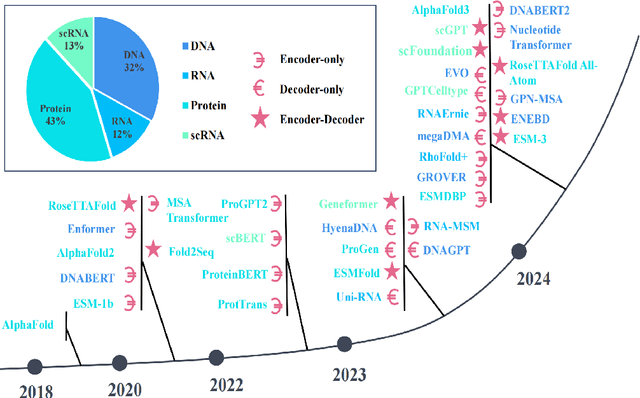
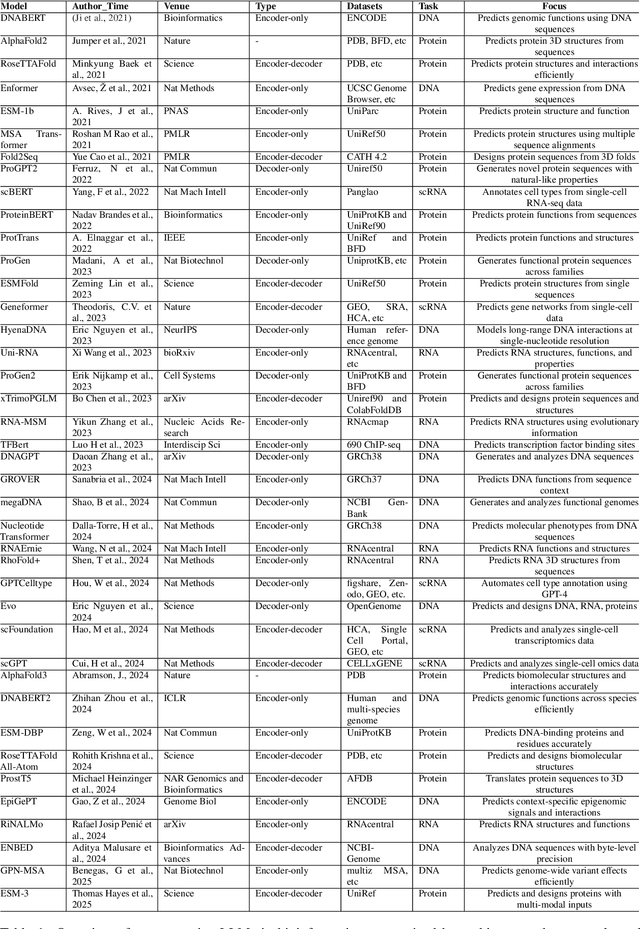
Large Language Models (LLMs) are revolutionizing bioinformatics, enabling advanced analysis of DNA, RNA, proteins, and single-cell data. This survey provides a systematic review of recent advancements, focusing on genomic sequence modeling, RNA structure prediction, protein function inference, and single-cell transcriptomics. Meanwhile, we also discuss several key challenges, including data scarcity, computational complexity, and cross-omics integration, and explore future directions such as multimodal learning, hybrid AI models, and clinical applications. By offering a comprehensive perspective, this paper underscores the transformative potential of LLMs in driving innovations in bioinformatics and precision medicine.
Biological Sequence with Language Model Prompting: A Survey
Mar 06, 2025Large Language models (LLMs) have emerged as powerful tools for addressing challenges across diverse domains. Notably, recent studies have demonstrated that large language models significantly enhance the efficiency of biomolecular analysis and synthesis, attracting widespread attention from academics and medicine. In this paper, we systematically investigate the application of prompt-based methods with LLMs to biological sequences, including DNA, RNA, proteins, and drug discovery tasks. Specifically, we focus on how prompt engineering enables LLMs to tackle domain-specific problems, such as promoter sequence prediction, protein structure modeling, and drug-target binding affinity prediction, often with limited labeled data. Furthermore, our discussion highlights the transformative potential of prompting in bioinformatics while addressing key challenges such as data scarcity, multimodal fusion, and computational resource limitations. Our aim is for this paper to function both as a foundational primer for newcomers and a catalyst for continued innovation within this dynamic field of study.
Developing and Utilizing a Large-Scale Cantonese Dataset for Multi-Tasking in Large Language Models
Mar 05, 2025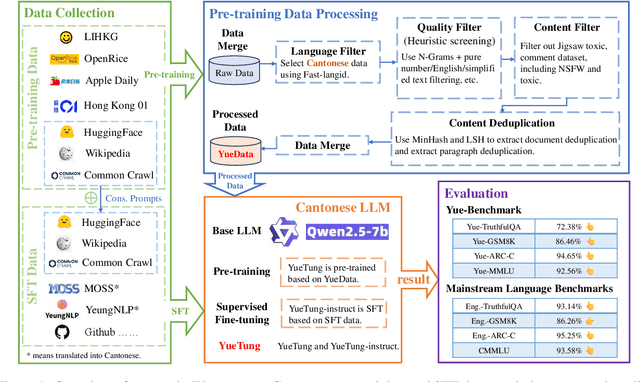
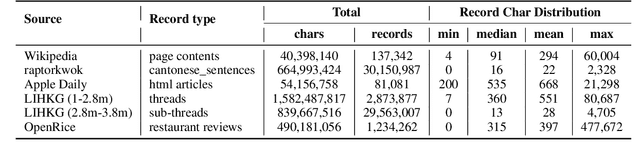
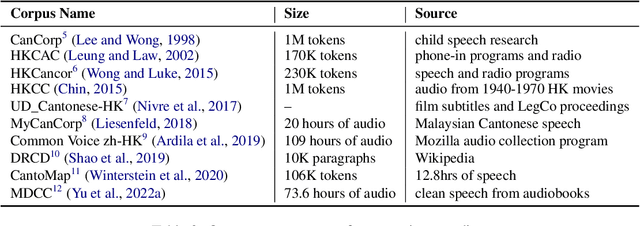
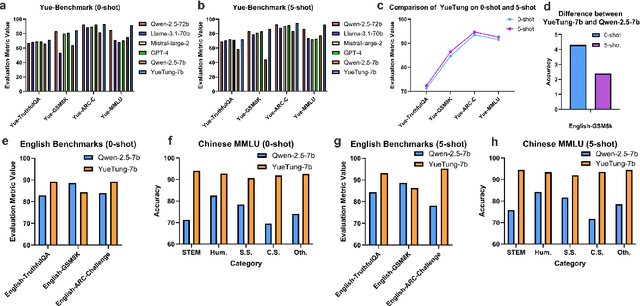
High-quality data resources play a crucial role in learning large language models (LLMs), particularly for low-resource languages like Cantonese. Despite having more than 85 million native speakers, Cantonese is still considered a low-resource language in the field of natural language processing (NLP) due to factors such as the dominance of Mandarin, lack of cohesion within the Cantonese-speaking community, diversity in character encoding and input methods, and the tendency of overseas Cantonese speakers to prefer using English. In addition, rich colloquial vocabulary of Cantonese, English loanwords, and code-switching characteristics add to the complexity of corpus collection and processing. To address these challenges, we collect Cantonese texts from a variety of sources, including open source corpora, Hong Kong-specific forums, Wikipedia, and Common Crawl data. We conduct rigorous data processing through language filtering, quality filtering, content filtering, and de-duplication steps, successfully constructing a high-quality Cantonese corpus of over 2 billion tokens for training large language models. We further refined the model through supervised fine-tuning (SFT) on curated Cantonese tasks, enhancing its ability to handle specific applications. Upon completion of the training, the model achieves state-of-the-art (SOTA) performance on four Cantonese benchmarks. After training on our dataset, the model also exhibits improved performance on other mainstream language tasks.
AgentSociety Challenge: Designing LLM Agents for User Modeling and Recommendation on Web Platforms
Feb 26, 2025The AgentSociety Challenge is the first competition in the Web Conference that aims to explore the potential of Large Language Model (LLM) agents in modeling user behavior and enhancing recommender systems on web platforms. The Challenge consists of two tracks: the User Modeling Track and the Recommendation Track. Participants are tasked to utilize a combined dataset from Yelp, Amazon, and Goodreads, along with an interactive environment simulator, to develop innovative LLM agents. The Challenge has attracted 295 teams across the globe and received over 1,400 submissions in total over the course of 37 official competition days. The participants have achieved 21.9% and 20.3% performance improvement for Track 1 and Track 2 in the Development Phase, and 9.1% and 15.9% in the Final Phase, representing a significant accomplishment. This paper discusses the detailed designs of the Challenge, analyzes the outcomes, and highlights the most successful LLM agent designs. To support further research and development, we have open-sourced the benchmark environment at https://tsinghua-fib-lab.github.io/AgentSocietyChallenge.
Retrieval Dexterity: Efficient Object Retrieval in Clutters with Dexterous Hand
Feb 26, 2025Retrieving objects buried beneath multiple objects is not only challenging but also time-consuming. Performing manipulation in such environments presents significant difficulty due to complex contact relationships. Existing methods typically address this task by sequentially grasping and removing each occluding object, resulting in lengthy execution times and requiring impractical grasping capabilities for every occluding object. In this paper, we present a dexterous arm-hand system for efficient object retrieval in multi-object stacked environments. Our approach leverages large-scale parallel reinforcement learning within diverse and carefully designed cluttered environments to train policies. These policies demonstrate emergent manipulation skills (e.g., pushing, stirring, and poking) that efficiently clear occluding objects to expose sufficient surface area of the target object. We conduct extensive evaluations across a set of over 10 household objects in diverse clutter configurations, demonstrating superior retrieval performance and efficiency for both trained and unseen objects. Furthermore, we successfully transfer the learned policies to a real-world dexterous multi-fingered robot system, validating their practical applicability in real-world scenarios. Videos can be found on our project website https://ChangWinde.github.io/RetrDex.
Self-Adjust Softmax
Feb 25, 2025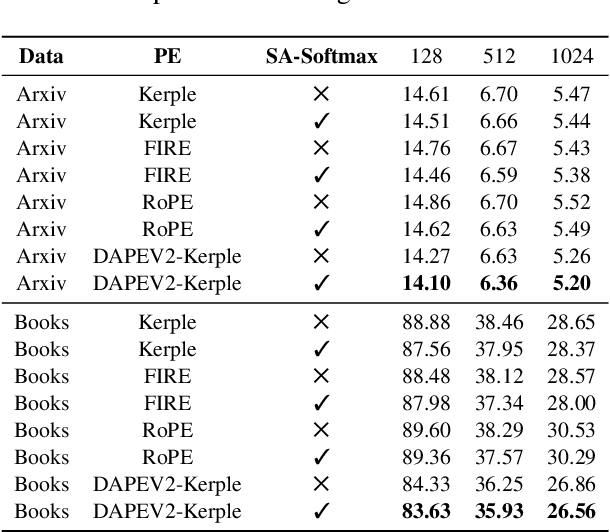
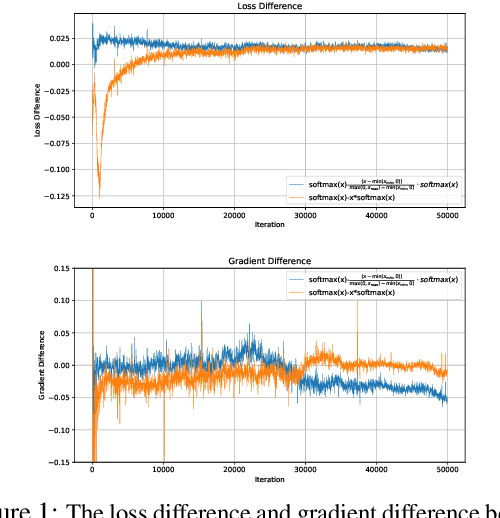
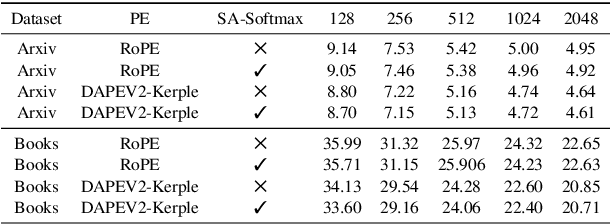
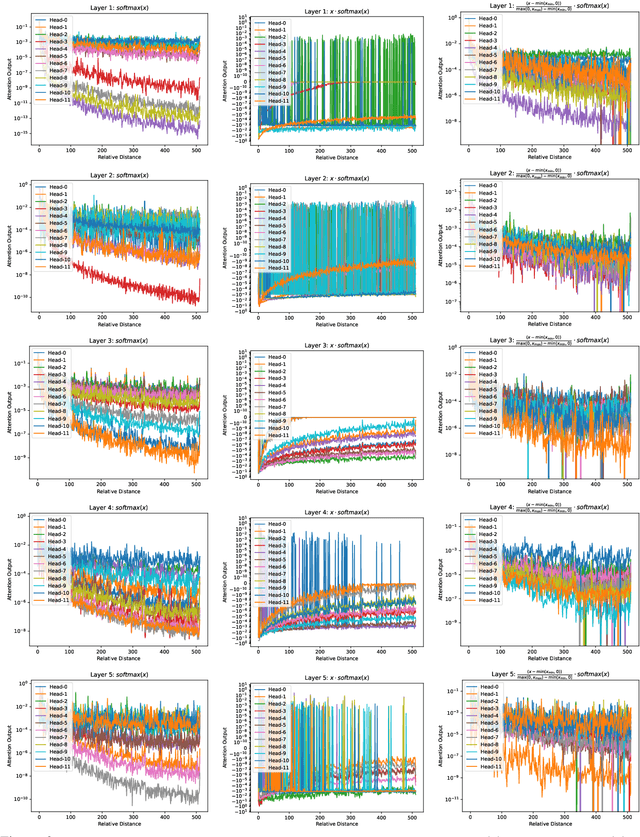
The softmax function is crucial in Transformer attention, which normalizes each row of the attention scores with summation to one, achieving superior performances over other alternative functions. However, the softmax function can face a gradient vanishing issue when some elements of the attention scores approach extreme values, such as probabilities close to one or zero. In this paper, we propose Self-Adjust Softmax (SA-Softmax) to address this issue by modifying $softmax(x)$ to $x \cdot softmax(x)$ and its normalized variant $\frac{(x - min(x_{\min},0))}{max(0,x_{max})-min(x_{min},0)} \cdot softmax(x)$. We theoretically show that SA-Softmax provides enhanced gradient properties compared to the vanilla softmax function. Moreover, SA-Softmax Attention can be seamlessly integrated into existing Transformer models to their attention mechanisms with minor adjustments. We conducted experiments to evaluate the empirical performance of Transformer models using SA-Softmax compared to the vanilla softmax function. These experiments, involving models with up to 2.7 billion parameters, are conducted across diverse datasets, language tasks, and positional encoding methods.
Improving TCM Question Answering through Tree-Organized Self-Reflective Retrieval with LLMs
Feb 13, 2025


Objectives: Large language models (LLMs) can harness medical knowledge for intelligent question answering (Q&A), promising support for auxiliary diagnosis and medical talent cultivation. However, there is a deficiency of highly efficient retrieval-augmented generation (RAG) frameworks within the domain of Traditional Chinese Medicine (TCM). Our purpose is to observe the effect of the Tree-Organized Self-Reflective Retrieval (TOSRR) framework on LLMs in TCM Q&A tasks. Materials and Methods: We introduce the novel approach of knowledge organization, constructing a tree structure knowledge base with hierarchy. At inference time, our self-reflection framework retrieves from this knowledge base, integrating information across chapters. Questions from the TCM Medical Licensing Examination (MLE) and the college Classics Course Exam (CCE) were randomly selected as benchmark datasets. Results: By coupling with GPT-4, the framework can improve the best performance on the TCM MLE benchmark by 19.85% in absolute accuracy, and improve recall accuracy from 27% to 38% on CCE datasets. In manual evaluation, the framework improves a total of 18.52 points across dimensions of safety, consistency, explainability, compliance, and coherence. Conclusion: The TOSRR framework can effectively improve LLM's capability in Q&A tasks of TCM.
AlphaAdam:Asynchronous Masked Optimization with Dynamic Alpha for Selective Updates
Jan 30, 2025In the training of large language models (LLMs), updating parameters more efficiently and stably has always been an important challenge. To achieve efficient parameter updates, existing methods usually achieve performance comparable to full parameter updates through methods such as low-dimensional decomposition or layer-wise selective updates. In this work, we propose AlphaAdam, an optimization framework for LLM from the perspective of intra-layer parameter updates. By decoupling parameter updates and dynamically adjusting their strength, AlphaAdam accelerates convergence and improves training stability. We construct parameter masks based on the consistency of historical momentum and gradient direction and combine them with an adaptive mask strength strategy to ensure efficient optimization and theoretical convergence guarantees, which is also applicable to most momentum-based optimizers. Extensive experiments show that AlphaAdam outperforms state-of-the-art methods such as AdamW in terms of convergence speed and computational efficiency across tasks, including GPT-2 pre-trained and fine-tuned RoBERTa and Llama-7B. Our AlphaAdam implements an optimizer enhancement framework for LLMs through intra-layer asynchronous masked adaptive updates. Our code is available in this \href{https://github.com/MaeChd/AlphaAdam}{link}
Harnessing Diverse Perspectives: A Multi-Agent Framework for Enhanced Error Detection in Knowledge Graphs
Jan 27, 2025
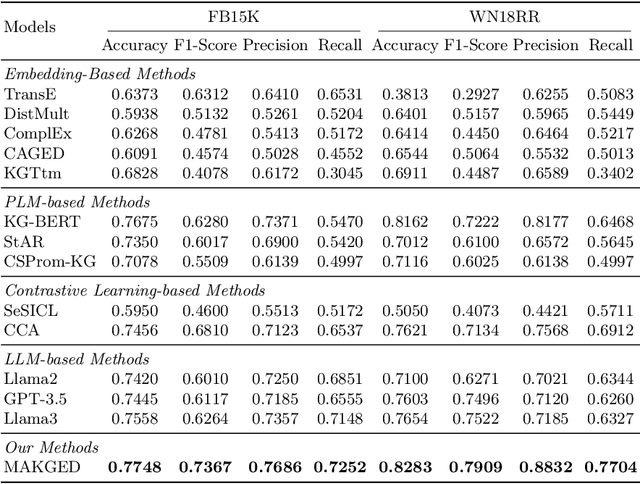
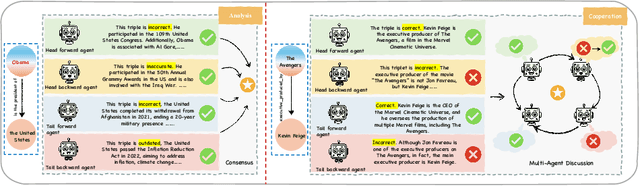

Knowledge graphs are widely used in industrial applications, making error detection crucial for ensuring the reliability of downstream applications. Existing error detection methods often fail to effectively leverage fine-grained subgraph information and rely solely on fixed graph structures, while also lacking transparency in their decision-making processes, which results in suboptimal detection performance. In this paper, we propose a novel Multi-Agent framework for Knowledge Graph Error Detection (MAKGED) that utilizes multiple large language models (LLMs) in a collaborative setting. By concatenating fine-grained, bidirectional subgraph embeddings with LLM-based query embeddings during training, our framework integrates these representations to produce four specialized agents. These agents utilize subgraph information from different dimensions to engage in multi-round discussions, thereby improving error detection accuracy and ensuring a transparent decision-making process. Extensive experiments on FB15K and WN18RR demonstrate that MAKGED outperforms state-of-the-art methods, enhancing the accuracy and robustness of KG evaluation. For specific industrial scenarios, our framework can facilitate the training of specialized agents using domain-specific knowledge graphs for error detection, which highlights the potential industrial application value of our framework. Our code and datasets are available at https://github.com/kse-ElEvEn/MAKGED.