 Add to Chrome
 Add to Firefox
 Add to Edge
Video-Text Dataset Construction from Multi-AI Feedback: Promoting Weak-to-Strong Preference Learning for Video Large Language Models
Nov 25, 2024
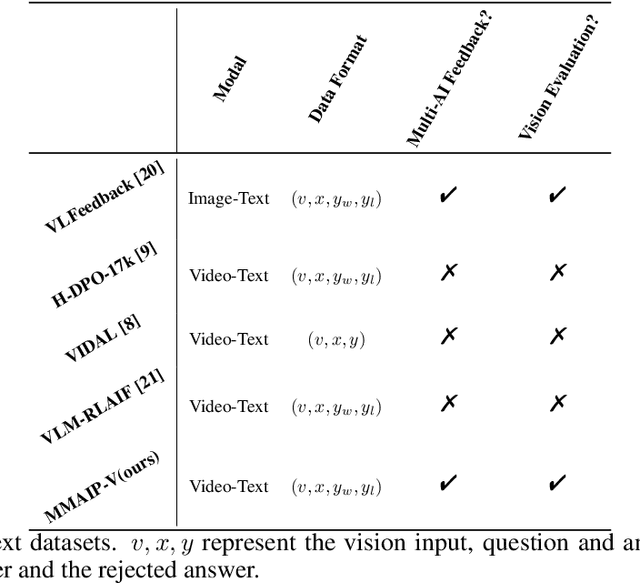
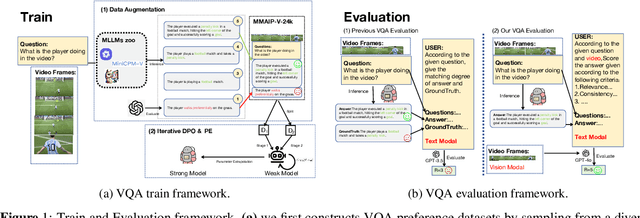
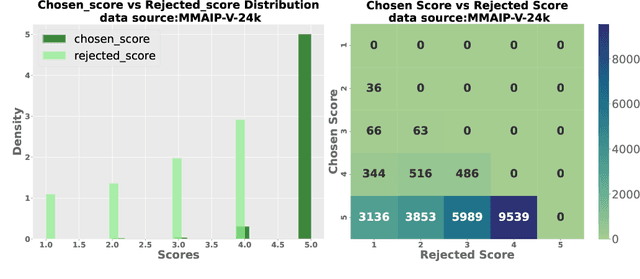
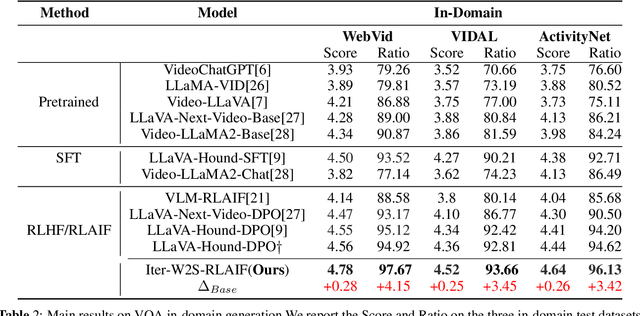
High-quality video-text preference data is crucial for Multimodal Large Language Models (MLLMs) alignment. However, existing preference data is very scarce. Obtaining VQA preference data for preference training is costly, and manually annotating responses is highly unreliable, which could result in low-quality pairs. Meanwhile, AI-generated responses controlled by temperature adjustment lack diversity. To address these issues, we propose a high-quality VQA preference dataset, called \textit{\textbf{M}ultiple \textbf{M}ultimodal \textbf{A}rtificial \textbf{I}ntelligence \textbf{P}reference Datasets in \textbf{V}QA} (\textbf{MMAIP-V}), which is constructed by sampling from the response distribution set and using an external scoring function for response evaluation. Furthermore, to fully leverage the preference knowledge in MMAIP-V and ensure sufficient optimization, we propose \textit{\textbf{Iter}ative \textbf{W}eak-to-\textbf{S}trong \textbf{R}einforcement \textbf{L}earning from \textbf{AI} \textbf{F}eedback for video MLLMs} (\textbf{Iter-W2S-RLAIF}), a framework that gradually enhances MLLMs' alignment capabilities by iteratively updating the reference model and performing parameter extrapolation. Finally, we propose an unbiased and information-complete evaluation scheme in VQA evaluation. Experiments demonstrate that MMAIP-V is beneficial for MLLMs in preference learning and Iter-W2S-RLAIF fully exploits the alignment information in MMAIP-V. We believe that the proposed automatic VQA preference data generation pipeline based on AI feedback can greatly promote future work in the MLLMs alignment. \textbf{Code and dataset are available} \href{https://anonymous.4open.science/r/MMAIP-V_Iter-W2S-RLAIF-702F}{MMAIP-V\_Iter-W2S-RLAIF-702F}.

Privacy-Preserving Federated Foundation Model for Generalist Ultrasound Artificial Intelligence
Nov 25, 2024

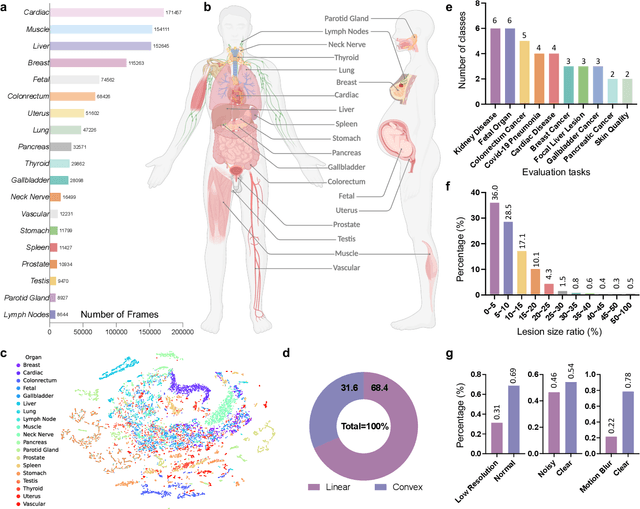

Ultrasound imaging is widely used in clinical diagnosis due to its non-invasive nature and real-time capabilities. However, conventional ultrasound diagnostics face several limitations, including high dependence on physician expertise and suboptimal image quality, which complicates interpretation and increases the likelihood of diagnostic errors. Artificial intelligence (AI) has emerged as a promising solution to enhance clinical diagnosis, particularly in detecting abnormalities across various biomedical imaging modalities. Nonetheless, current AI models for ultrasound imaging face critical challenges. First, these models often require large volumes of labeled medical data, raising concerns over patient privacy breaches. Second, most existing models are task-specific, which restricts their broader clinical utility. To overcome these challenges, we present UltraFedFM, an innovative privacy-preserving ultrasound foundation model. UltraFedFM is collaboratively pre-trained using federated learning across 16 distributed medical institutions in 9 countries, leveraging a dataset of over 1 million ultrasound images covering 19 organs and 10 ultrasound modalities. This extensive and diverse data, combined with a secure training framework, enables UltraFedFM to exhibit strong generalization and diagnostic capabilities. It achieves an average area under the receiver operating characteristic curve of 0.927 for disease diagnosis and a dice similarity coefficient of 0.878 for lesion segmentation. Notably, UltraFedFM surpasses the diagnostic accuracy of mid-level ultrasonographers and matches the performance of expert-level sonographers in the joint diagnosis of 8 common systemic diseases. These findings indicate that UltraFedFM can significantly enhance clinical diagnostics while safeguarding patient privacy, marking an advancement in AI-driven ultrasound imaging for future clinical applications.
Self-Calibrated CLIP for Training-Free Open-Vocabulary Segmentation
Nov 24, 2024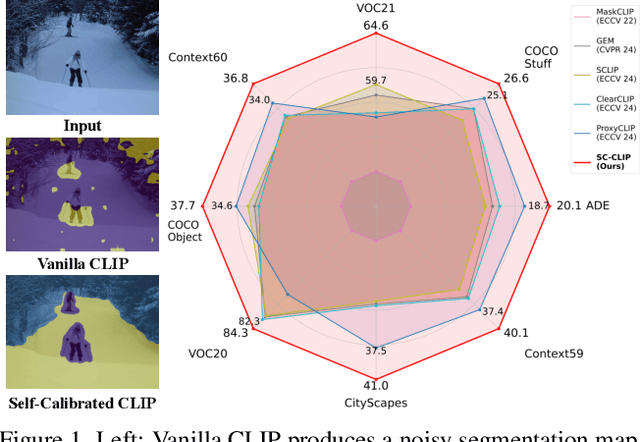
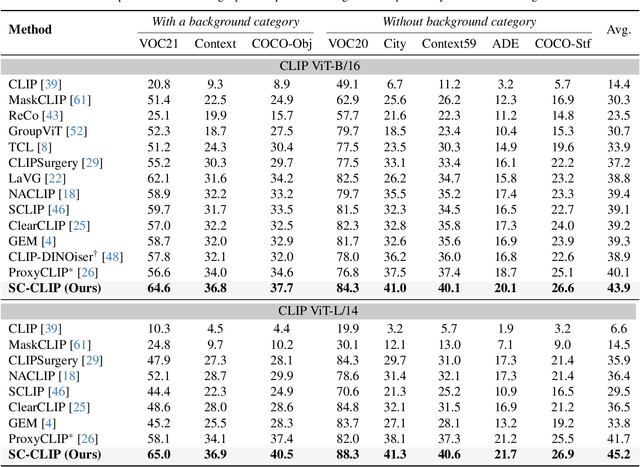
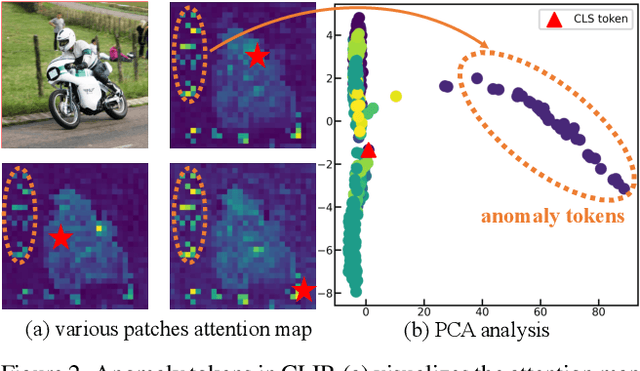
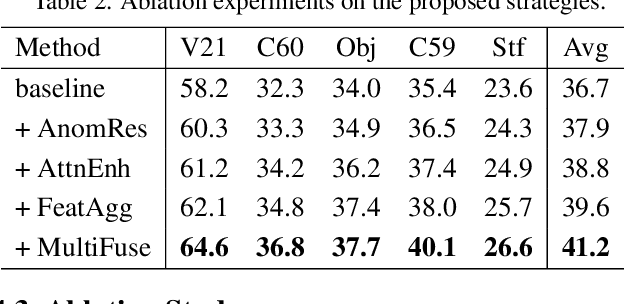
Recent advancements in pre-trained vision-language models like CLIP, have enabled the task of open-vocabulary segmentation. CLIP demonstrates impressive zero-shot capabilities in various downstream tasks that require holistic image understanding. However, due to its image-level pre-training, CLIP struggles to capture local details, resulting in poor performance in segmentation tasks. Our analysis reveals that anomaly tokens emerge during the forward pass, drawing excessive attention from normal patch tokens, thereby diminishing spatial awareness. To address this issue, we propose Self-Calibrated CLIP (SC-CLIP), a training-free method that calibrates CLIP to produce finer-grained representations while preserving its original generalization ability, without introducing new parameters or relying on additional backbones. Specifically, we first identify and resolve the anomaly tokens to mitigate their negative impact. Next, we enhance feature discriminability and attention correlation by leveraging the semantic consistency found in CLIP's intermediate features. Furthermore, we employ multi-level feature fusion to enrich details. Collectively, these strategies enhance CLIP's feature representation with greater granularity and coherence. Experimental results demonstrate the effectiveness of SC-CLIP, achieving state-of-the-art results across eight semantic segmentation datasets and surpassing previous methods by 9.5%. Notably, SC-CLIP boosts the performance of vanilla CLIP ViT-L/14 by 6.8 times. Our source code is available at https://github.com/SuleBai/SC-CLIP.
Multi-granularity Interest Retrieval and Refinement Network for Long-Term User Behavior Modeling in CTR Prediction
Nov 22, 2024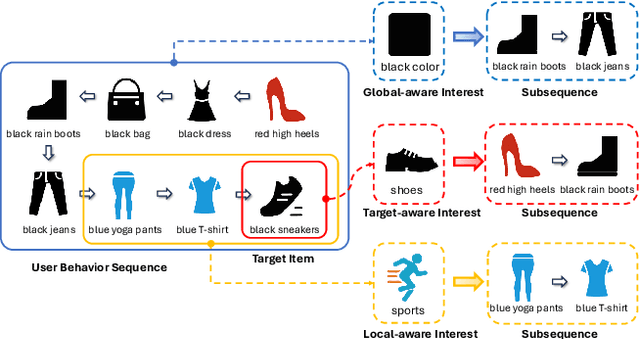
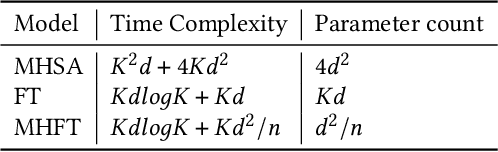
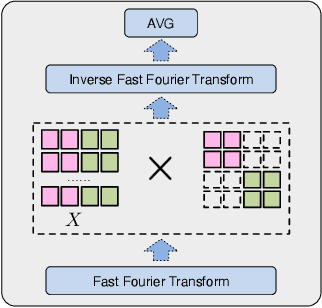
Click-through Rate (CTR) prediction is crucial for online personalization platforms. Recent advancements have shown that modeling rich user behaviors can significantly improve the performance of CTR prediction. Current long-term user behavior modeling algorithms predominantly follow two cascading stages. The first stage retrieves subsequence related to the target item from the long-term behavior sequence, while the second stage models the relationship between the subsequence and the target item. Despite significant progress, these methods have two critical flaws. First, the retrieval query typically includes only target item information, limiting the ability to capture the user's diverse interests. Second, relational information, such as sequential and interactive information within the subsequence, is frequently overlooked. Therefore, it requires to be further mined to more accurately model user interests. To this end, we propose Multi-granularity Interest Retrieval and Refinement Network (MIRRN). Specifically, we first construct queries based on behaviors observed at different time scales to obtain subsequences, each capturing users' interest at various granularities. We then introduce an noval multi-head Fourier transformer to efficiently learn sequential and interactive information within the subsequences, leading to more accurate modeling of user interests. Finally, we employ multi-head target attention to adaptively assess the impact of these multi-granularity interests on the target item. Extensive experiments have demonstrated that MIRRN significantly outperforms state-of-the-art baselines. Furthermore, an A/B test shows that MIRRN increases the average number of listening songs by 1.32% and the average time of listening songs by 0.55% on a popular music streaming app. The implementation code is publicly available at https://github.com/psycho-demon/MIRRN.
Global Challenge for Safe and Secure LLMs Track 1
Nov 21, 2024


This paper introduces the Global Challenge for Safe and Secure Large Language Models (LLMs), a pioneering initiative organized by AI Singapore (AISG) and the CyberSG R&D Programme Office (CRPO) to foster the development of advanced defense mechanisms against automated jailbreaking attacks. With the increasing integration of LLMs in critical sectors such as healthcare, finance, and public administration, ensuring these models are resilient to adversarial attacks is vital for preventing misuse and upholding ethical standards. This competition focused on two distinct tracks designed to evaluate and enhance the robustness of LLM security frameworks. Track 1 tasked participants with developing automated methods to probe LLM vulnerabilities by eliciting undesirable responses, effectively testing the limits of existing safety protocols within LLMs. Participants were challenged to devise techniques that could bypass content safeguards across a diverse array of scenarios, from offensive language to misinformation and illegal activities. Through this process, Track 1 aimed to deepen the understanding of LLM vulnerabilities and provide insights for creating more resilient models.
DMQR-RAG: Diverse Multi-Query Rewriting for RAG
Nov 20, 2024Large language models often encounter challenges with static knowledge and hallucinations, which undermine their reliability. Retrieval-augmented generation (RAG) mitigates these issues by incorporating external information. However, user queries frequently contain noise and intent deviations, necessitating query rewriting to improve the relevance of retrieved documents. In this paper, we introduce DMQR-RAG, a Diverse Multi-Query Rewriting framework designed to improve the performance of both document retrieval and final responses in RAG. Specifically, we investigate how queries with varying information quantities can retrieve a diverse array of documents, presenting four rewriting strategies that operate at different levels of information to enhance the performance of baseline approaches. Additionally, we propose an adaptive strategy selection method that minimizes the number of rewrites while optimizing overall performance. Our methods have been rigorously validated through extensive experiments conducted in both academic and industry settings.
Reaction-conditioned De Novo Enzyme Design with GENzyme
Nov 10, 2024The introduction of models like RFDiffusionAA, AlphaFold3, AlphaProteo, and Chai1 has revolutionized protein structure modeling and interaction prediction, primarily from a binding perspective, focusing on creating ideal lock-and-key models. However, these methods can fall short for enzyme-substrate interactions, where perfect binding models are rare, and induced fit states are more common. To address this, we shift to a functional perspective for enzyme design, where the enzyme function is defined by the reaction it catalyzes. Here, we introduce \textsc{GENzyme}, a \textit{de novo} enzyme design model that takes a catalytic reaction as input and generates the catalytic pocket, full enzyme structure, and enzyme-substrate binding complex. \textsc{GENzyme} is an end-to-end, three-staged model that integrates (1) a catalytic pocket generation and sequence co-design module, (2) a pocket inpainting and enzyme inverse folding module, and (3) a binding and screening module to optimize and predict enzyme-substrate complexes. The entire design process is driven by the catalytic reaction being targeted. This reaction-first approach allows for more accurate and biologically relevant enzyme design, potentially surpassing structure-based and binding-focused models in creating enzymes capable of catalyzing specific reactions. We provide \textsc{GENzyme} code at https://github.com/WillHua127/GENzyme.
BenchX: A Unified Benchmark Framework for Medical Vision-Language Pretraining on Chest X-Rays
Oct 29, 2024


Medical Vision-Language Pretraining (MedVLP) shows promise in learning generalizable and transferable visual representations from paired and unpaired medical images and reports. MedVLP can provide useful features to downstream tasks and facilitate adapting task-specific models to new setups using fewer examples. However, existing MedVLP methods often differ in terms of datasets, preprocessing, and finetuning implementations. This pose great challenges in evaluating how well a MedVLP method generalizes to various clinically-relevant tasks due to the lack of unified, standardized, and comprehensive benchmark. To fill this gap, we propose BenchX, a unified benchmark framework that enables head-to-head comparison and systematical analysis between MedVLP methods using public chest X-ray datasets. Specifically, BenchX is composed of three components: 1) Comprehensive datasets covering nine datasets and four medical tasks; 2) Benchmark suites to standardize data preprocessing, train-test splits, and parameter selection; 3) Unified finetuning protocols that accommodate heterogeneous MedVLP methods for consistent task adaptation in classification, segmentation, and report generation, respectively. Utilizing BenchX, we establish baselines for nine state-of-the-art MedVLP methods and found that the performance of some early MedVLP methods can be enhanced to surpass more recent ones, prompting a revisiting of the developments and conclusions from prior works in MedVLP. Our code are available at https://github.com/yangzhou12/BenchX.
Enhancing CTR Prediction in Recommendation Domain with Search Query Representation
Oct 28, 2024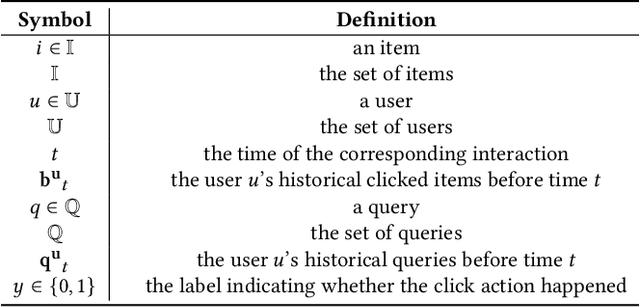
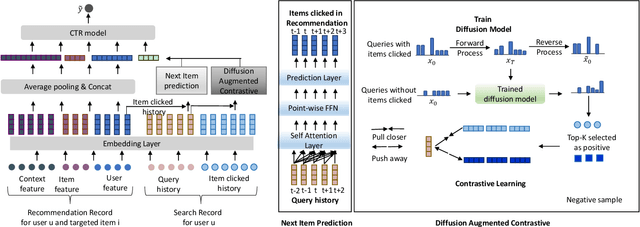
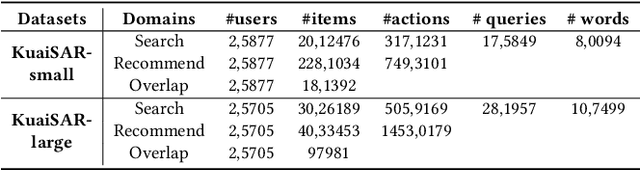
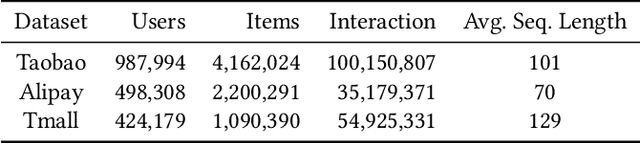
Many platforms, such as e-commerce websites, offer both search and recommendation services simultaneously to better meet users' diverse needs. Recommendation services suggest items based on user preferences, while search services allow users to search for items before providing recommendations. Since users and items are often shared between the search and recommendation domains, there is a valuable opportunity to enhance the recommendation domain by leveraging user preferences extracted from the search domain. Existing approaches either overlook the shift in user intention between these domains or fail to capture the significant impact of learning from users' search queries on understanding their interests. In this paper, we propose a framework that learns from user search query embeddings within the context of user preferences in the recommendation domain. Specifically, user search query sequences from the search domain are used to predict the items users will click at the next time point in the recommendation domain. Additionally, the relationship between queries and items is explored through contrastive learning. To address issues of data sparsity, the diffusion model is incorporated to infer positive items the user will select after searching with certain queries in a denoising manner, which is particularly effective in preventing false positives. Effectively extracting this information, the queries are integrated into click-through rate prediction in the recommendation domain. Experimental analysis demonstrates that our model outperforms state-of-the-art models in the recommendation domain.
* Accepted by CIKM 2024 Full Research Track
Enhancing Community Vision Screening -- AI Driven Retinal Photography for Early Disease Detection and Patient Trust
Oct 27, 2024Community vision screening plays a crucial role in identifying individuals with vision loss and preventing avoidable blindness, particularly in rural communities where access to eye care services is limited. Currently, there is a pressing need for a simple and efficient process to screen and refer individuals with significant eye disease-related vision loss to tertiary eye care centers for further care. An ideal solution should seamlessly and readily integrate with existing workflows, providing comprehensive initial screening results to service providers, thereby enabling precise patient referrals for timely treatment. This paper introduces the Enhancing Community Vision Screening (ECVS) solution, which addresses the aforementioned concerns with a novel and feasible solution based on simple, non-invasive retinal photography for the detection of pathology-based visual impairment. Our study employs four distinct deep learning models: RETinal photo Quality Assessment (RETQA), Pathology Visual Impairment detection (PVI), Eye Disease Diagnosis (EDD) and Visualization of Lesion Regions of the eye (VLR). We conducted experiments on over 10 datasets, totaling more than 80,000 fundus photos collected from various sources. The models integrated into ECVS achieved impressive AUC scores of 0.98 for RETQA, 0.95 for PVI, and 0.90 for EDD, along with a DICE coefficient of 0.48 for VLR. These results underscore the promising capabilities of ECVS as a straightforward and scalable method for community-based vision screening.