 Add to Chrome
 Add to Firefox
 Add to Edge
Improving Data and Reward Design for Scientific Reasoning in Large Language Models
Feb 09, 2026
Solving open-ended science questions remains challenging for large language models, particularly due to inherently unreliable supervision and evaluation. The bottleneck lies in the data construction and reward design for scientific post-training. We develop a large-scale, systematic data processing pipeline that transforms heterogeneous open-source science data into Dr. SCI dataset, which comprises of 1M questions across eight STEM subjects, with explicit verifiable/open-ended splits, scalable difficulty annotation, and fine-grained rubrics that operationalize evaluation for open-ended answers. Building on this dataset, we propose the Dr. SCI post-training pipeline, which redesigns the standard SFT -> RL workflow through three components: (i) Exploration-Expanding SFT, which broadens the model's reasoning pattern coverage prior to RL; (ii) Dynamic Difficulty Curriculum, which adapts training data to the model's evolving scientific capability; and (iii) SciRubric-Guided RL, which enables stable reinforcement learning on open-ended scientific questions via rubric-based evaluation with explicit answer correctness. Qwen3-4B-Base trained using Dr.SCI pipeline achieves 63.2 on GPQA-diamond and 32.4 on GPQA-general, consistently improves over strong post-trained baselines such as o1-mini and GPT-4o, demonstrating substantial gains in scientific reasoning, especially in open-ended settings.

Pull Requests as a Training Signal for Repo-Level Code Editing
Feb 07, 2026Repository-level code editing requires models to understand complex dependencies and execute precise multi-file modifications across a large codebase. While recent gains on SWE-bench rely heavily on complex agent scaffolding, it remains unclear how much of this capability can be internalised via high-quality training signals. To address this, we propose Clean Pull Request (Clean-PR), a mid-training paradigm that leverages real-world GitHub pull requests as a training signal for repository-level editing. We introduce a scalable pipeline that converts noisy pull request diffs into Search/Replace edit blocks through reconstruction and validation, resulting in the largest publicly available corpus of 2 million pull requests spanning 12 programming languages. Using this training signal, we perform a mid-training stage followed by an agentless-aligned supervised fine-tuning process with error-driven data augmentation. On SWE-bench, our model significantly outperforms the instruction-tuned baseline, achieving absolute improvements of 13.6% on SWE-bench Lite and 12.3% on SWE-bench Verified. These results demonstrate that repository-level code understanding and editing capabilities can be effectively internalised into model weights under a simplified, agentless protocol, without relying on heavy inference-time scaffolding.
MSign: An Optimizer Preventing Training Instability in Large Language Models via Stable Rank Restoration
Feb 02, 2026Training instability remains a critical challenge in large language model (LLM) pretraining, often manifesting as sudden gradient explosions that waste significant computational resources. We study training failures in a 5M-parameter NanoGPT model scaled via $μ$P, identifying two key phenomena preceding collapse: (1) rapid decline in weight matrix stable rank (ratio of squared Frobenius norm to squared spectral norm), and (2) increasing alignment between adjacent layer Jacobians. We prove theoretically that these two conditions jointly cause exponential gradient norm growth with network depth. To break this instability mechanism, we propose MSign, a new optimizer that periodically applies matrix sign operations to restore stable rank. Experiments on models from 5M to 3B parameters demonstrate that MSign effectively prevents training failures with a computational overhead of less than 7.0%.
Training LLMs for Divide-and-Conquer Reasoning Elevates Test-Time Scalability
Feb 02, 2026Large language models (LLMs) have demonstrated strong reasoning capabilities through step-by-step chain-of-thought (CoT) reasoning. Nevertheless, at the limits of model capability, CoT often proves insufficient, and its strictly sequential nature constrains test-time scalability. A potential alternative is divide-and-conquer (DAC) reasoning, which decomposes a complex problem into subproblems to facilitate more effective exploration of the solution. Although promising, our analysis reveals a fundamental misalignment between general-purpose post-training and DAC-style inference, which limits the model's capacity to fully leverage this potential. To bridge this gap and fully unlock LLMs' reasoning capabilities on the most challenging tasks, we propose an end-to-end reinforcement learning (RL) framework to enhance their DAC-style reasoning capacity. At each step, the policy decomposes a problem into a group of subproblems, solves them sequentially, and addresses the original one conditioned on the subproblem solutions, with both decomposition and solution integrated into RL training. Under comparable training, our DAC-style framework endows the model with a higher performance ceiling and stronger test-time scalability, surpassing CoT by 8.6% in Pass@1 and 6.3% in Pass@32 on competition-level benchmarks.
Sigma-MoE-Tiny Technical Report
Dec 19, 2025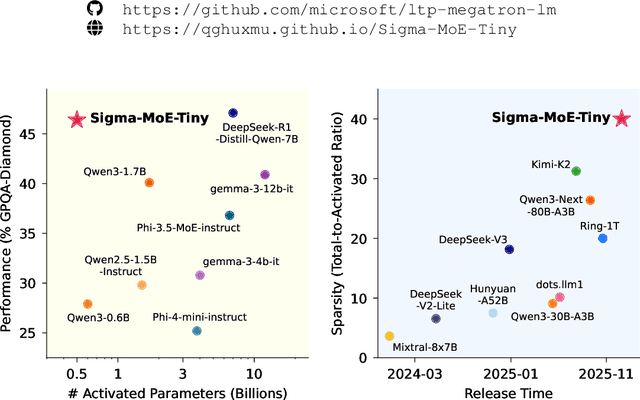
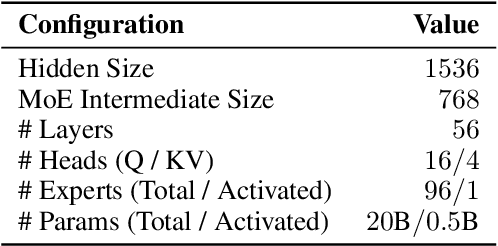
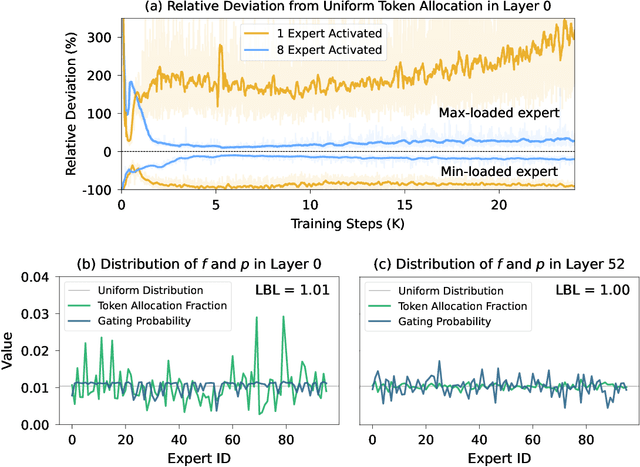
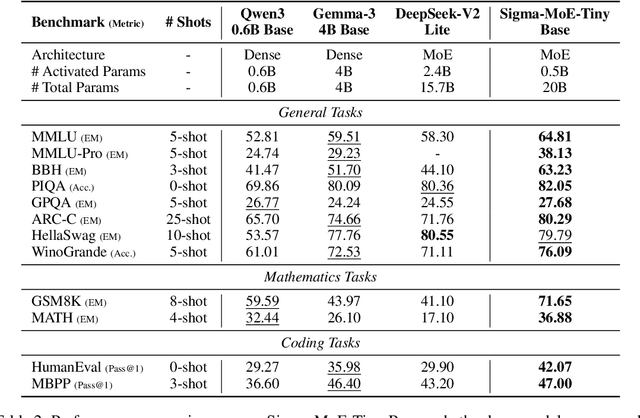
Mixture-of-Experts (MoE) has emerged as a promising paradigm for foundation models due to its efficient and powerful scalability. In this work, we present Sigma-MoE-Tiny, an MoE language model that achieves the highest sparsity compared to existing open-source models. Sigma-MoE-Tiny employs fine-grained expert segmentation with up to 96 experts per layer, while activating only one expert for each token, resulting in 20B total parameters with just 0.5B activated. The major challenge introduced by such extreme sparsity lies in expert load balancing. We find that the widely-used load balancing loss tends to become ineffective in the lower layers under this setting. To address this issue, we propose a progressive sparsification schedule aiming to balance expert utilization and training stability. Sigma-MoE-Tiny is pre-trained on a diverse and high-quality corpus, followed by post-training to further unlock its capabilities. The entire training process remains remarkably stable, with no occurrence of irrecoverable loss spikes. Comprehensive evaluations reveal that, despite activating only 0.5B parameters, Sigma-MoE-Tiny achieves top-tier performance among counterparts of comparable or significantly larger scale. In addition, we provide an in-depth discussion of load balancing in highly sparse MoE models, offering insights for advancing sparsity in future MoE architectures. Project page: https://qghuxmu.github.io/Sigma-MoE-Tiny Code: https://github.com/microsoft/ltp-megatron-lm
SIGMA: An AI-Empowered Training Stack on Early-Life Hardware
Dec 15, 2025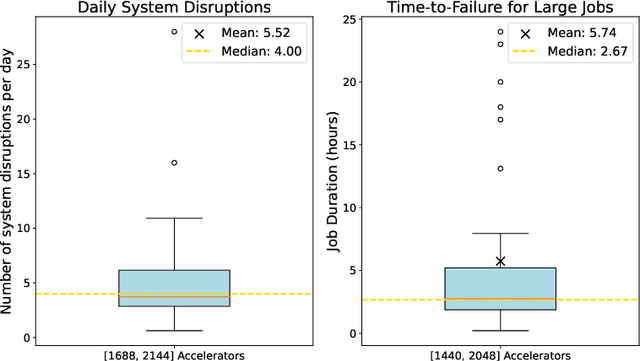

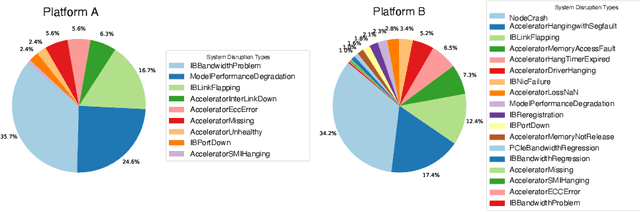
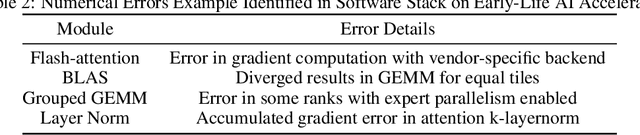
An increasing variety of AI accelerators is being considered for large-scale training. However, enabling large-scale training on early-life AI accelerators faces three core challenges: frequent system disruptions and undefined failure modes that undermine reliability; numerical errors and training instabilities that threaten correctness and convergence; and the complexity of parallelism optimization combined with unpredictable local noise that degrades efficiency. To address these challenges, SIGMA is an open-source training stack designed to improve the reliability, stability, and efficiency of large-scale distributed training on early-life AI hardware. The core of this initiative is the LUCIA TRAINING PLATFORM (LTP), the system optimized for clusters with early-life AI accelerators. Since its launch in March 2025, LTP has significantly enhanced training reliability and operational productivity. Over the past five months, it has achieved an impressive 94.45% effective cluster accelerator utilization, while also substantially reducing node recycling and job-recovery times. Building on the foundation of LTP, the LUCIA TRAINING FRAMEWORK (LTF) successfully trained SIGMA-MOE, a 200B MoE model, using 2,048 AI accelerators. This effort delivered remarkable stability and efficiency outcomes, achieving 21.08% MFU, state-of-the-art downstream accuracy, and encountering only one stability incident over a 75-day period. Together, these advances establish SIGMA, which not only tackles the critical challenges of large-scale training but also establishes a new benchmark for AI infrastructure and platform innovation, offering a robust, cost-effective alternative to prevailing established accelerator stacks and significantly advancing AI capabilities and scalability. The source code of SIGMA is available at https://github.com/microsoft/LuciaTrainingPlatform.
Recycling Pretrained Checkpoints: Orthogonal Growth of Mixture-of-Experts for Efficient Large Language Model Pre-Training
Oct 09, 2025The rapidly increasing computational cost of pretraining Large Language Models necessitates more efficient approaches. Numerous computational costs have been invested in existing well-trained checkpoints, but many of them remain underutilized due to engineering constraints or limited model capacity. To efficiently reuse this "sunk" cost, we propose to recycle pretrained checkpoints by expanding their parameter counts and continuing training. We propose orthogonal growth method well-suited for converged Mixture-of-Experts model: interpositional layer copying for depth growth and expert duplication with injected noise for width growth. To determine the optimal timing for such growth across checkpoints sequences, we perform comprehensive scaling experiments revealing that the final accuracy has a strong positive correlation with the amount of sunk cost, indicating that greater prior investment leads to better performance. We scale our approach to models with 70B parameters and over 1T training tokens, achieving 10.66% accuracy gain over training from scratch under the same additional compute budget. Our checkpoint recycling approach establishes a foundation for economically efficient large language model pretraining.
Training Matryoshka Mixture-of-Experts for Elastic Inference-Time Expert Utilization
Sep 30, 2025Mixture-of-Experts (MoE) has emerged as a promising paradigm for efficiently scaling large language models without a proportional increase in computational cost. However, the standard training strategy of Top-K router prevents MoE models from realizing their full potential for elastic inference. When the number of activated experts is altered at inference time, these models exhibit precipitous performance degradation. In this work, we introduce Matryoshka MoE (M-MoE), a training framework that instills a coarse-to-fine structure directly into the expert ensemble. By systematically varying the number of activated experts during training, M-MoE compels the model to learn a meaningful ranking: top-ranked experts collaborate to provide essential, coarse-grained capabilities, while subsequent experts add progressively finer-grained detail. We explore this principle at multiple granularities, identifying a layer-wise randomization strategy as the most effective. Our experiments demonstrate that a single M-MoE model achieves remarkable elasticity, with its performance at various expert counts closely matching that of an entire suite of specialist models, but at only a fraction of the total training cost. This flexibility not only unlocks elastic inference but also enables optimizing performance by allocating different computational budgets to different model layers. Our work paves the way for more practical and adaptable deployments of large-scale MoE models.
PeRL: Permutation-Enhanced Reinforcement Learning for Interleaved Vision-Language Reasoning
Jun 17, 2025Inspired by the impressive reasoning capabilities demonstrated by reinforcement learning approaches like DeepSeek-R1, recent emerging research has begun exploring the use of reinforcement learning (RL) to enhance vision-language models (VLMs) for multimodal reasoning tasks. However, most existing multimodal reinforcement learning approaches remain limited to spatial reasoning within single-image contexts, yet still struggle to generalize to more complex and real-world scenarios involving multi-image positional reasoning, where understanding the relationships across images is crucial. To address this challenge, we propose a general reinforcement learning approach PeRL tailored for interleaved multimodal tasks, and a multi-stage strategy designed to enhance the exploration-exploitation trade-off, thereby improving learning efficiency and task performance. Specifically, we introduce permutation of image sequences to simulate varied positional relationships to explore more spatial and positional diversity. Furthermore, we design a rollout filtering mechanism for resampling to focus on trajectories that contribute most to learning optimal behaviors to exploit learned policies effectively. We evaluate our model on 5 widely-used multi-image benchmarks and 3 single-image benchmarks. Our experiments confirm that PeRL trained model consistently surpasses R1-related and interleaved VLM baselines by a large margin, achieving state-of-the-art performance on multi-image benchmarks, while preserving comparable performance on single-image tasks.
SwS: Self-aware Weakness-driven Problem Synthesis in Reinforcement Learning for LLM Reasoning
Jun 10, 2025Reinforcement Learning with Verifiable Rewards (RLVR) has proven effective for training large language models (LLMs) on complex reasoning tasks, such as mathematical problem solving. A prerequisite for the scalability of RLVR is a high-quality problem set with precise and verifiable answers. However, the scarcity of well-crafted human-labeled math problems and limited-verification answers in existing distillation-oriented synthetic datasets limit their effectiveness in RL. Additionally, most problem synthesis strategies indiscriminately expand the problem set without considering the model's capabilities, leading to low efficiency in generating useful questions. To mitigate this issue, we introduce a Self-aware Weakness-driven problem Synthesis framework (SwS) that systematically identifies model deficiencies and leverages them for problem augmentation. Specifically, we define weaknesses as questions that the model consistently fails to learn through its iterative sampling during RL training. We then extract the core concepts from these failure cases and synthesize new problems to strengthen the model's weak areas in subsequent augmented training, enabling it to focus on and gradually overcome its weaknesses. Without relying on external knowledge distillation, our framework enables robust generalization byempowering the model to self-identify and address its weaknesses in RL, yielding average performance gains of 10.0% and 7.7% on 7B and 32B models across eight mainstream reasoning benchmarks.