 Add to Chrome
 Add to Firefox
 Add to Edge
m3BERT: A Modern, Multi-lingual, Matryoshka Bidirectional Encoder
May 19, 2026
Embedding models are pivotal in industrial information retrieval systems like search and advertising. However, existing pretrained models often exhibit fixed architectures and embedding dimensionalities, posing significant challenges when adapting them to diverse deployment scenarios with varying business-driven constraints. A common practice involves fine-tuning with partial parameter initialization from larger pretrained models for resource-constrained tasks. This method is often suboptimal as the misalignment between pretraining and downstream usage prevents full realization of pretraining benefits. To address this limitation, we introduce m3BERT: a Modern, Multi-lingual, Matryoshka Bidirectional Encoder, which features a novel pretraining strategy that jointly optimizes representations across both transformer layers and multiple embedding dimensions. This enables a single model to be tailored to varied resource and accuracy targets while maintaining consistency with pretraining. Incorporating recent architectural improvements, m3BERT uses a three-stage pretraining: monolingual pretraining, multilingual adaptation to serve diverse user bases, and crucial continual pretraining on a massive web domain corpus to enhance utility in commercial retrieval. m3BERT significantly outperforms state-of-the-art embedding models in Bing-Click, a large-scale industrial retrieval dataset, showcasing its practical versatility as an efficient foundation for resource-aware industrial retrieval systems. Further experiments on public datasets also confirm the general effectiveness of our multigranular Matryoshka pretraining strategy.

LoKA: Low-precision Kernel Applications for Recommendation Models At Scale
May 11, 2026Recent GPU generations deliver significantly higher FLOPs using lower-precision arithmetic, such as FP8. While successfully applied to large language models (LLMs), its adoption in large recommendation models (LRMs) has been limited. This is because LRMs are numerically sensitive, dominated by small matrix multiplications (GEMMs) followed by normalization, and trained in communication-intensive environments. Applying FP8 directly to LRMs often degrades model quality and prolongs training time. These challenges are inherent to LRM workloads and cannot be resolved merely by introducing better FP8 kernels. Instead, a system-model co-design approach is needed to successfully integrate FP8. We present LoKA (Low-precision Kernel Applications), a framework that makes FP8 practical for LRMs through three principles: profile under realistic distributions to know where low precision is safe, co-design model components with hardware to expand where it is safe, and orchestrate across kernel libraries to maximize the gains. Concretely, LoKA Probe is a statistically grounded, online benchmarking method that learns activation and weight statistics, and quantifies per-layer errors. This process pinpoints safe and unsafe, fast and slow sites for FP8 adoption. LoKA Mods is a set of reusable model adaptations that improve both numerical stability and execution efficiency with FP8. LoKA Dispatch is a runtime that leverages the statistical insights from LoKA Probe to select the fastest FP8 kernel that satisfies the accuracy requirements.
Greedy Information Projection for LLM Data Selection
Mar 14, 2026We present \emph{Greedy Information Projection} (\textsc{GIP}), a principled framework for choosing training examples for large language model fine-tuning. \textsc{GIP} casts selection as maximizing mutual information between a subset of examples and task-specific query signals, which may originate from LLM quality judgments, metadata, or other sources. The framework involves optimizing a closed-form mutual information objective defined using both data and query embeddings, naturally balancing {\it quality} and {\it diversity}. Optimizing this score is equivalent to maximizing the projection of the query embedding matrix onto the span of the selected data, which provides a geometric explanation for the co-emergence of quality and diversity. Building on this view, we employ a fast greedy matching-pursuit procedure with efficient projection-based updates. On instruction-following and mathematical reasoning datasets, \textsc{GIP} selects small subsets that match full-data fine-tuning while using only a fraction of examples and compute, unifying quality-aware and diversity-aware selection for efficient fine-tuning.
GLM-5: from Vibe Coding to Agentic Engineering
Feb 17, 2026We present GLM-5, a next-generation foundation model designed to transition the paradigm of vibe coding to agentic engineering. Building upon the agentic, reasoning, and coding (ARC) capabilities of its predecessor, GLM-5 adopts DSA to significantly reduce training and inference costs while maintaining long-context fidelity. To advance model alignment and autonomy, we implement a new asynchronous reinforcement learning infrastructure that drastically improves post-training efficiency by decoupling generation from training. Furthermore, we propose novel asynchronous agent RL algorithms that further improve RL quality, enabling the model to learn from complex, long-horizon interactions more effectively. Through these innovations, GLM-5 achieves state-of-the-art performance on major open benchmarks. Most critically, GLM-5 demonstrates unprecedented capability in real-world coding tasks, surpassing previous baselines in handling end-to-end software engineering challenges. Code, models, and more information are available at https://github.com/zai-org/GLM-5.
Training Matryoshka Mixture-of-Experts for Elastic Inference-Time Expert Utilization
Sep 30, 2025Mixture-of-Experts (MoE) has emerged as a promising paradigm for efficiently scaling large language models without a proportional increase in computational cost. However, the standard training strategy of Top-K router prevents MoE models from realizing their full potential for elastic inference. When the number of activated experts is altered at inference time, these models exhibit precipitous performance degradation. In this work, we introduce Matryoshka MoE (M-MoE), a training framework that instills a coarse-to-fine structure directly into the expert ensemble. By systematically varying the number of activated experts during training, M-MoE compels the model to learn a meaningful ranking: top-ranked experts collaborate to provide essential, coarse-grained capabilities, while subsequent experts add progressively finer-grained detail. We explore this principle at multiple granularities, identifying a layer-wise randomization strategy as the most effective. Our experiments demonstrate that a single M-MoE model achieves remarkable elasticity, with its performance at various expert counts closely matching that of an entire suite of specialist models, but at only a fraction of the total training cost. This flexibility not only unlocks elastic inference but also enables optimizing performance by allocating different computational budgets to different model layers. Our work paves the way for more practical and adaptable deployments of large-scale MoE models.
GLM-4.5: Agentic, Reasoning, and Coding (ARC) Foundation Models
Aug 08, 2025We present GLM-4.5, an open-source Mixture-of-Experts (MoE) large language model with 355B total parameters and 32B activated parameters, featuring a hybrid reasoning method that supports both thinking and direct response modes. Through multi-stage training on 23T tokens and comprehensive post-training with expert model iteration and reinforcement learning, GLM-4.5 achieves strong performance across agentic, reasoning, and coding (ARC) tasks, scoring 70.1% on TAU-Bench, 91.0% on AIME 24, and 64.2% on SWE-bench Verified. With much fewer parameters than several competitors, GLM-4.5 ranks 3rd overall among all evaluated models and 2nd on agentic benchmarks. We release both GLM-4.5 (355B parameters) and a compact version, GLM-4.5-Air (106B parameters), to advance research in reasoning and agentic AI systems. Code, models, and more information are available at https://github.com/zai-org/GLM-4.5.
ColBERT-serve: Efficient Multi-Stage Memory-Mapped Scoring
Apr 21, 2025We study serving retrieval models, specifically late interaction models like ColBERT, to many concurrent users at once and under a small budget, in which the index may not fit in memory. We present ColBERT-serve, a novel serving system that applies a memory-mapping strategy to the ColBERT index, reducing RAM usage by 90% and permitting its deployment on cheap servers, and incorporates a multi-stage architecture with hybrid scoring, reducing ColBERT's query latency and supporting many concurrent queries in parallel.
DeepThink: Aligning Language Models with Domain-Specific User Intents
Feb 08, 2025Supervised fine-tuning with synthesized instructions has been a common practice for adapting LLMs to domain-specific QA tasks. However, the synthesized instructions deviate from real user questions and expected answers. This study proposes a novel framework called DeepThink to generate high-quality instructions. DeepThink first generates a few seed questions to mimic actual user questions, simulates conversations to uncover the hidden user needs, and refines the answer by conversational contexts and the retrieved documents for more comprehensive answers. Experiments demonstrate that DeepThink achieves an average performance improvement of 7.92% compared to a GPT-4-turbo+RAG-based assistant on the real user test set in the advertising domain across dimensions such as relevance, completeness, clarity, accuracy, and actionability.
Sigma: Differential Rescaling of Query, Key and Value for Efficient Language Models
Jan 23, 2025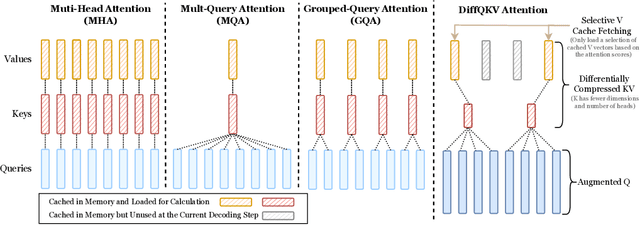


We introduce Sigma, an efficient large language model specialized for the system domain, empowered by a novel architecture including DiffQKV attention, and pre-trained on our meticulously collected system domain data. DiffQKV attention significantly enhances the inference efficiency of Sigma by optimizing the Query (Q), Key (K), and Value (V) components in the attention mechanism differentially, based on their varying impacts on the model performance and efficiency indicators. Specifically, we (1) conduct extensive experiments that demonstrate the model's varying sensitivity to the compression of K and V components, leading to the development of differentially compressed KV, and (2) propose augmented Q to expand the Q head dimension, which enhances the model's representation capacity with minimal impacts on the inference speed. Rigorous theoretical and empirical analyses reveal that DiffQKV attention significantly enhances efficiency, achieving up to a 33.36% improvement in inference speed over the conventional grouped-query attention (GQA) in long-context scenarios. We pre-train Sigma on 6T tokens from various sources, including 19.5B system domain data that we carefully collect and 1T tokens of synthesized and rewritten data. In general domains, Sigma achieves comparable performance to other state-of-arts models. In the system domain, we introduce the first comprehensive benchmark AIMicius, where Sigma demonstrates remarkable performance across all tasks, significantly outperforming GPT-4 with an absolute improvement up to 52.5%.
Distributed satellite information networks: Architecture, enabling technologies, and trends
Dec 17, 2024

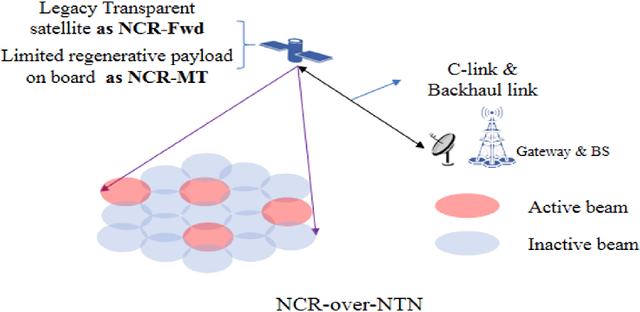

Driven by the vision of ubiquitous connectivity and wireless intelligence, the evolution of ultra-dense constellation-based satellite-integrated Internet is underway, now taking preliminary shape. Nevertheless, the entrenched institutional silos and limited, nonrenewable heterogeneous network resources leave current satellite systems struggling to accommodate the escalating demands of next-generation intelligent applications. In this context, the distributed satellite information networks (DSIN), exemplified by the cohesive clustered satellites system, have emerged as an innovative architecture, bridging information gaps across diverse satellite systems, such as communication, navigation, and remote sensing, and establishing a unified, open information network paradigm to support resilient space information services. This survey first provides a profound discussion about innovative network architectures of DSIN, encompassing distributed regenerative satellite network architecture, distributed satellite computing network architecture, and reconfigurable satellite formation flying, to enable flexible and scalable communication, computing and control. The DSIN faces challenges from network heterogeneity, unpredictable channel dynamics, sparse resources, and decentralized collaboration frameworks. To address these issues, a series of enabling technologies is identified, including channel modeling and estimation, cloud-native distributed MIMO cooperation, grant-free massive access, network routing, and the proper combination of all these diversity techniques. Furthermore, to heighten the overall resource efficiency, the cross-layer optimization techniques are further developed to meet upper-layer deterministic, adaptive and secure information services requirements. In addition, emerging research directions and new opportunities are highlighted on the way to achieving the DSIN vision.