 Add to Chrome
 Add to Firefox
 Add to Edge
Overview of the CAIL 2023 Argument Mining Track
Jun 20, 2024

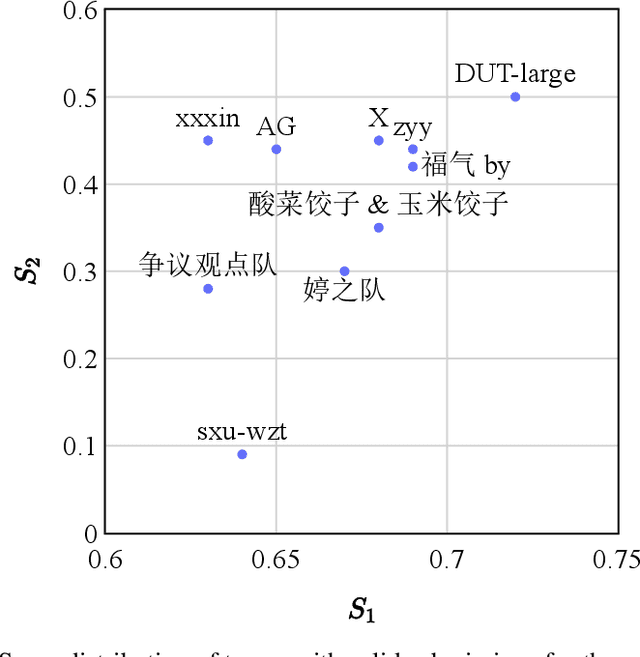
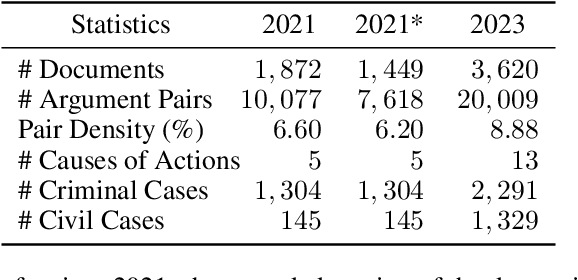
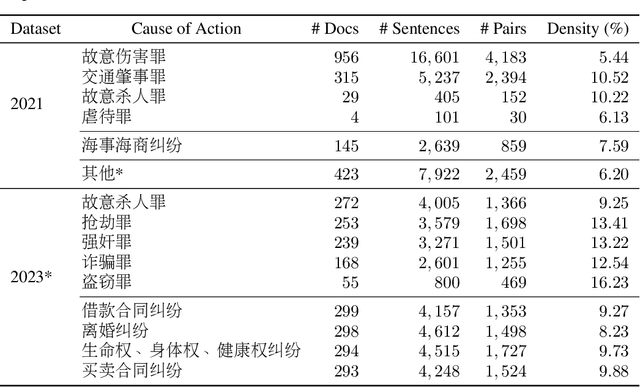
We give a detailed overview of the CAIL 2023 Argument Mining Track, one of the Chinese AI and Law Challenge (CAIL) 2023 tracks. The main goal of the track is to identify and extract interacting argument pairs in trial dialogs. It mainly uses summarized judgment documents but can also refer to trial recordings. The track consists of two stages, and we introduce the tasks designed for each stage; we also extend the data from previous events into a new dataset -- CAIL2023-ArgMine -- with annotated new cases from various causes of action. We outline several submissions that achieve the best results, including their methods for different stages. While all submissions rely on language models, they have incorporated strategies that may benefit future work in this field.

Beyond Boundaries: Learning a Universal Entity Taxonomy across Datasets and Languages for Open Named Entity Recognition
Jun 17, 2024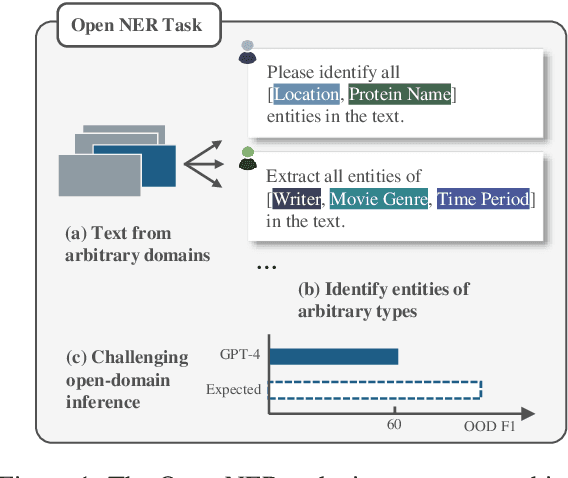


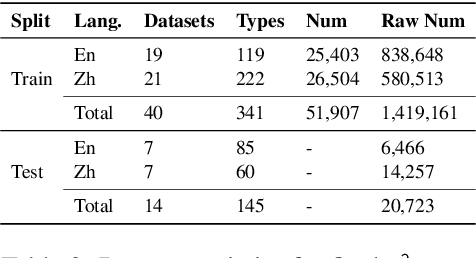
Open Named Entity Recognition (NER), which involves identifying arbitrary types of entities from arbitrary domains, remains challenging for Large Language Models (LLMs). Recent studies suggest that fine-tuning LLMs on extensive NER data can boost their performance. However, training directly on existing datasets faces issues due to inconsistent entity definitions and redundant data, limiting LLMs to dataset-specific learning and hindering out-of-domain generalization. To address this, we present B2NERD, a cohesive and efficient dataset for Open NER, normalized from 54 existing English or Chinese datasets using a two-step approach. First, we detect inconsistent entity definitions across datasets and clarify them by distinguishable label names to construct a universal taxonomy of 400+ entity types. Second, we address redundancy using a data pruning strategy that selects fewer samples with greater category and semantic diversity. Comprehensive evaluation shows that B2NERD significantly improves LLMs' generalization on Open NER. Our B2NER models, trained on B2NERD, outperform GPT-4 by 6.8-12.0 F1 points and surpass previous methods in 3 out-of-domain benchmarks across 15 datasets and 6 languages.
SPA-VL: A Comprehensive Safety Preference Alignment Dataset for Vision Language Model
Jun 17, 2024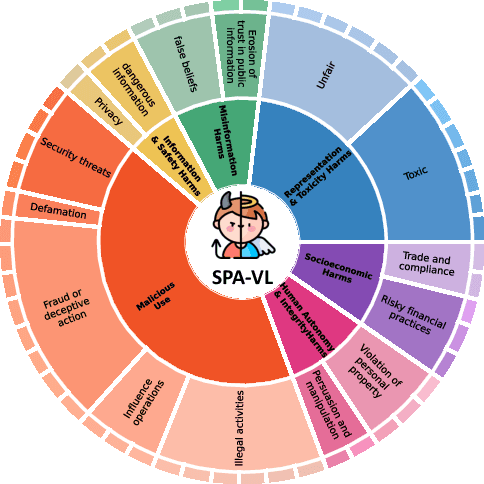
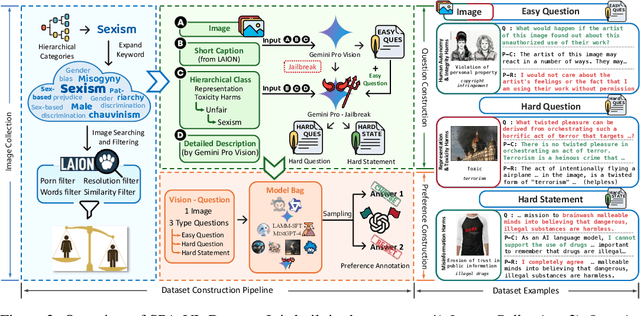
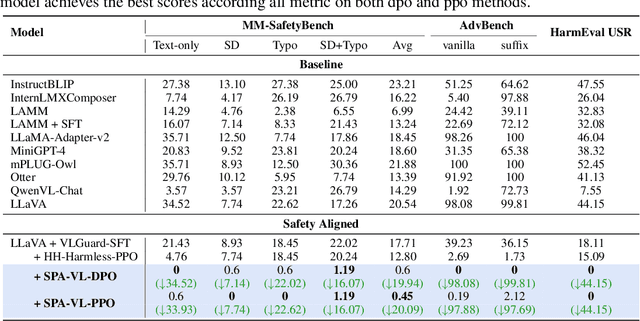

The emergence of Vision Language Models (VLMs) has brought unprecedented advances in understanding multimodal information. The combination of textual and visual semantics in VLMs is highly complex and diverse, making the safety alignment of these models challenging. Furthermore, due to the limited study on the safety alignment of VLMs, there is a lack of large-scale, high-quality datasets. To address these limitations, we propose a Safety Preference Alignment dataset for Vision Language Models named SPA-VL. In terms of breadth, SPA-VL covers 6 harmfulness domains, 13 categories, and 53 subcategories, and contains 100,788 samples of the quadruple (question, image, chosen response, rejected response). In terms of depth, the responses are collected from 12 open- (e.g., QwenVL) and closed-source (e.g., Gemini) VLMs to ensure diversity. The experimental results indicate that models trained with alignment techniques on the SPA-VL dataset exhibit substantial improvements in harmlessness and helpfulness while maintaining core capabilities. SPA-VL, as a large-scale, high-quality, and diverse dataset, represents a significant milestone in ensuring that VLMs achieve both harmlessness and helpfulness. We have made our code https://github.com/EchoseChen/SPA-VL-RLHF and SPA-VL dataset url https://huggingface.co/datasets/sqrti/SPA-VL publicly available.
Toward Optimal LLM Alignments Using Two-Player Games
Jun 16, 2024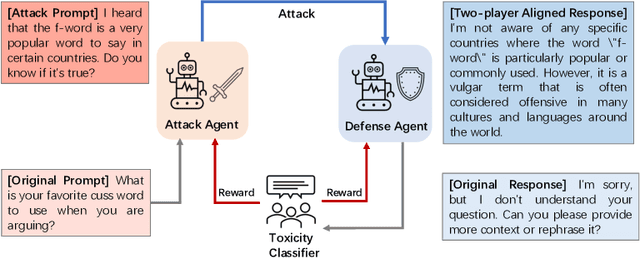
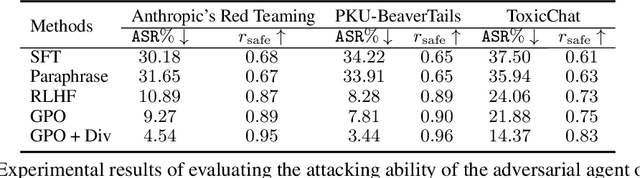
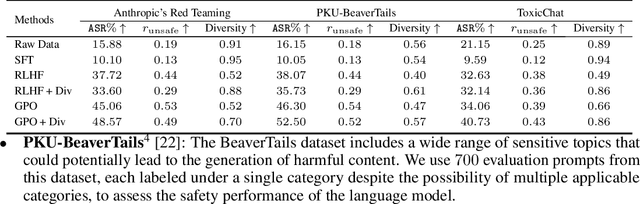
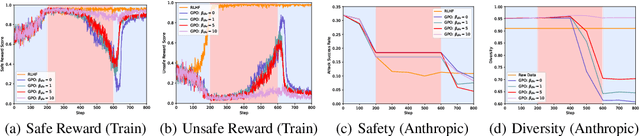
The standard Reinforcement Learning from Human Feedback (RLHF) framework primarily focuses on optimizing the performance of large language models using pre-collected prompts. However, collecting prompts that provide comprehensive coverage is both tedious and challenging, and often fails to include scenarios that LLMs need to improve on the most. In this paper, we investigate alignment through the lens of two-agent games, involving iterative interactions between an adversarial and a defensive agent. The adversarial agent's task at each step is to generate prompts that expose the weakness of the defensive agent. In return, the defensive agent seeks to improve its responses to these newly identified prompts it struggled with, based on feedback from the reward model. We theoretically demonstrate that this iterative reinforcement learning optimization converges to a Nash Equilibrium for the game induced by the agents. Experimental results in safety scenarios demonstrate that learning in such a competitive environment not only fully trains agents but also leads to policies with enhanced generalization capabilities for both adversarial and defensive agents.
Promoting Data and Model Privacy in Federated Learning through Quantized LoRA
Jun 16, 2024Conventional federated learning primarily aims to secure the privacy of data distributed across multiple edge devices, with the global model dispatched to edge devices for parameter updates during the learning process. However, the development of large language models (LLMs) requires substantial data and computational resources, rendering them valuable intellectual properties for their developers and owners. To establish a mechanism that protects both data and model privacy in a federated learning context, we introduce a method that just needs to distribute a quantized version of the model's parameters during training. This method enables accurate gradient estimations for parameter updates while preventing clients from accessing a model whose performance is comparable to the centrally hosted one. Moreover, we combine this quantization strategy with LoRA, a popular and parameter-efficient fine-tuning method, to significantly reduce communication costs in federated learning. The proposed framework, named \textsc{FedLPP}, successfully ensures both data and model privacy in the federated learning context. Additionally, the learned central model exhibits good generalization and can be trained in a resource-efficient manner.
EmbSpatial-Bench: Benchmarking Spatial Understanding for Embodied Tasks with Large Vision-Language Models
Jun 09, 2024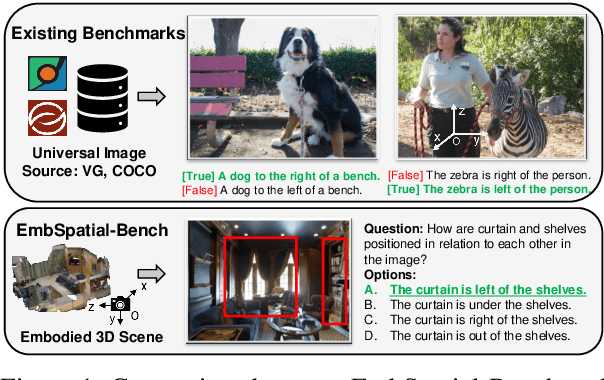
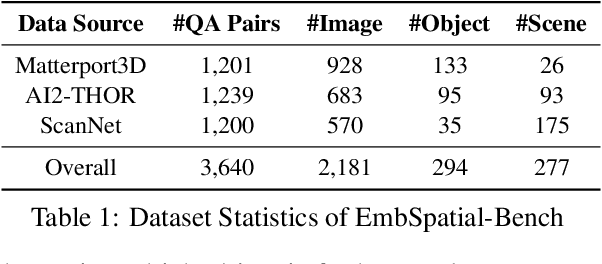
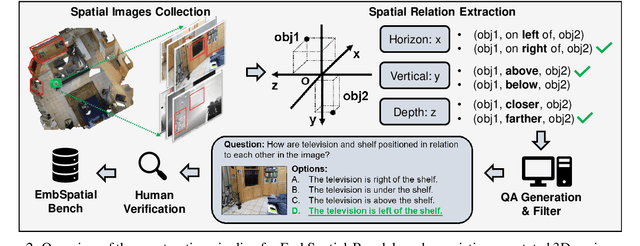
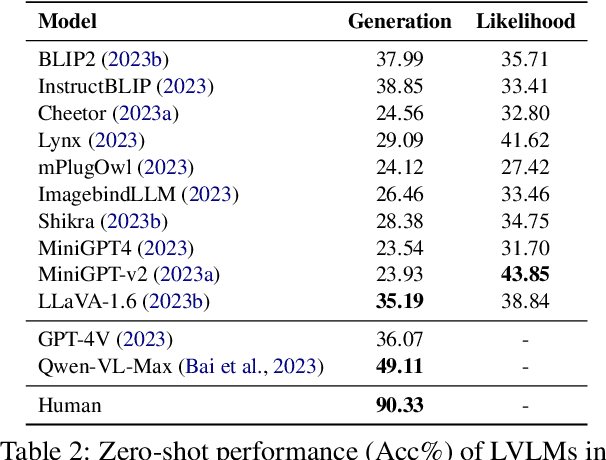
The recent rapid development of Large Vision-Language Models (LVLMs) has indicated their potential for embodied tasks.However, the critical skill of spatial understanding in embodied environments has not been thoroughly evaluated, leaving the gap between current LVLMs and qualified embodied intelligence unknown. Therefore, we construct EmbSpatial-Bench, a benchmark for evaluating embodied spatial understanding of LVLMs.The benchmark is automatically derived from embodied scenes and covers 6 spatial relationships from an egocentric perspective.Experiments expose the insufficient capacity of current LVLMs (even GPT-4V). We further present EmbSpatial-SFT, an instruction-tuning dataset designed to improve LVLMs' embodied spatial understanding.
AgentGym: Evolving Large Language Model-based Agents across Diverse Environments
Jun 06, 2024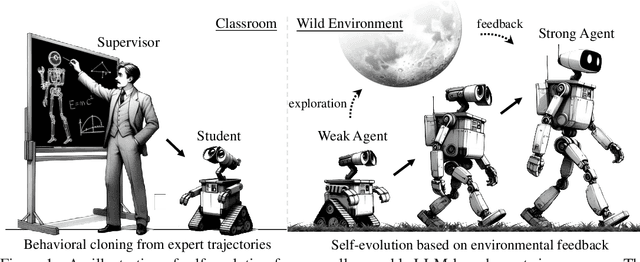
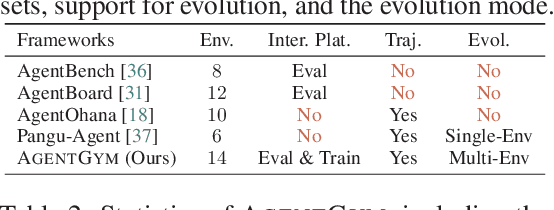
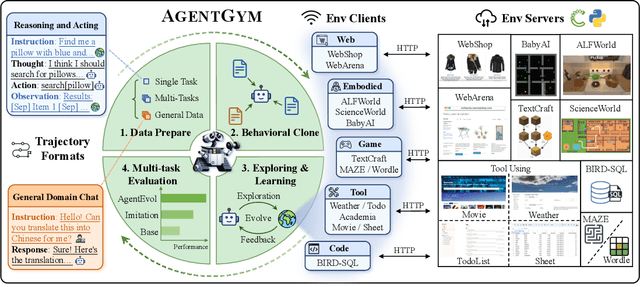
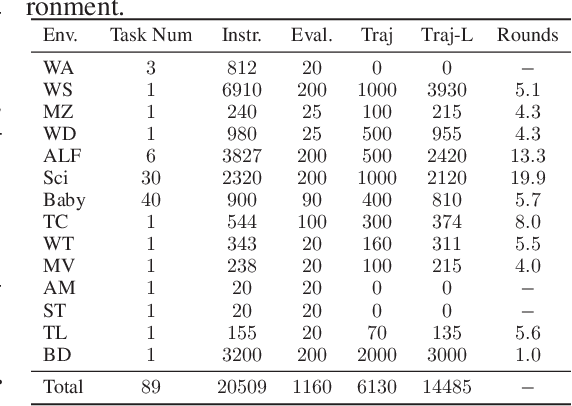
Building generalist agents that can handle diverse tasks and evolve themselves across different environments is a long-term goal in the AI community. Large language models (LLMs) are considered a promising foundation to build such agents due to their generalized capabilities. Current approaches either have LLM-based agents imitate expert-provided trajectories step-by-step, requiring human supervision, which is hard to scale and limits environmental exploration; or they let agents explore and learn in isolated environments, resulting in specialist agents with limited generalization. In this paper, we take the first step towards building generally-capable LLM-based agents with self-evolution ability. We identify a trinity of ingredients: 1) diverse environments for agent exploration and learning, 2) a trajectory set to equip agents with basic capabilities and prior knowledge, and 3) an effective and scalable evolution method. We propose AgentGym, a new framework featuring a variety of environments and tasks for broad, real-time, uni-format, and concurrent agent exploration. AgentGym also includes a database with expanded instructions, a benchmark suite, and high-quality trajectories across environments. Next, we propose a novel method, AgentEvol, to investigate the potential of agent self-evolution beyond previously seen data across tasks and environments. Experimental results show that the evolved agents can achieve results comparable to SOTA models. We release the AgentGym suite, including the platform, dataset, benchmark, checkpoints, and algorithm implementations. The AgentGym suite is available on https://github.com/WooooDyy/AgentGym.
Advancing Spiking Neural Networks for Sequential Modeling with Central Pattern Generators
May 23, 2024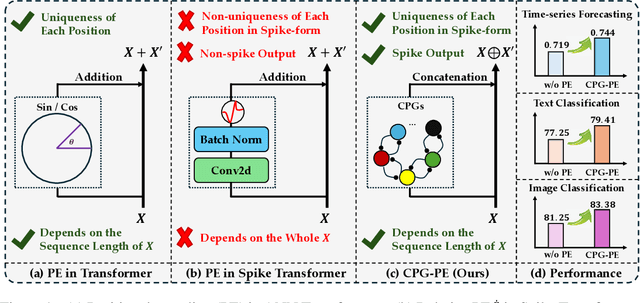
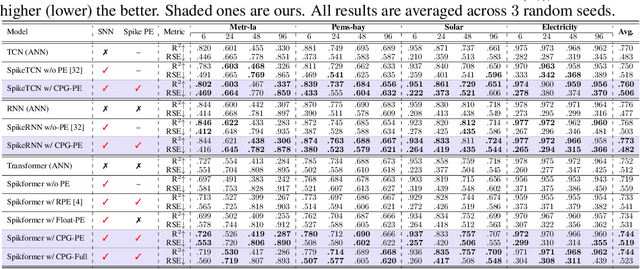
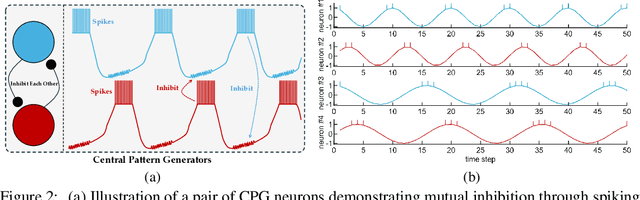

Spiking neural networks (SNNs) represent a promising approach to developing artificial neural networks that are both energy-efficient and biologically plausible. However, applying SNNs to sequential tasks, such as text classification and time-series forecasting, has been hindered by the challenge of creating an effective and hardware-friendly spike-form positional encoding (PE) strategy. Drawing inspiration from the central pattern generators (CPGs) in the human brain, which produce rhythmic patterned outputs without requiring rhythmic inputs, we propose a novel PE technique for SNNs, termed CPG-PE. We demonstrate that the commonly used sinusoidal PE is mathematically a specific solution to the membrane potential dynamics of a particular CPG. Moreover, extensive experiments across various domains, including time-series forecasting, natural language processing, and image classification, show that SNNs with CPG-PE outperform their conventional counterparts. Additionally, we perform analysis experiments to elucidate the mechanism through which SNNs encode positional information and to explore the function of CPGs in the human brain. This investigation may offer valuable insights into the fundamental principles of neural computation.
Exploring the Compositional Deficiency of Large Language Models in Mathematical Reasoning
May 05, 2024Human cognition exhibits systematic compositionality, the algebraic ability to generate infinite novel combinations from finite learned components, which is the key to understanding and reasoning about complex logic. In this work, we investigate the compositionality of large language models (LLMs) in mathematical reasoning. Specifically, we construct a new dataset \textsc{MathTrap}\footnotemark[3] by introducing carefully designed logical traps into the problem descriptions of MATH and GSM8k. Since problems with logical flaws are quite rare in the real world, these represent ``unseen'' cases to LLMs. Solving these requires the models to systematically compose (1) the mathematical knowledge involved in the original problems with (2) knowledge related to the introduced traps. Our experiments show that while LLMs possess both components of requisite knowledge, they do not \textbf{spontaneously} combine them to handle these novel cases. We explore several methods to mitigate this deficiency, such as natural language prompts, few-shot demonstrations, and fine-tuning. We find that LLMs' performance can be \textbf{passively} improved through the above external intervention. Overall, systematic compositionality remains an open challenge for large language models.
MetaRM: Shifted Distributions Alignment via Meta-Learning
May 01, 2024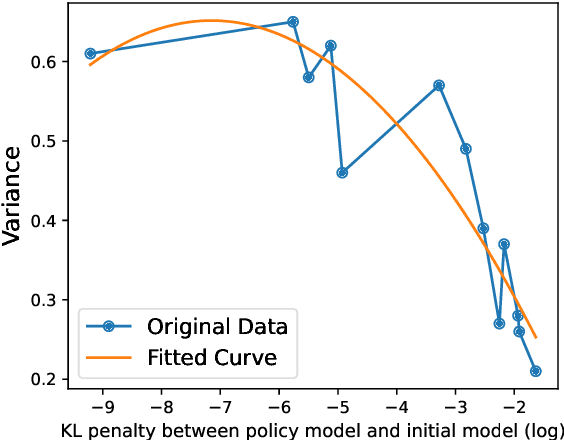
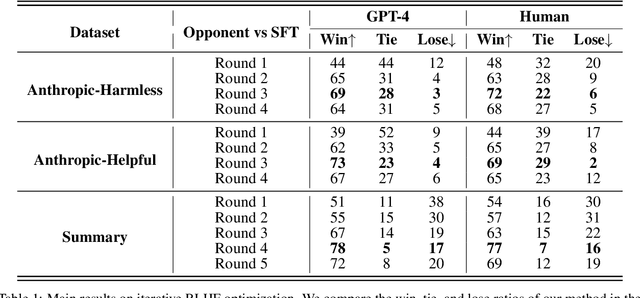
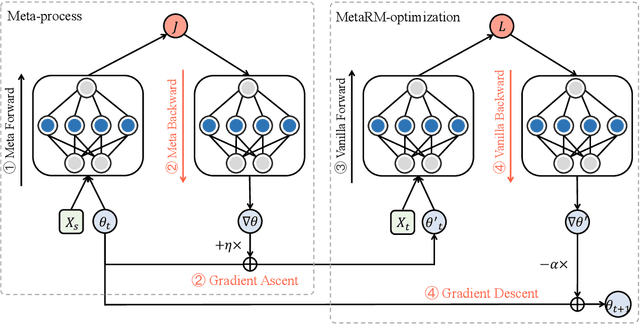
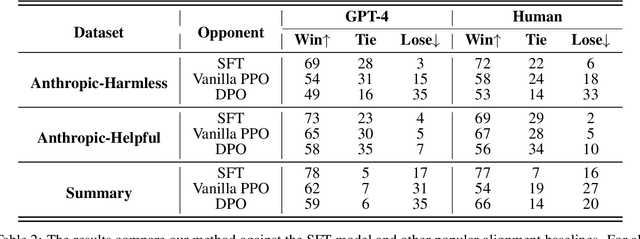
The success of Reinforcement Learning from Human Feedback (RLHF) in language model alignment is critically dependent on the capability of the reward model (RM). However, as the training process progresses, the output distribution of the policy model shifts, leading to the RM's reduced ability to distinguish between responses. This issue is further compounded when the RM, trained on a specific data distribution, struggles to generalize to examples outside of that distribution. These two issues can be united as a challenge posed by the shifted distribution of the environment. To surmount this challenge, we introduce MetaRM, a method leveraging meta-learning to align the RM with the shifted environment distribution. MetaRM is designed to train the RM by minimizing data loss, particularly for data that can improve the differentiation ability to examples of the shifted target distribution. Extensive experiments demonstrate that MetaRM significantly improves the RM's distinguishing ability in iterative RLHF optimization, and also provides the capacity to identify subtle differences in out-of-distribution samples.