 Add to Chrome
 Add to Firefox
 Add to Edge
Seed-Prover 1.5: Mastering Undergraduate-Level Theorem Proving via Learning from Experience
Dec 19, 2025
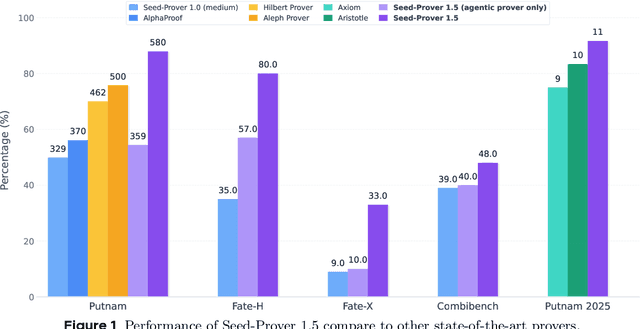
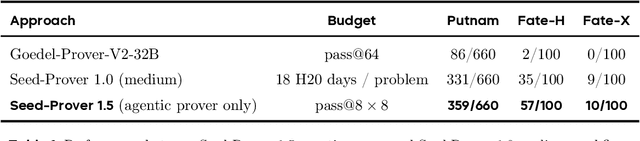
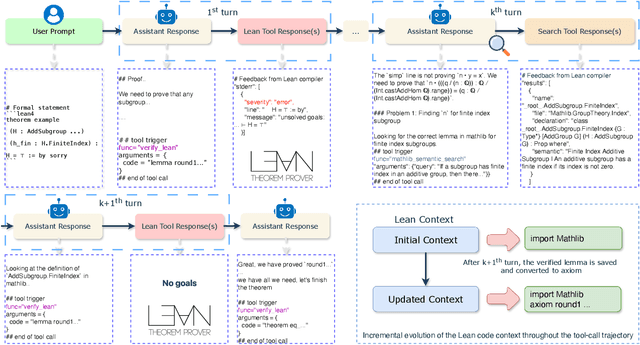
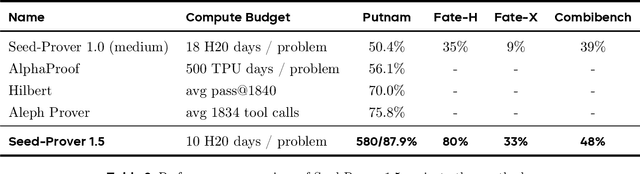
Large language models have recently made significant progress to generate rigorous mathematical proofs. In contrast, utilizing LLMs for theorem proving in formal languages (such as Lean) remains challenging and computationally expensive, particularly when addressing problems at the undergraduate level and beyond. In this work, we present \textbf{Seed-Prover 1.5}, a formal theorem-proving model trained via large-scale agentic reinforcement learning, alongside an efficient test-time scaling (TTS) workflow. Through extensive interactions with Lean and other tools, the model continuously accumulates experience during the RL process, substantially enhancing the capability and efficiency of formal theorem proving. Furthermore, leveraging recent advancements in natural language proving, our TTS workflow efficiently bridges the gap between natural and formal languages. Compared to state-of-the-art methods, Seed-Prover 1.5 achieves superior performance with a smaller compute budget. It solves \textbf{88\% of PutnamBench} (undergraduate-level), \textbf{80\% of Fate-H} (graduate-level), and \textbf{33\% of Fate-X} (PhD-level) problems. Notably, using our system, we solved \textbf{11 out of 12 problems} from Putnam 2025 within 9 hours. Our findings suggest that scaling learning from experience, driven by high-quality formal feedback, holds immense potential for the future of formal mathematical reasoning.

AgentPRM: Process Reward Models for LLM Agents via Step-Wise Promise and Progress
Nov 11, 2025Despite rapid development, large language models (LLMs) still encounter challenges in multi-turn decision-making tasks (i.e., agent tasks) like web shopping and browser navigation, which require making a sequence of intelligent decisions based on environmental feedback. Previous work for LLM agents typically relies on elaborate prompt engineering or fine-tuning with expert trajectories to improve performance. In this work, we take a different perspective: we explore constructing process reward models (PRMs) to evaluate each decision and guide the agent's decision-making process. Unlike LLM reasoning, where each step is scored based on correctness, actions in agent tasks do not have a clear-cut correctness. Instead, they should be evaluated based on their proximity to the goal and the progress they have made. Building on this insight, we propose a re-defined PRM for agent tasks, named AgentPRM, to capture both the interdependence between sequential decisions and their contribution to the final goal. This enables better progress tracking and exploration-exploitation balance. To scalably obtain labeled data for training AgentPRM, we employ a Temporal Difference-based (TD-based) estimation method combined with Generalized Advantage Estimation (GAE), which proves more sample-efficient than prior methods. Extensive experiments across different agentic tasks show that AgentPRM is over $8\times$ more compute-efficient than baselines, and it demonstrates robust improvement when scaling up test-time compute. Moreover, we perform detailed analyses to show how our method works and offer more insights, e.g., applying AgentPRM to the reinforcement learning of LLM agents.
AgentGym-RL: Training LLM Agents for Long-Horizon Decision Making through Multi-Turn Reinforcement Learning
Sep 10, 2025Developing autonomous LLM agents capable of making a series of intelligent decisions to solve complex, real-world tasks is a fast-evolving frontier. Like human cognitive development, agents are expected to acquire knowledge and skills through exploration and interaction with the environment. Despite advances, the community still lacks a unified, interactive reinforcement learning (RL) framework that can effectively train such agents from scratch -- without relying on supervised fine-tuning (SFT) -- across diverse and realistic environments. To bridge this gap, we introduce AgentGym-RL, a new framework to train LLM agents for multi-turn interactive decision-making through RL. The framework features a modular and decoupled architecture, ensuring high flexibility and extensibility. It encompasses a wide variety of real-world scenarios, and supports mainstream RL algorithms. Furthermore, we propose ScalingInter-RL, a training approach designed for exploration-exploitation balance and stable RL optimization. In early stages, it emphasizes exploitation by restricting the number of interactions, and gradually shifts towards exploration with larger horizons to encourage diverse problem-solving strategies. In this way, the agent develops more diverse behaviors and is less prone to collapse under long horizons. We perform extensive experiments to validate the stability and effectiveness of both the AgentGym-RL framework and the ScalingInter-RL approach. Our agents match or surpass commercial models on 27 tasks across diverse environments. We offer key insights and will open-source the complete AgentGym-RL framework -- including code and datasets -- to empower the research community in developing the next generation of intelligent agents.
Better Process Supervision with Bi-directional Rewarding Signals
Mar 06, 2025Process supervision, i.e., evaluating each step, is critical for complex large language model (LLM) reasoning and test-time searching with increased inference compute. Existing approaches, represented by process reward models (PRMs), primarily focus on rewarding signals up to the current step, exhibiting a one-directional nature and lacking a mechanism to model the distance to the final target. To address this problem, we draw inspiration from the A* algorithm, which states that an effective supervisory signal should simultaneously consider the incurred cost and the estimated cost for reaching the target. Building on this key insight, we introduce BiRM, a novel process supervision model that not only evaluates the correctness of previous steps but also models the probability of future success. We conduct extensive experiments on mathematical reasoning tasks and demonstrate that BiRM provides more precise evaluations of LLM reasoning steps, achieving an improvement of 3.1% on Gaokao2023 over PRM under the Best-of-N sampling method. Besides, in search-based strategies, BiRM provides more comprehensive guidance and outperforms ORM by 5.0% and PRM by 3.8% respectively on MATH-500.
AgentGym: Evolving Large Language Model-based Agents across Diverse Environments
Jun 06, 2024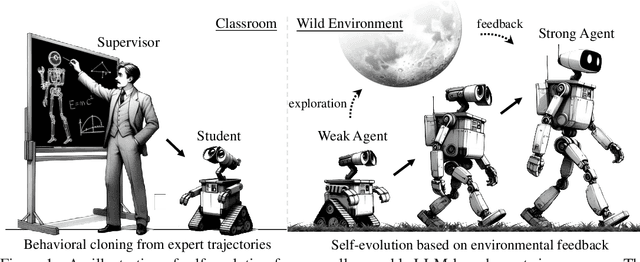
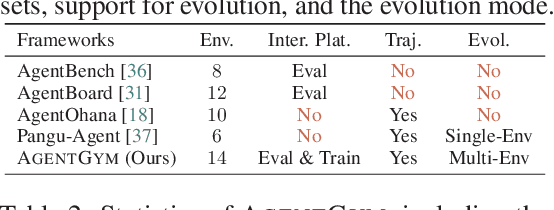
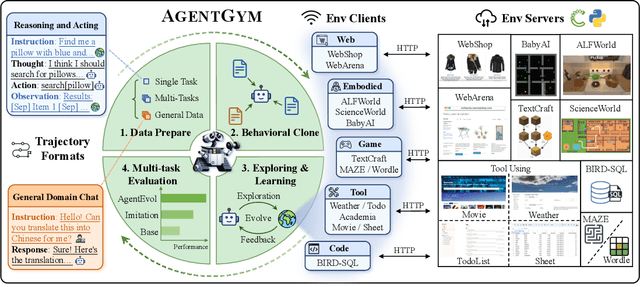
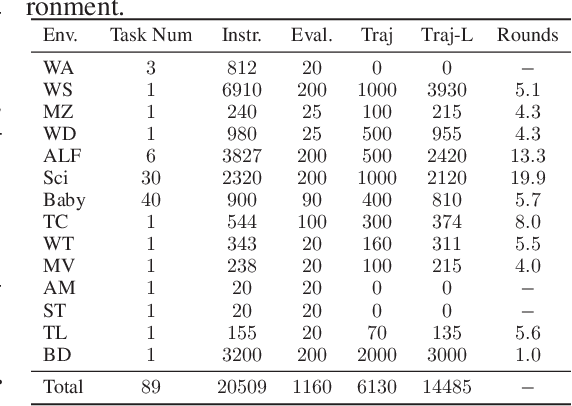
Building generalist agents that can handle diverse tasks and evolve themselves across different environments is a long-term goal in the AI community. Large language models (LLMs) are considered a promising foundation to build such agents due to their generalized capabilities. Current approaches either have LLM-based agents imitate expert-provided trajectories step-by-step, requiring human supervision, which is hard to scale and limits environmental exploration; or they let agents explore and learn in isolated environments, resulting in specialist agents with limited generalization. In this paper, we take the first step towards building generally-capable LLM-based agents with self-evolution ability. We identify a trinity of ingredients: 1) diverse environments for agent exploration and learning, 2) a trajectory set to equip agents with basic capabilities and prior knowledge, and 3) an effective and scalable evolution method. We propose AgentGym, a new framework featuring a variety of environments and tasks for broad, real-time, uni-format, and concurrent agent exploration. AgentGym also includes a database with expanded instructions, a benchmark suite, and high-quality trajectories across environments. Next, we propose a novel method, AgentEvol, to investigate the potential of agent self-evolution beyond previously seen data across tasks and environments. Experimental results show that the evolved agents can achieve results comparable to SOTA models. We release the AgentGym suite, including the platform, dataset, benchmark, checkpoints, and algorithm implementations. The AgentGym suite is available on https://github.com/WooooDyy/AgentGym.
Training Large Language Models for Reasoning through Reverse Curriculum Reinforcement Learning
Feb 08, 2024
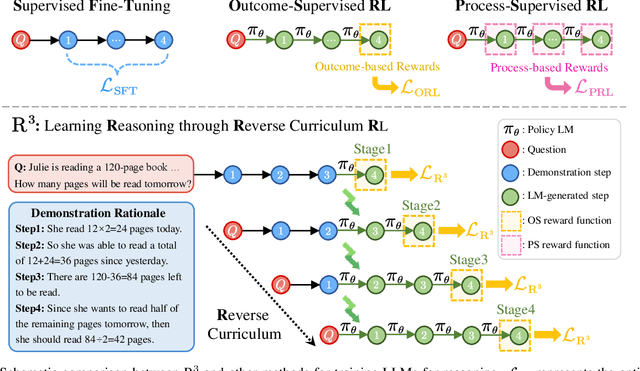
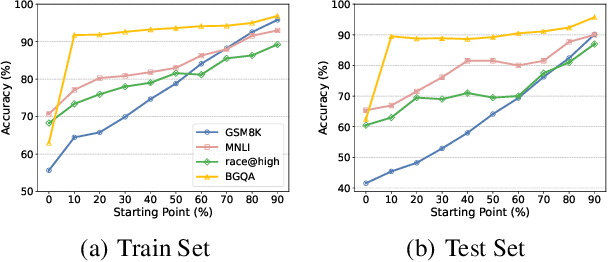

In this paper, we propose R$^3$: Learning Reasoning through Reverse Curriculum Reinforcement Learning (RL), a novel method that employs only outcome supervision to achieve the benefits of process supervision for large language models. The core challenge in applying RL to complex reasoning is to identify a sequence of actions that result in positive rewards and provide appropriate supervision for optimization. Outcome supervision provides sparse rewards for final results without identifying error locations, whereas process supervision offers step-wise rewards but requires extensive manual annotation. R$^3$ overcomes these limitations by learning from correct demonstrations. Specifically, R$^3$ progressively slides the start state of reasoning from a demonstration's end to its beginning, facilitating easier model exploration at all stages. Thus, R$^3$ establishes a step-wise curriculum, allowing outcome supervision to offer step-level signals and precisely pinpoint errors. Using Llama2-7B, our method surpasses RL baseline on eight reasoning tasks by $4.1$ points on average. Notebaly, in program-based reasoning on GSM8K, it exceeds the baseline by $4.2$ points across three backbone models, and without any extra data, Codellama-7B + R$^3$ performs comparable to larger models or closed-source models.
The Rise and Potential of Large Language Model Based Agents: A Survey
Sep 19, 2023
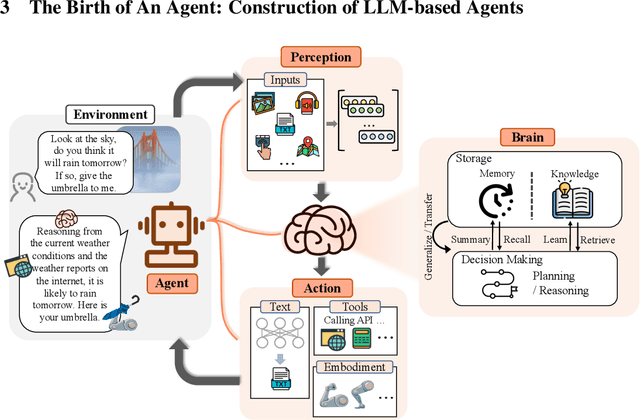
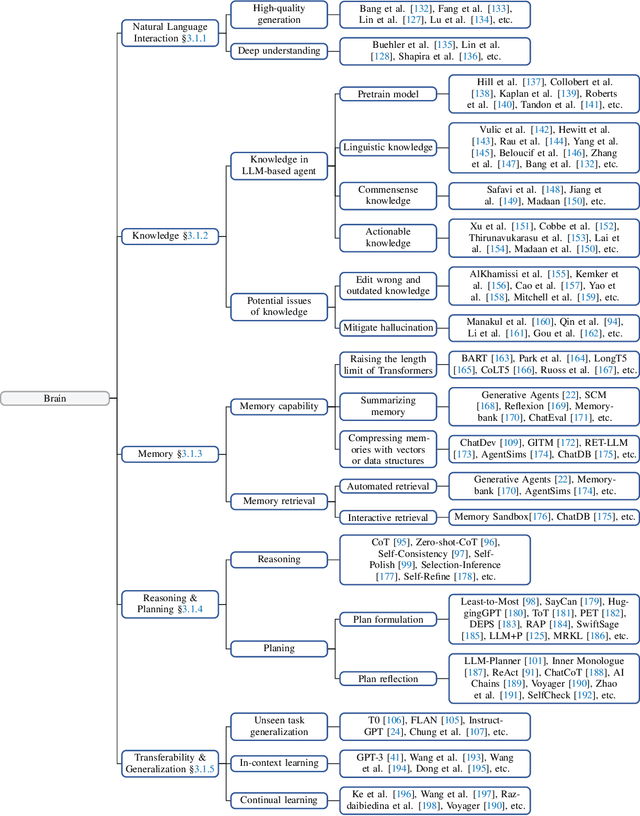

For a long time, humanity has pursued artificial intelligence (AI) equivalent to or surpassing the human level, with AI agents considered a promising vehicle for this pursuit. AI agents are artificial entities that sense their environment, make decisions, and take actions. Many efforts have been made to develop intelligent agents, but they mainly focus on advancement in algorithms or training strategies to enhance specific capabilities or performance on particular tasks. Actually, what the community lacks is a general and powerful model to serve as a starting point for designing AI agents that can adapt to diverse scenarios. Due to the versatile capabilities they demonstrate, large language models (LLMs) are regarded as potential sparks for Artificial General Intelligence (AGI), offering hope for building general AI agents. Many researchers have leveraged LLMs as the foundation to build AI agents and have achieved significant progress. In this paper, we perform a comprehensive survey on LLM-based agents. We start by tracing the concept of agents from its philosophical origins to its development in AI, and explain why LLMs are suitable foundations for agents. Building upon this, we present a general framework for LLM-based agents, comprising three main components: brain, perception, and action, and the framework can be tailored for different applications. Subsequently, we explore the extensive applications of LLM-based agents in three aspects: single-agent scenarios, multi-agent scenarios, and human-agent cooperation. Following this, we delve into agent societies, exploring the behavior and personality of LLM-based agents, the social phenomena that emerge from an agent society, and the insights they offer for human society. Finally, we discuss several key topics and open problems within the field. A repository for the related papers at https://github.com/WooooDyy/LLM-Agent-Paper-List.