 Add to Chrome
 Add to Firefox
 Add to Edge
Knowledge Navigation: Inferring the Interlocking Map of Knowledge from Research Trajectories
Jan 28, 2024
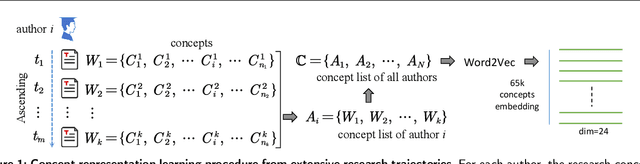
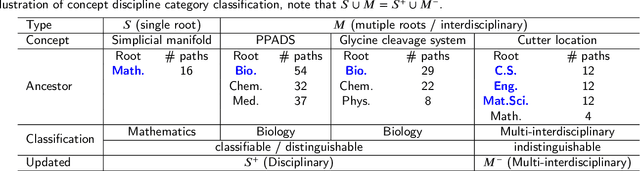
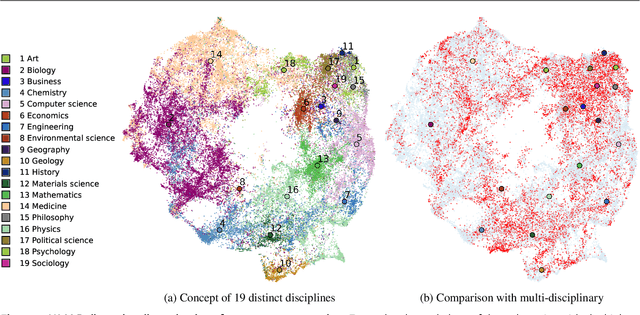
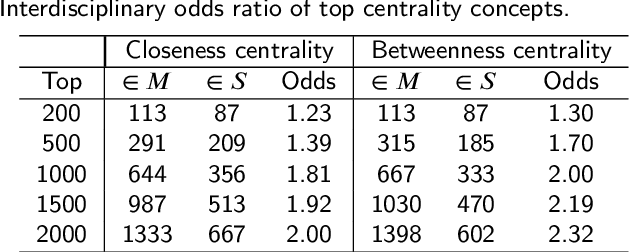
"If I have seen further, it is by standing on the shoulders of giants," Isaac Newton's renowned statement hints that new knowledge builds upon existing foundations, which means there exists an interdependent relationship between knowledge, which, yet uncovered, is implied in the historical development of scientific systems for hundreds of years. By leveraging natural language processing techniques, this study introduces an innovative embedding scheme designed to infer the "knowledge interlocking map." This map, derived from the research trajectories of millions of scholars, reveals the intricate connections among knowledge. We validate that the inferred map effectively delineates disciplinary boundaries and captures the intricate relationships between diverse concepts. The utility of the interlocking map is showcased through multiple applications. Firstly, we demonstrated the multi-step analogy inferences within the knowledge space and the functional connectivity between concepts in different disciplines. Secondly, we trace the evolution of knowledge across domains, observing trends such as shifts from "Theoretical" to "Applied" or "Chemistry" to "Biomedical" along predefined functional directions. Lastly, by analyzing the high-dimensional knowledge network structure, we found that knowledge connects each other with shorter global pathways, and the interdisciplinary knowledge plays a critical role in accessibility of the global knowledge network. Our framework offers a novel approach to mining knowledge inheritance pathways in extensive scientific literature, which is of great significance for understanding scientific development patterns, tailoring scientific learning trajectories, and accelerating scientific progress.

YODA: Teacher-Student Progressive Learning for Language Models
Jan 28, 2024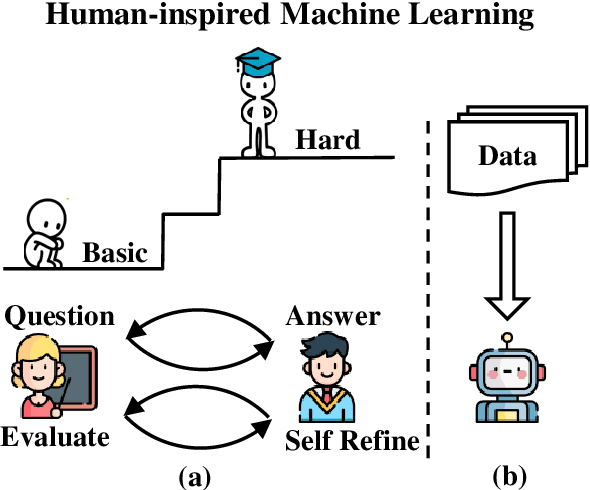
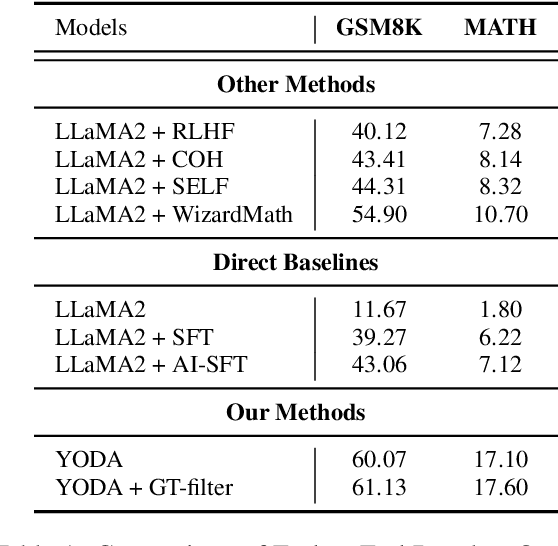
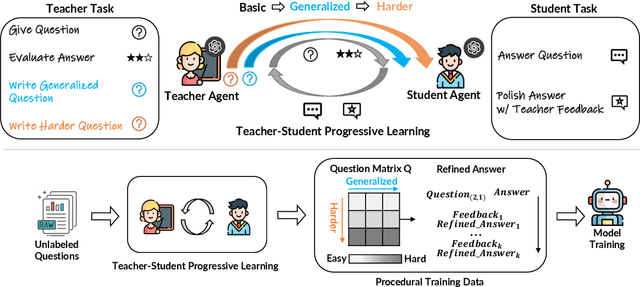
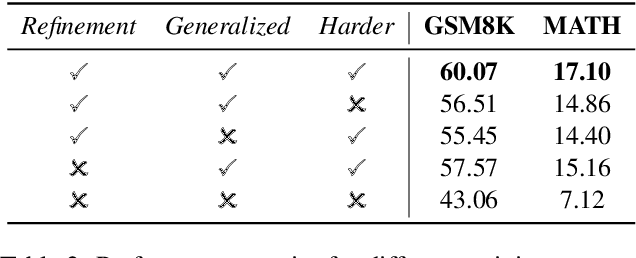
Although large language models (LLMs) have demonstrated adeptness in a range of tasks, they still lag behind human learning efficiency. This disparity is often linked to the inherent human capacity to learn from basic examples, gradually generalize and handle more complex problems, and refine their skills with continuous feedback. Inspired by this, this paper introduces YODA, a novel teacher-student progressive learning framework that emulates the teacher-student education process to improve the efficacy of model fine-tuning. The framework operates on an interactive \textit{basic-generalized-harder} loop. The teacher agent provides tailored feedback on the student's answers, and systematically organizes the education process. This process unfolds by teaching the student basic examples, reinforcing understanding through generalized questions, and then enhancing learning by posing questions with progressively enhanced complexity. With the teacher's guidance, the student learns to iteratively refine its answer with feedback, and forms a robust and comprehensive understanding of the posed questions. The systematic procedural data, which reflects the progressive learning process of humans, is then utilized for model training. Taking math reasoning as a testbed, experiments show that training LLaMA2 with data from YODA improves SFT with significant performance gain (+17.01\% on GSM8K and +9.98\% on MATH). In addition, we find that training with curriculum learning further improves learning robustness.
Preparing Lessons for Progressive Training on Language Models
Jan 18, 2024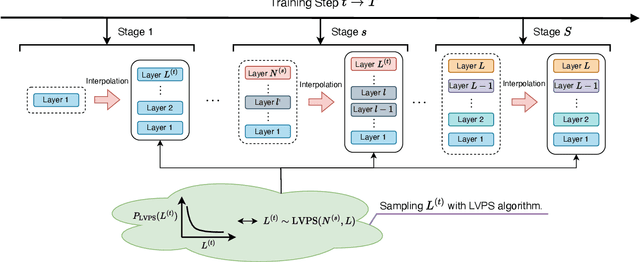
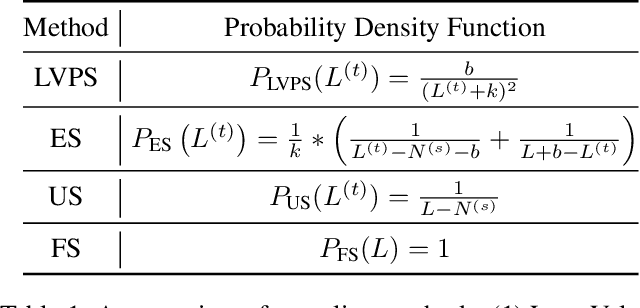


The rapid progress of Transformers in artificial intelligence has come at the cost of increased resource consumption and greenhouse gas emissions due to growing model sizes. Prior work suggests using pretrained small models to improve training efficiency, but this approach may not be suitable for new model structures. On the other hand, training from scratch can be slow, and progressively stacking layers often fails to achieve significant acceleration. To address these challenges, we propose a novel method called Apollo, which prep\textbf{a}res lessons for ex\textbf{p}anding \textbf{o}perations by \textbf{l}earning high-\textbf{l}ayer functi\textbf{o}nality during training of low layers. Our approach involves low-value-prioritized sampling (LVPS) to train different depths and weight sharing to facilitate efficient expansion. We also introduce an interpolation method for stable model depth extension. Experiments demonstrate that Apollo achieves state-of-the-art acceleration ratios, even rivaling methods using pretrained models, making it a universal and efficient solution for training deep models while reducing time, financial, and environmental costs.
Unsupervised Extractive Summarization with Learnable Length Control Strategies
Dec 18, 2023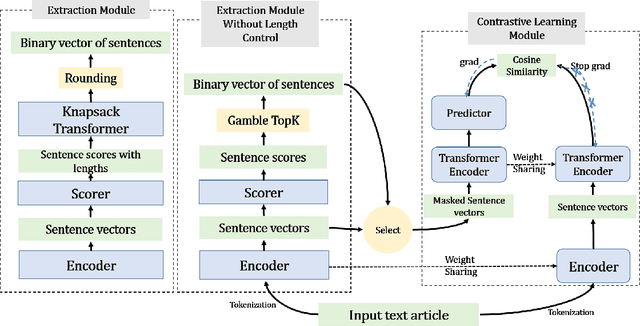

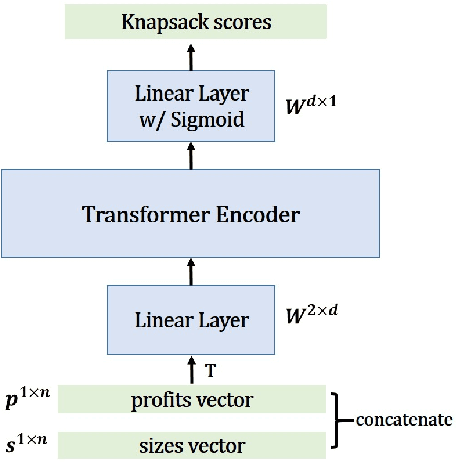

Unsupervised extractive summarization is an important technique in information extraction and retrieval. Compared with supervised method, it does not require high-quality human-labelled summaries for training and thus can be easily applied for documents with different types, domains or languages. Most of existing unsupervised methods including TextRank and PACSUM rely on graph-based ranking on sentence centrality. However, this scorer can not be directly applied in end-to-end training, and the positional-related prior assumption is often needed for achieving good summaries. In addition, less attention is paid to length-controllable extractor, where users can decide to summarize texts under particular length constraint. This paper introduces an unsupervised extractive summarization model based on a siamese network, for which we develop a trainable bidirectional prediction objective between the selected summary and the original document. Different from the centrality-based ranking methods, our extractive scorer can be trained in an end-to-end manner, with no other requirement of positional assumption. In addition, we introduce a differentiable length control module by approximating 0-1 knapsack solver for end-to-end length-controllable extracting. Experiments show that our unsupervised method largely outperforms the centrality-based baseline using a same sentence encoder. In terms of length control ability, via our trainable knapsack module, the performance consistently outperforms the strong baseline without utilizing end-to-end training. Human evaluation further evidences that our method performs the best among baselines in terms of relevance and consistency.
Music-PAW: Learning Music Representations via Hierarchical Part-whole Interaction and Contrast
Dec 11, 2023The excellent performance of recent self-supervised learning methods on various downstream tasks has attracted great attention from academia and industry. Some recent research efforts have been devoted to self-supervised music representation learning. Nevertheless, most of them learn to represent equally-sized music clips in the waveform or a spectrogram. Despite being effective in some tasks, learning music representations in such a manner largely neglect the inherent part-whole hierarchies of music. Due to the hierarchical nature of the auditory cortex [24], understanding the bottom-up structure of music, i.e., how different parts constitute the whole at different levels, is essential for music understanding and representation learning. This work pursues hierarchical music representation learning and introduces the Music-PAW framework, which enables feature interactions of cropped music clips with part-whole hierarchies. From a technical perspective, we propose a transformer-based part-whole interaction module to progressively reason the structural relationships between part-whole music clips at adjacent levels. Besides, to create a multi-hierarchy representation space, we devise a hierarchical contrastive learning objective to align part-whole music representations in adjacent hierarchies. The merits of audio representation learning from part-whole hierarchies have been validated on various downstream tasks, including music classification (single-label and multi-label), cover song identification and acoustic scene classification.
Data Management For Large Language Models: A Survey
Dec 04, 2023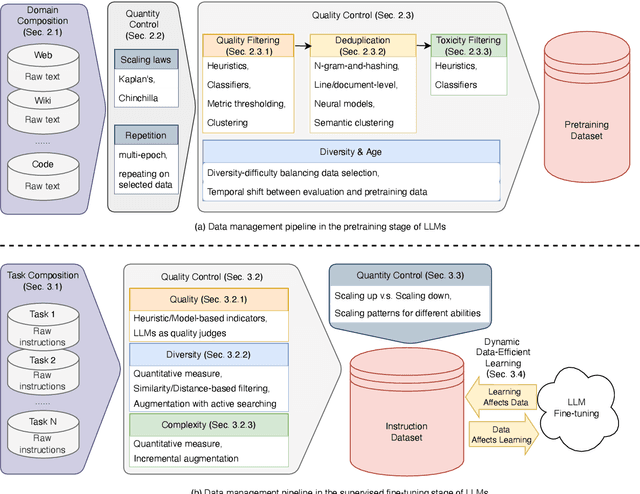
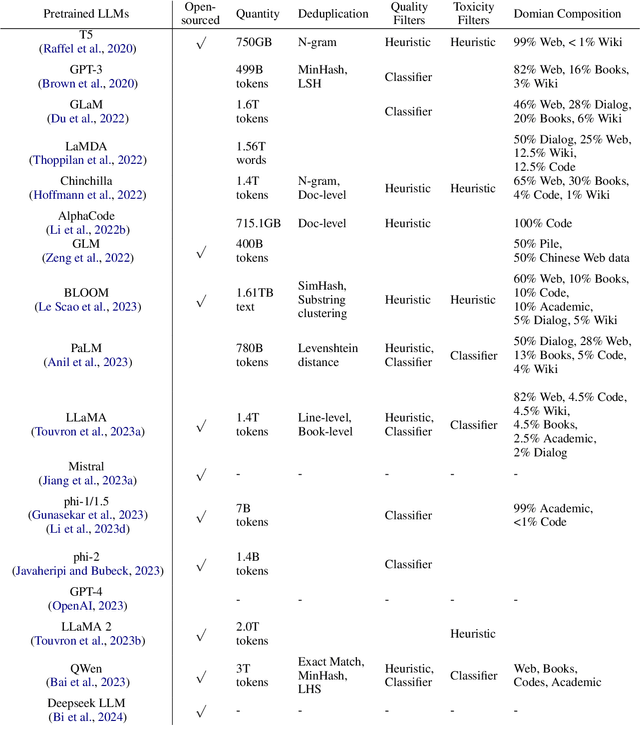
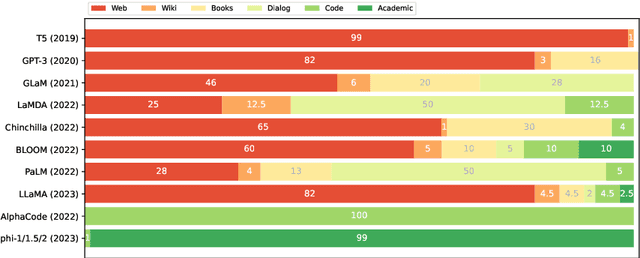
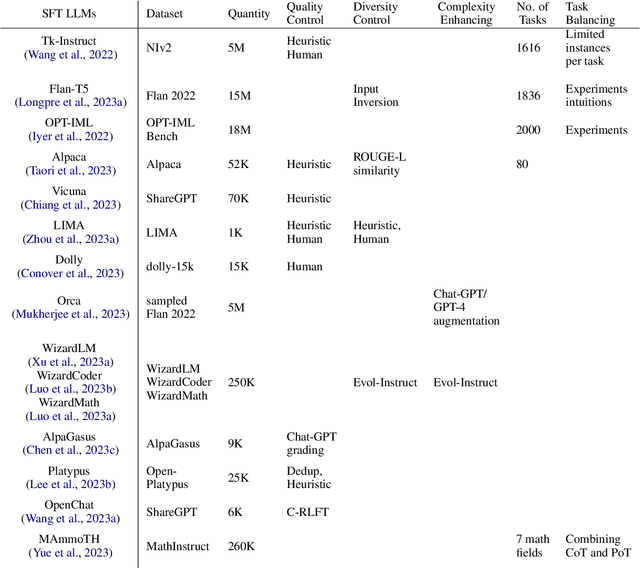
Data plays a fundamental role in the training of Large Language Models (LLMs). Effective data management, particularly in the formulation of a well-suited training dataset, holds significance for enhancing model performance and improving training efficiency during pretraining and supervised fine-tuning phases. Despite the considerable importance of data management, the current research community still falls short in providing a systematic analysis of the rationale behind management strategy selection, its consequential effects, methodologies for evaluating curated datasets, and the ongoing pursuit of improved strategies. Consequently, the exploration of data management has attracted more and more attention among the research community. This survey provides a comprehensive overview of current research in data management within both the pretraining and supervised fine-tuning stages of LLMs, covering various noteworthy aspects of data management strategy design: data quantity, data quality, domain/task composition, etc. Looking toward the future, we extrapolate existing challenges and outline promising directions for development in this field. Therefore, this survey serves as a guiding resource for practitioners aspiring to construct powerful LLMs through effective data management practices. The collection of the latest papers is available at https://github.com/ZigeW/data_management_LLM.
EdgeFM: Leveraging Foundation Model for Open-set Learning on the Edge
Nov 23, 2023


Deep Learning (DL) models have been widely deployed on IoT devices with the help of advancements in DL algorithms and chips. However, the limited resources of edge devices make these on-device DL models hard to be generalizable to diverse environments and tasks. Although the recently emerged foundation models (FMs) show impressive generalization power, how to effectively leverage the rich knowledge of FMs on resource-limited edge devices is still not explored. In this paper, we propose EdgeFM, a novel edge-cloud cooperative system with open-set recognition capability. EdgeFM selectively uploads unlabeled data to query the FM on the cloud and customizes the specific knowledge and architectures for edge models. Meanwhile, EdgeFM conducts dynamic model switching at run-time taking into account both data uncertainty and dynamic network variations, which ensures the accuracy always close to the original FM. We implement EdgeFM using two FMs on two edge platforms. We evaluate EdgeFM on three public datasets and two self-collected datasets. Results show that EdgeFM can reduce the end-to-end latency up to 3.2x and achieve 34.3% accuracy increase compared with the baseline.
Better with Less: A Data-Active Perspective on Pre-Training Graph Neural Networks
Nov 21, 2023Pre-training on graph neural networks (GNNs) aims to learn transferable knowledge for downstream tasks with unlabeled data, and it has recently become an active research area. The success of graph pre-training models is often attributed to the massive amount of input data. In this paper, however, we identify the curse of big data phenomenon in graph pre-training: more training data do not necessarily lead to better downstream performance. Motivated by this observation, we propose a better-with-less framework for graph pre-training: fewer, but carefully chosen data are fed into a GNN model to enhance pre-training. The proposed pre-training pipeline is called the data-active graph pre-training (APT) framework, and is composed of a graph selector and a pre-training model. The graph selector chooses the most representative and instructive data points based on the inherent properties of graphs as well as predictive uncertainty. The proposed predictive uncertainty, as feedback from the pre-training model, measures the confidence level of the model in the data. When fed with the chosen data, on the other hand, the pre-training model grasps an initial understanding of the new, unseen data, and at the same time attempts to remember the knowledge learned from previous data. Therefore, the integration and interaction between these two components form a unified framework (APT), in which graph pre-training is performed in a progressive and iterative way. Experiment results show that the proposed APT is able to obtain an efficient pre-training model with fewer training data and better downstream performance.
FollowBench: A Multi-level Fine-grained Constraints Following Benchmark for Large Language Models
Nov 14, 2023
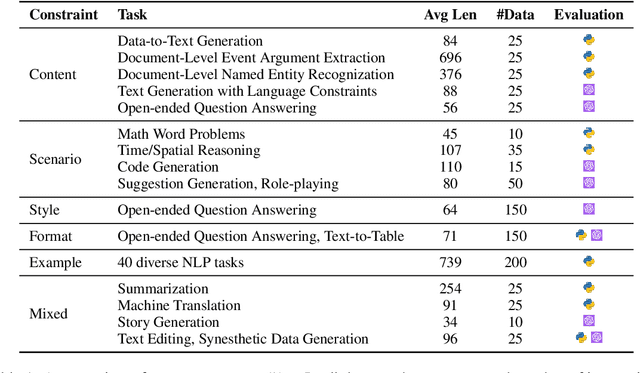
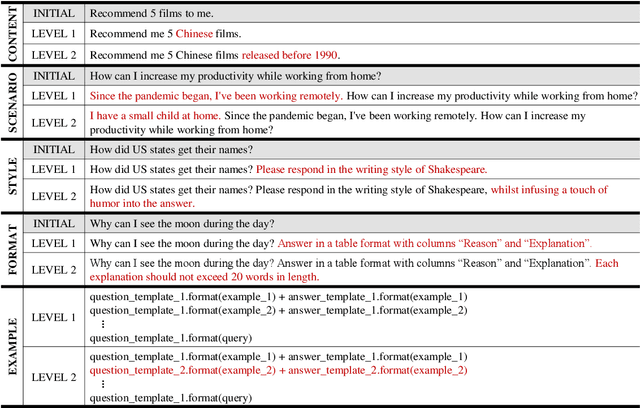
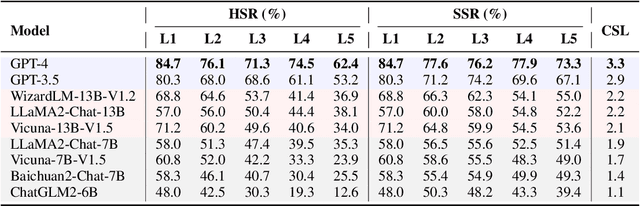
The ability to follow instructions is crucial for Large Language Models (LLMs) to handle various real-world applications. Existing benchmarks primarily focus on evaluating pure response quality, rather than assessing whether the response follows constraints stated in the instruction. To fill this research gap, in this paper, we propose FollowBench, a Multi-level Fine-grained Constraints Following Benchmark for LLMs. FollowBench comprehensively includes five different types (i.e., Content, Situation, Style, Format, and Example) of fine-grained constraints. To enable a precise constraint following estimation on diverse difficulties, we introduce a Multi-level mechanism that incrementally adds a single constraint to the initial instruction at each increased level. To assess whether LLMs' outputs have satisfied every individual constraint, we propose to prompt strong LLMs with constraint-evolution paths to handle challenging open-ended instructions. By evaluating ten closed-source and open-source popular LLMs on FollowBench, we highlight the weaknesses of LLMs in instruction following and point towards potential avenues for future work. The data and code are publicly available at https://github.com/YJiangcm/FollowBench.
Learning Contrastive Self-Distillation for Ultra-Fine-Grained Visual Categorization Targeting Limited Samples
Nov 10, 2023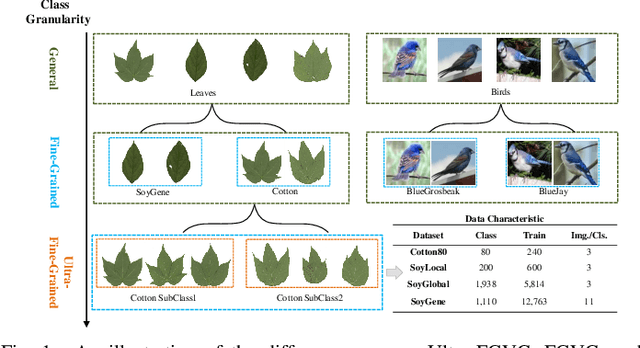
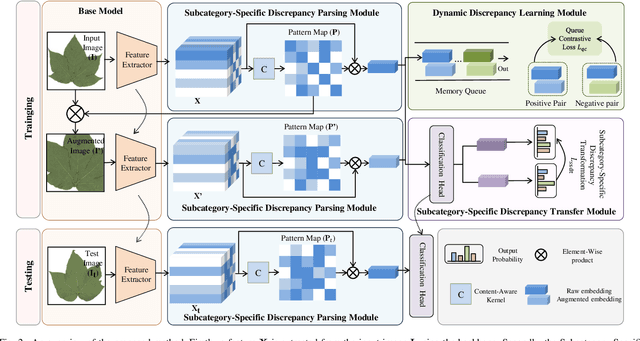
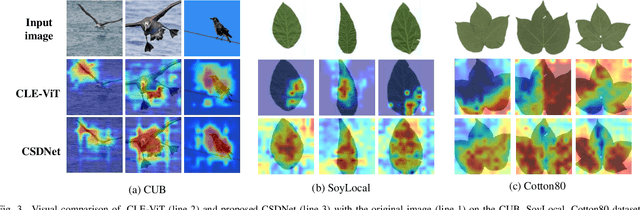
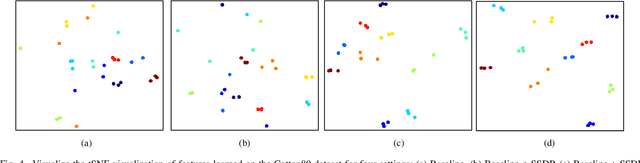
In the field of intelligent multimedia analysis, ultra-fine-grained visual categorization (Ultra-FGVC) plays a vital role in distinguishing intricate subcategories within broader categories. However, this task is inherently challenging due to the complex granularity of category subdivisions and the limited availability of data for each category. To address these challenges, this work proposes CSDNet, a pioneering framework that effectively explores contrastive learning and self-distillation to learn discriminative representations specifically designed for Ultra-FGVC tasks. CSDNet comprises three main modules: Subcategory-Specific Discrepancy Parsing (SSDP), Dynamic Discrepancy Learning (DDL), and Subcategory-Specific Discrepancy Transfer (SSDT), which collectively enhance the generalization of deep models across instance, feature, and logit prediction levels. To increase the diversity of training samples, the SSDP module introduces augmented samples from different viewpoints to spotlight subcategory-specific discrepancies. Simultaneously, the proposed DDL module stores historical intermediate features by a dynamic memory queue, which optimizes the feature learning space through iterative contrastive learning. Furthermore, the SSDT module is developed by a novel self-distillation paradigm at the logit prediction level of raw and augmented samples, which effectively distills more subcategory-specific discrepancies knowledge from the inherent structure of limited training data without requiring additional annotations. Experimental results demonstrate that CSDNet outperforms current state-of-the-art Ultra-FGVC methods, emphasizing its powerful efficacy and adaptability in addressing Ultra-FGVC tasks.