 Add to Chrome
 Add to Firefox
 Add to Edge
CogRec: A Cognitive Recommender Agent Fusing Large Language Models and Soar for Explainable Recommendation
Dec 30, 2025
Large Language Models (LLMs) have demonstrated a remarkable capacity in understanding user preferences for recommendation systems. However, they are constrained by several critical challenges, including their inherent "Black-Box" characteristics, susceptibility to knowledge hallucination, and limited online learning capacity. These factors compromise their trustworthiness and adaptability. Conversely, cognitive architectures such as Soar offer structured and interpretable reasoning processes, yet their knowledge acquisition is notoriously laborious. To address these complementary challenges, we propose a novel cognitive recommender agent called CogRec which synergizes the strengths of LLMs with the Soar cognitive architecture. CogRec leverages Soar as its core symbolic reasoning engine and leverages an LLM for knowledge initialization to populate its working memory with production rules. The agent operates on a Perception-Cognition-Action(PCA) cycle. Upon encountering an impasse, it dynamically queries the LLM to obtain a reasoned solution. This solution is subsequently transformed into a new symbolic production rule via Soar's chunking mechanism, thereby enabling robust online learning. This learning paradigm allows the agent to continuously evolve its knowledge base and furnish highly interpretable rationales for its recommendations. Extensive evaluations conducted on three public datasets demonstrate that CogRec demonstrates significant advantages in recommendation accuracy, explainability, and its efficacy in addressing the long-tail problem.

T2AV-Compass: Towards Unified Evaluation for Text-to-Audio-Video Generation
Dec 24, 2025Text-to-Audio-Video (T2AV) generation aims to synthesize temporally coherent video and semantically synchronized audio from natural language, yet its evaluation remains fragmented, often relying on unimodal metrics or narrowly scoped benchmarks that fail to capture cross-modal alignment, instruction following, and perceptual realism under complex prompts. To address this limitation, we present T2AV-Compass, a unified benchmark for comprehensive evaluation of T2AV systems, consisting of 500 diverse and complex prompts constructed via a taxonomy-driven pipeline to ensure semantic richness and physical plausibility. Besides, T2AV-Compass introduces a dual-level evaluation framework that integrates objective signal-level metrics for video quality, audio quality, and cross-modal alignment with a subjective MLLM-as-a-Judge protocol for instruction following and realism assessment. Extensive evaluation of 11 representative T2AVsystems reveals that even the strongest models fall substantially short of human-level realism and cross-modal consistency, with persistent failures in audio realism, fine-grained synchronization, instruction following, etc. These results indicate significant improvement room for future models and highlight the value of T2AV-Compass as a challenging and diagnostic testbed for advancing text-to-audio-video generation.
JoyVoice: Long-Context Conditioning for Anthropomorphic Multi-Speaker Conversational Synthesis
Dec 22, 2025Large speech generation models are evolving from single-speaker, short sentence synthesis to multi-speaker, long conversation geneartion. Current long-form speech generation models are predominately constrained to dyadic, turn-based interactions. To address this, we introduce JoyVoice, a novel anthropomorphic foundation model designed for flexible, boundary-free synthesis of up to eight speakers. Unlike conventional cascaded systems, JoyVoice employs a unified E2E-Transformer-DiT architecture that utilizes autoregressive hidden representations directly for diffusion inputs, enabling holistic end-to-end optimization. We further propose a MM-Tokenizer operating at a low bitrate of 12.5 Hz, which integrates multitask semantic and MMSE losses to effectively model both semantic and acoustic information. Additionally, the model incorporates robust text front-end processing via large-scale data perturbation. Experiments show that JoyVoice achieves state-of-the-art results in multilingual generation (Chinese, English, Japanese, Korean) and zero-shot voice cloning. JoyVoice achieves top-tier results on both the Seed-TTS-Eval Benchmark and multi-speaker long-form conversational voice cloning tasks, demonstrating superior audio quality and generalization. It achieves significant improvements in prosodic continuity for long-form speech, rhythm richness in multi-speaker conversations, paralinguistic naturalness, besides superior intelligibility. We encourage readers to listen to the demo at https://jea-speech.github.io/JoyVoice
OpenAI GPT-5 System Card
Dec 19, 2025This is the system card published alongside the OpenAI GPT-5 launch, August 2025. GPT-5 is a unified system with a smart and fast model that answers most questions, a deeper reasoning model for harder problems, and a real-time router that quickly decides which model to use based on conversation type, complexity, tool needs, and explicit intent (for example, if you say 'think hard about this' in the prompt). The router is continuously trained on real signals, including when users switch models, preference rates for responses, and measured correctness, improving over time. Once usage limits are reached, a mini version of each model handles remaining queries. This system card focuses primarily on gpt-5-thinking and gpt-5-main, while evaluations for other models are available in the appendix. The GPT-5 system not only outperforms previous models on benchmarks and answers questions more quickly, but -- more importantly -- is more useful for real-world queries. We've made significant advances in reducing hallucinations, improving instruction following, and minimizing sycophancy, and have leveled up GPT-5's performance in three of ChatGPT's most common uses: writing, coding, and health. All of the GPT-5 models additionally feature safe-completions, our latest approach to safety training to prevent disallowed content. Similarly to ChatGPT agent, we have decided to treat gpt-5-thinking as High capability in the Biological and Chemical domain under our Preparedness Framework, activating the associated safeguards. While we do not have definitive evidence that this model could meaningfully help a novice to create severe biological harm -- our defined threshold for High capability -- we have chosen to take a precautionary approach.
A Domain-Adapted Pipeline for Structured Information Extraction from Police Incident Announcements on Social Media
Dec 18, 2025Structured information extraction from police incident announcements is crucial for timely and accurate data processing, yet presents considerable challenges due to the variability and informal nature of textual sources such as social media posts. To address these challenges, we developed a domain-adapted extraction pipeline that leverages targeted prompt engineering with parameter-efficient fine-tuning of the Qwen2.5-7B model using Low-Rank Adaptation (LoRA). This approach enables the model to handle noisy, heterogeneous text while reliably extracting 15 key fields, including location, event characteristics, and impact assessment, from a high-quality, manually annotated dataset of 4,933 instances derived from 27,822 police briefing posts on Chinese Weibo (2019-2020). Experimental results demonstrated that LoRA-based fine-tuning significantly improved performance over both the base and instruction-tuned models, achieving an accuracy exceeding 98.36% for mortality detection and Exact Match Rates of 95.31% for fatality counts and 95.54% for province-level location extraction. The proposed pipeline thus provides a validated and efficient solution for multi-task structured information extraction in specialized domains, offering a practical framework for transforming unstructured text into reliable structured data in social science research.
ERIENet: An Efficient RAW Image Enhancement Network under Low-Light Environment
Dec 17, 2025RAW images have shown superior performance than sRGB images in many image processing tasks, especially for low-light image enhancement. However, most existing methods for RAW-based low-light enhancement usually sequentially process multi-scale information, which makes it difficult to achieve lightweight models and high processing speeds. Besides, they usually ignore the green channel superiority of RAW images, and fail to achieve better reconstruction performance with good use of green channel information. In this work, we propose an efficient RAW Image Enhancement Network (ERIENet), which parallelly processes multi-scale information with efficient convolution modules, and takes advantage of rich information in green channels to guide the reconstruction of images. Firstly, we introduce an efficient multi-scale fully-parallel architecture with a novel channel-aware residual dense block to extract feature maps, which reduces computational costs and achieves real-time processing speed. Secondly, we introduce a green channel guidance branch to exploit the rich information within the green channels of the input RAW image. It increases the quality of reconstruction results with few parameters and computations. Experiments on commonly used low-light image enhancement datasets show that ERIENet outperforms state-of-the-art methods in enhancing low-light RAW images with higher effiency. It also achieves an optimal speed of over 146 frame-per-second (FPS) for 4K-resolution images on a single NVIDIA GeForce RTX 3090 with 24G memory.
GAIR: GUI Automation via Information-Joint Reasoning and Group Reflection
Dec 10, 2025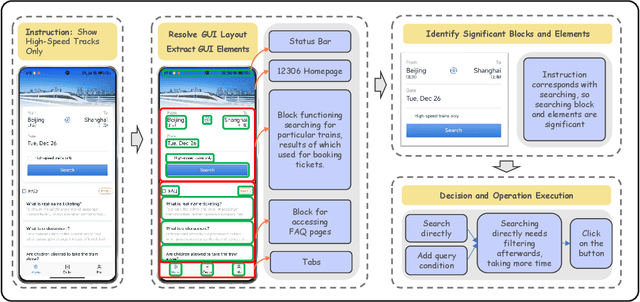
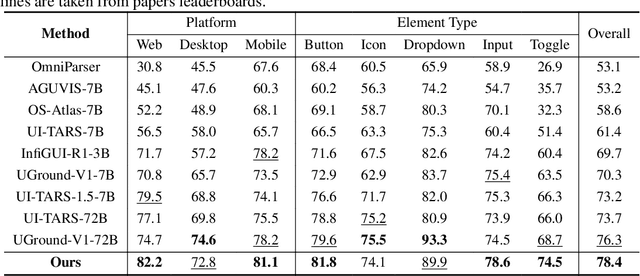
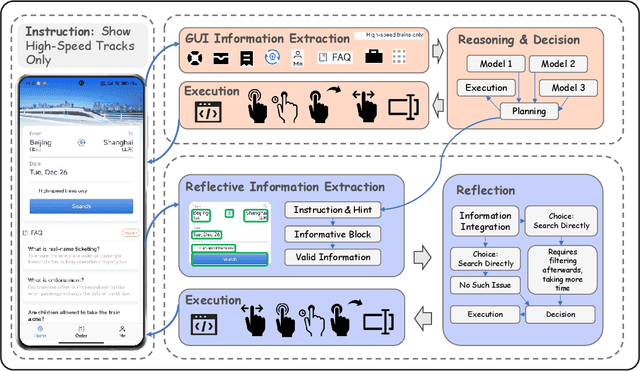
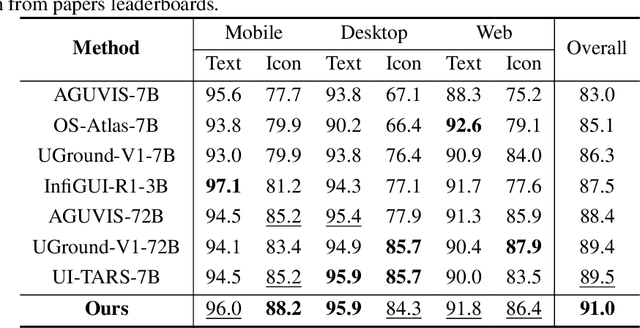
Building AI systems for GUI automation task has attracted remarkable research efforts, where MLLMs are leveraged for processing user requirements and give operations. However, GUI automation includes a wide range of tasks, from document processing to online shopping, from CAD to video editing. Diversity between particular tasks requires MLLMs for GUI automation to have heterogeneous capabilities and master multidimensional expertise, raising problems on constructing such a model. To address such challenge, we propose GAIR: GUI Automation via Information-Joint Reasoning and Group Reflection, a novel MLLM-based GUI automation agent framework designed for integrating knowledge and combining capabilities from heterogeneous models to build GUI automation agent systems with higher performance. Since different GUI-specific MLLMs are trained on different dataset and thus have different strengths, GAIR introduced a general-purpose MLLM for jointly processing the information from multiple GUI-specific models, further enhancing performance of the agent framework. The general-purpose MLLM also serves as decision maker, trying to execute a reasonable operation based on previously gathered information. When the general-purpose model thinks that there isn't sufficient information for a reasonable decision, GAIR would transit into group reflection status, where the general-purpose model would provide GUI-specific models with different instructions and hints based on their strengths and weaknesses, driving them to gather information with more significance and accuracy that can support deeper reasoning and decision. We evaluated the effectiveness and reliability of GAIR through extensive experiments on GUI benchmarks.
Inverse Knowledge Search over Verifiable Reasoning: Synthesizing a Scientific Encyclopedia from a Long Chains-of-Thought Knowledge Base
Oct 30, 2025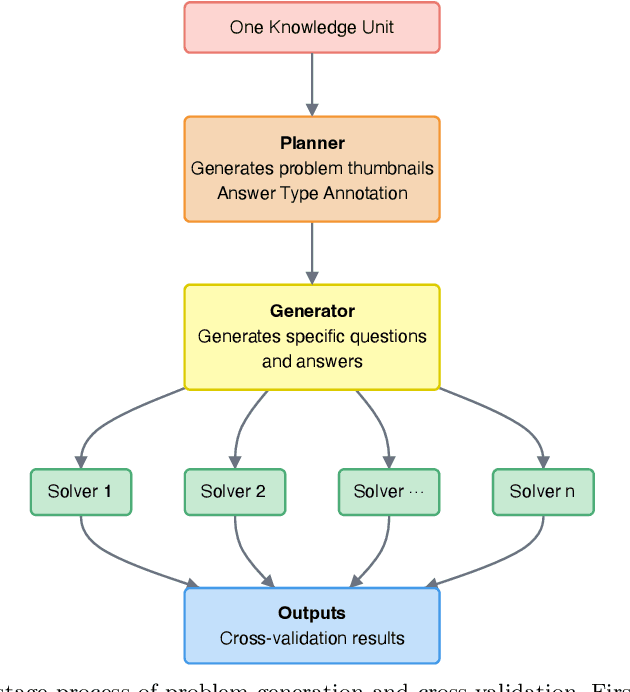
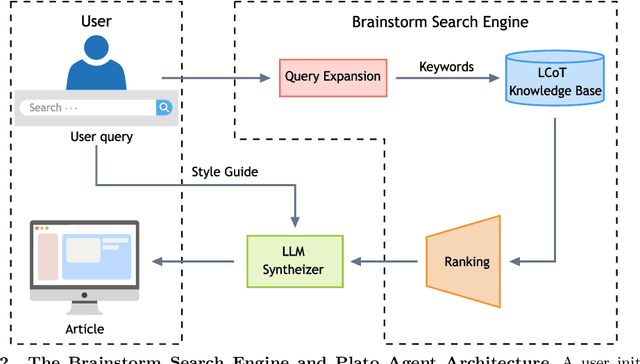
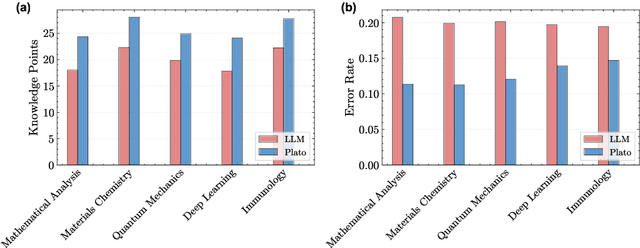
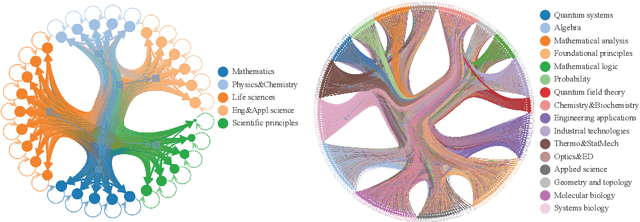
Most scientific materials compress reasoning, presenting conclusions while omitting the derivational chains that justify them. This compression hinders verification by lacking explicit, step-wise justifications and inhibits cross-domain links by collapsing the very pathways that establish the logical and causal connections between concepts. We introduce a scalable framework that decompresses scientific reasoning, constructing a verifiable Long Chain-of-Thought (LCoT) knowledge base and projecting it into an emergent encyclopedia, SciencePedia. Our pipeline operationalizes an endpoint-driven, reductionist strategy: a Socratic agent, guided by a curriculum of around 200 courses, generates approximately 3 million first-principles questions. To ensure high fidelity, multiple independent solver models generate LCoTs, which are then rigorously filtered by prompt sanitization and cross-model answer consensus, retaining only those with verifiable endpoints. This verified corpus powers the Brainstorm Search Engine, which performs inverse knowledge search -- retrieving diverse, first-principles derivations that culminate in a target concept. This engine, in turn, feeds the Plato synthesizer, which narrates these verified chains into coherent articles. The initial SciencePedia comprises approximately 200,000 fine-grained entries spanning mathematics, physics, chemistry, biology, engineering, and computation. In evaluations across six disciplines, Plato-synthesized articles (conditioned on retrieved LCoTs) exhibit substantially higher knowledge-point density and significantly lower factual error rates than an equally-prompted baseline without retrieval (as judged by an external LLM). Built on this verifiable LCoT knowledge base, this reasoning-centric approach enables trustworthy, cross-domain scientific synthesis at scale and establishes the foundation for an ever-expanding encyclopedia.
JOGS: Joint Optimization of Pose Estimation and 3D Gaussian Splatting
Oct 30, 2025Traditional novel view synthesis methods heavily rely on external camera pose estimation tools such as COLMAP, which often introduce computational bottlenecks and propagate errors. To address these challenges, we propose a unified framework that jointly optimizes 3D Gaussian points and camera poses without requiring pre-calibrated inputs. Our approach iteratively refines 3D Gaussian parameters and updates camera poses through a novel co-optimization strategy, ensuring simultaneous improvements in scene reconstruction fidelity and pose accuracy. The key innovation lies in decoupling the joint optimization into two interleaved phases: first, updating 3D Gaussian parameters via differentiable rendering with fixed poses, and second, refining camera poses using a customized 3D optical flow algorithm that incorporates geometric and photometric constraints. This formulation progressively reduces projection errors, particularly in challenging scenarios with large viewpoint variations and sparse feature distributions, where traditional methods struggle. Extensive evaluations on multiple datasets demonstrate that our approach significantly outperforms existing COLMAP-free techniques in reconstruction quality, and also surpasses the standard COLMAP-based baseline in general.
P/D-Device: Disaggregated Large Language Model between Cloud and Devices
Aug 12, 2025Serving disaggregated large language models has been widely adopted in industrial practice for enhanced performance. However, too many tokens generated in decoding phase, i.e., occupying the resources for a long time, essentially hamper the cloud from achieving a higher throughput. Meanwhile, due to limited on-device resources, the time to first token (TTFT), i.e., the latency of prefill phase, increases dramatically with the growth on prompt length. In order to concur with such a bottleneck on resources, i.e., long occupation in cloud and limited on-device computing capacity, we propose to separate large language model between cloud and devices. That is, the cloud helps a portion of the content for each device, only in its prefill phase. Specifically, after receiving the first token from the cloud, decoupling with its own prefill, the device responds to the user immediately for a lower TTFT. Then, the following tokens from cloud are presented via a speed controller for smoothed TPOT (the time per output token), until the device catches up with the progress. On-device prefill is then amortized using received tokens while the resource usage in cloud is controlled. Moreover, during cloud prefill, the prompt can be refined, using those intermediate data already generated, to further speed up on-device inference. We implement such a scheme P/D-Device, and confirm its superiority over other alternatives. We further propose an algorithm to decide the best settings. Real-trace experiments show that TTFT decreases at least 60%, maximum TPOT is about tens of milliseconds, and cloud throughput increases by up to 15x.