 Add to Chrome
 Add to Firefox
 Add to Edge
Enhancing Video-Language Representations with Structural Spatio-Temporal Alignment
Jun 27, 2024


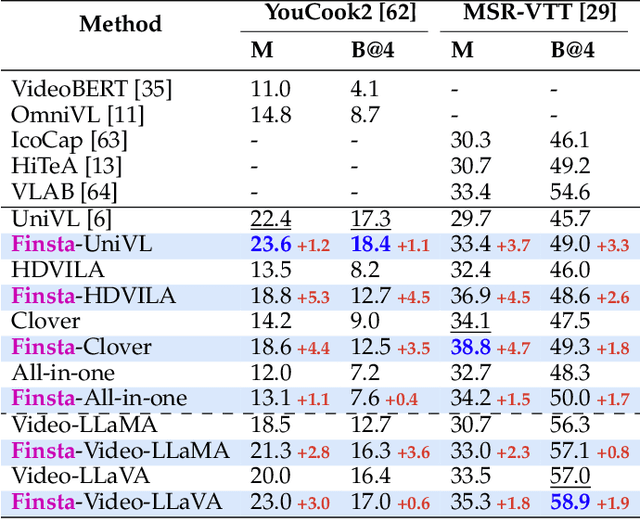
While pre-training large-scale video-language models (VLMs) has shown remarkable potential for various downstream video-language tasks, existing VLMs can still suffer from certain commonly seen limitations, e.g., coarse-grained cross-modal aligning , under-modeling of temporal dynamics, detached video-language view. In this work, we target enhancing VLMs with a fine-grained structural spatio-temporal alignment learning method (namely Finsta). First of all, we represent the input texts and videos with fine-grained scene graph (SG) structures, both of which are further unified into a holistic SG (HSG) for bridging two modalities. Then, an SG-based framework is built, where the textual SG (TSG) is encoded with a graph Transformer, while the video dynamic SG (DSG) and the HSG are modeled with a novel recurrent graph Transformer for spatial and temporal feature propagation. A spatial-temporal Gaussian differential graph Transformer is further devised to strengthen the sense of the changes in objects across spatial and temporal dimensions. Next, based on the fine-grained structural features of TSG and DSG, we perform object-centered spatial alignment and predicate-centered temporal alignment respectively, enhancing the video-language grounding in both the spatiality and temporality. We design our method as a plug&play system, which can be integrated into existing well-trained VLMs for further representation augmentation, without training from scratch or relying on SG annotations in downstream applications. On 6 representative VL modeling tasks over 12 datasets in both standard and long-form video scenarios, Finsta consistently improves the existing 13 strong-performing VLMs persistently, and refreshes the current state-of-the-art end task performance significantly in both the fine-tuning and zero-shot settings.
* Accepted by IEEE TPAMI 2024

Mamba or RWKV: Exploring High-Quality and High-Efficiency Segment Anything Model
Jun 27, 2024Transformer-based segmentation methods face the challenge of efficient inference when dealing with high-resolution images. Recently, several linear attention architectures, such as Mamba and RWKV, have attracted much attention as they can process long sequences efficiently. In this work, we focus on designing an efficient segment-anything model by exploring these different architectures. Specifically, we design a mixed backbone that contains convolution and RWKV operation, which achieves the best for both accuracy and efficiency. In addition, we design an efficient decoder to utilize the multiscale tokens to obtain high-quality masks. We denote our method as RWKV-SAM, a simple, effective, fast baseline for SAM-like models. Moreover, we build a benchmark containing various high-quality segmentation datasets and jointly train one efficient yet high-quality segmentation model using this benchmark. Based on the benchmark results, our RWKV-SAM achieves outstanding performance in efficiency and segmentation quality compared to transformers and other linear attention models. For example, compared with the same-scale transformer model, RWKV-SAM achieves more than 2x speedup and can achieve better segmentation performance on various datasets. In addition, RWKV-SAM outperforms recent vision Mamba models with better classification and semantic segmentation results. Code and models will be publicly available.
UIO-LLMs: Unbiased Incremental Optimization for Long-Context LLMs
Jun 26, 2024Managing long texts is challenging for large language models (LLMs) due to limited context window sizes. This study introduces UIO-LLMs, an unbiased incremental optimization approach for memory-enhanced transformers under long-context settings. We initially conceptualize the process as a streamlined encoder-decoder framework where the weights-shared encoder and decoder respectively encapsulate a context segment into memories and leverage these memories to predict outputs of the subsequent segment. Subsequently, by treating our memory-enhanced transformers as fully-connected recurrent neural networks (RNNs), we refine the training process using the Truncated Backpropagation Through Time (TBPTT) algorithm, which incorporates innovative incremental optimization techniques. These techniques not only diminish time complexity but also address the bias in gradient computation through an unbiased optimization process. UIO-LLMs successfully handle long context, such as extending the context window of Llama2-7b-chat from 4K to 100K tokens with minimal 2% additional parameters, while keeping the inference cost nearly linear as context length increases.
Q*: Improving Multi-step Reasoning for LLMs with Deliberative Planning
Jun 20, 2024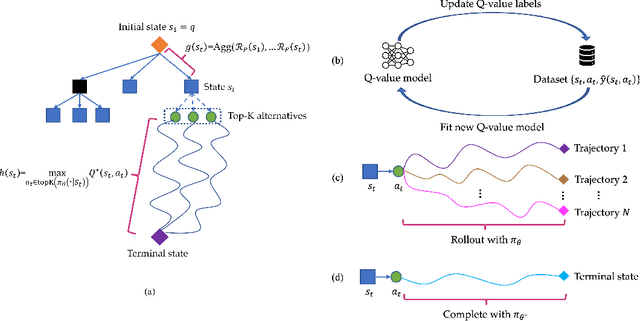
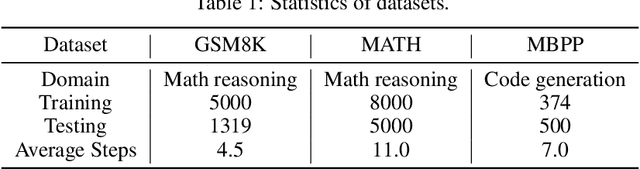
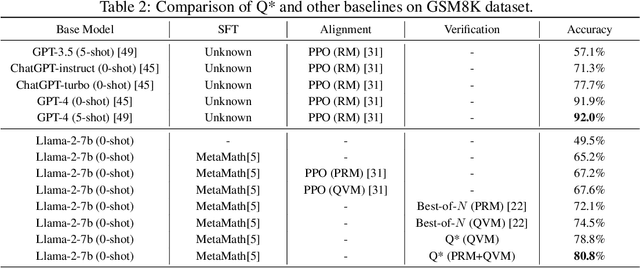
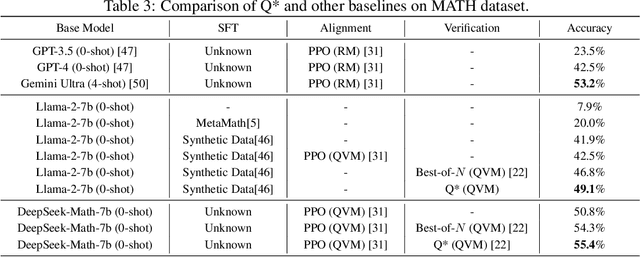
Large Language Models (LLMs) have demonstrated impressive capability in many nature language tasks. However, the auto-regressive generation process makes LLMs prone to produce errors, hallucinations and inconsistent statements when performing multi-step reasoning. In this paper, we aim to alleviate the pathology by introducing Q*, a general, versatile and agile framework for guiding LLMs decoding process with deliberative planning. By learning a plug-and-play Q-value model as heuristic function, our Q* can effectively guide LLMs to select the most promising next step without fine-tuning LLMs for each task, which avoids the significant computational overhead and potential risk of performance degeneration on other tasks. Extensive experiments on GSM8K, MATH and MBPP confirm the superiority of our method.
MVGamba: Unify 3D Content Generation as State Space Sequence Modeling
Jun 10, 2024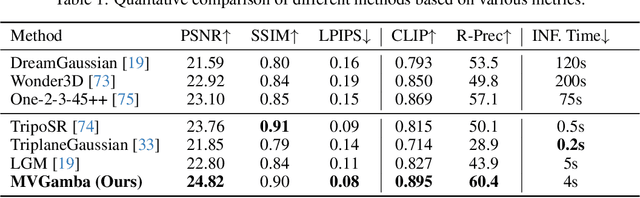
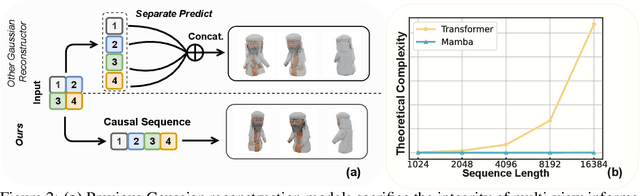
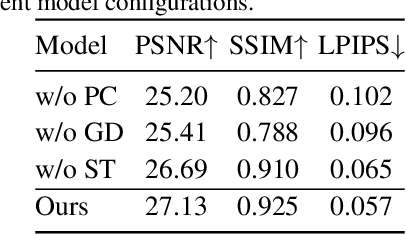
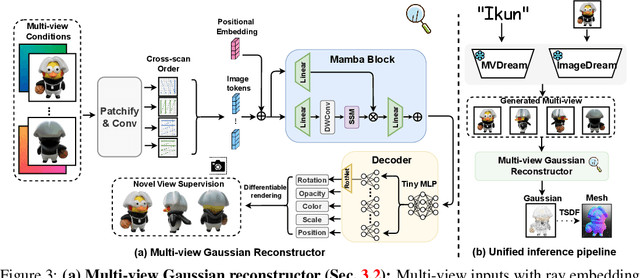
Recent 3D large reconstruction models (LRMs) can generate high-quality 3D content in sub-seconds by integrating multi-view diffusion models with scalable multi-view reconstructors. Current works further leverage 3D Gaussian Splatting as 3D representation for improved visual quality and rendering efficiency. However, we observe that existing Gaussian reconstruction models often suffer from multi-view inconsistency and blurred textures. We attribute this to the compromise of multi-view information propagation in favor of adopting powerful yet computationally intensive architectures (\eg, Transformers). To address this issue, we introduce MVGamba, a general and lightweight Gaussian reconstruction model featuring a multi-view Gaussian reconstructor based on the RNN-like State Space Model (SSM). Our Gaussian reconstructor propagates causal context containing multi-view information for cross-view self-refinement while generating a long sequence of Gaussians for fine-detail modeling with linear complexity. With off-the-shelf multi-view diffusion models integrated, MVGamba unifies 3D generation tasks from a single image, sparse images, or text prompts. Extensive experiments demonstrate that MVGamba outperforms state-of-the-art baselines in all 3D content generation scenarios with approximately only $0.1\times$ of the model size.
Towards Semantic Equivalence of Tokenization in Multimodal LLM
Jun 07, 2024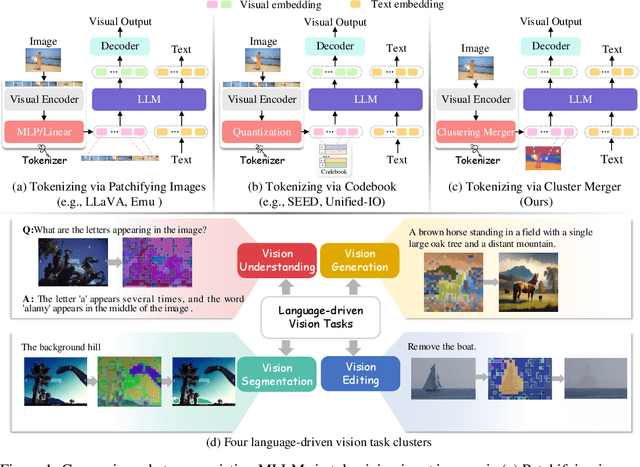
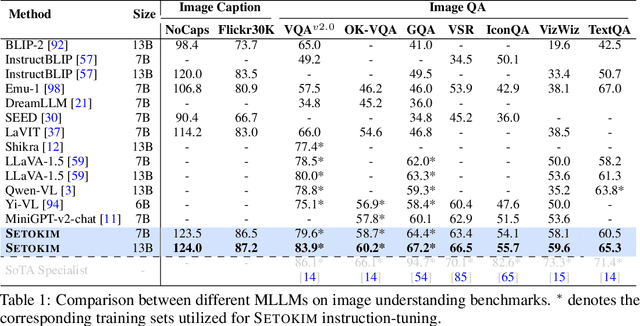
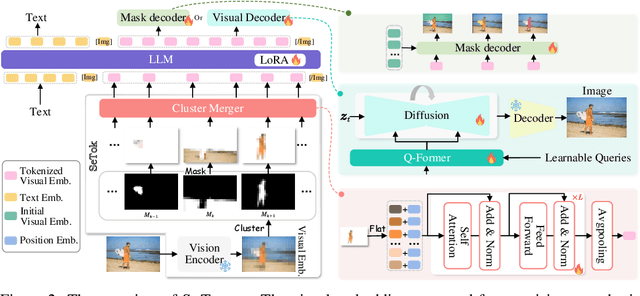
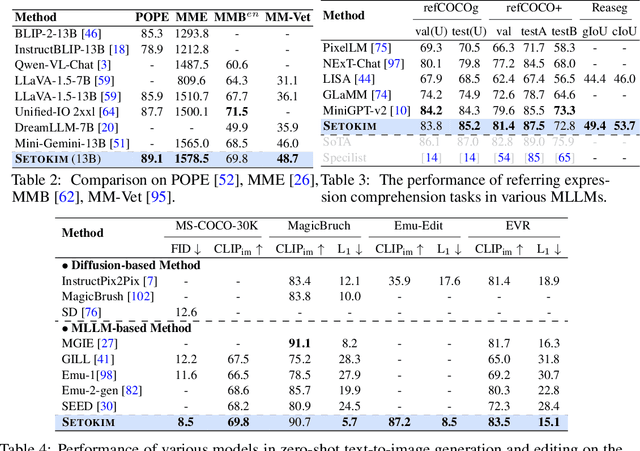
Multimodal Large Language Models (MLLMs) have demonstrated exceptional capabilities in processing vision-language tasks. One of the crux of MLLMs lies in vision tokenization, which involves efficiently transforming input visual signals into feature representations that are most beneficial for LLMs. However, existing vision tokenizers, essential for semantic alignment between vision and language, remain problematic. Existing methods aggressively fragment visual input, corrupting the visual semantic integrity. To address this, this paper proposes a novel dynamic Semantic-Equivalent Vision Tokenizer (SeTok), which groups visual features into semantic units via a dynamic clustering algorithm, flexibly determining the number of tokens based on image complexity. The resulting vision tokens effectively preserve semantic integrity and capture both low-frequency and high-frequency visual features. The proposed MLLM (Setokim) equipped with SeTok significantly demonstrates superior performance across various tasks, as evidenced by our experimental results. The project page is at https://chocowu.github.io/SeTok-web/.
Skywork-MoE: A Deep Dive into Training Techniques for Mixture-of-Experts Language Models
Jun 03, 2024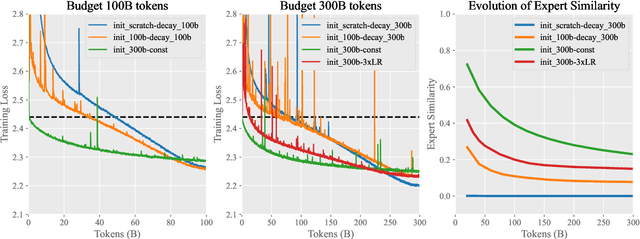

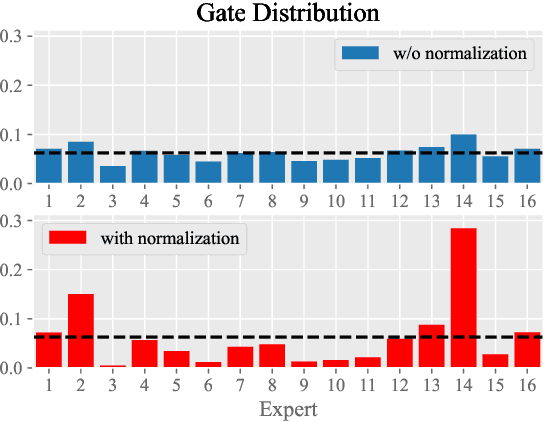

In this technical report, we introduce the training methodologies implemented in the development of Skywork-MoE, a high-performance mixture-of-experts (MoE) large language model (LLM) with 146 billion parameters and 16 experts. It is initialized from the pre-existing dense checkpoints of our Skywork-13B model. We explore the comparative effectiveness of upcycling versus training from scratch initializations. Our findings suggest that the choice between these two approaches should consider both the performance of the existing dense checkpoints and the MoE training budget. We highlight two innovative techniques: gating logit normalization, which improves expert diversification, and adaptive auxiliary loss coefficients, allowing for layer-specific adjustment of auxiliary loss coefficients. Our experimental results validate the effectiveness of these methods. Leveraging these techniques and insights, we trained our upcycled Skywork-MoE on a condensed subset of our SkyPile corpus. The evaluation results demonstrate that our model delivers strong performance across a wide range of benchmarks.
LongSkywork: A Training Recipe for Efficiently Extending Context Length in Large Language Models
Jun 02, 2024We introduce LongSkywork, a long-context Large Language Model (LLM) capable of processing up to 200,000 tokens. We provide a training recipe for efficiently extending context length of LLMs. We identify that the critical element in enhancing long-context processing capability is to incorporate a long-context SFT stage following the standard SFT stage. A mere 200 iterations can convert the standard SFT model into a long-context model. To reduce the effort in collecting and annotating data for long-context language modeling, we develop two novel methods for creating synthetic data. These methods are applied during the continual pretraining phase as well as the Supervised Fine-Tuning (SFT) phase, greatly enhancing the training efficiency of our long-context LLMs. Our findings suggest that synthetic long-context SFT data can surpass the performance of data curated by humans to some extent. LongSkywork achieves outstanding performance on a variety of long-context benchmarks. In the Needle test, a benchmark for long-context information retrieval, our models achieved perfect accuracy across multiple context spans. Moreover, in realistic application scenarios, LongSkywork-13B demonstrates performance on par with Claude2.1, the leading long-context model, underscoring the effectiveness of our proposed methods.
Reason3D: Searching and Reasoning 3D Segmentation via Large Language Model
May 27, 2024Recent advancements in multimodal large language models (LLMs) have shown their potential in various domains, especially concept reasoning. Despite these developments, applications in understanding 3D environments remain limited. This paper introduces Reason3D, a novel LLM designed for comprehensive 3D understanding. Reason3D takes point cloud data and text prompts as input to produce textual responses and segmentation masks, facilitating advanced tasks like 3D reasoning segmentation, hierarchical searching, express referring, and question answering with detailed mask outputs. Specifically, we propose a hierarchical mask decoder to locate small objects within expansive scenes. This decoder initially generates a coarse location estimate covering the object's general area. This foundational estimation facilitates a detailed, coarse-to-fine segmentation strategy that significantly enhances the precision of object identification and segmentation. Experiments validate that Reason3D achieves remarkable results on large-scale ScanNet and Matterport3D datasets for 3D express referring, 3D question answering, and 3D reasoning segmentation tasks. Code and models are available at: https://github.com/KuanchihHuang/Reason3D.
EditWorld: Simulating World Dynamics for Instruction-Following Image Editing
May 23, 2024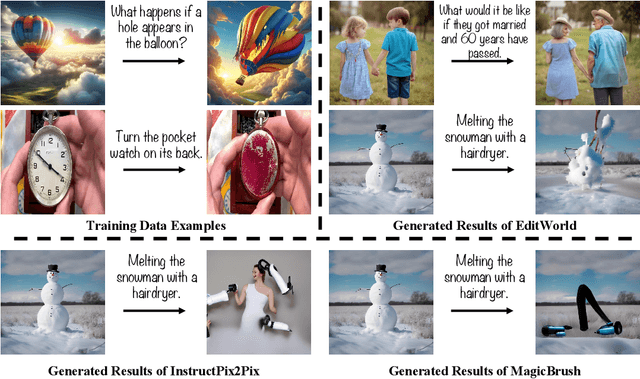
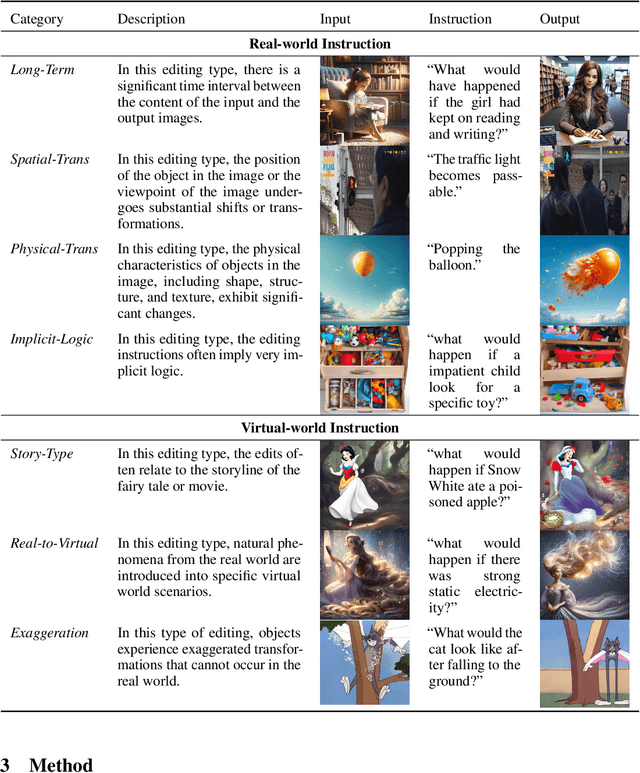
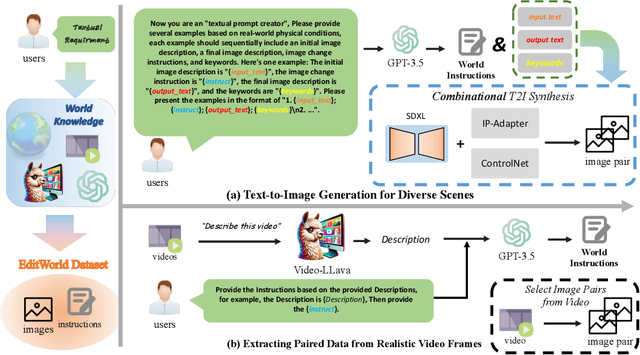
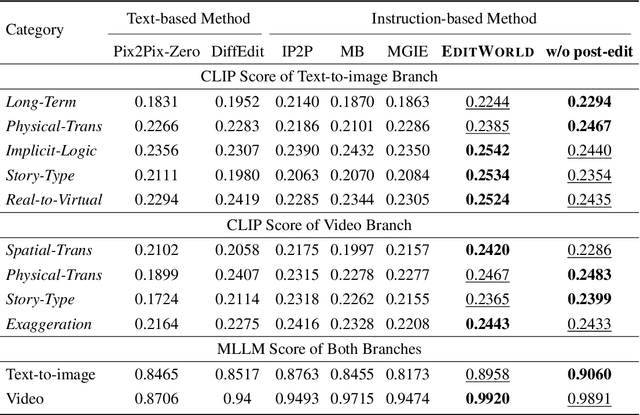
Diffusion models have significantly improved the performance of image editing. Existing methods realize various approaches to achieve high-quality image editing, including but not limited to text control, dragging operation, and mask-and-inpainting. Among these, instruction-based editing stands out for its convenience and effectiveness in following human instructions across diverse scenarios. However, it still focuses on simple editing operations like adding, replacing, or deleting, and falls short of understanding aspects of world dynamics that convey the realistic dynamic nature in the physical world. Therefore, this work, EditWorld, introduces a new editing task, namely world-instructed image editing, which defines and categorizes the instructions grounded by various world scenarios. We curate a new image editing dataset with world instructions using a set of large pretrained models (e.g., GPT-3.5, Video-LLava and SDXL). To enable sufficient simulation of world dynamics for image editing, our EditWorld trains model in the curated dataset, and improves instruction-following ability with designed post-edit strategy. Extensive experiments demonstrate our method significantly outperforms existing editing methods in this new task. Our dataset and code will be available at https://github.com/YangLing0818/EditWorld