 Add to Chrome
 Add to Firefox
 Add to Edge
NeRF Inpainting with Geometric Diffusion Prior and Balanced Score Distillation
Nov 23, 2024

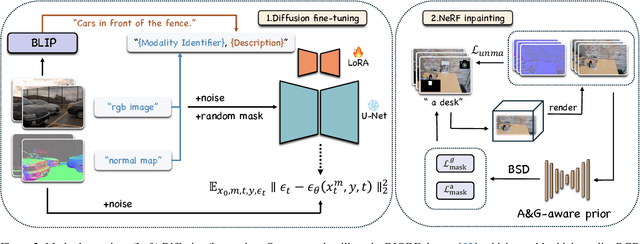
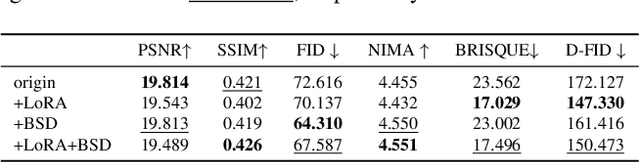

Recent advances in NeRF inpainting have leveraged pretrained diffusion models to enhance performance. However, these methods often yield suboptimal results due to their ineffective utilization of 2D diffusion priors. The limitations manifest in two critical aspects: the inadequate capture of geometric information by pretrained diffusion models and the suboptimal guidance provided by existing Score Distillation Sampling (SDS) methods. To address these problems, we introduce GB-NeRF, a novel framework that enhances NeRF inpainting through improved utilization of 2D diffusion priors. Our approach incorporates two key innovations: a fine-tuning strategy that simultaneously learns appearance and geometric priors and a specialized normal distillation loss that integrates these geometric priors into NeRF inpainting. We propose a technique called Balanced Score Distillation (BSD) that surpasses existing methods such as Score Distillation (SDS) and the improved version, Conditional Score Distillation (CSD). BSD offers improved inpainting quality in appearance and geometric aspects. Extensive experiments show that our method provides superior appearance fidelity and geometric consistency compared to existing approaches.

StableV2V: Stablizing Shape Consistency in Video-to-Video Editing
Nov 17, 2024Recent advancements of generative AI have significantly promoted content creation and editing, where prevailing studies further extend this exciting progress to video editing. In doing so, these studies mainly transfer the inherent motion patterns from the source videos to the edited ones, where results with inferior consistency to user prompts are often observed, due to the lack of particular alignments between the delivered motions and edited contents. To address this limitation, we present a shape-consistent video editing method, namely StableV2V, in this paper. Our method decomposes the entire editing pipeline into several sequential procedures, where it edits the first video frame, then establishes an alignment between the delivered motions and user prompts, and eventually propagates the edited contents to all other frames based on such alignment. Furthermore, we curate a testing benchmark, namely DAVIS-Edit, for a comprehensive evaluation of video editing, considering various types of prompts and difficulties. Experimental results and analyses illustrate the outperforming performance, visual consistency, and inference efficiency of our method compared to existing state-of-the-art studies.
APDDv2: Aesthetics of Paintings and Drawings Dataset with Artist Labeled Scores and Comments
Nov 13, 2024


Datasets play a pivotal role in training visual models, facilitating the development of abstract understandings of visual features through diverse image samples and multidimensional attributes. However, in the realm of aesthetic evaluation of artistic images, datasets remain relatively scarce. Existing painting datasets are often characterized by limited scoring dimensions and insufficient annotations, thereby constraining the advancement and application of automatic aesthetic evaluation methods in the domain of painting. To bridge this gap, we introduce the Aesthetics Paintings and Drawings Dataset (APDD), the first comprehensive collection of paintings encompassing 24 distinct artistic categories and 10 aesthetic attributes. Building upon the initial release of APDDv1, our ongoing research has identified opportunities for enhancement in data scale and annotation precision. Consequently, APDDv2 boasts an expanded image corpus and improved annotation quality, featuring detailed language comments to better cater to the needs of both researchers and practitioners seeking high-quality painting datasets. Furthermore, we present an updated version of the Art Assessment Network for Specific Painting Styles, denoted as ArtCLIP. Experimental validation demonstrates the superior performance of this revised model in the realm of aesthetic evaluation, surpassing its predecessor in accuracy and efficacy. The dataset and model are available at https://github.com/BestiVictory/APDDv2.git.
A Comprehensive Survey of Small Language Models in the Era of Large Language Models: Techniques, Enhancements, Applications, Collaboration with LLMs, and Trustworthiness
Nov 04, 2024Large language models (LLM) have demonstrated emergent abilities in text generation, question answering, and reasoning, facilitating various tasks and domains. Despite their proficiency in various tasks, LLMs like LaPM 540B and Llama-3.1 405B face limitations due to large parameter sizes and computational demands, often requiring cloud API use which raises privacy concerns, limits real-time applications on edge devices, and increases fine-tuning costs. Additionally, LLMs often underperform in specialized domains such as healthcare and law due to insufficient domain-specific knowledge, necessitating specialized models. Therefore, Small Language Models (SLMs) are increasingly favored for their low inference latency, cost-effectiveness, efficient development, and easy customization and adaptability. These models are particularly well-suited for resource-limited environments and domain knowledge acquisition, addressing LLMs' challenges and proving ideal for applications that require localized data handling for privacy, minimal inference latency for efficiency, and domain knowledge acquisition through lightweight fine-tuning. The rising demand for SLMs has spurred extensive research and development. However, a comprehensive survey investigating issues related to the definition, acquisition, application, enhancement, and reliability of SLM remains lacking, prompting us to conduct a detailed survey on these topics. The definition of SLMs varies widely, thus to standardize, we propose defining SLMs by their capability to perform specialized tasks and suitability for resource-constrained settings, setting boundaries based on the minimal size for emergent abilities and the maximum size sustainable under resource constraints. For other aspects, we provide a taxonomy of relevant models/methods and develop general frameworks for each category to enhance and utilize SLMs effectively.
CLAP. I. Resolving miscalibration for deep learning-based galaxy photometric redshift estimation
Oct 25, 2024


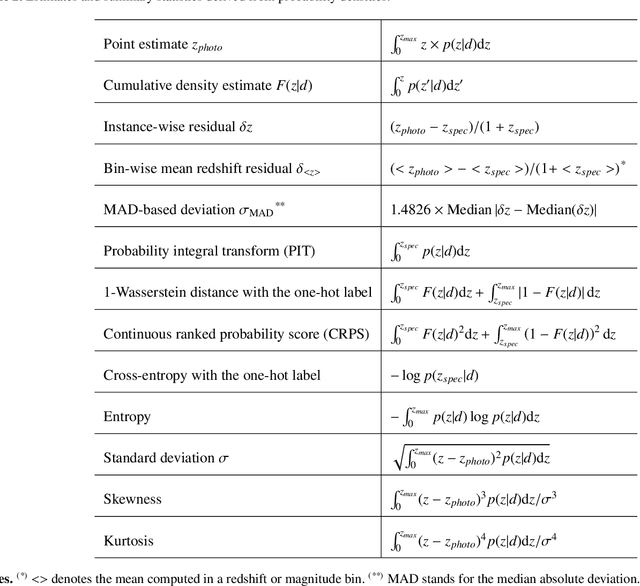
Obtaining well-calibrated photometric redshift probability densities for galaxies without a spectroscopic measurement remains a challenge. Deep learning discriminative models, typically fed with multi-band galaxy images, can produce outputs that mimic probability densities and achieve state-of-the-art accuracy. However, such models may be affected by miscalibration that would result in discrepancies between the model outputs and the actual distributions of true redshifts. Our work develops a novel method called the Contrastive Learning and Adaptive KNN for Photometric Redshift (CLAP) that resolves this issue. It leverages supervised contrastive learning (SCL) and k-nearest neighbours (KNN) to construct and calibrate raw probability density estimates, and implements a refitting procedure to resume end-to-end discriminative models ready to produce final estimates for large-scale imaging data. The harmonic mean is adopted to combine an ensemble of estimates from multiple realisations for improving accuracy. Our experiments demonstrate that CLAP takes advantage of both deep learning and KNN, outperforming benchmark methods on the calibration of probability density estimates and retaining high accuracy and computational efficiency. With reference to CLAP, we point out that miscalibration is particularly sensitive to the method-induced excessive correlations among data instances in addition to the unaccounted-for epistemic uncertainties. Reducing the uncertainties may not guarantee the removal of miscalibration due to the presence of such excessive correlations, yet this is a problem for conventional deep learning methods rather than CLAP. These discussions underscore the robustness of CLAP for obtaining photometric redshift probability densities required by astrophysical and cosmological applications. This is the first paper in our series on CLAP.
GeoCode-GPT: A Large Language Model for Geospatial Code Generation Tasks
Oct 23, 2024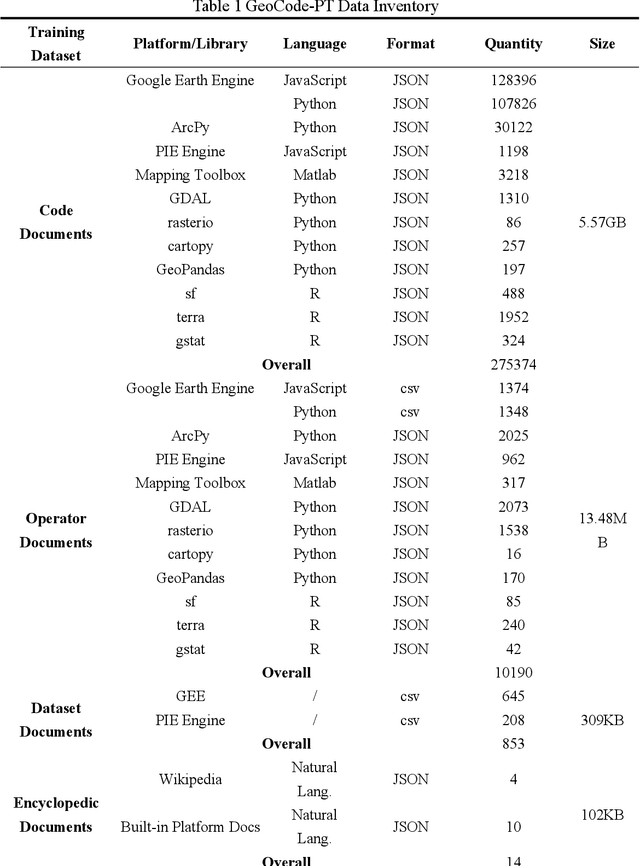
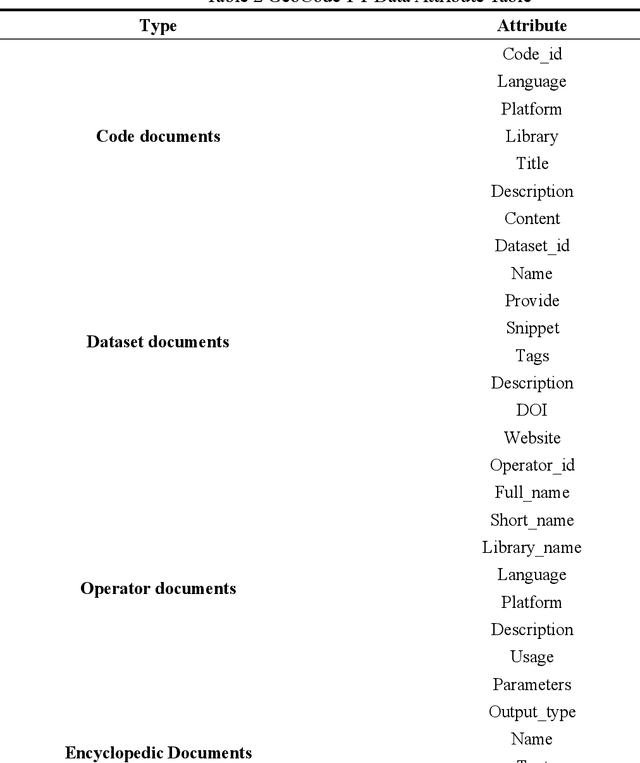
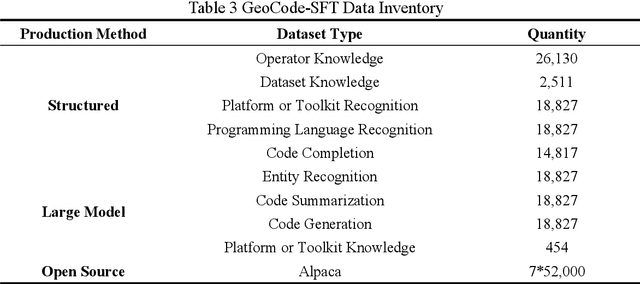
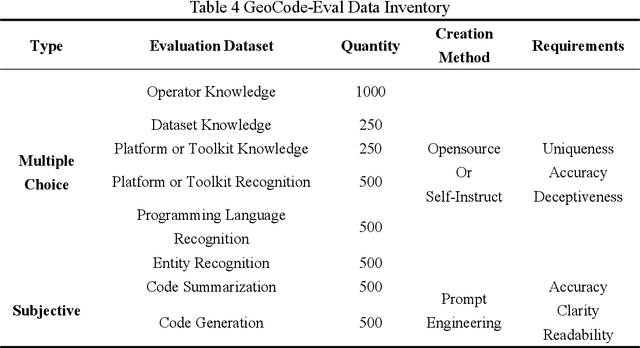
The increasing demand for spatiotemporal data and modeling tasks in geosciences has made geospatial code generation technology a critical factor in enhancing productivity. Although large language models (LLMs) have demonstrated potential in code generation tasks, they often encounter issues such as refusal to code or hallucination in geospatial code generation due to a lack of domain-specific knowledge and code corpora. To address these challenges, this paper presents and open-sources the GeoCode-PT and GeoCode-SFT corpora, along with the GeoCode-Eval evaluation dataset. Additionally, by leveraging QLoRA and LoRA for pretraining and fine-tuning, we introduce GeoCode-GPT-7B, the first LLM focused on geospatial code generation, fine-tuned from Code Llama-7B. Furthermore, we establish a comprehensive geospatial code evaluation framework, incorporating option matching, expert validation, and prompt engineering scoring for LLMs, and systematically evaluate GeoCode-GPT-7B using the GeoCode-Eval dataset. Experimental results show that GeoCode-GPT outperforms other models in multiple-choice accuracy by 9.1% to 32.1%, in code summarization ability by 1.7% to 25.4%, and in code generation capability by 1.2% to 25.1%. This paper provides a solution and empirical validation for enhancing LLMs' performance in geospatial code generation, extends the boundaries of domain-specific model applications, and offers valuable insights into unlocking their potential in geospatial code generation.
CursorCore: Assist Programming through Aligning Anything
Oct 09, 2024Large language models have been successfully applied to programming assistance tasks, such as code completion, code insertion, and instructional code editing. However, these applications remain insufficiently automated and struggle to effectively integrate various types of information during the programming process, including coding history, current code, and user instructions. In this work, we propose a new conversational framework that comprehensively integrates these information sources, collect data to train our models and evaluate their performance. Firstly, to thoroughly evaluate how well models align with different types of information and the quality of their outputs, we introduce a new benchmark, APEval (Assist Programming Eval), to comprehensively assess the performance of models in programming assistance tasks. Then, for data collection, we develop a data generation pipeline, Programming-Instruct, which synthesizes training data from diverse sources, such as GitHub and online judge platforms. This pipeline can automatically generate various types of messages throughout the programming process. Finally, using this pipeline, we generate 219K samples, fine-tune multiple models, and develop the CursorCore series. We show that CursorCore outperforms other models of comparable size. This framework unifies applications such as inline chat and automated editing, contributes to the advancement of coding assistants. Code, models and data are freely available at https://github.com/TechxGenus/CursorCore.
Learning Recommender Systems with Soft Target: A Decoupled Perspective
Oct 09, 2024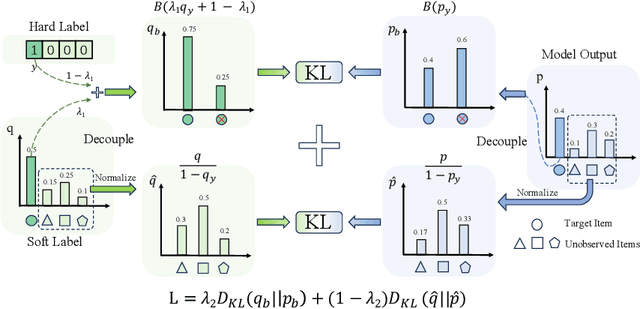

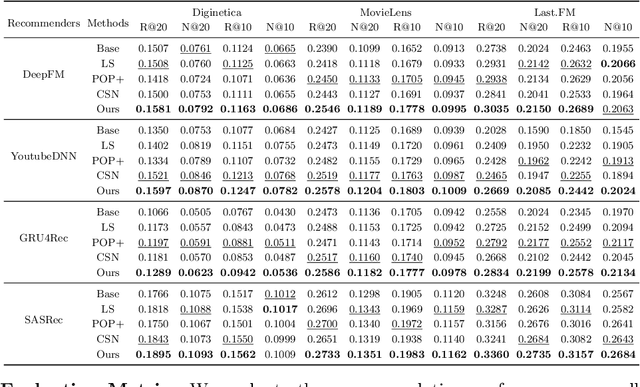
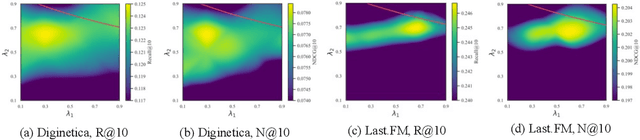
Learning recommender systems with multi-class optimization objective is a prevalent setting in recommendation. However, as observed user feedback often accounts for a tiny fraction of the entire item pool, the standard Softmax loss tends to ignore the difference between potential positive feedback and truly negative feedback. To address this challenge, we propose a novel decoupled soft label optimization framework to consider the objectives as two aspects by leveraging soft labels, including target confidence and the latent interest distribution of non-target items. Futhermore, based on our carefully theoretical analysis, we design a decoupled loss function to flexibly adjust the importance of these two aspects. To maximize the performance of the proposed method, we additionally present a sensible soft-label generation algorithm that models a label propagation algorithm to explore users' latent interests in unobserved feedback via neighbors. We conduct extensive experiments on various recommendation system models and public datasets, the results demonstrate the effectiveness and generality of the proposed method.
Explainable Diagnosis Prediction through Neuro-Symbolic Integration
Oct 01, 2024


Diagnosis prediction is a critical task in healthcare, where timely and accurate identification of medical conditions can significantly impact patient outcomes. Traditional machine learning and deep learning models have achieved notable success in this domain but often lack interpretability which is a crucial requirement in clinical settings. In this study, we explore the use of neuro-symbolic methods, specifically Logical Neural Networks (LNNs), to develop explainable models for diagnosis prediction. Essentially, we design and implement LNN-based models that integrate domain-specific knowledge through logical rules with learnable thresholds. Our models, particularly $M_{\text{multi-pathway}}$ and $M_{\text{comprehensive}}$, demonstrate superior performance over traditional models such as Logistic Regression, SVM, and Random Forest, achieving higher accuracy (up to 80.52\%) and AUROC scores (up to 0.8457) in the case study of diabetes prediction. The learned weights and thresholds within the LNN models provide direct insights into feature contributions, enhancing interpretability without compromising predictive power. These findings highlight the potential of neuro-symbolic approaches in bridging the gap between accuracy and explainability in healthcare AI applications. By offering transparent and adaptable diagnostic models, our work contributes to the advancement of precision medicine and supports the development of equitable healthcare solutions. Future research will focus on extending these methods to larger and more diverse datasets to further validate their applicability across different medical conditions and populations.
MemSim: A Bayesian Simulator for Evaluating Memory of LLM-based Personal Assistants
Sep 30, 2024


LLM-based agents have been widely applied as personal assistants, capable of memorizing information from user messages and responding to personal queries. However, there still lacks an objective and automatic evaluation on their memory capability, largely due to the challenges in constructing reliable questions and answers (QAs) according to user messages. In this paper, we propose MemSim, a Bayesian simulator designed to automatically construct reliable QAs from generated user messages, simultaneously keeping their diversity and scalability. Specifically, we introduce the Bayesian Relation Network (BRNet) and a causal generation mechanism to mitigate the impact of LLM hallucinations on factual information, facilitating the automatic creation of an evaluation dataset. Based on MemSim, we generate a dataset in the daily-life scenario, named MemDaily, and conduct extensive experiments to assess the effectiveness of our approach. We also provide a benchmark for evaluating different memory mechanisms in LLM-based agents with the MemDaily dataset. To benefit the research community, we have released our project at https://github.com/nuster1128/MemSim.