 Add to Chrome
 Add to Firefox
 Add to Edge
Interpretable Human-Label-Free Deep Learning for Real-Bogus Classification with Uncertainty Quantification
Jul 06, 2026
Time-domain surveys generate many transient candidates, making Real-Bogus classification a critical step in automated discovery pipelines. Reliable labels are costly, while community labels can be noisy and survey-dependent. We aim to develop a Real-Bogus classification framework that can be trained without human-labeled data using injected transients and bogus-dominated survey data, remains robust under strong class contamination, and provides calibrated uncertainty quantification. We combine simulated transient injections with a contaminated survey class and train a dual-network model using asymmetric co-teaching for classes with different label-noise levels. We evaluate performance on a benchmark subset and analyze the learned representation with latent-space visualization tools. For uncertainty quantification (UQ), we compare MC dropout and deep ensembles and propose a low-cost hybrid strategy that exploits the dual-network setting to improve calibration. We extend the evaluation to the light-curve domain to assess recovery of light-curve classes. The method achieves strong Real-Bogus performance on the labeled subset and remains stable under severe class contamination. It recovers transient light-curve classes with high fidelity, while single-source identification is limited by ambiguity in light-curve-derived labels. Our hybrid UQ approach achieves competitive calibration relative to more expensive ensemble baselines. Latent-space analyses indicate that uncertainty aligns with the decision boundary and reveal subclasses within the bogus population. Our results show that injection-driven, weakly supervised training can enable scalable and consistent Real-Bogus classification without human-labeled training data while providing calibrated uncertainties. The method is suited for transfer to forthcoming surveys by re-running the injection-based training pipeline.

CLAP. I. Resolving miscalibration for deep learning-based galaxy photometric redshift estimation
Oct 25, 2024


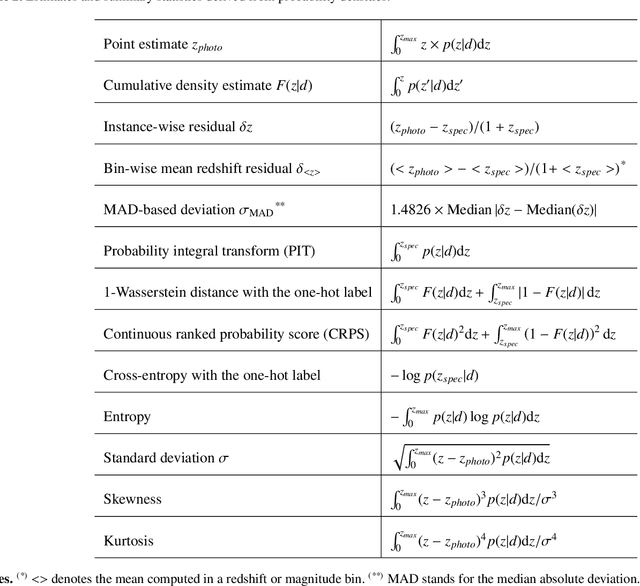
Obtaining well-calibrated photometric redshift probability densities for galaxies without a spectroscopic measurement remains a challenge. Deep learning discriminative models, typically fed with multi-band galaxy images, can produce outputs that mimic probability densities and achieve state-of-the-art accuracy. However, such models may be affected by miscalibration that would result in discrepancies between the model outputs and the actual distributions of true redshifts. Our work develops a novel method called the Contrastive Learning and Adaptive KNN for Photometric Redshift (CLAP) that resolves this issue. It leverages supervised contrastive learning (SCL) and k-nearest neighbours (KNN) to construct and calibrate raw probability density estimates, and implements a refitting procedure to resume end-to-end discriminative models ready to produce final estimates for large-scale imaging data. The harmonic mean is adopted to combine an ensemble of estimates from multiple realisations for improving accuracy. Our experiments demonstrate that CLAP takes advantage of both deep learning and KNN, outperforming benchmark methods on the calibration of probability density estimates and retaining high accuracy and computational efficiency. With reference to CLAP, we point out that miscalibration is particularly sensitive to the method-induced excessive correlations among data instances in addition to the unaccounted-for epistemic uncertainties. Reducing the uncertainties may not guarantee the removal of miscalibration due to the presence of such excessive correlations, yet this is a problem for conventional deep learning methods rather than CLAP. These discussions underscore the robustness of CLAP for obtaining photometric redshift probability densities required by astrophysical and cosmological applications. This is the first paper in our series on CLAP.
Astronomical image time series classification using CONVolutional attENTION (ConvEntion)
Apr 03, 2023

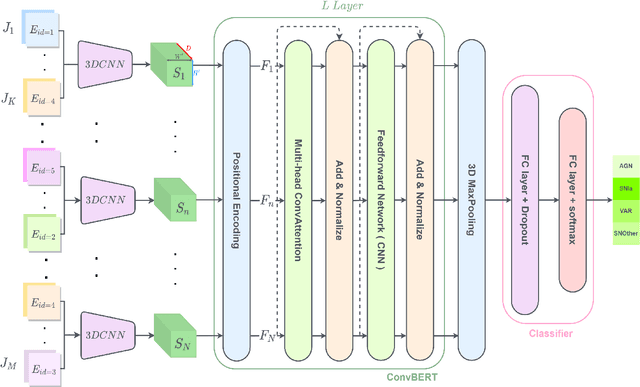
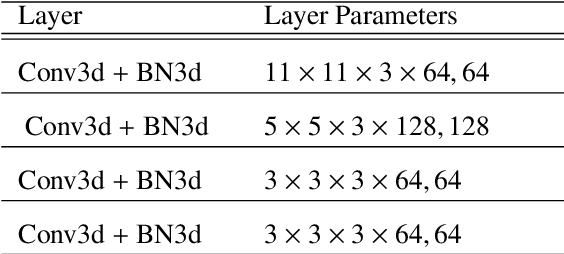
Aims. The treatment of astronomical image time series has won increasing attention in recent years. Indeed, numerous surveys following up on transient objects are in progress or under construction, such as the Vera Rubin Observatory Legacy Survey for Space and Time (LSST), which is poised to produce huge amounts of these time series. The associated scientific topics are extensive, ranging from the study of objects in our galaxy to the observation of the most distant supernovae for measuring the expansion of the universe. With such a large amount of data available, the need for robust automatic tools to detect and classify celestial objects is growing steadily. Methods. This study is based on the assumption that astronomical images contain more information than light curves. In this paper, we propose a novel approach based on deep learning for classifying different types of space objects directly using images. We named our approach ConvEntion, which stands for CONVolutional attENTION. It is based on convolutions and transformers, which are new approaches for the treatment of astronomical image time series. Our solution integrates spatio-temporal features and can be applied to various types of image datasets with any number of bands. Results. In this work, we solved various problems the datasets tend to suffer from and we present new results for classifications using astronomical image time series with an increase in accuracy of 13%, compared to state-of-the-art approaches that use image time series, and a 12% increase, compared to approaches that use light curves.
Galaxy Image Translation with Semi-supervised Noise-reconstructed Generative Adversarial Networks
Jan 19, 2021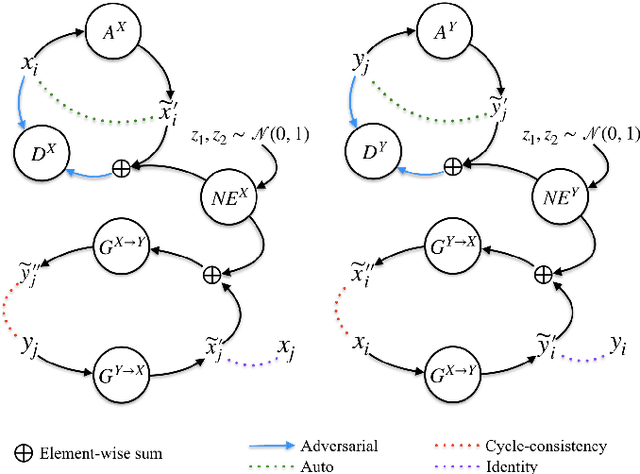
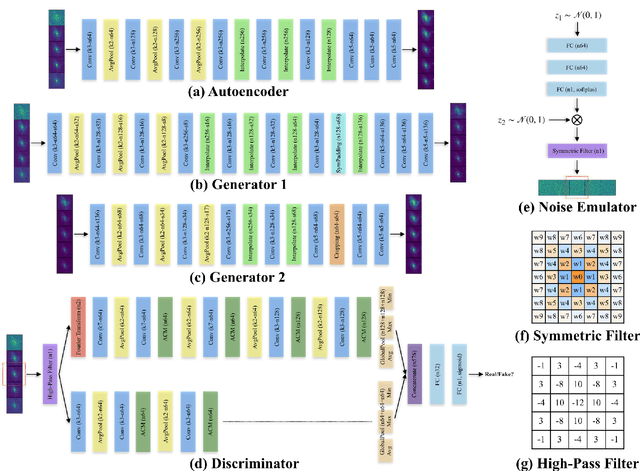
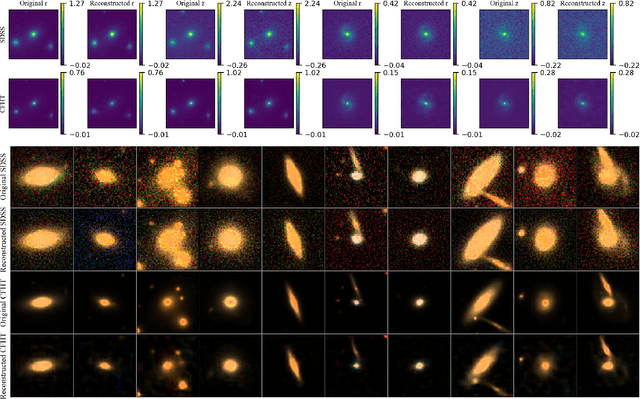
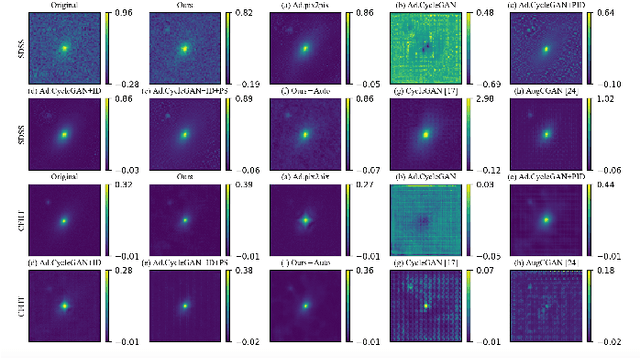
Image-to-image translation with Deep Learning neural networks, particularly with Generative Adversarial Networks (GANs), is one of the most powerful methods for simulating astronomical images. However, current work is limited to utilizing paired images with supervised translation, and there has been rare discussion on reconstructing noise background that encodes instrumental and observational effects. These limitations might be harmful for subsequent scientific applications in astrophysics. Therefore, we aim to develop methods for using unpaired images and preserving noise characteristics in image translation. In this work, we propose a two-way image translation model using GANs that exploits both paired and unpaired images in a semi-supervised manner, and introduce a noise emulating module that is able to learn and reconstruct noise characterized by high-frequency features. By experimenting on multi-band galaxy images from the Sloan Digital Sky Survey (SDSS) and the Canada France Hawaii Telescope Legacy Survey (CFHT), we show that our method recovers global and local properties effectively and outperforms benchmark image translation models. To our best knowledge, this work is the first attempt to apply semi-supervised methods and noise reconstruction techniques in astrophysical studies.
A CNN adapted to time series for the classification of Supernovae
Jan 02, 2019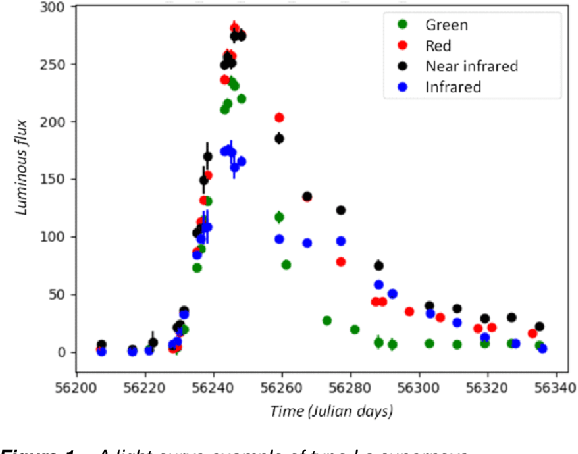
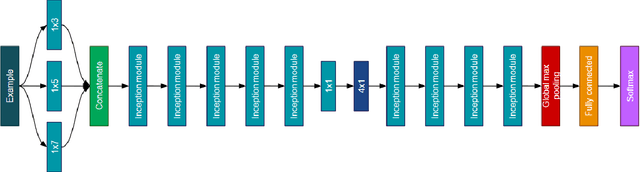
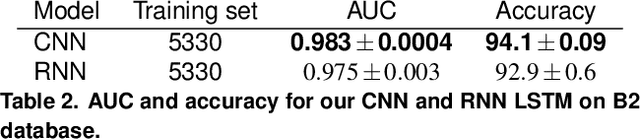
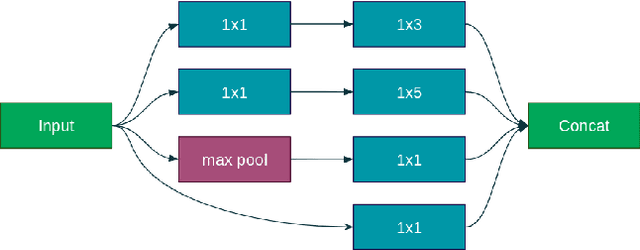
Cosmologists are facing the problem of the analysis of a huge quantity of data when observing the sky. The methods used in cosmology are, for the most of them, relying on astrophysical models, and thus, for the classification, they usually use a machine learning approach in two-steps, which consists in, first, extracting features, and second, using a classifier. In this paper, we are specifically studying the supernovae phenomenon and especially the binary classification "I.a supernovae versus not-I.a supernovae". We present two Convolutional Neural Networks (CNNs) defeating the current state-of-the-art. The first one is adapted to time series and thus to the treatment of supernovae light-curves. The second one is based on a Siamese CNN and is suited to the nature of data, i.e. their sparsity and their weak quantity (small learning database).