 Add to Chrome
 Add to Firefox
 Add to Edge
Annotation-Free Curb Detection Leveraging Altitude Difference Image
Sep 30, 2024
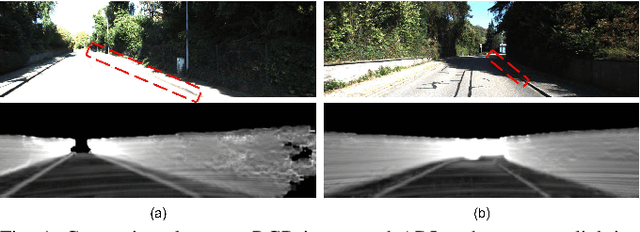
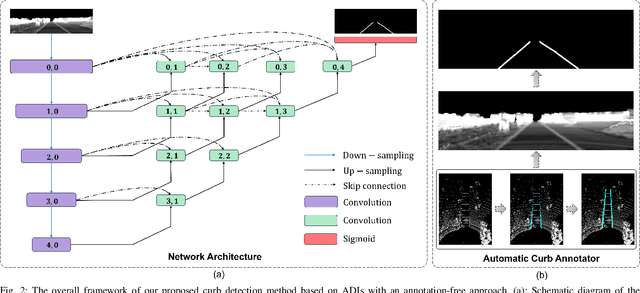
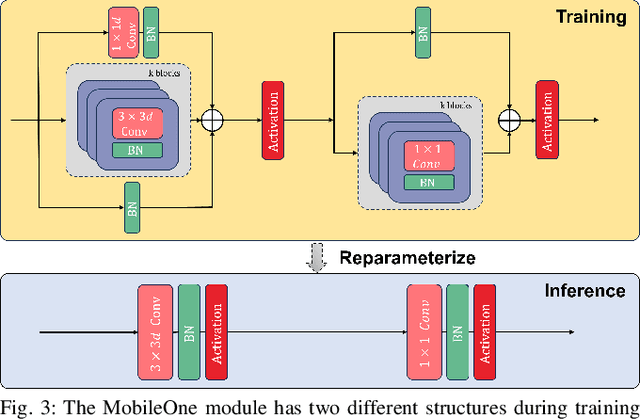
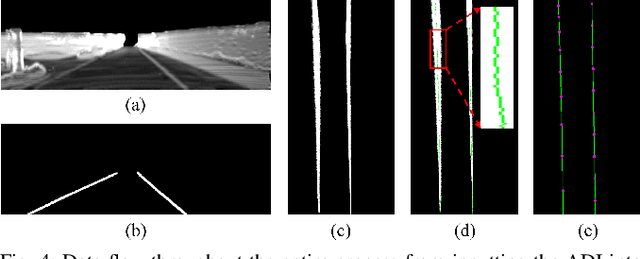
Road curbs are considered as one of the crucial and ubiquitous traffic features, which are essential for ensuring the safety of autonomous vehicles. Current methods for detecting curbs primarily rely on camera imagery or LiDAR point clouds. Image-based methods are vulnerable to fluctuations in lighting conditions and exhibit poor robustness, while methods based on point clouds circumvent the issues associated with lighting variations. However, it is the typical case that significant processing delays are encountered due to the voluminous amount of 3D points contained in each frame of the point cloud data. Furthermore, the inherently unstructured characteristics of point clouds poses challenges for integrating the latest deep learning advancements into point cloud data applications. To address these issues, this work proposes an annotation-free curb detection method leveraging Altitude Difference Image (ADI), which effectively mitigates the aforementioned challenges. Given that methods based on deep learning generally demand extensive, manually annotated datasets, which are both expensive and labor-intensive to create, we present an Automatic Curb Annotator (ACA) module. This module utilizes a deterministic curb detection algorithm to automatically generate a vast quantity of training data. Consequently, it facilitates the training of the curb detection model without necessitating any manual annotation of data. Finally, by incorporating a post-processing module, we manage to achieve state-of-the-art results on the KITTI 3D curb dataset with considerably reduced processing delays compared to existing methods, which underscores the effectiveness of our approach in curb detection tasks.

CoT-ST: Enhancing LLM-based Speech Translation with Multimodal Chain-of-Thought
Sep 29, 2024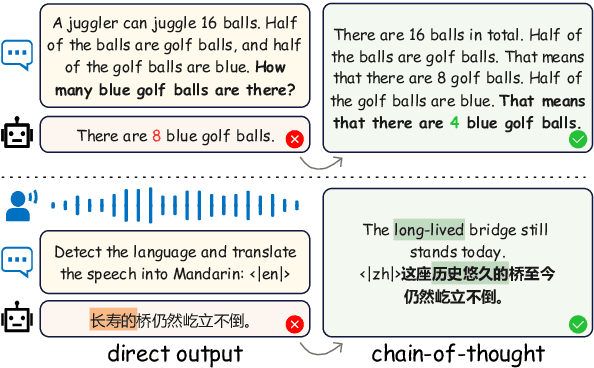
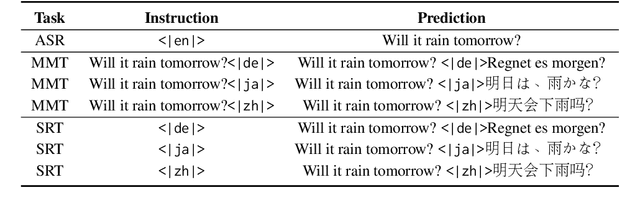
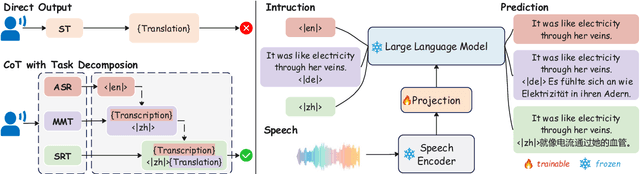
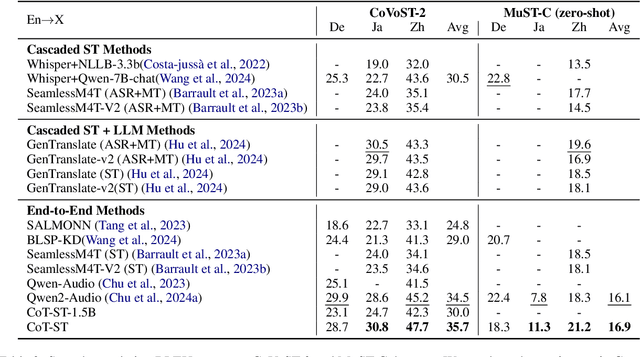
Speech Language Models (SLMs) have demonstrated impressive performance on speech translation tasks. However, existing research primarily focuses on direct instruction fine-tuning and often overlooks the inherent reasoning capabilities of SLMs. In this paper, we introduce a three-stage training framework designed to activate the chain-of-thought (CoT) capabilities of SLMs. We propose CoT-ST, a speech translation model that utilizes multimodal CoT to decompose speech translation into sequential steps of speech recognition and translation. We validated the effectiveness of our method on two datasets: the CoVoST-2 dataset and MuST-C dataset. The experimental results demonstrate that CoT-ST outperforms previous state-of-the-art methods, achieving higher BLEU scores (CoVoST-2 en-ja: 30.5->30.8, en-zh: 45.2->47.7, MuST-C en-zh: 19.6->21.2). This work is open sourced at https://github.com/X-LANCE/SLAM-LLM/tree/main/examples/st_covost2 .
Deep Learning and Machine Learning, Advancing Big Data Analytics and Management: Handy Appetizer
Sep 25, 2024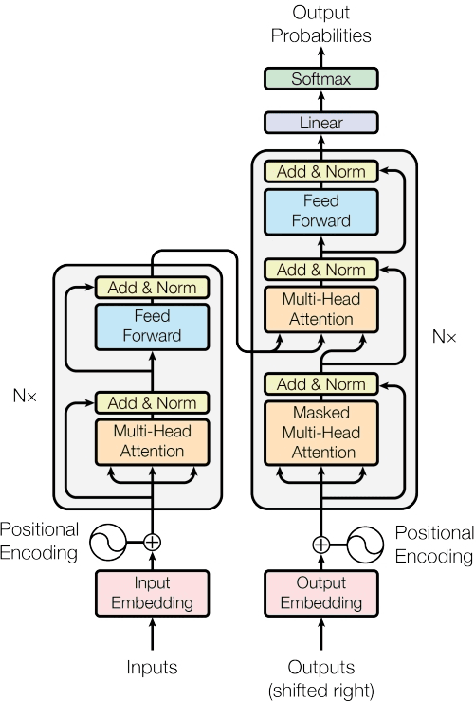
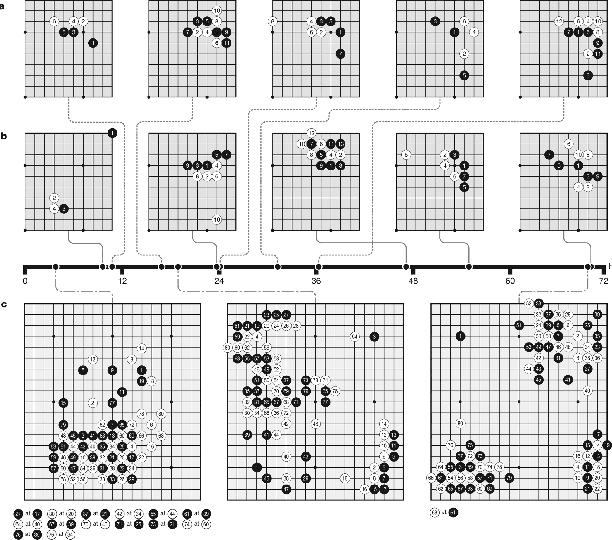
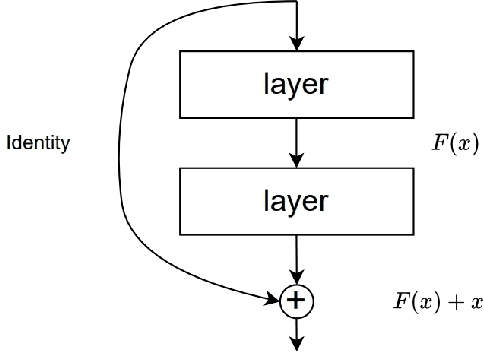
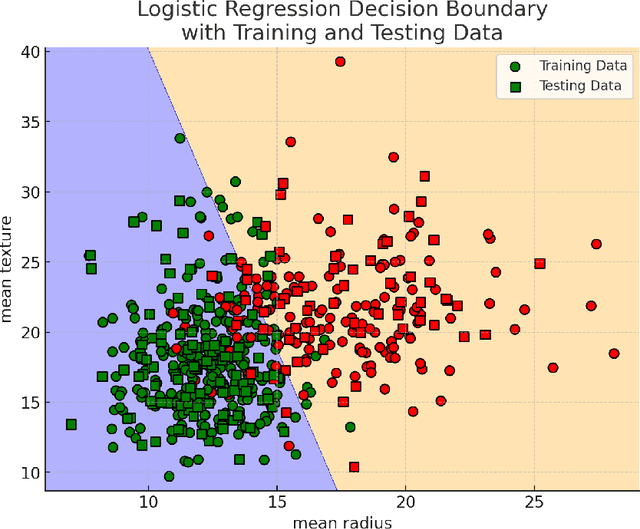
This book explores the role of Artificial Intelligence (AI), Machine Learning (ML), and Deep Learning (DL) in driving the progress of big data analytics and management. The book focuses on simplifying the complex mathematical concepts behind deep learning, offering intuitive visualizations and practical case studies to help readers understand how neural networks and technologies like Convolutional Neural Networks (CNNs) work. It introduces several classic models and technologies such as Transformers, GPT, ResNet, BERT, and YOLO, highlighting their applications in fields like natural language processing, image recognition, and autonomous driving. The book also emphasizes the importance of pre-trained models and how they can enhance model performance and accuracy, with instructions on how to apply these models in various real-world scenarios. Additionally, it provides an overview of key big data management technologies like SQL and NoSQL databases, as well as distributed computing frameworks such as Apache Hadoop and Spark, explaining their importance in managing and processing vast amounts of data. Ultimately, the book underscores the value of mastering deep learning and big data management skills as critical tools for the future workforce, making it an essential resource for both beginners and experienced professionals.
Deep Brain Ultrasound Ablation Thermal Dose Modeling with in Vivo Experimental Validation
Sep 04, 2024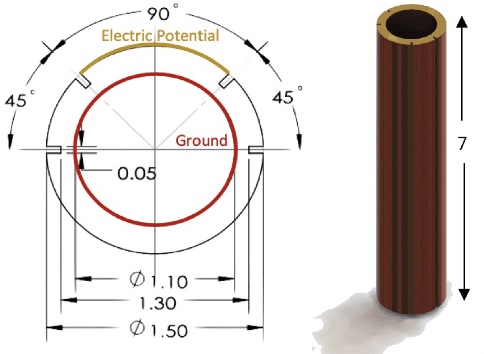
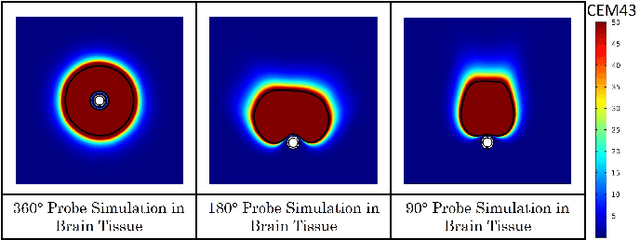
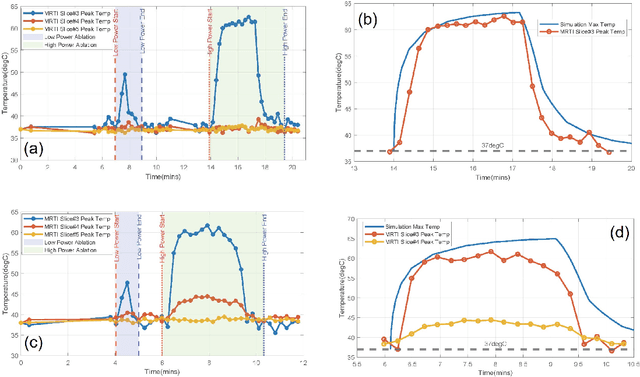
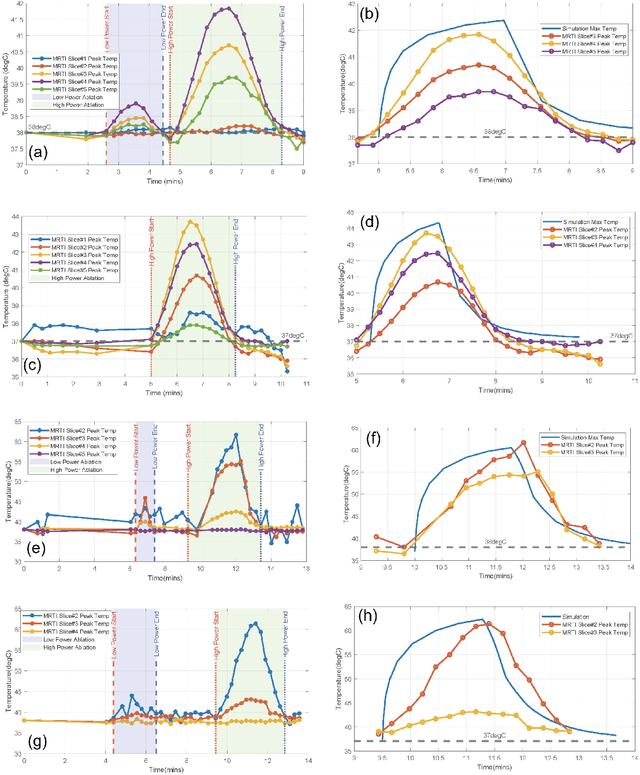
Intracorporeal needle-based therapeutic ultrasound (NBTU) is a minimally invasive option for intervening in malignant brain tumors, commonly used in thermal ablation procedures. This technique is suitable for both primary and metastatic cancers, utilizing a high-frequency alternating electric field (up to 10 MHz) to excite a piezoelectric transducer. The resulting rapid deformation of the transducer produces an acoustic wave that propagates through tissue, leading to localized high-temperature heating at the target tumor site and inducing rapid cell death. To optimize the design of NBTU transducers for thermal dose delivery during treatment, numerical modeling of the acoustic pressure field generated by the deforming piezoelectric transducer is frequently employed. The bioheat transfer process generated by the input pressure field is used to track the thermal propagation of the applicator over time. Magnetic resonance thermal imaging (MRTI) can be used to experimentally validate these models. Validation results using MRTI demonstrated the feasibility of this model, showing a consistent thermal propagation pattern. However, a thermal damage isodose map is more advantageous for evaluating therapeutic efficacy. To achieve a more accurate simulation based on the actual brain tissue environment, a new finite element method (FEM) simulation with enhanced damage evaluation capabilities was conducted. The results showed that the highest temperature and ablated volume differed between experimental and simulation results by 2.1884{\deg}C (3.71%) and 0.0631 cm$^3$ (5.74%), respectively. The lowest Pearson correlation coefficient (PCC) for peak temperature was 0.7117, and the lowest Dice coefficient for the ablated area was 0.7021, indicating a good agreement in accuracy between simulation and experiment.
Towards Efficient Large Language Models for Scientific Text: A Review
Aug 20, 2024
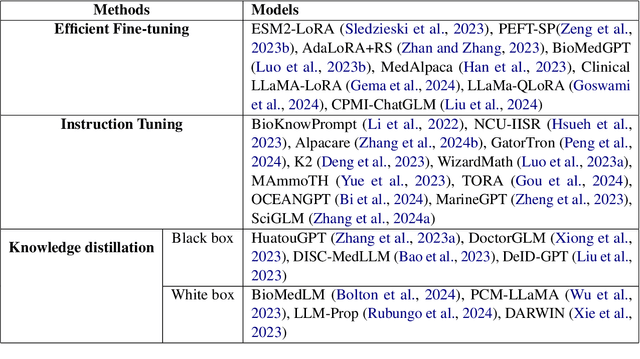
Large language models (LLMs) have ushered in a new era for processing complex information in various fields, including science. The increasing amount of scientific literature allows these models to acquire and understand scientific knowledge effectively, thus improving their performance in a wide range of tasks. Due to the power of LLMs, they require extremely expensive computational resources, intense amounts of data, and training time. Therefore, in recent years, researchers have proposed various methodologies to make scientific LLMs more affordable. The most well-known approaches align in two directions. It can be either focusing on the size of the models or enhancing the quality of data. To date, a comprehensive review of these two families of methods has not yet been undertaken. In this paper, we (I) summarize the current advances in the emerging abilities of LLMs into more accessible AI solutions for science, and (II) investigate the challenges and opportunities of developing affordable solutions for scientific domains using LLMs.
GLIMMER: Incorporating Graph and Lexical Features in Unsupervised Multi-Document Summarization
Aug 19, 2024
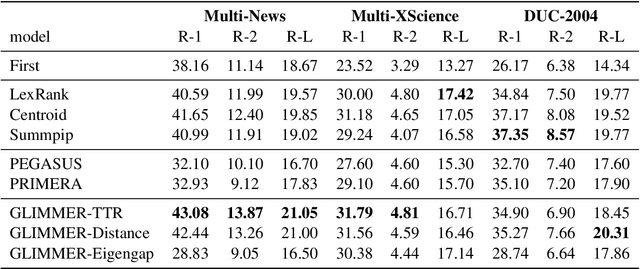
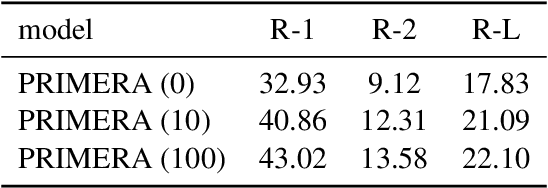

Pre-trained language models are increasingly being used in multi-document summarization tasks. However, these models need large-scale corpora for pre-training and are domain-dependent. Other non-neural unsupervised summarization approaches mostly rely on key sentence extraction, which can lead to information loss. To address these challenges, we propose a lightweight yet effective unsupervised approach called GLIMMER: a Graph and LexIcal features based unsupervised Multi-docuMEnt summaRization approach. It first constructs a sentence graph from the source documents, then automatically identifies semantic clusters by mining low-level features from raw texts, thereby improving intra-cluster correlation and the fluency of generated sentences. Finally, it summarizes clusters into natural sentences. Experiments conducted on Multi-News, Multi-XScience and DUC-2004 demonstrate that our approach outperforms existing unsupervised approaches. Furthermore, it surpasses state-of-the-art pre-trained multi-document summarization models (e.g. PEGASUS and PRIMERA) under zero-shot settings in terms of ROUGE scores. Additionally, human evaluations indicate that summaries generated by GLIMMER achieve high readability and informativeness scores. Our code is available at https://github.com/Oswald1997/GLIMMER.
Integrated Intention Prediction and Decision-Making with Spectrum Attention Net and Proximal Policy Optimization
Aug 06, 2024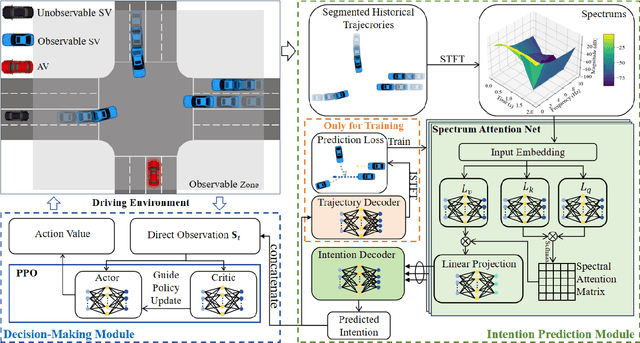
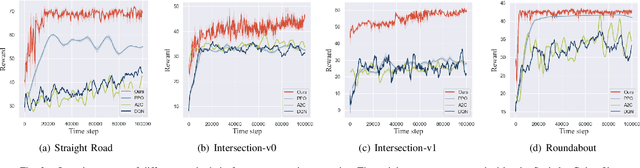
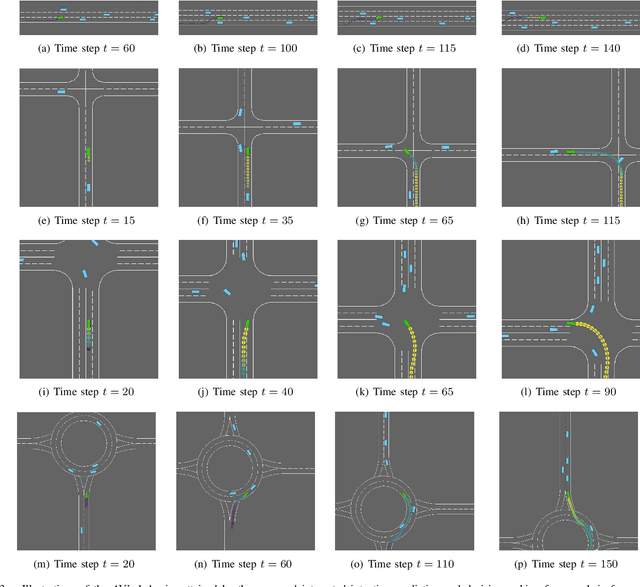
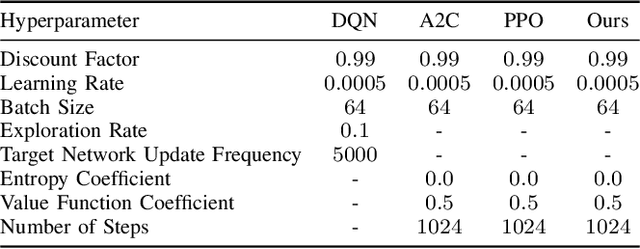
For autonomous driving in highly dynamic environments, it is anticipated to predict the future behaviors of surrounding vehicles (SVs) and make safe and effective decisions. However, modeling the inherent coupling effect between the prediction and decision-making modules has been a long-standing challenge, especially when there is a need to maintain appropriate computational efficiency. To tackle these problems, we propose a novel integrated intention prediction and decision-making approach, which explicitly models the coupling relationship and achieves efficient computation. Specifically, a spectrum attention net is designed to predict the intentions of SVs by capturing the trends of each frequency component over time and their interrelations. Fast computation of the intention prediction module is attained as the predicted intentions are not decoded to trajectories in the executing process. Furthermore, the proximal policy optimization (PPO) algorithm is employed to address the non-stationary problem in the framework through a modest policy update enabled by a clipping mechanism within its objective function. On the basis of these developments, the intention prediction and decision-making modules are integrated through joint learning. Experiments are conducted in representative traffic scenarios, and the results reveal that the proposed integrated framework demonstrates superior performance over several deep reinforcement learning (DRL) baselines in terms of success rate, efficiency, and safety in driving tasks.
Dynamic neural network with memristive CIM and CAM for 2D and 3D vision
Jul 12, 2024
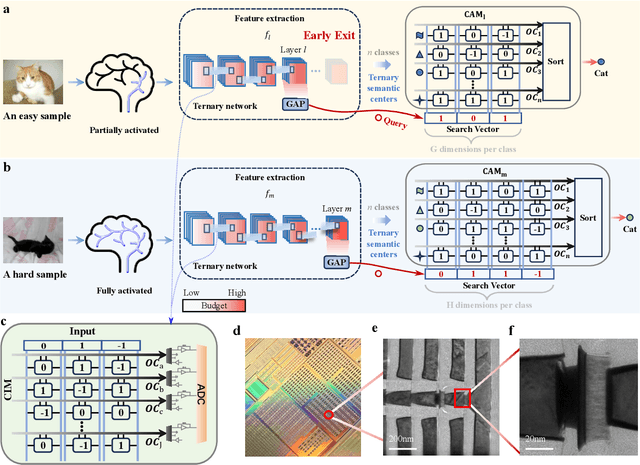
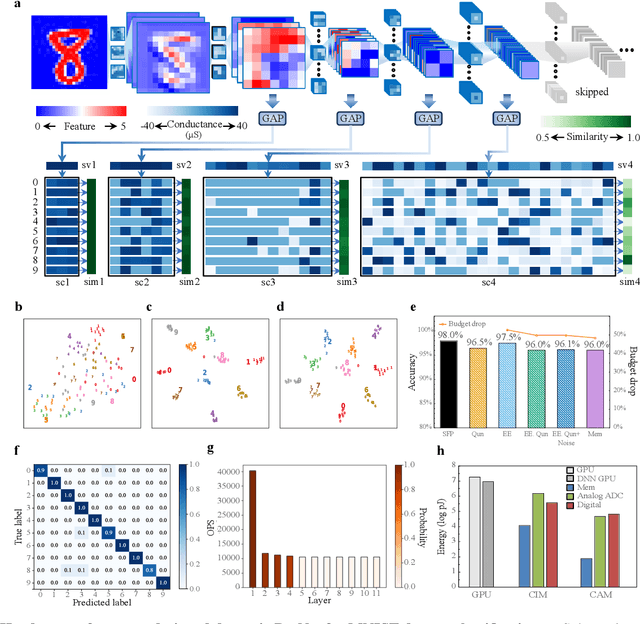
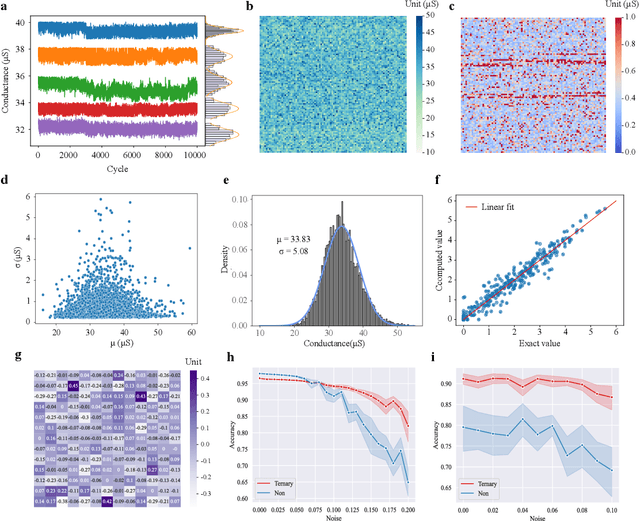
The brain is dynamic, associative and efficient. It reconfigures by associating the inputs with past experiences, with fused memory and processing. In contrast, AI models are static, unable to associate inputs with past experiences, and run on digital computers with physically separated memory and processing. We propose a hardware-software co-design, a semantic memory-based dynamic neural network (DNN) using memristor. The network associates incoming data with the past experience stored as semantic vectors. The network and the semantic memory are physically implemented on noise-robust ternary memristor-based Computing-In-Memory (CIM) and Content-Addressable Memory (CAM) circuits, respectively. We validate our co-designs, using a 40nm memristor macro, on ResNet and PointNet++ for classifying images and 3D points from the MNIST and ModelNet datasets, which not only achieves accuracy on par with software but also a 48.1% and 15.9% reduction in computational budget. Moreover, it delivers a 77.6% and 93.3% reduction in energy consumption.
Accurate Prior-centric Monocular Positioning with Offline LiDAR Fusion
Jul 12, 2024Unmanned vehicles usually rely on Global Positioning System (GPS) and Light Detection and Ranging (LiDAR) sensors to achieve high-precision localization results for navigation purpose. However, this combination with their associated costs and infrastructure demands, poses challenges for widespread adoption in mass-market applications. In this paper, we aim to use only a monocular camera to achieve comparable onboard localization performance by tracking deep-learning visual features on a LiDAR-enhanced visual prior map. Experiments show that the proposed algorithm can provide centimeter-level global positioning results with scale, which is effortlessly integrated and favorable for low-cost robot system deployment in real-world applications.
GraCoRe: Benchmarking Graph Comprehension and Complex Reasoning in Large Language Models
Jul 03, 2024Evaluating the graph comprehension and reasoning abilities of Large Language Models (LLMs) is challenging and often incomplete. Existing benchmarks focus primarily on pure graph understanding, lacking a comprehensive evaluation across all graph types and detailed capability definitions. This paper presents GraCoRe, a benchmark for systematically assessing LLMs' graph comprehension and reasoning. GraCoRe uses a three-tier hierarchical taxonomy to categorize and test models on pure graph and heterogeneous graphs, subdividing capabilities into 10 distinct areas tested through 19 tasks. Our benchmark includes 11 datasets with 5,140 graphs of varying complexity. We evaluated three closed-source and seven open-source LLMs, conducting thorough analyses from both ability and task perspectives. Key findings reveal that semantic enrichment enhances reasoning performance, node ordering impacts task success, and the ability to process longer texts does not necessarily improve graph comprehension or reasoning. GraCoRe is open-sourced at https://github.com/ZIKEYUAN/GraCoRe