 Add to Chrome
 Add to Firefox
 Add to Edge
Benchmarking and Reasoning Distillation of Large Language Models for Feedback Controller Design in Complex Dynamical Systems
Aug 07, 2026
Although remarkable capabilities have been demonstrated by Large Language Models (LLMs) across scientific domains, feedback controller design remains underexplored. Existing benchmarks focus mainly on linear single-Degree-of-Freedom (DoF) systems and large API-hosted models, leaving performance on complex controller-design tasks and feasibility for edge deployment unclear. To address these limitations, we introduce the Complex Dynamics-to-Control Benchmark for Large Language Models (CoDyControlBench), comprising 132 system configurations across five evaluation dimensions: number of DoF, system type, coupling level, damping regime, and controller type. Six state-of-the-art LLMs were evaluated over three independent runs, including three commercial models (GPT, Gemini, and Claude) and three open-source models (GLM, DeepSeek, and Qwen). GPT achieved the highest design success rate at 94.8\%, whereas Qwen showed the lowest rate at 50.0\%. Across the benchmark dimensions, DoF and controller type exhibited the largest model-averaged variations in design success, with success-rate ranges of 36.3\% and 17.6\%, respectively, exceeding those associated with system type, coupling level, and damping regime. Comparison of GPT and Qwen showed that their performance gap arose mainly from the control-design knowledge, particularly gain selection and the use of transient-limiting mechanisms. For edge deployment, a specialized 1.5B-parameter model was developed through reasoning distillation. The reasoning-distilled model outperformed the answer-distilled and base model on CoDyControlBench, maintained stable performance across 1-6 DoFs, and achieved successful traget tracking in all three physical trials on a pneumatic-artificial-muscle-driven robotic arm. These results establish a benchmark baseline and highlight the potential of lightweight, edge-deployable controller-design models.

JMed48k: A Multi-Profession Japanese Medical Licensing Benchmark for Vision-Language Model Evaluation
May 21, 2026We introduce JMed48k, a multi-profession Japanese healthcare licensing benchmark for evaluating vision-language models. Built from official PDF materials released by the Japanese Ministry of Health, Labour and Welfare, JMed48k contains 48,862 exam questions and 20,142 images from 11 national licensing examinations between 2005 and 2025, with visual content annotated under an 8-type taxonomy. From this corpus, we derive JMed48k-Eval, a recent five-year evaluation subset with 12,484 scored questions, including 9,905 text-only questions and 2,579 questions with images. We evaluate 21 proprietary, open-source, and medical-specific models, reporting text-only and with-image performance separately. Because these subsets contain different questions, we further introduce a paired image-removal audit that evaluates questions with images before and after removing visual content to explore four answer-transition states. The audit shows that proprietary and open source models gain substantially from images, whereas medical-specific systems show limited observable use of visual evidence, with many correct answers persisting after image removal. Even among proprietary models, the net image-removal effect varies sevenfold across professions, from +5.7 points on Physician questions to +39.8 points on Public Health Nurse questions. We release JMed48k to support reproducible, profession-stratified evaluation of vision-language models in medical licensing settings.
BrainAnytime: Anatomy-Aware Cross-Modal Pretraining for Brain Image Analysis with Arbitrary Modality Availability
May 13, 2026Clinical diagnostic workups typically follow a modality escalation pathway: after initial clinical evaluation, clinicians begin with routine structural imaging (e.g., MRI), selectively add sequences such as FLAIR or T2 to refine the differential, and reserve molecular imaging (e.g., amyloid-PET) for cases that remain uncertain after standard evaluation. Consequently, patients are observed with heterogeneous and often incomplete modality subsets. However, most current AI models assume fixed data modalities as the model inputs. In this paper, we present BrainAnytime, a unified pretraining framework pretrained on 34,899 3D brain scans from five datasets that support brain image analysis under arbitrary modality availability spanning multi-sequence MRI and amyloid-PET. A single model accepts whatever imaging is available, from a lone T1 scan to a full multimodal workup. Pretraining learns structural-molecular correspondences between MRI and PET via cross-modal distillation (RCMD) and prioritizes disease-vulnerable anatomy via atlas-guided curriculum masking (PACM), all within a shared 3D masked autoencoder (Multi-MAE3D). Across four downstream tasks and five clinically motivated modality settings, BrainAnytime largely outperforms modality-specific models, missing-modality baselines, and large-scale brain MRI pretrained foundation models on most modality settings. Notably, it surpasses the strongest missing-modality baselines with relative improvements of 6.2% and 7.0% in average accuracy on CN vs. AD and CN vs. MCI classification, respectively. Code is available at https://github.com/SDH-Lab/BrainAnytime.
PRA-PoE: Robust Alzheimer's Diagnosis with Arbitrary Missing Modalities
May 13, 2026Missing modalities are prevalent in real-world Alzheimer's disease (AD) assessment and pose a significant challenge to multimodal learning, particularly when the distribution of observed modality subsets differs between training and deployment. Such missingness pattern mismatch induces a conditional representation shift across modality subsets. Existing approaches that rely on implicit imputation or modality synthesis often fail to explicitly model modality availability and uncertainty, leading to overconfident dependence on synthesized features, reduced robustness, and miscalibrated uncertainty estimates. To address these limitations, we propose PRA-PoE, an incomplete multimodal learning framework that is equipped with Prototype-anchored Representation Alignment (PRA) and an Uncertainty-aware Product of Experts (UA-PoE) fusion mechanism. First, PRA uses learnable global prototypes and availability-conditioned tokens to encode modality availability, distinguish observed from missing modalities, re-synthesize features for missing modalities, and adaptively refine observed representations to align latent spaces across modality subsets, with the goal of reducing representation shift under varying missingness patterns. Second, UA-PoE models each modality as a Gaussian expert and performs closed-form Product of Experts fusion, where experts with higher uncertainty are automatically down-weighted via lower precision, improving uncertainty reliability. We evaluate PRA-PoE under a clinically realistic protocol by training with naturally missing data and testing on all non-empty modality combinations. PRA-PoE consistently outperforms the state-of-the-art across datasets, achieving a 5.4% relative improvement in average accuracy on ADNI and a 10.9% relative gain in average F1 on OASIS-3 over the strongest baseline across all non-empty modality subsets.
CORA: Conformal Risk-Controlled Agents for Safeguarded Mobile GUI Automation
Apr 10, 2026Graphical user interface (GUI) agents powered by vision language models (VLMs) are rapidly moving from passive assistance to autonomous operation. However, this unrestricted action space exposes users to severe and irreversible financial, privacy or social harm. Existing safeguards rely on prompt engineering, brittle heuristics and VLM-as-critic lack formal verification and user-tunable guarantees. We propose CORA (COnformal Risk-controlled GUI Agent), a post-policy, pre-action safeguarding framework that provides statistical guarantees on harmful executed actions. CORA reformulates safety as selective action execution: we train a Guardian model to estimate action-conditional risk for each proposed step. Rather than thresholding raw scores, we leverage Conformal Risk Control to calibrate an execute/abstain boundary that satisfies a user-specified risk budget and route rejected actions to a trainable Diagnostician model, which performs multimodal reasoning over rejected actions to recommend interventions (e.g., confirm, reflect, or abort) to minimize user burden. A Goal-Lock mechanism anchors assessment to a clarified, frozen user intent to resist visual injection attacks. To rigorously evaluate this paradigm, we introduce Phone-Harm, a new benchmark of mobile safety violations with step-level harm labels under real-world settings. Experiments on Phone-Harm and public benchmarks against diverse baselines validate that CORA improves the safety--helpfulness--interruption Pareto frontier, offering a practical, statistically grounded safety paradigm for autonomous GUI execution. Code and benchmark are available at cora-agent.github.io.
JMedEthicBench: A Multi-Turn Conversational Benchmark for Evaluating Medical Safety in Japanese Large Language Models
Jan 04, 2026As Large Language Models (LLMs) are increasingly deployed in healthcare field, it becomes essential to carefully evaluate their medical safety before clinical use. However, existing safety benchmarks remain predominantly English-centric, and test with only single-turn prompts despite multi-turn clinical consultations. To address these gaps, we introduce JMedEthicBench, the first multi-turn conversational benchmark for evaluating medical safety of LLMs for Japanese healthcare. Our benchmark is based on 67 guidelines from the Japan Medical Association and contains over 50,000 adversarial conversations generated using seven automatically discovered jailbreak strategies. Using a dual-LLM scoring protocol, we evaluate 27 models and find that commercial models maintain robust safety while medical-specialized models exhibit increased vulnerability. Furthermore, safety scores decline significantly across conversation turns (median: 9.5 to 5.0, $p < 0.001$). Cross-lingual evaluation on both Japanese and English versions of our benchmark reveals that medical model vulnerabilities persist across languages, indicating inherent alignment limitations rather than language-specific factors. These findings suggest that domain-specific fine-tuning may accidentally weaken safety mechanisms and that multi-turn interactions represent a distinct threat surface requiring dedicated alignment strategies.
Feature Alignment and Representation Transfer in Knowledge Distillation for Large Language Models
Apr 18, 2025Knowledge distillation (KD) is a technique for transferring knowledge from complex teacher models to simpler student models, significantly enhancing model efficiency and accuracy. It has demonstrated substantial advancements in various applications including image classification, object detection, language modeling, text classification, and sentiment analysis. Recent innovations in KD methods, such as attention-based approaches, block-wise logit distillation, and decoupling distillation, have notably improved student model performance. These techniques focus on stimulus complexity, attention mechanisms, and global information capture to optimize knowledge transfer. In addition, KD has proven effective in compressing large language models while preserving accuracy, reducing computational overhead, and improving inference speed. This survey synthesizes the latest literature, highlighting key findings, contributions, and future directions in knowledge distillation to provide insights for researchers and practitioners on its evolving role in artificial intelligence and machine learning.
Generative Adversarial Networks Bridging Art and Machine Intelligence
Feb 09, 2025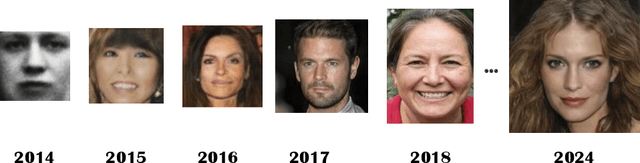

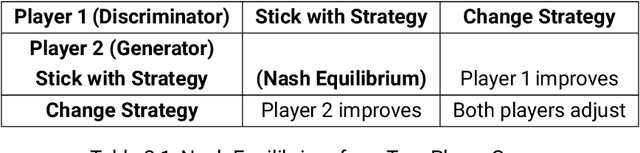

Generative Adversarial Networks (GAN) have greatly influenced the development of computer vision and artificial intelligence in the past decade and also connected art and machine intelligence together. This book begins with a detailed introduction to the fundamental principles and historical development of GANs, contrasting them with traditional generative models and elucidating the core adversarial mechanisms through illustrative Python examples. The text systematically addresses the mathematical and theoretical underpinnings including probability theory, statistics, and game theory providing a solid framework for understanding the objectives, loss functions, and optimisation challenges inherent to GAN training. Subsequent chapters review classic variants such as Conditional GANs, DCGANs, InfoGAN, and LAPGAN before progressing to advanced training methodologies like Wasserstein GANs, GANs with gradient penalty, least squares GANs, and spectral normalisation techniques. The book further examines architectural enhancements and task-specific adaptations in generators and discriminators, showcasing practical implementations in high resolution image generation, artistic style transfer, video synthesis, text to image generation and other multimedia applications. The concluding sections offer insights into emerging research trends, including self-attention mechanisms, transformer-based generative models, and a comparative analysis with diffusion models, thus charting promising directions for future developments in both academic and applied settings.
From Aleatoric to Epistemic: Exploring Uncertainty Quantification Techniques in Artificial Intelligence
Jan 05, 2025
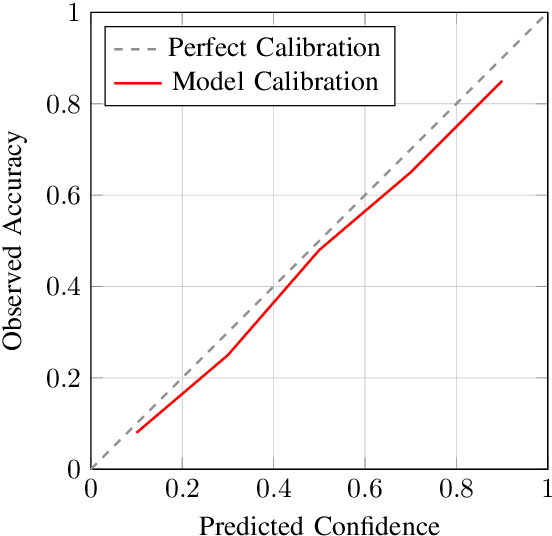

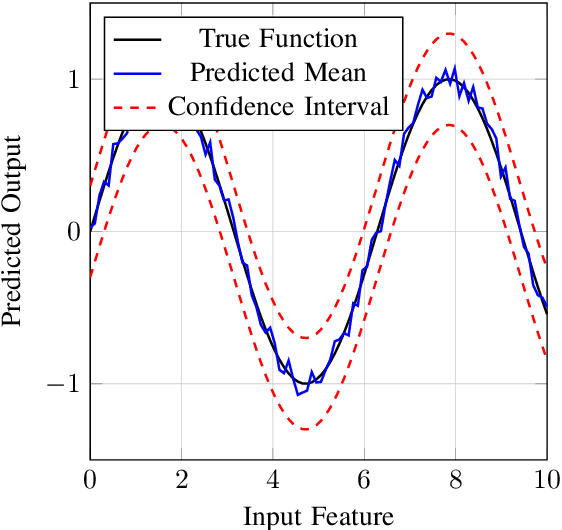
Uncertainty quantification (UQ) is a critical aspect of artificial intelligence (AI) systems, particularly in high-risk domains such as healthcare, autonomous systems, and financial technology, where decision-making processes must account for uncertainty. This review explores the evolution of uncertainty quantification techniques in AI, distinguishing between aleatoric and epistemic uncertainties, and discusses the mathematical foundations and methods used to quantify these uncertainties. We provide an overview of advanced techniques, including probabilistic methods, ensemble learning, sampling-based approaches, and generative models, while also highlighting hybrid approaches that integrate domain-specific knowledge. Furthermore, we examine the diverse applications of UQ across various fields, emphasizing its impact on decision-making, predictive accuracy, and system robustness. The review also addresses key challenges such as scalability, efficiency, and integration with explainable AI, and outlines future directions for research in this rapidly developing area. Through this comprehensive survey, we aim to provide a deeper understanding of UQ's role in enhancing the reliability, safety, and trustworthiness of AI systems.
From Bench to Bedside: A Review of Clinical Trialsin Drug Discovery and Development
Dec 12, 2024Clinical trials are an indispensable part of the drug development process, bridging the gap between basic research and clinical application. During the development of new drugs, clinical trials are used not only to evaluate the safety and efficacy of the drug but also to explore its dosage, treatment regimens, and potential side effects. This review discusses the various stages of clinical trials, including Phase I (safety assessment), Phase II (preliminary efficacy evaluation), Phase III (large-scale validation), and Phase IV (post-marketing surveillance), highlighting the characteristics of each phase and their interrelationships. Additionally, the paper addresses the major challenges encountered in clinical trials, such as ethical issues, subject recruitment difficulties, diversity and representativeness concerns, and proposes strategies for overcoming these challenges. With the advancement of technology, innovative technologies such as artificial intelligence, big data, and digitalization are gradually transforming clinical trial design and implementation, improving trial efficiency and data quality. The article also looks forward to the future of clinical trials, particularly the impact of emerging therapies such as gene therapy and immunotherapy on trial design, as well as the importance of regulatory reforms and global collaboration. In conclusion, the core role of clinical trials in drug development will continue to drive the progress of innovative drug development and clinical treatment.