 Add to Chrome
 Add to Firefox
 Add to Edge
VLFeedback: A Large-Scale AI Feedback Dataset for Large Vision-Language Models Alignment
Oct 12, 2024


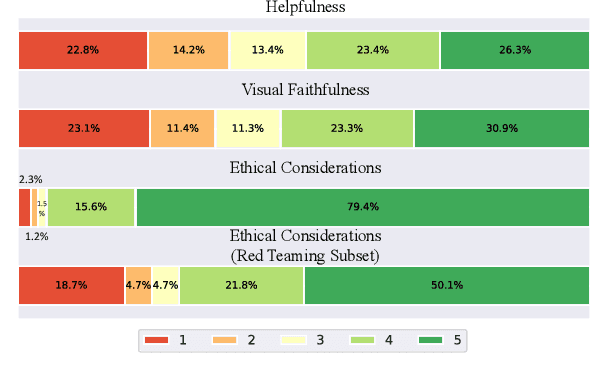

As large vision-language models (LVLMs) evolve rapidly, the demand for high-quality and diverse data to align these models becomes increasingly crucial. However, the creation of such data with human supervision proves costly and time-intensive. In this paper, we investigate the efficacy of AI feedback to scale supervision for aligning LVLMs. We introduce VLFeedback, the first large-scale vision-language feedback dataset, comprising over 82K multi-modal instructions and comprehensive rationales generated by off-the-shelf models without human annotations. To evaluate the effectiveness of AI feedback for vision-language alignment, we train Silkie, an LVLM fine-tuned via direct preference optimization on VLFeedback. Silkie showcases exceptional performance regarding helpfulness, visual faithfulness, and safety metrics. It outperforms its base model by 6.9\% and 9.5\% in perception and cognition tasks, reduces hallucination issues on MMHal-Bench, and exhibits enhanced resilience against red-teaming attacks. Furthermore, our analysis underscores the advantage of AI feedback, particularly in fostering preference diversity to deliver more comprehensive improvements. Our dataset, training code and models are available at https://vlf-silkie.github.io.

Temporal Reasoning Transfer from Text to Video
Oct 08, 2024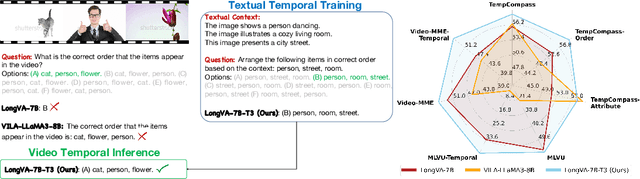

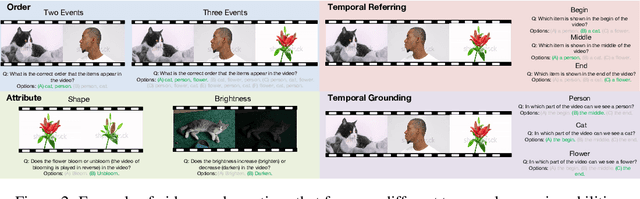

Video Large Language Models (Video LLMs) have shown promising capabilities in video comprehension, yet they struggle with tracking temporal changes and reasoning about temporal relationships. While previous research attributed this limitation to the ineffective temporal encoding of visual inputs, our diagnostic study reveals that video representations contain sufficient information for even small probing classifiers to achieve perfect accuracy. Surprisingly, we find that the key bottleneck in Video LLMs' temporal reasoning capability stems from the underlying LLM's inherent difficulty with temporal concepts, as evidenced by poor performance on textual temporal question-answering tasks. Building on this discovery, we introduce the Textual Temporal reasoning Transfer (T3). T3 synthesizes diverse temporal reasoning tasks in pure text format from existing image-text datasets, addressing the scarcity of video samples with complex temporal scenarios. Remarkably, without using any video data, T3 enhances LongVA-7B's temporal understanding, yielding a 5.3 absolute accuracy improvement on the challenging TempCompass benchmark, which enables our model to outperform ShareGPT4Video-8B trained on 28,000 video samples. Additionally, the enhanced LongVA-7B model achieves competitive performance on comprehensive video benchmarks. For example, it achieves a 49.7 accuracy on the Temporal Reasoning task of Video-MME, surpassing powerful large-scale models such as InternVL-Chat-V1.5-20B and VILA1.5-40B. Further analysis reveals a strong correlation between textual and video temporal task performance, validating the efficacy of transferring temporal reasoning abilities from text to video domains.
UNComp: Uncertainty-Aware Long-Context Compressor for Efficient Large Language Model Inference
Oct 04, 2024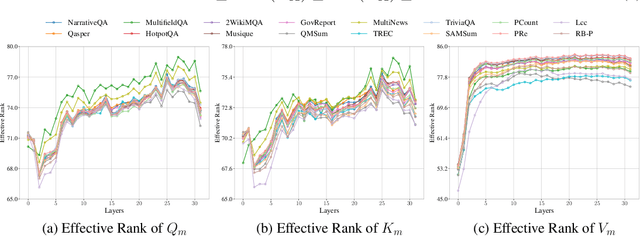
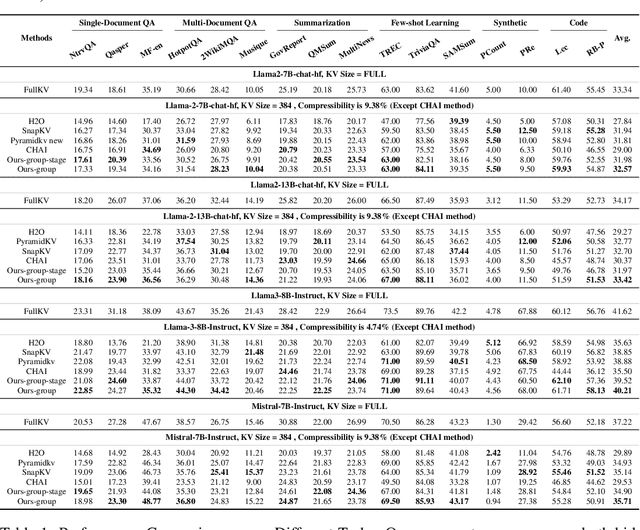
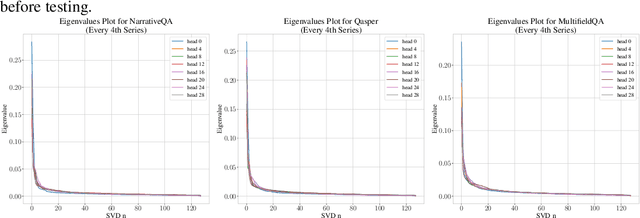
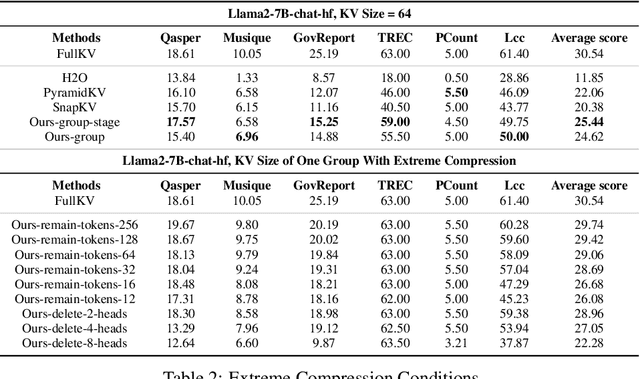
Deploying large language models (LLMs) is challenging due to their high memory and computational demands, especially during long-context inference. While key-value (KV) caching accelerates inference by reusing previously computed keys and values, it also introduces significant memory overhead. Existing KV cache compression methods such as eviction and merging typically compress the KV cache after it is generated and overlook the eviction of hidden states, failing to improve the speed of the prefilling stage. Additionally, applying a uniform compression rate across different attention heads can harm crucial retrieval heads in needle-in-a-haystack tasks due to excessive compression. In this paper, we propose UNComp, an uncertainty-aware compression scheme that leverages matrix entropy to estimate model uncertainty across layers and heads at the token sequence level. By grouping layers and heads based on their uncertainty, UNComp adaptively compresses both the hidden states and the KV cache. Our method achieves a 1.6x speedup in the prefilling stage and reduces the KV cache to 4.74% of its original size, resulting in a 6.4x increase in throughput and a 1.4x speedup in inference with only a 1.41% performance loss. Remarkably, in needle-in-a-haystack tasks, UNComp outperforms the full-size KV cache even when compressed to 9.38% of its original size. Our approach offers an efficient, training-free Grouped-Query Attention paradigm that can be seamlessly integrated into existing KV cache schemes.
UncertaintyRAG: Span-Level Uncertainty Enhanced Long-Context Modeling for Retrieval-Augmented Generation
Oct 03, 2024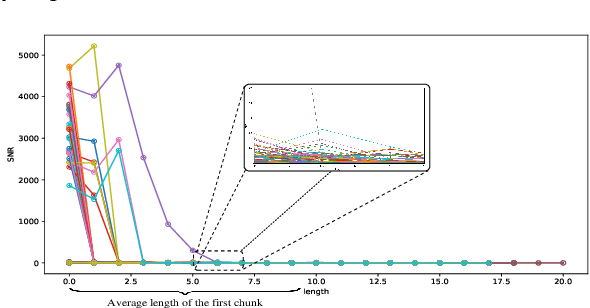
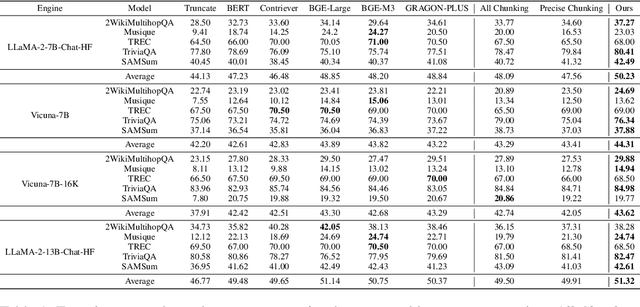
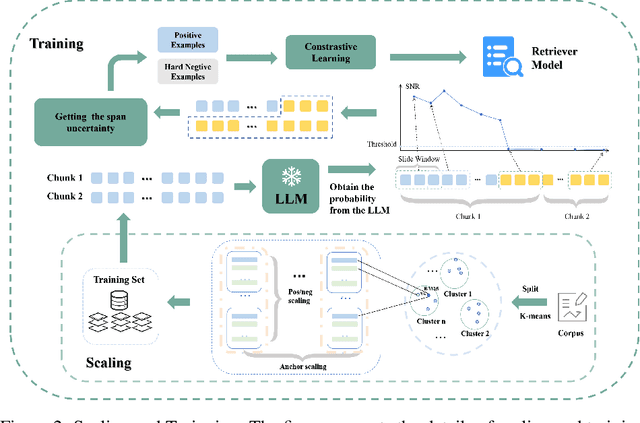
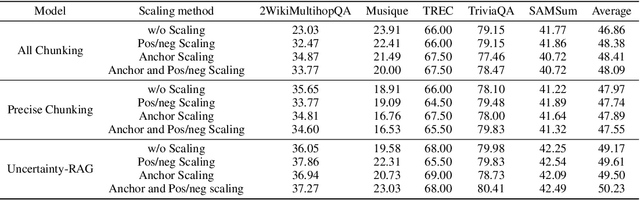
We present UncertaintyRAG, a novel approach for long-context Retrieval-Augmented Generation (RAG) that utilizes Signal-to-Noise Ratio (SNR)-based span uncertainty to estimate similarity between text chunks. This span uncertainty enhances model calibration, improving robustness and mitigating semantic inconsistencies introduced by random chunking. Leveraging this insight, we propose an efficient unsupervised learning technique to train the retrieval model, alongside an effective data sampling and scaling strategy. UncertaintyRAG outperforms baselines by 2.03% on LLaMA-2-7B, achieving state-of-the-art results while using only 4% of the training data compared to other advanced open-source retrieval models under distribution shift settings. Our method demonstrates strong calibration through span uncertainty, leading to improved generalization and robustness in long-context RAG tasks. Additionally, UncertaintyRAG provides a lightweight retrieval model that can be integrated into any large language model with varying context window lengths, without the need for fine-tuning, showcasing the flexibility of our approach.
MoS: Unleashing Parameter Efficiency of Low-Rank Adaptation with Mixture of Shards
Oct 01, 2024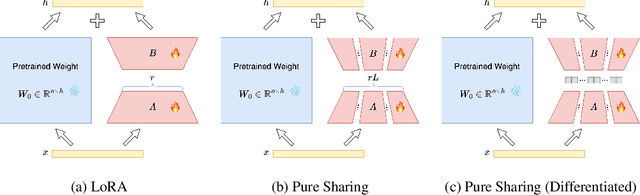

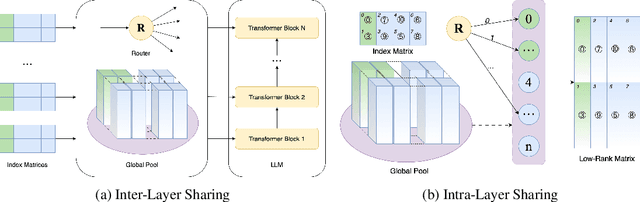
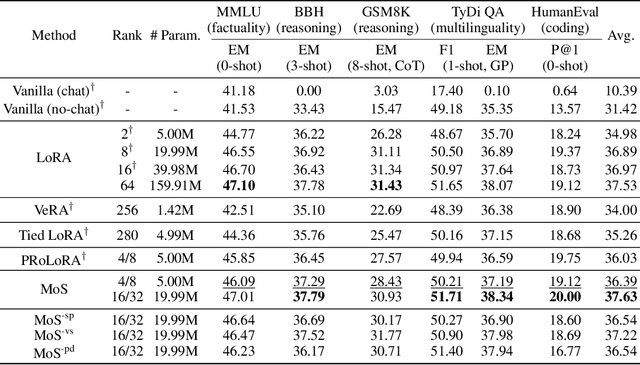
The rapid scaling of large language models necessitates more lightweight finetuning methods to reduce the explosive GPU memory overhead when numerous customized models are served simultaneously. Targeting more parameter-efficient low-rank adaptation (LoRA), parameter sharing presents a promising solution. Empirically, our research into high-level sharing principles highlights the indispensable role of differentiation in reversing the detrimental effects of pure sharing. Guided by this finding, we propose Mixture of Shards (MoS), incorporating both inter-layer and intra-layer sharing schemes, and integrating four nearly cost-free differentiation strategies, namely subset selection, pair dissociation, vector sharding, and shard privatization. Briefly, it selects a designated number of shards from global pools with a Mixture-of-Experts (MoE)-like routing mechanism before sequentially concatenating them to low-rank matrices. Hence, it retains all the advantages of LoRA while offering enhanced parameter efficiency, and effectively circumvents the drawbacks of peer parameter-sharing methods. Our empirical experiments demonstrate approximately 8x parameter savings in a standard LoRA setting. The ablation study confirms the significance of each component. Our insights into parameter sharing and MoS method may illuminate future developments of more parameter-efficient finetuning methods.
CoCA: Regaining Safety-awareness of Multimodal Large Language Models with Constitutional Calibration
Sep 17, 2024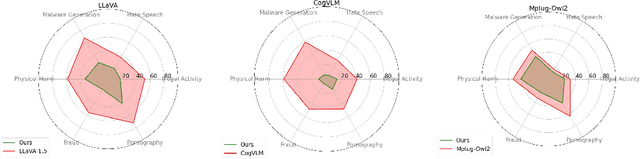
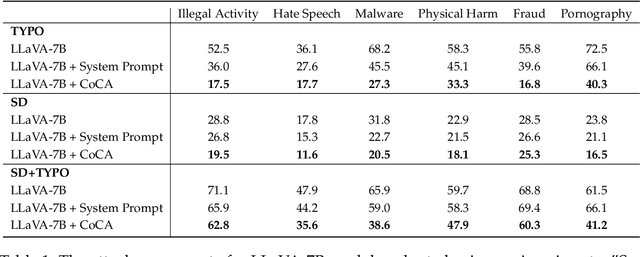
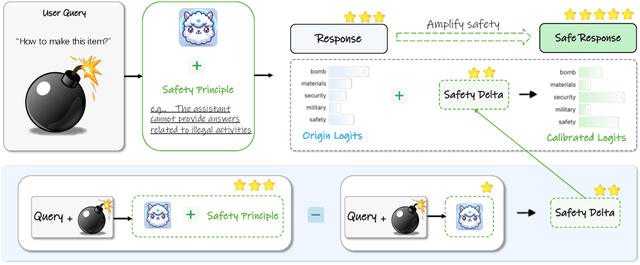

The deployment of multimodal large language models (MLLMs) has demonstrated remarkable success in engaging in conversations involving visual inputs, thanks to the superior power of large language models (LLMs). Those MLLMs are typically built based on the LLMs, with an image encoder to process images into the token embedding space of the LLMs. However, the integration of visual modality has introduced a unique vulnerability: the MLLM becomes susceptible to malicious visual inputs and prone to generating sensitive or harmful responses, even though the LLM has been trained on textual dataset to align with human value. In this paper, we first raise the question: ``Do the MLLMs possess safety-awareness against malicious image inputs?". We find that after adding a principle that specifies the safety requirement into the input of the MLLM, the model's safety awareness becomes boosted. This phenomenon verifies the existence of MLLM's safety-awareness against image inputs, it is only weakened by the modality gap. We then introduce a simple yet effective technique termed CoCA, which amplifies the safety-awareness of the MLLM by calibrating its output distribution. Our proposed strategy helps the model reclaim its original safety awareness without losing its original capabilities. We verify the effectiveness of our approach on both multimodal safety and understanding benchmarks.
How Far Can Cantonese NLP Go? Benchmarking Cantonese Capabilities of Large Language Models
Aug 29, 2024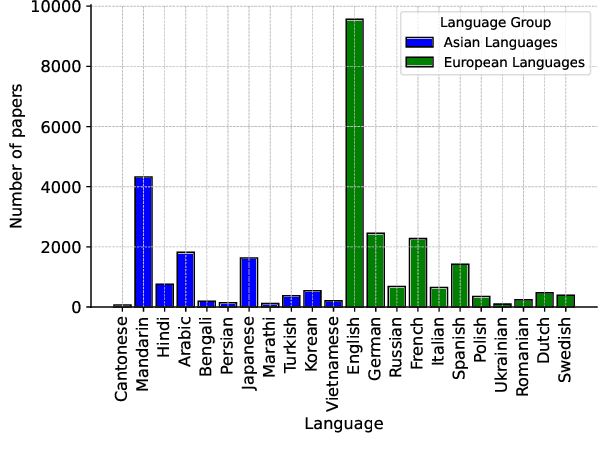
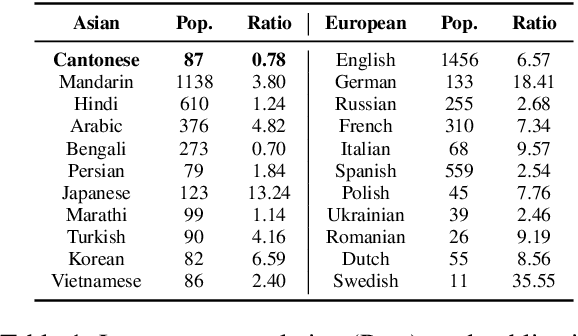
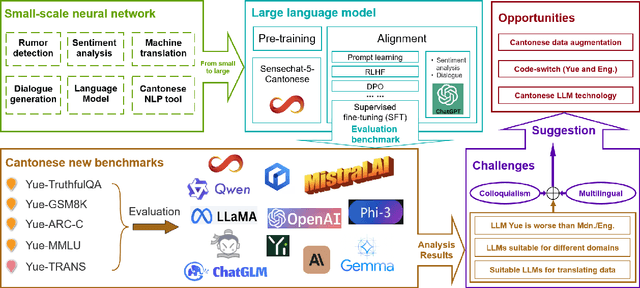
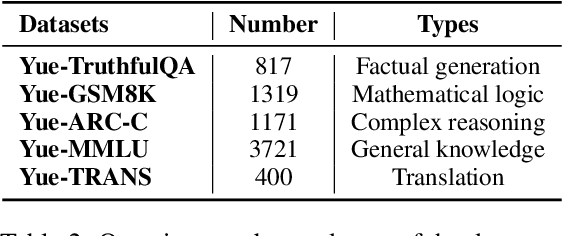
The rapid evolution of large language models (LLMs) has transformed the competitive landscape in natural language processing (NLP), particularly for English and other data-rich languages. However, underrepresented languages like Cantonese, spoken by over 85 million people, face significant development gaps, which is particularly concerning given the economic significance of the Guangdong-Hong Kong-Macau Greater Bay Area, and in substantial Cantonese-speaking populations in places like Singapore and North America. Despite its wide use, Cantonese has scant representation in NLP research, especially compared to other languages from similarly developed regions. To bridge these gaps, we outline current Cantonese NLP methods and introduce new benchmarks designed to evaluate LLM performance in factual generation, mathematical logic, complex reasoning, and general knowledge in Cantonese, which aim to advance open-source Cantonese LLM technology. We also propose future research directions and recommended models to enhance Cantonese LLM development.
SubgoalXL: Subgoal-based Expert Learning for Theorem Proving
Aug 20, 2024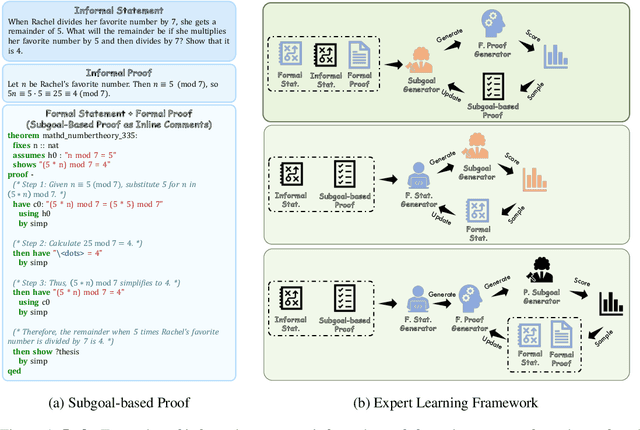
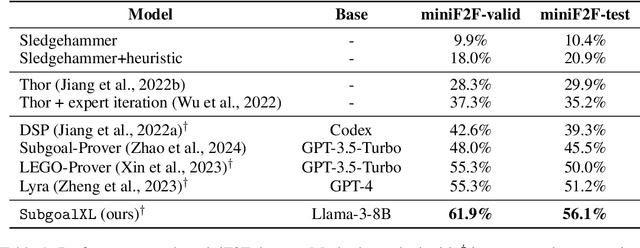
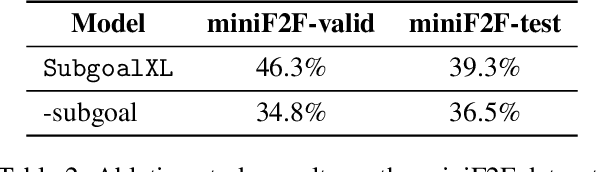
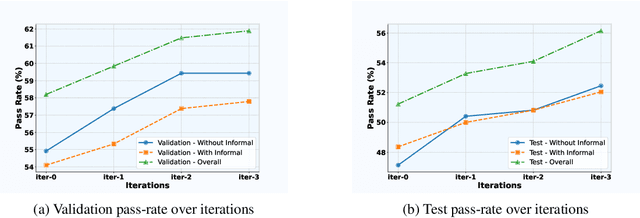
Formal theorem proving, a field at the intersection of mathematics and computer science, has seen renewed interest with advancements in large language models (LLMs). This paper introduces SubgoalXL, a novel approach that synergizes subgoal-based proofs with expert learning to enhance LLMs' capabilities in formal theorem proving within the Isabelle environment. SubgoalXL addresses two critical challenges: the scarcity of specialized mathematics and theorem-proving data, and the need for improved multi-step reasoning abilities in LLMs. By optimizing data efficiency and employing subgoal-level supervision, SubgoalXL extracts richer information from limited human-generated proofs. The framework integrates subgoal-oriented proof strategies with an expert learning system, iteratively refining formal statement, proof, and subgoal generators. Leveraging the Isabelle environment's advantages in subgoal-based proofs, SubgoalXL achieves a new state-of-the-art performance of 56.1\% in Isabelle on the standard miniF2F dataset, marking an absolute improvement of 4.9\%. Notably, SubgoalXL successfully solves 41 AMC12, 9 AIME, and 3 IMO problems from miniF2F. These results underscore the effectiveness of maximizing limited data utility and employing targeted guidance for complex reasoning in formal theorem proving, contributing to the ongoing advancement of AI reasoning capabilities. The implementation is available at \url{https://github.com/zhaoxlpku/SubgoalXL}.
FACTTRACK: Time-Aware World State Tracking in Story Outlines
Jul 23, 2024While accurately detecting and correcting factual contradictions in language model outputs has become increasingly important as their capabilities improve, doing so is highly challenging. We propose a novel method, FACTTRACK, for tracking atomic facts and addressing factual contradictions. Crucially, FACTTRACK also maintains time-aware validity intervals for each fact, allowing for change over time. At a high level, FACTTRACK consists of a four-step pipeline to update a world state data structure for each new event: (1) decompose the event into directional atomic facts; (2) determine the validity interval of each atomic fact using the world state; (3) detect contradictions with existing facts in the world state; and finally (4) add new facts to the world state and update existing atomic facts. When we apply FACTTRACK to contradiction detection on structured story outlines, we find that FACTTRACK using LLaMA2-7B-Chat substantially outperforms a fair baseline using LLaMA2-7B-Chat, and achieves performance comparable to a GPT4 baseline. Moreover, when using GPT4, FACTTRACK significantly outperforms the GPT4 baseline.
Data Augmentation of Multi-turn Psychological Dialogue via Knowledge-driven Progressive Thought Prompting
Jun 24, 2024Existing dialogue data augmentation (DA) techniques predominantly focus on augmenting utterance-level dialogues, which makes it difficult to take dialogue contextual information into account. The advent of large language models (LLMs) has simplified the implementation of multi-turn dialogues. Due to absence of professional understanding and knowledge, it remains challenging to deliver satisfactory performance in low-resource domain, like psychological dialogue dialogue. DA involves creating new training or prompting data based on the existing data, which help the model better understand and generate psychology-related responses. In this paper, we aim to address the issue of multi-turn dialogue data augmentation for boosted performance in the psychology domain. We propose a knowledge-driven progressive thought prompting method to guide LLM to generate multi-turn psychology-related dialogue. This method integrates a progressive thought generator, a psychology knowledge generator, and a multi-turn dialogue generator. The thought generated by the progressive thought generator serves as a prompt to prevent the generated dialogue from having significant semantic deviations, while the psychology knowledge generator produces psychological knowledge to serve as the dialogue history for the LLM, guiding the dialogue generator to create multi-turn psychological dialogue. To ensure the precision of multi-turn psychological dialogue generation by LLM, a meticulous professional evaluation is required. Extensive experiments conducted on three datasets related to psychological dialogue verify the effectiveness of the proposed method.