 Add to Chrome
 Add to Firefox
 Add to Edge
Intern-S2-Preview: Scientific Agentic Foundation Model
Aug 13, 2026
Scientific discovery increasingly requires AI systems that can reason over scientific evidence of heterogeneous modalities, interact with scientific tools and environments, and sustain progress across long task horizons. We present Intern-S2-Preview, a series of scientific agentic foundation models designed to support multimodal scientific understanding, reasoning, generation, and long-horizon tasks. The training pipeline begins with scientific multimodal pre-training over rendered scientific documents, interleaved image-text data, and diverse scientific corpora. Starting from the pretrained checkpoint, we apply a unified post-training pipeline consisting of supervised fine-tuning, scalable multi-task reinforcement learning (RL), black- and white-box agentic RL, and on-policy distillation. This pipeline is supported by practical techniques that improve rollout and training stability and efficiency, including partial rollout with off-policy correction, adaptive length regularization, online speculative decoding, robust multi-task optimization, and trace-aware experience assembly for agentic tasks. At the architecture level, Intern-S2-Preview-397B extends time series modelling from efficient long-sequence understanding to numerical forecasting, while Memory Decoder is studied as a separate memory-augmented path for rapid scientific specialization without modifying the frozen 397B backbone. Evaluations across scientific, multimodal, agentic, and general-purpose benchmarks show that Intern-S2-Preview-397B achieves competitive or leading results in multiple settings. The time series modules improve scientific signal understanding and forecasting on SciTS, while the separate Intern-MemDec-4B extension improves the Biology-Instructions average score from 56.92 to 60.32 without modifying the frozen 397B backbone.

Handwritten and Printed Text Segmentation via Region-Aware Human-Writing Descriptor Engineering
Jul 17, 2026With the increasing demand for reusing paper documents in educational and office settings, accurate segmentation of handwritten and printed text has become a crucial step in document digitization. Although numerous deep learning models have been developed for this task, their high computational cost limits deployment on resource-constrained edge devices. To address this challenge, we present a lightweight framework optimized for efficient performance on devices with severely limited computational capacity. Our approach begins with the Sentence-level Connected Component Segmentation algorithm, aimed at extracting coherent sentence-level segments from document images. We then design a novel Region-aware Handwriting Descriptor (RHD) to capture the intrinsic variability of human handwriting at the sentence level. A simple conventional classifier can then be seamlessly integrated with our designed descriptor, demonstrating strong classification performance for distinguishing handwritten and printed sentence-level text images, highlighting that the proposed descriptor is agnostic to the choice of classifier. Extensive experiments are performed on our self-constructed Multilingual High-Quality Annotated Dataset for Handwritten and Printed Text Segmentation (MAD-HPTS) and a public benchmark PHD-AS, and the experimental results demonstrate that the proposed framework outperforms current state-of-the-art methods in both accuracy and computational efficiency. On MAD-HPTS, our method sacrifices only 1.4% accuracy compared to the leading deep neural network baseline, yet achieves more than 8 times speedup in inference, making it well-suited for lightweight deployment.
Unified Restoration-Perception Learning: Maritime Infrared-Visible Image Fusion and Segmentation
Mar 30, 2026Marine scene understanding and segmentation plays a vital role in maritime monitoring and navigation safety. However, prevalent factors like fog and strong reflections in maritime environments cause severe image degradation, significantly compromising the stability of semantic perception. Existing restoration and enhancement methods typically target specific degradations or focus solely on visual quality, lacking end-to-end collaborative mechanisms that simultaneously improve structural recovery and semantic effectiveness. Moreover, publicly available infrared-visible datasets are predominantly collected from urban scenes, failing to capture the authentic characteristics of coupled degradations in marine environments. To address these challenges, the Infrared-Visible Maritime Ship Dataset (IVMSD) is proposed to cover various maritime scenarios under diverse weather and illumination conditions. Building upon this dataset, a Multi-task Complementary Learning Framework (MCLF) is proposed to collaboratively perform image restoration, multimodal fusion, and semantic segmentation within a unified architecture. The framework includes a Frequency-Spatial Enhancement Complementary (FSEC) module for degradation suppression and structural enhancement, a Semantic-Visual Consistency Attention (SVCA) module for semantic-consistent guidance, and a cross-modality guided attention mechanism for selective fusion. Experimental results on IVMSD demonstrate that the proposed method achieves state-of-the-art segmentation performance, significantly enhancing robustness and perceptual quality under complex maritime conditions.
Intern-S1-Pro: Scientific Multimodal Foundation Model at Trillion Scale
Mar 26, 2026We introduce Intern-S1-Pro, the first one-trillion-parameter scientific multimodal foundation model. Scaling to this unprecedented size, the model delivers a comprehensive enhancement across both general and scientific domains. Beyond stronger reasoning and image-text understanding capabilities, its intelligence is augmented with advanced agent capabilities. Simultaneously, its scientific expertise has been vastly expanded to master over 100 specialized tasks across critical science fields, including chemistry, materials, life sciences, and earth sciences. Achieving this massive scale is made possible by the robust infrastructure support of XTuner and LMDeploy, which facilitates highly efficient Reinforcement Learning (RL) training at the 1-trillion parameter level while ensuring strict precision consistency between training and inference. By seamlessly integrating these advancements, Intern-S1-Pro further fortifies the fusion of general and specialized intelligence, working as a Specializable Generalist, demonstrating its position in the top tier of open-source models for general capabilities, while outperforming proprietary models in the depth of specialized scientific tasks.
Could Thinking Multilingually Empower LLM Reasoning?
Apr 16, 2025Previous work indicates that large language models exhibit a significant "English bias", i.e. they often perform better when tasks are presented in English. Interestingly, we have observed that using certain other languages in reasoning tasks can yield better performance than English. However, this phenomenon remains under-explored. In this paper, we explore the upper bound of harnessing multilingualism in reasoning tasks, suggesting that multilingual reasoning promises significantly (by nearly 10 Acc@$k$ points) and robustly (tolerance for variations in translation quality and language choice) higher upper bounds than English-only reasoning. Besides analyzing the reason behind the upper bound and challenges in reaching it, we also find that common answer selection methods cannot achieve this upper bound, due to their limitations and biases. These insights could pave the way for future research aimed at fully harnessing the potential of multilingual reasoning in LLMs.
Generalizing From Short to Long: Effective Data Synthesis for Long-Context Instruction Tuning
Feb 21, 2025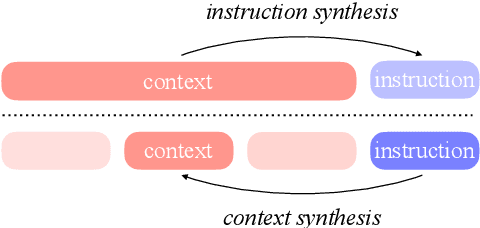
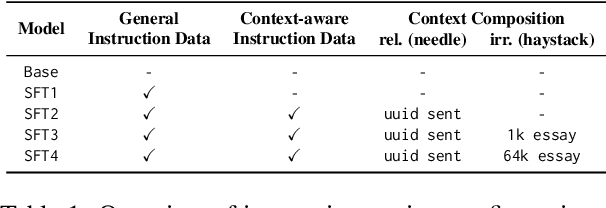
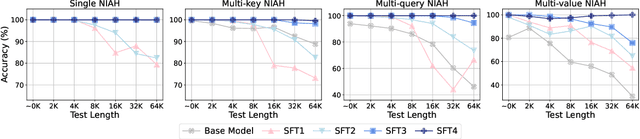
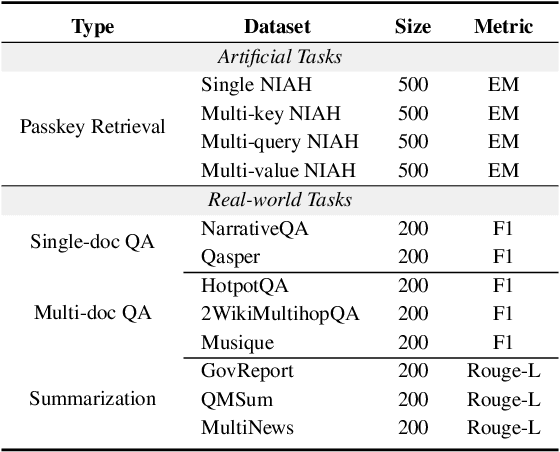
Long-context modelling for large language models (LLMs) has been a key area of recent research because many real world use cases require reasoning over longer inputs such as documents. The focus of research into modelling long context has been on how to model position and there has been little investigation into other important aspects of language modelling such as instruction tuning. Long context training examples are challenging and expensive to create and use. In this paper, we investigate how to design instruction data for the post-training phase of a long context pre-trained model: how much and what type of context is needed for optimal and efficient post-training. Our controlled study reveals that models instruction-tuned on short contexts can effectively generalize to longer ones, while also identifying other critical factors such as instruction difficulty and context composition. Based on these findings, we propose context synthesis, a novel data synthesis framework that leverages off-the-shelf LLMs to generate extended background contexts for high-quality instruction-answer pairs. Experiment results on the document-level benchmark (LongBench) demonstrate that our proposed approach outperforms previous instruction synthesis approaches and comes close to the performance of human-annotated long-context instruction data. The project will be available at: https://github.com/NJUNLP/context-synthesis.
BenchMAX: A Comprehensive Multilingual Evaluation Suite for Large Language Models
Feb 11, 2025Previous multilingual benchmarks focus primarily on simple understanding tasks, but for large language models(LLMs), we emphasize proficiency in instruction following, reasoning, long context understanding, code generation, and so on. However, measuring these advanced capabilities across languages is underexplored. To address the disparity, we introduce BenchMAX, a multi-way multilingual evaluation benchmark that allows for fair comparisons of these important abilities across languages. To maintain high quality, three distinct native-speaking annotators independently annotate each sample within all tasks after the data was machine-translated from English into 16 other languages. Additionally, we present a novel translation challenge stemming from dataset construction. Extensive experiments on BenchMAX reveal varying effectiveness of core capabilities across languages, highlighting performance gaps that cannot be bridged by simply scaling up model size. BenchMAX serves as a comprehensive multilingual evaluation platform, providing a promising test bed to promote the development of multilingual language models. The dataset and code are publicly accessible.
WanJuanSiLu: A High-Quality Open-Source Webtext Dataset for Low-Resource Languages
Jan 24, 2025


This paper introduces the open-source dataset WanJuanSiLu, designed to provide high-quality training corpora for low-resource languages, thereby advancing the research and development of multilingual models. To achieve this, we have developed a systematic data processing framework tailored for low-resource languages. This framework encompasses key stages such as data extraction, corpus cleaning, content deduplication, security filtering, quality evaluation, and theme classification. Through the implementation of this framework, we have significantly improved both the quality and security of the dataset, while maintaining its linguistic diversity. As of now, data for all five languages have been fully open-sourced. The dataset can be accessed at https://opendatalab.com/applyMultilingualCorpus, and GitHub repository is available at https://github.com/opendatalab/WanJuan3.0
A Chinese Continuous Sign Language Dataset Based on Complex Environments
Sep 18, 2024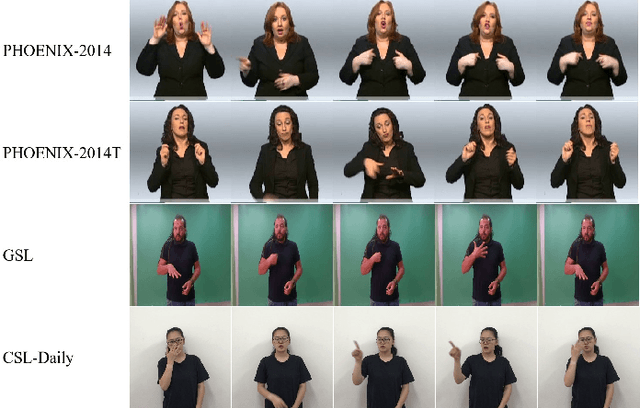
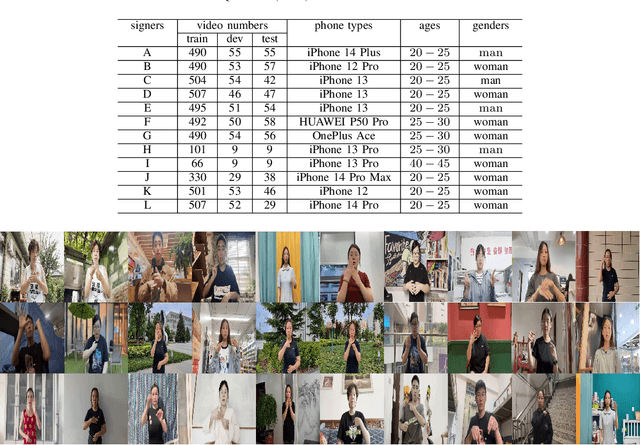
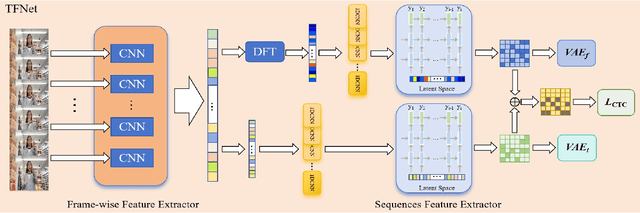
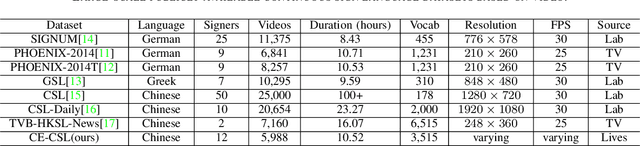
The current bottleneck in continuous sign language recognition (CSLR) research lies in the fact that most publicly available datasets are limited to laboratory environments or television program recordings, resulting in a single background environment with uniform lighting, which significantly deviates from the diversity and complexity found in real-life scenarios. To address this challenge, we have constructed a new, large-scale dataset for Chinese continuous sign language (CSL) based on complex environments, termed the complex environment - chinese sign language dataset (CE-CSL). This dataset encompasses 5,988 continuous CSL video clips collected from daily life scenes, featuring more than 70 different complex backgrounds to ensure representativeness and generalization capability. To tackle the impact of complex backgrounds on CSLR performance, we propose a time-frequency network (TFNet) model for continuous sign language recognition. This model extracts frame-level features and then utilizes both temporal and spectral information to separately derive sequence features before fusion, aiming to achieve efficient and accurate CSLR. Experimental results demonstrate that our approach achieves significant performance improvements on the CE-CSL, validating its effectiveness under complex background conditions. Additionally, our proposed method has also yielded highly competitive results when applied to three publicly available CSL datasets.
A Controlled Study on Long Context Extension and Generalization in LLMs
Sep 18, 2024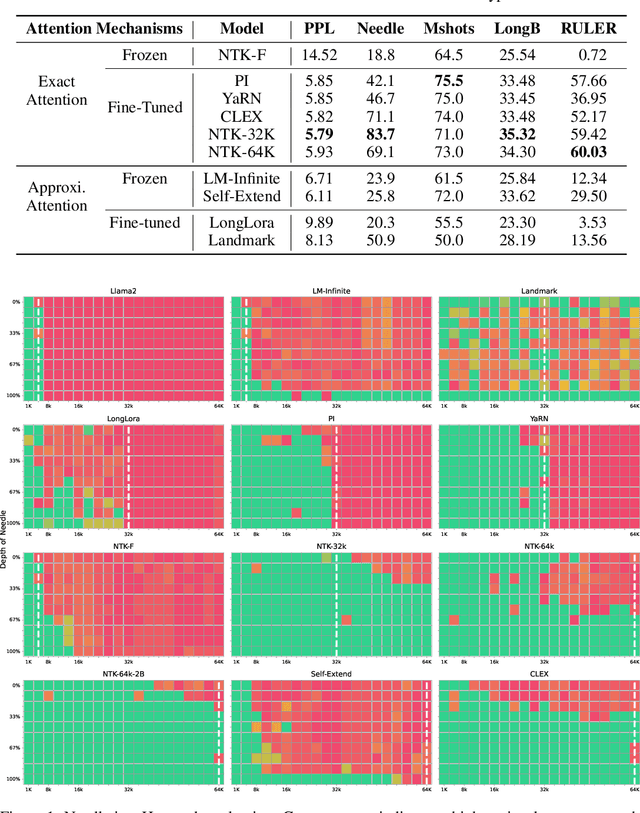
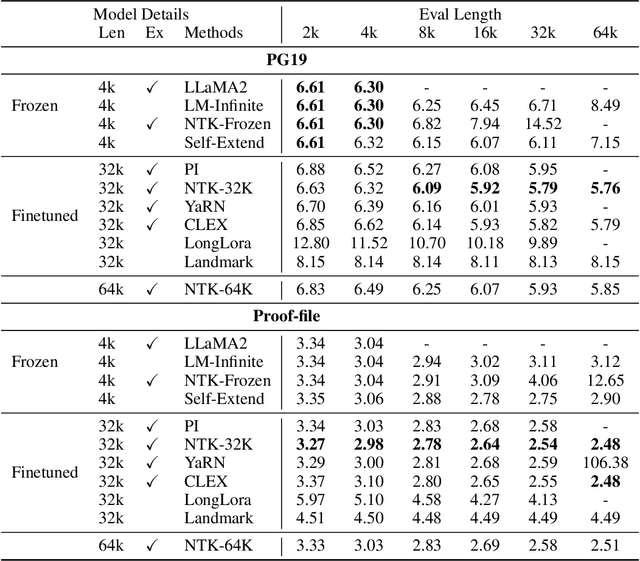
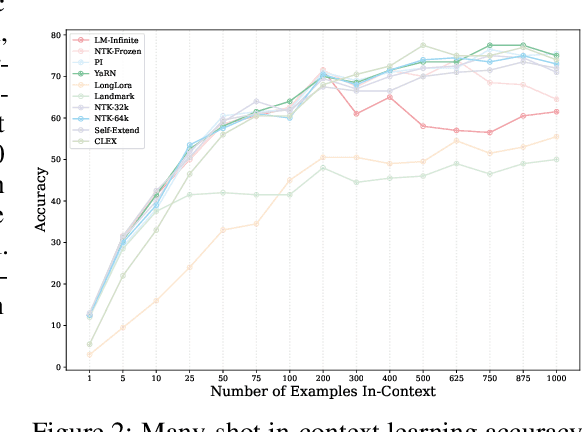
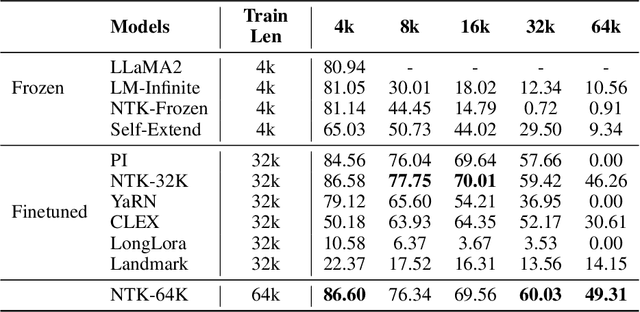
Broad textual understanding and in-context learning require language models that utilize full document contexts. Due to the implementation challenges associated with directly training long-context models, many methods have been proposed for extending models to handle long contexts. However, owing to differences in data and model classes, it has been challenging to compare these approaches, leading to uncertainty as to how to evaluate long-context performance and whether it differs from standard evaluation. We implement a controlled protocol for extension methods with a standardized evaluation, utilizing consistent base models and extension data. Our study yields several insights into long-context behavior. First, we reaffirm the critical role of perplexity as a general-purpose performance indicator even in longer-context tasks. Second, we find that current approximate attention methods systematically underperform across long-context tasks. Finally, we confirm that exact fine-tuning based methods are generally effective within the range of their extension, whereas extrapolation remains challenging. All codebases, models, and checkpoints will be made available open-source, promoting transparency and facilitating further research in this critical area of AI development.