 Add to Chrome
 Add to Firefox
 Add to Edge
NeRF-HuGS: Improved Neural Radiance Fields in Non-static Scenes Using Heuristics-Guided Segmentation
Mar 26, 2024
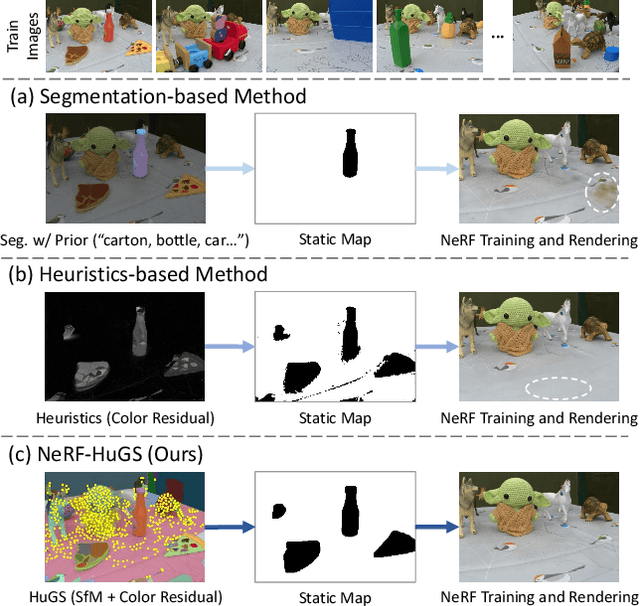


Neural Radiance Field (NeRF) has been widely recognized for its excellence in novel view synthesis and 3D scene reconstruction. However, their effectiveness is inherently tied to the assumption of static scenes, rendering them susceptible to undesirable artifacts when confronted with transient distractors such as moving objects or shadows. In this work, we propose a novel paradigm, namely "Heuristics-Guided Segmentation" (HuGS), which significantly enhances the separation of static scenes from transient distractors by harmoniously combining the strengths of hand-crafted heuristics and state-of-the-art segmentation models, thus significantly transcending the limitations of previous solutions. Furthermore, we delve into the meticulous design of heuristics, introducing a seamless fusion of Structure-from-Motion (SfM)-based heuristics and color residual heuristics, catering to a diverse range of texture profiles. Extensive experiments demonstrate the superiority and robustness of our method in mitigating transient distractors for NeRFs trained in non-static scenes. Project page: https://cnhaox.github.io/NeRF-HuGS/.

CoMo: Controllable Motion Generation through Language Guided Pose Code Editing
Mar 20, 2024Text-to-motion models excel at efficient human motion generation, but existing approaches lack fine-grained controllability over the generation process. Consequently, modifying subtle postures within a motion or inserting new actions at specific moments remains a challenge, limiting the applicability of these methods in diverse scenarios. In light of these challenges, we introduce CoMo, a Controllable Motion generation model, adept at accurately generating and editing motions by leveraging the knowledge priors of large language models (LLMs). Specifically, CoMo decomposes motions into discrete and semantically meaningful pose codes, with each code encapsulating the semantics of a body part, representing elementary information such as "left knee slightly bent". Given textual inputs, CoMo autoregressively generates sequences of pose codes, which are then decoded into 3D motions. Leveraging pose codes as interpretable representations, an LLM can directly intervene in motion editing by adjusting the pose codes according to editing instructions. Experiments demonstrate that CoMo achieves competitive performance in motion generation compared to state-of-the-art models while, in human studies, CoMo substantially surpasses previous work in motion editing abilities.
Adaptive Surface Normal Constraint for Geometric Estimation from Monocular Images
Feb 08, 2024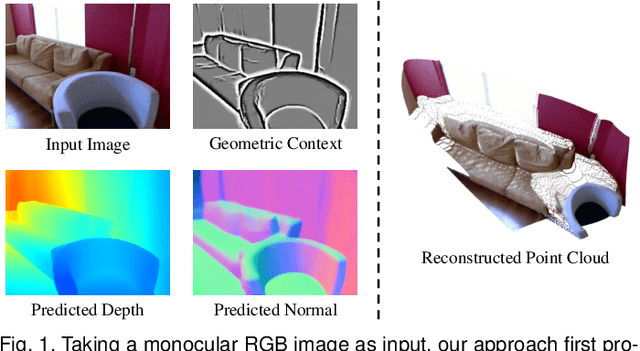
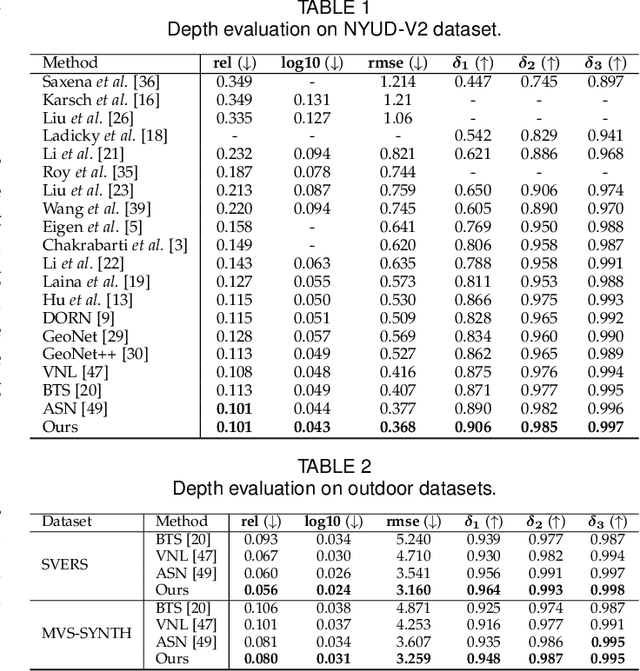
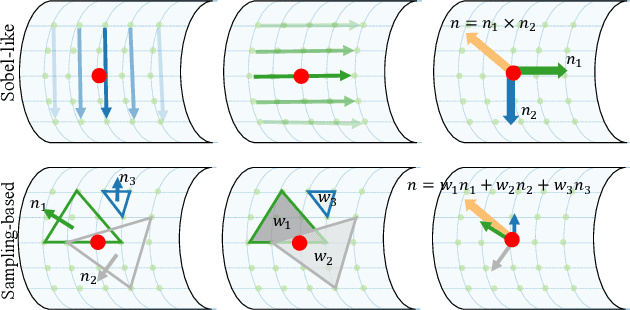
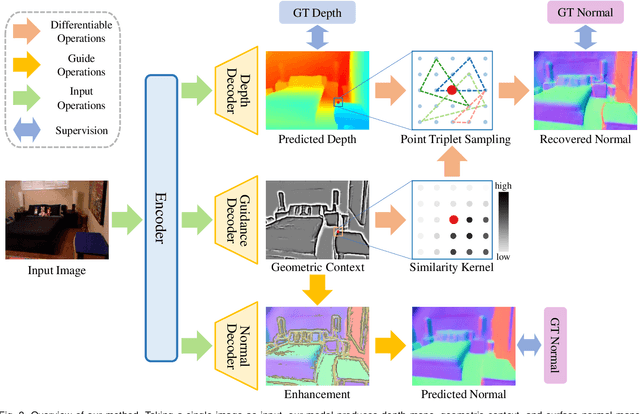
We introduce a novel approach to learn geometries such as depth and surface normal from images while incorporating geometric context. The difficulty of reliably capturing geometric context in existing methods impedes their ability to accurately enforce the consistency between the different geometric properties, thereby leading to a bottleneck of geometric estimation quality. We therefore propose the Adaptive Surface Normal (ASN) constraint, a simple yet efficient method. Our approach extracts geometric context that encodes the geometric variations present in the input image and correlates depth estimation with geometric constraints. By dynamically determining reliable local geometry from randomly sampled candidates, we establish a surface normal constraint, where the validity of these candidates is evaluated using the geometric context. Furthermore, our normal estimation leverages the geometric context to prioritize regions that exhibit significant geometric variations, which makes the predicted normals accurately capture intricate and detailed geometric information. Through the integration of geometric context, our method unifies depth and surface normal estimations within a cohesive framework, which enables the generation of high-quality 3D geometry from images. We validate the superiority of our approach over state-of-the-art methods through extensive evaluations and comparisons on diverse indoor and outdoor datasets, showcasing its efficiency and robustness.
Coverage Axis++: Efficient Inner Point Selection for 3D Shape Skeletonization
Feb 01, 2024
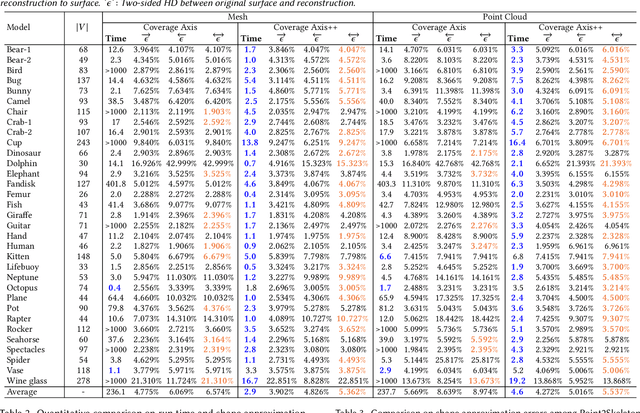
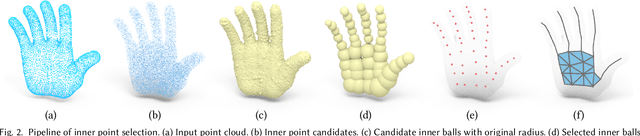
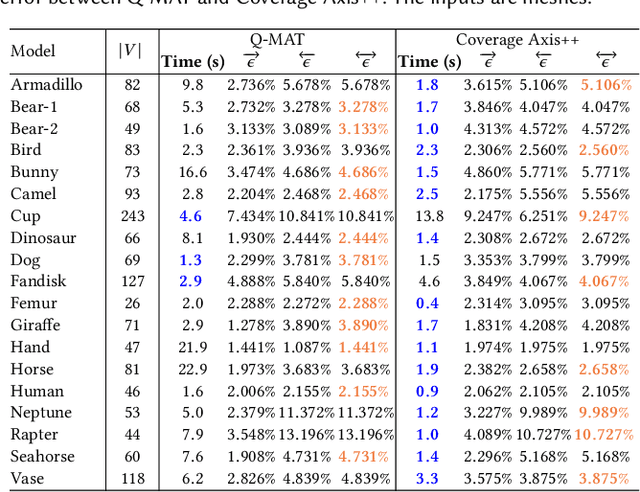
We introduce Coverage Axis++, a novel and efficient approach to 3D shape skeletonization. The current state-of-the-art approaches for this task often rely on the watertightness of the input or suffer from substantial computational costs, thereby limiting their practicality. To address this challenge, Coverage Axis++ proposes a heuristic algorithm to select skeletal points, offering a high-accuracy approximation of the Medial Axis Transform (MAT) while significantly mitigating computational intensity for various shape representations. We introduce a simple yet effective strategy that considers both shape coverage and uniformity to derive skeletal points. The selection procedure enforces consistency with the shape structure while favoring the dominant medial balls, which thus introduces a compact underlying shape representation in terms of MAT. As a result, Coverage Axis++ allows for skeletonization for various shape representations (e.g., water-tight meshes, triangle soups, point clouds), specification of the number of skeletal points, few hyperparameters, and highly efficient computation with improved reconstruction accuracy. Extensive experiments across a wide range of 3D shapes validate the efficiency and effectiveness of Coverage Axis++. The code will be publicly available once the paper is published.
DressCode: Autoregressively Sewing and Generating Garments from Text Guidance
Jan 29, 2024Apparel's significant role in human appearance underscores the importance of garment digitalization for digital human creation. Recent advances in 3D content creation are pivotal for digital human creation. Nonetheless, garment generation from text guidance is still nascent. We introduce a text-driven 3D garment generation framework, DressCode, which aims to democratize design for novices and offer immense potential in fashion design, virtual try-on, and digital human creation. For our framework, we first introduce SewingGPT, a GPT-based architecture integrating cross-attention with text-conditioned embedding to generate sewing patterns with text guidance. We also tailored a pre-trained Stable Diffusion for high-quality, tile-based PBR texture generation. By leveraging a large language model, our framework generates CG-friendly garments through natural language interaction. Our method also facilitates pattern completion and texture editing, simplifying the process for designers by user-friendly interaction. With comprehensive evaluations and comparisons with other state-of-the-art methods, our method showcases the best quality and alignment with input prompts. User studies further validate our high-quality rendering results, highlighting its practical utility and potential in production settings.
Holodeck: Language Guided Generation of 3D Embodied AI Environments
Dec 14, 20233D simulated environments play a critical role in Embodied AI, but their creation requires expertise and extensive manual effort, restricting their diversity and scope. To mitigate this limitation, we present Holodeck, a system that generates 3D environments to match a user-supplied prompt fully automatedly. Holodeck can generate diverse scenes, e.g., arcades, spas, and museums, adjust the designs for styles, and can capture the semantics of complex queries such as "apartment for a researcher with a cat" and "office of a professor who is a fan of Star Wars". Holodeck leverages a large language model (GPT-4) for common sense knowledge about what the scene might look like and uses a large collection of 3D assets from Objaverse to populate the scene with diverse objects. To address the challenge of positioning objects correctly, we prompt GPT-4 to generate spatial relational constraints between objects and then optimize the layout to satisfy those constraints. Our large-scale human evaluation shows that annotators prefer Holodeck over manually designed procedural baselines in residential scenes and that Holodeck can produce high-quality outputs for diverse scene types. We also demonstrate an exciting application of Holodeck in Embodied AI, training agents to navigate in novel scenes like music rooms and daycares without human-constructed data, which is a significant step forward in developing general-purpose embodied agents.
DiffusionPhase: Motion Diffusion in Frequency Domain
Dec 07, 2023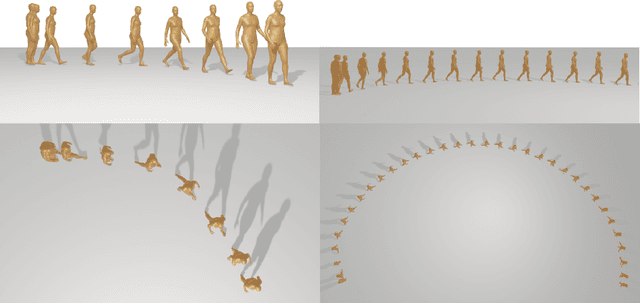
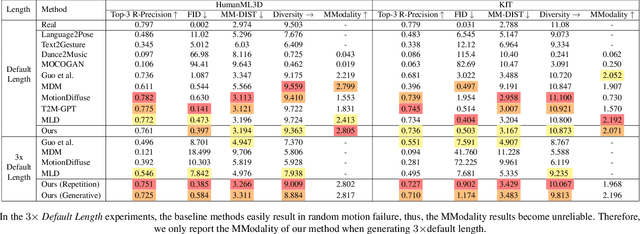
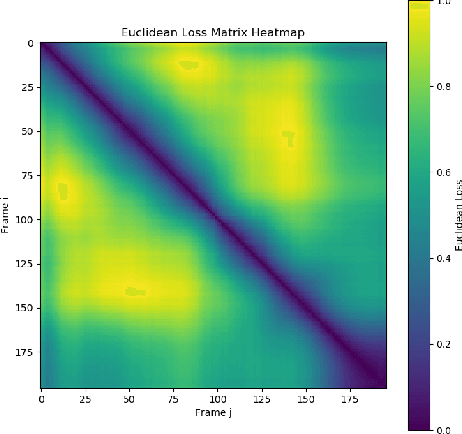
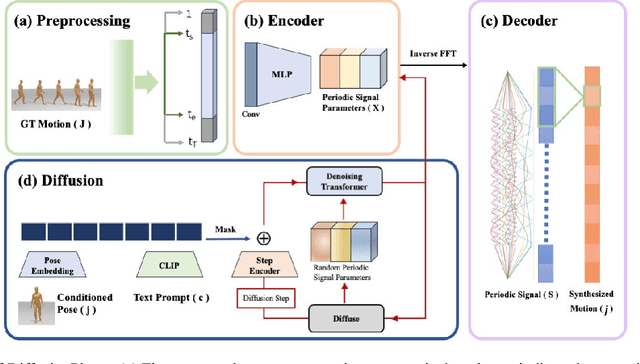
In this study, we introduce a learning-based method for generating high-quality human motion sequences from text descriptions (e.g., ``A person walks forward"). Existing techniques struggle with motion diversity and smooth transitions in generating arbitrary-length motion sequences, due to limited text-to-motion datasets and the pose representations used that often lack expressiveness or compactness. To address these issues, we propose the first method for text-conditioned human motion generation in the frequency domain of motions. We develop a network encoder that converts the motion space into a compact yet expressive parameterized phase space with high-frequency details encoded, capturing the local periodicity of motions in time and space with high accuracy. We also introduce a conditional diffusion model for predicting periodic motion parameters based on text descriptions and a start pose, efficiently achieving smooth transitions between motion sequences associated with different text descriptions. Experiments demonstrate that our approach outperforms current methods in generating a broader variety of high-quality motions, and synthesizing long sequences with natural transitions.
EMDM: Efficient Motion Diffusion Model for Fast, High-Quality Motion Generation
Dec 04, 2023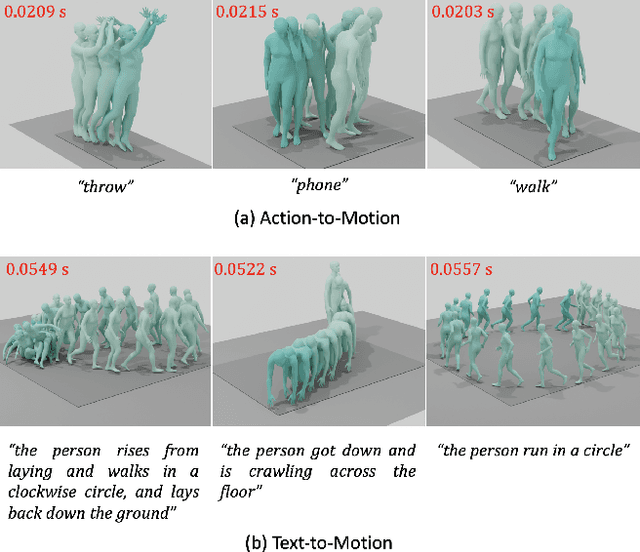
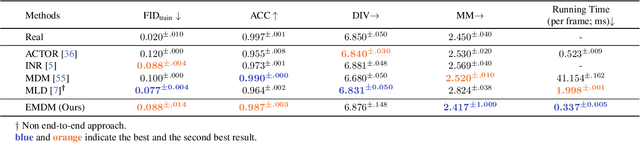
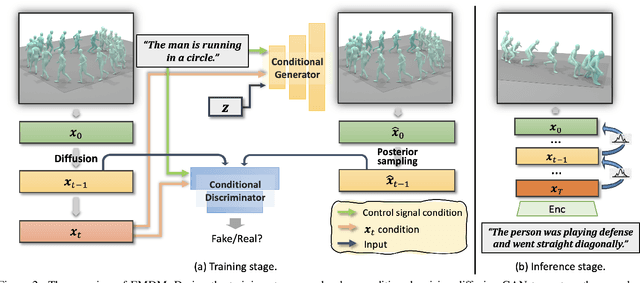
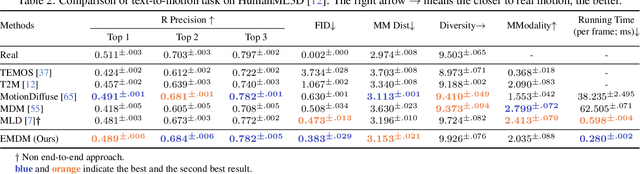
We introduce Efficient Motion Diffusion Model (EMDM) for fast and high-quality human motion generation. Although previous motion diffusion models have shown impressive results, they struggle to achieve fast generation while maintaining high-quality human motions. Motion latent diffusion has been proposed for efficient motion generation. However, effectively learning a latent space can be non-trivial in such a two-stage manner. Meanwhile, accelerating motion sampling by increasing the step size, e.g., DDIM, typically leads to a decline in motion quality due to the inapproximation of complex data distributions when naively increasing the step size. In this paper, we propose EMDM that allows for much fewer sample steps for fast motion generation by modeling the complex denoising distribution during multiple sampling steps. Specifically, we develop a Conditional Denoising Diffusion GAN to capture multimodal data distributions conditioned on both control signals, i.e., textual description and denoising time step. By modeling the complex data distribution, a larger sampling step size and fewer steps are achieved during motion synthesis, significantly accelerating the generation process. To effectively capture the human dynamics and reduce undesired artifacts, we employ motion geometric loss during network training, which improves the motion quality and training efficiency. As a result, EMDM achieves a remarkable speed-up at the generation stage while maintaining high-quality motion generation in terms of fidelity and diversity.
Egocentric Whole-Body Motion Capture with FisheyeViT and Diffusion-Based Motion Refinement
Dec 02, 2023
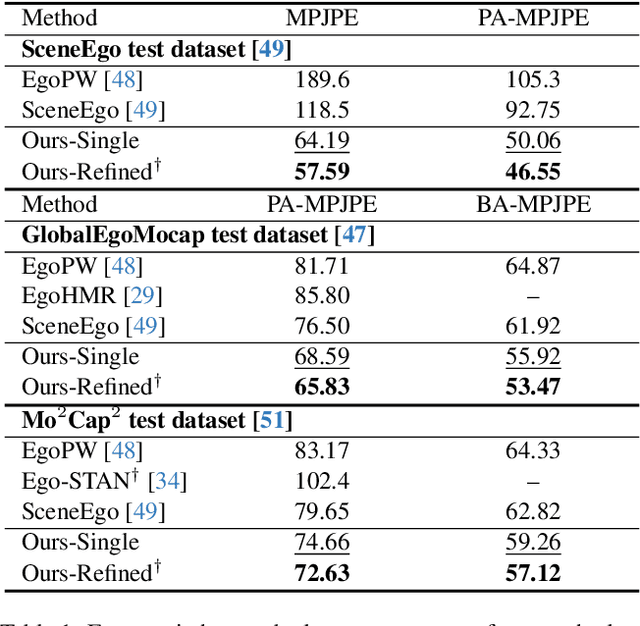
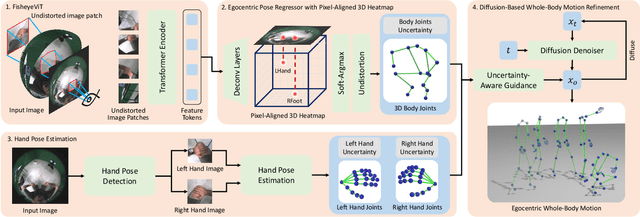
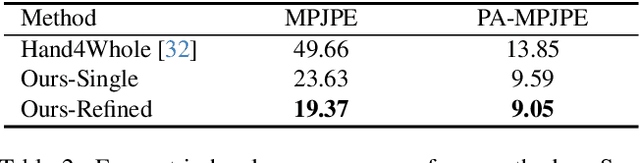
In this work, we explore egocentric whole-body motion capture using a single fisheye camera, which simultaneously estimates human body and hand motion. This task presents significant challenges due to three factors: the lack of high-quality datasets, fisheye camera distortion, and human body self-occlusion. To address these challenges, we propose a novel approach that leverages FisheyeViT to extract fisheye image features, which are subsequently converted into pixel-aligned 3D heatmap representations for 3D human body pose prediction. For hand tracking, we incorporate dedicated hand detection and hand pose estimation networks for regressing 3D hand poses. Finally, we develop a diffusion-based whole-body motion prior model to refine the estimated whole-body motion while accounting for joint uncertainties. To train these networks, we collect a large synthetic dataset, EgoWholeBody, comprising 840,000 high-quality egocentric images captured across a diverse range of whole-body motion sequences. Quantitative and qualitative evaluations demonstrate the effectiveness of our method in producing high-quality whole-body motion estimates from a single egocentric camera.
TLControl: Trajectory and Language Control for Human Motion Synthesis
Nov 30, 2023Controllable human motion synthesis is essential for applications in AR/VR, gaming, movies, and embodied AI. Existing methods often focus solely on either language or full trajectory control, lacking precision in synthesizing motions aligned with user-specified trajectories, especially for multi-joint control. To address these issues, we present TLControl, a new method for realistic human motion synthesis, incorporating both low-level trajectory and high-level language semantics controls. Specifically, we first train a VQ-VAE to learn a compact latent motion space organized by body parts. We then propose a Masked Trajectories Transformer to make coarse initial predictions of full trajectories of joints based on the learned latent motion space, with user-specified partial trajectories and text descriptions as conditioning. Finally, we introduce an efficient test-time optimization to refine these coarse predictions for accurate trajectory control. Experiments demonstrate that TLControl outperforms the state-of-the-art in trajectory accuracy and time efficiency, making it practical for interactive and high-quality animation generation.