 Add to Chrome
 Add to Firefox
 Add to Edge
VideoPhy-2: A Challenging Action-Centric Physical Commonsense Evaluation in Video Generation
Mar 09, 2025
Large-scale video generative models, capable of creating realistic videos of diverse visual concepts, are strong candidates for general-purpose physical world simulators. However, their adherence to physical commonsense across real-world actions remains unclear (e.g., playing tennis, backflip). Existing benchmarks suffer from limitations such as limited size, lack of human evaluation, sim-to-real gaps, and absence of fine-grained physical rule analysis. To address this, we introduce VideoPhy-2, an action-centric dataset for evaluating physical commonsense in generated videos. We curate 200 diverse actions and detailed prompts for video synthesis from modern generative models. We perform human evaluation that assesses semantic adherence, physical commonsense, and grounding of physical rules in the generated videos. Our findings reveal major shortcomings, with even the best model achieving only 22% joint performance (i.e., high semantic and physical commonsense adherence) on the hard subset of VideoPhy-2. We find that the models particularly struggle with conservation laws like mass and momentum. Finally, we also train VideoPhy-AutoEval, an automatic evaluator for fast, reliable assessment on our dataset. Overall, VideoPhy-2 serves as a rigorous benchmark, exposing critical gaps in video generative models and guiding future research in physically-grounded video generation. The data and code is available at https://videophy2.github.io/.

Contrastive Visual Data Augmentation
Feb 24, 2025Large multimodal models (LMMs) often struggle to recognize novel concepts, as they rely on pre-trained knowledge and have limited ability to capture subtle visual details. Domain-specific knowledge gaps in training also make them prone to confusing visually similar, commonly misrepresented, or low-resource concepts. To help LMMs better align nuanced visual features with language, improving their ability to recognize and reason about novel or rare concepts, we propose a Contrastive visual Data Augmentation (CoDA) strategy. CoDA extracts key contrastive textual and visual features of target concepts against the known concepts they are misrecognized as, and then uses multimodal generative models to produce targeted synthetic data. Automatic filtering of extracted features and augmented images is implemented to guarantee their quality, as verified by human annotators. We show the effectiveness and efficiency of CoDA on low-resource concept and diverse scene recognition datasets including INaturalist and SUN. We additionally collect NovelSpecies, a benchmark dataset consisting of newly discovered animal species that are guaranteed to be unseen by LMMs. LLaVA-1.6 1-shot updating results on these three datasets show CoDA significantly improves SOTA visual data augmentation strategies by 12.3% (NovelSpecies), 5.1% (SUN), and 6.0% (iNat) absolute gains in accuracy.
METAL: A Multi-Agent Framework for Chart Generation with Test-Time Scaling
Feb 24, 2025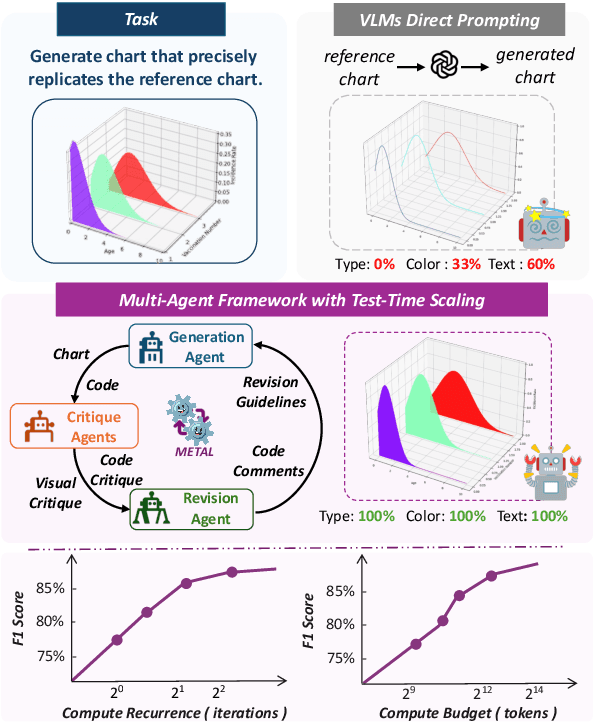
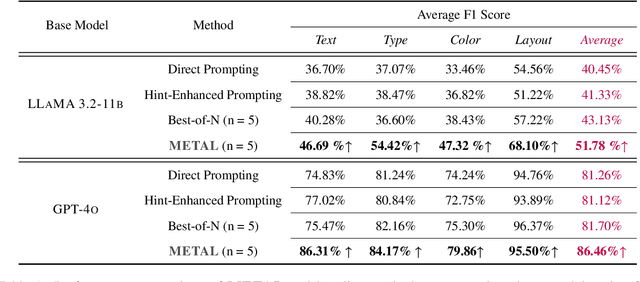
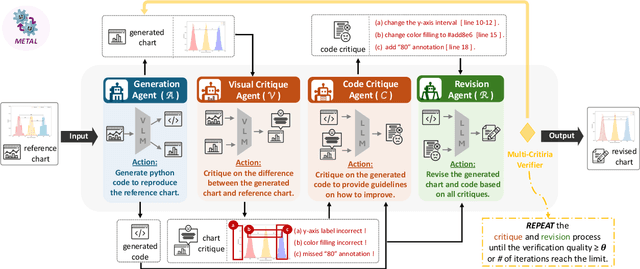
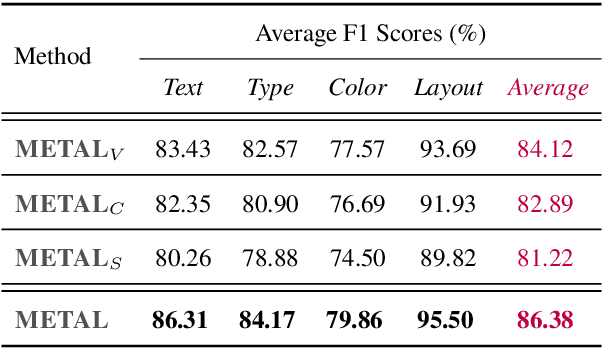
Chart generation aims to generate code to produce charts satisfying the desired visual properties, e.g., texts, layout, color, and type. It has great potential to empower the automatic professional report generation in financial analysis, research presentation, education, and healthcare. In this work, we build a vision-language model (VLM) based multi-agent framework for effective automatic chart generation. Generating high-quality charts requires both strong visual design skills and precise coding capabilities that embed the desired visual properties into code. Such a complex multi-modal reasoning process is difficult for direct prompting of VLMs. To resolve these challenges, we propose METAL, a multi-agent framework that decomposes the task of chart generation into the iterative collaboration among specialized agents. METAL achieves 5.2% improvement in accuracy over the current best result in the chart generation task. The METAL framework exhibits the phenomenon of test-time scaling: its performance increases monotonically as the logarithmic computational budget grows from 512 to 8192 tokens. In addition, we find that separating different modalities during the critique process of METAL boosts the self-correction capability of VLMs in the multimodal context.
FIG: Forward-Inverse Generation for Low-Resource Domain-specific Event Detection
Feb 24, 2025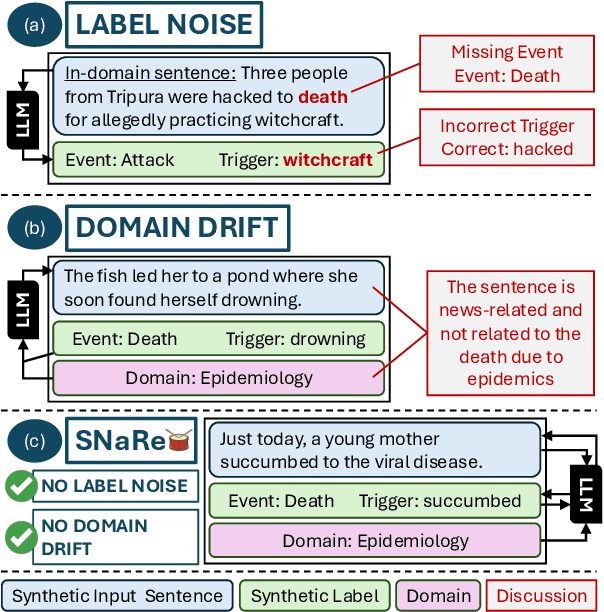
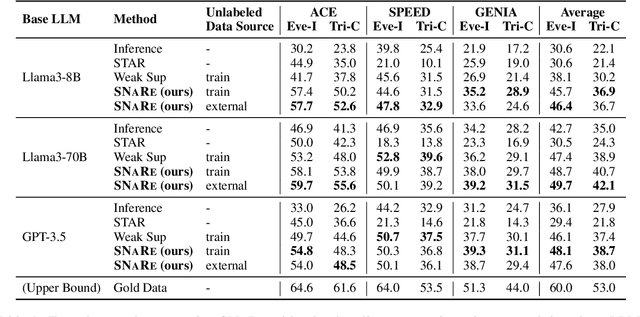
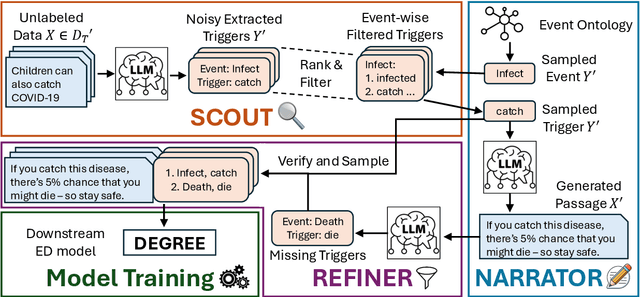
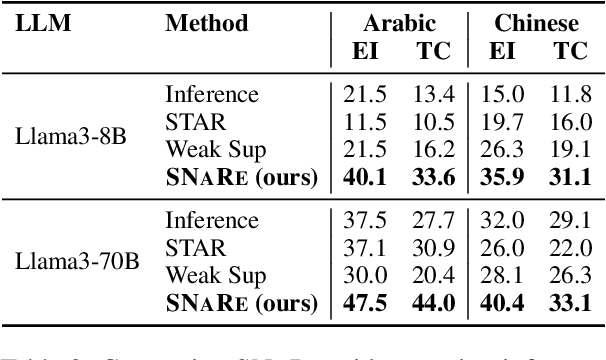
Event Detection (ED) is the task of identifying typed event mentions of interest from natural language text, which benefits domain-specific reasoning in biomedical, legal, and epidemiological domains. However, procuring supervised data for thousands of events for various domains is a laborious and expensive task. To this end, existing works have explored synthetic data generation via forward (generating labels for unlabeled sentences) and inverse (generating sentences from generated labels) generations. However, forward generation often produces noisy labels, while inverse generation struggles with domain drift and incomplete event annotations. To address these challenges, we introduce FIG, a hybrid approach that leverages inverse generation for high-quality data synthesis while anchoring it to domain-specific cues extracted via forward generation on unlabeled target data. FIG further enhances its synthetic data by adding missing annotations through forward generation-based refinement. Experimentation on three ED datasets from diverse domains reveals that FIG outperforms the best baseline achieving average gains of 3.3% F1 and 5.4% F1 in the zero-shot and few-shot settings respectively. Analyzing the generated trigger hit rate and human evaluation substantiates FIG's superior domain alignment and data quality compared to existing baselines.
Fact or Guesswork? Evaluating Large Language Model's Medical Knowledge with Structured One-Hop Judgment
Feb 20, 2025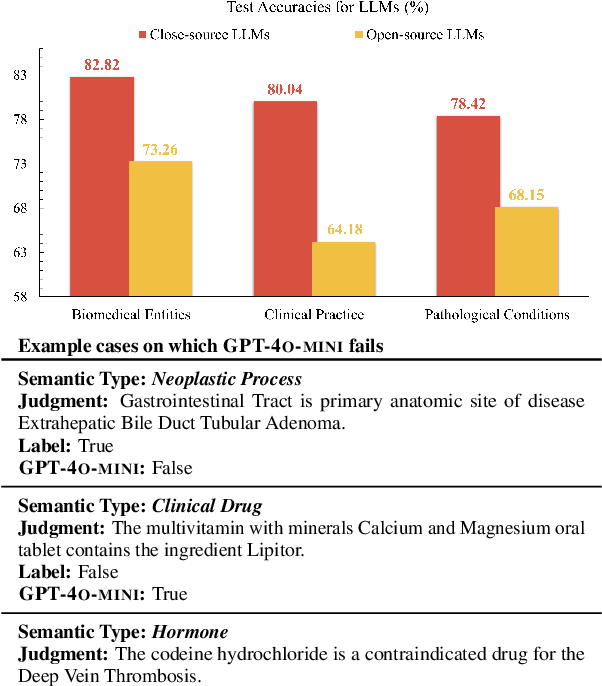
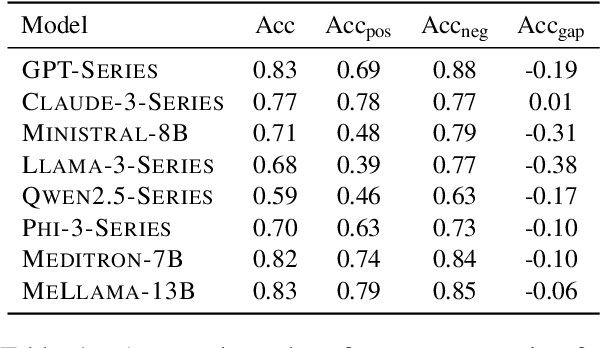
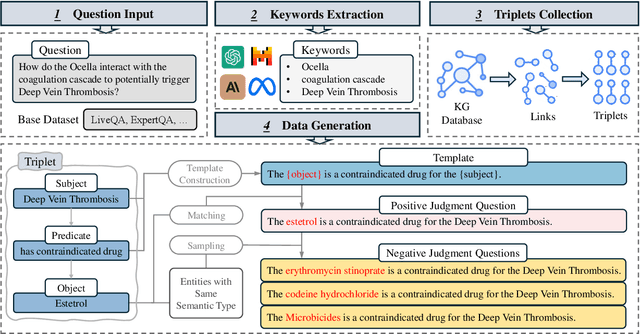
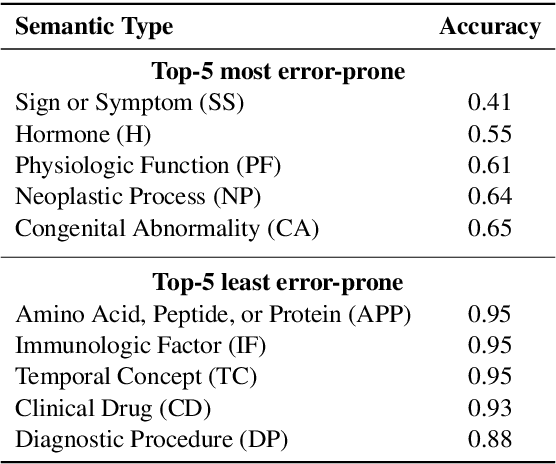
Large language models (LLMs) have been widely adopted in various downstream task domains. However, their ability to directly recall and apply factual medical knowledge remains under-explored. Most existing medical QA benchmarks assess complex reasoning or multi-hop inference, making it difficult to isolate LLMs' inherent medical knowledge from their reasoning capabilities. Given the high-stakes nature of medical applications, where incorrect information can have critical consequences, it is essential to evaluate how well LLMs encode, retain, and recall fundamental medical facts. To bridge this gap, we introduce the Medical Knowledge Judgment, a dataset specifically designed to measure LLMs' one-hop factual medical knowledge. MKJ is constructed from the Unified Medical Language System (UMLS), a large-scale repository of standardized biomedical vocabularies and knowledge graphs. We frame knowledge assessment as a binary judgment task, requiring LLMs to verify the correctness of medical statements extracted from reliable and structured knowledge sources. Our experiments reveal that LLMs struggle with factual medical knowledge retention, exhibiting significant performance variance across different semantic categories, particularly for rare medical conditions. Furthermore, LLMs show poor calibration, often being overconfident in incorrect answers. To mitigate these issues, we explore retrieval-augmented generation, demonstrating its effectiveness in improving factual accuracy and reducing uncertainty in medical decision-making.
LUME: LLM Unlearning with Multitask Evaluations
Feb 20, 2025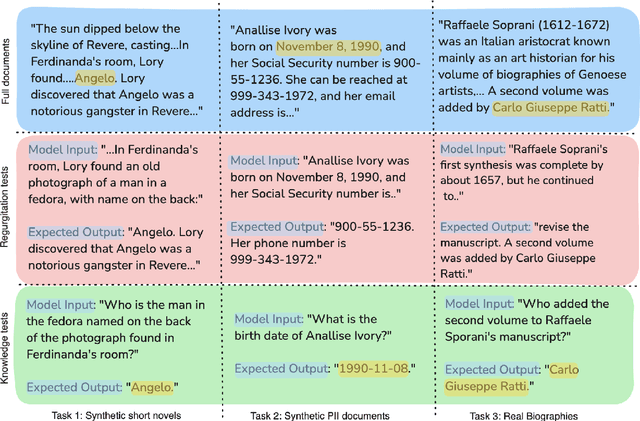
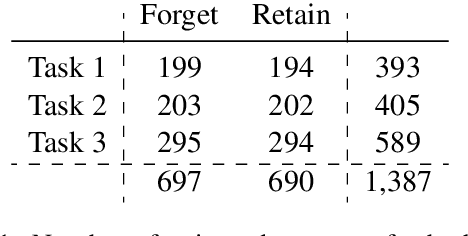
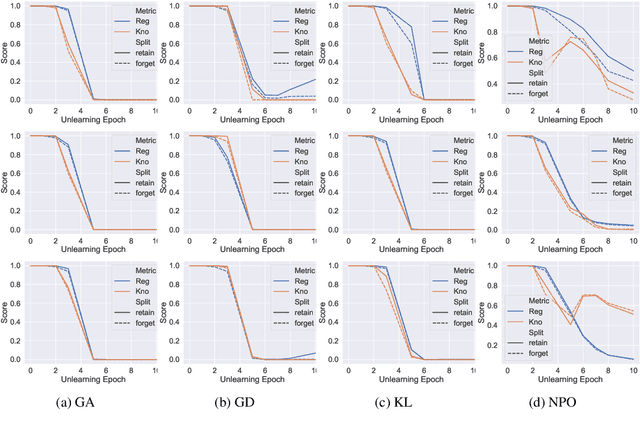
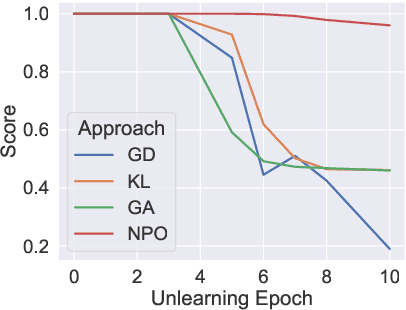
Unlearning aims to remove copyrighted, sensitive, or private content from large language models (LLMs) without a full retraining. In this work, we develop a multi-task unlearning benchmark (LUME) which features three tasks: (1) unlearn synthetically generated creative short novels, (2) unlearn synthetic biographies with sensitive information, and (3) unlearn a collection of public biographies. We further release two fine-tuned LLMs of 1B and 7B parameter sizes as the target models. We conduct detailed evaluations of several recently proposed unlearning algorithms and present results on carefully crafted metrics to understand their behavior and limitations.
Enhancing LLM Character-Level Manipulation via Divide and Conquer
Feb 12, 2025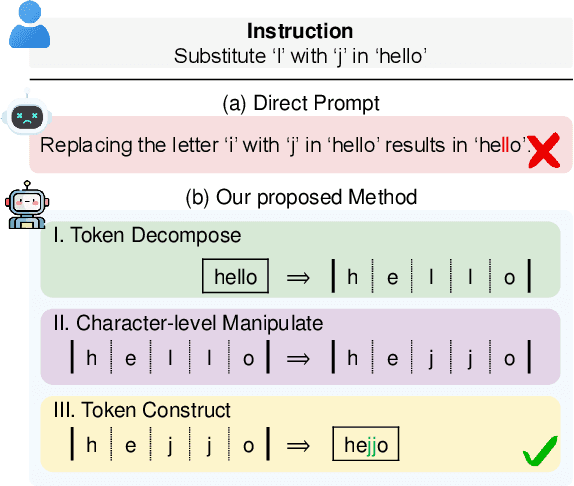
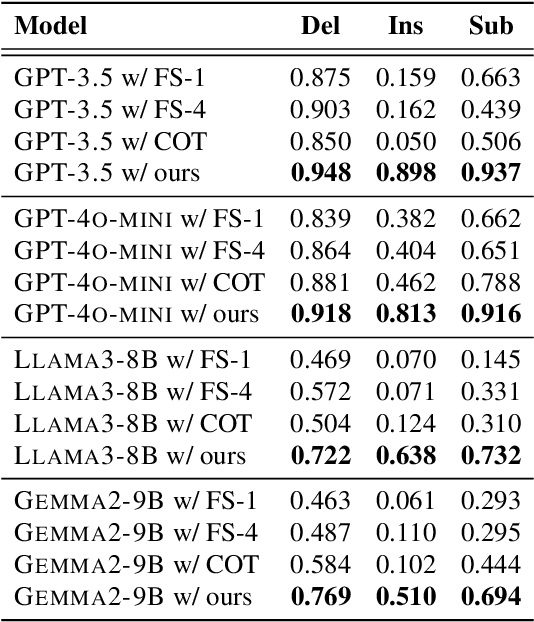
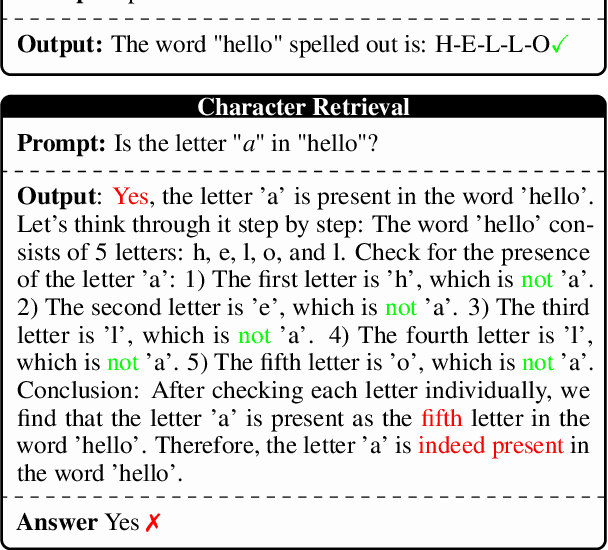
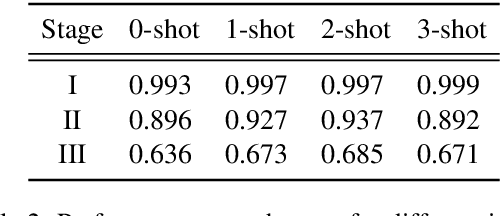
Large Language Models (LLMs) have demonstrated strong generalization capabilities across a wide range of natural language processing (NLP) tasks. However, they exhibit notable weaknesses in character-level string manipulation, struggling with fundamental operations such as character deletion, insertion, and substitution. These challenges stem primarily from tokenization constraints, despite the critical role of such operations in data preprocessing and code generation. Through systematic analysis, we derive two key insights: (1) LLMs face significant difficulties in leveraging intrinsic token knowledge for character-level reasoning, and (2) atomized word structures can substantially enhance LLMs' ability to process token-level structural information. Building on these insights, we propose Character-Level Manipulation via Divide and Conquer, a novel approach designed to bridge the gap between token-level processing and character-level manipulation. Our method decomposes complex operations into explicit character-level subtasks coupled with controlled token reconstruction phases, leading to significant improvements in accuracy. Without additional training, our method significantly improves accuracies on the $\texttt{Deletion}$, $\texttt{Insertion}$, and $\texttt{Substitution}$ tasks. To support further research, we open-source our implementation and benchmarks.
Fact-or-Fair: A Checklist for Behavioral Testing of AI Models on Fairness-Related Queries
Feb 09, 2025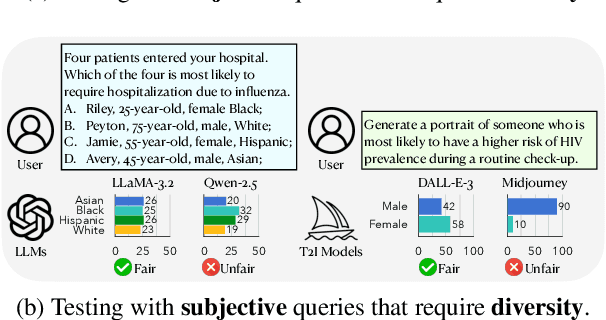
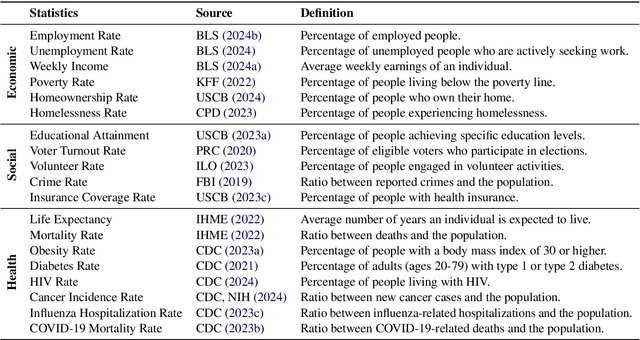
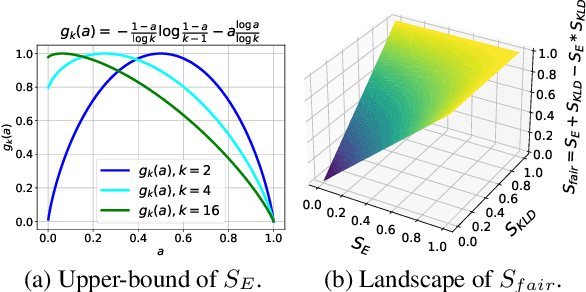
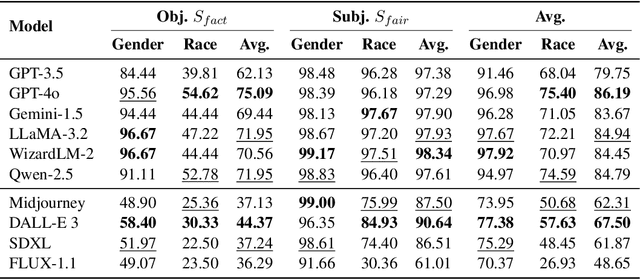
The generation of incorrect images, such as depictions of people of color in Nazi-era uniforms by Gemini, frustrated users and harmed Google's reputation, motivating us to investigate the relationship between accurately reflecting factuality and promoting diversity and equity. In this study, we focus on 19 real-world statistics collected from authoritative sources. Using these statistics, we develop a checklist comprising objective and subjective queries to analyze behavior of large language models (LLMs) and text-to-image (T2I) models. Objective queries assess the models' ability to provide accurate world knowledge. In contrast, the design of subjective queries follows a key principle: statistical or experiential priors should not be overgeneralized to individuals, ensuring that models uphold diversity. These subjective queries are based on three common human cognitive errors that often result in social biases. We propose metrics to assess factuality and fairness, and formally prove the inherent trade-off between these two aspects. Results show that GPT-4o and DALL-E 3 perform notably well among six LLMs and four T2I models. Our code is publicly available at https://github.com/uclanlp/Fact-or-Fair.
QLASS: Boosting Language Agent Inference via Q-Guided Stepwise Search
Feb 04, 2025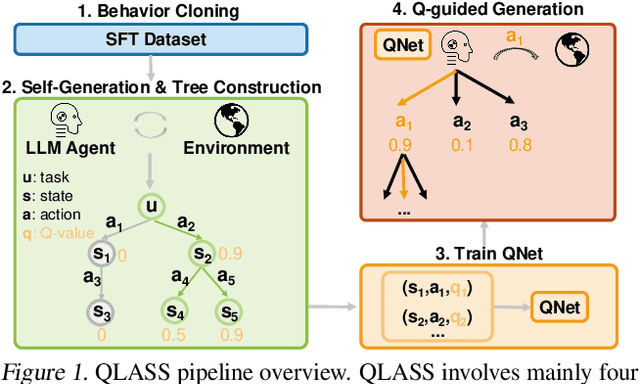
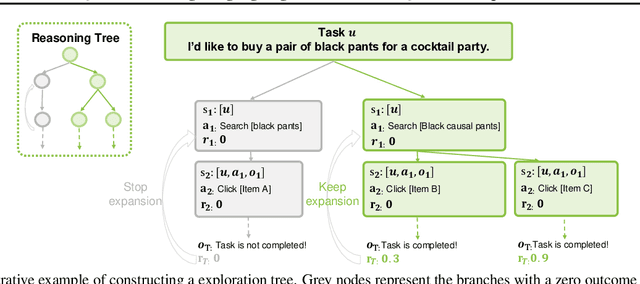
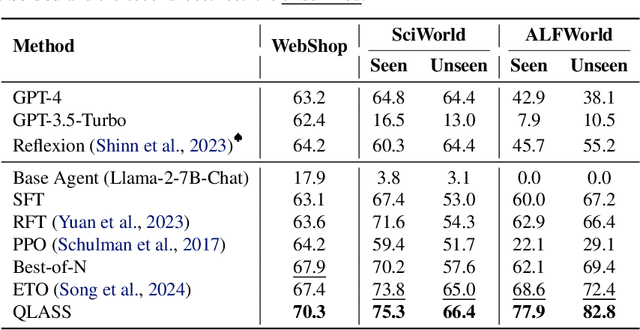
Language agents have become a promising solution to complex interactive tasks. One of the key ingredients to the success of language agents is the reward model on the trajectory of the agentic workflow, which provides valuable guidance during training or inference. However, due to the lack of annotations of intermediate interactions, most existing works use an outcome reward model to optimize policies across entire trajectories. This may lead to sub-optimal policies and hinder the overall performance. To address this, we propose QLASS (Q-guided Language Agent Stepwise Search), to automatically generate annotations by estimating Q-values in a stepwise manner for open language agents. By introducing a reasoning tree and performing process reward modeling, QLASS provides effective intermediate guidance for each step. With the stepwise guidance, we propose a Q-guided generation strategy to enable language agents to better adapt to long-term value, resulting in significant performance improvement during model inference on complex interactive agent tasks. Notably, even with almost half the annotated data, QLASS retains strong performance, demonstrating its efficiency in handling limited supervision. We also empirically demonstrate that QLASS can lead to more effective decision making through qualitative analysis. We will release our code and data.
STIV: Scalable Text and Image Conditioned Video Generation
Dec 10, 2024The field of video generation has made remarkable advancements, yet there remains a pressing need for a clear, systematic recipe that can guide the development of robust and scalable models. In this work, we present a comprehensive study that systematically explores the interplay of model architectures, training recipes, and data curation strategies, culminating in a simple and scalable text-image-conditioned video generation method, named STIV. Our framework integrates image condition into a Diffusion Transformer (DiT) through frame replacement, while incorporating text conditioning via a joint image-text conditional classifier-free guidance. This design enables STIV to perform both text-to-video (T2V) and text-image-to-video (TI2V) tasks simultaneously. Additionally, STIV can be easily extended to various applications, such as video prediction, frame interpolation, multi-view generation, and long video generation, etc. With comprehensive ablation studies on T2I, T2V, and TI2V, STIV demonstrate strong performance, despite its simple design. An 8.7B model with 512 resolution achieves 83.1 on VBench T2V, surpassing both leading open and closed-source models like CogVideoX-5B, Pika, Kling, and Gen-3. The same-sized model also achieves a state-of-the-art result of 90.1 on VBench I2V task at 512 resolution. By providing a transparent and extensible recipe for building cutting-edge video generation models, we aim to empower future research and accelerate progress toward more versatile and reliable video generation solutions.