 Add to Chrome
 Add to Firefox
 Add to Edge
Multimodal Integrated Knowledge Transfer to Large Language Models through Preference Optimization with Biomedical Applications
May 09, 2025
The scarcity of high-quality multimodal biomedical data limits the ability to effectively fine-tune pretrained Large Language Models (LLMs) for specialized biomedical tasks. To address this challenge, we introduce MINT (Multimodal Integrated kNowledge Transfer), a framework that aligns unimodal large decoder models with domain-specific decision patterns from multimodal biomedical data through preference optimization. While MINT supports different optimization techniques, we primarily implement it with the Odds Ratio Preference Optimization (ORPO) framework as its backbone. This strategy enables the aligned LLMs to perform predictive tasks using text-only or image-only inputs while retaining knowledge learnt from multimodal data. MINT leverages an upstream multimodal machine learning (MML) model trained on high-quality multimodal data to transfer domain-specific insights to downstream text-only or image-only LLMs. We demonstrate its effectiveness through two key applications: (1) Rare genetic disease prediction from texts, where MINT uses a multimodal encoder model, trained on facial photos and clinical notes, to generate a preference dataset for aligning a lightweight Llama 3.2-3B-Instruct. Despite relying on text input only, the MINT-derived model outperforms models trained with SFT, RAG, or DPO, and even outperforms Llama 3.1-405B-Instruct. (2) Tissue type classification using cell nucleus images, where MINT uses a vision-language foundation model as the preference generator, containing knowledge learnt from both text and histopathological images to align downstream image-only models. The resulting MINT-derived model significantly improves the performance of Llama 3.2-Vision-11B-Instruct on tissue type classification. In summary, MINT provides an effective strategy to align unimodal LLMs with high-quality multimodal expertise through preference optimization.

STRGCN: Capturing Asynchronous Spatio-Temporal Dependencies for Irregular Multivariate Time Series Forecasting
May 07, 2025Irregular multivariate time series (IMTS) are prevalent in real-world applications across many fields, where varying sensor frequencies and asynchronous measurements pose significant modeling challenges. Existing solutions often rely on a pre-alignment strategy to normalize data, which can distort intrinsic patterns and escalate computational and memory demands. Addressing these limitations, we introduce STRGCN, a Spatio-Temporal Relational Graph Convolutional Network that avoids pre-alignment and directly captures the complex interdependencies in IMTS by representing them as a fully connected graph. Each observation is represented as a node, allowing the model to effectively handle misaligned timestamps by mapping all inter-node relationships, thus faithfully preserving the asynchronous nature of the data. Moreover, we enhance this model with a hierarchical ``Sandwich'' structure that strategically aggregates nodes to optimize graph embeddings, reducing computational overhead while maintaining detailed local and global context. Extensive experiments on four public datasets demonstrate that STRGCN achieves state-of-the-art accuracy, competitive memory usage and training speed.
FilterTS: Comprehensive Frequency Filtering for Multivariate Time Series Forecasting
May 07, 2025Multivariate time series forecasting is crucial across various industries, where accurate extraction of complex periodic and trend components can significantly enhance prediction performance. However, existing models often struggle to capture these intricate patterns. To address these challenges, we propose FilterTS, a novel forecasting model that utilizes specialized filtering techniques based on the frequency domain. FilterTS introduces a Dynamic Cross-Variable Filtering Module, a key innovation that dynamically leverages other variables as filters to extract and reinforce shared variable frequency components across variables in multivariate time series. Additionally, a Static Global Filtering Module captures stable frequency components, identified throughout the entire training set. Moreover, the model is built in the frequency domain, converting time-domain convolutions into frequency-domain multiplicative operations to enhance computational efficiency. Extensive experimental results on eight real-world datasets have demonstrated that FilterTS significantly outperforms existing methods in terms of prediction accuracy and computational efficiency.
Quantitative Analysis of Performance Drop in DeepSeek Model Quantization
May 05, 2025Recently, there is a high demand for deploying DeepSeek-R1 and V3 locally, possibly because the official service often suffers from being busy and some organizations have data privacy concerns. While single-machine deployment offers infrastructure simplicity, the models' 671B FP8 parameter configuration exceeds the practical memory limits of a standard 8-GPU machine. Quantization is a widely used technique that helps reduce model memory consumption. However, it is unclear what the performance of DeepSeek-R1 and V3 will be after being quantized. This technical report presents the first quantitative evaluation of multi-bitwidth quantization across the complete DeepSeek model spectrum. Key findings reveal that 4-bit quantization maintains little performance degradation versus FP8 while enabling single-machine deployment on standard NVIDIA GPU devices. We further propose DQ3_K_M, a dynamic 3-bit quantization method that significantly outperforms traditional Q3_K_M variant on various benchmarks, which is also comparable with 4-bit quantization (Q4_K_M) approach in most tasks. Moreover, DQ3_K_M supports single-machine deployment configurations for both NVIDIA H100/A100 and Huawei 910B. Our implementation of DQ3\_K\_M is released at https://github.com/UnicomAI/DeepSeek-Eval, containing optimized 3-bit quantized variants of both DeepSeek-R1 and DeepSeek-V3.
A Large Vision-Language Model based Environment Perception System for Visually Impaired People
Apr 25, 2025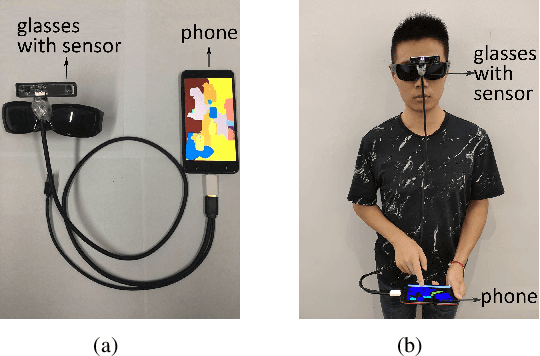
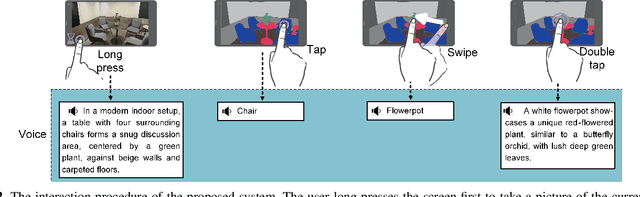
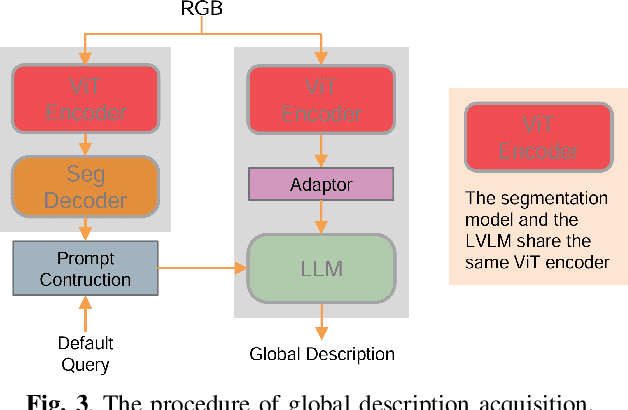
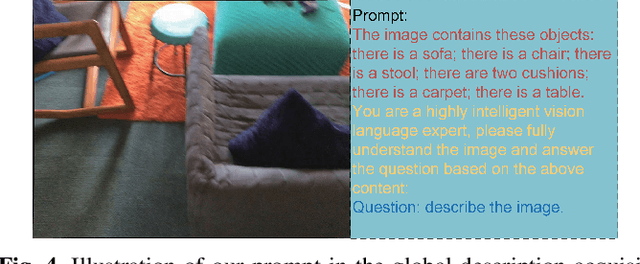
It is a challenging task for visually impaired people to perceive their surrounding environment due to the complexity of the natural scenes. Their personal and social activities are thus highly limited. This paper introduces a Large Vision-Language Model(LVLM) based environment perception system which helps them to better understand the surrounding environment, by capturing the current scene they face with a wearable device, and then letting them retrieve the analysis results through the device. The visually impaired people could acquire a global description of the scene by long pressing the screen to activate the LVLM output, retrieve the categories of the objects in the scene resulting from a segmentation model by tapping or swiping the screen, and get a detailed description of the objects they are interested in by double-tapping the screen. To help visually impaired people more accurately perceive the world, this paper proposes incorporating the segmentation result of the RGB image as external knowledge into the input of LVLM to reduce the LVLM's hallucination. Technical experiments on POPE, MME and LLaVA-QA90 show that the system could provide a more accurate description of the scene compared to Qwen-VL-Chat, exploratory experiments show that the system helps visually impaired people to perceive the surrounding environment effectively.
Landmark-Free Preoperative-to-Intraoperative Registration in Laparoscopic Liver Resection
Apr 21, 2025Liver registration by overlaying preoperative 3D models onto intraoperative 2D frames can assist surgeons in perceiving the spatial anatomy of the liver clearly for a higher surgical success rate. Existing registration methods rely heavily on anatomical landmark-based workflows, which encounter two major limitations: 1) ambiguous landmark definitions fail to provide efficient markers for registration; 2) insufficient integration of intraoperative liver visual information in shape deformation modeling. To address these challenges, in this paper, we propose a landmark-free preoperative-to-intraoperative registration framework utilizing effective self-supervised learning, termed \ourmodel. This framework transforms the conventional 3D-2D workflow into a 3D-3D registration pipeline, which is then decoupled into rigid and non-rigid registration subtasks. \ourmodel~first introduces a feature-disentangled transformer to learn robust correspondences for recovering rigid transformations. Further, a structure-regularized deformation network is designed to adjust the preoperative model to align with the intraoperative liver surface. This network captures structural correlations through geometry similarity modeling in a low-rank transformer network. To facilitate the validation of the registration performance, we also construct an in-vivo registration dataset containing liver resection videos of 21 patients, called \emph{P2I-LReg}, which contains 346 keyframes that provide a global view of the liver together with liver mask annotations and calibrated camera intrinsic parameters. Extensive experiments and user studies on both synthetic and in-vivo datasets demonstrate the superiority and potential clinical applicability of our method.
Anchor Token Matching: Implicit Structure Locking for Training-free AR Image Editing
Apr 14, 2025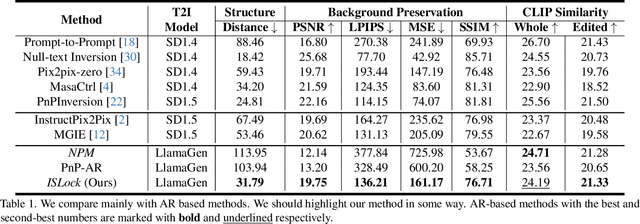
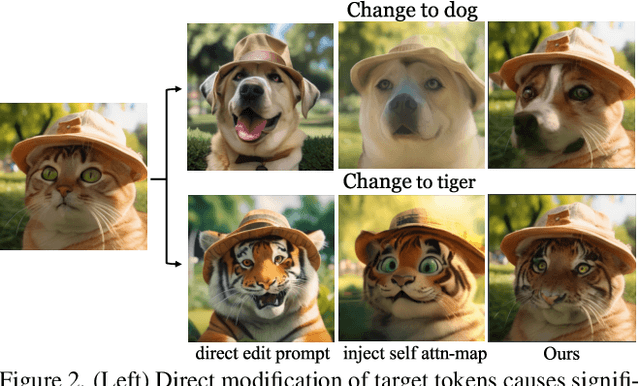
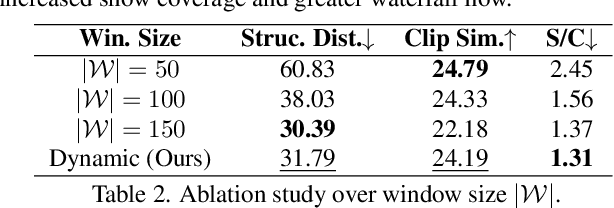
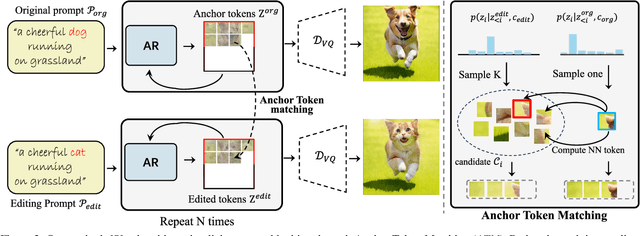
Text-to-image generation has seen groundbreaking advancements with diffusion models, enabling high-fidelity synthesis and precise image editing through cross-attention manipulation. Recently, autoregressive (AR) models have re-emerged as powerful alternatives, leveraging next-token generation to match diffusion models. However, existing editing techniques designed for diffusion models fail to translate directly to AR models due to fundamental differences in structural control. Specifically, AR models suffer from spatial poverty of attention maps and sequential accumulation of structural errors during image editing, which disrupt object layouts and global consistency. In this work, we introduce Implicit Structure Locking (ISLock), the first training-free editing strategy for AR visual models. Rather than relying on explicit attention manipulation or fine-tuning, ISLock preserves structural blueprints by dynamically aligning self-attention patterns with reference images through the Anchor Token Matching (ATM) protocol. By implicitly enforcing structural consistency in latent space, our method ISLock enables structure-aware editing while maintaining generative autonomy. Extensive experiments demonstrate that ISLock achieves high-quality, structure-consistent edits without additional training and is superior or comparable to conventional editing techniques. Our findings pioneer the way for efficient and flexible AR-based image editing, further bridging the performance gap between diffusion and autoregressive generative models. The code will be publicly available at https://github.com/hutaiHang/ATM
DyDiT++: Dynamic Diffusion Transformers for Efficient Visual Generation
Apr 09, 2025Diffusion Transformer (DiT), an emerging diffusion model for visual generation, has demonstrated superior performance but suffers from substantial computational costs. Our investigations reveal that these costs primarily stem from the \emph{static} inference paradigm, which inevitably introduces redundant computation in certain \emph{diffusion timesteps} and \emph{spatial regions}. To overcome this inefficiency, we propose \textbf{Dy}namic \textbf{Di}ffusion \textbf{T}ransformer (DyDiT), an architecture that \emph{dynamically} adjusts its computation along both \emph{timestep} and \emph{spatial} dimensions. Specifically, we introduce a \emph{Timestep-wise Dynamic Width} (TDW) approach that adapts model width conditioned on the generation timesteps. In addition, we design a \emph{Spatial-wise Dynamic Token} (SDT) strategy to avoid redundant computation at unnecessary spatial locations. TDW and SDT can be seamlessly integrated into DiT and significantly accelerates the generation process. Building on these designs, we further enhance DyDiT in three key aspects. First, DyDiT is integrated seamlessly with flow matching-based generation, enhancing its versatility. Furthermore, we enhance DyDiT to tackle more complex visual generation tasks, including video generation and text-to-image generation, thereby broadening its real-world applications. Finally, to address the high cost of full fine-tuning and democratize technology access, we investigate the feasibility of training DyDiT in a parameter-efficient manner and introduce timestep-based dynamic LoRA (TD-LoRA). Extensive experiments on diverse visual generation models, including DiT, SiT, Latte, and FLUX, demonstrate the effectiveness of DyDiT.
MDK12-Bench: A Multi-Discipline Benchmark for Evaluating Reasoning in Multimodal Large Language Models
Apr 08, 2025Multimodal reasoning, which integrates language and visual cues into problem solving and decision making, is a fundamental aspect of human intelligence and a crucial step toward artificial general intelligence. However, the evaluation of multimodal reasoning capabilities in Multimodal Large Language Models (MLLMs) remains inadequate. Most existing reasoning benchmarks are constrained by limited data size, narrow domain coverage, and unstructured knowledge distribution. To close these gaps, we introduce MDK12-Bench, a multi-disciplinary benchmark assessing the reasoning capabilities of MLLMs via real-world K-12 examinations. Spanning six disciplines (math, physics, chemistry, biology, geography, and information science), our benchmark comprises 140K reasoning instances across diverse difficulty levels from primary school to 12th grade. It features 6,827 instance-level knowledge point annotations based on a well-organized knowledge structure, detailed answer explanations, difficulty labels and cross-year partitions, providing a robust platform for comprehensive evaluation. Additionally, we present a novel dynamic evaluation framework to mitigate data contamination issues by bootstrapping question forms, question types, and image styles during evaluation. Extensive experiment on MDK12-Bench reveals the significant limitation of current MLLMs in multimodal reasoning. The findings on our benchmark provide insights into the development of the next-generation models. Our data and codes are available at https://github.com/LanceZPF/MDK12.
Dynamic Vision Mamba
Apr 07, 2025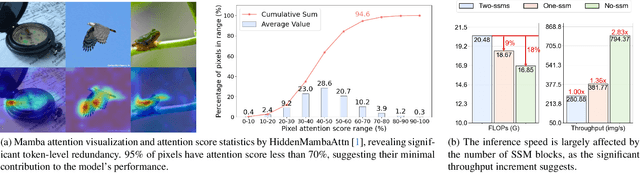
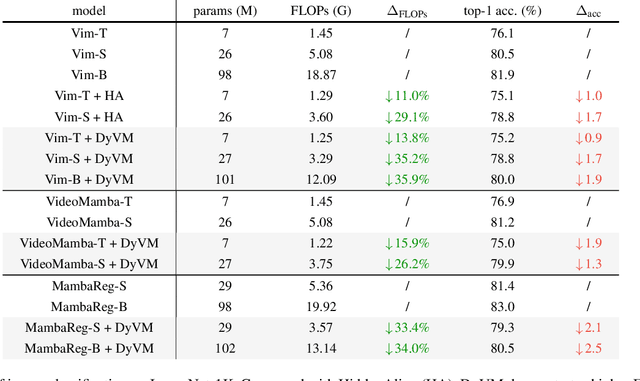
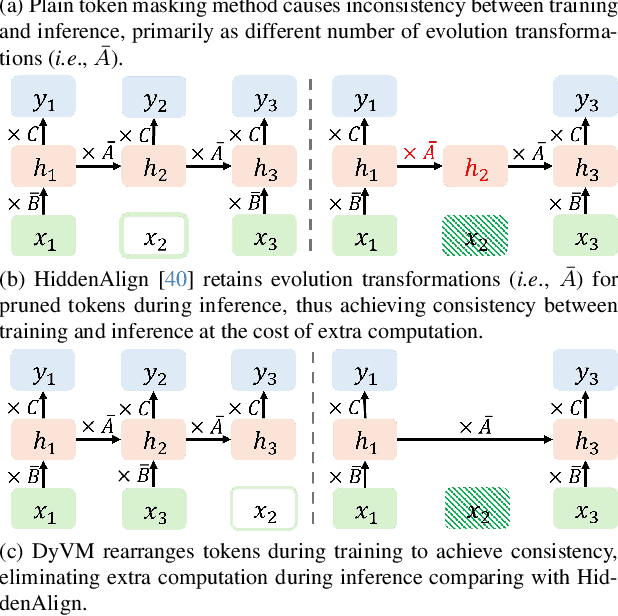
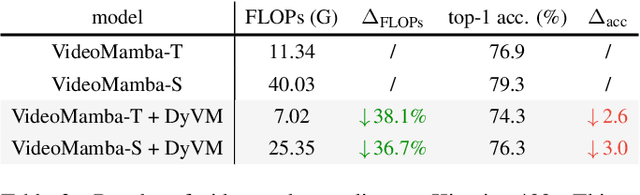
Mamba-based vision models have gained extensive attention as a result of being computationally more efficient than attention-based models. However, spatial redundancy still exists in these models, represented by token and block redundancy. For token redundancy, we analytically find that early token pruning methods will result in inconsistency between training and inference or introduce extra computation for inference. Therefore, we customize token pruning to fit the Mamba structure by rearranging the pruned sequence before feeding it into the next Mamba block. For block redundancy, we allow each image to select SSM blocks dynamically based on an empirical observation that the inference speed of Mamba-based vision models is largely affected by the number of SSM blocks. Our proposed method, Dynamic Vision Mamba (DyVM), effectively reduces FLOPs with minor performance drops. We achieve a reduction of 35.2\% FLOPs with only a loss of accuracy of 1.7\% on Vim-S. It also generalizes well across different Mamba vision model architectures and different vision tasks. Our code will be made public.