 Add to Chrome
 Add to Firefox
 Add to Edge
Gaffke's confidence interval for the mean of bounded data is inadmissible but asymptotically efficient
Jul 21, 2026
Given observations $\mathbf x=(x_1,\dots,x_n)$, Gaffke (2005) defined \[ K_n(\mathbf x)=\mathbb{P}_{\mathbf D}\!\left\{\sum_{i=1}^n x_iD_i\le 1\right\}, \qquad (D_0,D_1,\ldots,D_n)\sim\mathrm{Dirichlet}(1,\ldots,1), \] and conjectured that it is a $p$-value whenever the inputs are independent e-values. Recently, Vlassis and Thomas (2026) proved this conjecture. Inverting the tests for observations in $[0,1]$ gives the confidence interval studied by Learned-Miller and Thomas (2020), which reduces to Clopper--Pearson for Bernoulli data. We give a finite- and large-sample account of Gaffke's test and interval. First, for every $\mathbf x\in[0,\infty)^n$ and every elementary symmetric polynomial $e_k$, \( K_n(\mathbf x)e_k(\mathbf x)\le {n\choose k}, \) so the Gaffke $p$-value never larger than the SymPol $p$-value of Ming et al. (2026). However, Gaffke's p-value is inadmissible. For $n=2$, we construct a valid rule that is strictly smaller on mixed configurations and is the unique admissible rule that dominates $K_2$. A neutral-face extension proves inadmissibility of $K_n$ for every $n\ge2$. If one independent uniform random variable is allowed, there is an even simpler full-dimensional improvement: on the upper orthant, where $K_n(\mathbf x)=1/\prod_i x_i$, replace it by $U/\prod_i x_i$. The equal-tail Gaffke confidence interval $I_n$ is nevertheless first-order asymptotically efficient: for iid observations on $[0,1]$ with unknown variance $σ^2>0$, \[ \sqrt n\,\operatorname{Width}(I_n)\longrightarrow 2σz_{1-α/2}\qquad\text{almost surely}. \] Our simulations also find that, among a variety of bounded-mean intervals considered, the Gaffke interval is the shortest, including comparisons with a recent empirical Berry--Esseen procedure having the same first-order Gaussian target.

One Size does not Fit All: Heterogeneous Latent Space Alignment for Unsupervised Domain Adaptation
Jun 19, 2026Domain shift remains a major obstacle to the reliable deployment of machine learning models in high-stakes environments such as healthcare. While Domain adaptation aims to mitigate these effects, existing approaches suffer from limited expressiveness of latent representations and a reliance on handcrafted, static augmentations. In this work, we address these limitations by proposing a novel deep learning architecture for Unsupervised Domain Adaptation (UDA), specifically optimized for medical image segmentation. Our framework, ADualVUOT, integrates a dual-encoder Variational Autoencoder (VAE) with Continuous Normalizing Flows (CNFs) to increase modeling flexibility and posterior expressiveness. To achieve domain alignment, we leverage Unbalanced Optimal Transport (UOT) through the Gaussian-Gromov-Wasserstein (GGW) distance, which handles structural and topological discrepancies between domains. Furthermore, we incorporate an adversarial augmentation scheme to synthesize worst-case compositions, thus enhancing model robustness. Extensive experiments on medical imaging benchmarks show significant gains over prior OT-based approaches.
Token-Operations-Oriented Inference Optimization Techniques for Large Models
Jun 18, 2026Large model inference optimization serves as a key foundation for supporting the scalable, low-cost, and highly stable operation of large model services. Centered on token-oriented inference optimization technology, this paper proposes for the first time a four-layer technical architecture consisting of Multi-model Fusion, Model Optimization, Compute-Model Fusion, and Compute-Network-Model Fusion. It systematically reviews the key technologies and current industry status across these four levels and analyzes the application value of related technologies in real-world business scenarios. This paper provides a practical technical path for reducing token production costs, improving token service efficiency, ensuring the stability of token supply, and driving the transition of large model services from being merely callable to being operable.
HiMPO: Hindsight-Informed Memory Policy Optimization for Less-Entangled Credit in Long-Horizon Agents
Jun 15, 2026Long-horizon agents rely on memory mechanisms to compress interaction history, but optimizing memory writing faces a distinct credit assignment challenge: a memory update may be rewarded or penalized due to downstream tool failures, noisy observations, or reasoning errors rather than its own contribution. This causally entangled credit can lead agents to discard useful evidence or preserve irrelevant information. We propose HiMPO, a Hindsight-Informed Memory Policy Optimization framework for assigning less-entangled credit to memory-writing actions in long-horizon agents. HiMPO first estimates the local utility of a memory update by comparing the task-relevant information recoverable from the previous and updated memories under the same pre-write state. It then uses hindsight relevance as a bounded retrospective filter that attenuates memory credit when local utility is not supported by the target outcome. The resulting memory-specific advantage is applied only to memory tokens, while trajectory-level rewards optimize the rest of the agent behavior. Across judge-based open-domain tasks and objective compressive-memory QA, HiMPO improves over strong memory-based and RL-based baselines while preserving compressed-context efficiency. Controlled interventions further show that HiMPO reduces blame leakage from tool-induced errors and improves attribution fidelity of memory updates.
Mixture of Heterogeneous Grouped Experts for Language Modeling
Apr 28, 2026Large Language Models (LLMs) based on Mixture-of-Experts (MoE) are pivotal in industrial applications for their ability to scale performance efficiently. However, standard MoEs enforce uniform expert sizes,creating a rigidity that fails to align computational costs with varying token-level complexity. While heterogeneous expert architectures attempt to address this by diversifying expert sizes, they often suffer from significant system-level challenges, specifically unbalanced GPU utilization and inefficient parameter utilization, which hinder practical deployment. To bridge the gap between theoretical heterogeneity and robust industrial application, we propose Mixture of Heterogeneous Grouped Experts (MoHGE) which introduces a two-level routing mechanism to enable flexible, resource-aware expert combinations. To optimize inference efficiency, we propose a Group-Wise Auxiliary Loss, which dynamically steers tokens to the most parameter-efficient expert groups based on task difficulty. To address the critical deployment challenge of GPU load balancing, we introduce an All-size Group-decoupling Allocation strategy coupled with an Intra-Group Experts Auxiliary Loss. These mechanisms collectively ensure uniform computation distribution across GPUs. Extensive evaluations demonstrate that MoHGE matches the performance of MoE architectures while reducing the total parameters by approximately 20% and maintaining balanced GPU utilization. Our work establishes a scalable paradigm for resource-efficient MoE design, offering a practical solution for optimizing inference costs in real-world scenarios. The code is publicly available at https://github.com/UnicomAI/MoHGE.
PCA-Enhanced Probabilistic U-Net for Effective Ambiguous Medical Image Segmentation
Mar 12, 2026Ambiguous Medical Image Segmentation (AMIS) is significant to address the challenges of inherent uncertainties from image ambiguities, noise, and subjective annotations. Existing conditional variational autoencoder (cVAE)-based methods effectively capture uncertainty but face limitations including redundancy in high-dimensional latent spaces and limited expressiveness of single posterior networks. To overcome these issues, we introduce a novel PCA-Enhanced Probabilistic U-Net (\textbf{PEP U-Net}). Our method effectively incorporates Principal Component Analysis (PCA) for dimensionality reduction in the posterior network to mitigate redundancy and improve computational efficiency. Additionally, we further employ an inverse PCA operation to reconstruct critical information, enhancing the latent space's representational capacity. Compared to conventional generative models, our method preserves the ability to generate diverse segmentation hypotheses while achieving a superior balance between segmentation accuracy and predictive variability, thereby advancing the performance of generative modeling in medical image segmentation.
HEAL: Hindsight Entropy-Assisted Learning for Reasoning Distillation
Mar 11, 2026Distilling reasoning capabilities from Large Reasoning Models (LRMs) into smaller models is typically constrained by the limitation of rejection sampling. Standard methods treat the teacher as a static filter, discarding complex "corner-case" problems where the teacher fails to explore valid solutions independently, thereby creating an artificial "Teacher Ceiling" for the student. In this work, we propose Hindsight Entropy-Assisted Learning (HEAL), an RL-free framework designed to bridge this reasoning gap. Drawing on the educational theory of the Zone of Proximal Development(ZPD), HEAL synergizes three core modules: (1) Guided Entropy-Assisted Repair (GEAR), an active intervention mechanism that detects critical reasoning breakpoints via entropy dynamics and injects targeted hindsight hints to repair broken trajectories; (2) Perplexity-Uncertainty Ratio Estimator (PURE), a rigorous filtering protocol that decouples genuine cognitive breakthroughs from spurious shortcuts; and (3) Progressive Answer-guided Curriculum Evolution (PACE), a three-stage distillation strategy that organizes training from foundational alignment to frontier breakthrough. Extensive experiments on multiple benchmarks demonstrate that HEAL significantly outperforms traditional SFT distillation and other baselines.
AIConfigurator: Lightning-Fast Configuration Optimization for Multi-Framework LLM Serving
Jan 09, 2026Optimizing Large Language Model (LLM) inference in production systems is increasingly difficult due to dynamic workloads, stringent latency/throughput targets, and a rapidly expanding configuration space. This complexity spans not only distributed parallelism strategies (tensor/pipeline/expert) but also intricate framework-specific runtime parameters such as those concerning the enablement of CUDA graphs, available KV-cache memory fractions, and maximum token capacity, which drastically impact performance. The diversity of modern inference frameworks (e.g., TRT-LLM, vLLM, SGLang), each employing distinct kernels and execution policies, makes manual tuning both framework-specific and computationally prohibitive. We present AIConfigurator, a unified performance-modeling system that enables rapid, framework-agnostic inference configuration search without requiring GPU-based profiling. AIConfigurator combines (1) a methodology that decomposes inference into analytically modelable primitives - GEMM, attention, communication, and memory operations while capturing framework-specific scheduling dynamics; (2) a calibrated kernel-level performance database for these primitives across a wide range of hardware platforms and popular open-weights models (GPT-OSS, Qwen, DeepSeek, LLama, Mistral); and (3) an abstraction layer that automatically resolves optimal launch parameters for the target backend, seamlessly integrating into production-grade orchestration systems. Evaluation on production LLM serving workloads demonstrates that AIConfigurator identifies superior serving configurations that improve performance by up to 40% for dense models (e.g., Qwen3-32B) and 50% for MoE architectures (e.g., DeepSeek-V3), while completing searches within 30 seconds on average. Enabling the rapid exploration of vast design spaces - from cluster topology down to engine specific flags.
Group Distributionally Robust Machine Learning under Group Level Distributional Uncertainty
Sep 10, 2025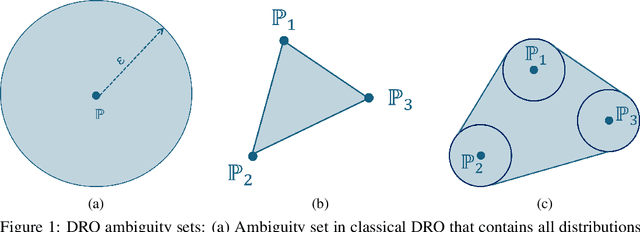

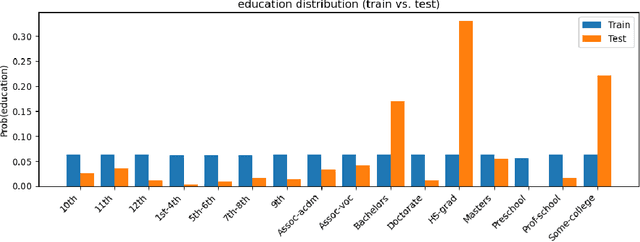
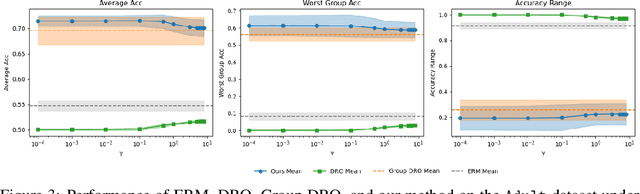
The performance of machine learning (ML) models critically depends on the quality and representativeness of the training data. In applications with multiple heterogeneous data generating sources, standard ML methods often learn spurious correlations that perform well on average but degrade performance for atypical or underrepresented groups. Prior work addresses this issue by optimizing the worst-group performance. However, these approaches typically assume that the underlying data distributions for each group can be accurately estimated using the training data, a condition that is frequently violated in noisy, non-stationary, and evolving environments. In this work, we propose a novel framework that relies on Wasserstein-based distributionally robust optimization (DRO) to account for the distributional uncertainty within each group, while simultaneously preserving the objective of improving the worst-group performance. We develop a gradient descent-ascent algorithm to solve the proposed DRO problem and provide convergence results. Finally, we validate the effectiveness of our method on real-world data.
JRDB-Reasoning: A Difficulty-Graded Benchmark for Visual Reasoning in Robotics
Aug 14, 2025Recent advances in Vision-Language Models (VLMs) and large language models (LLMs) have greatly enhanced visual reasoning, a key capability for embodied AI agents like robots. However, existing visual reasoning benchmarks often suffer from several limitations: they lack a clear definition of reasoning complexity, offer have no control to generate questions over varying difficulty and task customization, and fail to provide structured, step-by-step reasoning annotations (workflows). To bridge these gaps, we formalize reasoning complexity, introduce an adaptive query engine that generates customizable questions of varying complexity with detailed intermediate annotations, and extend the JRDB dataset with human-object interaction and geometric relationship annotations to create JRDB-Reasoning, a benchmark tailored for visual reasoning in human-crowded environments. Our engine and benchmark enable fine-grained evaluation of visual reasoning frameworks and dynamic assessment of visual-language models across reasoning levels.