 Add to Chrome
 Add to Firefox
 Add to Edge
Mixture of Heterogeneous Grouped Experts for Language Modeling
Apr 28, 2026
Large Language Models (LLMs) based on Mixture-of-Experts (MoE) are pivotal in industrial applications for their ability to scale performance efficiently. However, standard MoEs enforce uniform expert sizes,creating a rigidity that fails to align computational costs with varying token-level complexity. While heterogeneous expert architectures attempt to address this by diversifying expert sizes, they often suffer from significant system-level challenges, specifically unbalanced GPU utilization and inefficient parameter utilization, which hinder practical deployment. To bridge the gap between theoretical heterogeneity and robust industrial application, we propose Mixture of Heterogeneous Grouped Experts (MoHGE) which introduces a two-level routing mechanism to enable flexible, resource-aware expert combinations. To optimize inference efficiency, we propose a Group-Wise Auxiliary Loss, which dynamically steers tokens to the most parameter-efficient expert groups based on task difficulty. To address the critical deployment challenge of GPU load balancing, we introduce an All-size Group-decoupling Allocation strategy coupled with an Intra-Group Experts Auxiliary Loss. These mechanisms collectively ensure uniform computation distribution across GPUs. Extensive evaluations demonstrate that MoHGE matches the performance of MoE architectures while reducing the total parameters by approximately 20% and maintaining balanced GPU utilization. Our work establishes a scalable paradigm for resource-efficient MoE design, offering a practical solution for optimizing inference costs in real-world scenarios. The code is publicly available at https://github.com/UnicomAI/MoHGE.

Towards Privacy-Preserving Machine Translation at the Inference Stage: A New Task and Benchmark
Mar 16, 2026Current online translation services require sending user text to cloud servers, posing a risk of privacy leakage when the text contains sensitive information. This risk hinders the application of online translation services in privacy-sensitive scenarios. One way to mitigate this risk for online translation services is introducing privacy protection mechanisms targeting the inference stage of translation models. However, compared to subfields of NLP like text classification and summarization, the machine translation research community has limited exploration of privacy protection during the inference stage. There is no clearly defined privacy protection task for the inference stage, dedicated evaluation datasets and metrics, and reference benchmark methods. The absence of these elements has seriously constrained researchers' in-depth exploration of this direction. To bridge this gap, this paper proposes a novel "Privacy-Preserving Machine Translation" (PPMT) task, aiming to protect the private information in text during the model inference stage. For this task, we constructed three benchmark test datasets, designed corresponding evaluation metrics, and proposed a series of benchmark methods as a starting point for this task. The definition of privacy is complex and diverse. Considering that named entities often contain a large amount of personal privacy and commercial secrets, we have focused our research on protecting only the named entity's privacy in the text. We expect this research work will provide a new perspective and a solid foundation for the privacy protection problem in machine translation.
HEAL: Hindsight Entropy-Assisted Learning for Reasoning Distillation
Mar 11, 2026Distilling reasoning capabilities from Large Reasoning Models (LRMs) into smaller models is typically constrained by the limitation of rejection sampling. Standard methods treat the teacher as a static filter, discarding complex "corner-case" problems where the teacher fails to explore valid solutions independently, thereby creating an artificial "Teacher Ceiling" for the student. In this work, we propose Hindsight Entropy-Assisted Learning (HEAL), an RL-free framework designed to bridge this reasoning gap. Drawing on the educational theory of the Zone of Proximal Development(ZPD), HEAL synergizes three core modules: (1) Guided Entropy-Assisted Repair (GEAR), an active intervention mechanism that detects critical reasoning breakpoints via entropy dynamics and injects targeted hindsight hints to repair broken trajectories; (2) Perplexity-Uncertainty Ratio Estimator (PURE), a rigorous filtering protocol that decouples genuine cognitive breakthroughs from spurious shortcuts; and (3) Progressive Answer-guided Curriculum Evolution (PACE), a three-stage distillation strategy that organizes training from foundational alignment to frontier breakthrough. Extensive experiments on multiple benchmarks demonstrate that HEAL significantly outperforms traditional SFT distillation and other baselines.
Fuzzy Reasoning Chain (FRC): An Innovative Reasoning Framework from Fuzziness to Clarity
Sep 26, 2025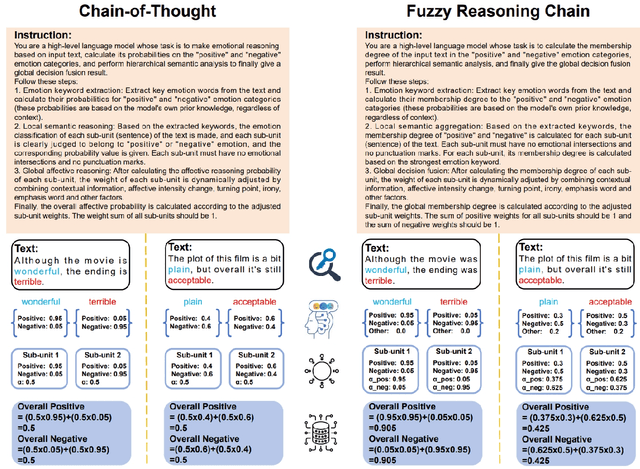
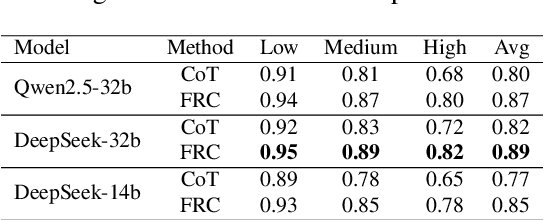
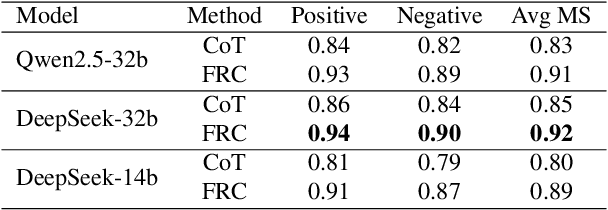
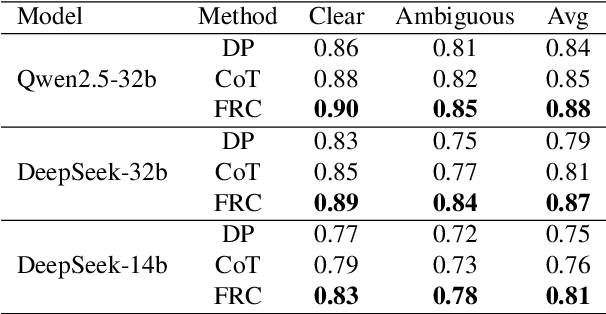
With the rapid advancement of large language models (LLMs), natural language processing (NLP) has achieved remarkable progress. Nonetheless, significant challenges remain in handling texts with ambiguity, polysemy, or uncertainty. We introduce the Fuzzy Reasoning Chain (FRC) framework, which integrates LLM semantic priors with continuous fuzzy membership degrees, creating an explicit interaction between probability-based reasoning and fuzzy membership reasoning. This transition allows ambiguous inputs to be gradually transformed into clear and interpretable decisions while capturing conflicting or uncertain signals that traditional probability-based methods cannot. We validate FRC on sentiment analysis tasks, where both theoretical analysis and empirical results show that it ensures stable reasoning and facilitates knowledge transfer across different model scales. These findings indicate that FRC provides a general mechanism for managing subtle and ambiguous expressions with improved interpretability and robustness.
Quantitative Analysis of Performance Drop in DeepSeek Model Quantization
May 05, 2025Recently, there is a high demand for deploying DeepSeek-R1 and V3 locally, possibly because the official service often suffers from being busy and some organizations have data privacy concerns. While single-machine deployment offers infrastructure simplicity, the models' 671B FP8 parameter configuration exceeds the practical memory limits of a standard 8-GPU machine. Quantization is a widely used technique that helps reduce model memory consumption. However, it is unclear what the performance of DeepSeek-R1 and V3 will be after being quantized. This technical report presents the first quantitative evaluation of multi-bitwidth quantization across the complete DeepSeek model spectrum. Key findings reveal that 4-bit quantization maintains little performance degradation versus FP8 while enabling single-machine deployment on standard NVIDIA GPU devices. We further propose DQ3_K_M, a dynamic 3-bit quantization method that significantly outperforms traditional Q3_K_M variant on various benchmarks, which is also comparable with 4-bit quantization (Q4_K_M) approach in most tasks. Moreover, DQ3_K_M supports single-machine deployment configurations for both NVIDIA H100/A100 and Huawei 910B. Our implementation of DQ3\_K\_M is released at https://github.com/UnicomAI/DeepSeek-Eval, containing optimized 3-bit quantized variants of both DeepSeek-R1 and DeepSeek-V3.
DAST: Difficulty-Adaptive Slow-Thinking for Large Reasoning Models
Mar 06, 2025Recent advancements in slow-thinking reasoning models have shown exceptional performance in complex reasoning tasks. However, these models often exhibit overthinking-generating redundant reasoning steps for simple problems, leading to excessive computational resource usage. While current mitigation strategies uniformly reduce reasoning tokens, they risk degrading performance on challenging tasks that require extended reasoning. This paper introduces Difficulty-Adaptive Slow-Thinking (DAST), a novel framework that enables models to autonomously adjust the length of Chain-of-Thought(CoT) based on problem difficulty. We first propose a Token Length Budget (TLB) metric to quantify difficulty, then leveraging length-aware reward shaping and length preference optimization to implement DAST. DAST penalizes overlong responses for simple tasks while incentivizing sufficient reasoning for complex problems. Experiments on diverse datasets and model scales demonstrate that DAST effectively mitigates overthinking (reducing token usage by over 30\% on average) while preserving reasoning accuracy on complex problems.
CuDIP: Enhancing Theorem Proving in LLMs via Curriculum Learning-based Direct Preference Optimization
Feb 25, 2025Automated theorem proving (ATP) is one of the most challenging mathematical reasoning tasks for Large Language Models (LLMs). Most existing LLM-based ATP methods rely on supervised fine-tuning, which results in a limited alignment between the theorem proving process and human preferences. Direct Preference Optimization (DPO), which aligns LLMs with human preferences, has shown positive effects for certain tasks. However, the lack of high-quality preference data for theorem proving presents a significant challenge. In this paper, we innovatively apply DPO to formal automated theorem proving and introduces a Curriculum Learning-based DPO Iterative Theorem Proving (CuDIP) method. Specifically, we propose a method for constructing preference data which utilizes LLMs and existing theorem proving data to enhance the diversity of the preference data while reducing the reliance on human preference annotations. We then integrate this preference data construction method with curriculum learning to iteratively fine-tune the theorem proving model through DPO. Experimental results on the MiniF2F and ProofNet datasets demonstrate the effectiveness of the proposed method.
Selection-p: Self-Supervised Task-Agnostic Prompt Compression for Faithfulness and Transferability
Oct 15, 2024

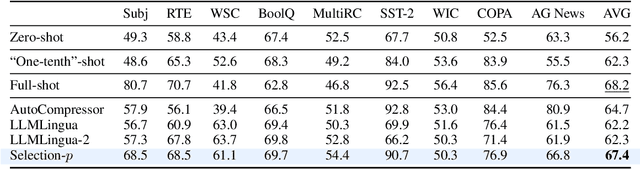
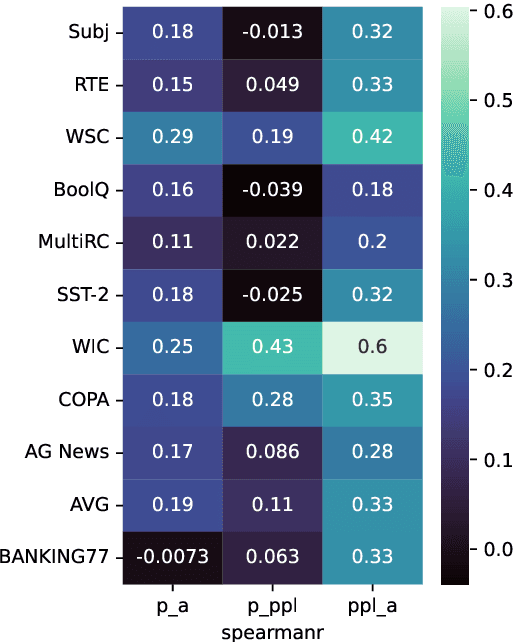
Large Language Models (LLMs) have demonstrated impressive capabilities in a wide range of natural language processing tasks when leveraging in-context learning. To mitigate the additional computational and financial costs associated with in-context learning, several prompt compression methods have been proposed to compress the in-context learning prompts. Despite their success, these methods face challenges with transferability due to model-specific compression, or rely on external training data, such as GPT-4. In this paper, we investigate the ability of LLMs to develop a unified compression method that discretizes uninformative tokens, utilizing a self-supervised pre-training technique. By introducing a small number of parameters during the continual pre-training, the proposed Selection-p produces a probability for each input token, indicating whether to preserve or discard it. Experiments show Selection-p achieves state-of-the-art performance across numerous classification tasks, achieving compression rates of up to 10 times while experiencing only a marginal 0.8% decrease in performance. Moreover, it exhibits superior transferability to different models compared to prior work. Additionally, we further analyze how Selection-p helps maintain performance on in-context learning with long contexts.
An Energy-based Model for Word-level AutoCompletion in Computer-aided Translation
Jul 29, 2024Word-level AutoCompletion(WLAC) is a rewarding yet challenging task in Computer-aided Translation. Existing work addresses this task through a classification model based on a neural network that maps the hidden vector of the input context into its corresponding label (i.e., the candidate target word is treated as a label). Since the context hidden vector itself does not take the label into account and it is projected to the label through a linear classifier, the model can not sufficiently leverage valuable information from the source sentence as verified in our experiments, which eventually hinders its overall performance. To alleviate this issue, this work proposes an energy-based model for WLAC, which enables the context hidden vector to capture crucial information from the source sentence. Unfortunately, training and inference suffer from efficiency and effectiveness challenges, thereby we employ three simple yet effective strategies to put our model into practice. Experiments on four standard benchmarks demonstrate that our reranking-based approach achieves substantial improvements (about 6.07%) over the previous state-of-the-art model. Further analyses show that each strategy of our approach contributes to the final performance.
Not All Preference Pairs Are Created Equal: A Recipe for Annotation-Efficient Iterative Preference Learning
Jun 25, 2024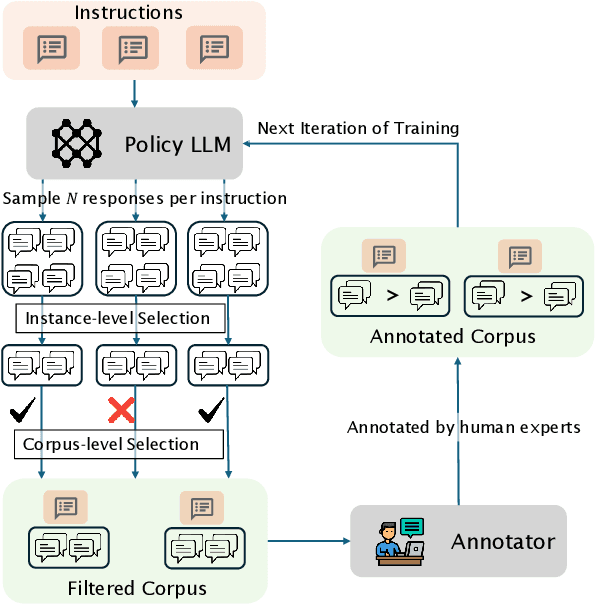
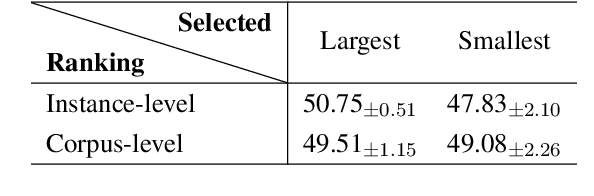
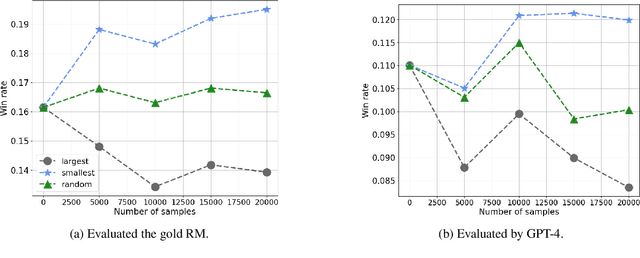
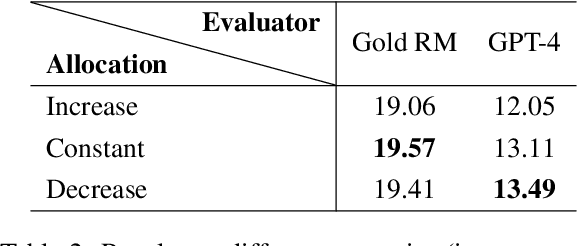
Iterative preference learning, though yielding superior performances, requires online annotated preference labels. In this work, we study strategies to select worth-annotating response pairs for cost-efficient annotation while achieving competitive or even better performances compared with the random selection baseline for iterative preference learning. Built on assumptions regarding uncertainty and distribution shifts, we propose a comparative view to rank the implicit reward margins as predicted by DPO to select the response pairs that yield more benefits. Through extensive experiments, we show that annotating those response pairs with small margins is generally better than large or random, under both single- and multi-iteration scenarios. Besides, our empirical results suggest allocating more annotation budgets in the earlier iterations rather than later across multiple iterations.