 Add to Chrome
 Add to Firefox
 Add to Edge
DiagramQG: A Dataset for Generating Concept-Focused Questions from Diagrams
Nov 26, 2024
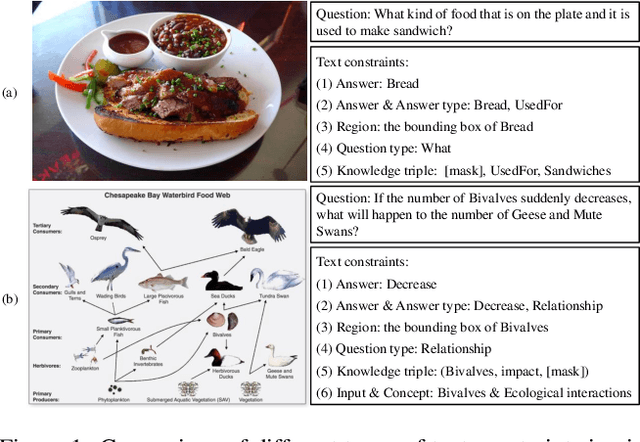

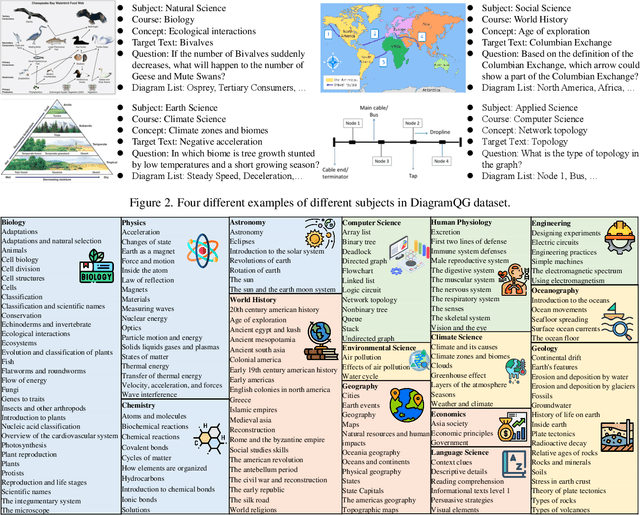
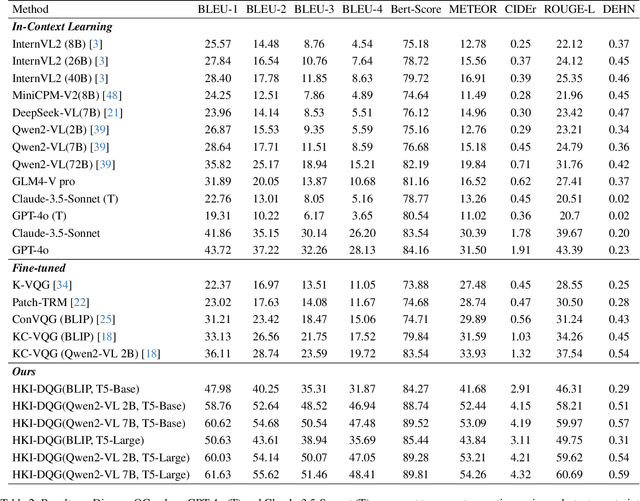
Visual Question Generation (VQG) has gained significant attention due to its potential in educational applications. However, VQG researches mainly focus on natural images, neglecting diagrams in educational materials used to assess students' conceptual understanding. To address this gap, we introduce DiagramQG, a dataset containing 8,372 diagrams and 19,475 questions across various subjects. DiagramQG introduces concept and target text constraints, guiding the model to generate concept-focused questions for educational purposes. Meanwhile, we present the Hierarchical Knowledge Integration framework for Diagram Question Generation (HKI-DQG) as a strong baseline. This framework obtains multi-scale patches of diagrams and acquires knowledge using a visual language model with frozen parameters. It then integrates knowledge, text constraints and patches to generate concept-focused questions. We evaluate the performance of existing VQG models, open-source and closed-source vision-language models, and HKI-DQG on the DiagramQG dataset. Our HKI-DQG outperform existing methods, demonstrating that it serves as a strong baseline. Furthermore, to assess its generalizability, we apply HKI-DQG to two other VQG datasets of natural images, namely VQG-COCO and K-VQG, achieving state-of-the-art performance.The dataset and code are available at https://dxzxy12138.github.io/diagramqg-home.

MSSF: A 4D Radar and Camera Fusion Framework With Multi-Stage Sampling for 3D Object Detection in Autonomous Driving
Nov 22, 2024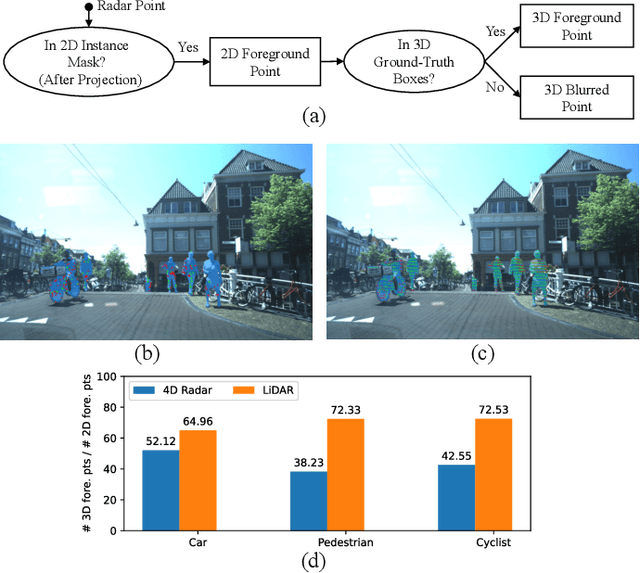
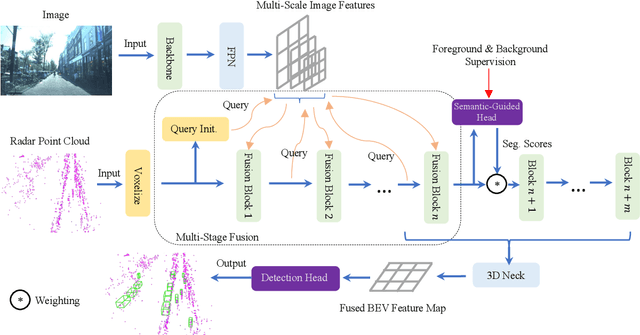
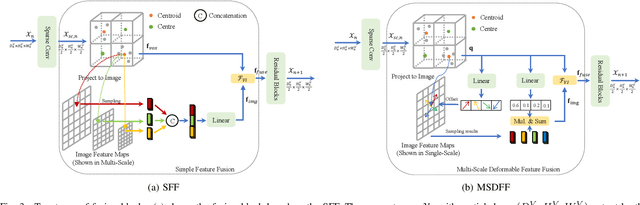
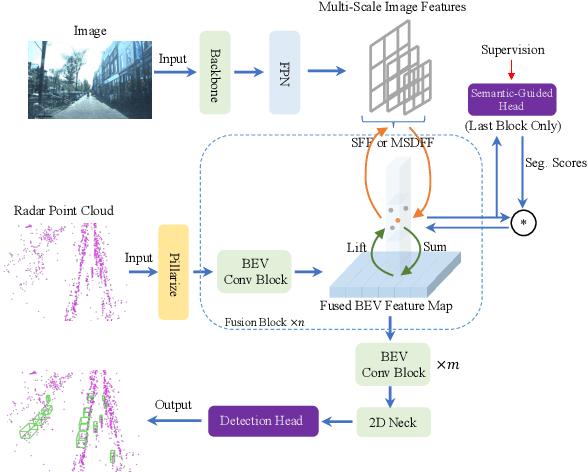
As one of the automotive sensors that have emerged in recent years, 4D millimeter-wave radar has a higher resolution than conventional 3D radar and provides precise elevation measurements. But its point clouds are still sparse and noisy, making it challenging to meet the requirements of autonomous driving. Camera, as another commonly used sensor, can capture rich semantic information. As a result, the fusion of 4D radar and camera can provide an affordable and robust perception solution for autonomous driving systems. However, previous radar-camera fusion methods have not yet been thoroughly investigated, resulting in a large performance gap compared to LiDAR-based methods. Specifically, they ignore the feature-blurring problem and do not deeply interact with image semantic information. To this end, we present a simple but effective multi-stage sampling fusion (MSSF) network based on 4D radar and camera. On the one hand, we design a fusion block that can deeply interact point cloud features with image features, and can be applied to commonly used single-modal backbones in a plug-and-play manner. The fusion block encompasses two types, namely, simple feature fusion (SFF) and multiscale deformable feature fusion (MSDFF). The SFF is easy to implement, while the MSDFF has stronger fusion abilities. On the other hand, we propose a semantic-guided head to perform foreground-background segmentation on voxels with voxel feature re-weighting, further alleviating the problem of feature blurring. Extensive experiments on the View-of-Delft (VoD) and TJ4DRadset datasets demonstrate the effectiveness of our MSSF. Notably, compared to state-of-the-art methods, MSSF achieves a 7.0% and 4.0% improvement in 3D mean average precision on the VoD and TJ4DRadSet datasets, respectively. It even surpasses classical LiDAR-based methods on the VoD dataset.
Spider: Any-to-Many Multimodal LLM
Nov 14, 2024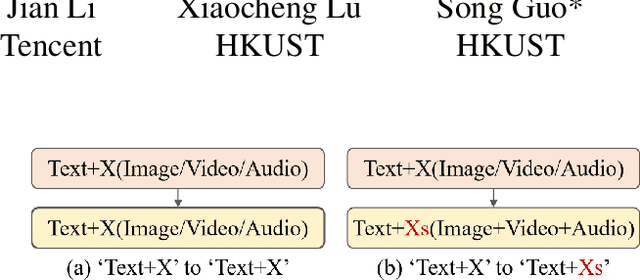


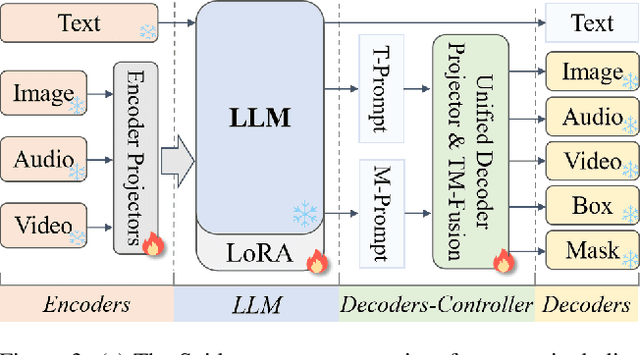
Multimodal LLMs (MLLMs) have emerged as an extension of Large Language Models (LLMs), enabling the integration of various modalities. However, Any-to-Any MLLMs are limited to generating pairwise modalities 'Text + X' within a single response, such as Text + {Image or Audio or Video}. To address this limitation, we introduce Spider, a novel efficient Any-to-Many Modalities Generation (AMMG) framework, which can generate an arbitrary combination of modalities 'Text + Xs', such as Text + {Image and Audio and Video}. To achieve efficient AMMG, our Spider integrates three core components: a Base Model for basic X-to-X (i.e., Any-to-Any) modality processing, a novel Efficient Decoders-Controller for controlling multimodal Decoders to generate Xs (many-modal) contents, and an Any-to-Many Instruction Template designed for producing Xs signal prompts. To train Spider, we constructed a novel Text-formatted Many-Modal (TMM) dataset, which facilitates the learning of the X-to-Xs (i.e., Any-to-Many) capability necessary for AMMG. Ultimately, the well-trained Spider generates a pseudo X-to-Xs dataset, the first-ever X-to-Xs many-modal dataset, enhancing the potential for AMMG task in future research. Overall, this work not only pushes the boundary of multimodal interaction but also provides rich data support for advancing the field.
Slender Object Scene Segmentation in Remote Sensing Image Based on Learnable Morphological Skeleton with Segment Anything Model
Nov 13, 2024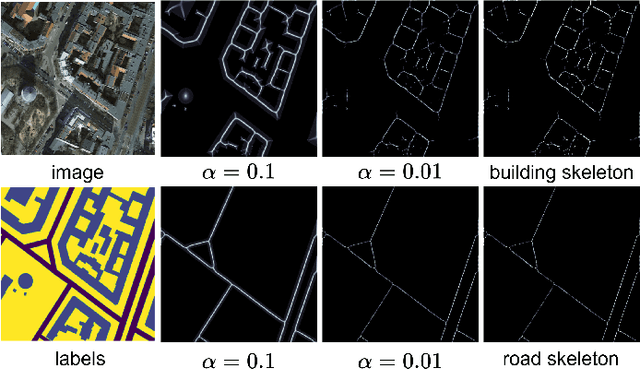
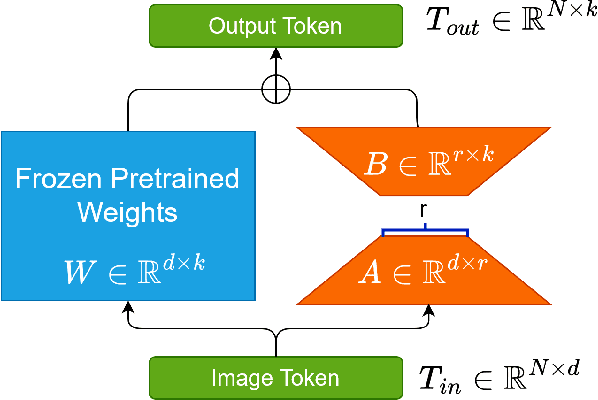
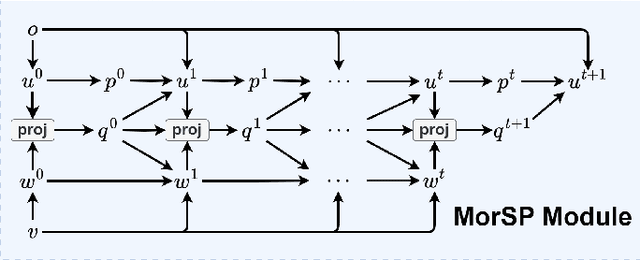
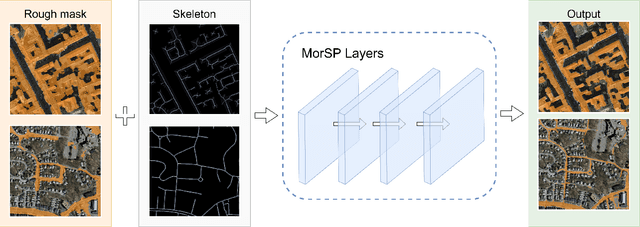
Morphological methods play a crucial role in remote sensing image processing, due to their ability to capture and preserve small structural details. However, most of the existing deep learning models for semantic segmentation are based on the encoder-decoder architecture including U-net and Segment Anything Model (SAM), where the downsampling process tends to discard fine details. In this paper, we propose a new approach that integrates learnable morphological skeleton prior into deep neural networks using the variational method. To address the difficulty in backpropagation in neural networks caused by the non-differentiability presented in classical morphological operations, we provide a smooth representation of the morphological skeleton and design a variational segmentation model integrating morphological skeleton prior by employing operator splitting and dual methods. Then, we integrate this model into the network architecture of SAM, which is achieved by adding a token to mask decoder and modifying the final sigmoid layer, ensuring the final segmentation results preserve the skeleton structure as much as possible. Experimental results on remote sensing datasets, including buildings and roads, demonstrate that our method outperforms the original SAM on slender object segmentation and exhibits better generalization capability.
Few-shot Open Relation Extraction with Gaussian Prototype and Adaptive Margin
Oct 27, 2024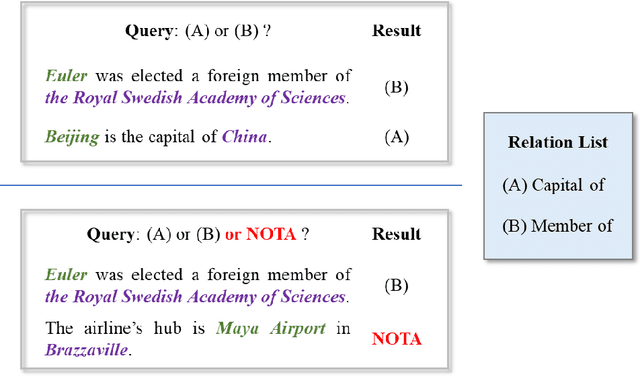
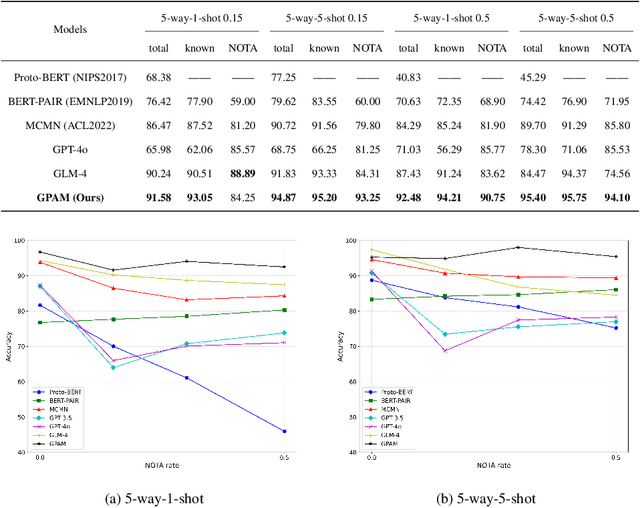
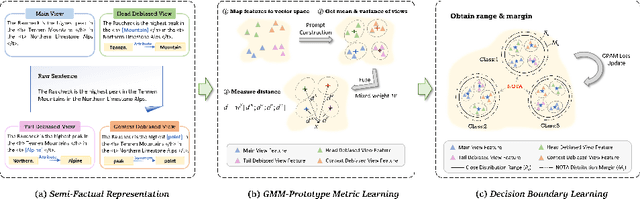
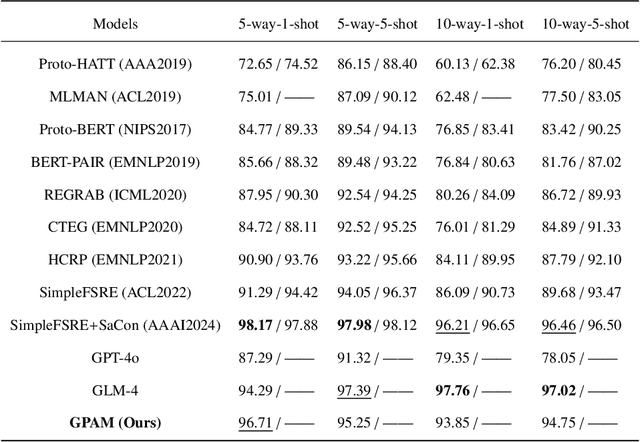
Few-shot relation extraction with none-of-the-above (FsRE with NOTA) aims at predicting labels in few-shot scenarios with unknown classes. FsRE with NOTA is more challenging than the conventional few-shot relation extraction task, since the boundaries of unknown classes are complex and difficult to learn. Meta-learning based methods, especially prototype-based methods, are the mainstream solutions to this task. They obtain the classification boundary by learning the sample distribution of each class. However, their performance is limited because few-shot overfitting and NOTA boundary confusion lead to misclassification between known and unknown classes. To this end, we propose a novel framework based on Gaussian prototype and adaptive margin named GPAM for FsRE with NOTA, which includes three modules, semi-factual representation, GMM-prototype metric learning and decision boundary learning. The first two modules obtain better representations to solve the few-shot problem through debiased information enhancement and Gaussian space distance measurement. The third module learns more accurate classification boundaries and prototypes through adaptive margin and negative sampling. In the training procedure of GPAM, we use contrastive learning loss to comprehensively consider the effects of range and margin on the classification of known and unknown classes to ensure the model's stability and robustness. Sufficient experiments and ablations on the FewRel dataset show that GPAM surpasses previous prototype methods and achieves state-of-the-art performance.
Efficient and Effective Retrieval of Dense-Sparse Hybrid Vectors using Graph-based Approximate Nearest Neighbor Search
Oct 27, 2024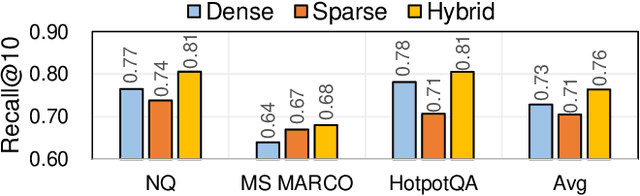
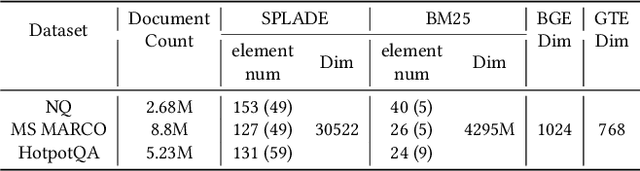
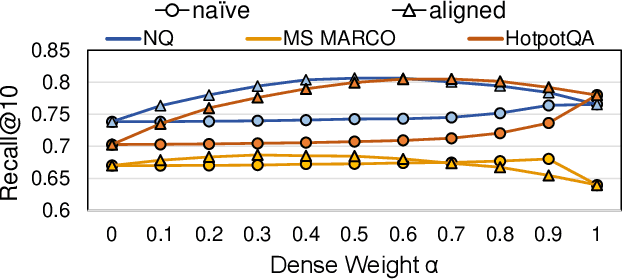
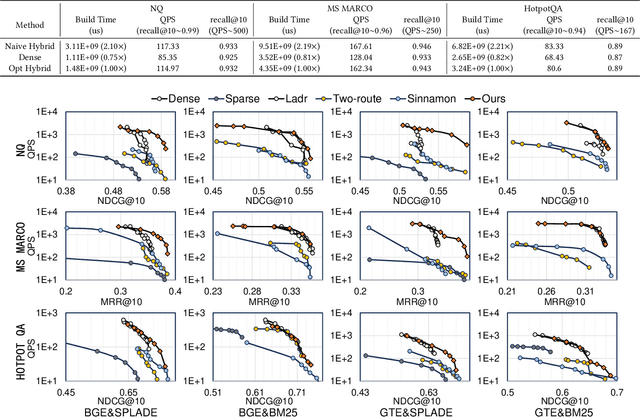
ANNS for embedded vector representations of texts is commonly used in information retrieval, with two important information representations being sparse and dense vectors. While it has been shown that combining these representations improves accuracy, the current method of conducting sparse and dense vector searches separately suffers from low scalability and high system complexity. Alternatively, building a unified index faces challenges with accuracy and efficiency. To address these issues, we propose a graph-based ANNS algorithm for dense-sparse hybrid vectors. Firstly, we propose a distribution alignment method to improve accuracy, which pre-samples dense and sparse vectors to analyze their distance distribution statistic, resulting in a 1%$\sim$9% increase in accuracy. Secondly, to improve efficiency, we design an adaptive two-stage computation strategy that initially computes dense distances only and later computes hybrid distances. Further, we prune the sparse vectors to speed up the calculation. Compared to naive implementation, we achieve $\sim2.1\times$ acceleration. Thorough experiments show that our algorithm achieves 8.9x$\sim$11.7x throughput at equal accuracy compared to existing hybrid vector search algorithms.
LLM-based Optimization of Compound AI Systems: A Survey
Oct 21, 2024
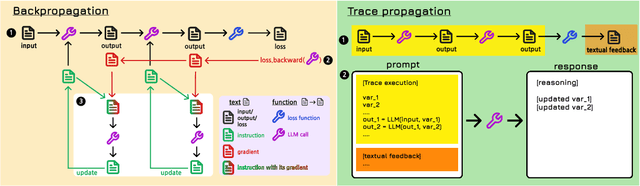
In a compound AI system, components such as an LLM call, a retriever, a code interpreter, or tools are interconnected. The system's behavior is primarily driven by parameters such as instructions or tool definitions. Recent advancements enable end-to-end optimization of these parameters using an LLM. Notably, leveraging an LLM as an optimizer is particularly efficient because it avoids gradient computation and can generate complex code and instructions. This paper presents a survey of the principles and emerging trends in LLM-based optimization of compound AI systems. It covers archetypes of compound AI systems, approaches to LLM-based end-to-end optimization, and insights into future directions and broader impacts. Importantly, this survey uses concepts from program analysis to provide a unified view of how an LLM optimizer is prompted to optimize a compound AI system. The exhaustive list of paper is provided at https://github.com/linyuhongg/LLM-based-Optimization-of-Compound-AI-Systems.
DEeR: Deviation Eliminating and Noise Regulating for Privacy-preserving Federated Low-rank Adaptation
Oct 16, 2024
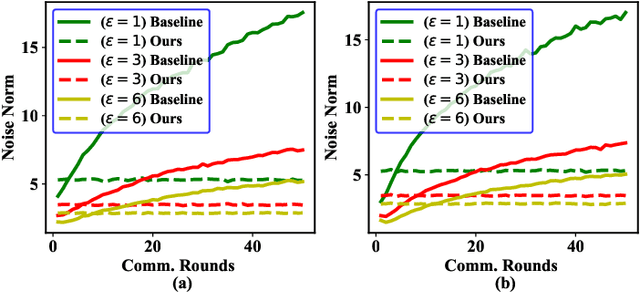
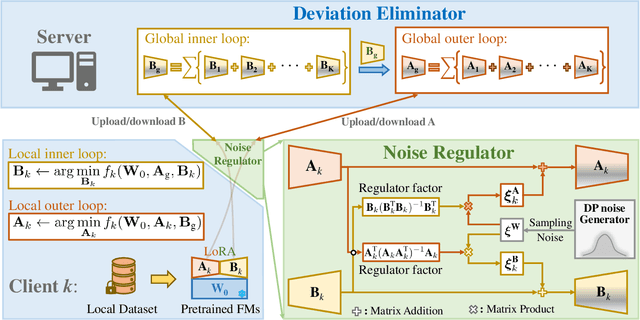
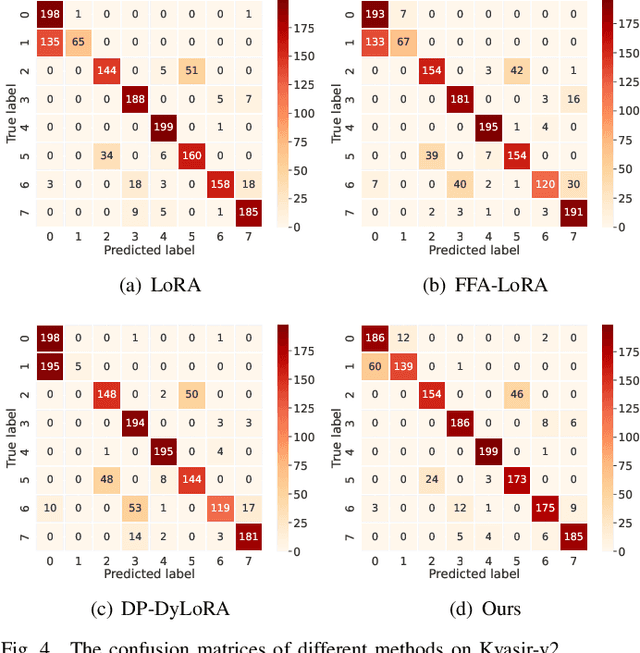
Integrating low-rank adaptation (LoRA) with federated learning (FL) has received widespread attention recently, aiming to adapt pretrained foundation models (FMs) to downstream medical tasks via privacy-preserving decentralized training. However, owing to the direct combination of LoRA and FL, current methods generally undergo two problems, i.e., aggregation deviation, and differential privacy (DP) noise amplification effect. To address these problems, we propose a novel privacy-preserving federated finetuning framework called \underline{D}eviation \underline{E}liminating and Nois\underline{e} \underline{R}egulating (DEeR). Specifically, we firstly theoretically prove that the necessary condition to eliminate aggregation deviation is guaranteing the equivalence between LoRA parameters of clients. Based on the theoretical insight, a deviation eliminator is designed to utilize alternating minimization algorithm to iteratively optimize the zero-initialized and non-zero-initialized parameter matrices of LoRA, ensuring that aggregation deviation always be zeros during training. Furthermore, we also conduct an in-depth analysis of the noise amplification effect and find that this problem is mainly caused by the ``linear relationship'' between DP noise and LoRA parameters. To suppress the noise amplification effect, we propose a noise regulator that exploits two regulator factors to decouple relationship between DP and LoRA, thereby achieving robust privacy protection and excellent finetuning performance. Additionally, we perform comprehensive ablated experiments to verify the effectiveness of the deviation eliminator and noise regulator. DEeR shows better performance on public medical datasets in comparison with state-of-the-art approaches. The code is available at https://github.com/CUHK-AIM-Group/DEeR.
Bi-temporal Gaussian Feature Dependency Guided Change Detection in Remote Sensing Images
Oct 12, 2024Change Detection (CD) enables the identification of alterations between images of the same area captured at different times. However, existing CD methods still struggle to address pseudo changes resulting from domain information differences in multi-temporal images and instances of detail errors caused by the loss and contamination of detail features during the upsampling process in the network. To address this, we propose a bi-temporal Gaussian distribution feature-dependent network (BGFD). Specifically, we first introduce the Gaussian noise domain disturbance (GNDD) module, which approximates distribution using image statistical features to characterize domain information, samples noise to perturb the network for learning redundant domain information, addressing domain information differences from a more fundamental perspective. Additionally, within the feature dependency facilitation (FDF) module, we integrate a novel mutual information difference loss ($L_{MI}$) and more sophisticated attention mechanisms to enhance the capabilities of the network, ensuring the acquisition of essential domain information. Subsequently, we have designed a novel detail feature compensation (DFC) module, which compensates for detail feature loss and contamination introduced during the upsampling process from the perspectives of enhancing local features and refining global features. The BGFD has effectively reduced pseudo changes and enhanced the detection capability of detail information. It has also achieved state-of-the-art performance on four publicly available datasets - DSIFN-CD, SYSU-CD, LEVIR-CD, and S2Looking, surpassing baseline models by +8.58%, +1.28%, +0.31%, and +3.76% respectively, in terms of the F1-Score metric.
Baichuan-Omni Technical Report
Oct 11, 2024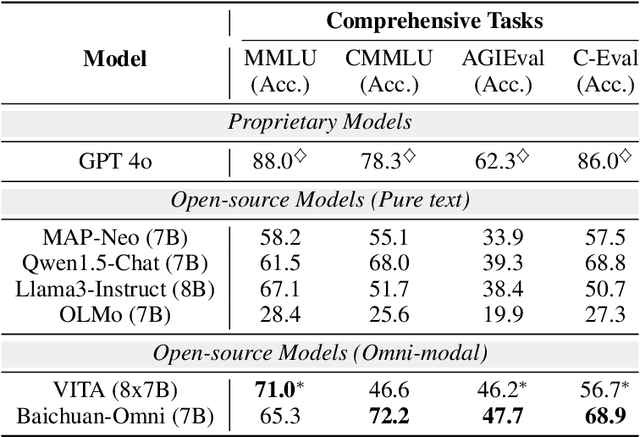

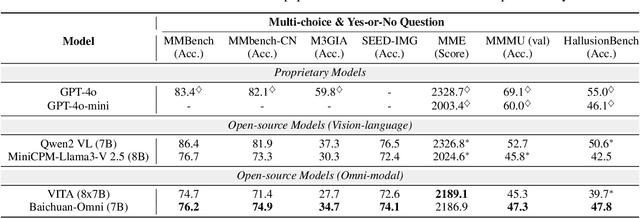

The salient multimodal capabilities and interactive experience of GPT-4o highlight its critical role in practical applications, yet it lacks a high-performing open-source counterpart. In this paper, we introduce Baichuan-Omni, the first open-source 7B Multimodal Large Language Model (MLLM) adept at concurrently processing and analyzing modalities of image, video, audio, and text, while delivering an advanced multimodal interactive experience and strong performance. We propose an effective multimodal training schema starting with 7B model and proceeding through two stages of multimodal alignment and multitask fine-tuning across audio, image, video, and text modal. This approach equips the language model with the ability to handle visual and audio data effectively. Demonstrating strong performance across various omni-modal and multimodal benchmarks, we aim for this contribution to serve as a competitive baseline for the open-source community in advancing multimodal understanding and real-time interaction.