 Add to Chrome
 Add to Firefox
 Add to Edge
ViTs: Teaching Machines to See Time Series Anomalies Like Human Experts
Oct 06, 2025
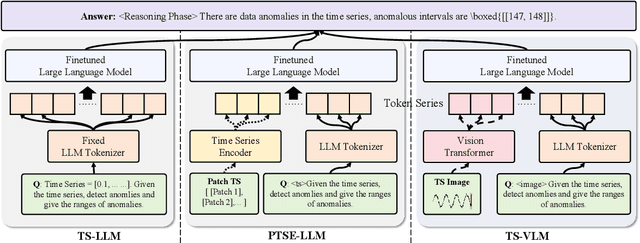

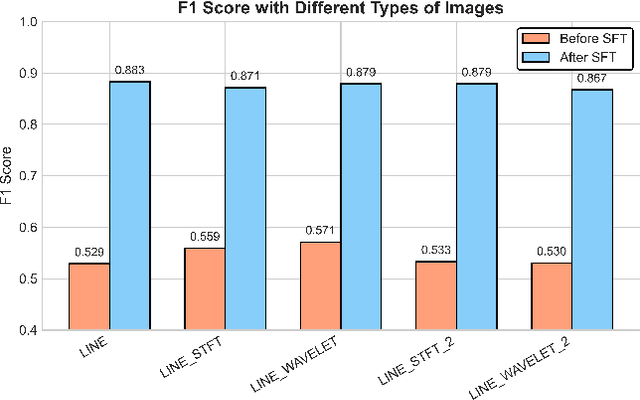
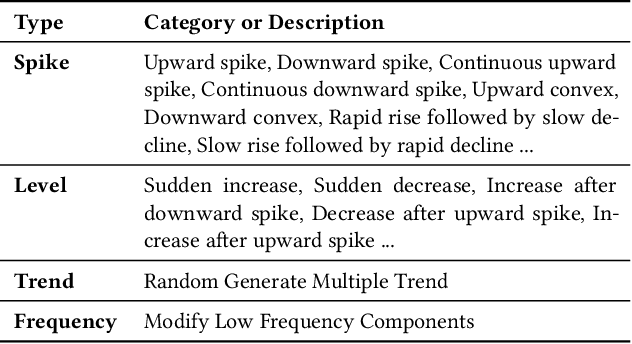
Web service administrators must ensure the stability of multiple systems by promptly detecting anomalies in Key Performance Indicators (KPIs). Achieving the goal of "train once, infer across scenarios" remains a fundamental challenge for time series anomaly detection models. Beyond improving zero-shot generalization, such models must also flexibly handle sequences of varying lengths during inference, ranging from one hour to one week, without retraining. Conventional approaches rely on sliding-window encoding and self-supervised learning, which restrict inference to fixed-length inputs. Large Language Models (LLMs) have demonstrated remarkable zero-shot capabilities across general domains. However, when applied to time series data, they face inherent limitations due to context length. To address this issue, we propose ViTs, a Vision-Language Model (VLM)-based framework that converts time series curves into visual representations. By rescaling time series images, temporal dependencies are preserved while maintaining a consistent input size, thereby enabling efficient processing of arbitrarily long sequences without context constraints. Training VLMs for this purpose introduces unique challenges, primarily due to the scarcity of aligned time series image-text data. To overcome this, we employ an evolutionary algorithm to automatically generate thousands of high-quality image-text pairs and design a three-stage training pipeline consisting of: (1) time series knowledge injection, (2) anomaly detection enhancement, and (3) anomaly reasoning refinement. Extensive experiments demonstrate that ViTs substantially enhance the ability of VLMs to understand and detect anomalies in time series data. All datasets and code will be publicly released at: https://anonymous.4open.science/r/ViTs-C484/.

Fast, Slow, and Tool-augmented Thinking for LLMs: A Review
Aug 17, 2025Large Language Models (LLMs) have demonstrated remarkable progress in reasoning across diverse domains. However, effective reasoning in real-world tasks requires adapting the reasoning strategy to the demands of the problem, ranging from fast, intuitive responses to deliberate, step-by-step reasoning and tool-augmented thinking. Drawing inspiration from cognitive psychology, we propose a novel taxonomy of LLM reasoning strategies along two knowledge boundaries: a fast/slow boundary separating intuitive from deliberative processes, and an internal/external boundary distinguishing reasoning grounded in the model's parameters from reasoning augmented by external tools. We systematically survey recent work on adaptive reasoning in LLMs and categorize methods based on key decision factors. We conclude by highlighting open challenges and future directions toward more adaptive, efficient, and reliable LLMs.
Unified modality separation: A vision-language framework for unsupervised domain adaptation
Aug 07, 2025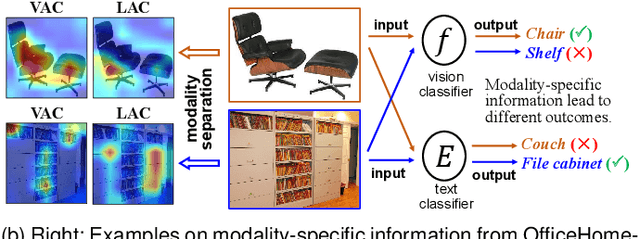
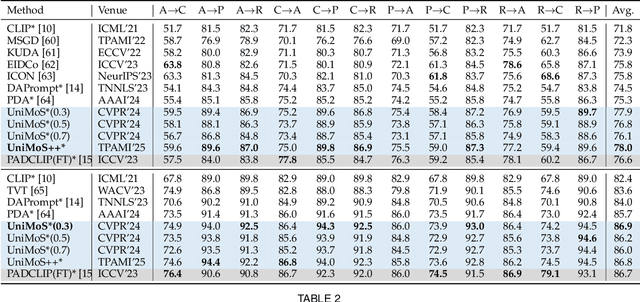
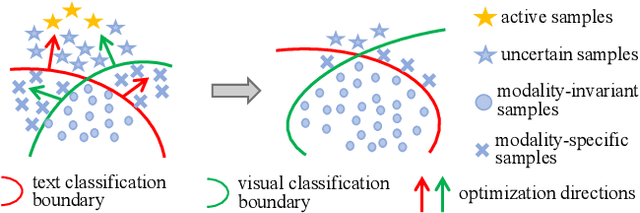
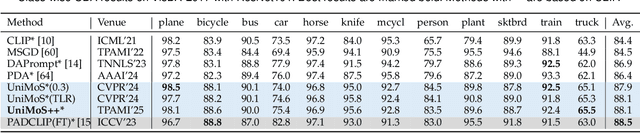
Unsupervised domain adaptation (UDA) enables models trained on a labeled source domain to handle new unlabeled domains. Recently, pre-trained vision-language models (VLMs) have demonstrated promising zero-shot performance by leveraging semantic information to facilitate target tasks. By aligning vision and text embeddings, VLMs have shown notable success in bridging domain gaps. However, inherent differences naturally exist between modalities, which is known as modality gap. Our findings reveal that direct UDA with the presence of modality gap only transfers modality-invariant knowledge, leading to suboptimal target performance. To address this limitation, we propose a unified modality separation framework that accommodates both modality-specific and modality-invariant components. During training, different modality components are disentangled from VLM features then handled separately in a unified manner. At test time, modality-adaptive ensemble weights are automatically determined to maximize the synergy of different components. To evaluate instance-level modality characteristics, we design a modality discrepancy metric to categorize samples into modality-invariant, modality-specific, and uncertain ones. The modality-invariant samples are exploited to facilitate cross-modal alignment, while uncertain ones are annotated to enhance model capabilities. Building upon prompt tuning techniques, our methods achieve up to 9% performance gain with 9 times of computational efficiencies. Extensive experiments and analysis across various backbones, baselines, datasets and adaptation settings demonstrate the efficacy of our design.
SpikeVideoFormer: An Efficient Spike-Driven Video Transformer with Hamming Attention and $\mathcal{O}(T)$ Complexity
May 15, 2025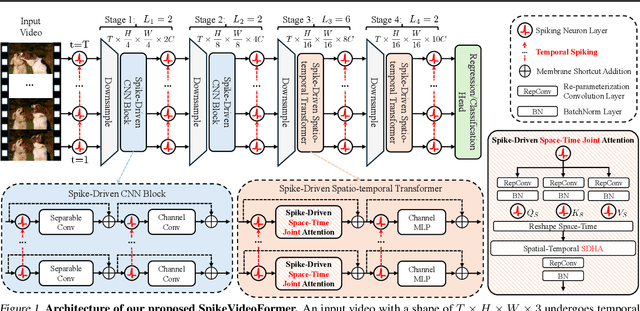
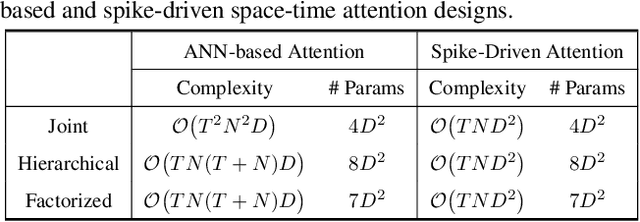
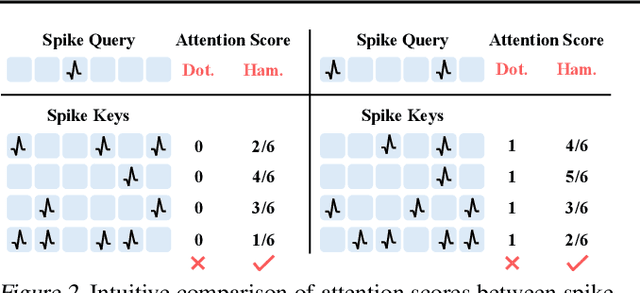
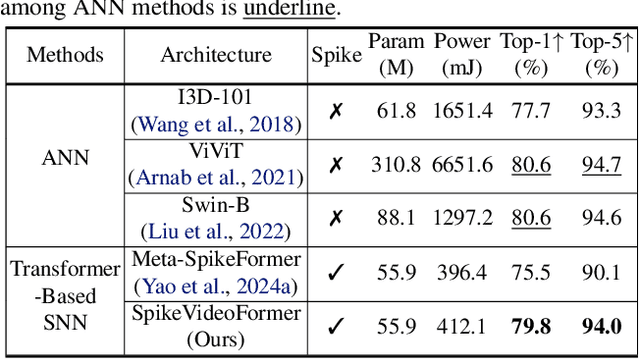
Spiking Neural Networks (SNNs) have shown competitive performance to Artificial Neural Networks (ANNs) in various vision tasks, while offering superior energy efficiency. However, existing SNN-based Transformers primarily focus on single-image tasks, emphasizing spatial features while not effectively leveraging SNNs' efficiency in video-based vision tasks. In this paper, we introduce SpikeVideoFormer, an efficient spike-driven video Transformer, featuring linear temporal complexity $\mathcal{O}(T)$. Specifically, we design a spike-driven Hamming attention (SDHA) which provides a theoretically guided adaptation from traditional real-valued attention to spike-driven attention. Building on SDHA, we further analyze various spike-driven space-time attention designs and identify an optimal scheme that delivers appealing performance for video tasks, while maintaining only linear temporal complexity. The generalization ability and efficiency of our model are demonstrated across diverse downstream video tasks, including classification, human pose tracking, and semantic segmentation. Empirical results show our method achieves state-of-the-art (SOTA) performance compared to existing SNN approaches, with over 15\% improvement on the latter two tasks. Additionally, it matches the performance of recent ANN-based methods while offering significant efficiency gains, achieving $\times 16$, $\times 10$ and $\times 5$ improvements on the three tasks. https://github.com/JimmyZou/SpikeVideoFormer
ReasoningV: Efficient Verilog Code Generation with Adaptive Hybrid Reasoning Model
Apr 20, 2025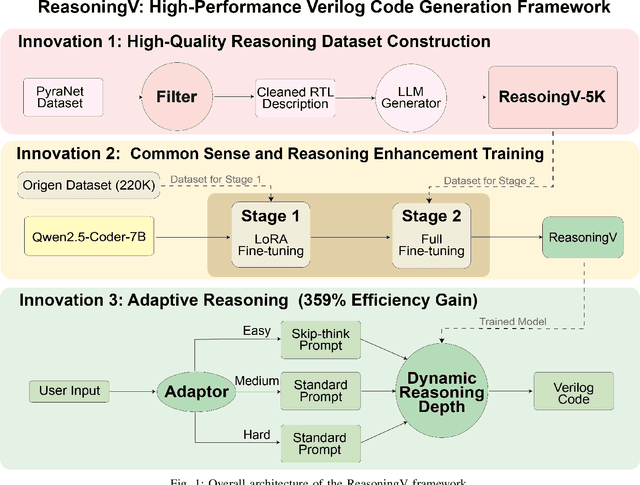
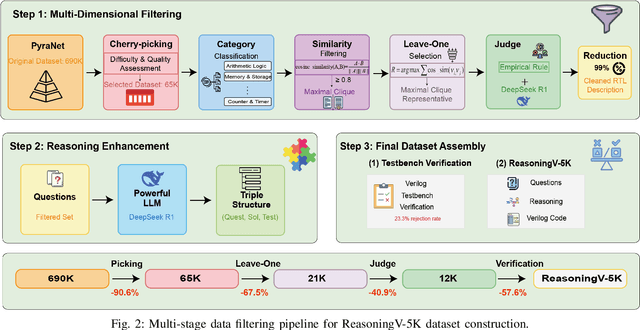
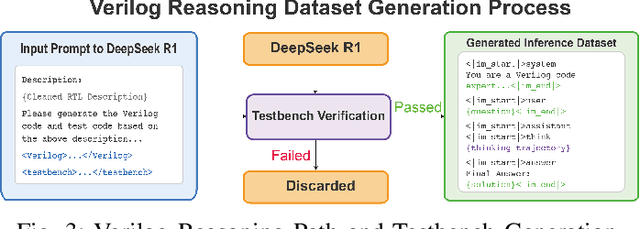
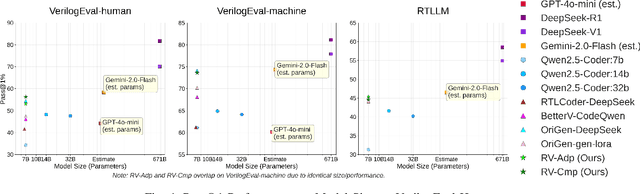
Large Language Models (LLMs) have advanced Verilog code generation significantly, yet face challenges in data quality, reasoning capabilities, and computational efficiency. This paper presents ReasoningV, a novel model employing a hybrid reasoning strategy that integrates trained intrinsic capabilities with dynamic inference adaptation for Verilog code generation. Our framework introduces three complementary innovations: (1) ReasoningV-5K, a high-quality dataset of 5,000 functionally verified instances with reasoning paths created through multi-dimensional filtering of PyraNet samples; (2) a two-stage training approach combining parameter-efficient fine-tuning for foundational knowledge with full-parameter optimization for enhanced reasoning; and (3) an adaptive reasoning mechanism that dynamically adjusts reasoning depth based on problem complexity, reducing token consumption by up to 75\% while preserving performance. Experimental results demonstrate ReasoningV's effectiveness with a pass@1 accuracy of 57.8\% on VerilogEval-human, achieving performance competitive with leading commercial models like Gemini-2.0-flash (59.5\%) and exceeding the previous best open-source model by 10.4 percentage points. ReasoningV offers a more reliable and accessible pathway for advancing AI-driven hardware design automation, with our model, data, and code available at https://github.com/BUAA-CLab/ReasoningV.
SVIP: Semantically Contextualized Visual Patches for Zero-Shot Learning
Mar 13, 2025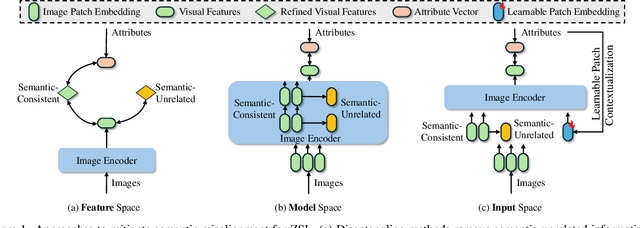
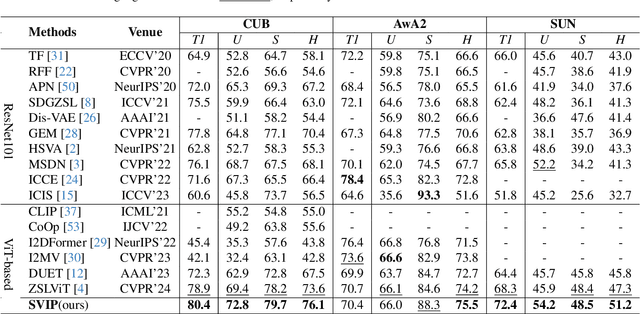
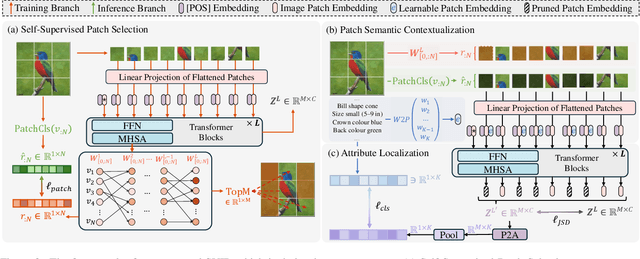
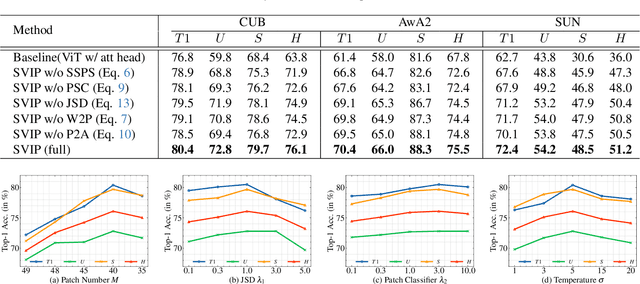
Zero-shot learning (ZSL) aims to recognize unseen classes without labeled training examples by leveraging class-level semantic descriptors such as attributes. A fundamental challenge in ZSL is semantic misalignment, where semantic-unrelated information involved in visual features introduce ambiguity to visual-semantic interaction. Unlike existing methods that suppress semantic-unrelated information post hoc either in the feature space or the model space, we propose addressing this issue at the input stage, preventing semantic-unrelated patches from propagating through the network. To this end, we introduce Semantically contextualized VIsual Patches (SVIP) for ZSL, a transformer-based framework designed to enhance visual-semantic alignment. Specifically, we propose a self-supervised patch selection mechanism that preemptively learns to identify semantic-unrelated patches in the input space. This is trained with the supervision from aggregated attention scores across all transformer layers, which estimate each patch's semantic score. As removing semantic-unrelated patches from the input sequence may disrupt object structure, we replace them with learnable patch embeddings. With initialization from word embeddings, we can ensure they remain semantically meaningful throughout feature extraction. Extensive experiments on ZSL benchmarks demonstrate that SVIP achieves state-of-the-art performance results while providing more interpretable and semantically rich feature representations.
ProAI: Proactive Multi-Agent Conversational AI with Structured Knowledge Base for Psychiatric Diagnosis
Feb 28, 2025Most LLM-driven conversational AI systems operate reactively, responding to user prompts without guiding the interaction. Most LLM-driven conversational AI systems operate reactively, responding to user prompts without guiding the interaction. However, many real-world applications-such as psychiatric diagnosis, consulting, and interviews-require AI to take a proactive role, asking the right questions and steering conversations toward specific objectives. Using mental health differential diagnosis as an application context, we introduce ProAI, a goal-oriented, proactive conversational AI framework. ProAI integrates structured knowledge-guided memory, multi-agent proactive reasoning, and a multi-faceted evaluation strategy, enabling LLMs to engage in clinician-style diagnostic reasoning rather than simple response generation. Through simulated patient interactions, user experience assessment, and professional clinical validation, we demonstrate that ProAI achieves up to 83.3% accuracy in mental disorder differential diagnosis while maintaining professional and empathetic interaction standards. These results highlight the potential for more reliable, adaptive, and goal-driven AI diagnostic assistants, advancing LLMs beyond reactive dialogue systems.
Entropy-Based Decoding for Retrieval-Augmented Large Language Models
Jun 25, 2024Augmenting Large Language Models (LLMs) with retrieved external knowledge has proven effective for improving the factual accuracy of generated responses. Despite their success, retrieval-augmented LLMs still face the distractibility issue, where the generated responses are negatively influenced by noise from both external and internal knowledge sources. In this paper, we introduce a novel, training-free decoding method guided by entropy considerations to mitigate this issue. Our approach utilizes entropy-based document-parallel ensemble decoding to prioritize low-entropy distributions from retrieved documents, thereby enhancing the extraction of relevant information of context. Additionally, it incorporates a contrastive decoding mechanism that contrasts the obtained low-entropy ensemble distribution with the high-entropy distribution derived from the model's internal knowledge across layers, which ensures a greater emphasis on reliable external information. Extensive experiments on open-domain question answering datasets demonstrate the superiority of our method.
Generative Artificial Intelligence-Guided User Studies: An Application for Air Taxi Services
Jun 18, 2024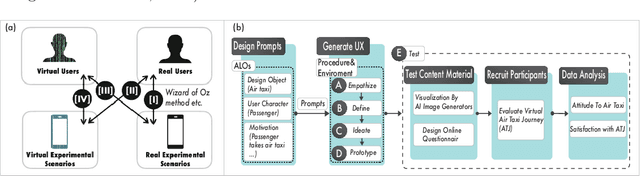
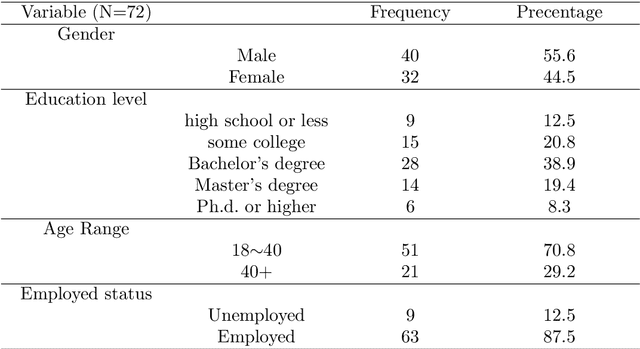
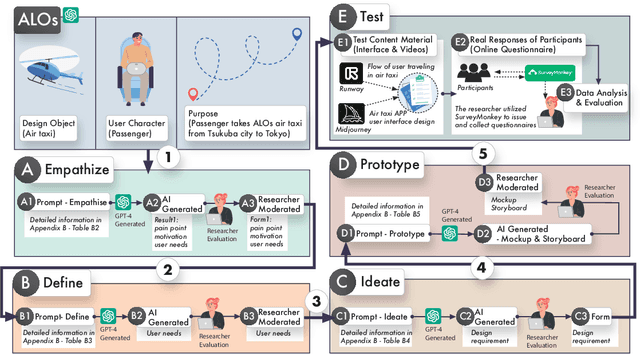
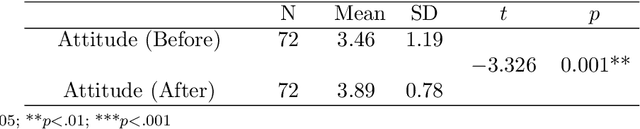
User studies are crucial for meeting user needs. In user studies, real experimental scenarios and participants are constructed and recruited. However, emerging and unfamiliar studies face limitations, including safety concerns and iterative efficiency. To address these challenges, this study utilizes a large language model (LLM) to create generative AI virtual scenarios for user experience. By recruiting real users to evaluate this experience, we can collect feedback that enables rapid iteration in the early design phase. The air taxi is particularly representative of these challenges and has been chosen as the case study for this research. The key contribution was designing a virtual ATJ using OpenAI's GPT-4 model and AI image and video generators. Based on the LLM-generated scripts, key visuals were created for the air taxi, and the ATJ was evaluated by 72 participants. Furthermore, the LLM demonstrated the ability to identify and suggest environments that significantly improve participants' attitudes toward air taxis. Education level and gender significantly influenced participants' attitudes and their satisfaction with the ATJ. Our study confirms the capability of generative AI to support user studies, providing a feasible approach and valuable insights for designing air taxi user experiences in the early design phase.
Enhancing Biomedical Knowledge Retrieval-Augmented Generation with Self-Rewarding Tree Search and Proximal Policy Optimization
Jun 17, 2024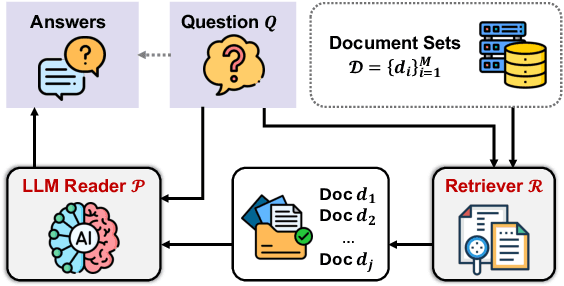
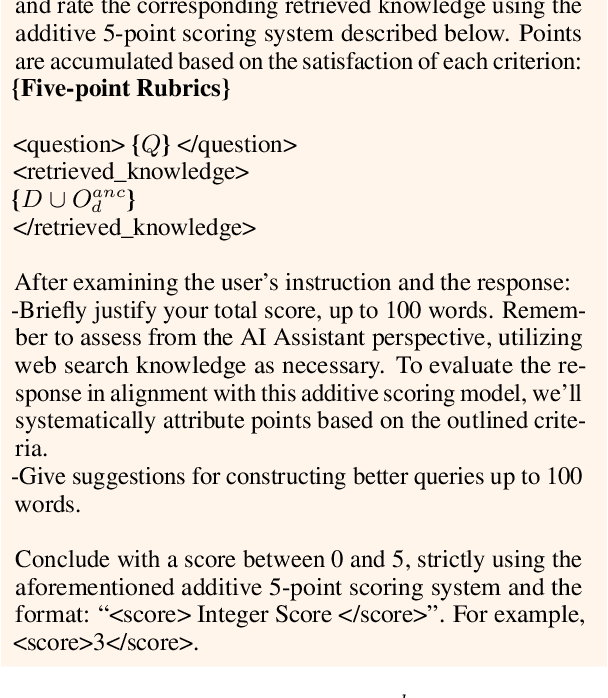
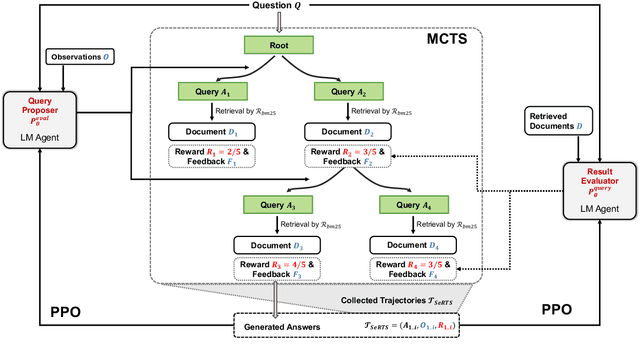
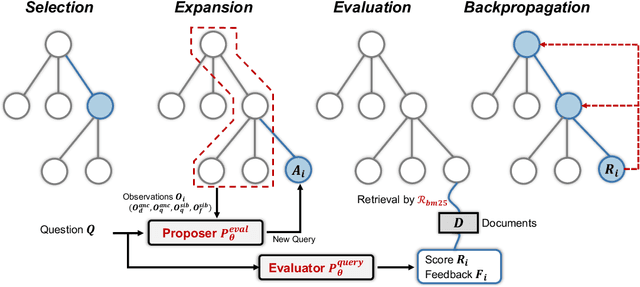
Large Language Models (LLMs) have shown great potential in the biomedical domain with the advancement of retrieval-augmented generation (RAG). However, existing retrieval-augmented approaches face challenges in addressing diverse queries and documents, particularly for medical knowledge queries, resulting in sub-optimal performance. To address these limitations, we propose a novel plug-and-play LLM-based retrieval method called Self-Rewarding Tree Search (SeRTS) based on Monte Carlo Tree Search (MCTS) and a self-rewarding paradigm. By combining the reasoning capabilities of LLMs with the effectiveness of tree search, SeRTS boosts the zero-shot performance of retrieving high-quality and informative results for RAG. We further enhance retrieval performance by fine-tuning LLMs with Proximal Policy Optimization (PPO) objectives using the trajectories collected by SeRTS as feedback. Controlled experiments using the BioASQ-QA dataset with GPT-3.5-Turbo and LLama2-7b demonstrate that our method significantly improves the performance of the BM25 retriever and surpasses the strong baseline of self-reflection in both efficiency and scalability. Moreover, SeRTS generates higher-quality feedback for PPO training than self-reflection. Our proposed method effectively adapts LLMs to document retrieval tasks, enhancing their ability to retrieve highly relevant documents for RAG in the context of medical knowledge queries. This work presents a significant step forward in leveraging LLMs for accurate and comprehensive biomedical question answering.