 Add to Chrome
 Add to Firefox
 Add to Edge
LongRCA Bench: Diagnosing Responsible Roles and Root Causes in Long-Horizon Agent Failures
Aug 15, 2026
When a long-horizon agent execution fails, outcome-level evaluation reveals the unsuccessful result but not where the decisive error entered the trajectory. Developers must then inspect the full execution to identify the responsible role and localize the earliest decisive root-cause step. Existing failure-attribution benchmarks largely focus on shorter traces, leaving diagnosis across hundreds of recorded steps underexplored. We introduce LongRCA Bench, comprising 1,140 failed trajectories across five domains without injected errors. It provides independently scored human labels for the responsible role and earliest decisive root-cause step. The median trajectory contains 145 steps, and the strongest baseline reaches only 13.2% exact root-step accuracy. We further present Root-Cause Trajectory Attribution (RCTA), a training-free method that retrieves candidate error steps from segment summaries and traces them to available earlier handoff instructions. Using the same backbone, benchmark instances, and scoring protocol, RCTA reaches 51.1% responsible-role accuracy and 24.1% exact root-step accuracy. These results highlight the need to evaluate responsible-role attribution and exact root-step localization as separate targets in long-trajectory failure diagnosis.

ViTs: Teaching Machines to See Time Series Anomalies Like Human Experts
Oct 06, 2025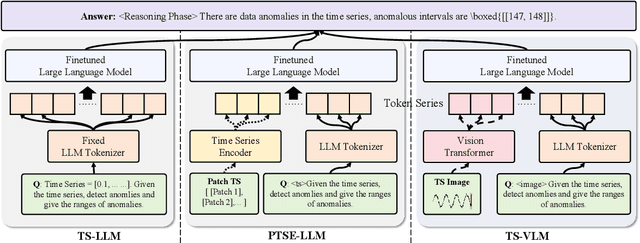

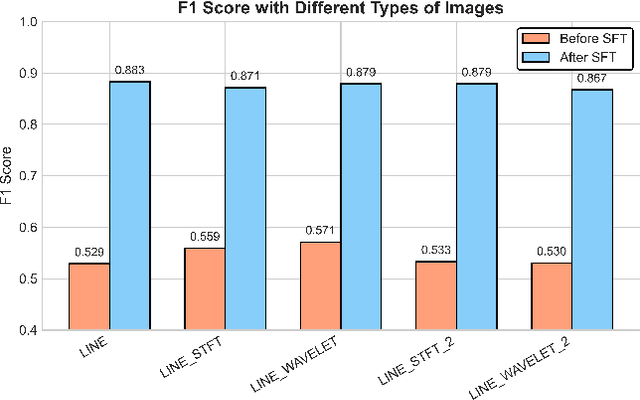
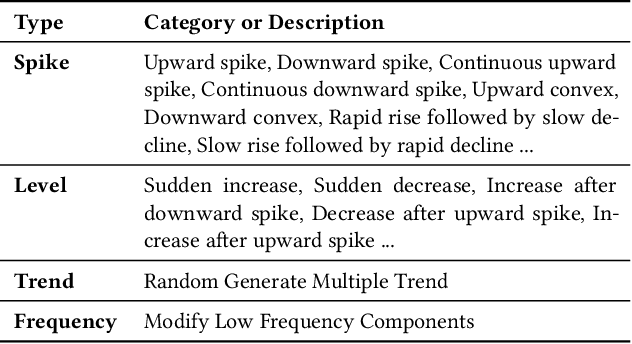
Web service administrators must ensure the stability of multiple systems by promptly detecting anomalies in Key Performance Indicators (KPIs). Achieving the goal of "train once, infer across scenarios" remains a fundamental challenge for time series anomaly detection models. Beyond improving zero-shot generalization, such models must also flexibly handle sequences of varying lengths during inference, ranging from one hour to one week, without retraining. Conventional approaches rely on sliding-window encoding and self-supervised learning, which restrict inference to fixed-length inputs. Large Language Models (LLMs) have demonstrated remarkable zero-shot capabilities across general domains. However, when applied to time series data, they face inherent limitations due to context length. To address this issue, we propose ViTs, a Vision-Language Model (VLM)-based framework that converts time series curves into visual representations. By rescaling time series images, temporal dependencies are preserved while maintaining a consistent input size, thereby enabling efficient processing of arbitrarily long sequences without context constraints. Training VLMs for this purpose introduces unique challenges, primarily due to the scarcity of aligned time series image-text data. To overcome this, we employ an evolutionary algorithm to automatically generate thousands of high-quality image-text pairs and design a three-stage training pipeline consisting of: (1) time series knowledge injection, (2) anomaly detection enhancement, and (3) anomaly reasoning refinement. Extensive experiments demonstrate that ViTs substantially enhance the ability of VLMs to understand and detect anomalies in time series data. All datasets and code will be publicly released at: https://anonymous.4open.science/r/ViTs-C484/.