 Add to Chrome
 Add to Firefox
 Add to Edge
Beyond Text Following: Repairable Arbitration Reversals in Audio-Language Models
Jun 03, 2026
Audio-language models (ALMs) often follow text that conflicts with audio, even when the audio evidence is clear. This raises a basic question: is the audio-supported answer unavailable, or is it represented but overridden by the conflicting text? We examine this question using a same-audio counterfactual that keeps the audio fixed, removes only the conflicting text, and measures the resulting shift in model preference. Across five ALMs and four conflict tasks, 64.1% of conflict samples show a sign flip: the same-audio branch prefers the audio-supported answer, whereas the joint branch prefers the text-supported answer. This pattern suggests that the relevant audio evidence is encoded but loses in arbitration. Activation patching further localizes the reversal to answer-position computation, and patching effects closely track output candidate-score differences (Spearman rho=0.93). Using this diagnostic, we propose Gated Audio Counterfactual Logit Correction (GACL), a training-free decoding rule that interpolates between joint and same-audio scores. Under a strict 5 pp faithfulness-drop budget, GACL improves nAUC by 17.8 points over the best contrastive baseline and transfers without retuning to vision-text arbitration (up to +40.5 pp).

SAILRec: Steering LLM Attention to Dual-Side Semantically Aligned Collaborative Embeddings for Recommendation
Jun 03, 2026Recent LLM-based recommenders enhance language models with collaborative embeddings from user-item interactions, but making such embeddings available does not ensure their proper use during inference. Through a diagnostic attention analysis, we find that the utilization of collaborative embeddings is depth-dependent and alignment-sensitive, suggesting that LLMs need to balance their internal semantic knowledge with external collaborative knowledge. To address this issue, we propose SAILRec, an LLM-based recommender that improves this balance through dual-side semantic alignment and hierarchical attention steering. The former aligns item-side embeddings with item-text semantics and user-side embeddings with codebook-based semantic profiles, while the latter suppresses premature shallow-layer collaborative interference and strengthens collaborative evidence in deeper decision layers. Experiments on MovieLens-1M and Amazon-Book show that SAILRec consistently outperforms representative baselines, with ablation and masking analyses validating its key designs.
An Illusion of Unlearning? Assessing Machine Unlearning Through Internal Representations
Apr 09, 2026While numerous machine unlearning (MU) methods have recently been developed with promising results in erasing the influence of forgotten data, classes, or concepts, they are also highly vulnerable-for example, simple fine-tuning can inadvertently reintroduce erased concepts. In this paper, we address this contradiction by examining the internal representations of unlearned models, in contrast to prior work that focuses primarily on output-level behavior. Our analysis shows that many state-of-the-art MU methods appear successful mainly due to a misalignment between last-layer features and the classifier, a phenomenon we call feature-classifier misalignment. In fact, hidden features remain highly discriminative, and simple linear probing can recover near-original accuracy. Assuming neural collapse in the original model, we further demonstrate that adjusting only the classifier can achieve negligible forget accuracy while preserving retain accuracy, and we corroborate this with experiments using classifier-only fine-tuning. Motivated by these findings, we propose MU methods based on a class-mean features (CMF) classifier, which explicitly enforces alignment between features and classifiers. Experiments on standard benchmarks show that CMF-based unlearning reduces forgotten information in representations while maintaining high retain accuracy, highlighting the need for faithful representation-level evaluation of MU.
Enhancing Biomedical Knowledge Retrieval-Augmented Generation with Self-Rewarding Tree Search and Proximal Policy Optimization
Jun 17, 2024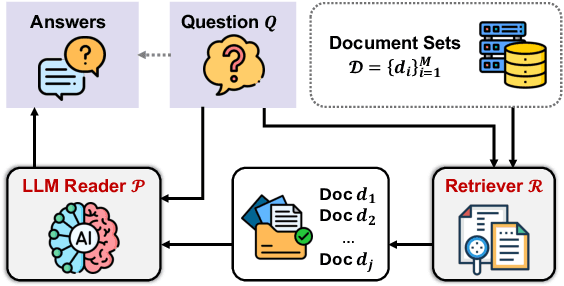
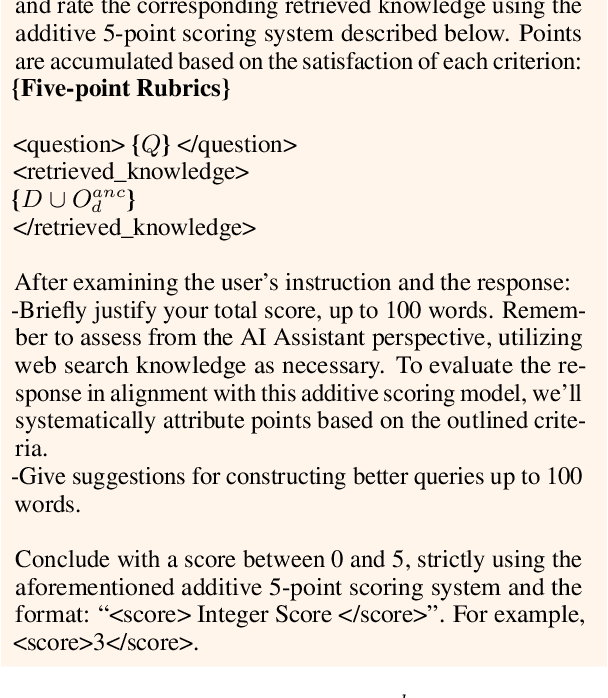
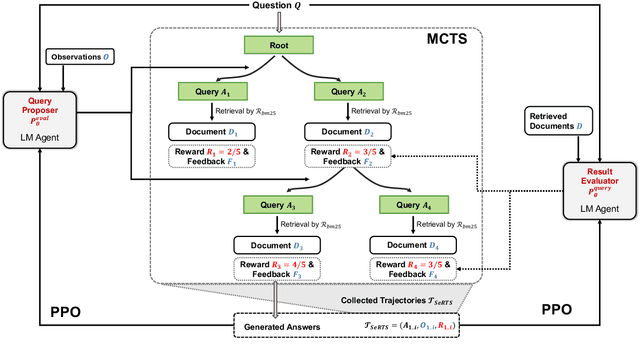
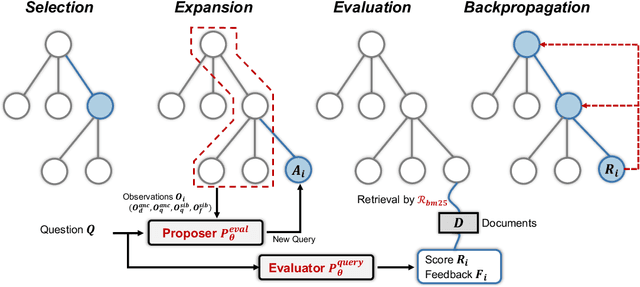
Large Language Models (LLMs) have shown great potential in the biomedical domain with the advancement of retrieval-augmented generation (RAG). However, existing retrieval-augmented approaches face challenges in addressing diverse queries and documents, particularly for medical knowledge queries, resulting in sub-optimal performance. To address these limitations, we propose a novel plug-and-play LLM-based retrieval method called Self-Rewarding Tree Search (SeRTS) based on Monte Carlo Tree Search (MCTS) and a self-rewarding paradigm. By combining the reasoning capabilities of LLMs with the effectiveness of tree search, SeRTS boosts the zero-shot performance of retrieving high-quality and informative results for RAG. We further enhance retrieval performance by fine-tuning LLMs with Proximal Policy Optimization (PPO) objectives using the trajectories collected by SeRTS as feedback. Controlled experiments using the BioASQ-QA dataset with GPT-3.5-Turbo and LLama2-7b demonstrate that our method significantly improves the performance of the BM25 retriever and surpasses the strong baseline of self-reflection in both efficiency and scalability. Moreover, SeRTS generates higher-quality feedback for PPO training than self-reflection. Our proposed method effectively adapts LLMs to document retrieval tasks, enhancing their ability to retrieve highly relevant documents for RAG in the context of medical knowledge queries. This work presents a significant step forward in leveraging LLMs for accurate and comprehensive biomedical question answering.