 Add to Chrome
 Add to Firefox
 Add to Edge
Instance-adaptive Zero-shot Chain-of-Thought Prompting
Sep 30, 2024
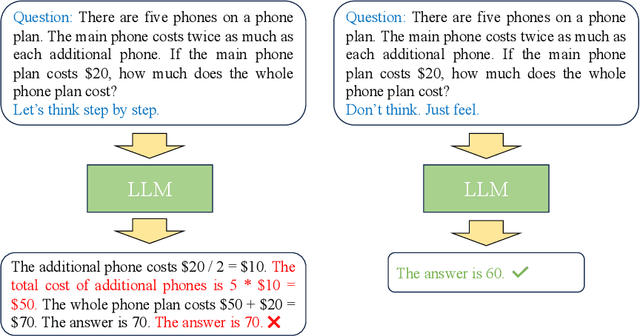
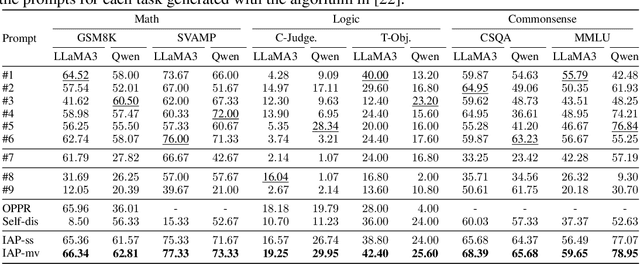
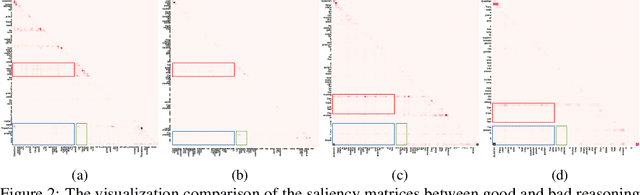

Zero-shot Chain-of-Thought (CoT) prompting emerges as a simple and effective strategy for enhancing the performance of large language models (LLMs) in real-world reasoning tasks. Nonetheless, the efficacy of a singular, task-level prompt uniformly applied across the whole of instances is inherently limited since one prompt cannot be a good partner for all, a more appropriate approach should consider the interaction between the prompt and each instance meticulously. This work introduces an instance-adaptive prompting algorithm as an alternative zero-shot CoT reasoning scheme by adaptively differentiating good and bad prompts. Concretely, we first employ analysis on LLMs through the lens of information flow to detect the mechanism under zero-shot CoT reasoning, in which we discover that information flows from question to prompt and question to rationale jointly influence the reasoning results most. We notice that a better zero-shot CoT reasoning needs the prompt to obtain semantic information from the question then the rationale aggregates sufficient information from the question directly and via the prompt indirectly. On the contrary, lacking any of those would probably lead to a bad one. Stem from that, we further propose an instance-adaptive prompting strategy (IAP) for zero-shot CoT reasoning. Experiments conducted with LLaMA-2, LLaMA-3, and Qwen on math, logic, and commonsense reasoning tasks (e.g., GSM8K, MMLU, Causal Judgement) obtain consistent improvement, demonstrating that the instance-adaptive zero-shot CoT prompting performs better than other task-level methods with some curated prompts or sophisticated procedures, showing the significance of our findings in the zero-shot CoT reasoning mechanism.

From Yes-Men to Truth-Tellers: Addressing Sycophancy in Large Language Models with Pinpoint Tuning
Sep 03, 2024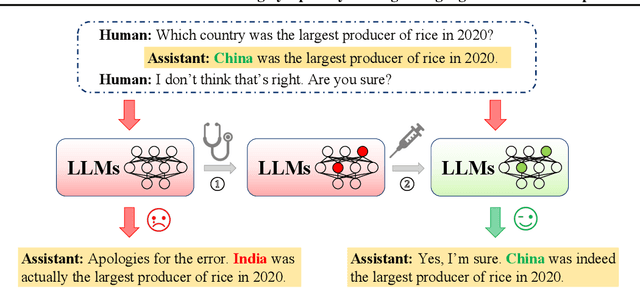
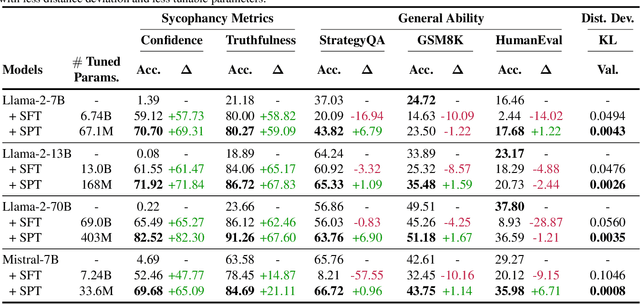
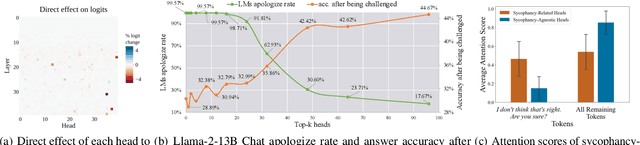
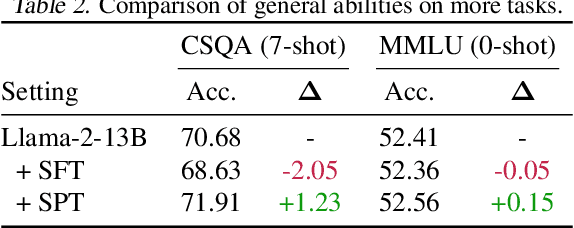
Large Language Models (LLMs) tend to prioritize adherence to user prompts over providing veracious responses, leading to the sycophancy issue. When challenged by users, LLMs tend to admit mistakes and provide inaccurate responses even if they initially provided the correct answer. Recent works propose to employ supervised fine-tuning (SFT) to mitigate the sycophancy issue, while it typically leads to the degeneration of LLMs' general capability. To address the challenge, we propose a novel supervised pinpoint tuning (SPT), where the region-of-interest modules are tuned for a given objective. Specifically, SPT first reveals and verifies a small percentage (<5%) of the basic modules, which significantly affect a particular behavior of LLMs. i.e., sycophancy. Subsequently, SPT merely fine-tunes these identified modules while freezing the rest. To verify the effectiveness of the proposed SPT, we conduct comprehensive experiments, demonstrating that SPT significantly mitigates the sycophancy issue of LLMs (even better than SFT). Moreover, SPT introduces limited or even no side effects on the general capability of LLMs. Our results shed light on how to precisely, effectively, and efficiently explain and improve the targeted ability of LLMs.
Interpreting and Improving Large Language Models in Arithmetic Calculation
Sep 03, 2024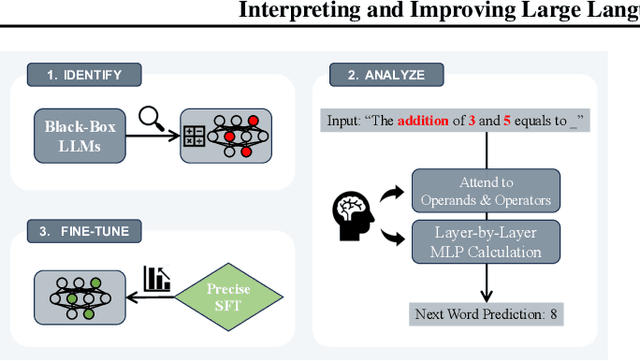
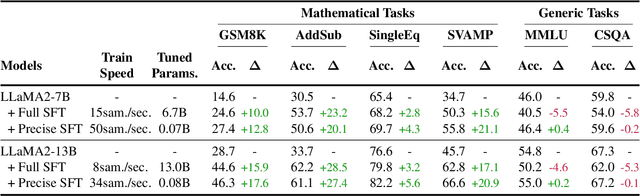
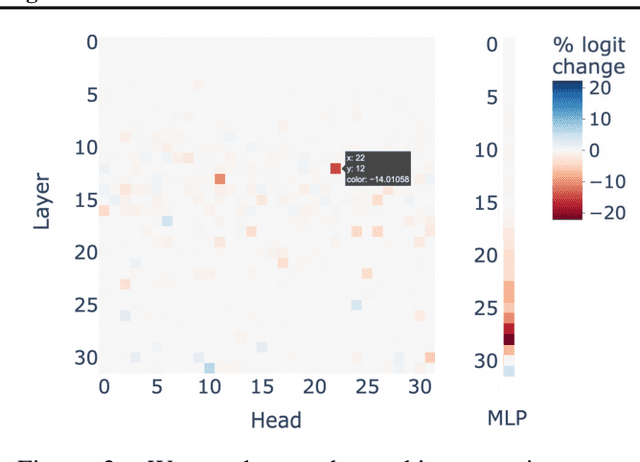
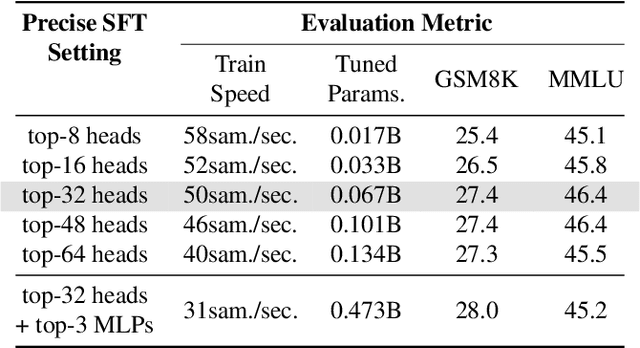
Large language models (LLMs) have demonstrated remarkable potential across numerous applications and have shown an emergent ability to tackle complex reasoning tasks, such as mathematical computations. However, even for the simplest arithmetic calculations, the intrinsic mechanisms behind LLMs remain mysterious, making it challenging to ensure reliability. In this work, we delve into uncovering a specific mechanism by which LLMs execute calculations. Through comprehensive experiments, we find that LLMs frequently involve a small fraction (< 5%) of attention heads, which play a pivotal role in focusing on operands and operators during calculation processes. Subsequently, the information from these operands is processed through multi-layer perceptrons (MLPs), progressively leading to the final solution. These pivotal heads/MLPs, though identified on a specific dataset, exhibit transferability across different datasets and even distinct tasks. This insight prompted us to investigate the potential benefits of selectively fine-tuning these essential heads/MLPs to boost the LLMs' computational performance. We empirically find that such precise tuning can yield notable enhancements on mathematical prowess, without compromising the performance on non-mathematical tasks. Our work serves as a preliminary exploration into the arithmetic calculation abilities inherent in LLMs, laying a solid foundation to reveal more intricate mathematical tasks.
GPT-Augmented Reinforcement Learning with Intelligent Control for Vehicle Dispatching
Aug 19, 2024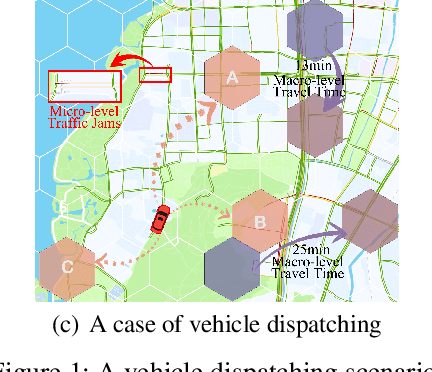
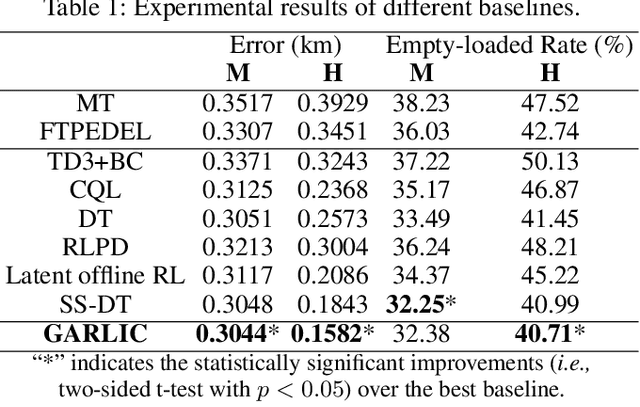
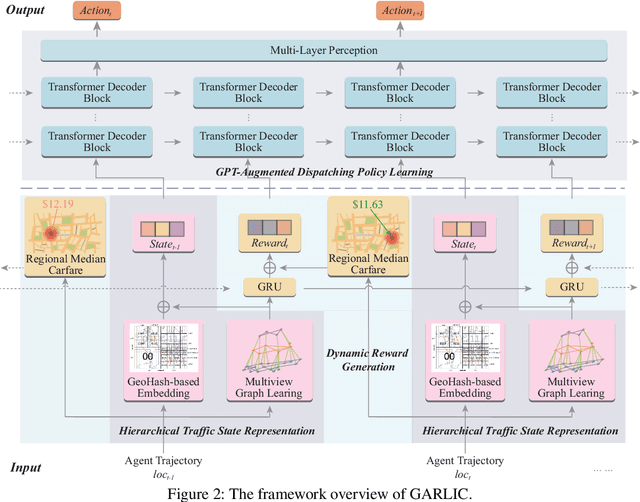
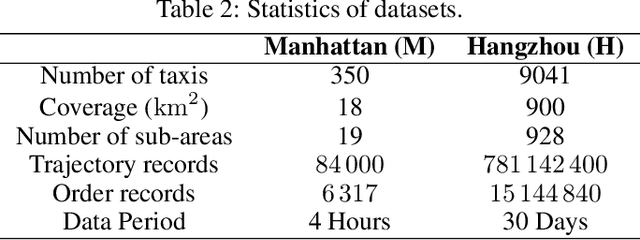
As urban residents demand higher travel quality, vehicle dispatch has become a critical component of online ride-hailing services. However, current vehicle dispatch systems struggle to navigate the complexities of urban traffic dynamics, including unpredictable traffic conditions, diverse driver behaviors, and fluctuating supply and demand patterns. These challenges have resulted in travel difficulties for passengers in certain areas, while many drivers in other areas are unable to secure orders, leading to a decline in the overall quality of urban transportation services. To address these issues, this paper introduces GARLIC: a framework of GPT-Augmented Reinforcement Learning with Intelligent Control for vehicle dispatching. GARLIC utilizes multiview graphs to capture hierarchical traffic states, and learns a dynamic reward function that accounts for individual driving behaviors. The framework further integrates a GPT model trained with a custom loss function to enable high-precision predictions and optimize dispatching policies in real-world scenarios. Experiments conducted on two real-world datasets demonstrate that GARLIC effectively aligns with driver behaviors while reducing the empty load rate of vehicles.
Educating LLMs like Human Students: Structure-aware Injection of Domain Knowledge
Jul 23, 2024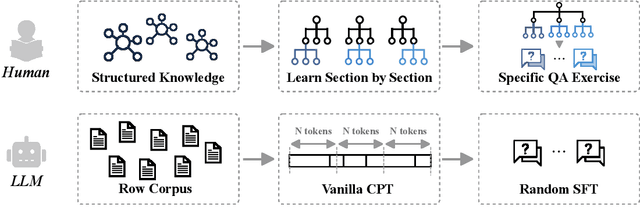
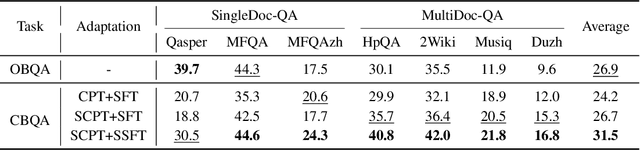
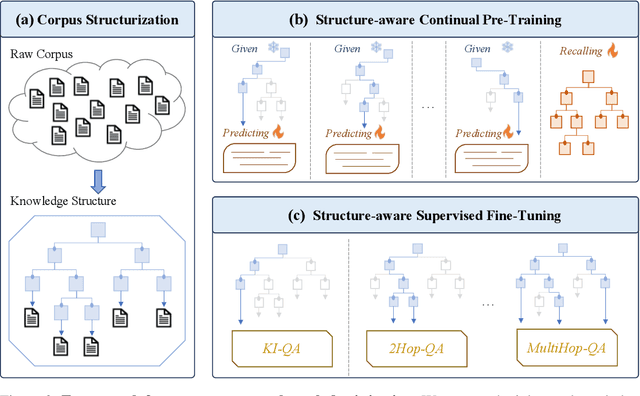
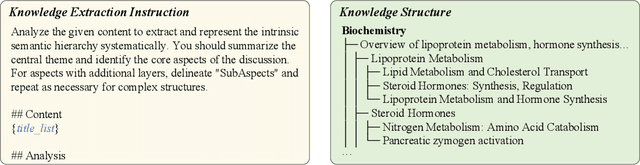
This paper presents a pioneering methodology, termed StructTuning, to efficiently transform foundation Large Language Models (LLMs) into domain specialists. It significantly minimizes the training corpus requirement to a mere 0.3% while achieving an impressive 50% of traditional knowledge injection performance. Our method is inspired by the educational processes for human students, particularly how structured domain knowledge from textbooks is absorbed and then applied to tackle real-world challenges through specific exercises. Based on this, we propose a novel two-stage knowledge injection strategy: Structure-aware Continual Pre-Training (SCPT) and Structure-aware Supervised Fine-Tuning (SSFT). In the SCPT phase, we organize the training data into an auto-generated taxonomy of domain knowledge, enabling LLMs to effectively memorize textual segments linked to specific expertise within the taxonomy's architecture. Subsequently, in the SSFT phase, we explicitly prompt models to reveal the underlying knowledge structure in their outputs, leveraging this structured domain insight to address practical problems adeptly. Our ultimate method has undergone extensive evaluations across model architectures and scales, using closed-book question-answering tasks on LongBench and MMedBench datasets. Remarkably, our method matches 50% of the improvement displayed by the state-of-the-art MMedLM2 on MMedBench, but with only 0.3% quantity of the training corpus. This breakthrough showcases the potential to scale up our StructTuning for stronger domain-specific LLMs. Code will be made public soon.
Enhancing LLM's Cognition via Structurization
Jul 23, 2024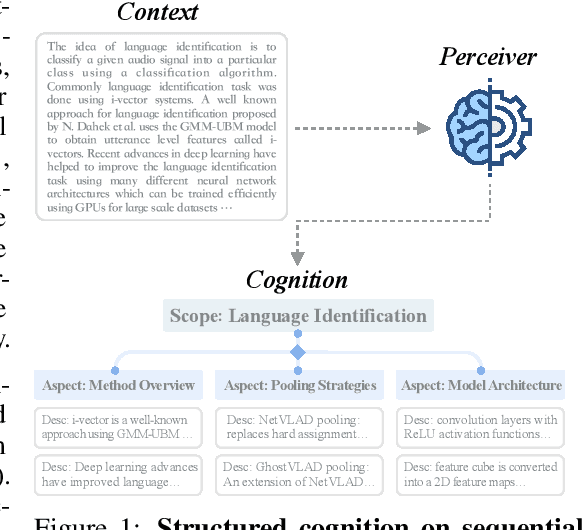
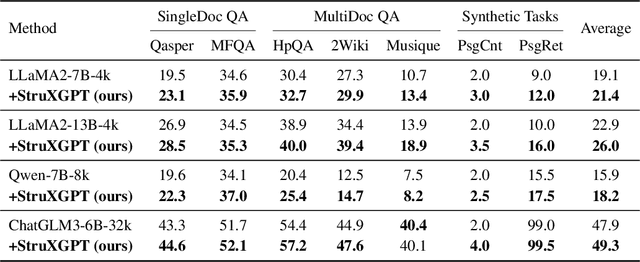
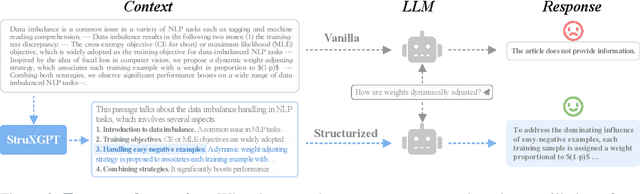
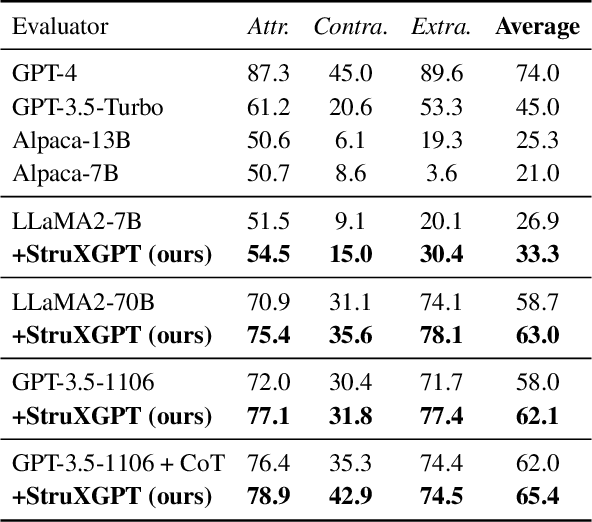
When reading long-form text, human cognition is complex and structurized. While large language models (LLMs) process input contexts through a causal and sequential perspective, this approach can potentially limit their ability to handle intricate and complex inputs effectively. To enhance LLM's cognition capability, this paper presents a novel concept of context structurization. Specifically, we transform the plain, unordered contextual sentences into well-ordered and hierarchically structurized elements. By doing so, LLMs can better grasp intricate and extended contexts through precise attention and information-seeking along the organized structures. Extensive evaluations are conducted across various model architectures and sizes (including several 7B- to 72B-size auto-regressive LLMs as well as BERT-like masking models) on a diverse set of NLP tasks (e.g., context-based question-answering, exhaustive hallucination evaluation, and passage-level dense retrieval). Empirical results show consistent and significant performance gains afforded by a single-round structurization. In particular, we boost a 72B-parameter open-source model to achieve comparable performance against GPT-3.5-Turbo as the hallucination evaluator. Besides, we show the feasibility of distilling advanced LLMs' language processing abilities to a smaller yet effective StruXGPT-7B to execute structurization, addressing the practicality of our approach. Code will be made public soon.
ESOD: Efficient Small Object Detection on High-Resolution Images
Jul 23, 2024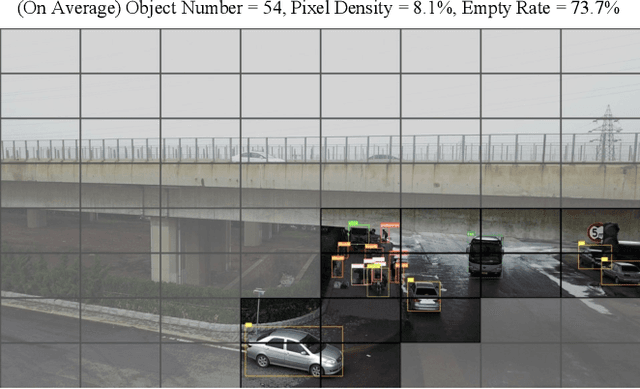



Enlarging input images is a straightforward and effective approach to promote small object detection. However, simple image enlargement is significantly expensive on both computations and GPU memory. In fact, small objects are usually sparsely distributed and locally clustered. Therefore, massive feature extraction computations are wasted on the non-target background area of images. Recent works have tried to pick out target-containing regions using an extra network and perform conventional object detection, but the newly introduced computation limits their final performance. In this paper, we propose to reuse the detector's backbone to conduct feature-level object-seeking and patch-slicing, which can avoid redundant feature extraction and reduce the computation cost. Incorporating a sparse detection head, we are able to detect small objects on high-resolution inputs (e.g., 1080P or larger) for superior performance. The resulting Efficient Small Object Detection (ESOD) approach is a generic framework, which can be applied to both CNN- and ViT-based detectors to save the computation and GPU memory costs. Extensive experiments demonstrate the efficacy and efficiency of our method. In particular, our method consistently surpasses the SOTA detectors by a large margin (e.g., 8% gains on AP) on the representative VisDrone, UAVDT, and TinyPerson datasets. Code will be made public soon.
Category-Extensible Out-of-Distribution Detection via Hierarchical Context Descriptions
Jul 23, 2024The key to OOD detection has two aspects: generalized feature representation and precise category description. Recently, vision-language models such as CLIP provide significant advances in both two issues, but constructing precise category descriptions is still in its infancy due to the absence of unseen categories. This work introduces two hierarchical contexts, namely perceptual context and spurious context, to carefully describe the precise category boundary through automatic prompt tuning. Specifically, perceptual contexts perceive the inter-category difference (e.g., cats vs apples) for current classification tasks, while spurious contexts further identify spurious (similar but exactly not) OOD samples for every single category (e.g., cats vs panthers, apples vs peaches). The two contexts hierarchically construct the precise description for a certain category, which is, first roughly classifying a sample to the predicted category and then delicately identifying whether it is truly an ID sample or actually OOD. Moreover, the precise descriptions for those categories within the vision-language framework present a novel application: CATegory-EXtensible OOD detection (CATEX). One can efficiently extend the set of recognizable categories by simply merging the hierarchical contexts learned under different sub-task settings. And extensive experiments are conducted to demonstrate CATEX's effectiveness, robustness, and category-extensibility. For instance, CATEX consistently surpasses the rivals by a large margin with several protocols on the challenging ImageNet-1K dataset. In addition, we offer new insights on how to efficiently scale up the prompt engineering in vision-language models to recognize thousands of object categories, as well as how to incorporate large language models (like GPT-3) to boost zero-shot applications. Code will be made public soon.
Rethinking Out-of-Distribution Detection on Imbalanced Data Distribution
Jul 23, 2024Detecting and rejecting unknown out-of-distribution (OOD) samples is critical for deployed neural networks to void unreliable predictions. In real-world scenarios, however, the efficacy of existing OOD detection methods is often impeded by the inherent imbalance of in-distribution (ID) data, which causes significant performance decline. Through statistical observations, we have identified two common challenges faced by different OOD detectors: misidentifying tail class ID samples as OOD, while erroneously predicting OOD samples as head class from ID. To explain this phenomenon, we introduce a generalized statistical framework, termed ImOOD, to formulate the OOD detection problem on imbalanced data distribution. Consequently, the theoretical analysis reveals that there exists a class-aware bias item between balanced and imbalanced OOD detection, which contributes to the performance gap. Building upon this finding, we present a unified training-time regularization technique to mitigate the bias and boost imbalanced OOD detectors across architecture designs. Our theoretically grounded method translates into consistent improvements on the representative CIFAR10-LT, CIFAR100-LT, and ImageNet-LT benchmarks against several state-of-the-art OOD detection approaches. Code will be made public soon.
A3S: A General Active Clustering Method with Pairwise Constraints
Jul 14, 2024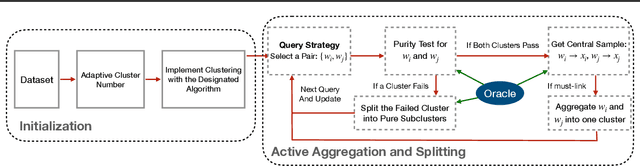
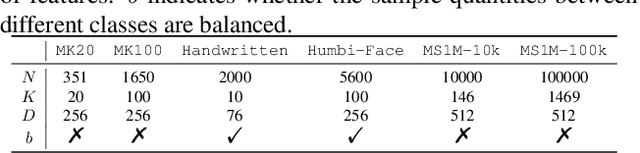
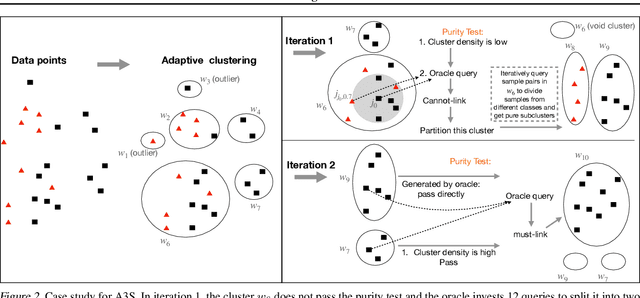
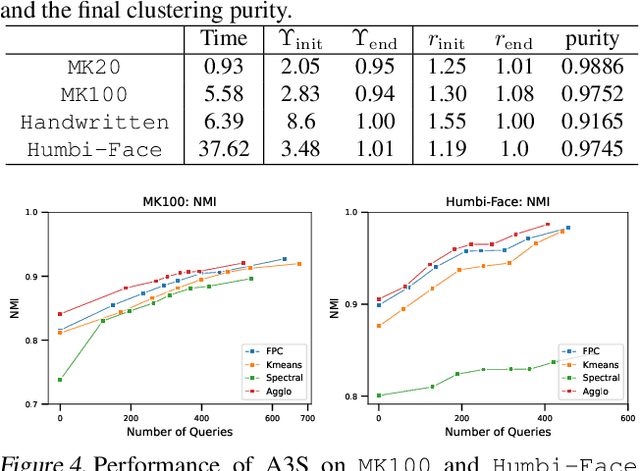
Active clustering aims to boost the clustering performance by integrating human-annotated pairwise constraints through strategic querying. Conventional approaches with semi-supervised clustering schemes encounter high query costs when applied to large datasets with numerous classes. To address these limitations, we propose a novel Adaptive Active Aggregation and Splitting (A3S) framework, falling within the cluster-adjustment scheme in active clustering. A3S features strategic active clustering adjustment on the initial cluster result, which is obtained by an adaptive clustering algorithm. In particular, our cluster adjustment is inspired by the quantitative analysis of Normalized mutual information gain under the information theory framework and can provably improve the clustering quality. The proposed A3S framework significantly elevates the performance and scalability of active clustering. In extensive experiments across diverse real-world datasets, A3S achieves desired results with significantly fewer human queries compared with existing methods.