 Add to Chrome
 Add to Firefox
 Add to Edge
Bringing Value Models Back: Generative Critics for Value Modeling in LLM Reinforcement Learning
Apr 12, 2026
Credit assignment is a central challenge in reinforcement learning (RL). Classical actor-critic methods address this challenge through fine-grained advantage estimation based on a learned value function. However, learned value models are often avoided in modern large language model (LLM) RL because conventional discriminative critics are difficult to train reliably. We revisit value modeling and argue that this difficulty is partly due to limited expressiveness. In particular, representation complexity theory suggests that value functions can be hard to approximate under the one-shot prediction paradigm used by existing value models, and our scaling experiments show that such critics do not improve reliably with scale. Motivated by this observation, we propose Generative Actor-Critic (GenAC), which replaces one-shot scalar value prediction with a generative critic that performs chain-of-thought reasoning before producing a value estimate. We further introduce In-Context Conditioning, which helps the critic remain calibrated to the current actor throughout training. GenAC improves value approximation, ranking reliability, and out-of-distribution generalization, and these gains translate into stronger downstream RL performance than both value-based and value-free baselines. Overall, our results suggest that stronger value modeling is a promising direction for improving credit assignment in LLM reinforcement learning.

Shopping with a Platform AI Assistant: Who Adopts, When in the Journey, and What For
Mar 26, 2026This paper provides some of the first large-scale descriptive evidence on how consumers adopt and use platform-embedded shopping AI in e-commerce. Using data on 31 million users of Ctrip, China's largest online travel platform, we study "Wendao," an LLM-based AI assistant integrated into the platform. We document three empirical regularities. First, adoption is highest among older consumers, female users, and highly engaged existing users, reversing the younger, male-dominated profile commonly documented for general-purpose AI tools. Second, AI chat appears in the same broad phase of the purchase journey as traditional search and well before order placement; among journeys containing both chat and search, the most common pattern is interleaving, with users moving back and forth between the two modalities. Third, consumers disproportionately use the assistant for exploratory, hard-to-keyword tasks: attraction queries account for 42% of observed chat requests, and chat intent varies systematically with both the timing of chat relative to search and the category of products later purchased within the same journey. These findings suggest that embedded shopping AI functions less as a substitute for conventional search than as a complementary interface for exploratory product discovery in e-commerce.
Robust Assortment Optimization from Observational Data
Feb 11, 2026Assortment optimization is a fundamental challenge in modern retail and recommendation systems, where the goal is to select a subset of products that maximizes expected revenue under complex customer choice behaviors. While recent advances in data-driven methods have leveraged historical data to learn and optimize assortments, these approaches typically rely on strong assumptions -- namely, the stability of customer preferences and the correctness of the underlying choice models. However, such assumptions frequently break in real-world scenarios due to preference shifts and model misspecification, leading to poor generalization and revenue loss. Motivated by this limitation, we propose a robust framework for data-driven assortment optimization that accounts for potential distributional shifts in customer choice behavior. Our approach models potential preference shift from a nominal choice model that generates data and seeks to maximize worst-case expected revenue. We first establish the computational tractability of robust assortment planning when the nominal model is known, then advance to the data-driven setting, where we design statistically optimal algorithms that minimize the data requirements while maintaining robustness. Our theoretical analysis provides both upper bounds and matching lower bounds on the sample complexity, offering theoretical guarantees for robust generalization. Notably, we uncover and identify the notion of ``robust item-wise coverage'' as the minimal data requirement to enable sample-efficient robust assortment learning. Our work bridges the gap between robustness and statistical efficiency in assortment learning, contributing new insights and tools for reliable assortment optimization under uncertainty.
Optimism Stabilizes Thompson Sampling for Adaptive Inference
Feb 05, 2026Thompson sampling (TS) is widely used for stochastic multi-armed bandits, yet its inferential properties under adaptive data collection are subtle. Classical asymptotic theory for sample means can fail because arm-specific sample sizes are random and coupled with the rewards through the action-selection rule. We study this phenomenon in the $K$-armed Gaussian bandit and identify \emph{optimism} as a key mechanism for restoring \emph{stability}, a sufficient condition for valid asymptotic inference requiring each arm's pull count to concentrate around a deterministic scale. First, we prove that variance-inflated TS \citep{halder2025stable} is stable for any $K \ge 2$, including the challenging regime where multiple arms are optimal. This resolves the open question raised by \citet{halder2025stable} through extending their results from the two-armed setting to the general $K$-armed setting. Second, we analyze an alternative optimistic modification that keeps the posterior variance unchanged but adds an explicit mean bonus to posterior mean, and establish the same stability conclusion. In summary, suitably implemented optimism stabilizes Thompson sampling and enables asymptotically valid inference in multi-armed bandits, while incurring only a mild additional regret cost.
Muon in Associative Memory Learning: Training Dynamics and Scaling Laws
Feb 05, 2026Muon updates matrix parameters via the matrix sign of the gradient and has shown strong empirical gains, yet its dynamics and scaling behavior remain unclear in theory. We study Muon in a linear associative memory model with softmax retrieval and a hierarchical frequency spectrum over query-answer pairs, with and without label noise. In this setting, we show that Gradient Descent (GD) learns frequency components at highly imbalanced rates, leading to slow convergence bottlenecked by low-frequency components. In contrast, the Muon optimizer mitigates this imbalance, leading to faster and more uniform progress. Specifically, in the noiseless case, Muon achieves an exponential speedup over GD; in the noisy case with a power-decay frequency spectrum, we derive Muon's optimization scaling law and demonstrate its superior scaling efficiency over GD. Furthermore, we show that Muon can be interpreted as an implicit matrix preconditioner arising from adaptive task alignment and block-symmetric gradient structure. In contrast, the preconditioner with coordinate-wise sign operator could match Muon under oracle access to unknown task representations, which is infeasible for SignGD in practice. Experiments on synthetic long-tail classification and LLaMA-style pre-training corroborate the theory.
The Sample Complexity of Online Strategic Decision Making with Information Asymmetry and Knowledge Transportability
Jun 11, 2025Information asymmetry is a pervasive feature of multi-agent systems, especially evident in economics and social sciences. In these settings, agents tailor their actions based on private information to maximize their rewards. These strategic behaviors often introduce complexities due to confounding variables. Simultaneously, knowledge transportability poses another significant challenge, arising from the difficulties of conducting experiments in target environments. It requires transferring knowledge from environments where empirical data is more readily available. Against these backdrops, this paper explores a fundamental question in online learning: Can we employ non-i.i.d. actions to learn about confounders even when requiring knowledge transfer? We present a sample-efficient algorithm designed to accurately identify system dynamics under information asymmetry and to navigate the challenges of knowledge transfer effectively in reinforcement learning, framed within an online strategic interaction model. Our method provably achieves learning of an $\epsilon$-optimal policy with a tight sample complexity of $O(1/\epsilon^2)$.
Less is More: Improving LLM Alignment via Preference Data Selection
Feb 22, 2025Direct Preference Optimization (DPO) has emerged as a promising approach for aligning large language models with human preferences. While prior work mainly extends DPO from the aspect of the objective function, we instead improve DPO from the largely overlooked but critical aspect of data selection. Specifically, we address the issue of parameter shrinkage caused by noisy data by proposing a novel margin-maximization principle for dataset curation in DPO training. To accurately estimate margins for data selection, we propose a dual-margin guided approach that considers both external reward margins and implicit DPO reward margins. Extensive experiments demonstrate that our method reduces computational cost dramatically while improving performance. Remarkably, by using just 10\% of the Ultrafeedback dataset, our approach achieves 3\% to 8\% improvements across various Llama and Mistral series models on the AlpacaEval 2.0 benchmark. Furthermore, our approach seamlessly extends to iterative DPO, yielding a roughly 3\% improvement with 25\% online data, while further reducing training time. These results highlight the potential of data selection strategies for advancing preference optimization.
Learning an Optimal Assortment Policy under Observational Data
Feb 10, 2025We study the fundamental problem of offline assortment optimization under the Multinomial Logit (MNL) model, where sellers must determine the optimal subset of the products to offer based solely on historical customer choice data. While most existing approaches to learning-based assortment optimization focus on the online learning of the optimal assortment through repeated interactions with customers, such exploration can be costly or even impractical in many real-world settings. In this paper, we consider the offline learning paradigm and investigate the minimal data requirements for efficient offline assortment optimization. To this end, we introduce Pessimistic Rank-Breaking (PRB), an algorithm that combines rank-breaking with pessimistic estimation. We prove that PRB is nearly minimax optimal by establishing the tight suboptimality upper bound and a nearly matching lower bound. This further shows that "optimal item coverage" - where each item in the optimal assortment appears sufficiently often in the historical data - is both sufficient and necessary for efficient offline learning. This significantly relaxes the previous requirement of observing the complete optimal assortment in the data. Our results provide fundamental insights into the data requirements for offline assortment optimization under the MNL model.
BRiTE: Bootstrapping Reinforced Thinking Process to Enhance Language Model Reasoning
Jan 31, 2025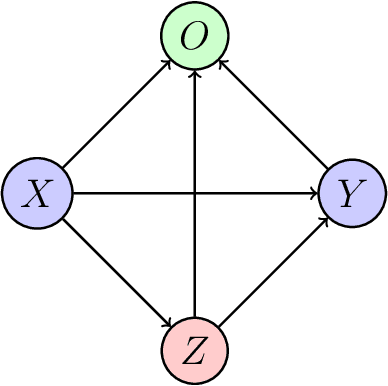

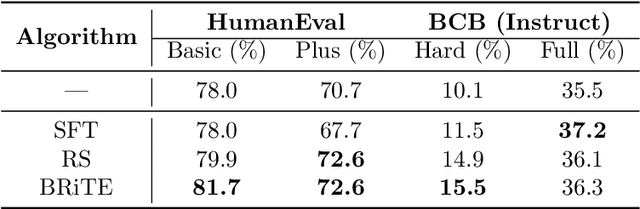
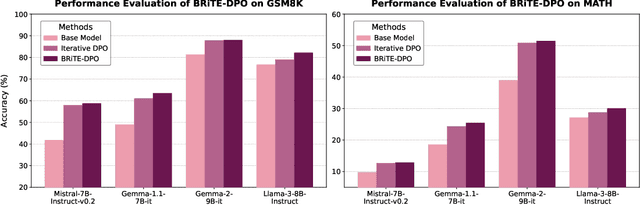
Large Language Models (LLMs) have demonstrated remarkable capabilities in complex reasoning tasks, yet generating reliable reasoning processes remains a significant challenge. We present a unified probabilistic framework that formalizes LLM reasoning through a novel graphical model incorporating latent thinking processes and evaluation signals. Within this framework, we introduce the Bootstrapping Reinforced Thinking Process (BRiTE) algorithm, which works in two steps. First, it generates high-quality rationales by approximating the optimal thinking process through reinforcement learning, using a novel reward shaping mechanism. Second, it enhances the base LLM by maximizing the joint probability of rationale generation with respect to the model's parameters. Theoretically, we demonstrate BRiTE's convergence at a rate of $1/T$ with $T$ representing the number of iterations. Empirical evaluations on math and coding benchmarks demonstrate that our approach consistently improves performance across different base models without requiring human-annotated thinking processes. In addition, BRiTE demonstrates superior performance compared to existing algorithms that bootstrap thinking processes use alternative methods such as rejection sampling, and can even match or exceed the results achieved through supervised fine-tuning with human-annotated data.
A3S: A General Active Clustering Method with Pairwise Constraints
Jul 14, 2024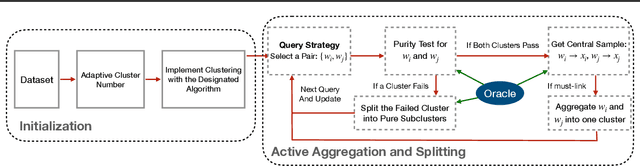
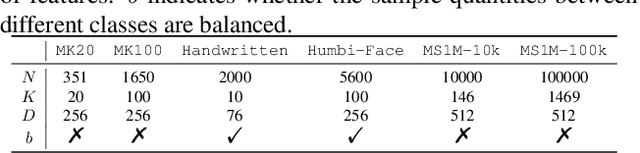
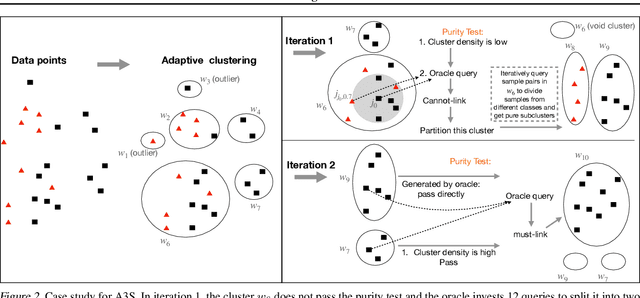
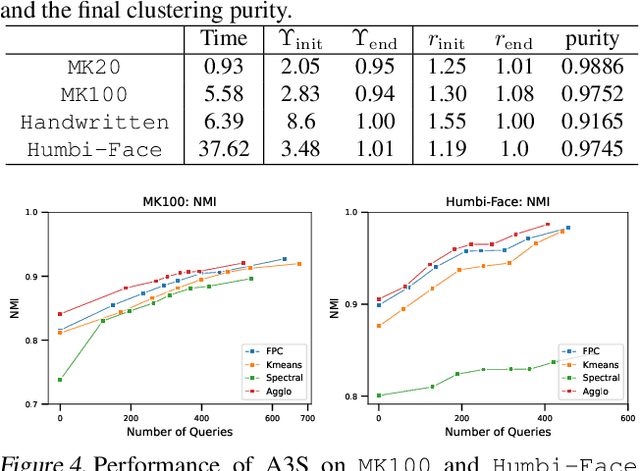
Active clustering aims to boost the clustering performance by integrating human-annotated pairwise constraints through strategic querying. Conventional approaches with semi-supervised clustering schemes encounter high query costs when applied to large datasets with numerous classes. To address these limitations, we propose a novel Adaptive Active Aggregation and Splitting (A3S) framework, falling within the cluster-adjustment scheme in active clustering. A3S features strategic active clustering adjustment on the initial cluster result, which is obtained by an adaptive clustering algorithm. In particular, our cluster adjustment is inspired by the quantitative analysis of Normalized mutual information gain under the information theory framework and can provably improve the clustering quality. The proposed A3S framework significantly elevates the performance and scalability of active clustering. In extensive experiments across diverse real-world datasets, A3S achieves desired results with significantly fewer human queries compared with existing methods.