 Add to Chrome
 Add to Firefox
 Add to Edge
WavChat: A Survey of Spoken Dialogue Models
Nov 26, 2024


Recent advancements in spoken dialogue models, exemplified by systems like GPT-4o, have captured significant attention in the speech domain. Compared to traditional three-tier cascaded spoken dialogue models that comprise speech recognition (ASR), large language models (LLMs), and text-to-speech (TTS), modern spoken dialogue models exhibit greater intelligence. These advanced spoken dialogue models not only comprehend audio, music, and other speech-related features, but also capture stylistic and timbral characteristics in speech. Moreover, they generate high-quality, multi-turn speech responses with low latency, enabling real-time interaction through simultaneous listening and speaking capability. Despite the progress in spoken dialogue systems, there is a lack of comprehensive surveys that systematically organize and analyze these systems and the underlying technologies. To address this, we have first compiled existing spoken dialogue systems in the chronological order and categorized them into the cascaded and end-to-end paradigms. We then provide an in-depth overview of the core technologies in spoken dialogue models, covering aspects such as speech representation, training paradigm, streaming, duplex, and interaction capabilities. Each section discusses the limitations of these technologies and outlines considerations for future research. Additionally, we present a thorough review of relevant datasets, evaluation metrics, and benchmarks from the perspectives of training and evaluating spoken dialogue systems. We hope this survey will contribute to advancing both academic research and industrial applications in the field of spoken dialogue systems. The related material is available at https://github.com/jishengpeng/WavChat.

SatVision-TOA: A Geospatial Foundation Model for Coarse-Resolution All-Sky Remote Sensing Imagery
Nov 26, 2024Foundation models have the potential to transform the landscape of remote sensing (RS) data analysis by enabling large computer vision models to be pre-trained on vast amounts of remote sensing data. These models can then be fine-tuned with small amounts of labeled training and applied to a variety of applications. Most existing foundation models are designed for high spatial resolution, cloud-free satellite imagery or photos, limiting their applicability in scenarios that require frequent temporal monitoring or broad spectral profiles. As a result, foundation models trained solely on cloud-free images have limited utility for applications that involve atmospheric variables or require atmospheric corrections. We introduce SatVision-TOA, a novel foundation model pre-trained on 14-band MODIS L1B Top-Of-Atmosphere (TOA) radiance imagery, addressing the need for models pre-trained to handle moderate- and coarse-resolution all-sky remote sensing data. The SatVision-TOA model is pre-trained using a Masked-Image-Modeling (MIM) framework and the SwinV2 architecture, and learns detailed contextual representations through self-supervised learning without the need for labels. It is a 3 billion parameter model that is trained on 100 million images. To our knowledge this is the largest foundation model trained solely on satellite RS imagery. Results show that SatVision-TOA achieves superior performance over baseline methods on downstream tasks such as 3D cloud retrieval. Notably, the model achieves a mean intersection over union (mIOU) of 0.46, a substantial improvement over the baseline mIOU of 0.22. Additionally, the rate of false negative results in the fine-tuning task were reduced by over 50% compared to the baseline. Our work advances pre-trained vision modeling for multispectral RS by learning from a variety of atmospheric and aerosol conditions to improve cloud and land surface monitoring.
Improving Mathematical Reasoning Capabilities of Small Language Models via Feedback-Driven Distillation
Nov 22, 2024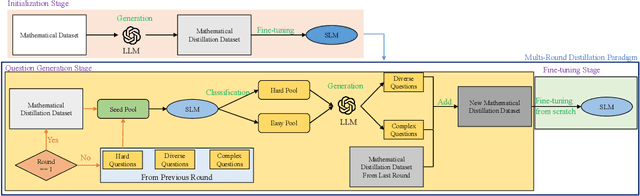
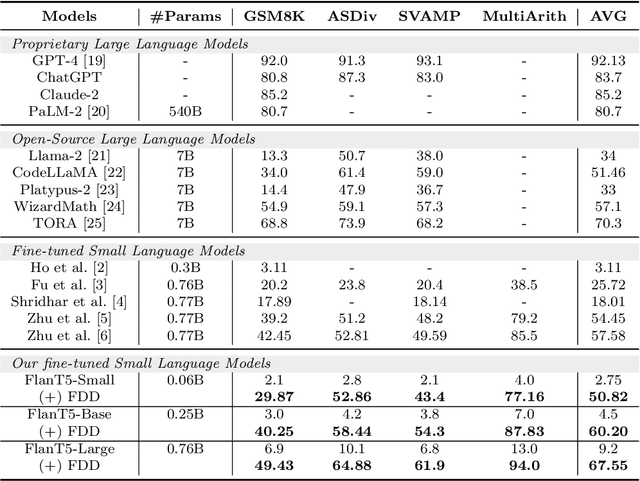
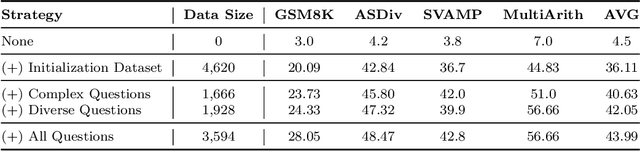
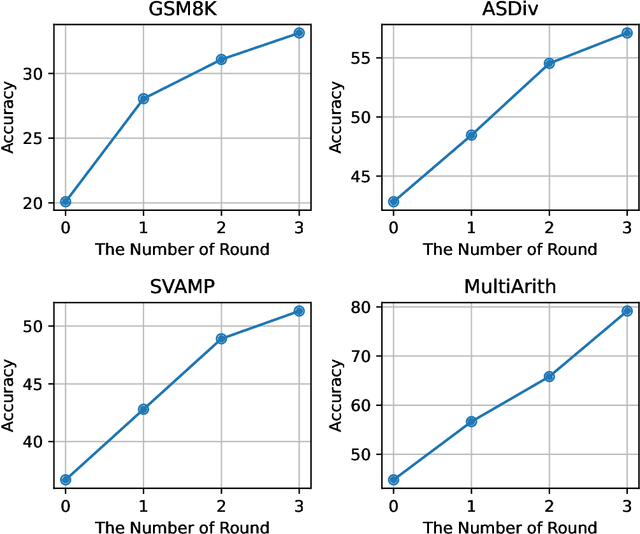
Large Language Models (LLMs) demonstrate exceptional reasoning capabilities, often achieving state-of-the-art performance in various tasks. However, their substantial computational and memory demands, due to billions of parameters, hinder deployment in resource-constrained environments. A promising solution is knowledge distillation, where LLMs transfer reasoning capabilities to Small Language Models (SLMs, $\le$ 1B parameters), enabling wider deployment on low-resource devices. Existing methods primarily focus on generating high-quality reasoning rationales for distillation datasets but often neglect the critical role of data quantity and quality. To address these challenges, we propose a Feedback-Driven Distillation (FDD) framework to enhance SLMs' mathematical reasoning capabilities. In the initialization stage, a distillation dataset is constructed by prompting LLMs to pair mathematical problems with corresponding reasoning rationales. We classify problems into easy and hard categories based on SLM performance. For easy problems, LLMs generate more complex variations, while for hard problems, new questions of similar complexity are synthesized. In addition, we propose a multi-round distillation paradigm to iteratively enrich the distillation datasets, thereby progressively improving the mathematical reasoning abilities of SLMs. Experimental results demonstrate that our method can make SLMs achieve SOTA mathematical reasoning performance.
On the Linear Speedup of Personalized Federated Reinforcement Learning with Shared Representations
Nov 22, 2024Federated reinforcement learning (FedRL) enables multiple agents to collaboratively learn a policy without sharing their local trajectories collected during agent-environment interactions. However, in practice, the environments faced by different agents are often heterogeneous, leading to poor performance by the single policy learned by existing FedRL algorithms on individual agents. In this paper, we take a further step and introduce a \emph{personalized} FedRL framework (PFedRL) by taking advantage of possibly shared common structure among agents in heterogeneous environments. Specifically, we develop a class of PFedRL algorithms named PFedRL-Rep that learns (1) a shared feature representation collaboratively among all agents, and (2) an agent-specific weight vector personalized to its local environment. We analyze the convergence of PFedTD-Rep, a particular instance of the framework with temporal difference (TD) learning and linear representations. To the best of our knowledge, we are the first to prove a linear convergence speedup with respect to the number of agents in the PFedRL setting. To achieve this, we show that PFedTD-Rep is an example of the federated two-timescale stochastic approximation with Markovian noise. Experimental results demonstrate that PFedTD-Rep, along with an extension to the control setting based on deep Q-networks (DQN), not only improve learning in heterogeneous settings, but also provide better generalization to new environments.
LLaVA-MR: Large Language-and-Vision Assistant for Video Moment Retrieval
Nov 21, 2024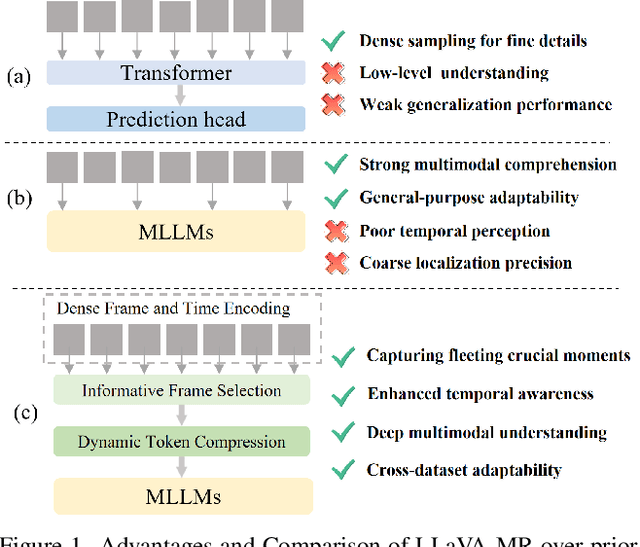
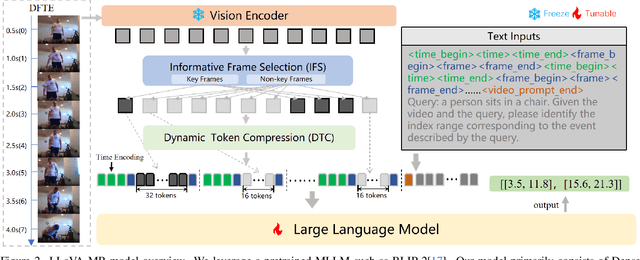
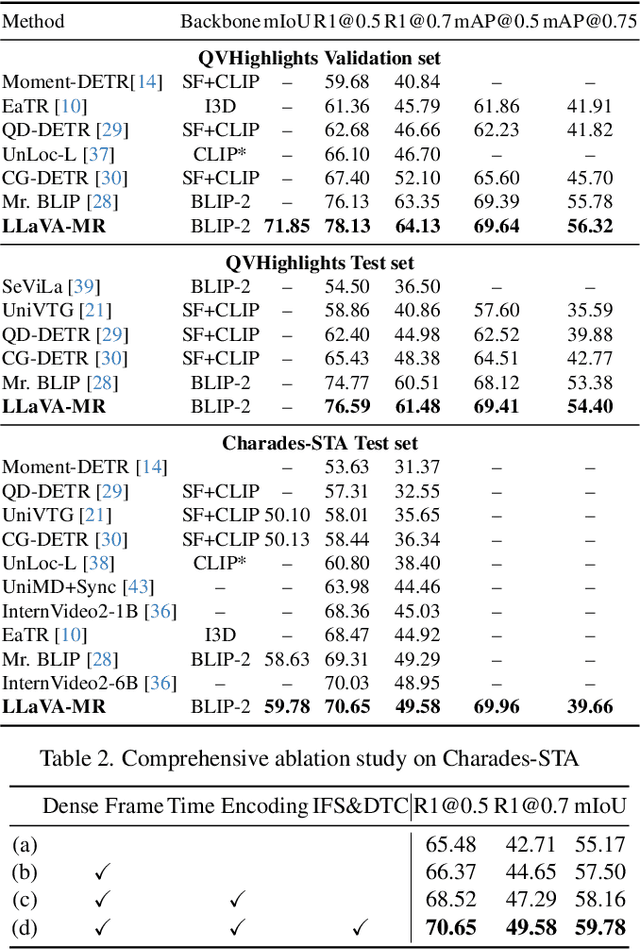
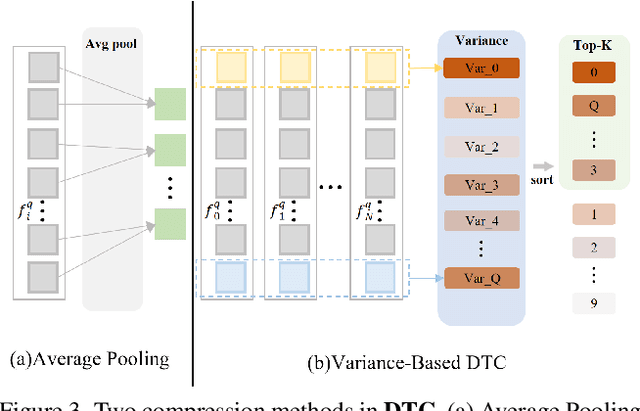
Multimodal Large Language Models (MLLMs) are widely used for visual perception, understanding, and reasoning. However, long video processing and precise moment retrieval remain challenging due to LLMs' limited context size and coarse frame extraction. We propose the Large Language-and-Vision Assistant for Moment Retrieval (LLaVA-MR), which enables accurate moment retrieval and contextual grounding in videos using MLLMs. LLaVA-MR combines Dense Frame and Time Encoding (DFTE) for spatial-temporal feature extraction, Informative Frame Selection (IFS) for capturing brief visual and motion patterns, and Dynamic Token Compression (DTC) to manage LLM context limitations. Evaluations on benchmarks like Charades-STA and QVHighlights demonstrate that LLaVA-MR outperforms 11 state-of-the-art methods, achieving an improvement of 1.82% in R1@0.5 and 1.29% in mAP@0.5 on the QVHighlights dataset. Our implementation will be open-sourced upon acceptance.
Spider: Any-to-Many Multimodal LLM
Nov 14, 2024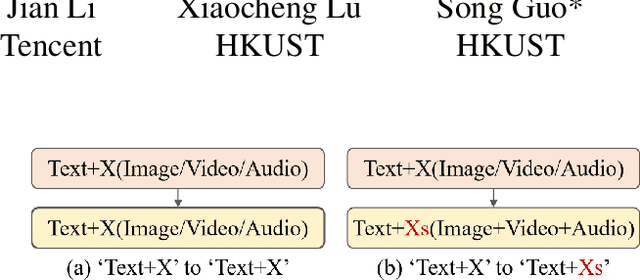


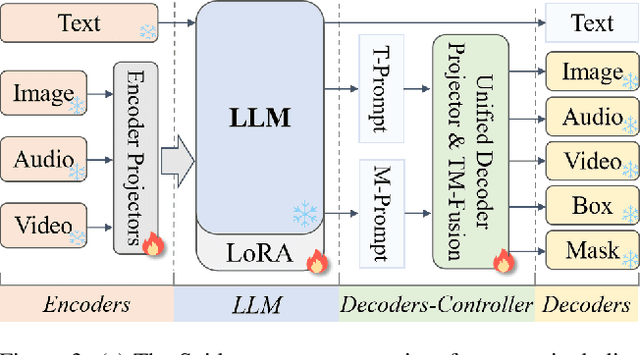
Multimodal LLMs (MLLMs) have emerged as an extension of Large Language Models (LLMs), enabling the integration of various modalities. However, Any-to-Any MLLMs are limited to generating pairwise modalities 'Text + X' within a single response, such as Text + {Image or Audio or Video}. To address this limitation, we introduce Spider, a novel efficient Any-to-Many Modalities Generation (AMMG) framework, which can generate an arbitrary combination of modalities 'Text + Xs', such as Text + {Image and Audio and Video}. To achieve efficient AMMG, our Spider integrates three core components: a Base Model for basic X-to-X (i.e., Any-to-Any) modality processing, a novel Efficient Decoders-Controller for controlling multimodal Decoders to generate Xs (many-modal) contents, and an Any-to-Many Instruction Template designed for producing Xs signal prompts. To train Spider, we constructed a novel Text-formatted Many-Modal (TMM) dataset, which facilitates the learning of the X-to-Xs (i.e., Any-to-Many) capability necessary for AMMG. Ultimately, the well-trained Spider generates a pseudo X-to-Xs dataset, the first-ever X-to-Xs many-modal dataset, enhancing the potential for AMMG task in future research. Overall, this work not only pushes the boundary of multimodal interaction but also provides rich data support for advancing the field.
Feature Averaging: An Implicit Bias of Gradient Descent Leading to Non-Robustness in Neural Networks
Oct 14, 2024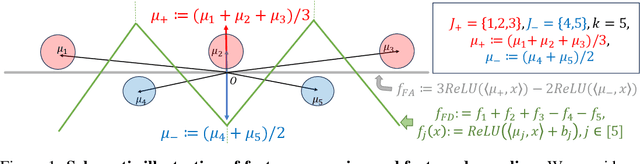
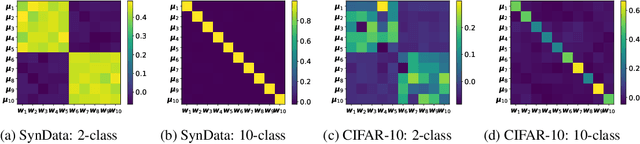
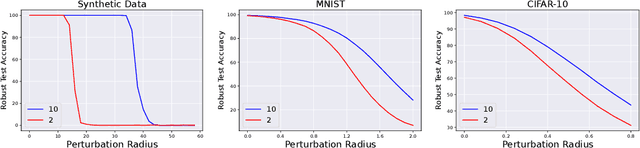

In this work, we investigate a particular implicit bias in the gradient descent training process, which we term "Feature Averaging", and argue that it is one of the principal factors contributing to non-robustness of deep neural networks. Despite the existence of multiple discriminative features capable of classifying data, neural networks trained by gradient descent exhibit a tendency to learn the average (or certain combination) of these features, rather than distinguishing and leveraging each feature individually. In particular, we provide a detailed theoretical analysis of the training dynamics of gradient descent in a two-layer ReLU network for a binary classification task, where the data distribution consists of multiple clusters with orthogonal cluster center vectors. We rigorously prove that gradient descent converges to the regime of feature averaging, wherein the weights associated with each hidden-layer neuron represent an average of the cluster centers (each center corresponding to a distinct feature). It leads the network classifier to be non-robust due to an attack that aligns with the negative direction of the averaged features. Furthermore, we prove that, with the provision of more granular supervised information, a two-layer multi-class neural network is capable of learning individual features, from which one can derive a binary classifier with the optimal robustness under our setting. Besides, we also conduct extensive experiments using synthetic datasets, MNIST and CIFAR-10 to substantiate the phenomenon of feature averaging and its role in adversarial robustness of neural networks. We hope the theoretical and empirical insights can provide a deeper understanding of the impact of the gradient descent training on feature learning process, which in turn influences the robustness of the network, and how more detailed supervision may enhance model robustness.
MMAD: The First-Ever Comprehensive Benchmark for Multimodal Large Language Models in Industrial Anomaly Detection
Oct 12, 2024


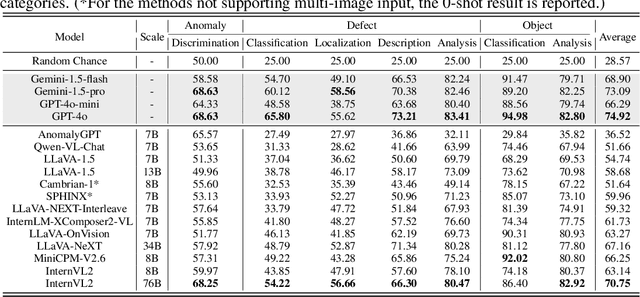
In the field of industrial inspection, Multimodal Large Language Models (MLLMs) have a high potential to renew the paradigms in practical applications due to their robust language capabilities and generalization abilities. However, despite their impressive problem-solving skills in many domains, MLLMs' ability in industrial anomaly detection has not been systematically studied. To bridge this gap, we present MMAD, the first-ever full-spectrum MLLMs benchmark in industrial Anomaly Detection. We defined seven key subtasks of MLLMs in industrial inspection and designed a novel pipeline to generate the MMAD dataset with 39,672 questions for 8,366 industrial images. With MMAD, we have conducted a comprehensive, quantitative evaluation of various state-of-the-art MLLMs. The commercial models performed the best, with the average accuracy of GPT-4o models reaching 74.9%. However, this result falls far short of industrial requirements. Our analysis reveals that current MLLMs still have significant room for improvement in answering questions related to industrial anomalies and defects. We further explore two training-free performance enhancement strategies to help models improve in industrial scenarios, highlighting their promising potential for future research.
DOPL: Direct Online Preference Learning for Restless Bandits with Preference Feedback
Oct 07, 2024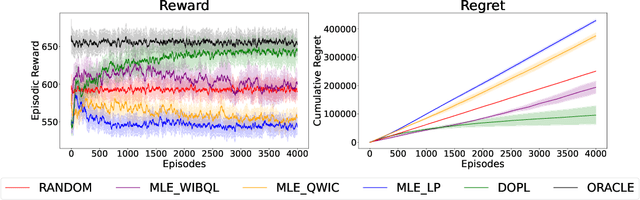
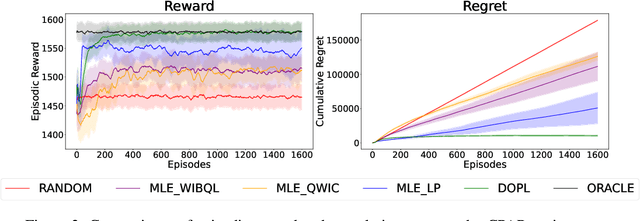
Restless multi-armed bandits (RMAB) has been widely used to model constrained sequential decision making problems, where the state of each restless arm evolves according to a Markov chain and each state transition generates a scalar reward. However, the success of RMAB crucially relies on the availability and quality of reward signals. Unfortunately, specifying an exact reward function in practice can be challenging and even infeasible. In this paper, we introduce Pref-RMAB, a new RMAB model in the presence of preference signals, where the decision maker only observes pairwise preference feedback rather than scalar reward from the activated arms at each decision epoch. Preference feedback, however, arguably contains less information than the scalar reward, which makes Pref-RMAB seemingly more difficult. To address this challenge, we present a direct online preference learning (DOPL) algorithm for Pref-RMAB to efficiently explore the unknown environments, adaptively collect preference data in an online manner, and directly leverage the preference feedback for decision-makings. We prove that DOPL yields a sublinear regret. To our best knowledge, this is the first algorithm to ensure $\tilde{\mathcal{O}}(\sqrt{T\ln T})$ regret for RMAB with preference feedback. Experimental results further demonstrate the effectiveness of DOPL.
Self-supervised Preference Optimization: Enhance Your Language Model with Preference Degree Awareness
Sep 26, 2024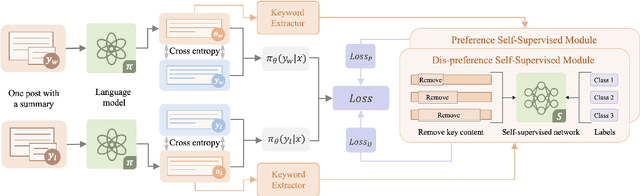
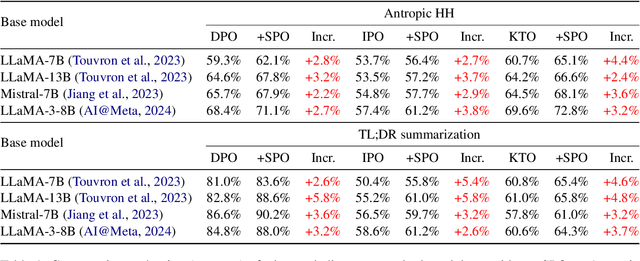
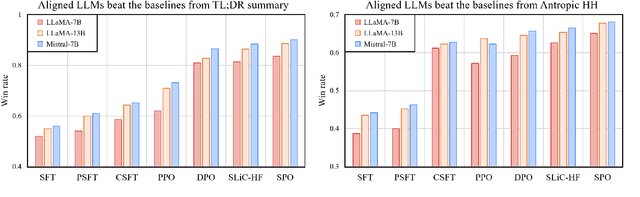
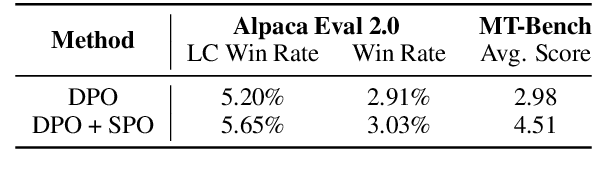
Recently, there has been significant interest in replacing the reward model in Reinforcement Learning with Human Feedback (RLHF) methods for Large Language Models (LLMs), such as Direct Preference Optimization (DPO) and its variants. These approaches commonly use a binary cross-entropy mechanism on pairwise samples, i.e., minimizing and maximizing the loss based on preferred or dis-preferred responses, respectively. However, while this training strategy omits the reward model, it also overlooks the varying preference degrees within different responses. We hypothesize that this is a key factor hindering LLMs from sufficiently understanding human preferences. To address this problem, we propose a novel Self-supervised Preference Optimization (SPO) framework, which constructs a self-supervised preference degree loss combined with the alignment loss, thereby helping LLMs improve their ability to understand the degree of preference. Extensive experiments are conducted on two widely used datasets of different tasks. The results demonstrate that SPO can be seamlessly integrated with existing preference optimization methods and significantly boost their performance to achieve state-of-the-art performance. We also conduct detailed analyses to offer comprehensive insights into SPO, which verifies its effectiveness. The code is available at https://github.com/lijian16/SPO.