 Add to Chrome
 Add to Firefox
 Add to Edge
Agentic Context Engineering: Evolving Contexts for Self-Improving Language Models
Oct 06, 2025
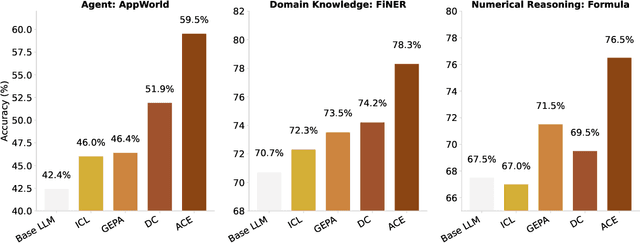
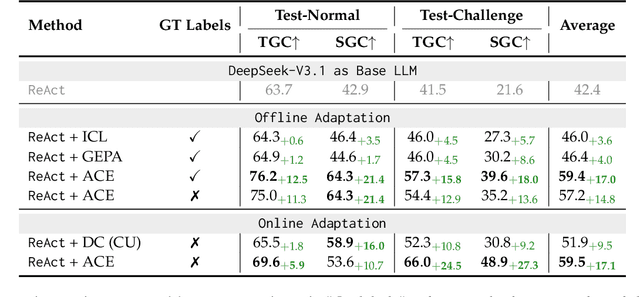
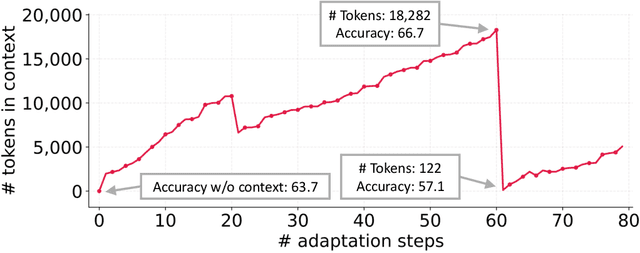
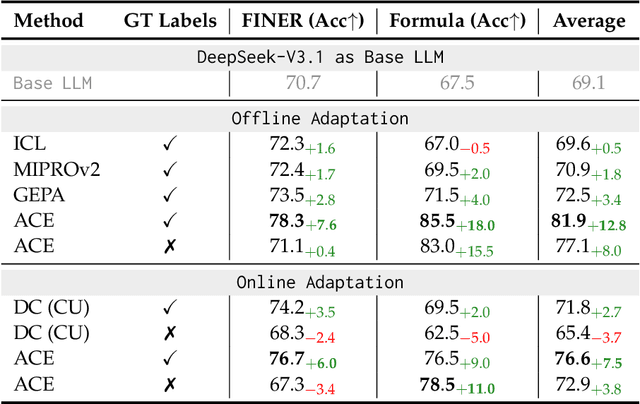
Large language model (LLM) applications such as agents and domain-specific reasoning increasingly rely on context adaptation -- modifying inputs with instructions, strategies, or evidence, rather than weight updates. Prior approaches improve usability but often suffer from brevity bias, which drops domain insights for concise summaries, and from context collapse, where iterative rewriting erodes details over time. Building on the adaptive memory introduced by Dynamic Cheatsheet, we introduce ACE (Agentic Context Engineering), a framework that treats contexts as evolving playbooks that accumulate, refine, and organize strategies through a modular process of generation, reflection, and curation. ACE prevents collapse with structured, incremental updates that preserve detailed knowledge and scale with long-context models. Across agent and domain-specific benchmarks, ACE optimizes contexts both offline (e.g., system prompts) and online (e.g., agent memory), consistently outperforming strong baselines: +10.6% on agents and +8.6% on finance, while significantly reducing adaptation latency and rollout cost. Notably, ACE could adapt effectively without labeled supervision and instead by leveraging natural execution feedback. On the AppWorld leaderboard, ACE matches the top-ranked production-level agent on the overall average and surpasses it on the harder test-challenge split, despite using a smaller open-source model. These results show that comprehensive, evolving contexts enable scalable, efficient, and self-improving LLM systems with low overhead.

Learning Human-Perceived Fakeness in AI-Generated Videos via Multimodal LLMs
Sep 26, 2025Can humans identify AI-generated (fake) videos and provide grounded reasons? While video generation models have advanced rapidly, a critical dimension -- whether humans can detect deepfake traces within a generated video, i.e., spatiotemporal grounded visual artifacts that reveal a video as machine generated -- has been largely overlooked. We introduce DeeptraceReward, the first fine-grained, spatially- and temporally- aware benchmark that annotates human-perceived fake traces for video generation reward. The dataset comprises 4.3K detailed annotations across 3.3K high-quality generated videos. Each annotation provides a natural-language explanation, pinpoints a bounding-box region containing the perceived trace, and marks precise onset and offset timestamps. We consolidate these annotations into 9 major categories of deepfake traces that lead humans to identify a video as AI-generated, and train multimodal language models (LMs) as reward models to mimic human judgments and localizations. On DeeptraceReward, our 7B reward model outperforms GPT-5 by 34.7% on average across fake clue identification, grounding, and explanation. Interestingly, we observe a consistent difficulty gradient: binary fake v.s. real classification is substantially easier than fine-grained deepfake trace detection; within the latter, performance degrades from natural language explanations (easiest), to spatial grounding, to temporal labeling (hardest). By foregrounding human-perceived deepfake traces, DeeptraceReward provides a rigorous testbed and training signal for socially aware and trustworthy video generation.
Paper2Agent: Reimagining Research Papers As Interactive and Reliable AI Agents
Sep 08, 2025We introduce Paper2Agent, an automated framework that converts research papers into AI agents. Paper2Agent transforms research output from passive artifacts into active systems that can accelerate downstream use, adoption, and discovery. Conventional research papers require readers to invest substantial effort to understand and adapt a paper's code, data, and methods to their own work, creating barriers to dissemination and reuse. Paper2Agent addresses this challenge by automatically converting a paper into an AI agent that acts as a knowledgeable research assistant. It systematically analyzes the paper and the associated codebase using multiple agents to construct a Model Context Protocol (MCP) server, then iteratively generates and runs tests to refine and robustify the resulting MCP. These paper MCPs can then be flexibly connected to a chat agent (e.g. Claude Code) to carry out complex scientific queries through natural language while invoking tools and workflows from the original paper. We demonstrate Paper2Agent's effectiveness in creating reliable and capable paper agents through in-depth case studies. Paper2Agent created an agent that leverages AlphaGenome to interpret genomic variants and agents based on ScanPy and TISSUE to carry out single-cell and spatial transcriptomics analyses. We validate that these paper agents can reproduce the original paper's results and can correctly carry out novel user queries. By turning static papers into dynamic, interactive AI agents, Paper2Agent introduces a new paradigm for knowledge dissemination and a foundation for the collaborative ecosystem of AI co-scientists.
UQ: Assessing Language Models on Unsolved Questions
Aug 25, 2025Benchmarks shape progress in AI research. A useful benchmark should be both difficult and realistic: questions should challenge frontier models while also reflecting real-world usage. Yet, current paradigms face a difficulty-realism tension: exam-style benchmarks are often made artificially difficult with limited real-world value, while benchmarks based on real user interaction often skew toward easy, high-frequency problems. In this work, we explore a radically different paradigm: assessing models on unsolved questions. Rather than a static benchmark scored once, we curate unsolved questions and evaluate models asynchronously over time with validator-assisted screening and community verification. We introduce UQ, a testbed of 500 challenging, diverse questions sourced from Stack Exchange, spanning topics from CS theory and math to sci-fi and history, probing capabilities including reasoning, factuality, and browsing. UQ is difficult and realistic by construction: unsolved questions are often hard and naturally arise when humans seek answers, thus solving them yields direct real-world value. Our contributions are threefold: (1) UQ-Dataset and its collection pipeline combining rule-based filters, LLM judges, and human review to ensure question quality (e.g., well-defined and difficult); (2) UQ-Validators, compound validation strategies that leverage the generator-validator gap to provide evaluation signals and pre-screen candidate solutions for human review; and (3) UQ-Platform, an open platform where experts collectively verify questions and solutions. The top model passes UQ-validation on only 15% of questions, and preliminary human verification has already identified correct answers among those that passed. UQ charts a path for evaluating frontier models on real-world, open-ended challenges, where success pushes the frontier of human knowledge. We release UQ at https://uq.stanford.edu.
4KAgent: Agentic Any Image to 4K Super-Resolution
Jul 09, 2025We present 4KAgent, a unified agentic super-resolution generalist system designed to universally upscale any image to 4K resolution (and even higher, if applied iteratively). Our system can transform images from extremely low resolutions with severe degradations, for example, highly distorted inputs at 256x256, into crystal-clear, photorealistic 4K outputs. 4KAgent comprises three core components: (1) Profiling, a module that customizes the 4KAgent pipeline based on bespoke use cases; (2) A Perception Agent, which leverages vision-language models alongside image quality assessment experts to analyze the input image and make a tailored restoration plan; and (3) A Restoration Agent, which executes the plan, following a recursive execution-reflection paradigm, guided by a quality-driven mixture-of-expert policy to select the optimal output for each step. Additionally, 4KAgent embeds a specialized face restoration pipeline, significantly enhancing facial details in portrait and selfie photos. We rigorously evaluate our 4KAgent across 11 distinct task categories encompassing a total of 26 diverse benchmarks, setting new state-of-the-art on a broad spectrum of imaging domains. Our evaluations cover natural images, portrait photos, AI-generated content, satellite imagery, fluorescence microscopy, and medical imaging like fundoscopy, ultrasound, and X-ray, demonstrating superior performance in terms of both perceptual (e.g., NIQE, MUSIQ) and fidelity (e.g., PSNR) metrics. By establishing a novel agentic paradigm for low-level vision tasks, we aim to catalyze broader interest and innovation within vision-centric autonomous agents across diverse research communities. We will release all the code, models, and results at: https://4kagent.github.io.
Data Diversification Methods In Alignment Enhance Math Performance In LLMs
Jul 02, 2025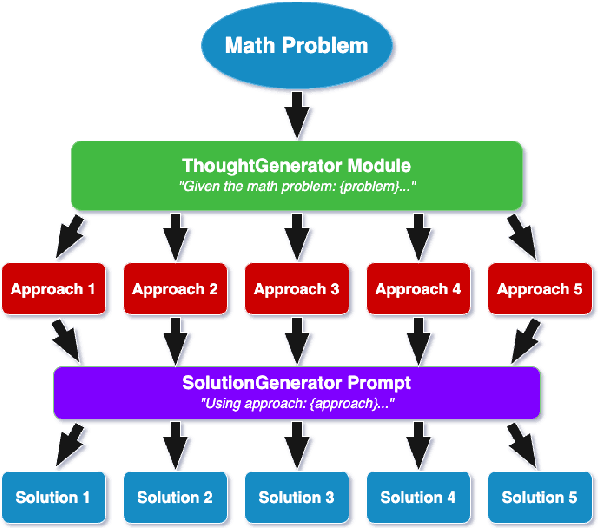
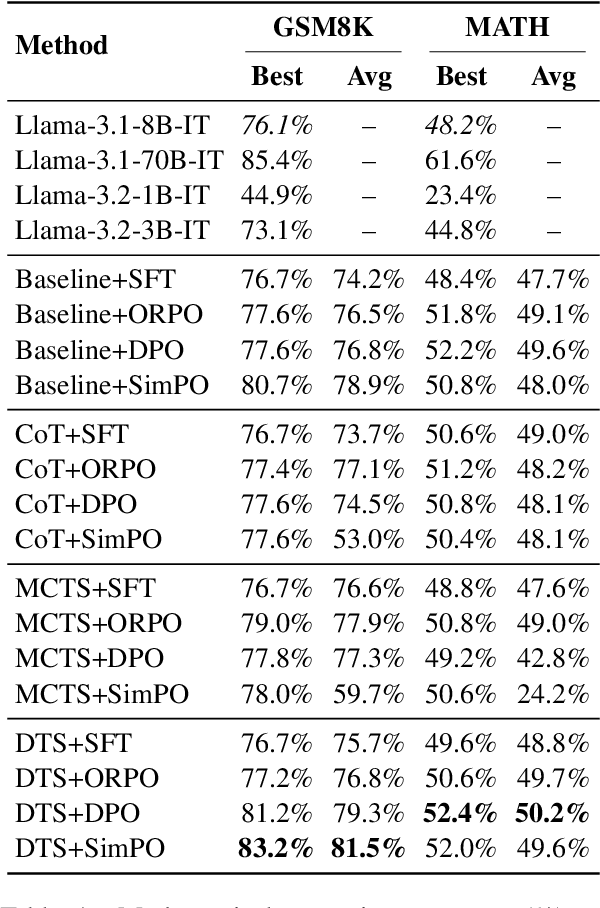
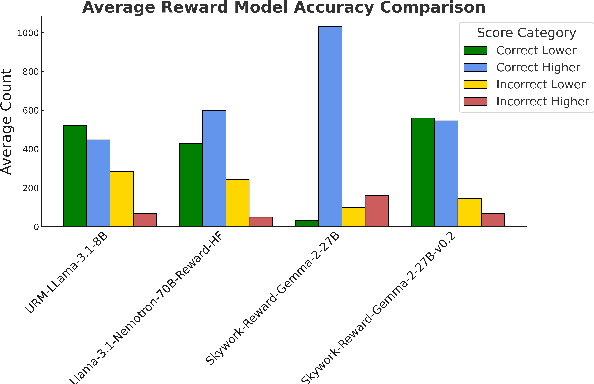
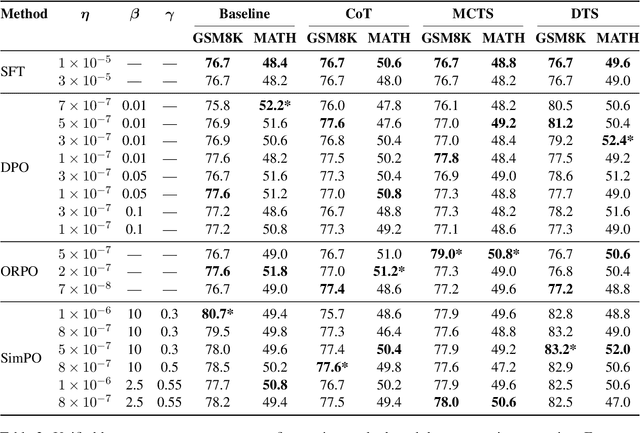
While recent advances in preference learning have enhanced alignment in human feedback, mathematical reasoning remains a persistent challenge. We investigate how data diversification strategies in preference optimization can improve the mathematical reasoning abilities of large language models (LLMs). We evaluate three common data generation methods: temperature sampling, Chain-of-Thought prompting, and Monte Carlo Tree Search (MCTS), and introduce Diversified-ThinkSolve (DTS), a novel structured approach that systematically decomposes problems into diverse reasoning paths. Our results show that with strategically diversified preference data, models can substantially improve mathematical reasoning performance, with the best approach yielding gains of 7.1% on GSM8K and 4.2% on MATH over the base model. Despite its strong performance, DTS incurs only a marginal computational overhead (1.03x) compared to the baseline, while MCTS is nearly five times more costly with lower returns. These findings demonstrate that structured exploration of diverse problem-solving methods creates more effective preference data for mathematical alignment than traditional approaches.
GeoAda: Efficiently Finetune Geometric Diffusion Models with Equivariant Adapters
Jul 02, 2025Geometric diffusion models have shown remarkable success in molecular dynamics and structure generation. However, efficiently fine-tuning them for downstream tasks with varying geometric controls remains underexplored. In this work, we propose an SE(3)-equivariant adapter framework ( GeoAda) that enables flexible and parameter-efficient fine-tuning for controlled generative tasks without modifying the original model architecture. GeoAda introduces a structured adapter design: control signals are first encoded through coupling operators, then processed by a trainable copy of selected pretrained model layers, and finally projected back via decoupling operators followed by an equivariant zero-initialized convolution. By fine-tuning only these lightweight adapter modules, GeoAda preserves the model's geometric consistency while mitigating overfitting and catastrophic forgetting. We theoretically prove that the proposed adapters maintain SE(3)-equivariance, ensuring that the geometric inductive biases of the pretrained diffusion model remain intact during adaptation. We demonstrate the wide applicability of GeoAda across diverse geometric control types, including frame control, global control, subgraph control, and a broad range of application domains such as particle dynamics, molecular dynamics, human motion prediction, and molecule generation. Empirical results show that GeoAda achieves state-of-the-art fine-tuning performance while preserving original task accuracy, whereas other baselines experience significant performance degradation due to overfitting and catastrophic forgetting.
Solving Inequality Proofs with Large Language Models
Jun 09, 2025Inequality proving, crucial across diverse scientific and mathematical fields, tests advanced reasoning skills such as discovering tight bounds and strategic theorem application. This makes it a distinct, demanding frontier for large language models (LLMs), offering insights beyond general mathematical problem-solving. Progress in this area is hampered by existing datasets that are often scarce, synthetic, or rigidly formal. We address this by proposing an informal yet verifiable task formulation, recasting inequality proving into two automatically checkable subtasks: bound estimation and relation prediction. Building on this, we release IneqMath, an expert-curated dataset of Olympiad-level inequalities, including a test set and training corpus enriched with step-wise solutions and theorem annotations. We also develop a novel LLM-as-judge evaluation framework, combining a final-answer judge with four step-wise judges designed to detect common reasoning flaws. A systematic evaluation of 29 leading LLMs on IneqMath reveals a surprising reality: even top models like o1 achieve less than 10% overall accuracy under step-wise scrutiny; this is a drop of up to 65.5% from their accuracy considering only final answer equivalence. This discrepancy exposes fragile deductive chains and a critical gap for current LLMs between merely finding an answer and constructing a rigorous proof. Scaling model size and increasing test-time computation yield limited gains in overall proof correctness. Instead, our findings highlight promising research directions such as theorem-guided reasoning and self-refinement. Code and data are available at https://ineqmath.github.io/.
Cartridges: Lightweight and general-purpose long context representations via self-study
Jun 06, 2025
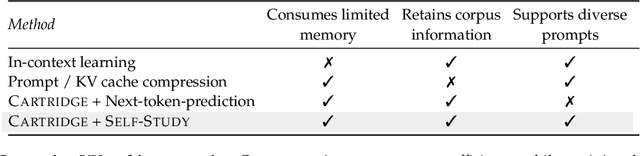
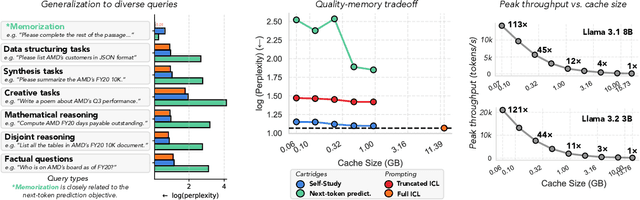
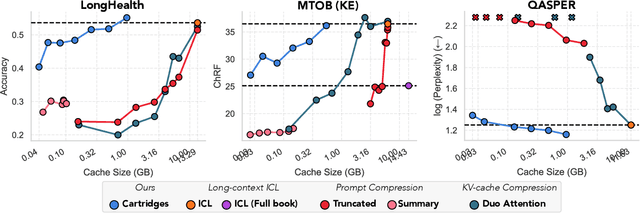
Large language models are often used to answer queries grounded in large text corpora (e.g. codebases, legal documents, or chat histories) by placing the entire corpus in the context window and leveraging in-context learning (ICL). Although current models support contexts of 100K-1M tokens, this setup is costly to serve because the memory consumption of the KV cache scales with input length. We explore an alternative: training a smaller KV cache offline on each corpus. At inference time, we load this trained KV cache, which we call a Cartridge, and decode a response. Critically, the cost of training a Cartridge can be amortized across all the queries referencing the same corpus. However, we find that the naive approach of training the Cartridge with next-token prediction on the corpus is not competitive with ICL. Instead, we propose self-study, a training recipe in which we generate synthetic conversations about the corpus and train the Cartridge with a context-distillation objective. We find that Cartridges trained with self-study replicate the functionality of ICL, while being significantly cheaper to serve. On challenging long-context benchmarks, Cartridges trained with self-study match ICL performance while using 38.6x less memory and enabling 26.4x higher throughput. Self-study also extends the model's effective context length (e.g. from 128k to 484k tokens on MTOB) and surprisingly, leads to Cartridges that can be composed at inference time without retraining.
Inference-time Scaling of Diffusion Models through Classical Search
May 29, 2025Classical search algorithms have long underpinned modern artificial intelligence. In this work, we tackle the challenge of inference-time control in diffusion models -- adapting generated outputs to meet diverse test-time objectives -- using principles from classical search. We propose a general framework that orchestrates local and global search to efficiently navigate the generative space. It employs a theoretically grounded local search via annealed Langevin MCMC and performs compute-efficient global exploration using breadth-first and depth-first tree search. We evaluate our approach on a range of challenging domains, including planning, offline reinforcement learning, and image generation. Across all tasks, we observe significant gains in both performance and efficiency. These results show that classical search provides a principled and practical foundation for inference-time scaling in diffusion models. Project page at diffusion-inference-scaling.github.io.