 Add to Chrome
 Add to Firefox
 Add to Edge
Semi-Supervised Spoken Language Glossification
Jun 12, 2024
Spoken language glossification (SLG) aims to translate the spoken language text into the sign language gloss, i.e., a written record of sign language. In this work, we present a framework named $S$emi-$S$upervised $S$poken $L$anguage $G$lossification ($S^3$LG) for SLG. To tackle the bottleneck of limited parallel data in SLG, our $S^3$LG incorporates large-scale monolingual spoken language text into SLG training. The proposed framework follows the self-training structure that iteratively annotates and learns from pseudo labels. Considering the lexical similarity and syntactic difference between sign language and spoken language, our $S^3$LG adopts both the rule-based heuristic and model-based approach for auto-annotation. During training, we randomly mix these complementary synthetic datasets and mark their differences with a special token. As the synthetic data may be less quality, the $S^3$LG further leverages consistency regularization to reduce the negative impact of noise in the synthetic data. Extensive experiments are conducted on public benchmarks to demonstrate the effectiveness of the $S^3$LG. Our code is available at \url{https://github.com/yaohj11/S3LG}.

StrucTexTv3: An Efficient Vision-Language Model for Text-rich Image Perception, Comprehension, and Beyond
Jun 04, 2024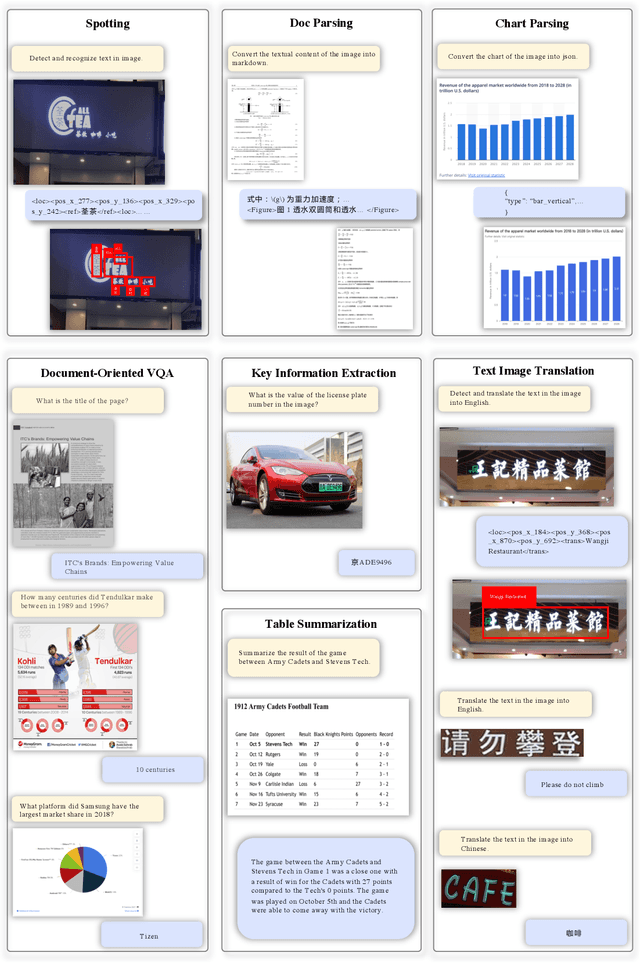
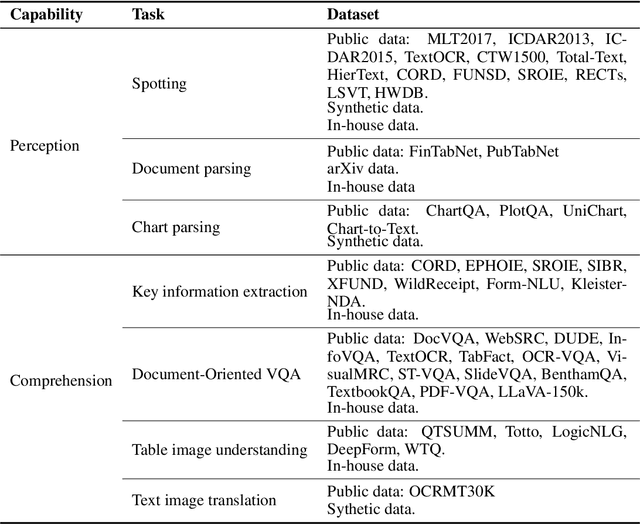
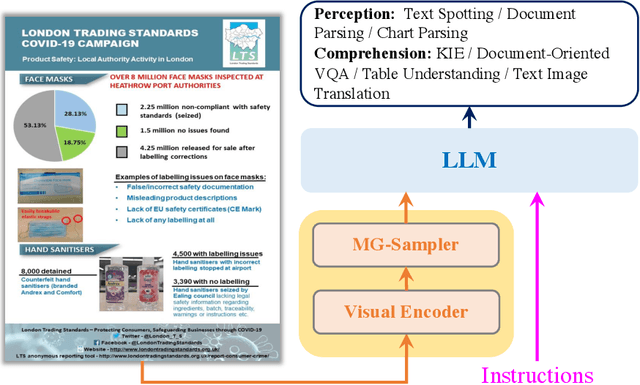
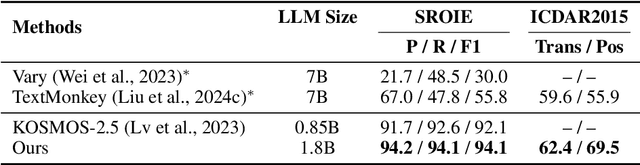
Text-rich images have significant and extensive value, deeply integrated into various aspects of human life. Notably, both visual cues and linguistic symbols in text-rich images play crucial roles in information transmission but are accompanied by diverse challenges. Therefore, the efficient and effective understanding of text-rich images is a crucial litmus test for the capability of Vision-Language Models. We have crafted an efficient vision-language model, StrucTexTv3, tailored to tackle various intelligent tasks for text-rich images. The significant design of StrucTexTv3 is presented in the following aspects: Firstly, we adopt a combination of an effective multi-scale reduced visual transformer and a multi-granularity token sampler (MG-Sampler) as a visual token generator, successfully solving the challenges of high-resolution input and complex representation learning for text-rich images. Secondly, we enhance the perception and comprehension abilities of StrucTexTv3 through instruction learning, seamlessly integrating various text-oriented tasks into a unified framework. Thirdly, we have curated a comprehensive collection of high-quality text-rich images, abbreviated as TIM-30M, encompassing diverse scenarios like incidental scenes, office documents, web pages, and screenshots, thereby improving the robustness of our model. Our method achieved SOTA results in text-rich image perception tasks, and significantly improved performance in comprehension tasks. Among multimodal models with LLM decoder of approximately 1.8B parameters, it stands out as a leader, which also makes the deployment of edge devices feasible. In summary, the StrucTexTv3 model, featuring efficient structural design, outstanding performance, and broad adaptability, offers robust support for diverse intelligent application tasks involving text-rich images, thus exhibiting immense potential for widespread application.
Gradually Vanishing Gap in Prototypical Network for Unsupervised Domain Adaptation
May 28, 2024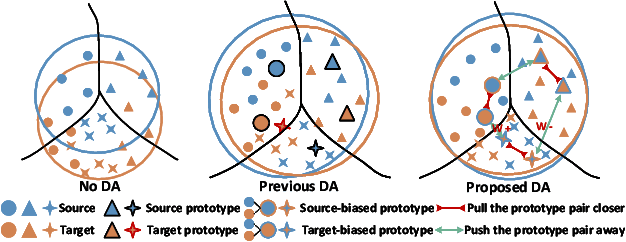
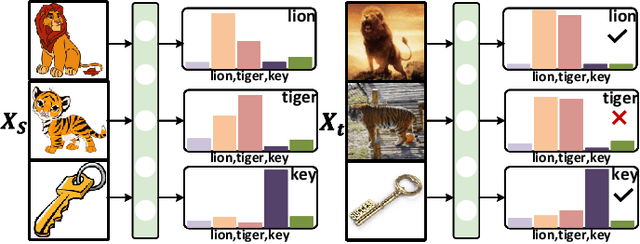
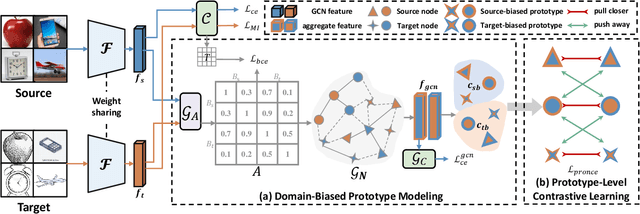

Unsupervised domain adaptation (UDA) is a critical problem for transfer learning, which aims to transfer the semantic information from labeled source domain to unlabeled target domain. Recent advancements in UDA models have demonstrated significant generalization capabilities on the target domain. However, the generalization boundary of UDA models remains unclear. When the domain discrepancy is too large, the model can not preserve the distribution structure, leading to distribution collapse during the alignment. To address this challenge, we propose an efficient UDA framework named Gradually Vanishing Gap in Prototypical Network (GVG-PN), which achieves transfer learning from both global and local perspectives. From the global alignment standpoint, our model generates a domain-biased intermediate domain that helps preserve the distribution structures. By entangling cross-domain features, our model progressively reduces the risk of distribution collapse. However, only relying on global alignment is insufficient to preserve the distribution structure. To further enhance the inner relationships of features, we introduce the local perspective. We utilize the graph convolutional network (GCN) as an intuitive method to explore the internal relationships between features, ensuring the preservation of manifold structures and generating domain-biased prototypes. Additionally, we consider the discriminability of the inner relationships between features. We propose a pro-contrastive loss to enhance the discriminability at the prototype level by separating hard negative pairs. By incorporating both GCN and the pro-contrastive loss, our model fully explores fine-grained semantic relationships. Experiments on several UDA benchmarks validated that the proposed GVG-PN can clearly outperform the SOTA models.
AnyFit: Controllable Virtual Try-on for Any Combination of Attire Across Any Scenario
May 28, 2024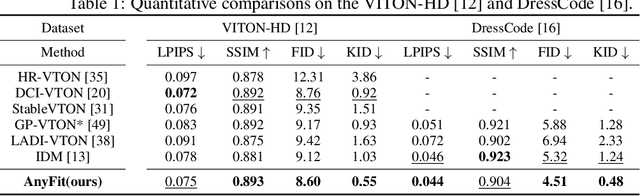
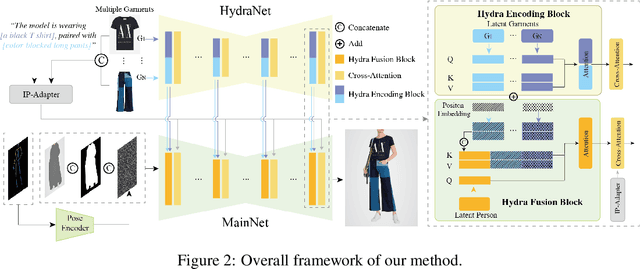
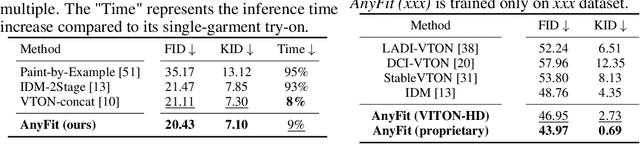

While image-based virtual try-on has made significant strides, emerging approaches still fall short of delivering high-fidelity and robust fitting images across various scenarios, as their models suffer from issues of ill-fitted garment styles and quality degrading during the training process, not to mention the lack of support for various combinations of attire. Therefore, we first propose a lightweight, scalable, operator known as Hydra Block for attire combinations. This is achieved through a parallel attention mechanism that facilitates the feature injection of multiple garments from conditionally encoded branches into the main network. Secondly, to significantly enhance the model's robustness and expressiveness in real-world scenarios, we evolve its potential across diverse settings by synthesizing the residuals of multiple models, as well as implementing a mask region boost strategy to overcome the instability caused by information leakage in existing models. Equipped with the above design, AnyFit surpasses all baselines on high-resolution benchmarks and real-world data by a large gap, excelling in producing well-fitting garments replete with photorealistic and rich details. Furthermore, AnyFit's impressive performance on high-fidelity virtual try-ons in any scenario from any image, paves a new path for future research within the fashion community.
Know in AdVance: Linear-Complexity Forecasting of Ad Campaign Performance with Evolving User Interest
May 17, 2024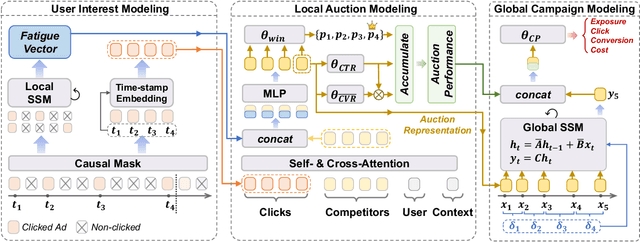
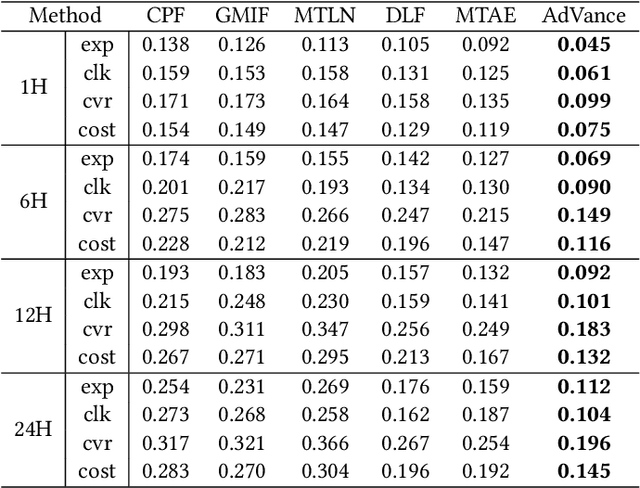
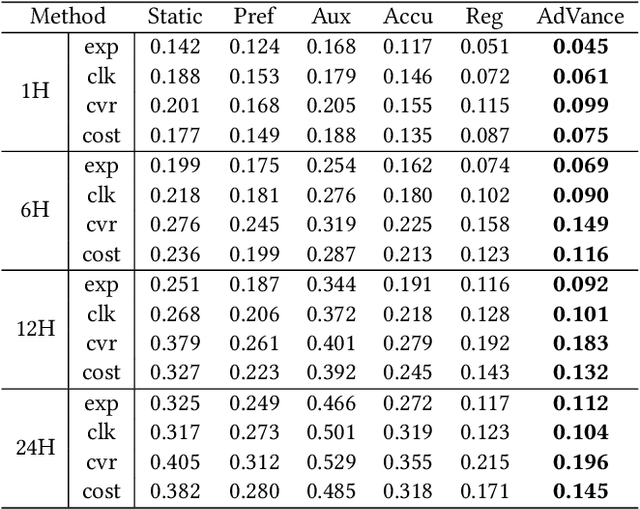
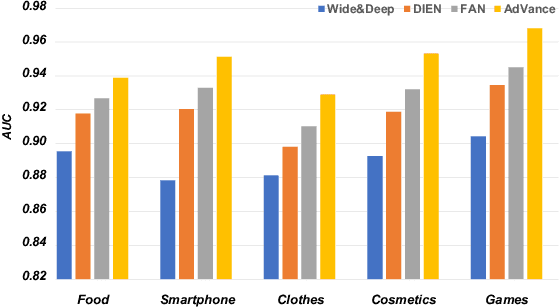
Real-time Bidding (RTB) advertisers wish to \textit{know in advance} the expected cost and yield of ad campaigns to avoid trial-and-error expenses. However, Campaign Performance Forecasting (CPF), a sequence modeling task involving tens of thousands of ad auctions, poses challenges of evolving user interest, auction representation, and long context, making coarse-grained and static-modeling methods sub-optimal. We propose \textit{AdVance}, a time-aware framework that integrates local auction-level and global campaign-level modeling. User preference and fatigue are disentangled using a time-positioned sequence of clicked items and a concise vector of all displayed items. Cross-attention, conditioned on the fatigue vector, captures the dynamics of user interest toward each candidate ad. Bidders compete with each other, presenting a complete graph similar to the self-attention mechanism. Hence, we employ a Transformer Encoder to compress each auction into embedding by solving auxiliary tasks. These sequential embeddings are then summarized by a conditional state space model (SSM) to comprehend long-range dependencies while maintaining global linear complexity. Considering the irregular time intervals between auctions, we make SSM's parameters dependent on the current auction embedding and the time interval. We further condition SSM's global predictions on the accumulation of local results. Extensive evaluations and ablation studies demonstrate its superiority over state-of-the-art methods. AdVance has been deployed on the Tencent Advertising platform, and A/B tests show a remarkable 4.5\% uplift in Average Revenue per User (ARPU).
Large Language Model (LLM) for Telecommunications: A Comprehensive Survey on Principles, Key Techniques, and Opportunities
May 17, 2024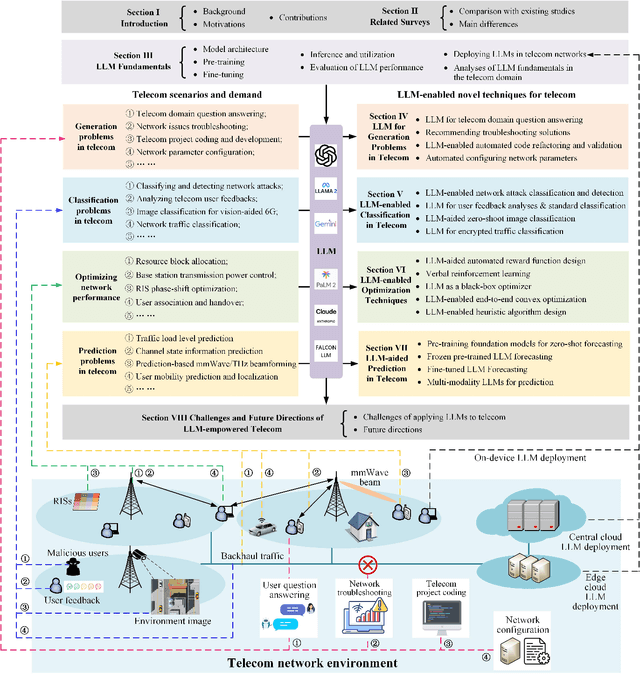


Large language models (LLMs) have received considerable attention recently due to their outstanding comprehension and reasoning capabilities, leading to great progress in many fields. The advancement of LLM techniques also offers promising opportunities to automate many tasks in the telecommunication (telecom) field. After pre-training and fine-tuning, LLMs can perform diverse downstream tasks based on human instructions, paving the way to artificial general intelligence (AGI)-enabled 6G. Given the great potential of LLM technologies, this work aims to provide a comprehensive overview of LLM-enabled telecom networks. In particular, we first present LLM fundamentals, including model architecture, pre-training, fine-tuning, inference and utilization, model evaluation, and telecom deployment. Then, we introduce LLM-enabled key techniques and telecom applications in terms of generation, classification, optimization, and prediction problems. Specifically, the LLM-enabled generation applications include telecom domain knowledge, code, and network configuration generation. After that, the LLM-based classification applications involve network security, text, image, and traffic classification problems. Moreover, multiple LLM-enabled optimization techniques are introduced, such as automated reward function design for reinforcement learning and verbal reinforcement learning. Furthermore, for LLM-aided prediction problems, we discussed time-series prediction models and multi-modality prediction problems for telecom. Finally, we highlight the challenges and identify the future directions of LLM-enabled telecom networks.
Collage: Light-Weight Low-Precision Strategy for LLM Training
May 06, 2024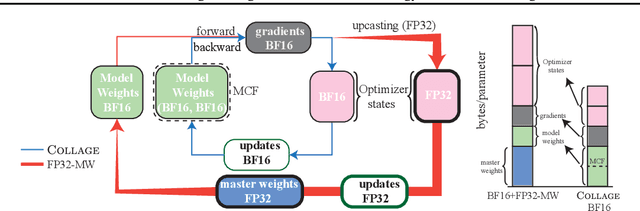
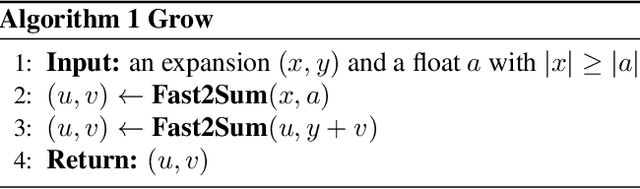
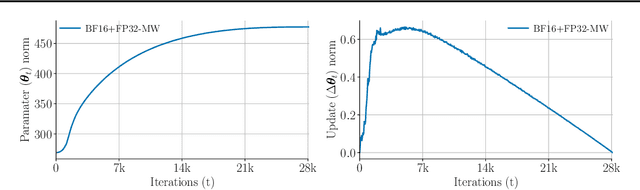
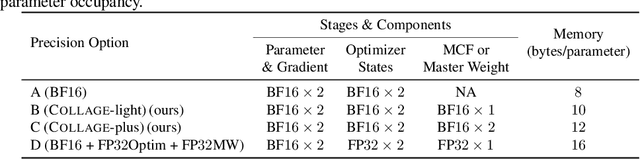
Large models training is plagued by the intense compute cost and limited hardware memory. A practical solution is low-precision representation but is troubled by loss in numerical accuracy and unstable training rendering the model less useful. We argue that low-precision floating points can perform well provided the error is properly compensated at the critical locations in the training process. We propose Collage which utilizes multi-component float representation in low-precision to accurately perform operations with numerical errors accounted. To understand the impact of imprecision to training, we propose a simple and novel metric which tracks the lost information during training as well as differentiates various precision strategies. Our method works with commonly used low-precision such as half-precision ($16$-bit floating points) and can be naturally extended to work with even lower precision such as $8$-bit. Experimental results show that pre-training using Collage removes the requirement of using $32$-bit floating-point copies of the model and attains similar/better training performance compared to $(16, 32)$-bit mixed-precision strategy, with up to $3.7\times$ speedup and $\sim 15\%$ to $23\%$ less memory usage in practice.
LASER: Tuning-Free LLM-Driven Attention Control for Efficient Text-conditioned Image-to-Animation
Apr 23, 2024Revolutionary advancements in text-to-image models have unlocked new dimensions for sophisticated content creation, e.g., text-conditioned image editing, allowing us to edit the diverse images that convey highly complex visual concepts according to the textual guidance. Despite being promising, existing methods focus on texture- or non-rigid-based visual manipulation, which struggles to produce the fine-grained animation of smooth text-conditioned image morphing without fine-tuning, i.e., due to their highly unstructured latent space. In this paper, we introduce a tuning-free LLM-driven attention control framework, encapsulated by the progressive process of LLM planning, prompt-Aware editing, StablE animation geneRation, abbreviated as LASER. LASER employs a large language model (LLM) to refine coarse descriptions into detailed prompts, guiding pre-trained text-to-image models for subsequent image generation. We manipulate the model's spatial features and self-attention mechanisms to maintain animation integrity and enable seamless morphing directly from text prompts, eliminating the need for additional fine-tuning or annotations. Our meticulous control over spatial features and self-attention ensures structural consistency in the images. This paper presents a novel framework integrating LLMs with text-to-image models to create high-quality animations from a single text input. We also propose a Text-conditioned Image-to-Animation Benchmark to validate the effectiveness and efficacy of LASER. Extensive experiments demonstrate that LASER produces impressive, consistent, and efficient results in animation generation, positioning it as a powerful tool for advanced digital content creation.
The Devil is in the Few Shots: Iterative Visual Knowledge Completion for Few-shot Learning
Apr 19, 2024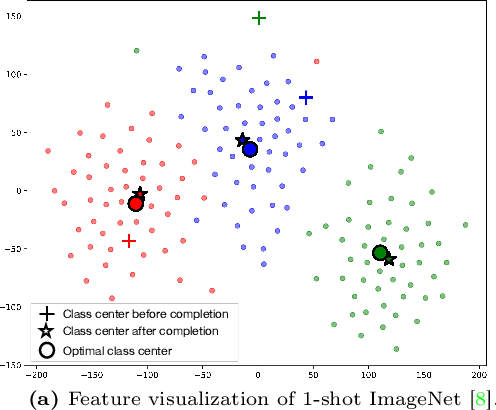
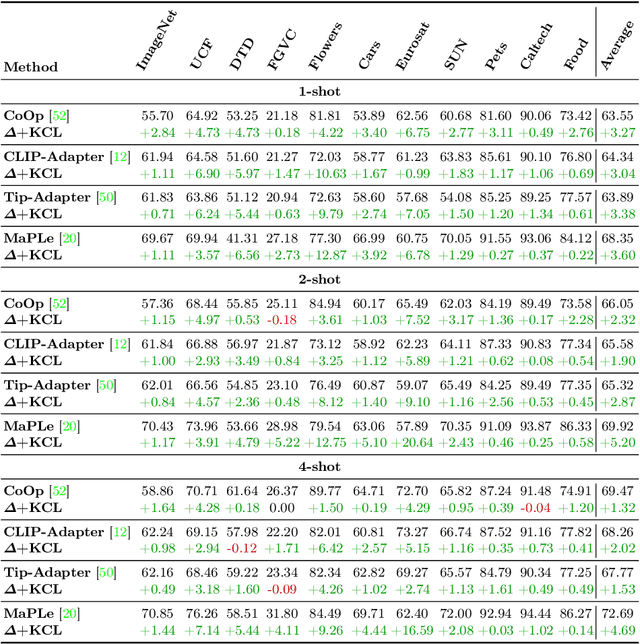
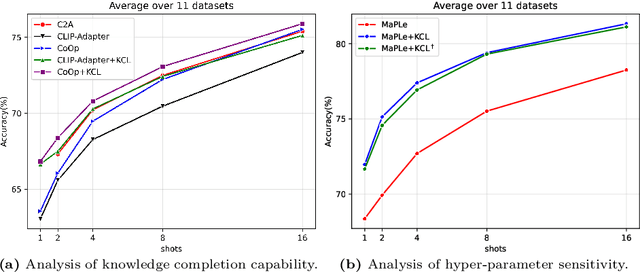
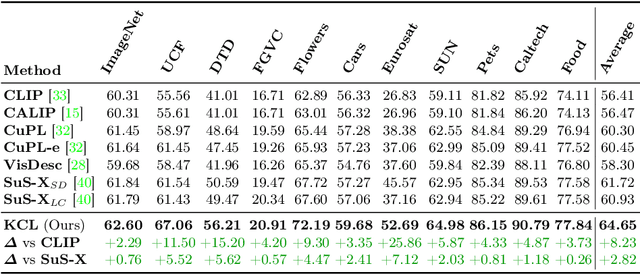
Contrastive Language-Image Pre-training (CLIP) has shown powerful zero-shot learning performance. Few-shot learning aims to further enhance the transfer capability of CLIP by giving few images in each class, aka 'few shots'. Most existing methods either implicitly learn from the few shots by incorporating learnable prompts or adapters, or explicitly embed them in a cache model for inference. However, the narrow distribution of few shots often contains incomplete class information, leading to biased visual knowledge with high risk of misclassification. To tackle this problem, recent methods propose to supplement visual knowledge by generative models or extra databases, which can be costly and time-consuming. In this paper, we propose an Iterative Visual Knowledge CompLetion (KCL) method to complement visual knowledge by properly taking advantages of unlabeled samples without access to any auxiliary or synthetic data. Specifically, KCL first measures the similarities between unlabeled samples and each category. Then, the samples with top confidence to each category is selected and collected by a designed confidence criterion. Finally, the collected samples are treated as labeled ones and added to few shots to jointly re-estimate the remaining unlabeled ones. The above procedures will be repeated for a certain number of iterations with more and more samples being collected until convergence, ensuring a progressive and robust knowledge completion process. Extensive experiments on 11 benchmark datasets demonstrate the effectiveness and efficiency of KCL as a plug-and-play module under both few-shot and zero-shot learning settings. Code is available at https://github.com/Mark-Sky/KCL.
MolCRAFT: Structure-Based Drug Design in Continuous Parameter Space
Apr 18, 2024Generative models for structure-based drug design (SBDD) have shown promising results in recent years. Existing works mainly focus on how to generate molecules with higher binding affinity, ignoring the feasibility prerequisites for generated 3D poses and resulting in false positives. We conduct thorough studies on key factors of ill-conformational problems when applying autoregressive methods and diffusion to SBDD, including mode collapse and hybrid continuous-discrete space. In this paper, we introduce \ours, the first SBDD model that operates in the continuous parameter space, together with a novel noise reduced sampling strategy. Empirical results show that our model consistently achieves superior performance in binding affinity with more stable 3D structure, demonstrating our ability to accurately model interatomic interactions. To our best knowledge, MolCRAFT is the first to achieve reference-level Vina Scores (-6.59 kcal/mol), outperforming other strong baselines by a wide margin (-0.84 kcal/mol). Code is available at https://github.com/AlgoMole/MolCRAFT.