 Add to Chrome
 Add to Firefox
 Add to Edge
A review on vision-based motion estimation
Jul 19, 2024
Compared to contact sensors-based motion measurement, vision-based motion measurement has advantages of low cost and high efficiency and have been under active development in the past decades. This paper provides a review on existing motion measurement methods. In addition to the development of each branch of vision-based motion measurement methods, this paper also discussed the advantages and disadvantages of existing methods. Based on this discussion, it was identified that existing methods have a common limitation in optimally balancing accuracy and robustness. To address issue, we developed the Gaussian kernel-based motion measurement method. Preliminary study shows that the developed method can achieve high accuracy on simple synthesized images.

Exploring the Causality of End-to-End Autonomous Driving
Jul 09, 2024
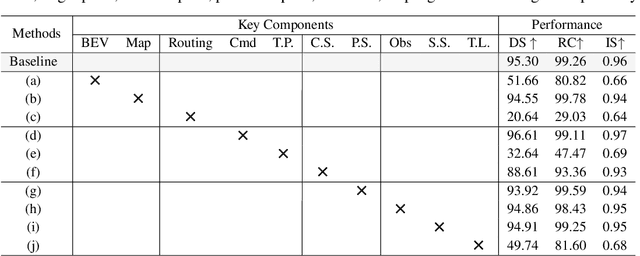

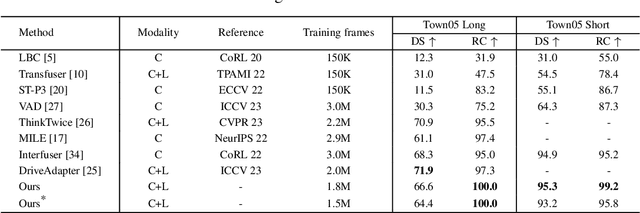
Deep learning-based models are widely deployed in autonomous driving areas, especially the increasingly noticed end-to-end solutions. However, the black-box property of these models raises concerns about their trustworthiness and safety for autonomous driving, and how to debug the causality has become a pressing concern. Despite some existing research on the explainability of autonomous driving, there is currently no systematic solution to help researchers debug and identify the key factors that lead to the final predicted action of end-to-end autonomous driving. In this work, we propose a comprehensive approach to explore and analyze the causality of end-to-end autonomous driving. First, we validate the essential information that the final planning depends on by using controlled variables and counterfactual interventions for qualitative analysis. Then, we quantitatively assess the factors influencing model decisions by visualizing and statistically analyzing the response of key model inputs. Finally, based on the comprehensive study of the multi-factorial end-to-end autonomous driving system, we have developed a strong baseline and a tool for exploring causality in the close-loop simulator CARLA. It leverages the essential input sources to obtain a well-designed model, resulting in highly competitive capabilities. As far as we know, our work is the first to unveil the mystery of end-to-end autonomous driving and turn the black box into a white one. Thorough close-loop experiments demonstrate that our method can be applied to end-to-end autonomous driving solutions for causality debugging. Code will be available at https://github.com/bdvisl/DriveInsight.
BEVWorld: A Multimodal World Model for Autonomous Driving via Unified BEV Latent Space
Jul 08, 2024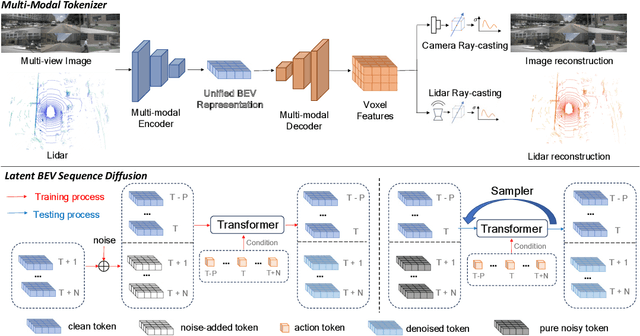
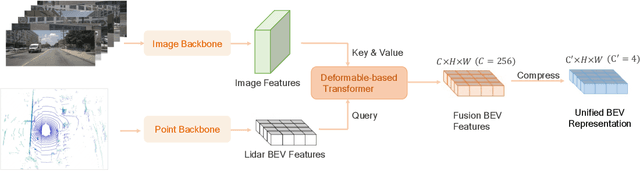

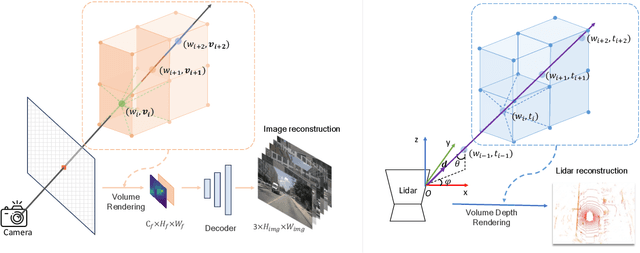
World models are receiving increasing attention in autonomous driving for their ability to predict potential future scenarios. In this paper, we present BEVWorld, a novel approach that tokenizes multimodal sensor inputs into a unified and compact Bird's Eye View (BEV) latent space for environment modeling. The world model consists of two parts: the multi-modal tokenizer and the latent BEV sequence diffusion model. The multi-modal tokenizer first encodes multi-modality information and the decoder is able to reconstruct the latent BEV tokens into LiDAR and image observations by ray-casting rendering in a self-supervised manner. Then the latent BEV sequence diffusion model predicts future scenarios given action tokens as conditions. Experiments demonstrate the effectiveness of BEVWorld in autonomous driving tasks, showcasing its capability in generating future scenes and benefiting downstream tasks such as perception and motion prediction. Code will be available at https://github.com/zympsyche/BevWorld.
Efficient Surgical Tool Recognition via HMM-Stabilized Deep Learning
Apr 07, 2024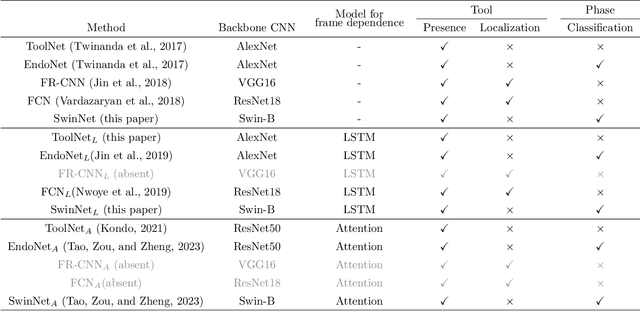
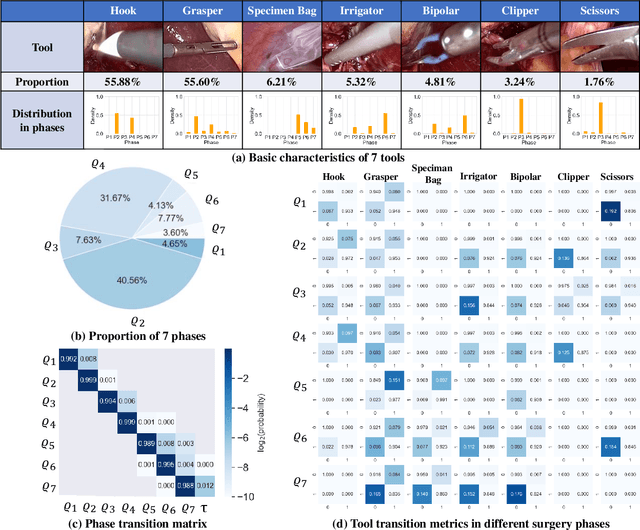
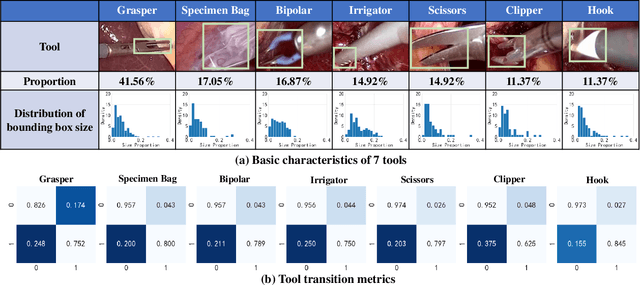
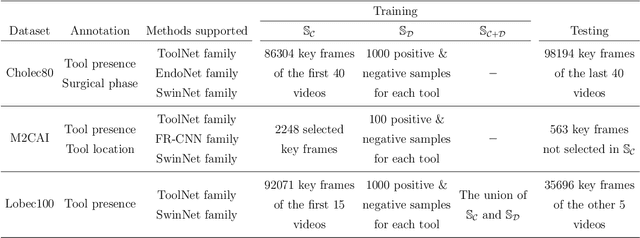
Recognizing various surgical tools, actions and phases from surgery videos is an important problem in computer vision with exciting clinical applications. Existing deep-learning-based methods for this problem either process each surgical video as a series of independent images without considering their dependence, or rely on complicated deep learning models to count for dependence of video frames. In this study, we revealed from exploratory data analysis that surgical videos enjoy relatively simple semantic structure, where the presence of surgical phases and tools can be well modeled by a compact hidden Markov model (HMM). Based on this observation, we propose an HMM-stabilized deep learning method for tool presence detection. A wide range of experiments confirm that the proposed approaches achieve better performance with lower training and running costs, and support more flexible ways to construct and utilize training data in scenarios where not all surgery videos of interest are extensively labelled. These results suggest that popular deep learning approaches with over-complicated model structures may suffer from inefficient utilization of data, and integrating ingredients of deep learning and statistical learning wisely may lead to more powerful algorithms that enjoy competitive performance, transparent interpretation and convenient model training simultaneously.
BASES: Large-scale Web Search User Simulation with Large Language Model based Agents
Feb 27, 2024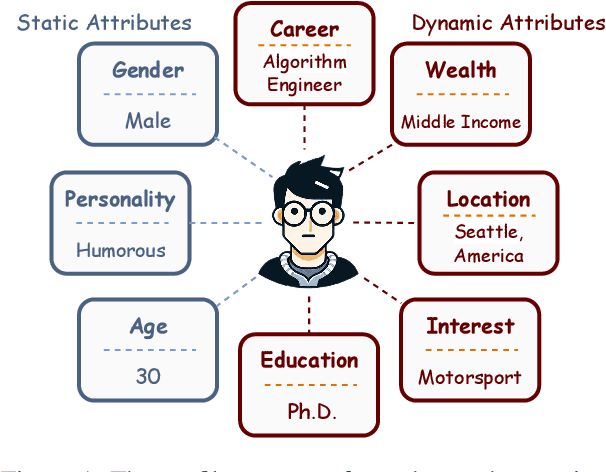
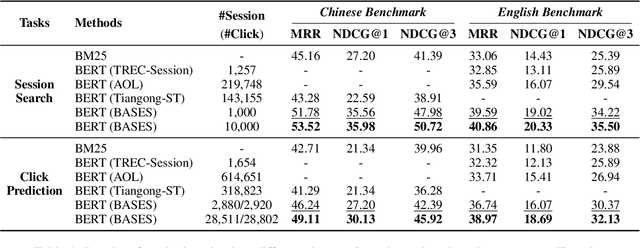
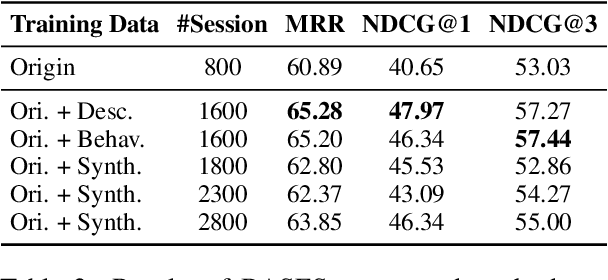
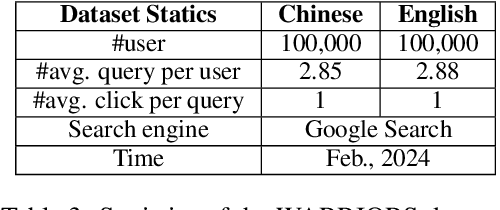
Due to the excellent capacities of large language models (LLMs), it becomes feasible to develop LLM-based agents for reliable user simulation. Considering the scarcity and limit (e.g., privacy issues) of real user data, in this paper, we conduct large-scale user simulation for web search, to improve the analysis and modeling of user search behavior. Specially, we propose BASES, a novel user simulation framework with LLM-based agents, designed to facilitate comprehensive simulations of web search user behaviors. Our simulation framework can generate unique user profiles at scale, which subsequently leads to diverse search behaviors. To demonstrate the effectiveness of BASES, we conduct evaluation experiments based on two human benchmarks in both Chinese and English, demonstrating that BASES can effectively simulate large-scale human-like search behaviors. To further accommodate the research on web search, we develop WARRIORS, a new large-scale dataset encompassing web search user behaviors, including both Chinese and English versions, which can greatly bolster research in the field of information retrieval. Our code and data will be publicly released soon.
Towards Boosting Many-to-Many Multilingual Machine Translation with Large Language Models
Jan 11, 2024The training paradigm for machine translation has gradually shifted, from learning neural machine translation (NMT) models with extensive parallel corpora to instruction finetuning on pretrained multilingual large language models (LLMs) with high-quality translation pairs. In this paper, we focus on boosting the many-to-many multilingual translation performance of LLMs with an emphasis on zero-shot translation directions. We demonstrate that prompt strategies adopted during instruction finetuning are crucial to zero-shot translation performance and introduce a cross-lingual consistency regularization, XConST, to bridge the representation gap among different languages and improve zero-shot translation performance. XConST is not a new method, but a version of CrossConST (Gao et al., 2023a) adapted for multilingual finetuning on LLMs with translation instructions. Experimental results on ALMA (Xu et al., 2023) and LLaMA-2 (Touvron et al., 2023) show that our approach consistently improves translation performance. Our implementations are available at https://github.com/gpengzhi/CrossConST-LLM.
Joint Diffusion: Mutual Consistency-Driven Diffusion Model for PET-MRI Co-Reconstruction
Nov 24, 2023Positron Emission Tomography and Magnetic Resonance Imaging (PET-MRI) systems can obtain functional and anatomical scans. PET suffers from a low signal-to-noise ratio. Meanwhile, the k-space data acquisition process in MRI is time-consuming. The study aims to accelerate MRI and enhance PET image quality. Conventional approaches involve the separate reconstruction of each modality within PET-MRI systems. However, there exists complementary information among multi-modal images. The complementary information can contribute to image reconstruction. In this study, we propose a novel PET-MRI joint reconstruction model employing a mutual consistency-driven diffusion mode, namely MC-Diffusion. MC-Diffusion learns the joint probability distribution of PET and MRI for utilizing complementary information. We conducted a series of contrast experiments about LPLS, Joint ISAT-net and MC-Diffusion by the ADNI dataset. The results underscore the qualitative and quantitative improvements achieved by MC-Diffusion, surpassing the state-of-the-art method.
A Two-Stage Generative Model with CycleGAN and Joint Diffusion for MRI-based Brain Tumor Detection
Nov 06, 2023Accurate detection and segmentation of brain tumors is critical for medical diagnosis. However, current supervised learning methods require extensively annotated images and the state-of-the-art generative models used in unsupervised methods often have limitations in covering the whole data distribution. In this paper, we propose a novel framework Two-Stage Generative Model (TSGM) that combines Cycle Generative Adversarial Network (CycleGAN) and Variance Exploding stochastic differential equation using joint probability (VE-JP) to improve brain tumor detection and segmentation. The CycleGAN is trained on unpaired data to generate abnormal images from healthy images as data prior. Then VE-JP is implemented to reconstruct healthy images using synthetic paired abnormal images as a guide, which alters only pathological regions but not regions of healthy. Notably, our method directly learned the joint probability distribution for conditional generation. The residual between input and reconstructed images suggests the abnormalities and a thresholding method is subsequently applied to obtain segmentation results. Furthermore, the multimodal results are weighted with different weights to improve the segmentation accuracy further. We validated our method on three datasets, and compared with other unsupervised methods for anomaly detection and segmentation. The DSC score of 0.8590 in BraTs2020 dataset, 0.6226 in ITCS dataset and 0.7403 in In-house dataset show that our method achieves better segmentation performance and has better generalization.
Score-based Diffusion Models With Self-supervised Learning For Accelerated 3D Multi-contrast Cardiac Magnetic Resonance Imaging
Oct 07, 2023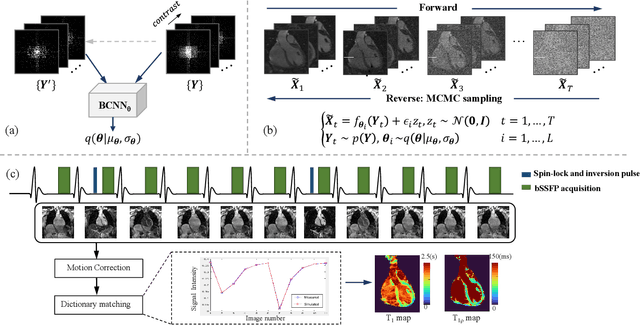
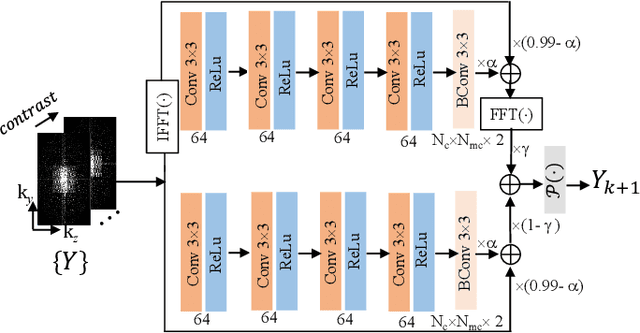
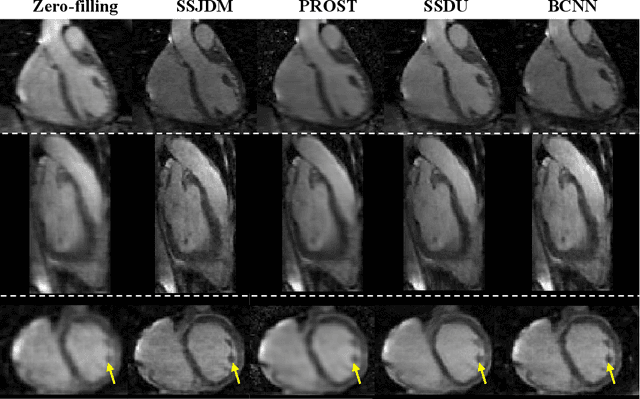
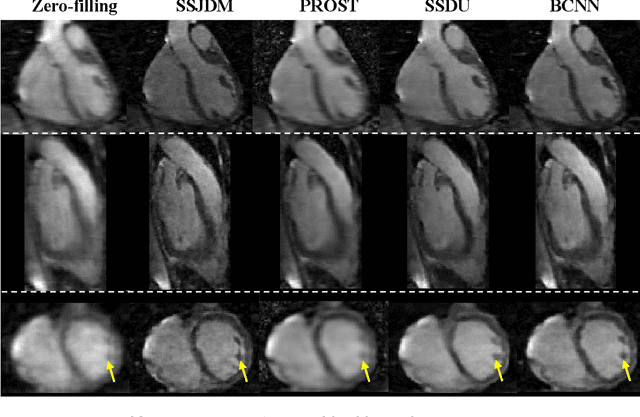
Long scan time significantly hinders the widespread applications of three-dimensional multi-contrast cardiac magnetic resonance (3D-MC-CMR) imaging. This study aims to accelerate 3D-MC-CMR acquisition by a novel method based on score-based diffusion models with self-supervised learning. Specifically, we first establish a mapping between the undersampled k-space measurements and the MR images, utilizing a self-supervised Bayesian reconstruction network. Secondly, we develop a joint score-based diffusion model on 3D-MC-CMR images to capture their inherent distribution. The 3D-MC-CMR images are finally reconstructed using the conditioned Langenvin Markov chain Monte Carlo sampling. This approach enables accurate reconstruction without fully sampled training data. Its performance was tested on the dataset acquired by a 3D joint myocardial T1 and T1rho mapping sequence. The T1 and T1rho maps were estimated via a dictionary matching method from the reconstructed images. Experimental results show that the proposed method outperforms traditional compressed sensing and existing self-supervised deep learning MRI reconstruction methods. It also achieves high quality T1 and T1rho parametric maps close to the reference maps obtained by traditional mapping sequences, even at a high acceleration rate of 14.
GLS-CSC: A Simple but Effective Strategy to Mitigate Chinese STM Models' Over-Reliance on Superficial Clue
Sep 08, 2023Pre-trained models have achieved success in Chinese Short Text Matching (STM) tasks, but they often rely on superficial clues, leading to a lack of robust predictions. To address this issue, it is crucial to analyze and mitigate the influence of superficial clues on STM models. Our study aims to investigate their over-reliance on the edit distance feature, commonly used to measure the semantic similarity of Chinese text pairs, which can be considered a superficial clue. To mitigate STM models' over-reliance on superficial clues, we propose a novel resampling training strategy called Gradually Learn Samples Containing Superficial Clue (GLS-CSC). Through comprehensive evaluations of In-Domain (I.D.), Robustness (Rob.), and Out-Of-Domain (O.O.D.) test sets, we demonstrate that GLS-CSC outperforms existing methods in terms of enhancing the robustness and generalization of Chinese STM models. Moreover, we conduct a detailed analysis of existing methods and reveal their commonality.