 Add to Chrome
 Add to Firefox
 Add to Edge
Iterative Experience Refinement of Software-Developing Agents
May 07, 2024
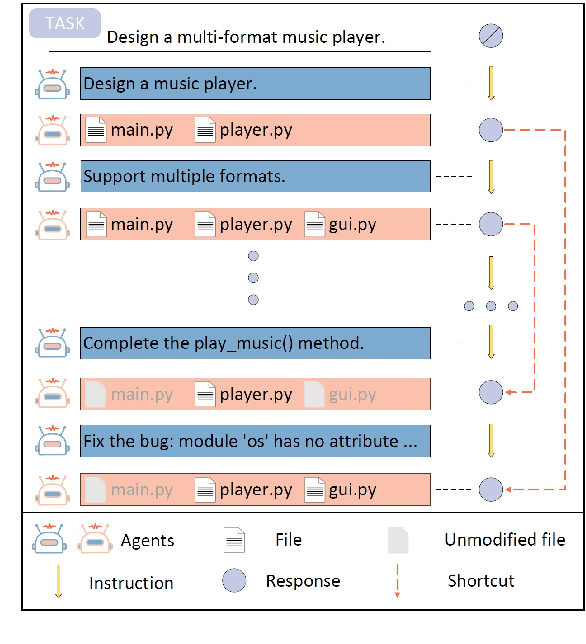
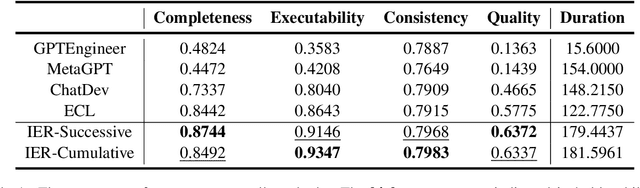
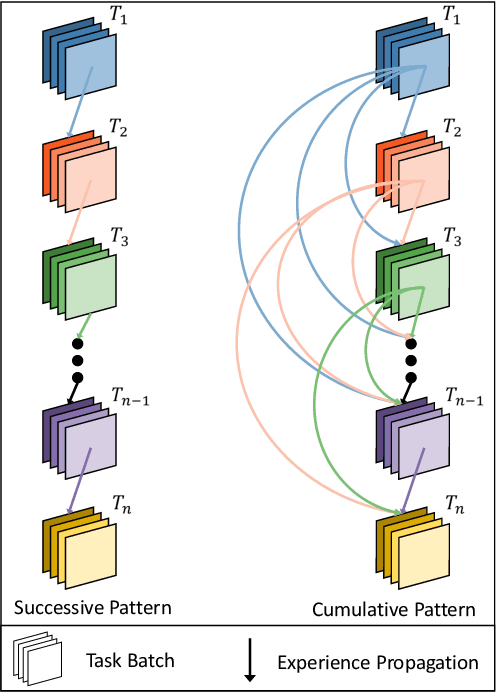
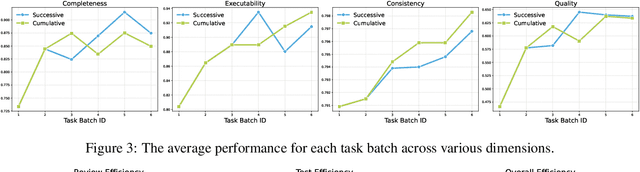
Autonomous agents powered by large language models (LLMs) show significant potential for achieving high autonomy in various scenarios such as software development. Recent research has shown that LLM agents can leverage past experiences to reduce errors and enhance efficiency. However, the static experience paradigm, reliant on a fixed collection of past experiences acquired heuristically, lacks iterative refinement and thus hampers agents' adaptability. In this paper, we introduce the Iterative Experience Refinement framework, enabling LLM agents to refine experiences iteratively during task execution. We propose two fundamental patterns: the successive pattern, refining based on nearest experiences within a task batch, and the cumulative pattern, acquiring experiences across all previous task batches. Augmented with our heuristic experience elimination, the method prioritizes high-quality and frequently-used experiences, effectively managing the experience space and enhancing efficiency. Extensive experiments show that while the successive pattern may yield superior results, the cumulative pattern provides more stable performance. Moreover, experience elimination facilitates achieving better performance using just 11.54% of a high-quality subset.

UniFS: Universal Few-shot Instance Perception with Point Representations
Apr 30, 2024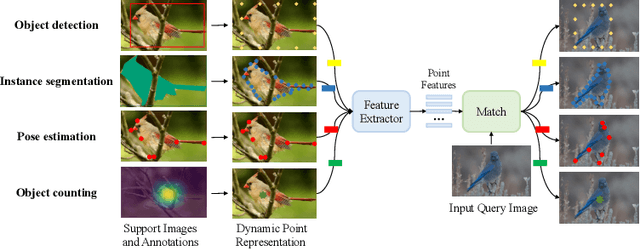
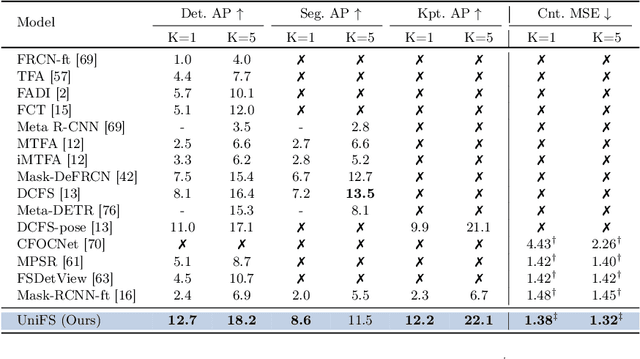
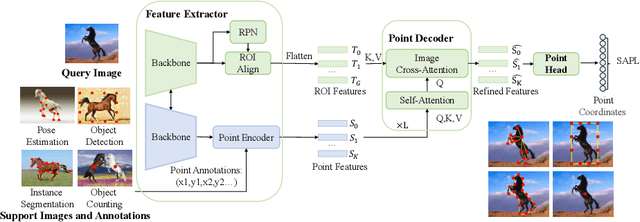
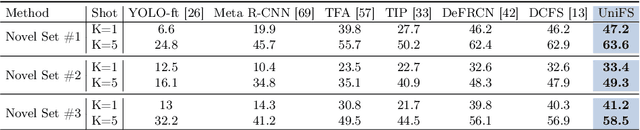
Instance perception tasks (object detection, instance segmentation, pose estimation, counting) play a key role in industrial applications of visual models. As supervised learning methods suffer from high labeling cost, few-shot learning methods which effectively learn from a limited number of labeled examples are desired. Existing few-shot learning methods primarily focus on a restricted set of tasks, presumably due to the challenges involved in designing a generic model capable of representing diverse tasks in a unified manner. In this paper, we propose UniFS, a universal few-shot instance perception model that unifies a wide range of instance perception tasks by reformulating them into a dynamic point representation learning framework. Additionally, we propose Structure-Aware Point Learning (SAPL) to exploit the higher-order structural relationship among points to further enhance representation learning. Our approach makes minimal assumptions about the tasks, yet it achieves competitive results compared to highly specialized and well optimized specialist models. Codes will be released soon.
DevBench: A Comprehensive Benchmark for Software Development
Mar 15, 2024
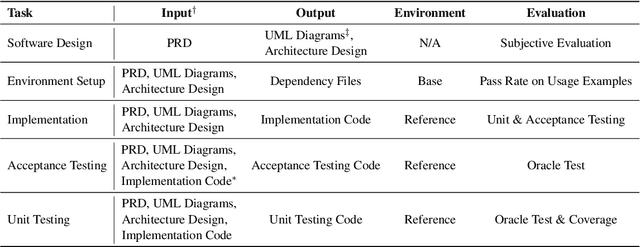
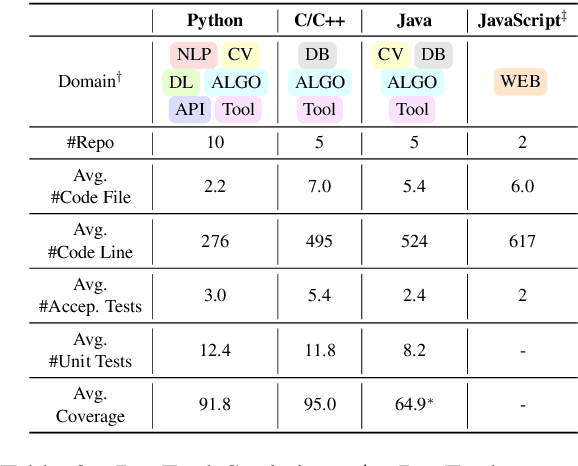

Recent advancements in large language models (LLMs) have significantly enhanced their coding capabilities. However, existing benchmarks predominantly focused on simplified or isolated aspects of programming, such as single-file code generation or repository issue debugging, falling short of measuring the full spectrum of challenges raised by real-world programming activities. To this end, we propose DevBench, a comprehensive benchmark that evaluates LLMs across various stages of the software development lifecycle, including software design, environment setup, implementation, acceptance testing, and unit testing. DevBench features a wide range of programming languages and domains, high-quality data collection, and carefully designed and verified metrics for each task. Empirical studies show that current LLMs, including GPT-4-Turbo, fail to solve the challenges presented within DevBench. Analyses reveal that models struggle with understanding the complex structures in the repository, managing the compilation process, and grasping advanced programming concepts. Our findings offer actionable insights for the future development of LLMs toward real-world programming applications. Our benchmark is available at https://github.com/open-compass/DevBench
LocalMamba: Visual State Space Model with Windowed Selective Scan
Mar 14, 2024


Recent advancements in state space models, notably Mamba, have demonstrated significant progress in modeling long sequences for tasks like language understanding. Yet, their application in vision tasks has not markedly surpassed the performance of traditional Convolutional Neural Networks (CNNs) and Vision Transformers (ViTs). This paper posits that the key to enhancing Vision Mamba (ViM) lies in optimizing scan directions for sequence modeling. Traditional ViM approaches, which flatten spatial tokens, overlook the preservation of local 2D dependencies, thereby elongating the distance between adjacent tokens. We introduce a novel local scanning strategy that divides images into distinct windows, effectively capturing local dependencies while maintaining a global perspective. Additionally, acknowledging the varying preferences for scan patterns across different network layers, we propose a dynamic method to independently search for the optimal scan choices for each layer, substantially improving performance. Extensive experiments across both plain and hierarchical models underscore our approach's superiority in effectively capturing image representations. For example, our model significantly outperforms Vim-Ti by 3.1% on ImageNet with the same 1.5G FLOPs. Code is available at: https://github.com/hunto/LocalMamba.
DEMOS: Dynamic Environment Motion Synthesis in 3D Scenes via Local Spherical-BEV Perception
Mar 04, 2024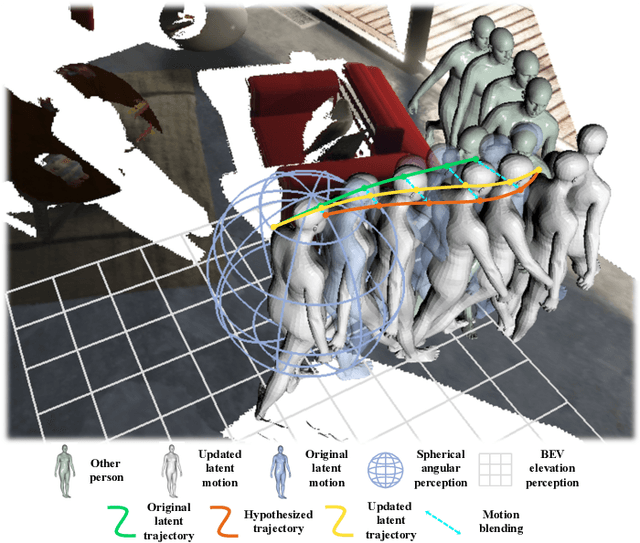
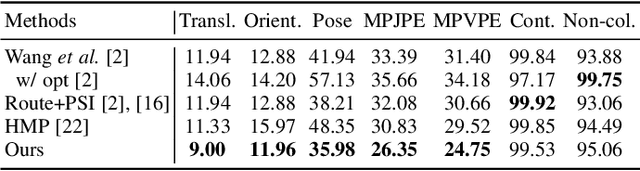

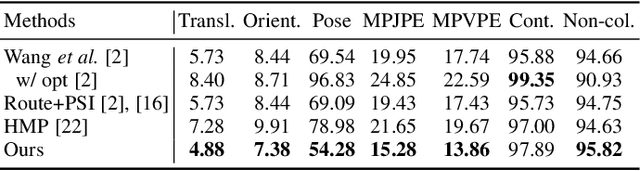
Motion synthesis in real-world 3D scenes has recently attracted much attention. However, the static environment assumption made by most current methods usually cannot be satisfied especially for real-time motion synthesis in scanned point cloud scenes, if multiple dynamic objects exist, e.g., moving persons or vehicles. To handle this problem, we propose the first Dynamic Environment MOtion Synthesis framework (DEMOS) to predict future motion instantly according to the current scene, and use it to dynamically update the latent motion for final motion synthesis. Concretely, we propose a Spherical-BEV perception method to extract local scene features that are specifically designed for instant scene-aware motion prediction. Then, we design a time-variant motion blending to fuse the new predicted motions into the latent motion, and the final motion is derived from the updated latent motions, benefitting both from motion-prior and iterative methods. We unify the data format of two prevailing datasets, PROX and GTA-IM, and take them for motion synthesis evaluation in 3D scenes. We also assess the effectiveness of the proposed method in dynamic environments from GTA-IM and Semantic3D to check the responsiveness. The results show our method outperforms previous works significantly and has great performance in handling dynamic environments.
Towards Tracing Trustworthiness Dynamics: Revisiting Pre-training Period of Large Language Models
Feb 29, 2024Ensuring the trustworthiness of large language models (LLMs) is crucial. Most studies concentrate on fully pre-trained LLMs to better understand and improve LLMs' trustworthiness. In this paper, to reveal the untapped potential of pre-training, we pioneer the exploration of LLMs' trustworthiness during this period, focusing on five key dimensions: reliability, privacy, toxicity, fairness, and robustness. To begin with, we apply linear probing to LLMs. The high probing accuracy suggests that \textit{LLMs in early pre-training can already distinguish concepts in each trustworthiness dimension}. Therefore, to further uncover the hidden possibilities of pre-training, we extract steering vectors from a LLM's pre-training checkpoints to enhance the LLM's trustworthiness. Finally, inspired by~\citet{choi2023understanding} that mutual information estimation is bounded by linear probing accuracy, we also probe LLMs with mutual information to investigate the dynamics of trustworthiness during pre-training. We are the first to observe a similar two-phase phenomenon: fitting and compression~\citep{shwartz2017opening}. This research provides an initial exploration of trustworthiness modeling during LLM pre-training, seeking to unveil new insights and spur further developments in the field. We will make our code publicly accessible at \url{https://github.com/ChnQ/TracingLLM}.
Beyond Natural Language: LLMs Leveraging Alternative Formats for Enhanced Reasoning and Communication
Feb 28, 2024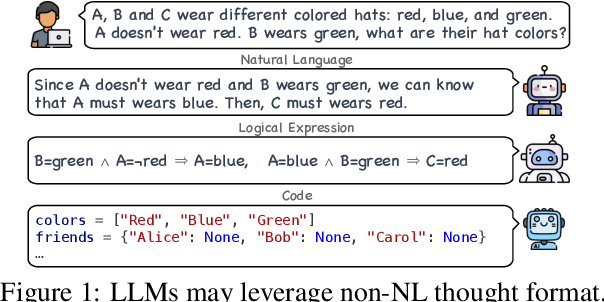
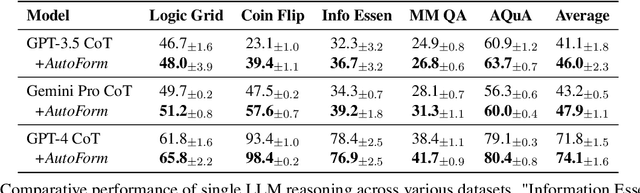
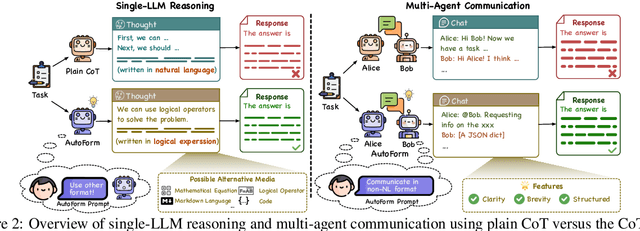
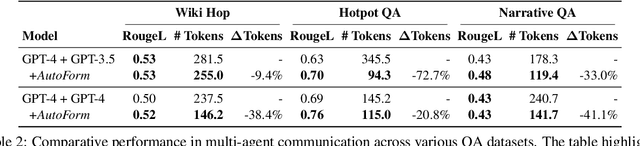
Natural language (NL) has long been the predominant format for human cognition and communication, and by extension, has been similarly pivotal in the development and application of Large Language Models (LLMs). Yet, besides NL, LLMs have seen various non-NL formats during pre-training, such as code and logical expression. NL's status as the optimal format for LLMs, particularly in single-LLM reasoning and multi-agent communication, has not been thoroughly examined. In this work, we challenge the default use of NL by exploring the utility of non-NL formats in these contexts. We show that allowing LLMs to autonomously select the most suitable format before reasoning or communicating leads to a 3.3 to 5.7\% improvement in reasoning efficiency for different LLMs, and up to a 72.7\% reduction in token usage in multi-agent communication, all while maintaining communicative effectiveness. Our comprehensive analysis further reveals that LLMs can devise a format from limited task instructions and that the devised format is effectively transferable across different LLMs. Intriguingly, the structured communication format decided by LLMs exhibits notable parallels with established agent communication languages, suggesting a natural evolution towards efficient, structured communication in agent communication. Our code is released at \url{https://github.com/thunlp/AutoForm}.
AutoMMLab: Automatically Generating Deployable Models from Language Instructions for Computer Vision Tasks
Feb 23, 2024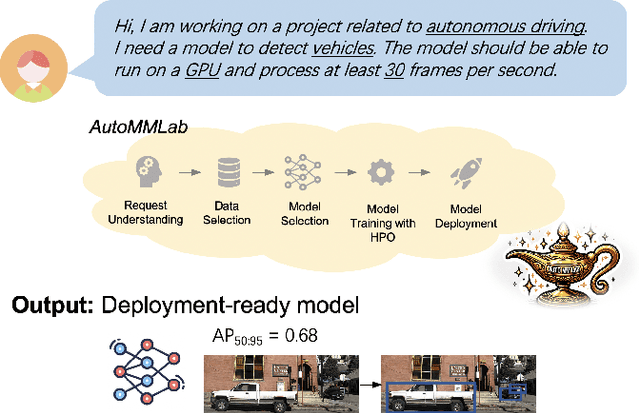
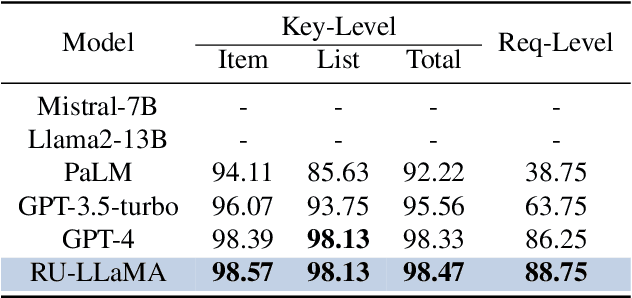
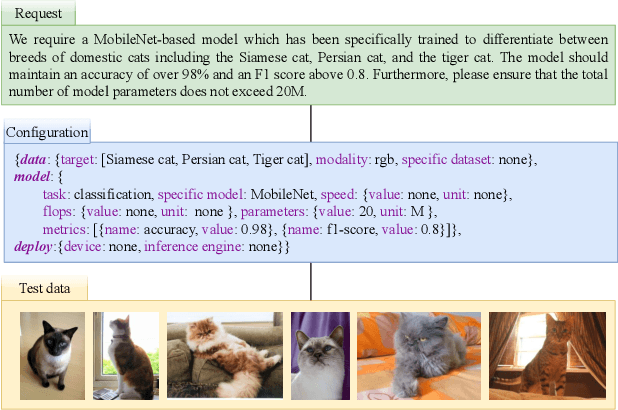
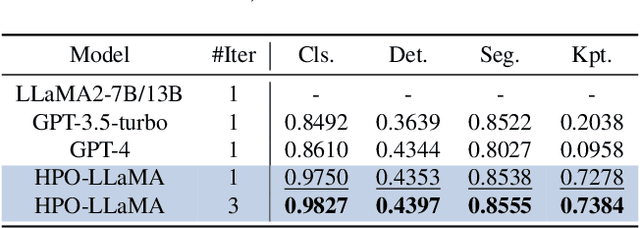
Automated machine learning (AutoML) is a collection of techniques designed to automate the machine learning development process. While traditional AutoML approaches have been successfully applied in several critical steps of model development (e.g. hyperparameter optimization), there lacks a AutoML system that automates the entire end-to-end model production workflow. To fill this blank, we present AutoMMLab, a general-purpose LLM-empowered AutoML system that follows user's language instructions to automate the whole model production workflow for computer vision tasks. The proposed AutoMMLab system effectively employs LLMs as the bridge to connect AutoML and OpenMMLab community, empowering non-expert individuals to easily build task-specific models via a user-friendly language interface. Specifically, we propose RU-LLaMA to understand users' request and schedule the whole pipeline, and propose a novel LLM-based hyperparameter optimizer called HPO-LLaMA to effectively search for the optimal hyperparameters. Experiments show that our AutoMMLab system is versatile and covers a wide range of mainstream tasks, including classification, detection, segmentation and keypoint estimation. We further develop a new benchmark, called LAMP, for studying key components in the end-to-end prompt-based model training pipeline. Code, model, and data will be released.
A Study on the Vulnerability of Test Questions against ChatGPT-based Cheating
Feb 21, 2024ChatGPT is a chatbot that can answer text prompts fairly accurately, even performing very well on postgraduate-level questions. Many educators have found that their take-home or remote tests and exams are vulnerable to ChatGPT-based cheating because students may directly use answers provided by tools like ChatGPT. In this paper, we try to provide an answer to an important question: how well ChatGPT can answer test questions and how we can detect whether the questions of a test can be answered correctly by ChatGPT. We generated ChatGPT's responses to the MedMCQA dataset, which contains over 10,000 medical school entrance exam questions. We analyzed the responses and uncovered certain types of questions ChatGPT answers more inaccurately than others. In addition, we have created a basic natural language processing model to single out the most vulnerable questions to ChatGPT in a collection of questions or a sample exam. Our tool can be used by test-makers to avoid ChatGPT-vulnerable test questions.
* 2023 International Conference on Machine Learning and Applications (ICMLA)
Fair Classifiers Without Fair Training: An Influence-Guided Data Sampling Approach
Feb 20, 2024


A fair classifier should ensure the benefit of people from different groups, while the group information is often sensitive and unsuitable for model training. Therefore, learning a fair classifier but excluding sensitive attributes in the training dataset is important. In this paper, we study learning fair classifiers without implementing fair training algorithms to avoid possible leakage of sensitive information. Our theoretical analyses validate the possibility of this approach, that traditional training on a dataset with an appropriate distribution shift can reduce both the upper bound for fairness disparity and model generalization error, indicating that fairness and accuracy can be improved simultaneously with simply traditional training. We then propose a tractable solution to progressively shift the original training data during training by sampling influential data, where the sensitive attribute of new data is not accessed in sampling or used in training. Extensive experiments on real-world data demonstrate the effectiveness of our proposed algorithm.