 Add to Chrome
 Add to Firefox
 Add to Edge
Bridging Cognitive Gap: Hierarchical Description Learning for Artistic Image Aesthetics Assessment
Dec 29, 2025
The aesthetic quality assessment task is crucial for developing a human-aligned quantitative evaluation system for AIGC. However, its inherently complex nature, spanning visual perception, cognition, and emotion, poses fundamental challenges. Although aesthetic descriptions offer a viable representation of this complexity, two critical challenges persist: (1) data scarcity and imbalance: existing dataset overly focuses on visual perception and neglects deeper dimensions due to the expensive manual annotation; and (2) model fragmentation: current visual networks isolate aesthetic attributes with multi-branch encoder, while multimodal methods represented by contrastive learning struggle to effectively process long-form textual descriptions. To resolve challenge (1), we first present the Refined Aesthetic Description (RAD) dataset, a large-scale (70k), multi-dimensional structured dataset, generated via an iterative pipeline without heavy annotation costs and easy to scale. To address challenge (2), we propose ArtQuant, an aesthetics assessment framework for artistic images which not only couples isolated aesthetic dimensions through joint description generation, but also better models long-text semantics with the help of LLM decoders. Besides, theoretical analysis confirms this symbiosis: RAD's semantic adequacy (data) and generation paradigm (model) collectively minimize prediction entropy, providing mathematical grounding for the framework. Our approach achieves state-of-the-art performance on several datasets while requiring only 33% of conventional training epochs, narrowing the cognitive gap between artistic images and aesthetic judgment. We will release both code and dataset to support future research.

MiMo-Audio: Audio Language Models are Few-Shot Learners
Dec 29, 2025Existing audio language models typically rely on task-specific fine-tuning to accomplish particular audio tasks. In contrast, humans are able to generalize to new audio tasks with only a few examples or simple instructions. GPT-3 has shown that scaling next-token prediction pretraining enables strong generalization capabilities in text, and we believe this paradigm is equally applicable to the audio domain. By scaling MiMo-Audio's pretraining data to over one hundred million of hours, we observe the emergence of few-shot learning capabilities across a diverse set of audio tasks. We develop a systematic evaluation of these capabilities and find that MiMo-Audio-7B-Base achieves SOTA performance on both speech intelligence and audio understanding benchmarks among open-source models. Beyond standard metrics, MiMo-Audio-7B-Base generalizes to tasks absent from its training data, such as voice conversion, style transfer, and speech editing. MiMo-Audio-7B-Base also demonstrates powerful speech continuation capabilities, capable of generating highly realistic talk shows, recitations, livestreaming and debates. At the post-training stage, we curate a diverse instruction-tuning corpus and introduce thinking mechanisms into both audio understanding and generation. MiMo-Audio-7B-Instruct achieves open-source SOTA on audio understanding benchmarks (MMSU, MMAU, MMAR, MMAU-Pro), spoken dialogue benchmarks (Big Bench Audio, MultiChallenge Audio) and instruct-TTS evaluations, approaching or surpassing closed-source models. Model checkpoints and full evaluation suite are available at https://github.com/XiaomiMiMo/MiMo-Audio.
DiverseGRPO: Mitigating Mode Collapse in Image Generation via Diversity-Aware GRPO
Dec 25, 2025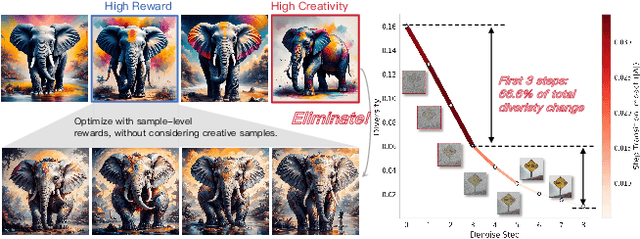
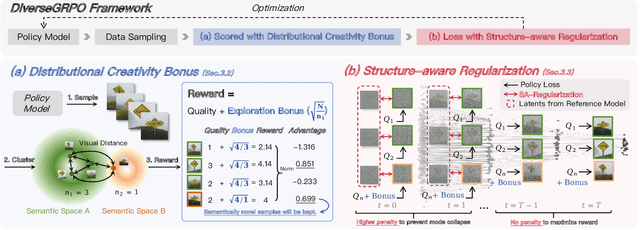
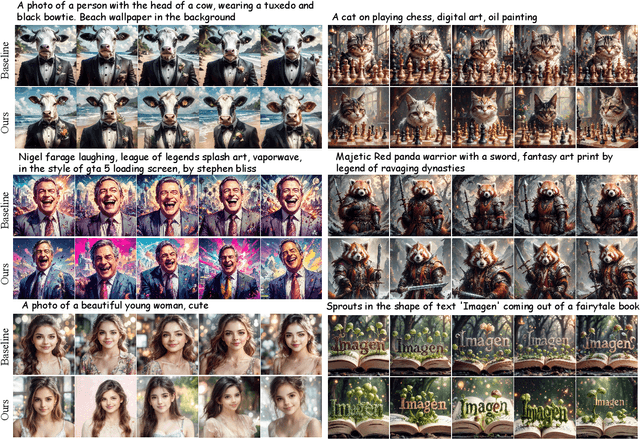
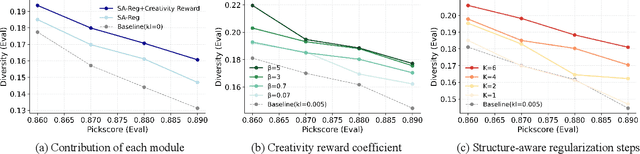
Reinforcement learning (RL), particularly GRPO, improves image generation quality significantly by comparing the relative performance of images generated within the same group. However, in the later stages of training, the model tends to produce homogenized outputs, lacking creativity and visual diversity, which restricts its application scenarios. This issue can be analyzed from both reward modeling and generation dynamics perspectives. First, traditional GRPO relies on single-sample quality as the reward signal, driving the model to converge toward a few high-reward generation modes while neglecting distribution-level diversity. Second, conventional GRPO regularization neglects the dominant role of early-stage denoising in preserving diversity, causing a misaligned regularization budget that limits the achievable quality--diversity trade-off. Motivated by these insights, we revisit the diversity degradation problem from both reward modeling and generation dynamics. At the reward level, we propose a distributional creativity bonus based on semantic grouping. Specifically, we construct a distribution-level representation via spectral clustering over samples generated from the same caption, and adaptively allocate exploratory rewards according to group sizes to encourage the discovery of novel visual modes. At the generation level, we introduce a structure-aware regularization, which enforces stronger early-stage constraints to preserve diversity without compromising reward optimization efficiency. Experiments demonstrate that our method achieves a 13\%--18\% improvement in semantic diversity under matched quality scores, establishing a new Pareto frontier between image quality and diversity for GRPO-based image generation.
${D}^{3}${ETOR}: ${D}$ebate-Enhanced Pseudo Labeling and Frequency-Aware Progressive ${D}$ebiasing for Weakly-Supervised Camouflaged Object ${D}$etection with Scribble Annotations
Dec 23, 2025Weakly-Supervised Camouflaged Object Detection (WSCOD) aims to locate and segment objects that are visually concealed within their surrounding scenes, relying solely on sparse supervision such as scribble annotations. Despite recent progress, existing WSCOD methods still lag far behind fully supervised ones due to two major limitations: (1) the pseudo masks generated by general-purpose segmentation models (e.g., SAM) and filtered via rules are often unreliable, as these models lack the task-specific semantic understanding required for effective pseudo labeling in COD; and (2) the neglect of inherent annotation bias in scribbles, which hinders the model from capturing the global structure of camouflaged objects. To overcome these challenges, we propose ${D}^{3}$ETOR, a two-stage WSCOD framework consisting of Debate-Enhanced Pseudo Labeling and Frequency-Aware Progressive Debiasing. In the first stage, we introduce an adaptive entropy-driven point sampling method and a multi-agent debate mechanism to enhance the capability of SAM for COD, improving the interpretability and precision of pseudo masks. In the second stage, we design FADeNet, which progressively fuses multi-level frequency-aware features to balance global semantic understanding with local detail modeling, while dynamically reweighting supervision strength across regions to alleviate scribble bias. By jointly exploiting the supervision signals from both the pseudo masks and scribble semantics, ${D}^{3}$ETOR significantly narrows the gap between weakly and fully supervised COD, achieving state-of-the-art performance on multiple benchmarks.
Outlier detection in mixed-attribute data: a semi-supervised approach with fuzzy approximations and relative entropy
Dec 22, 2025Outlier detection is a critical task in data mining, aimed at identifying objects that significantly deviate from the norm. Semi-supervised methods improve detection performance by leveraging partially labeled data but typically overlook the uncertainty and heterogeneity of real-world mixed-attribute data. This paper introduces a semi-supervised outlier detection method, namely fuzzy rough sets-based outlier detection (FROD), to effectively handle these challenges. Specifically, we first utilize a small subset of labeled data to construct fuzzy decision systems, through which we introduce the attribute classification accuracy based on fuzzy approximations to evaluate the contribution of attribute sets in outlier detection. Unlabeled data is then used to compute fuzzy relative entropy, which provides a characterization of outliers from the perspective of uncertainty. Finally, we develop the detection algorithm by combining attribute classification accuracy with fuzzy relative entropy. Experimental results on 16 public datasets show that FROD is comparable with or better than leading detection algorithms. All datasets and source codes are accessible at https://github.com/ChenBaiyang/FROD. This manuscript is the accepted author version of a paper published by Elsevier. The final published version is available at https://doi.org/10.1016/j.ijar.2025.109373
* Author's accepted manuscript
HybridSplat: Fast Reflection-baked Gaussian Tracing using Hybrid Splatting
Dec 15, 2025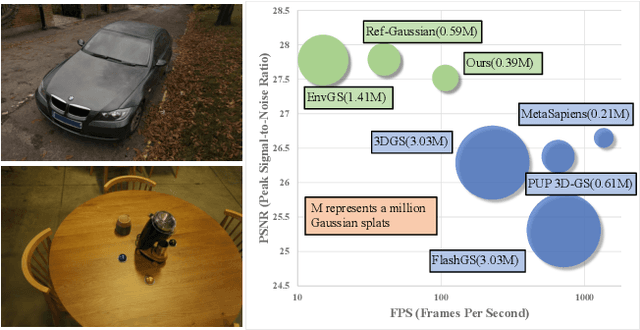
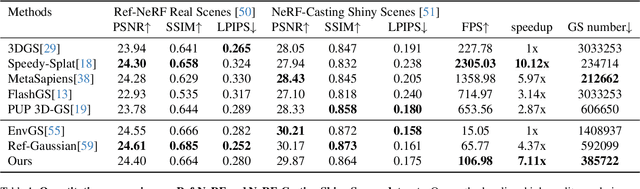
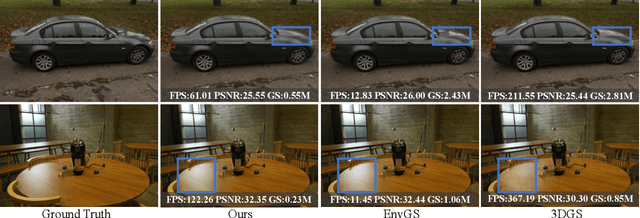
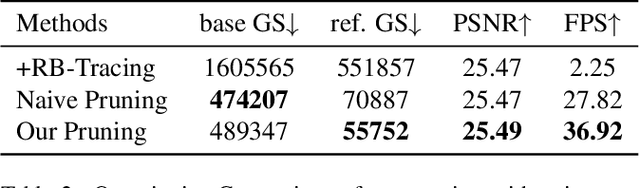
Rendering complex reflection of real-world scenes using 3D Gaussian splatting has been a quite promising solution for photorealistic novel view synthesis, but still faces bottlenecks especially in rendering speed and memory storage. This paper proposes a new Hybrid Splatting(HybridSplat) mechanism for Gaussian primitives. Our key idea is a new reflection-baked Gaussian tracing, which bakes the view-dependent reflection within each Gaussian primitive while rendering the reflection using tile-based Gaussian splatting. Then we integrate the reflective Gaussian primitives with base Gaussian primitives using a unified hybrid splatting framework for high-fidelity scene reconstruction. Moreover, we further introduce a pipeline-level acceleration for the hybrid splatting, and reflection-sensitive Gaussian pruning to reduce the model size, thus achieving much faster rendering speed and lower memory storage while preserving the reflection rendering quality. By extensive evaluation, our HybridSplat accelerates about 7x rendering speed across complex reflective scenes from Ref-NeRF, NeRF-Casting with 4x fewer Gaussian primitives than similar ray-tracing based Gaussian splatting baselines, serving as a new state-of-the-art method especially for complex reflective scenes.
SCIR: A Self-Correcting Iterative Refinement Framework for Enhanced Information Extraction Based on Schema
Dec 13, 2025Although Large language Model (LLM)-powered information extraction (IE) systems have shown impressive capabilities, current fine-tuning paradigms face two major limitations: high training costs and difficulties in aligning with LLM preferences. To address these issues, we propose a novel universal IE paradigm, the Self-Correcting Iterative Refinement (SCIR) framework, along with a Multi-task Bilingual (Chinese-English) Self-Correcting (MBSC) dataset containing over 100,000 entries. The SCIR framework achieves plug-and-play compatibility with existing LLMs and IE systems through its Dual-Path Self-Correcting module and feedback-driven optimization, thereby significantly reducing training costs. Concurrently, the MBSC dataset tackles the challenge of preference alignment by indirectly distilling GPT-4's capabilities into IE result detection models. Experimental results demonstrate that SCIR outperforms state-of-the-art IE methods across three key tasks: named entity recognition, relation extraction, and event extraction, achieving a 5.27 percent average improvement in span-based Micro-F1 while reducing training costs by 87 percent compared to baseline approaches. These advancements not only enhance the flexibility and accuracy of IE systems but also pave the way for lightweight and efficient IE paradigms.
The FACTS Leaderboard: A Comprehensive Benchmark for Large Language Model Factuality
Dec 11, 2025We introduce The FACTS Leaderboard, an online leaderboard suite and associated set of benchmarks that comprehensively evaluates the ability of language models to generate factually accurate text across diverse scenarios. The suite provides a holistic measure of factuality by aggregating the performance of models on four distinct sub-leaderboards: (1) FACTS Multimodal, which measures the factuality of responses to image-based questions; (2) FACTS Parametric, which assesses models' world knowledge by answering closed-book factoid questions from internal parameters; (3) FACTS Search, which evaluates factuality in information-seeking scenarios, where the model must use a search API; and (4) FACTS Grounding (v2), which evaluates whether long-form responses are grounded in provided documents, featuring significantly improved judge models. Each sub-leaderboard employs automated judge models to score model responses, and the final suite score is an average of the four components, designed to provide a robust and balanced assessment of a model's overall factuality. The FACTS Leaderboard Suite will be actively maintained, containing both public and private splits to allow for external participation while guarding its integrity. It can be found at https://www.kaggle.com/benchmarks/google/facts .
MeViS: A Multi-Modal Dataset for Referring Motion Expression Video Segmentation
Dec 11, 2025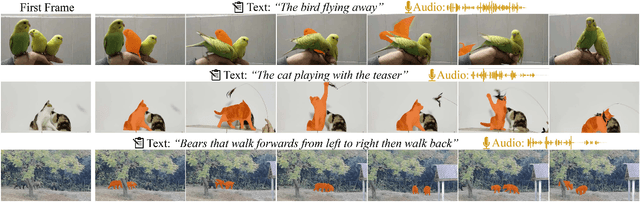
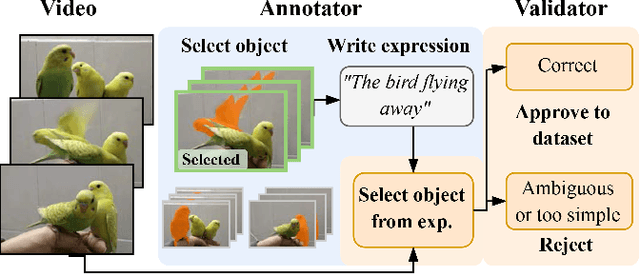
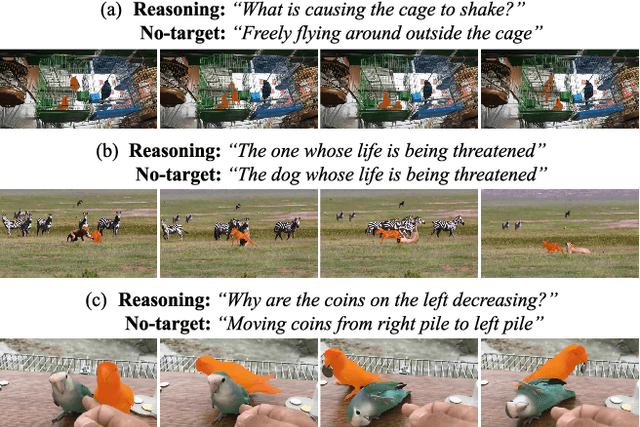
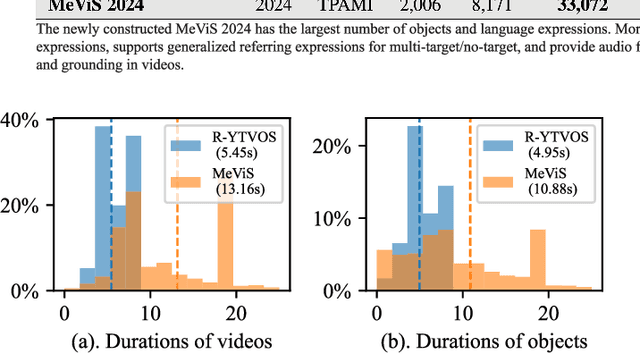
This paper proposes a large-scale multi-modal dataset for referring motion expression video segmentation, focusing on segmenting and tracking target objects in videos based on language description of objects' motions. Existing referring video segmentation datasets often focus on salient objects and use language expressions rich in static attributes, potentially allowing the target object to be identified in a single frame. Such datasets underemphasize the role of motion in both videos and languages. To explore the feasibility of using motion expressions and motion reasoning clues for pixel-level video understanding, we introduce MeViS, a dataset containing 33,072 human-annotated motion expressions in both text and audio, covering 8,171 objects in 2,006 videos of complex scenarios. We benchmark 15 existing methods across 4 tasks supported by MeViS, including 6 referring video object segmentation (RVOS) methods, 3 audio-guided video object segmentation (AVOS) methods, 2 referring multi-object tracking (RMOT) methods, and 4 video captioning methods for the newly introduced referring motion expression generation (RMEG) task. The results demonstrate weaknesses and limitations of existing methods in addressing motion expression-guided video understanding. We further analyze the challenges and propose an approach LMPM++ for RVOS/AVOS/RMOT that achieves new state-of-the-art results. Our dataset provides a platform that facilitates the development of motion expression-guided video understanding algorithms in complex video scenes. The proposed MeViS dataset and the method's source code are publicly available at https://henghuiding.com/MeViS/
* IEEE TPAMI, Project Page: https://henghuiding.com/MeViS/
Video-QTR: Query-Driven Temporal Reasoning Framework for Lightweight Video Understanding
Dec 10, 2025The rapid development of multimodal large-language models (MLLMs) has significantly expanded the scope of visual language reasoning, enabling unified systems to interpret and describe complex visual content. However, applying these models to long-video understanding remains computationally intensive. Dense frame encoding generates excessive visual tokens, leading to high memory consumption, redundant computation, and limited scalability in real-world applications. This inefficiency highlights a key limitation of the traditional process-then-reason paradigm, which analyzes visual streams exhaustively before semantic reasoning. To address this challenge, we introduce Video-QTR (Query-Driven Temporal Reasoning), a lightweight framework that redefines video comprehension as a query-guided reasoning process. Instead of encoding every frame, Video-QTR dynamically allocates perceptual resources based on the semantic intent of the query, creating an adaptive feedback loop between reasoning and perception. Extensive experiments across five benchmarks: MSVD-QA, Activity Net-QA, Movie Chat, and Video MME demonstrate that Video-QTR achieves state-of-the-art performance while reducing input frame consumption by up to 73%. These results confirm that query-driven temporal reasoning provides an efficient and scalable solution for video understanding.