 Add to Chrome
 Add to Firefox
 Add to Edge
Tensor-Compressed and Fully-Quantized Training of Neural PDE Solvers
Dec 10, 2025
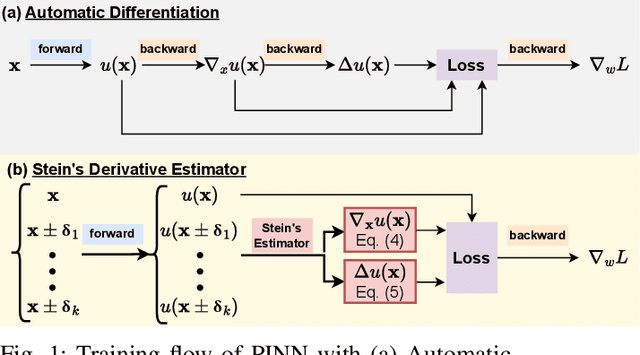
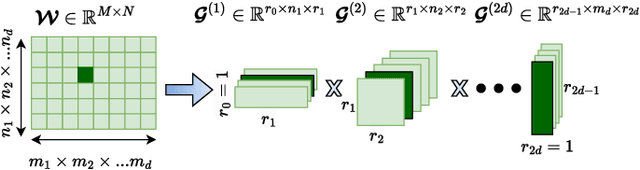
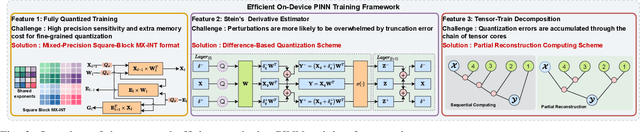
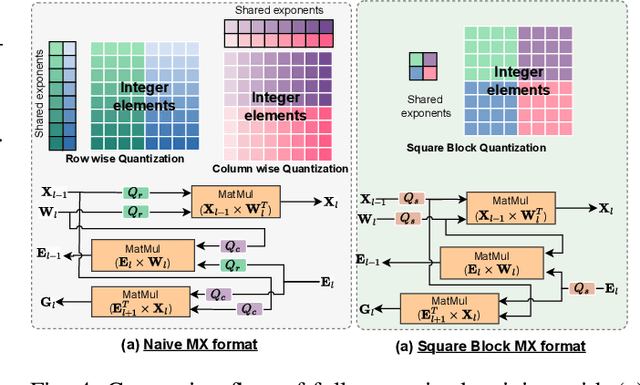
Physics-Informed Neural Networks (PINNs) have emerged as a promising paradigm for solving partial differential equations (PDEs) by embedding physical laws into neural network training objectives. However, their deployment on resource-constrained platforms is hindered by substantial computational and memory overhead, primarily stemming from higher-order automatic differentiation, intensive tensor operations, and reliance on full-precision arithmetic. To address these challenges, we present a framework that enables scalable and energy-efficient PINN training on edge devices. This framework integrates fully quantized training, Stein's estimator (SE)-based residual loss computation, and tensor-train (TT) decomposition for weight compression. It contributes three key innovations: (1) a mixed-precision training method that use a square-block MX (SMX) format to eliminate data duplication during backpropagation; (2) a difference-based quantization scheme for the Stein's estimator that mitigates underflow; and (3) a partial-reconstruction scheme (PRS) for TT-Layers that reduces quantization-error accumulation. We further design PINTA, a precision-scalable hardware accelerator, to fully exploit the performance of the framework. Experiments on the 2-D Poisson, 20-D Hamilton-Jacobi-Bellman (HJB), and 100-D Heat equations demonstrate that the proposed framework achieves accuracy comparable to or better than full-precision, uncompressed baselines while delivering 5.5x to 83.5x speedups and 159.6x to 2324.1x energy savings. This work enables real-time PDE solving on edge devices and paves the way for energy-efficient scientific computing at scale.

GeoDiffMM: Geometry-Guided Conditional Diffusion for Motion Magnification
Dec 09, 2025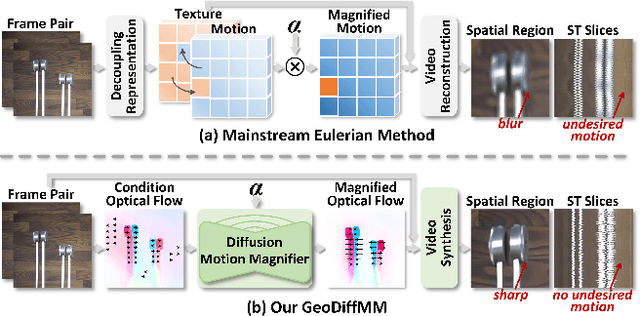
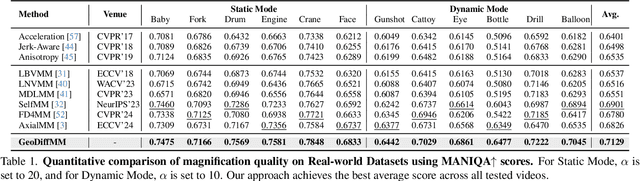
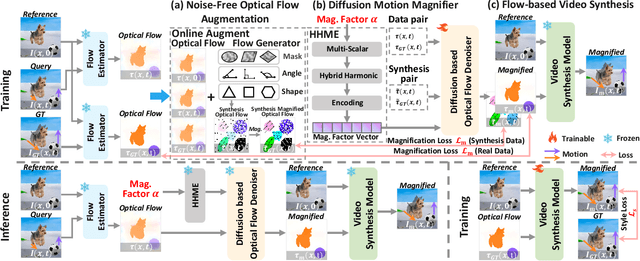
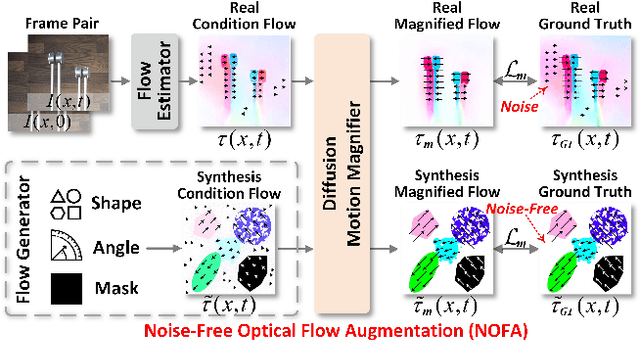
Video Motion Magnification (VMM) amplifies subtle macroscopic motions to a perceptible level. Recently, existing mainstream Eulerian approaches address amplification-induced noise via decoupling representation learning such as texture, shape and frequancey schemes, but they still struggle to separate photon noise from true micro-motion when motion displacements are very small. We propose GeoDiffMM, a novel diffusion-based Lagrangian VMM framework conditioned on optical flow as a geometric cue, enabling structurally consistent motion magnification. Specifically, we design a Noise-free Optical Flow Augmentation strategy that synthesizes diverse nonrigid motion fields without photon noise as supervision, helping the model learn more accurate geometry-aware optial flow and generalize better. Next, we develop a Diffusion Motion Magnifier that conditions the denoising process on (i) optical flow as a geometry prior and (ii) a learnable magnification factor controlling magnitude, thereby selectively amplifying motion components consistent with scene semantics and structure while suppressing content-irrelevant perturbations. Finally, we perform Flow-based Video Synthesis to map the amplified motion back to the image domain with high fidelity. Extensive experiments on real and synthetic datasets show that GeoDiffMM outperforms state-of-the-art methods and significantly improves motion magnification.
SkipKV: Selective Skipping of KV Generation and Storage for Efficient Inference with Large Reasoning Models
Dec 08, 2025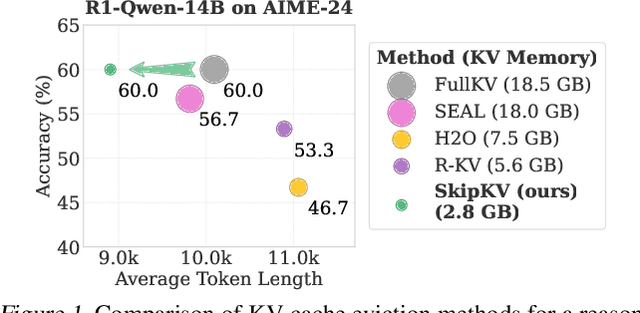
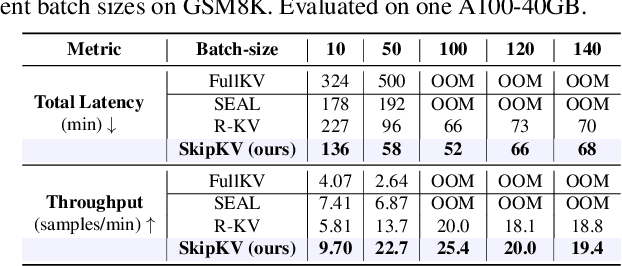
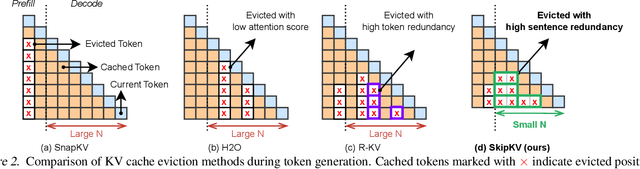
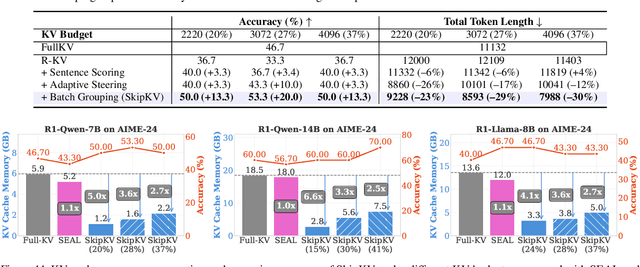
Large reasoning models (LRMs) often cost significant key-value (KV) cache overhead, due to their linear growth with the verbose chain-of-thought (CoT) reasoning process. This costs both memory and throughput bottleneck limiting their efficient deployment. Towards reducing KV cache size during inference, we first investigate the effectiveness of existing KV cache eviction methods for CoT reasoning. Interestingly, we find that due to unstable token-wise scoring and the reduced effective KV budget caused by padding tokens, state-of-the-art (SoTA) eviction methods fail to maintain accuracy in the multi-batch setting. Additionally, these methods often generate longer sequences than the original model, as semantic-unaware token-wise eviction leads to repeated revalidation during reasoning. To address these issues, we present \textbf{SkipKV}, a \textbf{\textit{training-free}} KV compression method for selective \textit{eviction} and \textit{generation} operating at a coarse-grained sentence-level sequence removal for efficient CoT reasoning. In specific, it introduces a \textit{sentence-scoring metric} to identify and remove highly similar sentences while maintaining semantic coherence. To suppress redundant generation, SkipKV dynamically adjusts a steering vector to update the hidden activation states during inference enforcing the LRM to generate concise response. Extensive evaluations on multiple reasoning benchmarks demonstrate the effectiveness of SkipKV in maintaining up to $\mathbf{26.7}\%$ improved accuracy compared to the alternatives, at a similar compression budget. Additionally, compared to SoTA, SkipKV yields up to $\mathbf{1.6}\times$ fewer generation length while improving throughput up to $\mathbf{1.7}\times$.
Learning to Expand Images for Efficient Visual Autoregressive Modeling
Nov 19, 2025Autoregressive models have recently shown great promise in visual generation by leveraging discrete token sequences akin to language modeling. However, existing approaches often suffer from inefficiency, either due to token-by-token decoding or the complexity of multi-scale representations. In this work, we introduce Expanding Autoregressive Representation (EAR), a novel generation paradigm that emulates the human visual system's center-outward perception pattern. EAR unfolds image tokens in a spiral order from the center and progressively expands outward, preserving spatial continuity and enabling efficient parallel decoding. To further enhance flexibility and speed, we propose a length-adaptive decoding strategy that dynamically adjusts the number of tokens predicted at each step. This biologically inspired design not only reduces computational cost but also improves generation quality by aligning the generation order with perceptual relevance. Extensive experiments on ImageNet demonstrate that EAR achieves state-of-the-art trade-offs between fidelity and efficiency on single-scale autoregressive models, setting a new direction for scalable and cognitively aligned autoregressive image generation.
UniADC: A Unified Framework for Anomaly Detection and Classification
Nov 10, 2025In this paper, we introduce the task of unified anomaly detection and classification, which aims to simultaneously detect anomalous regions in images and identify their specific categories. Existing methods typically treat anomaly detection and classification as separate tasks, thereby neglecting their inherent correlation, limiting information sharing, and resulting in suboptimal performance. To address this, we propose UniADC, a unified anomaly detection and classification model that can effectively perform both tasks with only a few or even no anomaly images. Specifically, UniADC consists of two key components: a training-free controllable inpainting network and a multi-task discriminator. The inpainting network can synthesize anomaly images of specific categories by repainting normal regions guided by anomaly priors, and can also repaint few-shot anomaly samples to augment the available anomaly data. The multi-task discriminator is then trained on these synthesized samples, enabling precise anomaly detection and classification by aligning fine-grained image features with anomaly-category embeddings. We conduct extensive experiments on three anomaly detection and classification datasets, including MVTec-FS, MTD, and WFDD, and the results demonstrate that UniADC consistently outperforms existing methods in anomaly detection, localization, and classification. The code is available at https://github.com/cnulab/UniADC.
A Survey on Deep Text Hashing: Efficient Semantic Text Retrieval with Binary Representation
Oct 31, 2025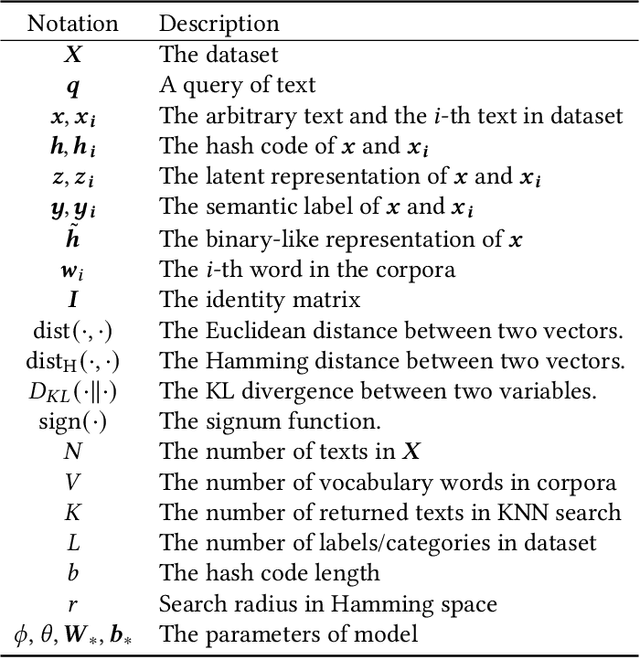
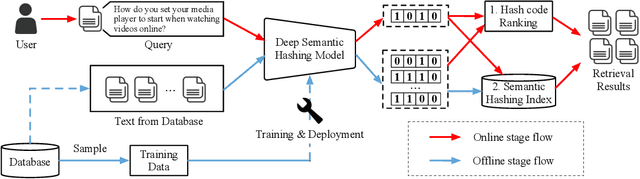
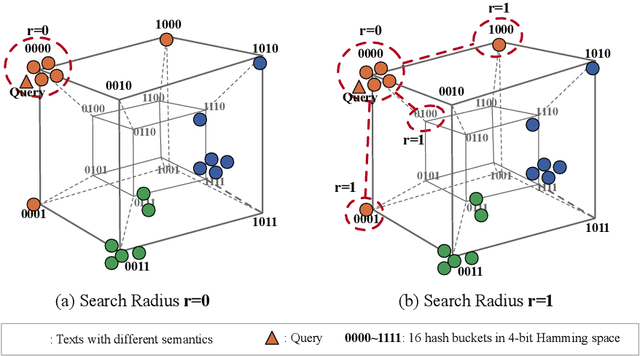
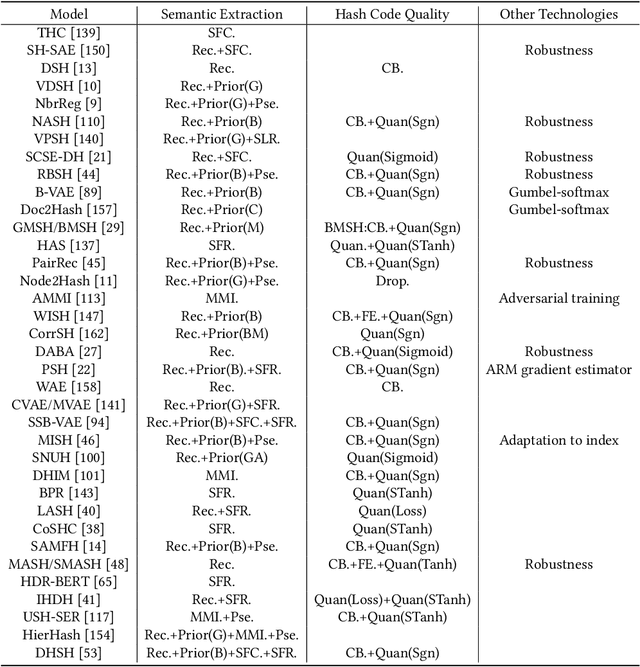
With the rapid growth of textual content on the Internet, efficient large-scale semantic text retrieval has garnered increasing attention from both academia and industry. Text hashing, which projects original texts into compact binary hash codes, is a crucial method for this task. By using binary codes, the semantic similarity computation for text pairs is significantly accelerated via fast Hamming distance calculations, and storage costs are greatly reduced. With the advancement of deep learning, deep text hashing has demonstrated significant advantages over traditional, data-independent hashing techniques. By leveraging deep neural networks, these methods can learn compact and semantically rich binary representations directly from data, overcoming the performance limitations of earlier approaches. This survey investigates current deep text hashing methods by categorizing them based on their core components: semantic extraction, hash code quality preservation, and other key technologies. We then present a detailed evaluation schema with results on several popular datasets, followed by a discussion of practical applications and open-source tools for implementation. Finally, we conclude by discussing key challenges and future research directions, including the integration of deep text hashing with large language models to further advance the field. The project for this survey can be accessed at https://github.com/hly1998/DeepTextHashing.
Kimi Linear: An Expressive, Efficient Attention Architecture
Oct 30, 2025We introduce Kimi Linear, a hybrid linear attention architecture that, for the first time, outperforms full attention under fair comparisons across various scenarios -- including short-context, long-context, and reinforcement learning (RL) scaling regimes. At its core lies Kimi Delta Attention (KDA), an expressive linear attention module that extends Gated DeltaNet with a finer-grained gating mechanism, enabling more effective use of limited finite-state RNN memory. Our bespoke chunkwise algorithm achieves high hardware efficiency through a specialized variant of the Diagonal-Plus-Low-Rank (DPLR) transition matrices, which substantially reduces computation compared to the general DPLR formulation while remaining more consistent with the classical delta rule. We pretrain a Kimi Linear model with 3B activated parameters and 48B total parameters, based on a layerwise hybrid of KDA and Multi-Head Latent Attention (MLA). Our experiments show that with an identical training recipe, Kimi Linear outperforms full MLA with a sizeable margin across all evaluated tasks, while reducing KV cache usage by up to 75% and achieving up to 6 times decoding throughput for a 1M context. These results demonstrate that Kimi Linear can be a drop-in replacement for full attention architectures with superior performance and efficiency, including tasks with longer input and output lengths. To support further research, we open-source the KDA kernel and vLLM implementations, and release the pre-trained and instruction-tuned model checkpoints.
LLMBisect: Breaking Barriers in Bug Bisection with A Comparative Analysis Pipeline
Oct 30, 2025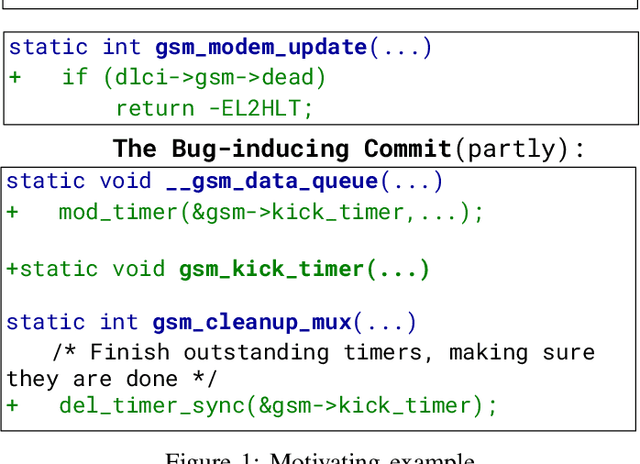
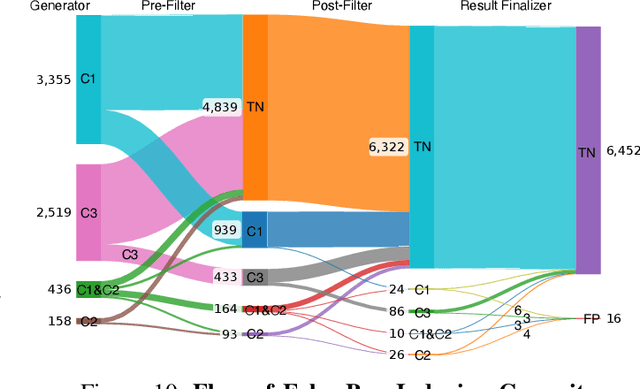
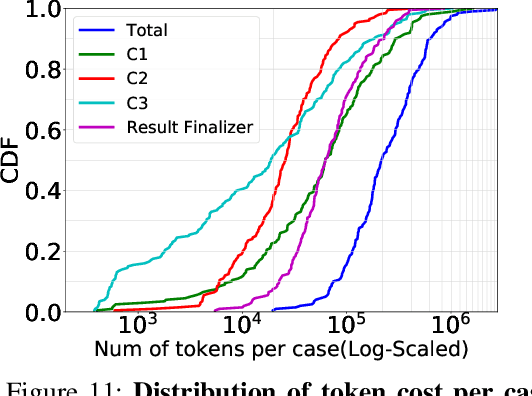
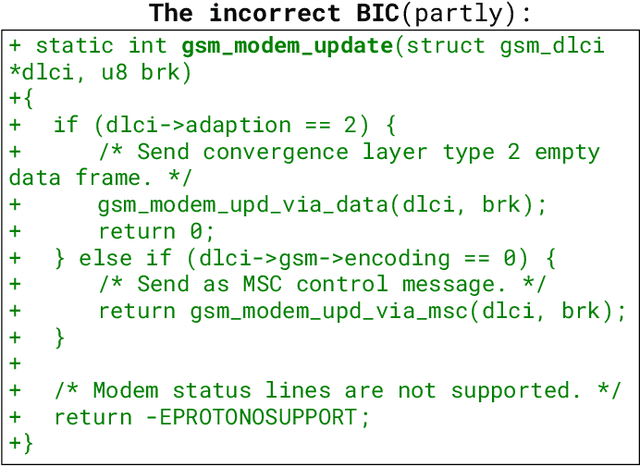
Bug bisection has been an important security task that aims to understand the range of software versions impacted by a bug, i.e., identifying the commit that introduced the bug. However, traditional patch-based bisection methods are faced with several significant barriers: For example, they assume that the bug-inducing commit (BIC) and the patch commit modify the same functions, which is not always true. They often rely solely on code changes, while the commit message frequently contains a wealth of vulnerability-related information. They are also based on simple heuristics (e.g., assuming the BIC initializes lines deleted in the patch) and lack any logical analysis of the vulnerability. In this paper, we make the observation that Large Language Models (LLMs) are well-positioned to break the barriers of existing solutions, e.g., comprehend both textual data and code in patches and commits. Unlike previous BIC identification approaches, which yield poor results, we propose a comprehensive multi-stage pipeline that leverages LLMs to: (1) fully utilize patch information, (2) compare multiple candidate commits in context, and (3) progressively narrow down the candidates through a series of down-selection steps. In our evaluation, we demonstrate that our approach achieves significantly better accuracy than the state-of-the-art solution by more than 38\%. Our results further confirm that the comprehensive multi-stage pipeline is essential, as it improves accuracy by 60\% over a baseline LLM-based bisection method.
TheraMind: A Strategic and Adaptive Agent for Longitudinal Psychological Counseling
Oct 29, 2025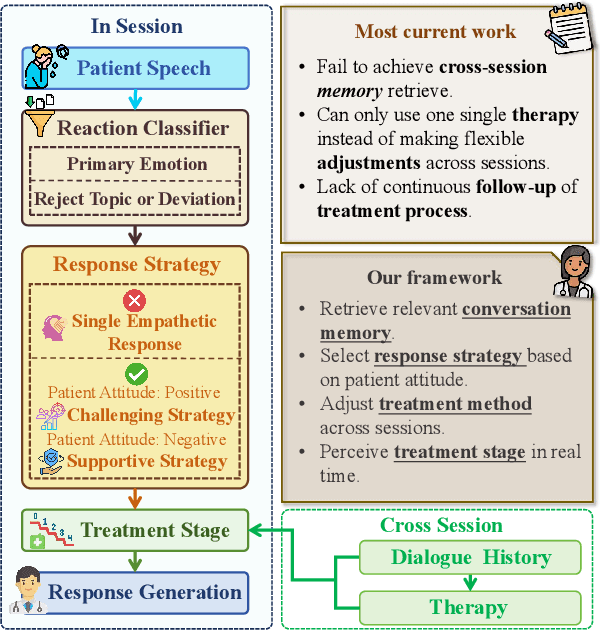
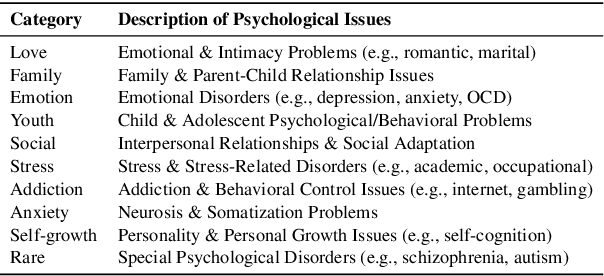
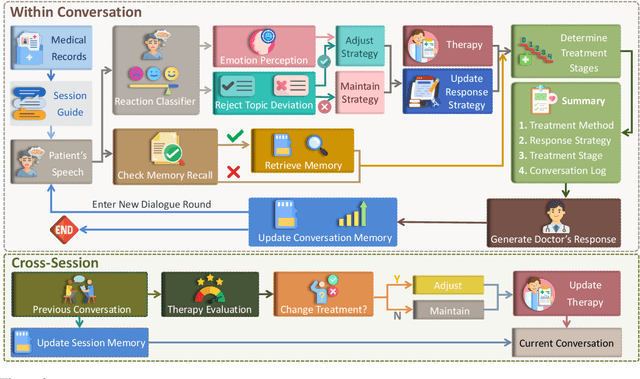
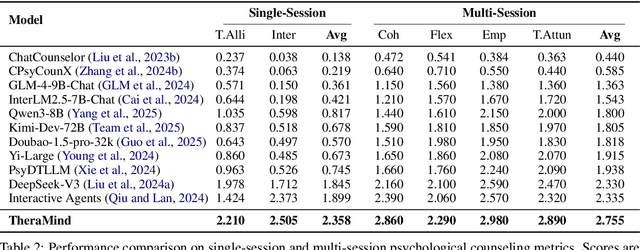
Large language models (LLMs) in psychological counseling have attracted increasing attention. However, existing approaches often lack emotional understanding, adaptive strategies, and the use of therapeutic methods across multiple sessions with long-term memory, leaving them far from real clinical practice. To address these critical gaps, we introduce TheraMind, a strategic and adaptive agent for longitudinal psychological counseling. The cornerstone of TheraMind is a novel dual-loop architecture that decouples the complex counseling process into an Intra-Session Loop for tactical dialogue management and a Cross-Session Loop for strategic therapeutic planning. The Intra-Session Loop perceives the patient's emotional state to dynamically select response strategies while leveraging cross-session memory to ensure continuity. Crucially, the Cross-Session Loop empowers the agent with long-term adaptability by evaluating the efficacy of the applied therapy after each session and adjusting the method for subsequent interactions. We validate our approach in a high-fidelity simulation environment grounded in real clinical cases. Extensive evaluations show that TheraMind outperforms other methods, especially on multi-session metrics like Coherence, Flexibility, and Therapeutic Attunement, validating the effectiveness of its dual-loop design in emulating strategic, adaptive, and longitudinal therapeutic behavior. The code is publicly available at https://0mwwm0.github.io/TheraMind/.
Posterior Collapse as a Phase Transition in Variational Autoencoders
Oct 02, 2025We investigate the phenomenon of posterior collapse in variational autoencoders (VAEs) from the perspective of statistical physics, and reveal that it constitutes a phase transition governed jointly by data structure and model hyper-parameters. By analyzing the stability of the trivial solution associated with posterior collapse, we identify a critical hyper-parameter threshold. This critical boundary, separating meaningful latent inference from collapse, is characterized by a discontinuity in the KL divergence between the approximate posterior and the prior distribution. We validate this critical behavior on both synthetic and real-world datasets, confirming the existence of a phase transition. Our results demonstrate that posterior collapse is not merely an optimization failure, but rather an emerging phase transition arising from the interplay between data structure and variational constraints. This perspective offers new insights into the trainability and representational capacity of deep generative models.