 Add to Chrome
 Add to Firefox
 Add to Edge
Two-Stage IQ Imbalance Estimation and Compensation for AFDM Systems
Jun 16, 2026
Affine frequency division multiplexing (AFDM) is an emerging chirp-based multicarrier waveform with strong diversity in doubly selective channels, but practical systems suffer from transmitter and receiver IQ imbalance, causing image interference and performance degradation. This paper proposes a two-stage IQ imbalance estimation and compensation method for AFDM systems. First, a preamble-assisted iterative algorithm estimates the time-invariant IQ imbalance parameters by exploiting their slowly time-varying nature. Then, a joint channel estimation and data detection scheme combines basis expansion model (BEM)-based channel estimation with an improved LMMSE detector for interference suppression. Simulations show rapid convergence and near-ideal BER performance.

Performance Analysis of AFDM Under In-Phase and Quadrature Imbalance at Receiver
Jun 15, 2026Affine Frequency Division Multiplexing (AFDM) is a chirp-based multicarrier waveform that achieves full diversity in doubly selective channels while requiring reduced pilot overhead. It is regarded as a highly promising candidate for sixth-generation (6G) mobile communication waveforms in high-mobility scenarios. However, AFDM deployment remains subject to hardware impairments, particularly the in-phase and quadrature (IQ) imbalance commonly encountered in direct conversion transceivers. This paper investigates the impact of receiver IQ imbalance on the bit error rate (BER) performance of AFDM systems. A mathematical model of AFDM under receiver IQ imbalance is first established, where the resulting inter-carrier interference (ICI) in the discrete affine Fourier transform (DAFT) domain is explicitly characterized. Moreover, a closed-form expression for the BER is derived under the influence of receiver IQ imbalance in an M-QAM-AFDM system over an AWGN channel. Numerical simulation results validate the accuracy of the theoretical analysis, while also indicating that under identical IQ imbalance conditions, AFDM exhibits more pronounced BER degradation compared to OFDM. The results provide fundamental insights into the sensitivity of AFDM to receiver IQ imbalance and offer guidance for practical system design.
Rotatable Antenna-Enabled Near-Field Integrated Sensing and Communication
Jun 11, 2026In this paper, we propose leveraging rotatable antennas (RAs) to enhance near-field communication and sensing by exploiting a new orientation-domain spatial degree-of-freedom (DoF) provided by element-wise antenna rotation. Specifically, we investigate an RA-enabled near-field integrated sensing and communication (ISAC) system with sub-connected hybrid beamforming, where each transmit RA can independently adjust its boresight direction under a practical rotation constraint. A spherical-wave channel model incorporating orientation-dependent antenna gains is established to characterize multi-user communication and target sensing in the presence of clutters. Based on this model, a weighted communication-sensing utility maximization problem is formulated by jointly optimizing the receive beamformer, digital beamformer, analog beamformer, and RA boresight directions. To solve the resulting non-convex problem, an alternating optimization algorithm is developed by combining fractional programming, Riemannian optimization, and a spherical-cap Frank--Wolfe-based boresight update. To further understand the impact of RA rotation on near-field sensing, we derive a closed-form root Cramer--Rao bound (RCRB) expression. Simulation results demonstrate the convergence and effectiveness of the proposed algorithm. It is shown that the RA-enabled hybrid design can match or even outperform the fully-digital FPA benchmark in some regimes, indicating that the orientation-domain DoF introduced by element-wise rotation can compensate for limited RF chains. The RCRB and beampattern results further show that RA rotation improves off-broadside sensing accuracy, enhances range-domain focusing, and suppresses same-angle clutters in the near field.
Geometry-Aware Contrastive Learning for Few-Shot Automatic Modulation Recognition
May 26, 2026Standard Self-Supervised Learning (SSL) for Automatic Modulation Recognition (AMR) struggles with ineffective isotropic augmentations, spectral instability, and semantic drift. To address these challenges, we propose Dynamic-Consistency Contrastive Learning (DyCo-CL), a geometry-aware framework that couples Virtual Adversarial Augmentation (VAA) with a semantic consistency loss. We provide a theoretical analysis indicating that this strategy acts as an implicit spectral regularizer for the encoder, enabling stable manifold exploration. Complementing this, our Signal-Adaptive Swin Backbone with fixed-window attention improves structural stability by constraining attention locality, while a Hybrid Knowledge Fusion module anchors representations with physical priors. Experiments on RML benchmarks show that DyCo-CL achieves a 6.27% accuracy gain in 1-shot settings over prior methods.
Goal2Skill: Long-Horizon Manipulation with Adaptive Planning and Reflection
Apr 15, 2026Recent vision-language-action (VLA) systems have demonstrated strong capabilities in embodied manipulation. However, most existing VLA policies rely on limited observation windows and end-to-end action prediction, which makes them brittle in long-horizon, memory-dependent tasks with partial observability, occlusions, and multi-stage dependencies. Such tasks require not only precise visuomotor control, but also persistent memory, adaptive task decomposition, and explicit recovery from execution failures. To address these limitations, we propose a dual-system framework for long-horizon embodied manipulation. Our framework explicitly separates high-level semantic reasoning from low-level motor execution. A high-level planner, implemented as a VLM-based agentic module, maintains structured task memory and performs goal decomposition, outcome verification, and error-driven correction. A low-level executor, instantiated as a VLA-based visuomotor controller, carries out each sub-task through diffusion-based action generation conditioned on geometry-preserving filtered observations. Together, the two systems form a closed loop between planning and execution, enabling memory-aware reasoning, adaptive replanning, and robust online recovery. Experiments on representative RMBench tasks show that the proposed framework substantially outperforms representative baselines, achieving a 32.4% average success rate compared with 9.8% for the strongest baseline. Ablation studies further confirm the importance of structured memory and closed-loop recovery for long-horizon manipulation.
Score-Based Conditional Flow Models for MIMO Receiver Design with Superimposed Pilots
Feb 25, 2026Accurate channel state information (CSI) is vital for multiple-input multiple-output (MIMO) systems. However, superimposed pilots (SIP), which reduce overhead, introduce severe pilot contamination and data interference, complicating joint channel estimation and data detection. This paper proposes a conditional flow matching receiver (CFM-Rx), an unsupervised generative framework that learns directly from received signals, eliminating the need for labeled data and improving adaptability across diverse system settings. By leveraging flow-based generative modeling, CFM-Rx enables deterministic, low-latency inference and exploits model invertibility to capture the bidirectional nature of signal propagation. This framework unifies flow matching with score-based diffusion modeling via a moment-consistent ordinary differential equation (ODE), replacing stochastic differential equation (SDE) sampling with a deterministic and efficient process. Furthermore, it integrates receiver-side priors to ensure stable, data-consistent inference. Extensive simulation results across various MIMO configurations demonstrate that CFM-Rx consistently outperforms conventional estimators and state-of-the-art data-driven receivers, achieving notable gains in channel estimation accuracy and symbol detection robustness, particularly under severe pilot contamination.
Unseen Horizons: Unveiling the Real Capability of LLM Code Generation Beyond the Familiar
Dec 11, 2024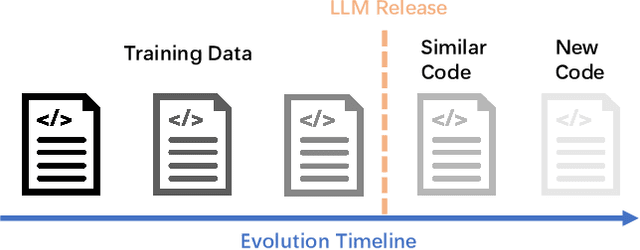
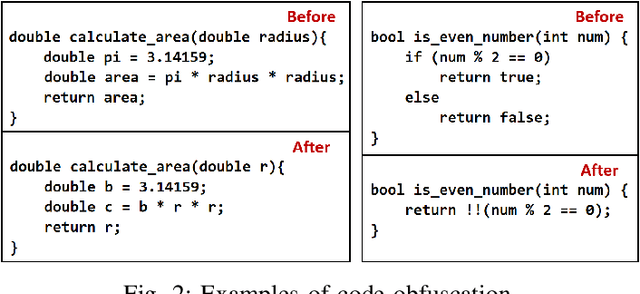
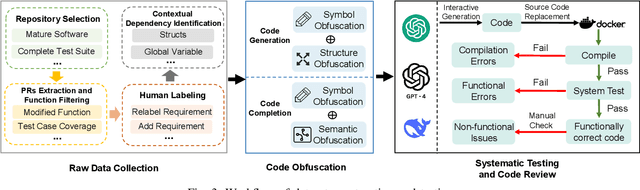
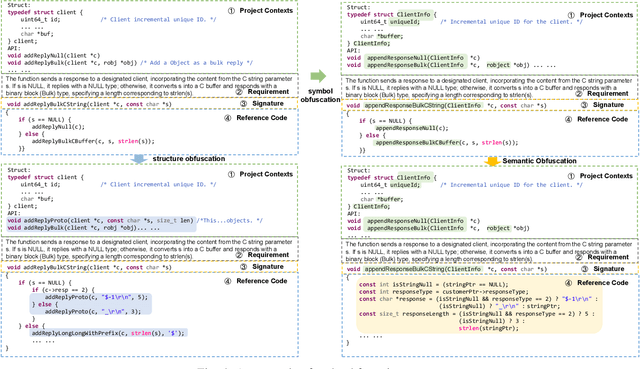
Recently, large language models (LLMs) have shown strong potential in code generation tasks. However, there are still gaps before they can be fully applied in actual software development processes. Accurately assessing the code generation capabilities of large language models has become an important basis for evaluating and improving the models. Some existing works have constructed datasets to evaluate the capabilities of these models. However, the current evaluation process may encounter the illusion of "Specialist in Familiarity", primarily due to three gaps: the exposure of target code, case timeliness, and dependency availability. The fundamental reason for these gaps is that the code in current datasets may have been extensively exposed and exercised during the training phase, and due to the continuous training and development of LLM, their timeliness has been severely compromised. The key to solve the problem is to, as much as possible, evaluate the LLMs using code that they have not encountered before. Thus, the fundamental idea in this paper is to draw on the concept of code obfuscation, changing code at different levels while ensuring the functionality and output. To this end, we build a code-obfuscation based benchmark OBFUSEVAL. We first collect 1,354 raw cases from five real-world projects, including function description and code. Then we use three-level strategy (symbol, structure and semantic) to obfuscate descriptions, code and context dependencies. We evaluate four LLMs on OBFU- SEVAL and compared the effectiveness of different obfuscation strategy. We use official test suites of these projects to evaluate the generated code. The results show that after obfuscation, the average decrease ratio of test pass rate can up to 62.5%.
Augmenting Channel Simulator and Semi- Supervised Learning for Efficient Indoor Positioning
Aug 01, 2024


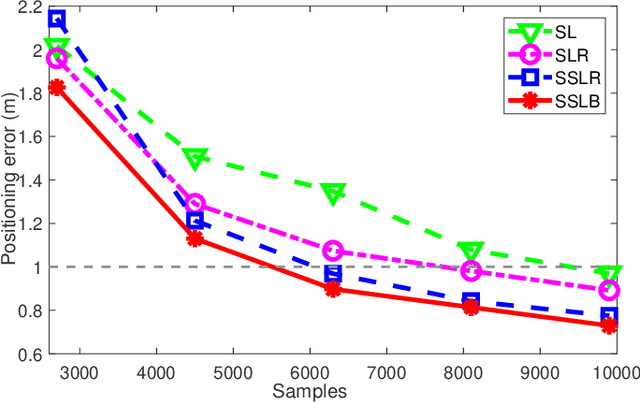
This work aims to tackle the labor-intensive and resource-consuming task of indoor positioning by proposing an efficient approach. The proposed approach involves the introduction of a semi-supervised learning (SSL) with a biased teacher (SSLB) algorithm, which effectively utilizes both labeled and unlabeled channel data. To reduce measurement expenses, unlabeled data is generated using an updated channel simulator (UCHS), and then weighted by adaptive confidence values to simplify the tuning of hyperparameters. Simulation results demonstrate that the proposed strategy achieves superior performance while minimizing measurement overhead and training expense compared to existing benchmarks, offering a valuable and practical solution for indoor positioning.
DGoT: Dynamic Graph of Thoughts for Scientific Abstract Generation
Mar 26, 2024The method of training language models based on domain datasets has obtained significant achievements in the task of generating scientific paper abstracts. However, such models face problems of generalization and expensive training costs. The use of large language models (LLMs) to solve the task of generating paper abstracts saves the cost of model training. However, due to the hallucination problem of LLM, it is often necessary to improve the reliability of the results through multi-round query prompt approach such as Graph of Thoughts (GoT), which also brings additional reasoning costs. In this paper, we propose a Dynamic Graph of Thought (DGoT). It not only inherits the advantages of the existing GoT prompt approach, but also dynamically adjust the graph structure according to data characteristics while reducing model reasoning cost. Experimental results show that our method's cost-effectiveness in abstract generation tasks is only 43.7% to 56.4% of other multi-round query prompt approaches. Our code is available at https://github.com/JayceNing/DGoT.
KDSM: An uplift modeling framework based on knowledge distillation and sample matching
Mar 06, 2023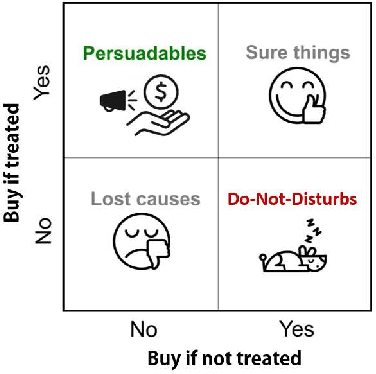
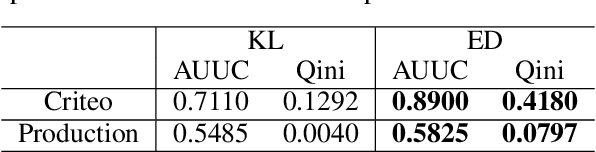
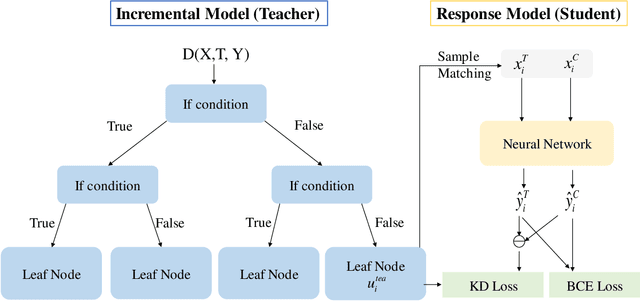
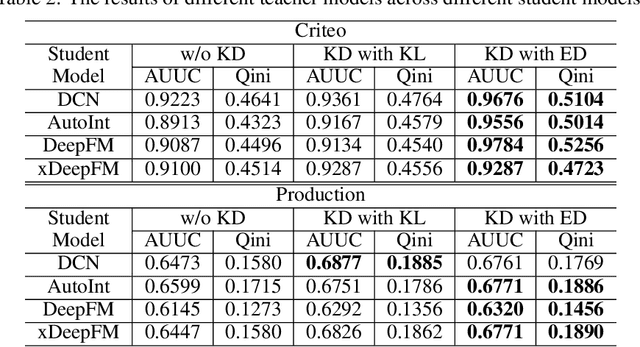
Uplift modeling aims to estimate the treatment effect on individuals, widely applied in the e-commerce platform to target persuadable customers and maximize the return of marketing activities. Among the existing uplift modeling methods, tree-based methods are adept at fitting increment and generalization, while neural-network-based models excel at predicting absolute value and precision, and these advantages have not been fully explored and combined. Also, the lack of counterfactual sample pairs is the root challenge in uplift modeling. In this paper, we proposed an uplift modeling framework based on Knowledge Distillation and Sample Matching (KDSM). The teacher model is the uplift decision tree (UpliftDT), whose structure is exploited to construct counterfactual sample pairs, and the pairwise incremental prediction is treated as another objective for the student model. Under the idea of multitask learning, the student model can achieve better performance on generalization and even surpass the teacher. Extensive offline experiments validate the universality of different combinations of teachers and student models and the superiority of KDSM measured against the baselines. In online A/B testing, the cost of each incremental room night is reduced by 6.5\%.