 Add to Chrome
 Add to Firefox
 Add to Edge
Near-Field Wideband Channel Estimation for XL-MIMO Systems via Denoising Diffusion Model
Apr 22, 2026
Extremely large-scale multiple-input multiple-output (XL-MIMO) is a key enabling technology for sixth-generation (6G) communication systems. Nevertheless, the increase in array aperture and signal bandwidth brings new challenges to wideband channel estimation in XL-MIMO systems. Motivated by recent advances in deep generative modeling, we propose a diffusion model-based method for near-field wideband channel estimation in XL-MIMO systems. We first analyze the statistical correlation of wideband channel and show that near-field wideband channel exhibits both spatial non-stationarity and beam split effects. Based on these observations, the channel estimation problem is formulated as a Bayesian posterior inference task, in which a diffusion model is employed to learn the prior distribution of the channel. To further enhance the representation of complex spatial-frequency channel structures, we design a denoising network with a multi-scale attention mechanism. In particular, the network extracts multi-scale spatial-frequency features via parallel convolutional branches with different receptive fields, and combines feature attention and spatial attention modules to adaptively emphasize critical channel features. This design enables more accurate modeling of near-field wideband channel distributions and consequently improves channel estimation performance. Experimental results demonstrate that the proposed method exhibits superior robustness to existing baseline schemes for XL-MIMO wideband channel estimation under different experimental settings.

Med-V1: Small Language Models for Zero-shot and Scalable Biomedical Evidence Attribution
Mar 05, 2026Assessing whether an article supports an assertion is essential for hallucination detection and claim verification. While large language models (LLMs) have the potential to automate this task, achieving strong performance requires frontier models such as GPT-5 that are prohibitively expensive to deploy at scale. To efficiently perform biomedical evidence attribution, we present Med-V1, a family of small language models with only three billion parameters. Trained on high-quality synthetic data newly developed in this study, Med-V1 substantially outperforms (+27.0% to +71.3%) its base models on five biomedical benchmarks unified into a verification format. Despite its smaller size, Med-V1 performs comparably to frontier LLMs such as GPT-5, along with high-quality explanations for its predictions. We use Med-V1 to conduct a first-of-its-kind use case study that quantifies hallucinations in LLM-generated answers under different citation instructions. Results show that the format instruction strongly affects citation validity and hallucination, with GPT-5 generating more claims but exhibiting hallucination rates similar to GPT-4o. Additionally, we present a second use case showing that Med-V1 can automatically identify high-stakes evidence misattributions in clinical practice guidelines, revealing potentially negative public health impacts that are otherwise challenging to identify at scale. Overall, Med-V1 provides an efficient and accurate lightweight alternative to frontier LLMs for practical and real-world applications in biomedical evidence attribution and verification tasks. Med-V1 is available at https://github.com/ncbi-nlp/Med-V1.
CT-Bench: A Benchmark for Multimodal Lesion Understanding in Computed Tomography
Feb 16, 2026Artificial intelligence (AI) can automatically delineate lesions on computed tomography (CT) and generate radiology report content, yet progress is limited by the scarcity of publicly available CT datasets with lesion-level annotations. To bridge this gap, we introduce CT-Bench, a first-of-its-kind benchmark dataset comprising two components: a Lesion Image and Metadata Set containing 20,335 lesions from 7,795 CT studies with bounding boxes, descriptions, and size information, and a multitask visual question answering benchmark with 2,850 QA pairs covering lesion localization, description, size estimation, and attribute categorization. Hard negative examples are included to reflect real-world diagnostic challenges. We evaluate multiple state-of-the-art multimodal models, including vision-language and medical CLIP variants, by comparing their performance to radiologist assessments, demonstrating the value of CT-Bench as a comprehensive benchmark for lesion analysis. Moreover, fine-tuning models on the Lesion Image and Metadata Set yields significant performance gains across both components, underscoring the clinical utility of CT-Bench.
Knowledge-guided Contextual Gene Set Analysis Using Large Language Models
Jun 04, 2025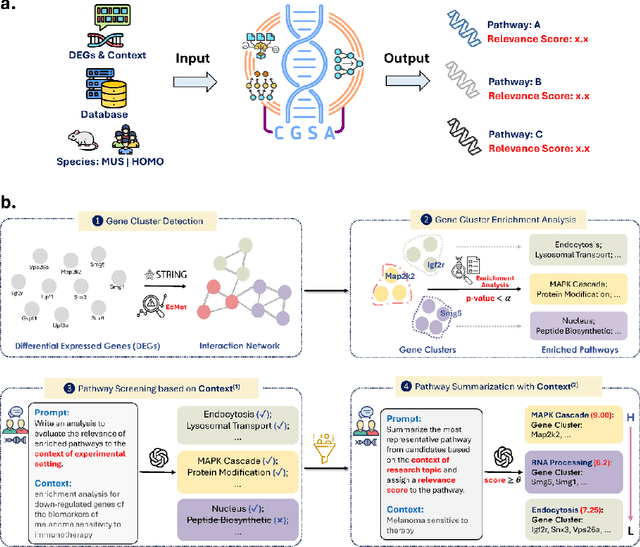
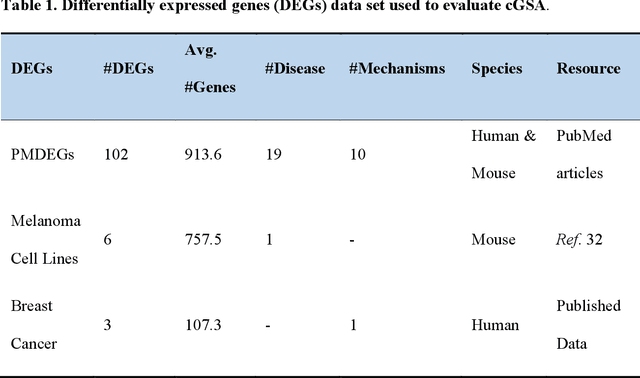
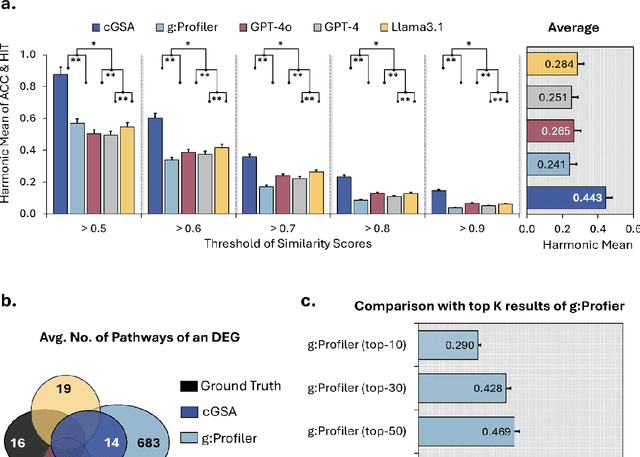
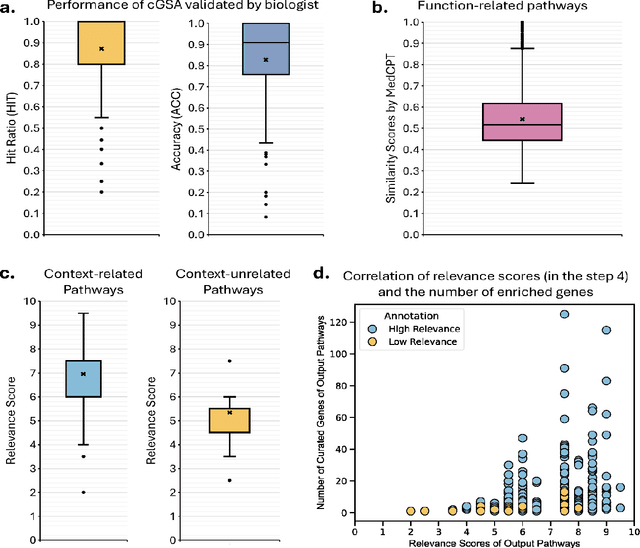
Gene set analysis (GSA) is a foundational approach for interpreting genomic data of diseases by linking genes to biological processes. However, conventional GSA methods overlook clinical context of the analyses, often generating long lists of enriched pathways with redundant, nonspecific, or irrelevant results. Interpreting these requires extensive, ad-hoc manual effort, reducing both reliability and reproducibility. To address this limitation, we introduce cGSA, a novel AI-driven framework that enhances GSA by incorporating context-aware pathway prioritization. cGSA integrates gene cluster detection, enrichment analysis, and large language models to identify pathways that are not only statistically significant but also biologically meaningful. Benchmarking on 102 manually curated gene sets across 19 diseases and ten disease-related biological mechanisms shows that cGSA outperforms baseline methods by over 30%, with expert validation confirming its increased precision and interpretability. Two independent case studies in melanoma and breast cancer further demonstrate its potential to uncover context-specific insights and support targeted hypothesis generation.
Multi-Scale Target-Aware Representation Learning for Fundus Image Enhancement
May 03, 2025High-quality fundus images provide essential anatomical information for clinical screening and ophthalmic disease diagnosis. Yet, due to hardware limitations, operational variability, and patient compliance, fundus images often suffer from low resolution and signal-to-noise ratio. Recent years have witnessed promising progress in fundus image enhancement. However, existing works usually focus on restoring structural details or global characteristics of fundus images, lacking a unified image enhancement framework to recover comprehensive multi-scale information. Moreover, few methods pinpoint the target of image enhancement, e.g., lesions, which is crucial for medical image-based diagnosis. To address these challenges, we propose a multi-scale target-aware representation learning framework (MTRL-FIE) for efficient fundus image enhancement. Specifically, we propose a multi-scale feature encoder (MFE) that employs wavelet decomposition to embed both low-frequency structural information and high-frequency details. Next, we design a structure-preserving hierarchical decoder (SHD) to fuse multi-scale feature embeddings for real fundus image restoration. SHD integrates hierarchical fusion and group attention mechanisms to achieve adaptive feature fusion while retaining local structural smoothness. Meanwhile, a target-aware feature aggregation (TFA) module is used to enhance pathological regions and reduce artifacts. Experimental results on multiple fundus image datasets demonstrate the effectiveness and generalizability of MTRL-FIE for fundus image enhancement. Compared to state-of-the-art methods, MTRL-FIE achieves superior enhancement performance with a more lightweight architecture. Furthermore, our approach generalizes to other ophthalmic image processing tasks without supervised fine-tuning, highlighting its potential for clinical applications.
RAG-Gym: Optimizing Reasoning and Search Agents with Process Supervision
Feb 19, 2025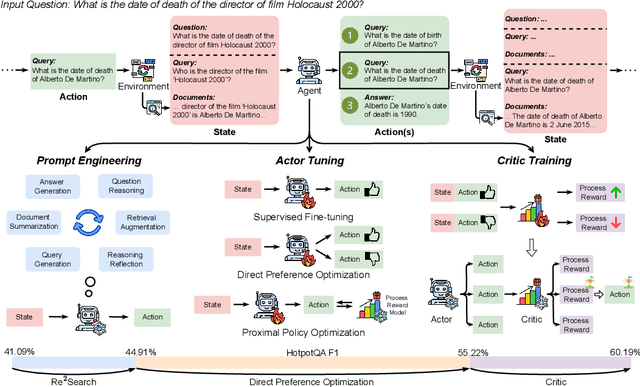
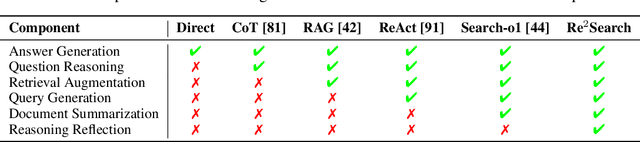
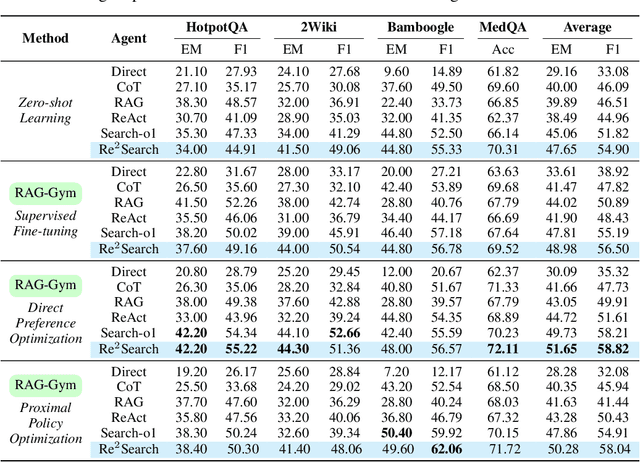
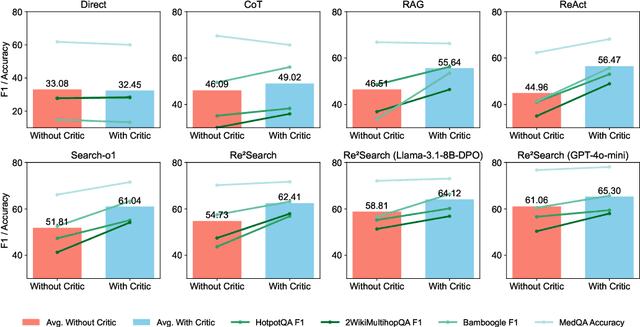
Retrieval-augmented generation (RAG) has shown great potential for knowledge-intensive tasks, but its traditional architectures rely on static retrieval, limiting their effectiveness for complex questions that require sequential information-seeking. While agentic reasoning and search offer a more adaptive approach, most existing methods depend heavily on prompt engineering. In this work, we introduce RAG-Gym, a unified optimization framework that enhances information-seeking agents through fine-grained process supervision at each search step. We also propose ReSearch, a novel agent architecture that synergizes answer reasoning and search query generation within the RAG-Gym framework. Experiments on four challenging datasets show that RAG-Gym improves performance by up to 25.6\% across various agent architectures, with ReSearch consistently outperforming existing baselines. Further analysis highlights the effectiveness of advanced LLMs as process reward judges and the transferability of trained reward models as verifiers for different LLMs. Additionally, we examine the scaling properties of training and inference in agentic RAG. The project homepage is available at https://rag-gym.github.io/.
A Multi-Modal AI Copilot for Single-Cell Analysis with Instruction Following
Jan 15, 2025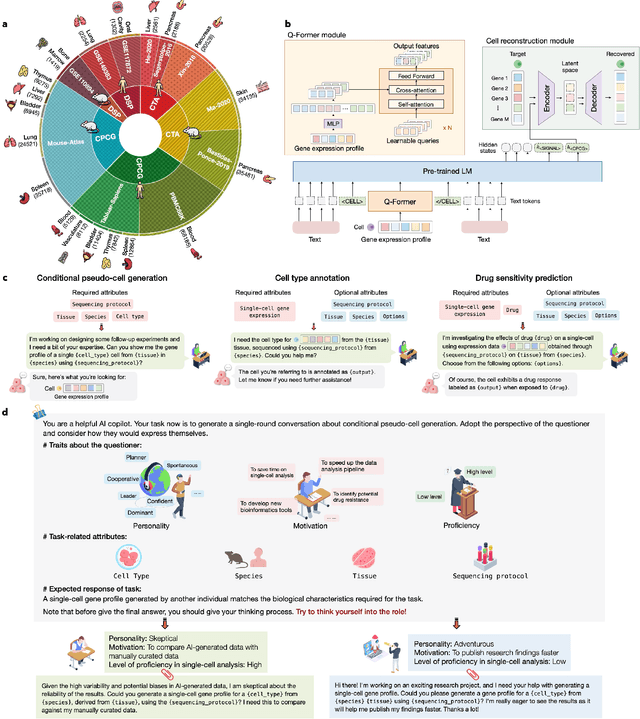
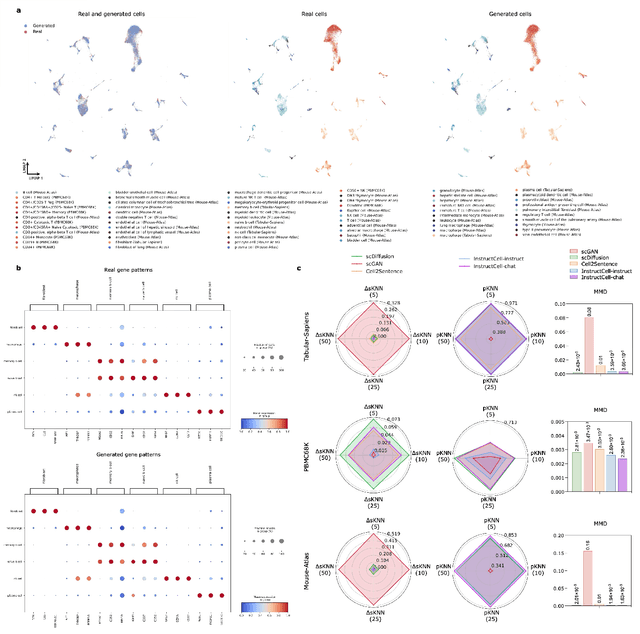
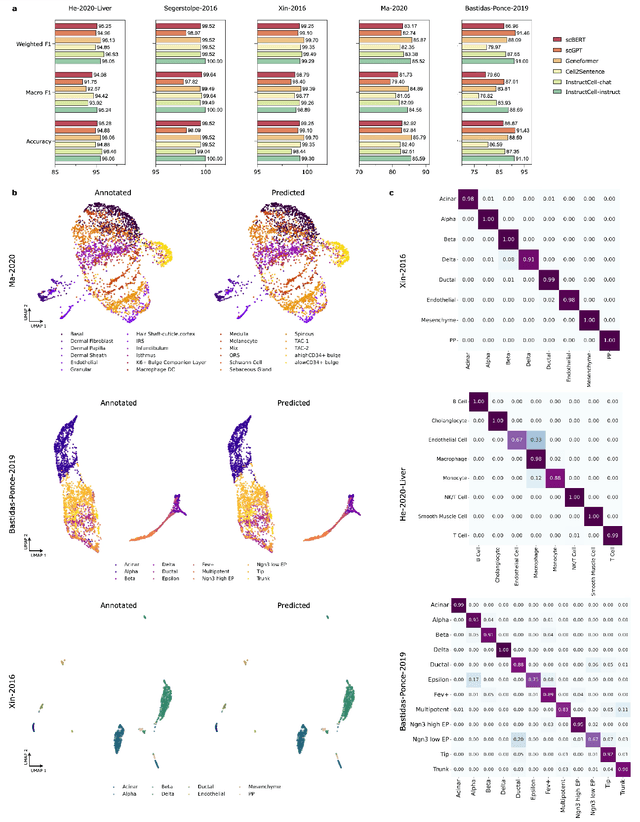
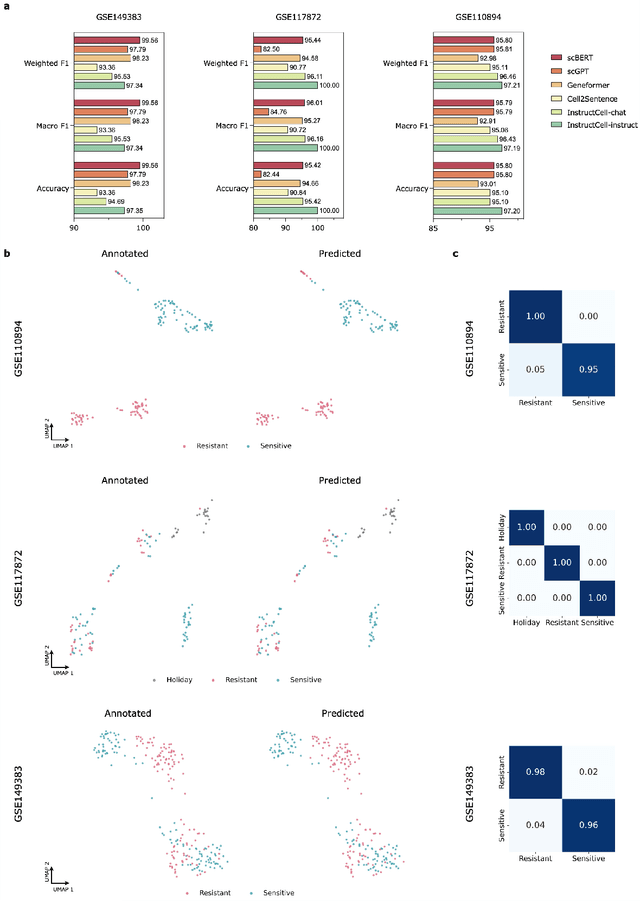
Large language models excel at interpreting complex natural language instructions, enabling them to perform a wide range of tasks. In the life sciences, single-cell RNA sequencing (scRNA-seq) data serves as the "language of cellular biology", capturing intricate gene expression patterns at the single-cell level. However, interacting with this "language" through conventional tools is often inefficient and unintuitive, posing challenges for researchers. To address these limitations, we present InstructCell, a multi-modal AI copilot that leverages natural language as a medium for more direct and flexible single-cell analysis. We construct a comprehensive multi-modal instruction dataset that pairs text-based instructions with scRNA-seq profiles from diverse tissues and species. Building on this, we develop a multi-modal cell language architecture capable of simultaneously interpreting and processing both modalities. InstructCell empowers researchers to accomplish critical tasks-such as cell type annotation, conditional pseudo-cell generation, and drug sensitivity prediction-using straightforward natural language commands. Extensive evaluations demonstrate that InstructCell consistently meets or exceeds the performance of existing single-cell foundation models, while adapting to diverse experimental conditions. More importantly, InstructCell provides an accessible and intuitive tool for exploring complex single-cell data, lowering technical barriers and enabling deeper biological insights.
The Power of Noise: Toward a Unified Multi-modal Knowledge Graph Representation Framework
Mar 20, 2024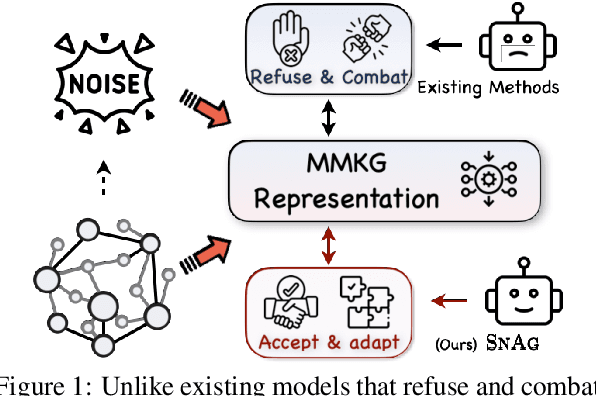
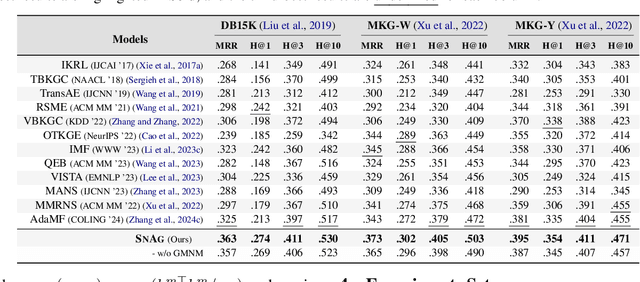
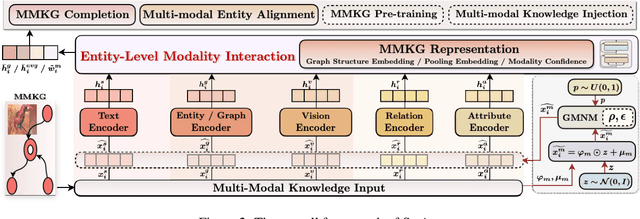
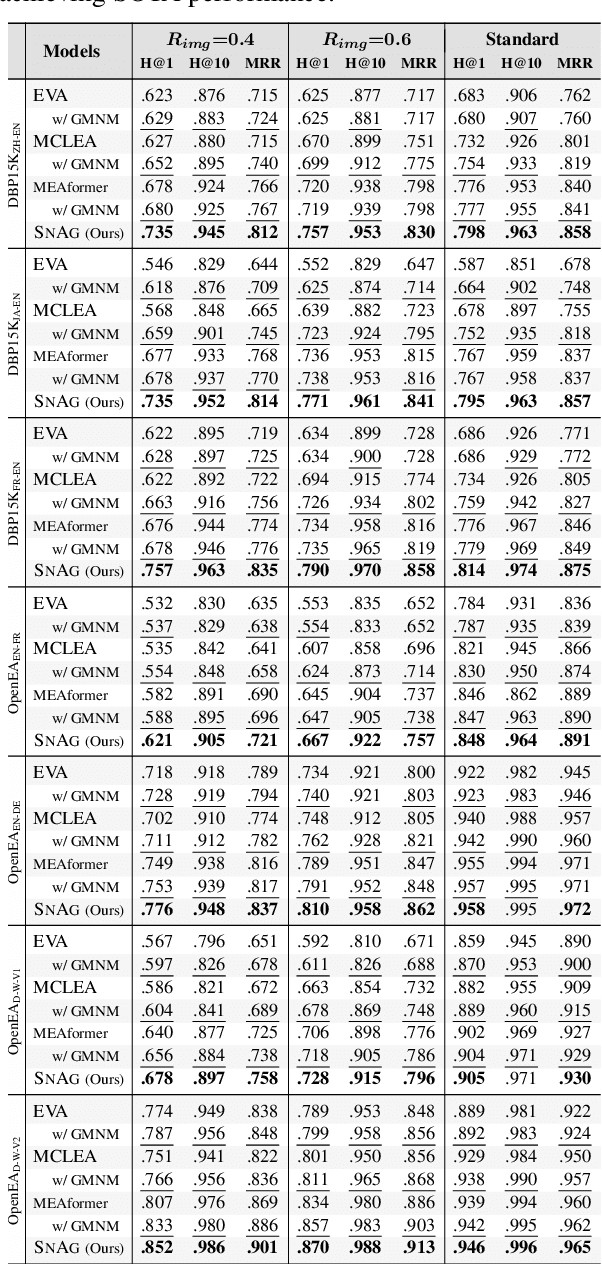
The advancement of Multi-modal Pre-training highlights the necessity for a robust Multi-Modal Knowledge Graph (MMKG) representation learning framework. This framework is crucial for integrating structured knowledge into multi-modal Large Language Models (LLMs) at scale, aiming to alleviate issues like knowledge misconceptions and multi-modal hallucinations. In this work, to evaluate models' ability to accurately embed entities within MMKGs, we focus on two widely researched tasks: Multi-modal Knowledge Graph Completion (MKGC) and Multi-modal Entity Alignment (MMEA). Building on this foundation, we propose a novel SNAG method that utilizes a Transformer-based architecture equipped with modality-level noise masking for the robust integration of multi-modal entity features in KGs. By incorporating specific training objectives for both MKGC and MMEA, our approach achieves SOTA performance across a total of ten datasets (three for MKGC and seven for MEMA), demonstrating its robustness and versatility. Besides, SNAG can not only function as a standalone model but also enhance other existing methods, providing stable performance improvements. Our code and data are available at: https://github.com/zjukg/SNAG.
BioT5+: Towards Generalized Biological Understanding with IUPAC Integration and Multi-task Tuning
Feb 27, 2024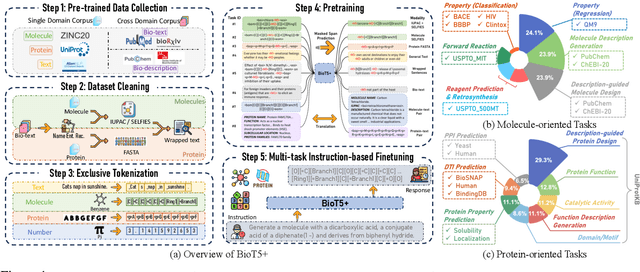


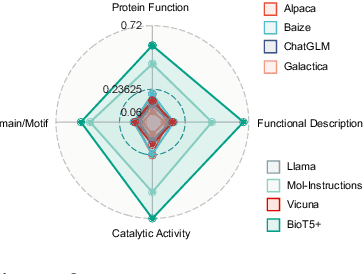
Recent research trends in computational biology have increasingly focused on integrating text and bio-entity modeling, especially in the context of molecules and proteins. However, previous efforts like BioT5 faced challenges in generalizing across diverse tasks and lacked a nuanced understanding of molecular structures, particularly in their textual representations (e.g., IUPAC). This paper introduces BioT5+, an extension of the BioT5 framework, tailored to enhance biological research and drug discovery. BioT5+ incorporates several novel features: integration of IUPAC names for molecular understanding, inclusion of extensive bio-text and molecule data from sources like bioRxiv and PubChem, the multi-task instruction tuning for generality across tasks, and a novel numerical tokenization technique for improved processing of numerical data. These enhancements allow BioT5+ to bridge the gap between molecular representations and their textual descriptions, providing a more holistic understanding of biological entities, and largely improving the grounded reasoning of bio-text and bio-sequences. The model is pre-trained and fine-tuned with a large number of experiments, including \emph{3 types of problems (classification, regression, generation), 15 kinds of tasks, and 21 total benchmark datasets}, demonstrating the remarkable performance and state-of-the-art results in most cases. BioT5+ stands out for its ability to capture intricate relationships in biological data, thereby contributing significantly to bioinformatics and computational biology. Our code is available at \url{https://github.com/QizhiPei/BioT5}.
Knowledge Graphs Meet Multi-Modal Learning: A Comprehensive Survey
Feb 26, 2024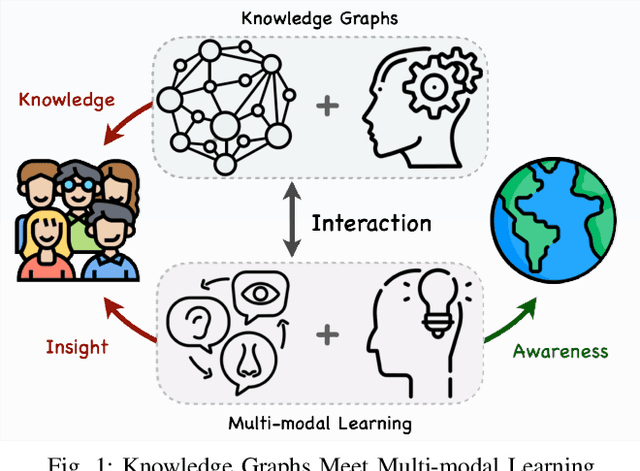
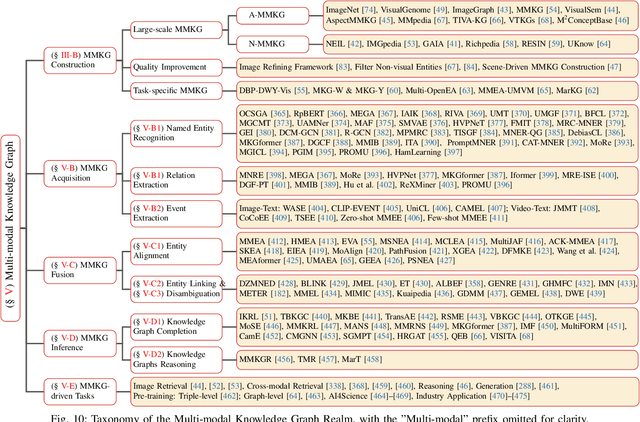
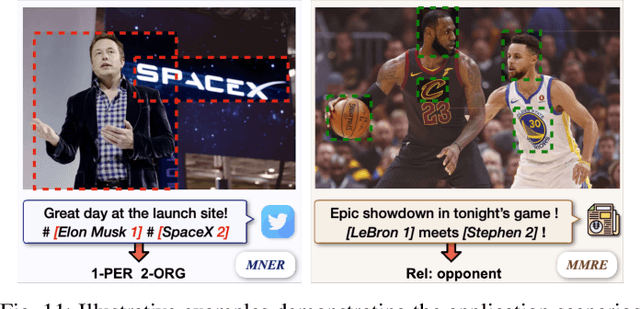
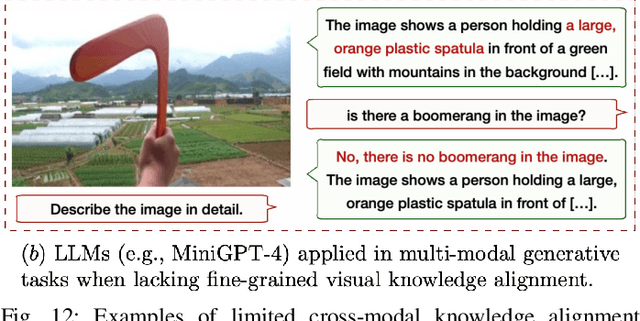
Knowledge Graphs (KGs) play a pivotal role in advancing various AI applications, with the semantic web community's exploration into multi-modal dimensions unlocking new avenues for innovation. In this survey, we carefully review over 300 articles, focusing on KG-aware research in two principal aspects: KG-driven Multi-Modal (KG4MM) learning, where KGs support multi-modal tasks, and Multi-Modal Knowledge Graph (MM4KG), which extends KG studies into the MMKG realm. We begin by defining KGs and MMKGs, then explore their construction progress. Our review includes two primary task categories: KG-aware multi-modal learning tasks, such as Image Classification and Visual Question Answering, and intrinsic MMKG tasks like Multi-modal Knowledge Graph Completion and Entity Alignment, highlighting specific research trajectories. For most of these tasks, we provide definitions, evaluation benchmarks, and additionally outline essential insights for conducting relevant research. Finally, we discuss current challenges and identify emerging trends, such as progress in Large Language Modeling and Multi-modal Pre-training strategies. This survey aims to serve as a comprehensive reference for researchers already involved in or considering delving into KG and multi-modal learning research, offering insights into the evolving landscape of MMKG research and supporting future work.