 Add to Chrome
 Add to Firefox
 Add to Edge
MCLRL: A Multi-Domain Contrastive Learning with Reinforcement Learning Framework for Few-Shot Modulation Recognition
Feb 26, 2025
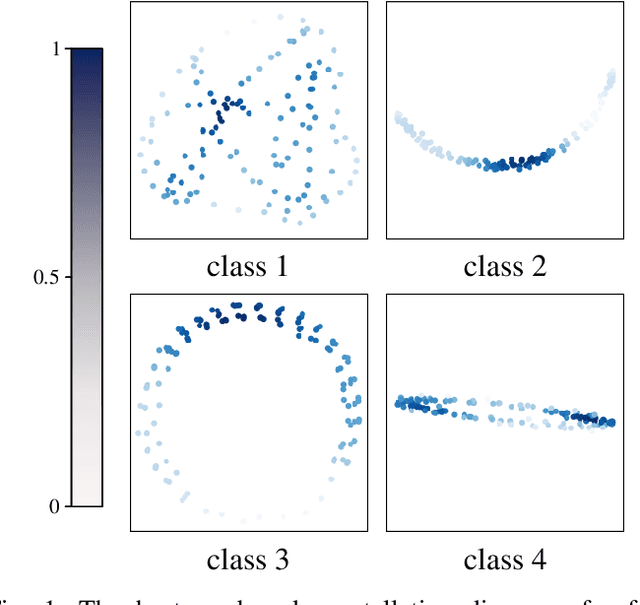
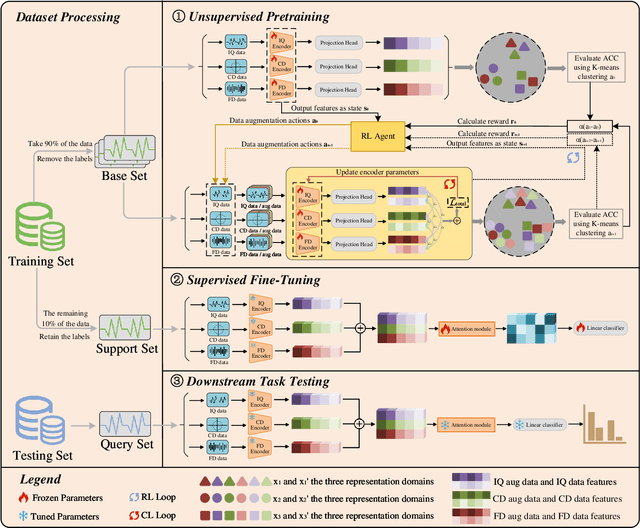
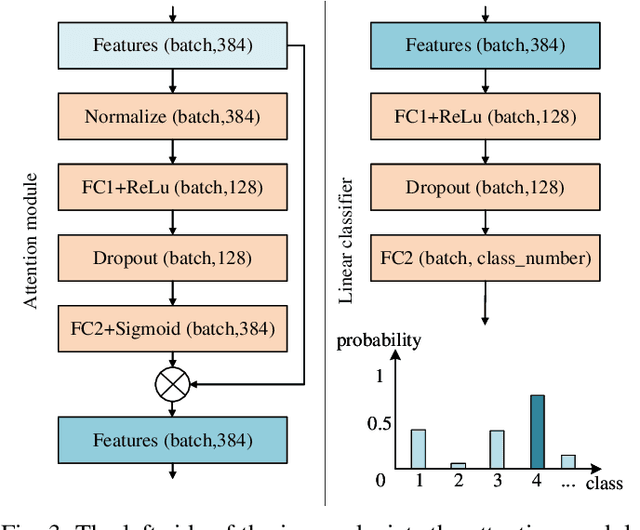
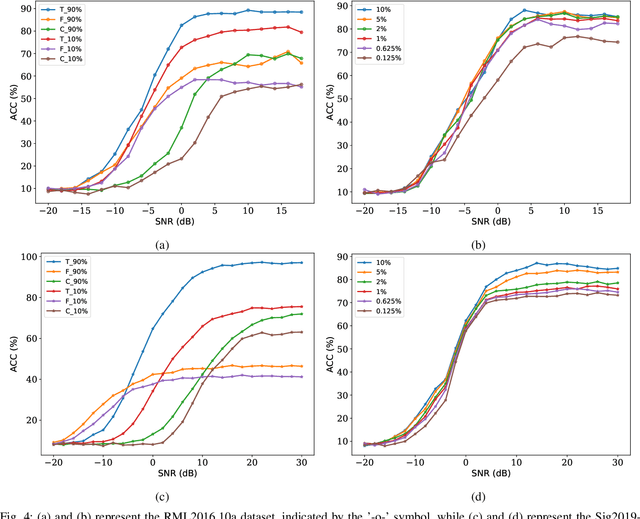
With the rapid advancements in wireless communication technology, automatic modulation recognition (AMR) plays a critical role in ensuring communication security and reliability. However, numerous challenges, including higher performance demands, difficulty in data acquisition under specific scenarios, limited sample size, and low-quality labeled data, hinder its development. Few-shot learning (FSL) offers an effective solution by enabling models to achieve satisfactory performance with only a limited number of labeled samples. While most FSL techniques are applied in the field of computer vision, they are not directly applicable to wireless signal processing. This study does not propose a new FSL-specific signal model but introduces a framework called MCLRL. This framework combines multi-domain contrastive learning with reinforcement learning. Multi-domain representations of signals enhance feature richness, while integrating contrastive learning and reinforcement learning architectures enables the extraction of deep features for classification. In downstream tasks, the model achieves excellent performance using only a few samples and minimal training cycles. Experimental results show that the MCLRL framework effectively extracts key features from signals, performs well in FSL tasks, and maintains flexibility in signal model selection.

LServe: Efficient Long-sequence LLM Serving with Unified Sparse Attention
Feb 20, 2025Large language models (LLMs) have shown remarkable potential in processing long sequences, yet efficiently serving these long-context models remains challenging due to the quadratic computational complexity of attention in the prefilling stage and the large memory footprint of the KV cache in the decoding stage. To address these issues, we introduce LServe, an efficient system that accelerates long-sequence LLM serving via hybrid sparse attention. This method unifies different hardware-friendly, structured sparsity patterns for both prefilling and decoding attention into a single framework, where computations on less important tokens are skipped block-wise. LServe demonstrates the compatibility of static and dynamic sparsity in long-context LLM attention. This design enables multiplicative speedups by combining these optimizations. Specifically, we convert half of the attention heads to nearly free streaming heads in both the prefilling and decoding stages. Additionally, we find that only a constant number of KV pages is required to preserve long-context capabilities, irrespective of context length. We then design a hierarchical KV page selection policy that dynamically prunes KV pages based on query-centric similarity. On average, LServe accelerates LLM prefilling by up to 2.9x and decoding by 1.3-2.1x over vLLM, maintaining long-context accuracy. Code is released at https://github.com/mit-han-lab/omniserve.
Multilingual Language Model Pretraining using Machine-translated Data
Feb 18, 2025High-resource languages such as English, enables the pretraining of high-quality large language models (LLMs). The same can not be said for most other languages as LLMs still underperform for non-English languages, likely due to a gap in the quality and diversity of the available multilingual pretraining corpora. In this work, we find that machine-translated texts from a single high-quality source language can contribute significantly to the pretraining quality of multilingual LLMs. We translate FineWeb-Edu, a high-quality English web dataset, into nine languages, resulting in a 1.7-trillion-token dataset, which we call TransWebEdu and pretrain a 1.3B-parameter model, TransWebLLM, from scratch on this dataset. Across nine non-English reasoning tasks, we show that TransWebLLM matches or outperforms state-of-the-art multilingual models trained using closed data, such as Llama3.2, Qwen2.5, and Gemma, despite using an order of magnitude less data. We demonstrate that adding less than 5% of TransWebEdu as domain-specific pretraining data sets a new state-of-the-art in Arabic, Italian, Indonesian, Swahili, and Welsh understanding and commonsense reasoning tasks. To promote reproducibility, we release our corpus, models, and training pipeline under Open Source Initiative-approved licenses.
Beyond Window-Based Detection: A Graph-Centric Framework for Discrete Log Anomaly Detection
Jan 21, 2025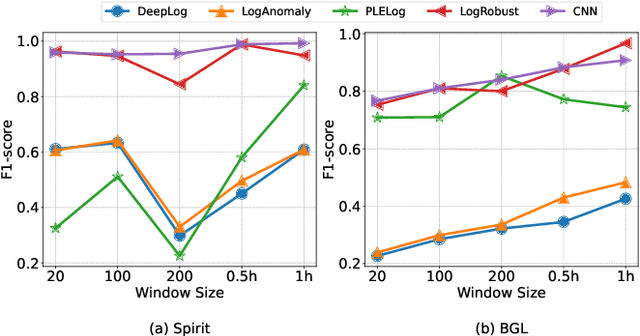
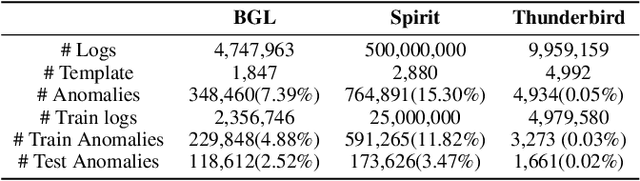
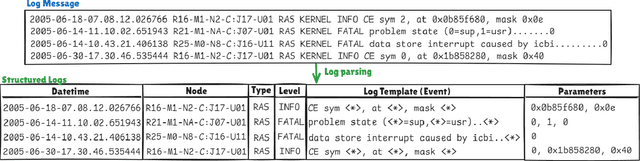
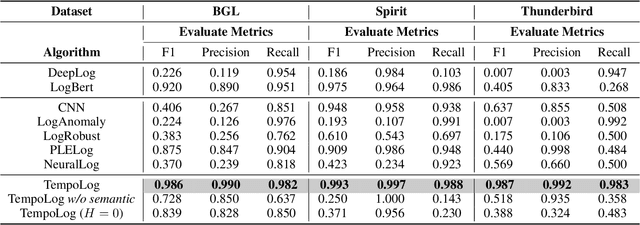
Detecting anomalies in discrete event logs is critical for ensuring system reliability, security, and efficiency. Traditional window-based methods for log anomaly detection often suffer from context bias and fuzzy localization, which hinder their ability to precisely and efficiently identify anomalies. To address these challenges, we propose a graph-centric framework, TempoLog, which leverages multi-scale temporal graph networks for discrete log anomaly detection. Unlike conventional methods, TempoLog constructs continuous-time dynamic graphs directly from event logs, eliminating the need for fixed-size window grouping. By representing log templates as nodes and their temporal relationships as edges, the framework dynamically captures both local and global dependencies across multiple temporal scales. Additionally, a semantic-aware model enhances detection by incorporating rich contextual information. Extensive experiments on public datasets demonstrate that our method achieves state-of-the-art performance in event-level anomaly detection, significantly outperforming existing approaches in both accuracy and efficiency.
Large Language Models for Bioinformatics
Jan 10, 2025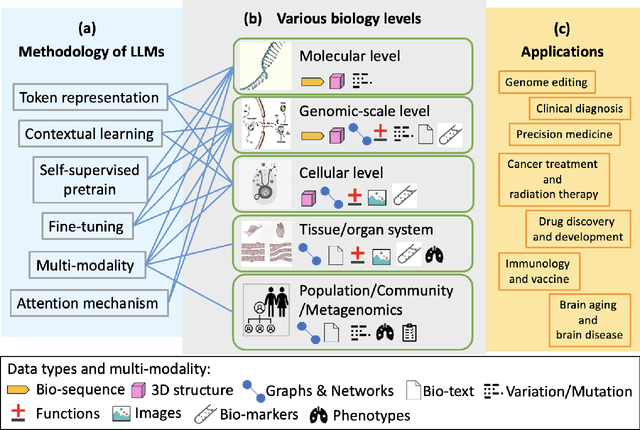
With the rapid advancements in large language model (LLM) technology and the emergence of bioinformatics-specific language models (BioLMs), there is a growing need for a comprehensive analysis of the current landscape, computational characteristics, and diverse applications. This survey aims to address this need by providing a thorough review of BioLMs, focusing on their evolution, classification, and distinguishing features, alongside a detailed examination of training methodologies, datasets, and evaluation frameworks. We explore the wide-ranging applications of BioLMs in critical areas such as disease diagnosis, drug discovery, and vaccine development, highlighting their impact and transformative potential in bioinformatics. We identify key challenges and limitations inherent in BioLMs, including data privacy and security concerns, interpretability issues, biases in training data and model outputs, and domain adaptation complexities. Finally, we highlight emerging trends and future directions, offering valuable insights to guide researchers and clinicians toward advancing BioLMs for increasingly sophisticated biological and clinical applications.
Efficient Parallel Genetic Algorithm for Perturbed Substructure Optimization in Complex Network
Dec 30, 2024


Evolutionary computing, particularly genetic algorithm (GA), is a combinatorial optimization method inspired by natural selection and the transmission of genetic information, which is widely used to identify optimal solutions to complex problems through simulated programming and iteration. Due to its strong adaptability, flexibility, and robustness, GA has shown significant performance and potentiality on perturbed substructure optimization (PSSO), an important graph mining problem that achieves its goals by modifying network structures. However, the efficiency and practicality of GA-based PSSO face enormous challenges due to the complexity and diversity of application scenarios. While some research has explored acceleration frameworks in evolutionary computing, their performance on PSSO remains limited due to a lack of scenario generalizability. Based on these, this paper is the first to present the GA-based PSSO Acceleration framework (GAPA), which simplifies the GA development process and supports distributed acceleration. Specifically, it reconstructs the genetic operation and designs a development framework for efficient parallel acceleration. Meanwhile, GAPA includes an extensible library that optimizes and accelerates 10 PSSO algorithms, covering 4 crucial tasks for graph mining. Comprehensive experiments on 18 datasets across 4 tasks and 10 algorithms effectively demonstrate the superiority of GAPA, achieving an average of 4x the acceleration of Evox. The repository is in https://github.com/NetAlsGroup/GAPA.
Transformer-based toxin-protein interaction analysis prioritizes airborne particulate matter components with potential adverse health effects
Dec 21, 2024Air pollution, particularly airborne particulate matter (PM), poses a significant threat to public health globally. It is crucial to comprehend the association between PM-associated toxic components and their cellular targets in humans to understand the mechanisms by which air pollution impacts health and to establish causal relationships between air pollution and public health consequences. Although many studies have explored the impact of PM on human health, the understanding of the association between toxins and the associated targets remain limited. Leveraging cutting-edge deep learning technologies, we developed tipFormer (toxin-protein interaction prediction based on transformer), a novel deep-learning tool for identifying toxic components capable of penetrating human cells and instigating pathogenic biological activities and signaling cascades. Experimental results show that tipFormer effectively captures interactions between proteins and toxic components. It incorporates dual pre-trained language models to encode protein sequences and chemicals. It employs a convolutional encoder to assimilate the sequential attributes of proteins and chemicals. It then introduces a learning module with a cross-attention mechanism to decode and elucidate the multifaceted interactions pivotal for the hotspots binding proteins and chemicals. Experimental results show that tipFormer effectively captures interactions between proteins and toxic components. This approach offers significant value to air quality and toxicology researchers by allowing high-throughput identification and prioritization of hazards. It supports more targeted laboratory studies and field measurements, ultimately enhancing our understanding of how air pollution impacts human health.
Quantum Machine Learning in Log-based Anomaly Detection: Challenges and Opportunities
Dec 18, 2024Log-based anomaly detection (LogAD) is the main component of Artificial Intelligence for IT Operations (AIOps), which can detect anomalous that occur during the system on-the-fly. Existing methods commonly extract log sequence features using classical machine learning techniques to identify whether a new sequence is an anomaly or not. However, these classical approaches often require trade-offs between efficiency and accuracy. The advent of quantum machine learning (QML) offers a promising alternative. By transforming parts of classical machine learning computations into parameterized quantum circuits (PQCs), QML can significantly reduce the number of trainable parameters while maintaining accuracy comparable to classical counterparts. In this work, we introduce a unified framework, \ourframework{}, for evaluating QML models in the context of LogAD. This framework incorporates diverse log data, integrated QML models, and comprehensive evaluation metrics. State-of-the-art methods such as DeepLog, LogAnomaly, and LogRobust, along with their quantum-transformed counterparts, are included in our framework.Beyond standard metrics like F1 score, precision, and recall, our evaluation extends to factors critical to QML performance, such as specificity, the number of circuits, circuit design, and quantum state encoding. Using \ourframework{}, we conduct extensive experiments to assess the performance of these models and their quantum counterparts, uncovering valuable insights and paving the way for future research in QML model selection and design for LogAD.
RADIO Amplified: Improved Baselines for Agglomerative Vision Foundation Models
Dec 10, 2024Agglomerative models have recently emerged as a powerful approach to training vision foundation models, leveraging multi-teacher distillation from existing models such as CLIP, DINO, and SAM. This strategy enables the efficient creation of robust models, combining the strengths of individual teachers while significantly reducing computational and resource demands. In this paper, we thoroughly analyze state-of-the-art agglomerative models, identifying critical challenges including resolution mode shifts, teacher imbalance, idiosyncratic teacher artifacts, and an excessive number of output tokens. To address these issues, we propose several novel solutions: multi-resolution training, mosaic augmentation, and improved balancing of teacher loss functions. Specifically, in the context of Vision Language Models, we introduce a token compression technique to maintain high-resolution information within a fixed token count. We release our top-performing models, available in multiple scales (-B, -L, -H, and -g), alongside inference code and pretrained weights.
NVILA: Efficient Frontier Visual Language Models
Dec 05, 2024

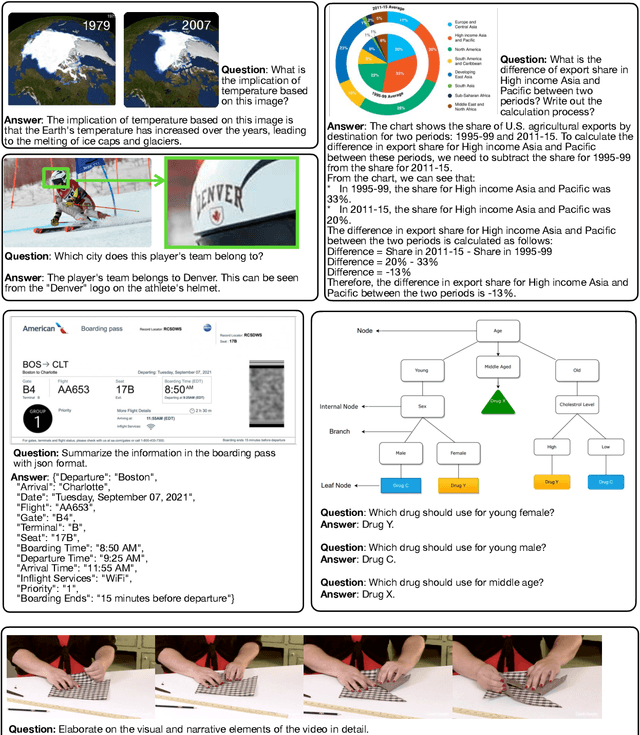

Visual language models (VLMs) have made significant advances in accuracy in recent years. However, their efficiency has received much less attention. This paper introduces NVILA, a family of open VLMs designed to optimize both efficiency and accuracy. Building on top of VILA, we improve its model architecture by first scaling up the spatial and temporal resolutions, and then compressing visual tokens. This "scale-then-compress" approach enables NVILA to efficiently process high-resolution images and long videos. We also conduct a systematic investigation to enhance the efficiency of NVILA throughout its entire lifecycle, from training and fine-tuning to deployment. NVILA matches or surpasses the accuracy of many leading open and proprietary VLMs across a wide range of image and video benchmarks. At the same time, it reduces training costs by 4.5X, fine-tuning memory usage by 3.4X, pre-filling latency by 1.6-2.2X, and decoding latency by 1.2-2.8X. We will soon make our code and models available to facilitate reproducibility.