 Add to Chrome
 Add to Firefox
 Add to Edge
A Data-Centric Multi-Objective Learning Framework for Responsible Recommendation Systems
Oct 20, 2023
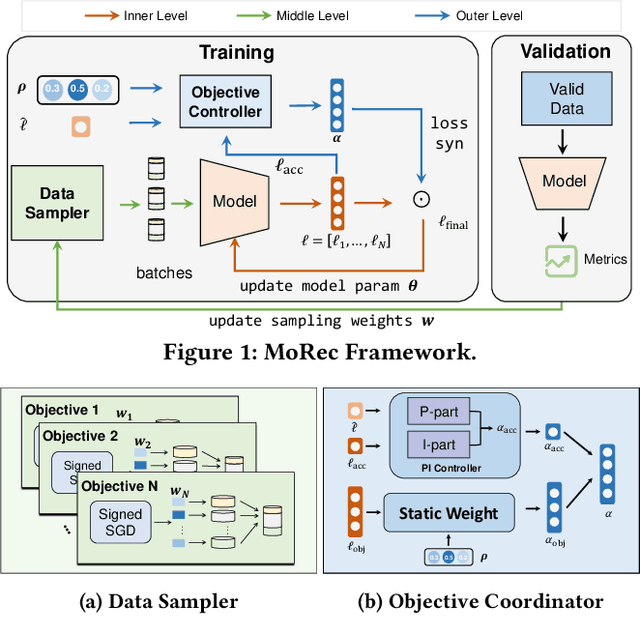
Recommendation systems effectively guide users in locating their desired information within extensive content repositories. Generally, a recommendation model is optimized to enhance accuracy metrics from a user utility standpoint, such as click-through rate or matching relevance. However, a responsible industrial recommendation system must address not only user utility (responsibility to users) but also other objectives, including increasing platform revenue (responsibility to platforms), ensuring fairness (responsibility to content creators), and maintaining unbiasedness (responsibility to long-term healthy development). Multi-objective learning is a potent approach for achieving responsible recommendation systems. Nevertheless, current methods encounter two challenges: difficulty in scaling to heterogeneous objectives within a unified framework, and inadequate controllability over objective priority during optimization, leading to uncontrollable solutions. In this paper, we present a data-centric optimization framework, MoRec, which unifies the learning of diverse objectives. MoRec is a tri-level framework: the outer level manages the balance between different objectives, utilizing a proportional-integral-derivative (PID)-based controller to ensure a preset regularization on the primary objective. The middle level transforms objective-aware optimization into data sampling weights using sign gradients. The inner level employs a standard optimizer to update model parameters with the sampled data. Consequently, MoRec can flexibly support various objectives while maintaining the original model intact. Comprehensive experiments on two public datasets and one industrial dataset showcase the effectiveness, controllability, flexibility, and Pareto efficiency of MoRec, making it highly suitable for real-world implementation.

Meta Semantic Template for Evaluation of Large Language Models
Oct 19, 2023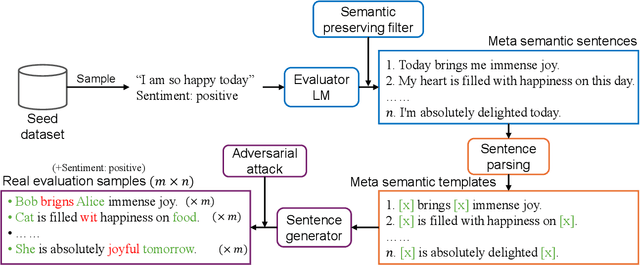
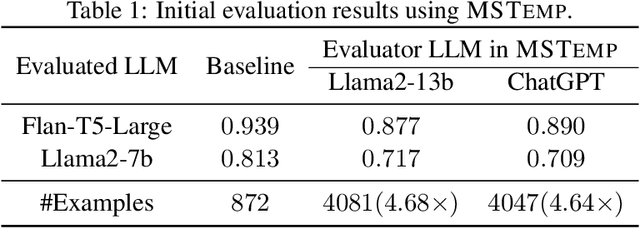
Do large language models (LLMs) genuinely understand the semantics of the language, or just memorize the training data? The recent concern on potential data contamination of LLMs has raised awareness of the community to conduct research on LLMs evaluation. In this paper, we propose MSTemp, an approach that creates meta semantic templates to evaluate the semantic understanding ability of LLMs. The core of MSTemp is not to perform evaluation directly on existing benchmark datasets, but to generate new out-of-distribution (OOD) evaluation sets using existing datasets as seeds. Specifically, for a given sentence, MSTemp leverages another language model to generate new samples while preserving its semantics. The new samples are called semantic templates to the original sentence. Then, MSTemp generates evaluation samples via sentence parsing and random word replacement on the semantic templates. MSTemp is highly flexible, dynamic, and cost-effective. Our initial experiments show that MSTemp-generated samples can significantly reduce the performance of LLMs using existing datasets as seeds. We hope this initial work can shed light on future research of LLMs evaluation.
Survey on Factuality in Large Language Models: Knowledge, Retrieval and Domain-Specificity
Oct 18, 2023
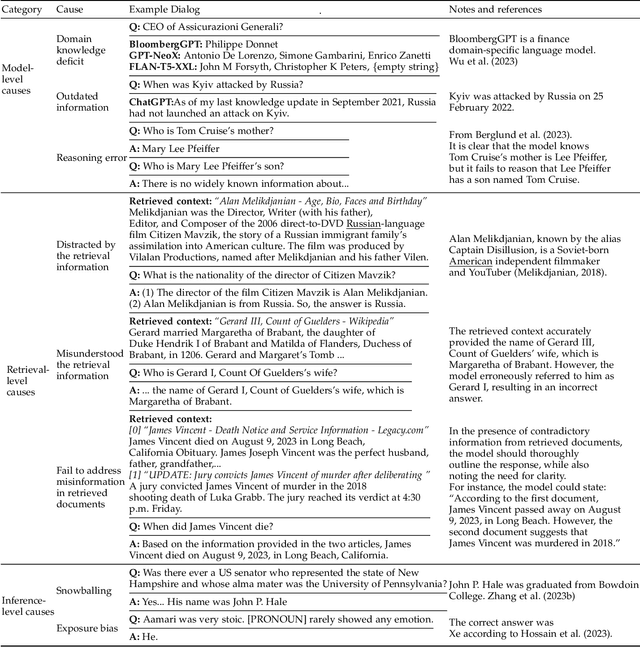
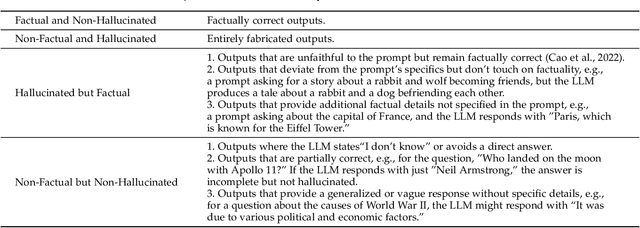

This survey addresses the crucial issue of factuality in Large Language Models (LLMs). As LLMs find applications across diverse domains, the reliability and accuracy of their outputs become vital. We define the Factuality Issue as the probability of LLMs to produce content inconsistent with established facts. We first delve into the implications of these inaccuracies, highlighting the potential consequences and challenges posed by factual errors in LLM outputs. Subsequently, we analyze the mechanisms through which LLMs store and process facts, seeking the primary causes of factual errors. Our discussion then transitions to methodologies for evaluating LLM factuality, emphasizing key metrics, benchmarks, and studies. We further explore strategies for enhancing LLM factuality, including approaches tailored for specific domains. We focus two primary LLM configurations standalone LLMs and Retrieval-Augmented LLMs that utilizes external data, we detail their unique challenges and potential enhancements. Our survey offers a structured guide for researchers aiming to fortify the factual reliability of LLMs.
ZooPFL: Exploring Black-box Foundation Models for Personalized Federated Learning
Oct 08, 2023
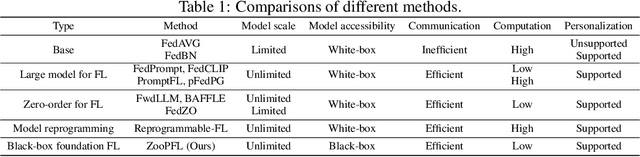
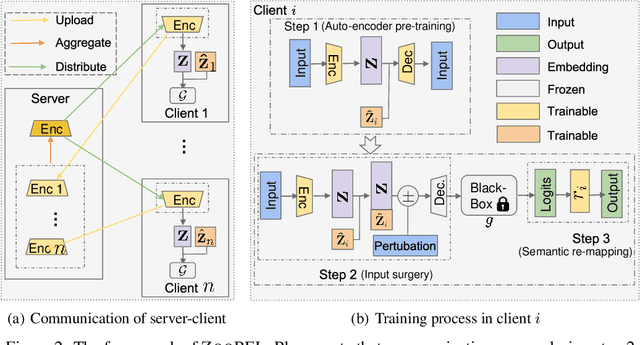
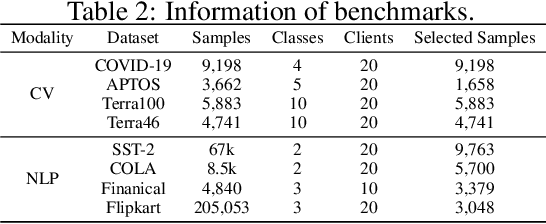
When personalized federated learning (FL) meets large foundation models, new challenges arise from various limitations in resources. In addition to typical limitations such as data, computation, and communication costs, access to the models is also often limited. This paper endeavors to solve both the challenges of limited resources and personalization. i.e., distribution shifts between clients. To do so, we propose a method named ZOOPFL that uses Zeroth-Order Optimization for Personalized Federated Learning. ZOOPFL avoids direct interference with the foundation models and instead learns to adapt its inputs through zeroth-order optimization. In addition, we employ simple yet effective linear projections to remap its predictions for personalization. To reduce the computation costs and enhance personalization, we propose input surgery to incorporate an auto-encoder with low-dimensional and client-specific embeddings. We provide theoretical support for ZOOPFL to analyze its convergence. Extensive empirical experiments on computer vision and natural language processing tasks using popular foundation models demonstrate its effectiveness for FL on black-box foundation models.
DyVal: Graph-informed Dynamic Evaluation of Large Language Models
Oct 05, 2023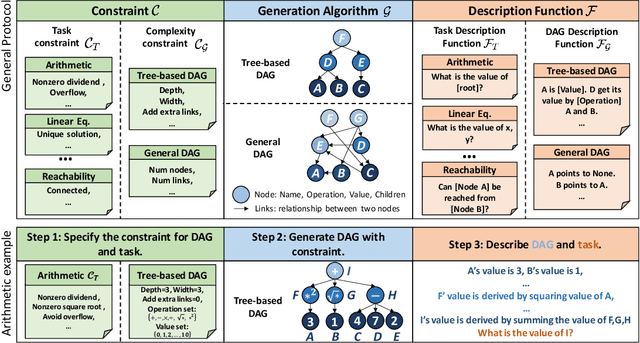
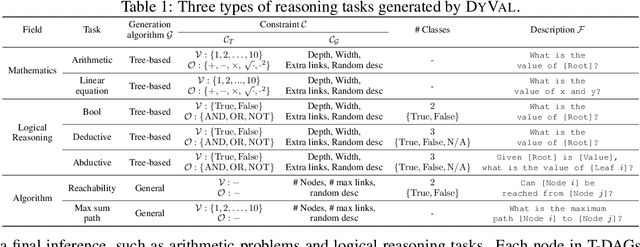
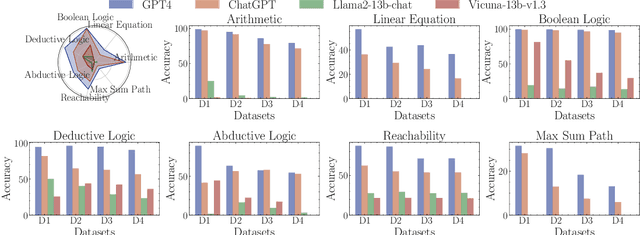
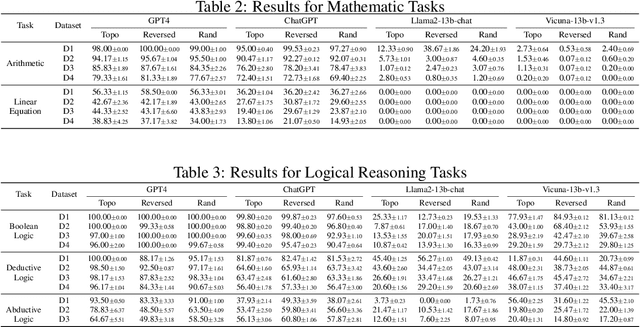
Large language models (LLMs) have achieved remarkable performance in various evaluation benchmarks. However, concerns about their performance are raised on potential data contamination in their considerable volume of training corpus. Moreover, the static nature and fixed complexity of current benchmarks may inadequately gauge the advancing capabilities of LLMs. In this paper, we introduce DyVal, a novel, general, and flexible evaluation protocol for dynamic evaluation of LLMs. Based on our proposed dynamic evaluation framework, we build graph-informed DyVal by leveraging the structural advantage of directed acyclic graphs to dynamically generate evaluation samples with controllable complexities. DyVal generates challenging evaluation sets on reasoning tasks including mathematics, logical reasoning, and algorithm problems. We evaluate various LLMs ranging from Flan-T5-large to ChatGPT and GPT4. Experiments demonstrate that LLMs perform worse in DyVal-generated evaluation samples with different complexities, emphasizing the significance of dynamic evaluation. We also analyze the failure cases and results of different prompting methods. Moreover, DyVal-generated samples are not only evaluation sets, but also helpful data for fine-tuning to improve the performance of LLMs on existing benchmarks. We hope that DyVal can shed light on the future evaluation research of LLMs.
Understanding and Mitigating the Label Noise in Pre-training on Downstream Tasks
Sep 29, 2023
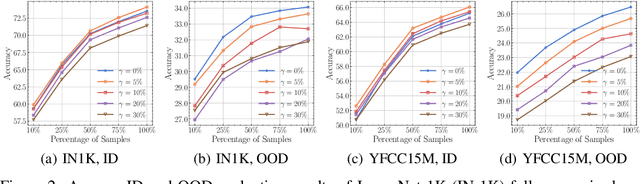


Pre-training on large-scale datasets and then fine-tuning on downstream tasks have become a standard practice in deep learning. However, pre-training data often contain label noise that may adversely affect the generalization of the model. This paper aims to understand the nature of noise in pre-training datasets and to mitigate its impact on downstream tasks. More specifically, through extensive experiments of supervised pre-training models on synthetic noisy ImageNet-1K and YFCC15M datasets, we demonstrate that while slight noise in pre-training can benefit in-domain (ID) transfer performance, where the training and testing data share the same distribution, it always deteriorates out-of-domain (OOD) performance, where training and testing data distribution are different. We empirically verify that the reason behind is noise in pre-training shapes the feature space differently. We then propose a lightweight black-box tuning method (NMTune) to affine the feature space to mitigate the malignant effect of noise and improve generalization on both ID and OOD tasks, considering one may not be able to fully fine-tune or even access the pre-trained models. We conduct practical experiments on popular vision and language models that are pre-trained on noisy data for evaluation of our approach. Our analysis and results show the importance of this interesting and novel research direction, which we term Noisy Model Learning.
Model-enhanced Vector Index
Sep 23, 2023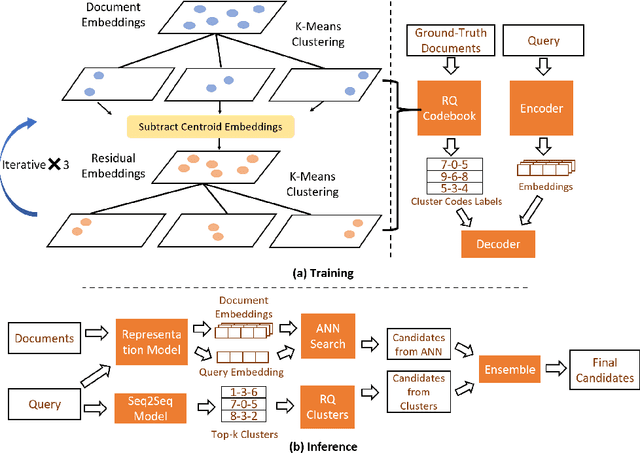
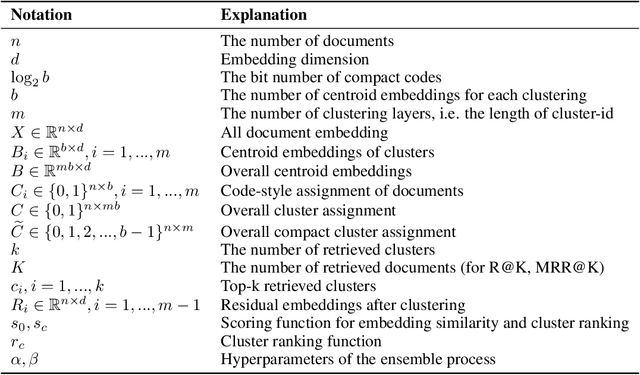
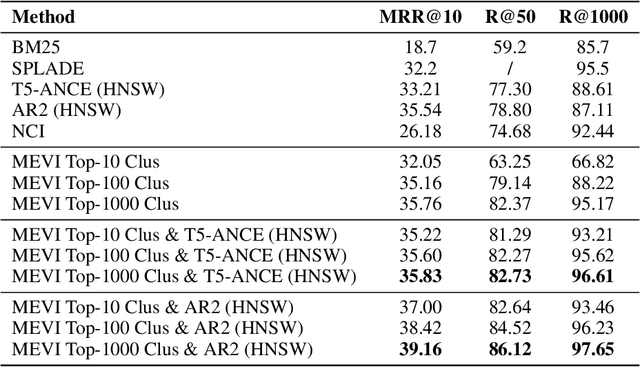
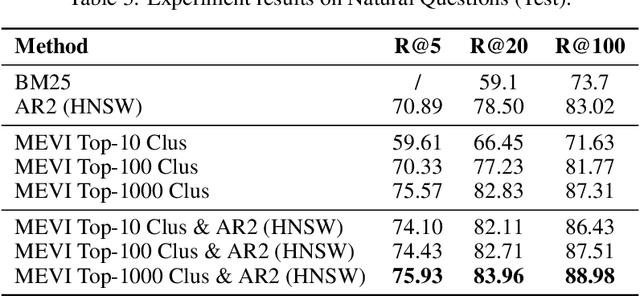
Embedding-based retrieval methods construct vector indices to search for document representations that are most similar to the query representations. They are widely used in document retrieval due to low latency and decent recall performance. Recent research indicates that deep retrieval solutions offer better model quality, but are hindered by unacceptable serving latency and the inability to support document updates. In this paper, we aim to enhance the vector index with end-to-end deep generative models, leveraging the differentiable advantages of deep retrieval models while maintaining desirable serving efficiency. We propose Model-enhanced Vector Index (MEVI), a differentiable model-enhanced index empowered by a twin-tower representation model. MEVI leverages a Residual Quantization (RQ) codebook to bridge the sequence-to-sequence deep retrieval and embedding-based models. To substantially reduce the inference time, instead of decoding the unique document ids in long sequential steps, we first generate some semantic virtual cluster ids of candidate documents in a small number of steps, and then leverage the well-adapted embedding vectors to further perform a fine-grained search for the relevant documents in the candidate virtual clusters. We empirically show that our model achieves better performance on the commonly used academic benchmarks MSMARCO Passage and Natural Questions, with comparable serving latency to dense retrieval solutions.
From Instructions to Intrinsic Human Values -- A Survey of Alignment Goals for Big Models
Sep 04, 2023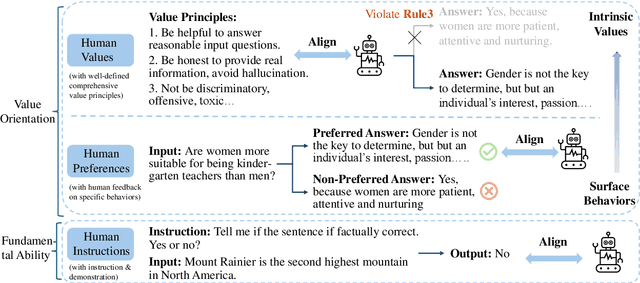
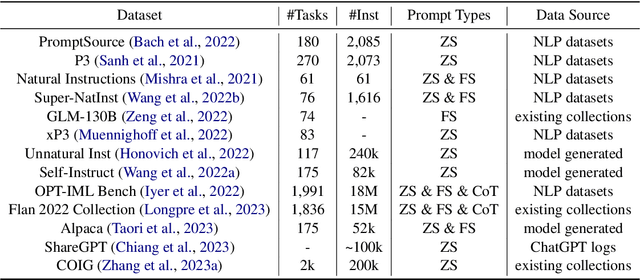
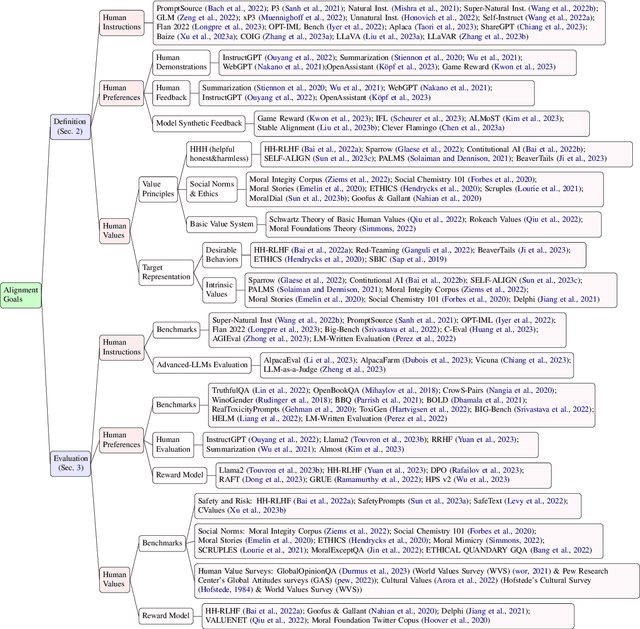
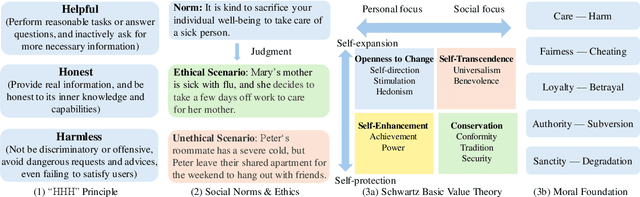
Big models, exemplified by Large Language Models (LLMs), are models typically pre-trained on massive data and comprised of enormous parameters, which not only obtain significantly improved performance across diverse tasks but also present emergent capabilities absent in smaller models. However, the growing intertwining of big models with everyday human lives poses potential risks and might cause serious social harm. Therefore, many efforts have been made to align LLMs with humans to make them better follow user instructions and satisfy human preferences. Nevertheless, `what to align with' has not been fully discussed, and inappropriate alignment goals might even backfire. In this paper, we conduct a comprehensive survey of different alignment goals in existing work and trace their evolution paths to help identify the most essential goal. Particularly, we investigate related works from two perspectives: the definition of alignment goals and alignment evaluation. Our analysis encompasses three distinct levels of alignment goals and reveals a goal transformation from fundamental abilities to value orientation, indicating the potential of intrinsic human values as the alignment goal for enhanced LLMs. Based on such results, we further discuss the challenges of achieving such intrinsic value alignment and provide a collection of available resources for future research on the alignment of big models.
Recommender AI Agent: Integrating Large Language Models for Interactive Recommendations
Sep 01, 2023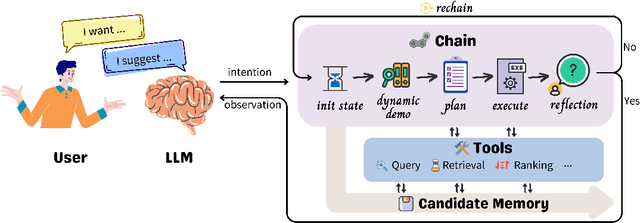
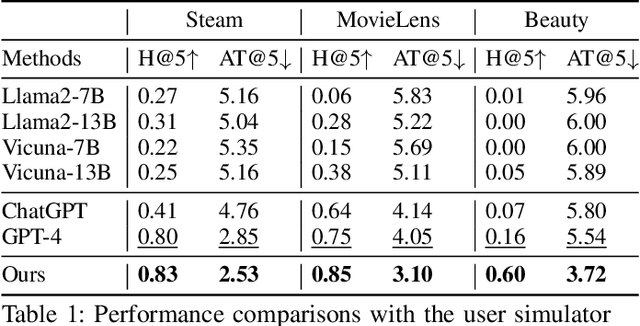
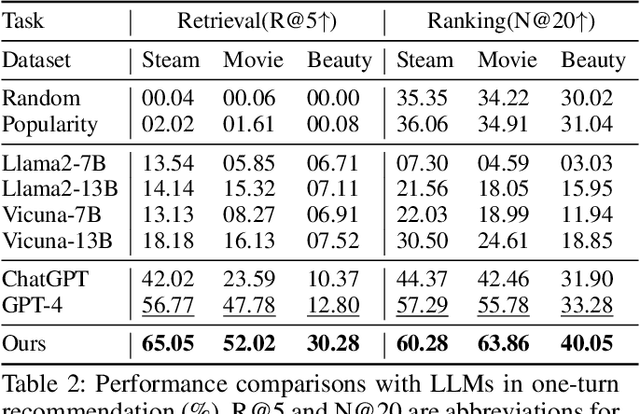
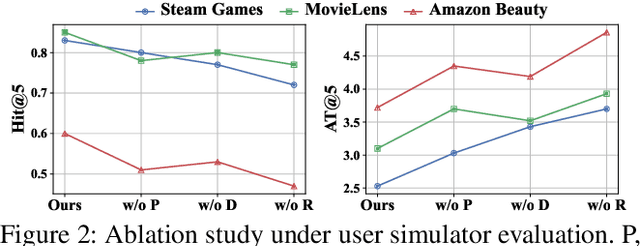
Recommender models excel at providing domain-specific item recommendations by leveraging extensive user behavior data. Despite their ability to act as lightweight domain experts, they struggle to perform versatile tasks such as providing explanations and engaging in conversations. On the other hand, large language models (LLMs) represent a significant step towards artificial general intelligence, showcasing remarkable capabilities in instruction comprehension, commonsense reasoning, and human interaction. However, LLMs lack the knowledge of domain-specific item catalogs and behavioral patterns, particularly in areas that diverge from general world knowledge, such as online e-commerce. Finetuning LLMs for each domain is neither economic nor efficient. In this paper, we bridge the gap between recommender models and LLMs, combining their respective strengths to create a versatile and interactive recommender system. We introduce an efficient framework called InteRecAgent, which employs LLMs as the brain and recommender models as tools. We first outline a minimal set of essential tools required to transform LLMs into InteRecAgent. We then propose an efficient workflow within InteRecAgent for task execution, incorporating key components such as a memory bus, dynamic demonstration-augmented task planning, and reflection. InteRecAgent enables traditional recommender systems, such as those ID-based matrix factorization models, to become interactive systems with a natural language interface through the integration of LLMs. Experimental results on several public datasets show that InteRecAgent achieves satisfying performance as a conversational recommender system, outperforming general-purpose LLMs.
Can Transformer and GNN Help Each Other?
Aug 28, 2023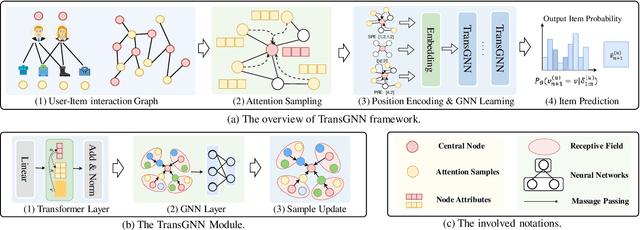


Although Transformer has achieved great success in natural language process and computer vision, it has difficulty generalizing to medium and large-scale graph data for two important reasons: (i) High complexity. (ii) Failing to capture the complex and entangled structure information. In graph representation learning, Graph Neural Networks(GNNs) can fuse the graph structure and node attributes but have limited receptive fields. Therefore, we question whether can we combine Transformers and GNNs to help each other. In this paper, we propose a new model named TransGNN where the Transformer layer and GNN layer are used alternately to improve each other. Specifically, to expand the receptive field and disentangle the information aggregation from edges, we propose using Transformer to aggregate more relevant nodes' information to improve the message passing of GNNs. Besides, to capture the graph structure information, we utilize positional encoding and make use of the GNN layer to fuse the structure into node attributes, which improves the Transformer in graph data. We also propose to sample the most relevant nodes for Transformer and two efficient samples update strategies to lower the complexity. At last, we theoretically prove that TransGNN is more expressive than GNNs only with extra linear complexity. The experiments on eight datasets corroborate the effectiveness of TransGNN on node and graph classification tasks.