 Add to Chrome
 Add to Firefox
 Add to Edge
Choice Outweighs Effort: Facilitating Complementary Knowledge Fusion in Federated Learning via Re-calibration and Merit-discrimination
Aug 25, 2025
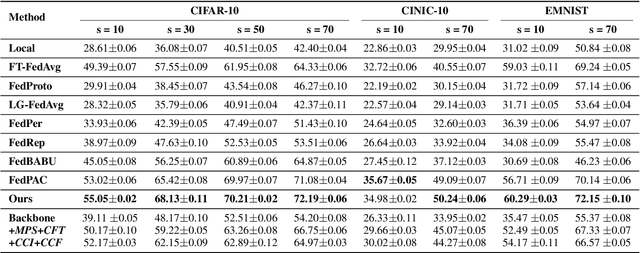
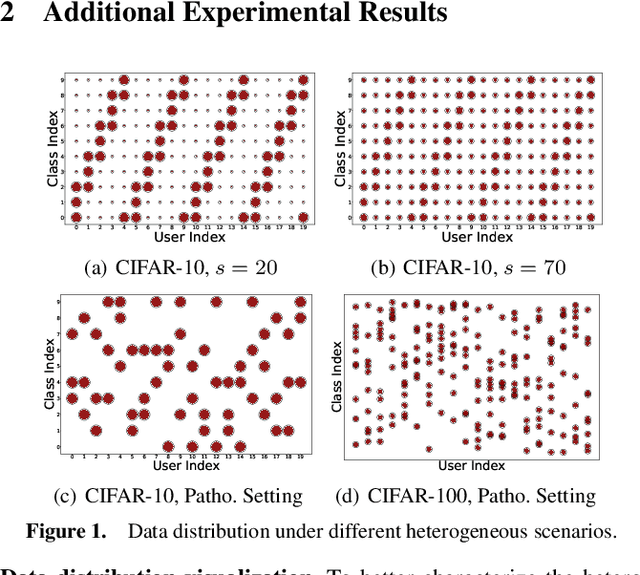
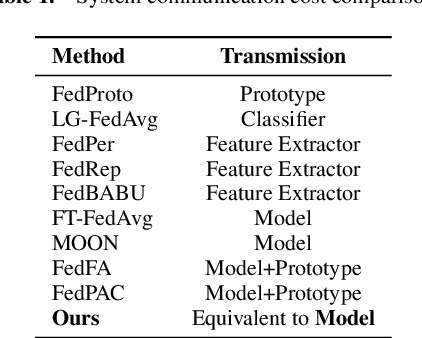
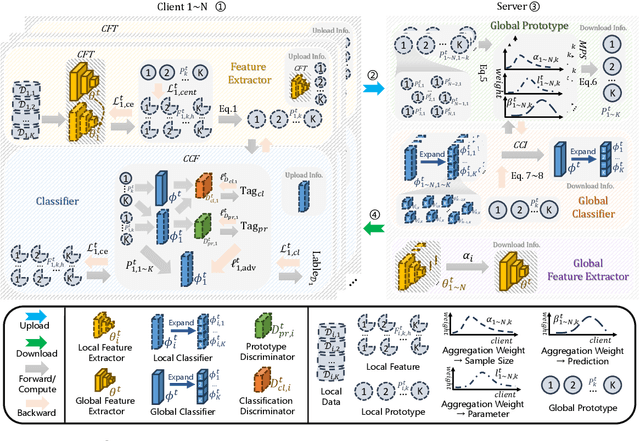
Cross-client data heterogeneity in federated learning induces biases that impede unbiased consensus condensation and the complementary fusion of generalization- and personalization-oriented knowledge. While existing approaches mitigate heterogeneity through model decoupling and representation center loss, they often rely on static and restricted metrics to evaluate local knowledge and adopt global alignment too rigidly, leading to consensus distortion and diminished model adaptability. To address these limitations, we propose FedMate, a method that implements bilateral optimization: On the server side, we construct a dynamic global prototype, with aggregation weights calibrated by holistic integration of sample size, current parameters, and future prediction; a category-wise classifier is then fine-tuned using this prototype to preserve global consistency. On the client side, we introduce complementary classification fusion to enable merit-based discrimination training and incorporate cost-aware feature transmission to balance model performance and communication efficiency. Experiments on five datasets of varying complexity demonstrate that FedMate outperforms state-of-the-art methods in harmonizing generalization and adaptation. Additionally, semantic segmentation experiments on autonomous driving datasets validate the method's real-world scalability.

PerPilot: Personalizing VLM-based Mobile Agents via Memory and Exploration
Aug 25, 2025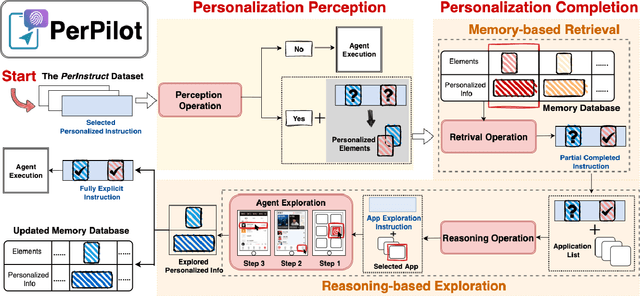

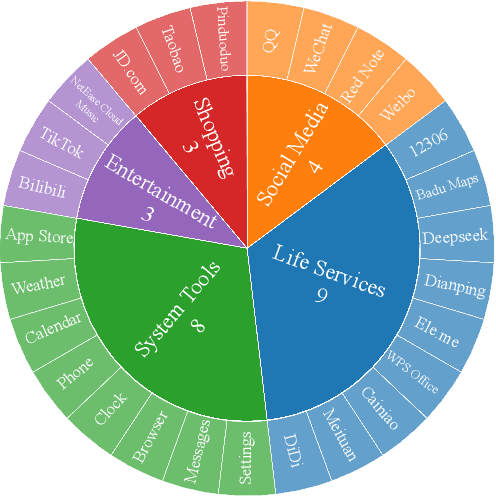

Vision language model (VLM)-based mobile agents show great potential for assisting users in performing instruction-driven tasks. However, these agents typically struggle with personalized instructions -- those containing ambiguous, user-specific context -- a challenge that has been largely overlooked in previous research. In this paper, we define personalized instructions and introduce PerInstruct, a novel human-annotated dataset covering diverse personalized instructions across various mobile scenarios. Furthermore, given the limited personalization capabilities of existing mobile agents, we propose PerPilot, a plug-and-play framework powered by large language models (LLMs) that enables mobile agents to autonomously perceive, understand, and execute personalized user instructions. PerPilot identifies personalized elements and autonomously completes instructions via two complementary approaches: memory-based retrieval and reasoning-based exploration. Experimental results demonstrate that PerPilot effectively handles personalized tasks with minimal user intervention and progressively improves its performance with continued use, underscoring the importance of personalization-aware reasoning for next-generation mobile agents. The dataset and code are available at: https://github.com/xinwang-nwpu/PerPilot
WildSpoof Challenge Evaluation Plan
Aug 23, 2025The WildSpoof Challenge aims to advance the use of in-the-wild data in two intertwined speech processing tasks. It consists of two parallel tracks: (1) Text-to-Speech (TTS) synthesis for generating spoofed speech, and (2) Spoofing-robust Automatic Speaker Verification (SASV) for detecting spoofed speech. While the organizers coordinate both tracks and define the data protocols, participants treat them as separate and independent tasks. The primary objectives of the challenge are: (i) to promote the use of in-the-wild data for both TTS and SASV, moving beyond conventional clean and controlled datasets and considering real-world scenarios; and (ii) to encourage interdisciplinary collaboration between the spoofing generation (TTS) and spoofing detection (SASV) communities, thereby fostering the development of more integrated, robust, and realistic systems.
Deep Skin Lesion Segmentation with Transformer-CNN Fusion: Toward Intelligent Skin Cancer Analysis
Aug 20, 2025This paper proposes a high-precision semantic segmentation method based on an improved TransUNet architecture to address the challenges of complex lesion structures, blurred boundaries, and significant scale variations in skin lesion images. The method integrates a transformer module into the traditional encoder-decoder framework to model global semantic information, while retaining a convolutional branch to preserve local texture and edge features. This enhances the model's ability to perceive fine-grained structures. A boundary-guided attention mechanism and multi-scale upsampling path are also designed to improve lesion boundary localization and segmentation consistency. To verify the effectiveness of the approach, a series of experiments were conducted, including comparative studies, hyperparameter sensitivity analysis, data augmentation effects, input resolution variation, and training data split ratio tests. Experimental results show that the proposed model outperforms existing representative methods in mIoU, mDice, and mAcc, demonstrating stronger lesion recognition accuracy and robustness. In particular, the model achieves better boundary reconstruction and structural recovery in complex scenarios, making it well-suited for the key demands of automated segmentation tasks in skin lesion analysis.
Unified and Semantically Grounded Domain Adaptation for Medical Image Segmentation
Aug 12, 2025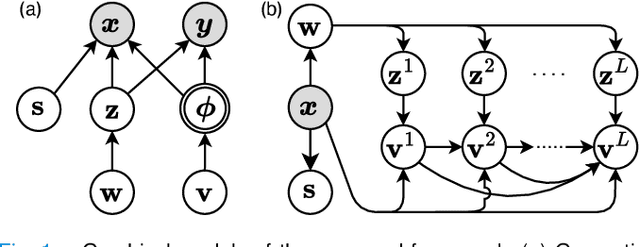
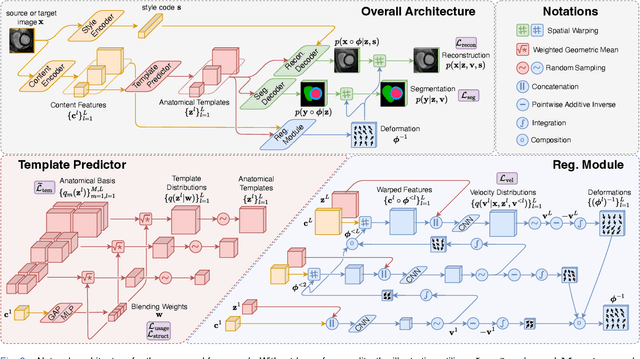
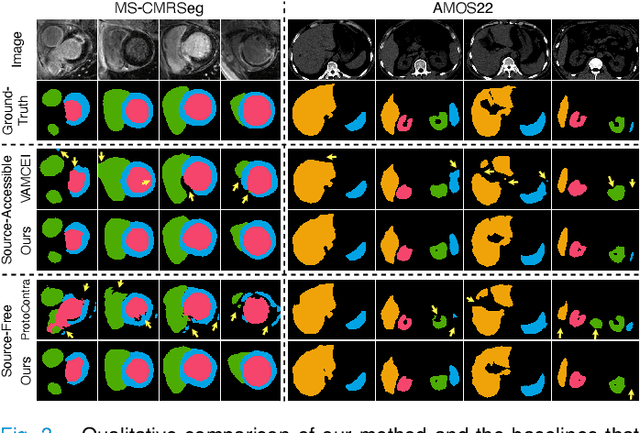
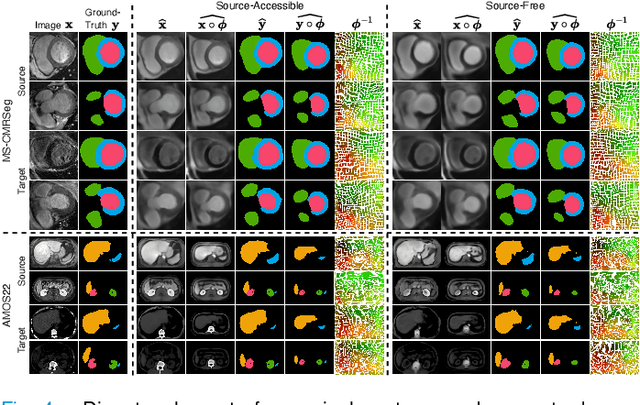
Most prior unsupervised domain adaptation approaches for medical image segmentation are narrowly tailored to either the source-accessible setting, where adaptation is guided by source-target alignment, or the source-free setting, which typically resorts to implicit supervision mechanisms such as pseudo-labeling and model distillation. This substantial divergence in methodological designs between the two settings reveals an inherent flaw: the lack of an explicit, structured construction of anatomical knowledge that naturally generalizes across domains and settings. To bridge this longstanding divide, we introduce a unified, semantically grounded framework that supports both source-accessible and source-free adaptation. Fundamentally distinct from all prior works, our framework's adaptability emerges naturally as a direct consequence of the model architecture, without the need for any handcrafted adaptation strategies. Specifically, our model learns a domain-agnostic probabilistic manifold as a global space of anatomical regularities, mirroring how humans establish visual understanding. Thus, the structural content in each image can be interpreted as a canonical anatomy retrieved from the manifold and a spatial transformation capturing individual-specific geometry. This disentangled, interpretable formulation enables semantically meaningful prediction with intrinsic adaptability. Extensive experiments on challenging cardiac and abdominal datasets show that our framework achieves state-of-the-art results in both settings, with source-free performance closely approaching its source-accessible counterpart, a level of consistency rarely observed in prior works. Beyond quantitative improvement, we demonstrate strong interpretability of the proposed framework via manifold traversal for smooth shape manipulation.
BlindGuard: Safeguarding LLM-based Multi-Agent Systems under Unknown Attacks
Aug 11, 2025The security of LLM-based multi-agent systems (MAS) is critically threatened by propagation vulnerability, where malicious agents can distort collective decision-making through inter-agent message interactions. While existing supervised defense methods demonstrate promising performance, they may be impractical in real-world scenarios due to their heavy reliance on labeled malicious agents to train a supervised malicious detection model. To enable practical and generalizable MAS defenses, in this paper, we propose BlindGuard, an unsupervised defense method that learns without requiring any attack-specific labels or prior knowledge of malicious behaviors. To this end, we establish a hierarchical agent encoder to capture individual, neighborhood, and global interaction patterns of each agent, providing a comprehensive understanding for malicious agent detection. Meanwhile, we design a corruption-guided detector that consists of directional noise injection and contrastive learning, allowing effective detection model training solely on normal agent behaviors. Extensive experiments show that BlindGuard effectively detects diverse attack types (i.e., prompt injection, memory poisoning, and tool attack) across MAS with various communication patterns while maintaining superior generalizability compared to supervised baselines. The code is available at: https://github.com/MR9812/BlindGuard.
SEF-MK: Speaker-Embedding-Free Voice Anonymization through Multi-k-means Quantization
Aug 09, 2025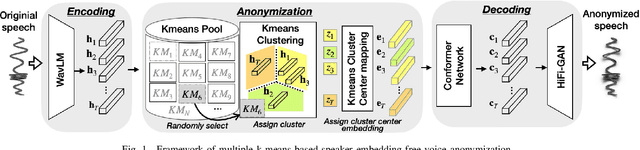
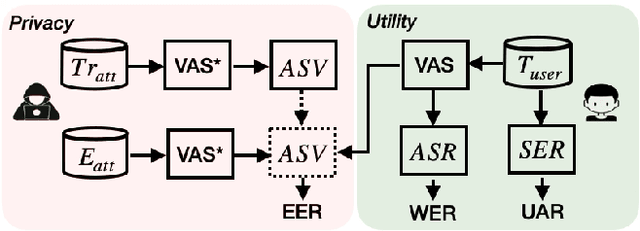
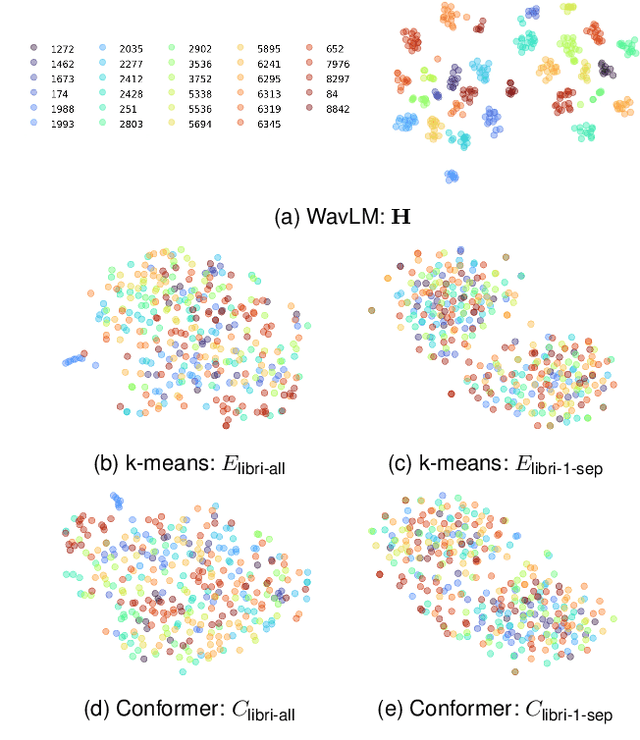
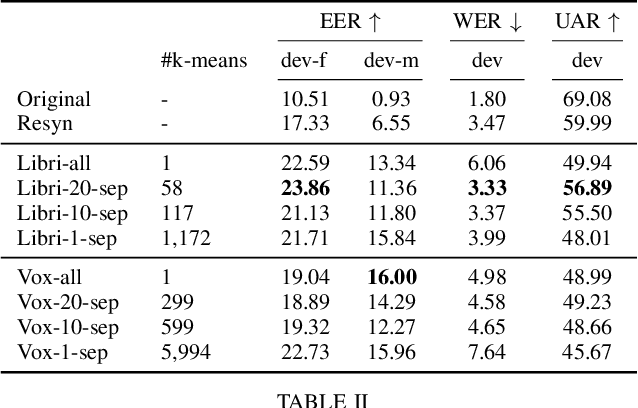
Voice anonymization protects speaker privacy by concealing identity while preserving linguistic and paralinguistic content. Self-supervised learning (SSL) representations encode linguistic features but preserve speaker traits. We propose a novel speaker-embedding-free framework called SEF-MK. Instead of using a single k-means model trained on the entire dataset, SEF-MK anonymizes SSL representations for each utterance by randomly selecting one of multiple k-means models, each trained on a different subset of speakers. We explore this approach from both attacker and user perspectives. Extensive experiments show that, compared to a single k-means model, SEF-MK with multiple k-means models better preserves linguistic and emotional content from the user's viewpoint. However, from the attacker's perspective, utilizing multiple k-means models boosts the effectiveness of privacy attacks. These insights can aid users in designing voice anonymization systems to mitigate attacker threats.
GLM-4.5: Agentic, Reasoning, and Coding (ARC) Foundation Models
Aug 08, 2025We present GLM-4.5, an open-source Mixture-of-Experts (MoE) large language model with 355B total parameters and 32B activated parameters, featuring a hybrid reasoning method that supports both thinking and direct response modes. Through multi-stage training on 23T tokens and comprehensive post-training with expert model iteration and reinforcement learning, GLM-4.5 achieves strong performance across agentic, reasoning, and coding (ARC) tasks, scoring 70.1% on TAU-Bench, 91.0% on AIME 24, and 64.2% on SWE-bench Verified. With much fewer parameters than several competitors, GLM-4.5 ranks 3rd overall among all evaluated models and 2nd on agentic benchmarks. We release both GLM-4.5 (355B parameters) and a compact version, GLM-4.5-Air (106B parameters), to advance research in reasoning and agentic AI systems. Code, models, and more information are available at https://github.com/zai-org/GLM-4.5.
On the Design of Expressive and Trainable Pulse-based Quantum Machine Learning Models
Aug 07, 2025Pulse-based Quantum Machine Learning (QML) has emerged as a novel paradigm in quantum artificial intelligence due to its exceptional hardware efficiency. For practical applications, pulse-based models must be both expressive and trainable. Previous studies suggest that pulse-based models under dynamic symmetry can be effectively trained, thanks to a favorable loss landscape that has no barren plateaus. However, the resulting uncontrollability may compromise expressivity when the model is inadequately designed. This paper investigates the requirements for pulse-based QML models to be expressive while preserving trainability. We present a necessary condition pertaining to the system's initial state, the measurement observable, and the underlying dynamical symmetry Lie algebra, supported by numerical simulations. Our findings establish a framework for designing practical pulse-based QML models that balance expressivity and trainability.
Breaking Obfuscation: Cluster-Aware Graph with LLM-Aided Recovery for Malicious JavaScript Detection
Jul 30, 2025With the rapid expansion of web-based applications and cloud services, malicious JavaScript code continues to pose significant threats to user privacy, system integrity, and enterprise security. But, detecting such threats remains challenging due to sophisticated code obfuscation techniques and JavaScript's inherent language characteristics, particularly its nested closure structures and syntactic flexibility. In this work, we propose DeCoda, a hybrid defense framework that combines large language model (LLM)-based deobfuscation with code graph learning: (1) We first construct a sophisticated prompt-learning pipeline with multi-stage refinement, where the LLM progressively reconstructs the original code structure from obfuscated inputs and then generates normalized Abstract Syntax Tree (AST) representations; (2) In JavaScript ASTs, dynamic typing scatters semantically similar nodes while deeply nested functions fracture scope capturing, introducing structural noise and semantic ambiguity. To address these challenges, we then propose to learn hierarchical code graph representations via a Cluster-wise Graph that synergistically integrates graph transformer network, node clustering, and node-to-cluster attention to simultaneously capture both local node-level semantics and global cluster-induced structural relationships from AST graph. Experimental results demonstrate that our method achieves F1-scores of 94.64% and 97.71% on two benchmark datasets, demonstrating absolute improvements of 10.74% and 13.85% over state-of-the-art baselines. In false-positive control evaluation at fixed FPR levels (0.0001, 0.001, 0.01), our approach delivers 4.82, 5.91, and 2.53 higher TPR respectively compared to the best-performing baseline. These results highlight the effectiveness of LLM-based deobfuscation and underscore the importance of modeling cluster-level relationships in detecting malicious code.