 Add to Chrome
 Add to Firefox
 Add to Edge
vTensor: Flexible Virtual Tensor Management for Efficient LLM Serving
Jul 22, 2024

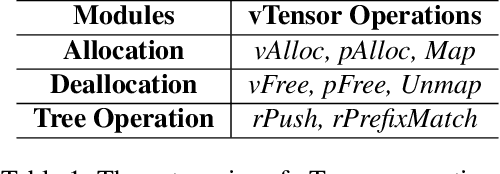
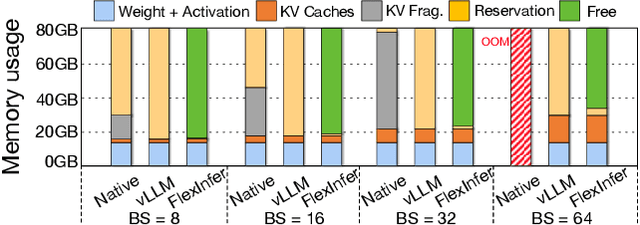

Large Language Models (LLMs) are widely used across various domains, processing millions of daily requests. This surge in demand poses significant challenges in optimizing throughput and latency while keeping costs manageable. The Key-Value (KV) cache, a standard method for retaining previous computations, makes LLM inference highly bounded by memory. While batching strategies can enhance performance, they frequently lead to significant memory fragmentation. Even though cutting-edge systems like vLLM mitigate KV cache fragmentation using paged Attention mechanisms, they still suffer from inefficient memory and computational operations due to the tightly coupled page management and computation kernels. This study introduces the vTensor, an innovative tensor structure for LLM inference based on GPU virtual memory management (VMM). vTensor addresses existing limitations by decoupling computation from memory defragmentation and offering dynamic extensibility. Our framework employs a CPU-GPU heterogeneous approach, ensuring efficient, fragmentation-free memory management while accommodating various computation kernels across different LLM architectures. Experimental results indicate that vTensor achieves an average speedup of 1.86x across different models, with up to 2.42x in multi-turn chat scenarios. Additionally, vTensor provides average speedups of 2.12x and 3.15x in kernel evaluation, reaching up to 3.92x and 3.27x compared to SGLang Triton prefix-prefilling kernels and vLLM paged Attention kernel, respectively. Furthermore, it frees approximately 71.25% (57GB) of memory on the NVIDIA A100 GPU compared to vLLM, enabling more memory-intensive workloads.

MIBench: Evaluating Multimodal Large Language Models over Multiple Images
Jul 21, 2024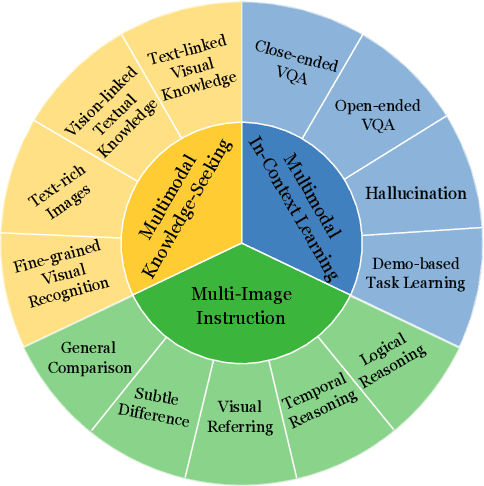

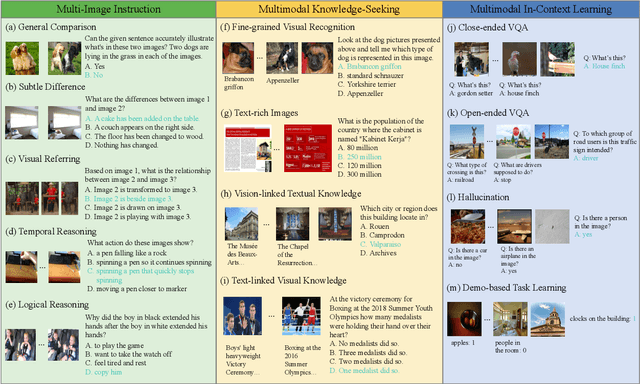

Built on the power of LLMs, numerous multimodal large language models (MLLMs) have recently achieved remarkable performance on various vision-language tasks across multiple benchmarks. However, most existing MLLMs and benchmarks primarily focus on single-image input scenarios, leaving the performance of MLLMs when handling realistic multiple images remain underexplored. Although a few benchmarks consider multiple images, their evaluation dimensions and samples are very limited. Therefore, in this paper, we propose a new benchmark MIBench, to comprehensively evaluate fine-grained abilities of MLLMs in multi-image scenarios. Specifically, MIBench categorizes the multi-image abilities into three scenarios: multi-image instruction (MII), multimodal knowledge-seeking (MKS) and multimodal in-context learning (MIC), and constructs 13 tasks with a total of 13K annotated samples. During data construction, for MII and MKS, we extract correct options from manual annotations and create challenging distractors to obtain multiple-choice questions. For MIC, to enable an in-depth evaluation, we set four sub-tasks and transform the original datasets into in-context learning formats. We evaluate several open-source MLLMs and close-source MLLMs on the proposed MIBench. The results reveal that although current models excel in single-image tasks, they exhibit significant shortcomings when faced with multi-image inputs, such as confused fine-grained perception, limited multi-image reasoning, and unstable in-context learning. The annotated data in MIBench is available at https://huggingface.co/datasets/StarBottle/MIBench.
Temporal Correlation Meets Embedding: Towards a 2nd Generation of JDE-based Real-Time Multi-Object Tracking
Jul 19, 2024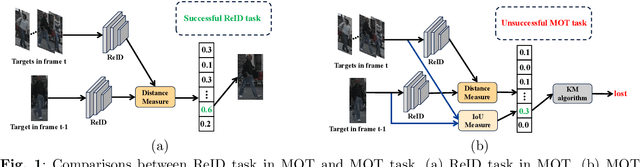
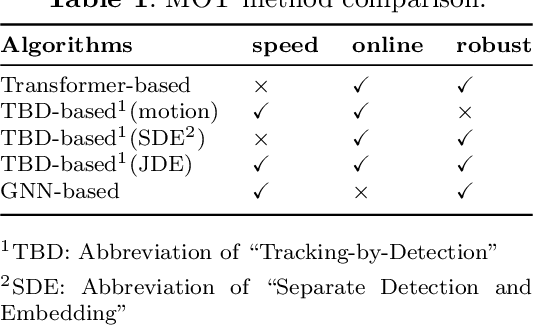
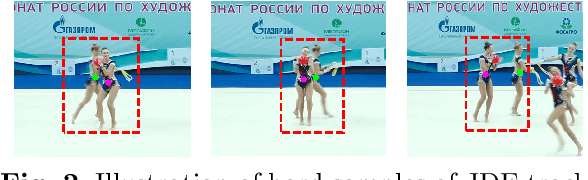
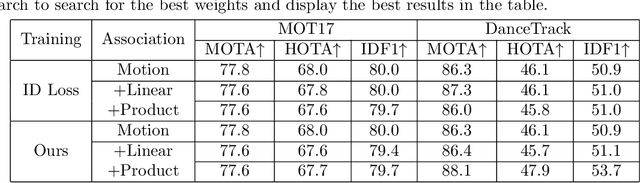
Joint Detection and Embedding(JDE) trackers have demonstrated excellent performance in Multi-Object Tracking(MOT) tasks by incorporating the extraction of appearance features as auxiliary tasks through embedding Re-Identification task(ReID) into the detector, achieving a balance between inference speed and tracking performance. However, solving the competition between the detector and the feature extractor has always been a challenge. Also, the issue of directly embedding the ReID task into MOT has remained unresolved. The lack of high discriminability in appearance features results in their limited utility. In this paper, we propose a new learning approach using cross-correlation to capture temporal information of objects. The feature extraction network is no longer trained solely on appearance features from each frame but learns richer motion features by utilizing feature heatmaps from consecutive frames, addressing the challenge of inter-class feature similarity. Furthermore, we apply our learning approach to a more lightweight feature extraction network, and treat the feature matching scores as strong cues rather than auxiliary cues, employing a appropriate weight calculation to reflect the compatibility between our obtained features and the MOT task. Our tracker, named TCBTrack, achieves state-of-the-art performance on multiple public benchmarks, i.e., MOT17, MOT20, and DanceTrack datasets. Specifically, on the DanceTrack test set, we achieve 56.8 HOTA, 58.1 IDF1 and 92.5 MOTA, making it the best online tracker that can achieve real-time performance. Comparative evaluations with other trackers prove that our tracker achieves the best balance between speed, robustness and accuracy.
Animate3D: Animating Any 3D Model with Multi-view Video Diffusion
Jul 16, 2024


Recent advances in 4D generation mainly focus on generating 4D content by distilling pre-trained text or single-view image-conditioned models. It is inconvenient for them to take advantage of various off-the-shelf 3D assets with multi-view attributes, and their results suffer from spatiotemporal inconsistency owing to the inherent ambiguity in the supervision signals. In this work, we present Animate3D, a novel framework for animating any static 3D model. The core idea is two-fold: 1) We propose a novel multi-view video diffusion model (MV-VDM) conditioned on multi-view renderings of the static 3D object, which is trained on our presented large-scale multi-view video dataset (MV-Video). 2) Based on MV-VDM, we introduce a framework combining reconstruction and 4D Score Distillation Sampling (4D-SDS) to leverage the multi-view video diffusion priors for animating 3D objects. Specifically, for MV-VDM, we design a new spatiotemporal attention module to enhance spatial and temporal consistency by integrating 3D and video diffusion models. Additionally, we leverage the static 3D model's multi-view renderings as conditions to preserve its identity. For animating 3D models, an effective two-stage pipeline is proposed: we first reconstruct motions directly from generated multi-view videos, followed by the introduced 4D-SDS to refine both appearance and motion. Qualitative and quantitative experiments demonstrate that Animate3D significantly outperforms previous approaches. Data, code, and models will be open-released.
How to Make Cross Encoder a Good Teacher for Efficient Image-Text Retrieval?
Jul 10, 2024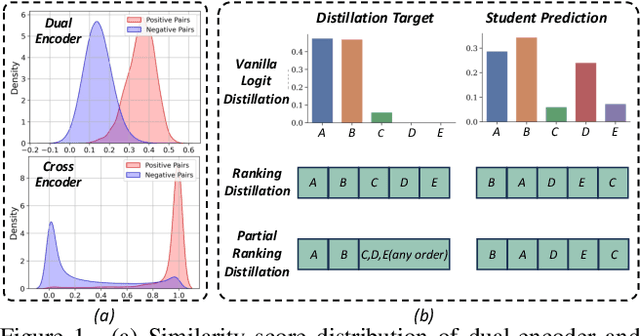
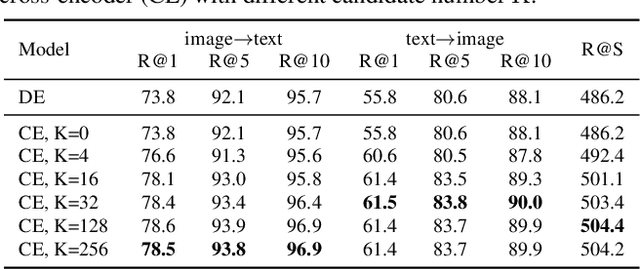
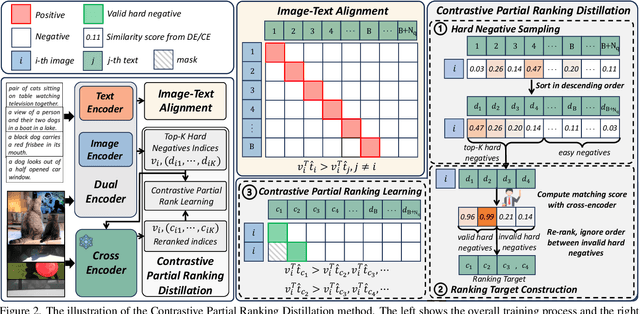
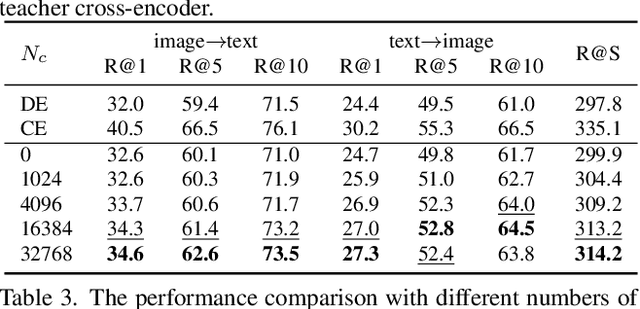
Dominant dual-encoder models enable efficient image-text retrieval but suffer from limited accuracy while the cross-encoder models offer higher accuracy at the expense of efficiency. Distilling cross-modality matching knowledge from cross-encoder to dual-encoder provides a natural approach to harness their strengths. Thus we investigate the following valuable question: how to make cross-encoder a good teacher for dual-encoder? Our findings are threefold:(1) Cross-modal similarity score distribution of cross-encoder is more concentrated while the result of dual-encoder is nearly normal making vanilla logit distillation less effective. However ranking distillation remains practical as it is not affected by the score distribution.(2) Only the relative order between hard negatives conveys valid knowledge while the order information between easy negatives has little significance.(3) Maintaining the coordination between distillation loss and dual-encoder training loss is beneficial for knowledge transfer. Based on these findings we propose a novel Contrastive Partial Ranking Distillation (CPRD) method which implements the objective of mimicking relative order between hard negative samples with contrastive learning. This approach coordinates with the training of the dual-encoder effectively transferring valid knowledge from the cross-encoder to the dual-encoder. Extensive experiments on image-text retrieval and ranking tasks show that our method surpasses other distillation methods and significantly improves the accuracy of dual-encoder.
EA-VTR: Event-Aware Video-Text Retrieval
Jul 10, 2024
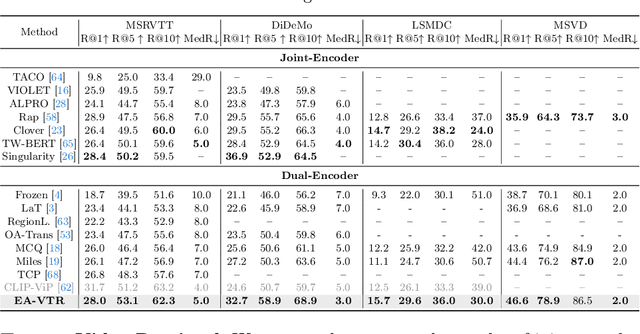
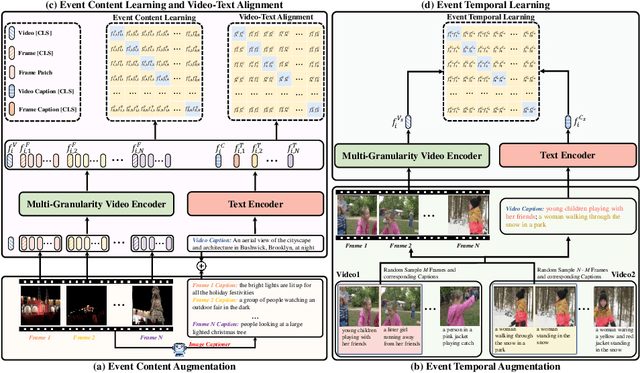
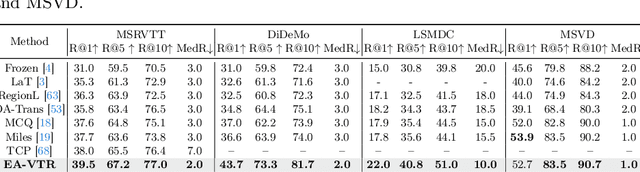
Understanding the content of events occurring in the video and their inherent temporal logic is crucial for video-text retrieval. However, web-crawled pre-training datasets often lack sufficient event information, and the widely adopted video-level cross-modal contrastive learning also struggles to capture detailed and complex video-text event alignment. To address these challenges, we make improvements from both data and model perspectives. In terms of pre-training data, we focus on supplementing the missing specific event content and event temporal transitions with the proposed event augmentation strategies. Based on the event-augmented data, we construct a novel Event-Aware Video-Text Retrieval model, ie, EA-VTR, which achieves powerful video-text retrieval ability through superior video event awareness. EA-VTR can efficiently encode frame-level and video-level visual representations simultaneously, enabling detailed event content and complex event temporal cross-modal alignment, ultimately enhancing the comprehensive understanding of video events. Our method not only significantly outperforms existing approaches on multiple datasets for Text-to-Video Retrieval and Video Action Recognition tasks, but also demonstrates superior event content perceive ability on Multi-event Video-Text Retrieval and Video Moment Retrieval tasks, as well as outstanding event temporal logic understanding ability on Test of Time task.
Self-Training with Pseudo-Label Scorer for Aspect Sentiment Quad Prediction
Jun 26, 2024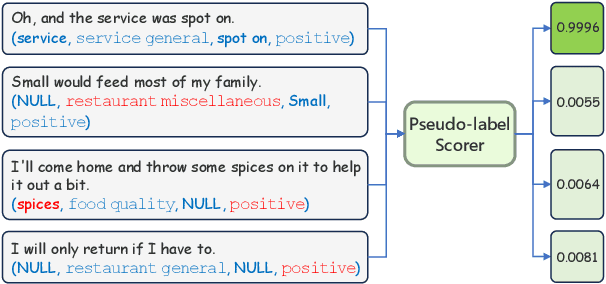
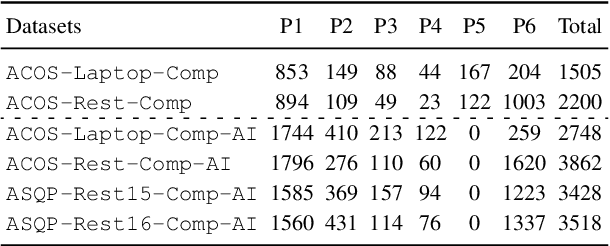
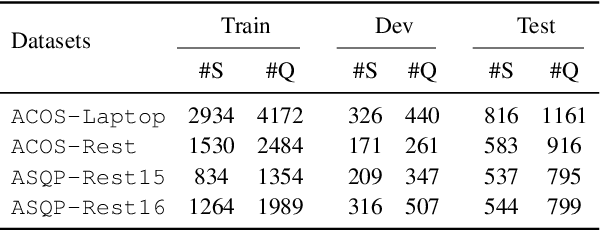
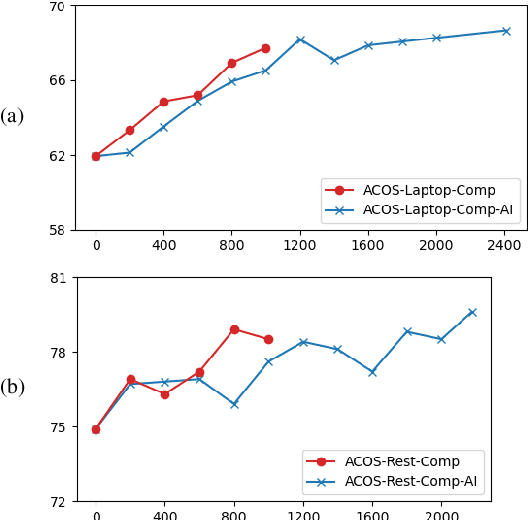
Aspect Sentiment Quad Prediction (ASQP) aims to predict all quads (aspect term, aspect category, opinion term, sentiment polarity) for a given review, which is the most representative and challenging task in aspect-based sentiment analysis. A key challenge in the ASQP task is the scarcity of labeled data, which limits the performance of existing methods. To tackle this issue, we propose a self-training framework with a pseudo-label scorer, wherein a scorer assesses the match between reviews and their pseudo-labels, aiming to filter out mismatches and thereby enhance the effectiveness of self-training. We highlight two critical aspects to ensure the scorer's effectiveness and reliability: the quality of the training dataset and its model architecture. To this end, we create a human-annotated comparison dataset and train a generative model on it using ranking-based objectives. Extensive experiments on public ASQP datasets reveal that using our scorer can greatly and consistently improve the effectiveness of self-training. Moreover, we explore the possibility of replacing humans with large language models for comparison dataset annotation, and experiments demonstrate its feasibility. We release our code and data at https://github.com/HITSZ-HLT/ST-w-Scorer-ABSA .
Observation, Analysis, and Solution: Exploring Strong Lightweight Vision Transformers via Masked Image Modeling Pre-Training
Apr 18, 2024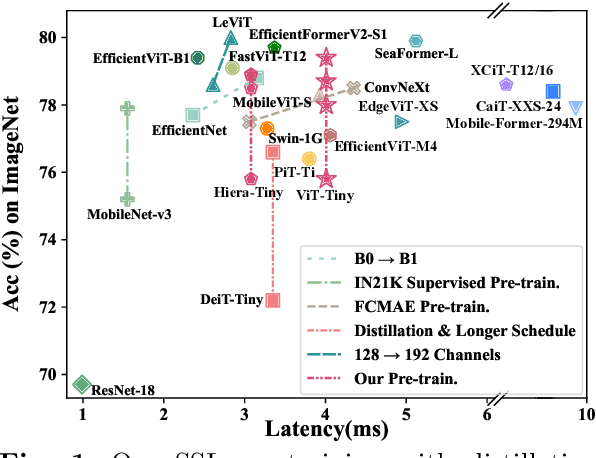
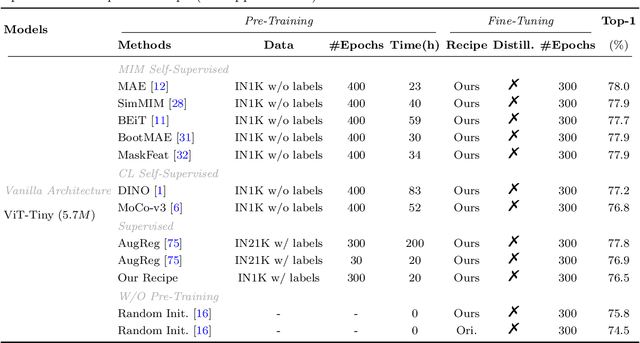

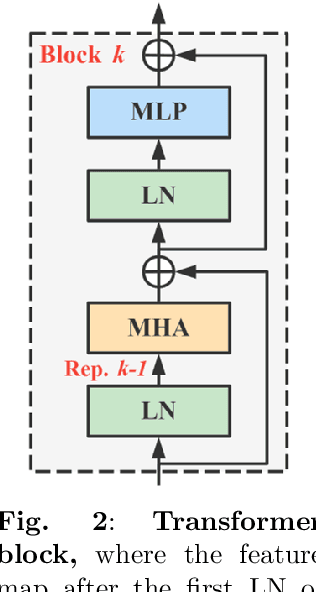
Masked image modeling (MIM) pre-training for large-scale vision transformers (ViTs) in computer vision has enabled promising downstream performance on top of the learned self-supervised ViT features. In this paper, we question if the extremely simple ViTs' fine-tuning performance with a small-scale architecture can also benefit from this pre-training paradigm, which is considerably less studied yet in contrast to the well-established lightweight architecture design methodology with sophisticated components introduced. By carefully adapting various typical MIM pre-training methods to this lightweight regime and comparing them with the contrastive learning (CL) pre-training on various downstream image classification and dense prediction tasks, we systematically observe different behaviors between MIM and CL with respect to the downstream fine-tuning data scales. Furthermore, we analyze the frozen features under linear probing evaluation and also the layer representation similarities and attention maps across the obtained models, which clearly show the inferior learning of MIM pre-training on higher layers, leading to unsatisfactory fine-tuning performance on data-insufficient downstream tasks. This finding is naturally a guide to choosing appropriate distillation strategies during pre-training to solve the above deterioration problem. Extensive experiments on various vision tasks demonstrate the effectiveness of our observation-analysis-solution flow. In particular, our pre-training with distillation on pure lightweight ViTs with vanilla/hierarchical design (5.7M/6.5M) can achieve 79.4%/78.9% top-1 accuracy on ImageNet-1K. It also enables SOTA performance on the ADE20K semantic segmentation task (42.8% mIoU) and LaSOT visual tracking task (66.1% AUC) in the lightweight regime. The latter even surpasses all the current SOTA lightweight CPU-realtime trackers.
STAG4D: Spatial-Temporal Anchored Generative 4D Gaussians
Mar 22, 2024
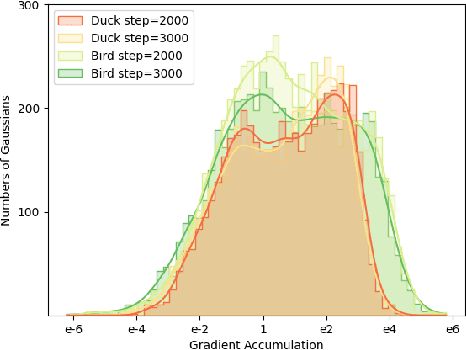
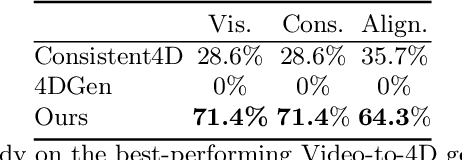

Recent progress in pre-trained diffusion models and 3D generation have spurred interest in 4D content creation. However, achieving high-fidelity 4D generation with spatial-temporal consistency remains a challenge. In this work, we propose STAG4D, a novel framework that combines pre-trained diffusion models with dynamic 3D Gaussian splatting for high-fidelity 4D generation. Drawing inspiration from 3D generation techniques, we utilize a multi-view diffusion model to initialize multi-view images anchoring on the input video frames, where the video can be either real-world captured or generated by a video diffusion model. To ensure the temporal consistency of the multi-view sequence initialization, we introduce a simple yet effective fusion strategy to leverage the first frame as a temporal anchor in the self-attention computation. With the almost consistent multi-view sequences, we then apply the score distillation sampling to optimize the 4D Gaussian point cloud. The 4D Gaussian spatting is specially crafted for the generation task, where an adaptive densification strategy is proposed to mitigate the unstable Gaussian gradient for robust optimization. Notably, the proposed pipeline does not require any pre-training or fine-tuning of diffusion networks, offering a more accessible and practical solution for the 4D generation task. Extensive experiments demonstrate that our method outperforms prior 4D generation works in rendering quality, spatial-temporal consistency, and generation robustness, setting a new state-of-the-art for 4D generation from diverse inputs, including text, image, and video.
BEV2PR: BEV-Enhanced Visual Place Recognition with Structural Cues
Mar 11, 2024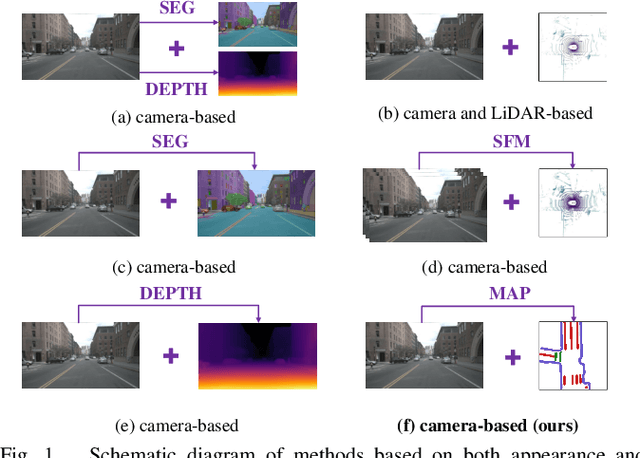
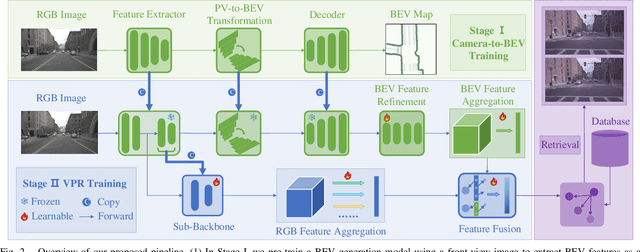
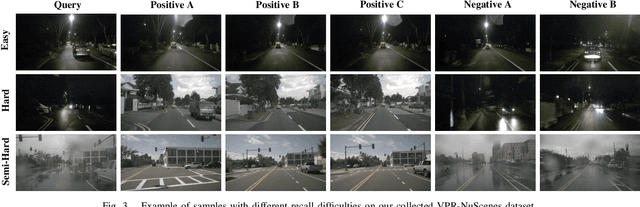
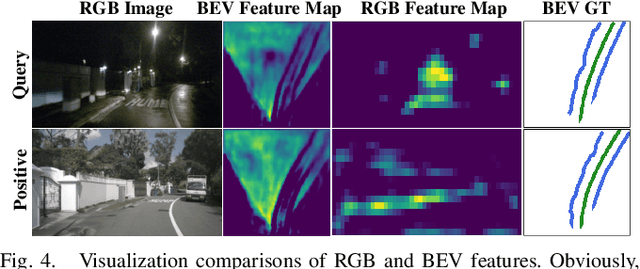
In this paper, we propose a new image-based visual place recognition (VPR) framework by exploiting the structural cues in bird's-eye view (BEV) from a single monocular camera. The motivation arises from two key observations about VPR: 1) For the methods based on both camera and LiDAR sensors, the integration of LiDAR in robotic systems has led to increased expenses, while the alignment of data between different sensors is also a major challenge. 2) Other image-/camera-based methods, involving integrating RGB images and their derived variants (e.g., pseudo depth images, pseudo 3D point clouds), exhibit several limitations, such as the failure to effectively exploit the explicit spatial relationships between different objects. To tackle the above issues, we design a new BEV-enhanced VPR framework, nemely BEV2PR, which can generate a composite descriptor with both visual cues and spatial awareness solely based on a single camera. For the visual cues, any popular aggregation module for RGB global features can be integrated into our framework. The key points lie in: 1) We use BEV segmentation features as an explicit source of structural knowledge in constructing global features. 2) The lower layers of the pre-trained backbone from BEV map generation are shared for visual and structural streams in VPR, facilitating the learning of fine-grained local features in the visual stream. 3) The complementary visual features and structural features can jointly enhance VPR performance. Our BEV2PR framework enables consistent performance improvements over several popular camera-based VPR aggregation modules when integrating them. The experiments on our collected VPR-NuScenes dataset demonstrate an absolute gain of 2.47% on Recall@1 for the strong Conv-AP baseline to achieve the best performance in our setting, and notably, a 18.06% gain on the hard set.