 Add to Chrome
 Add to Firefox
 Add to Edge
A Comprehensive Survey of Scientific Large Language Models and Their Applications in Scientific Discovery
Jun 16, 2024
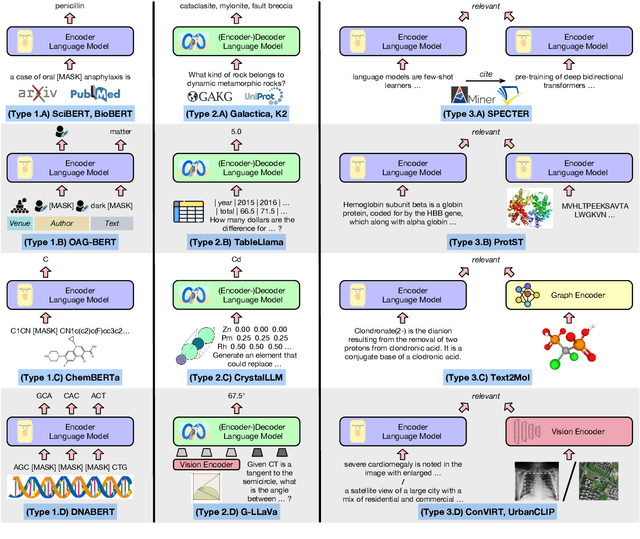
In many scientific fields, large language models (LLMs) have revolutionized the way with which text and other modalities of data (e.g., molecules and proteins) are dealt, achieving superior performance in various applications and augmenting the scientific discovery process. Nevertheless, previous surveys on scientific LLMs often concentrate on one to two fields or a single modality. In this paper, we aim to provide a more holistic view of the research landscape by unveiling cross-field and cross-modal connections between scientific LLMs regarding their architectures and pre-training techniques. To this end, we comprehensively survey over 250 scientific LLMs, discuss their commonalities and differences, as well as summarize pre-training datasets and evaluation tasks for each field and modality. Moreover, we investigate how LLMs have been deployed to benefit scientific discovery. Resources related to this survey are available at https://github.com/yuzhimanhua/Awesome-Scientific-Language-Models.

CliBench: Multifaceted Evaluation of Large Language Models in Clinical Decisions on Diagnoses, Procedures, Lab Tests Orders and Prescriptions
Jun 14, 2024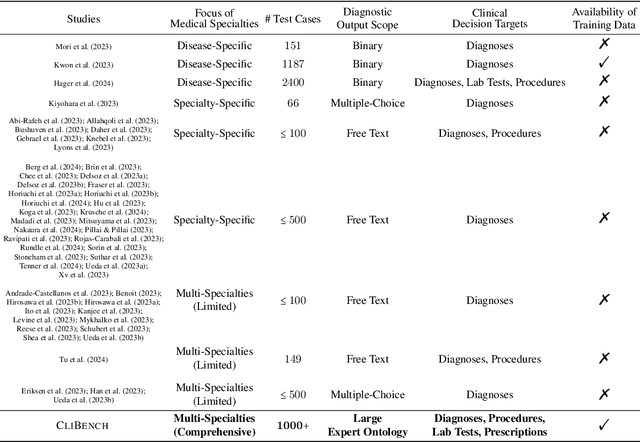
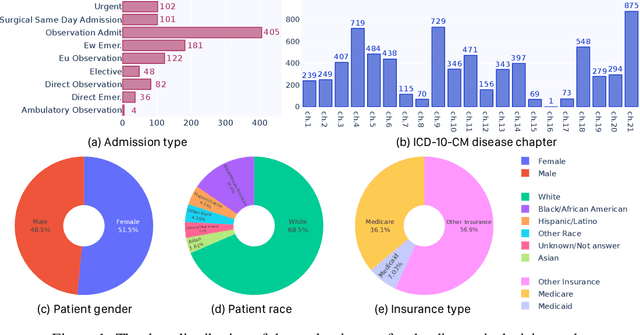
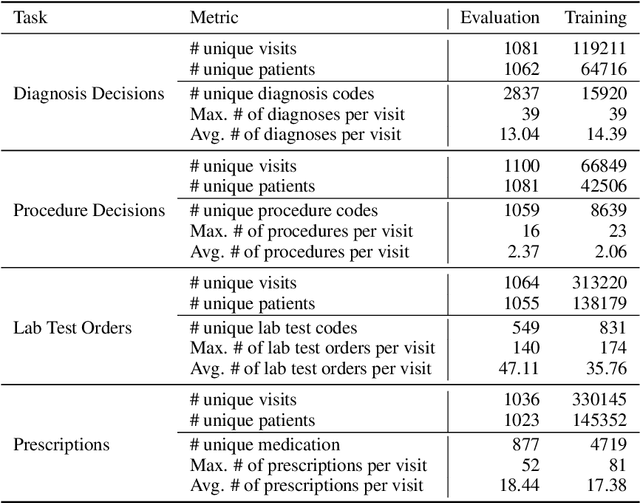
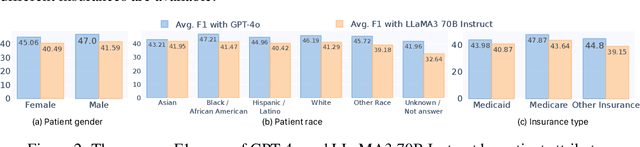
The integration of Artificial Intelligence (AI), especially Large Language Models (LLMs), into the clinical diagnosis process offers significant potential to improve the efficiency and accessibility of medical care. While LLMs have shown some promise in the medical domain, their application in clinical diagnosis remains underexplored, especially in real-world clinical practice, where highly sophisticated, patient-specific decisions need to be made. Current evaluations of LLMs in this field are often narrow in scope, focusing on specific diseases or specialties and employing simplified diagnostic tasks. To bridge this gap, we introduce CliBench, a novel benchmark developed from the MIMIC IV dataset, offering a comprehensive and realistic assessment of LLMs' capabilities in clinical diagnosis. This benchmark not only covers diagnoses from a diverse range of medical cases across various specialties but also incorporates tasks of clinical significance: treatment procedure identification, lab test ordering and medication prescriptions. Supported by structured output ontologies, CliBench enables a precise and multi-granular evaluation, offering an in-depth understanding of LLM's capability on diverse clinical tasks of desired granularity. We conduct a zero-shot evaluation of leading LLMs to assess their proficiency in clinical decision-making. Our preliminary results shed light on the potential and limitations of current LLMs in clinical settings, providing valuable insights for future advancements in LLM-powered healthcare.
Lurking in the shadows: Unveiling Stealthy Backdoor Attacks against Personalized Federated Learning
Jun 10, 2024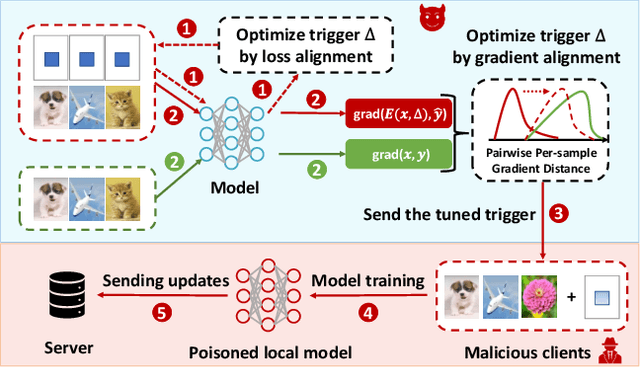
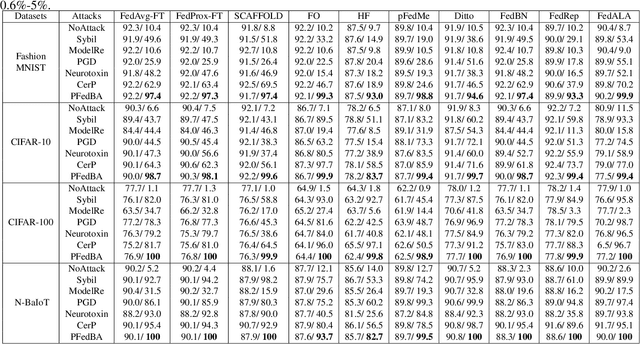
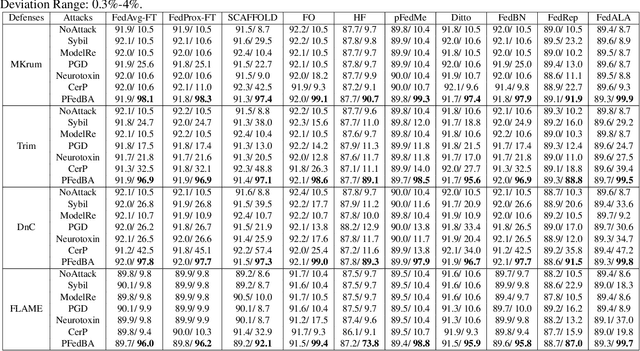
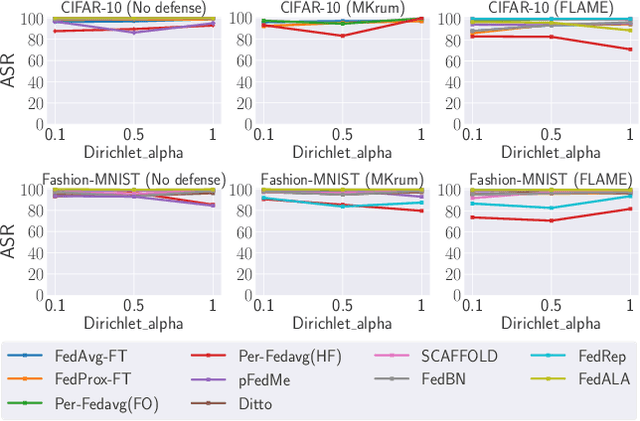
Federated Learning (FL) is a collaborative machine learning technique where multiple clients work together with a central server to train a global model without sharing their private data. However, the distribution shift across non-IID datasets of clients poses a challenge to this one-model-fits-all method hindering the ability of the global model to effectively adapt to each client's unique local data. To echo this challenge, personalized FL (PFL) is designed to allow each client to create personalized local models tailored to their private data. While extensive research has scrutinized backdoor risks in FL, it has remained underexplored in PFL applications. In this study, we delve deep into the vulnerabilities of PFL to backdoor attacks. Our analysis showcases a tale of two cities. On the one hand, the personalization process in PFL can dilute the backdoor poisoning effects injected into the personalized local models. Furthermore, PFL systems can also deploy both server-end and client-end defense mechanisms to strengthen the barrier against backdoor attacks. On the other hand, our study shows that PFL fortified with these defense methods may offer a false sense of security. We propose \textit{PFedBA}, a stealthy and effective backdoor attack strategy applicable to PFL systems. \textit{PFedBA} ingeniously aligns the backdoor learning task with the main learning task of PFL by optimizing the trigger generation process. Our comprehensive experiments demonstrate the effectiveness of \textit{PFedBA} in seamlessly embedding triggers into personalized local models. \textit{PFedBA} yields outstanding attack performance across 10 state-of-the-art PFL algorithms, defeating the existing 6 defense mechanisms. Our study sheds light on the subtle yet potent backdoor threats to PFL systems, urging the community to bolster defenses against emerging backdoor challenges.
MolX: Enhancing Large Language Models for Molecular Learning with A Multi-Modal Extension
Jun 10, 2024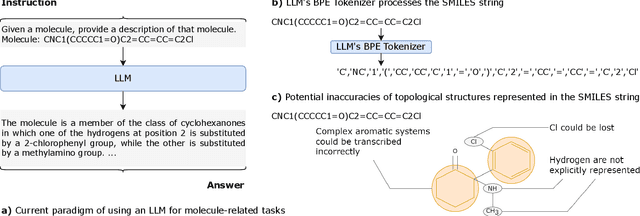

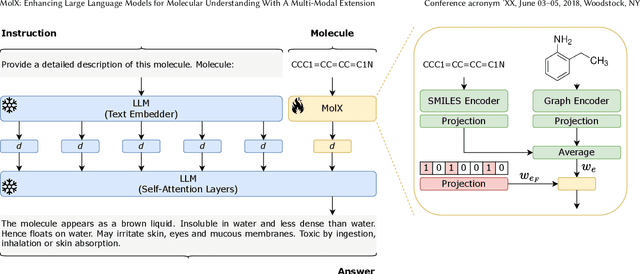
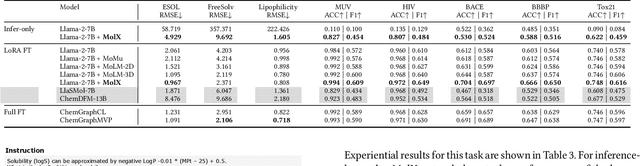
Recently, Large Language Models (LLMs) with their strong task-handling capabilities have shown remarkable advancements across a spectrum of fields, moving beyond natural language understanding. However, their proficiency within the chemistry domain remains restricted, especially in solving professional molecule-related tasks. This challenge is attributed to their inherent limitations in comprehending molecules using only common textual representations, i.e., SMILES strings. In this study, we seek to enhance the ability of LLMs to comprehend molecules by designing and equipping them with a multi-modal external module, namely MolX. In particular, instead of directly using a SMILES string to represent a molecule, we utilize specific encoders to extract fine-grained features from both SMILES string and 2D molecular graph representations for feeding into an LLM. Moreover, a human-defined molecular fingerprint is incorporated to leverage its embedded domain knowledge. Then, to establish an alignment between MolX and the LLM's textual input space, the whole model in which the LLM is frozen, is pre-trained with a versatile strategy including a diverse set of tasks. Extensive experimental evaluations demonstrate that our proposed method only introduces a small number of trainable parameters while outperforming baselines on various downstream molecule-related tasks ranging from molecule-to-text translation to retrosynthesis, with and without fine-tuning the LLM.
M2NO: Multiresolution Operator Learning with Multiwavelet-based Algebraic Multigrid Method
Jun 07, 2024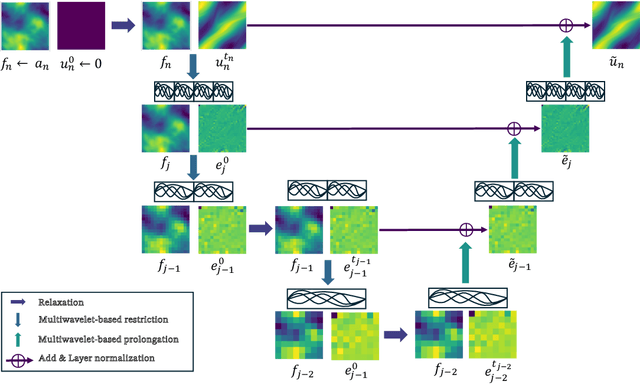
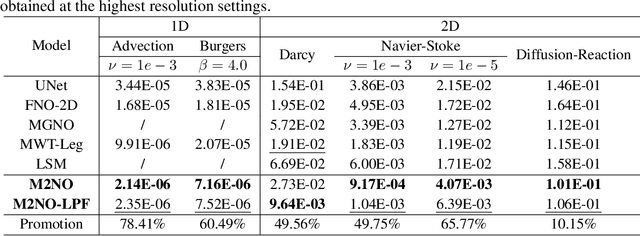
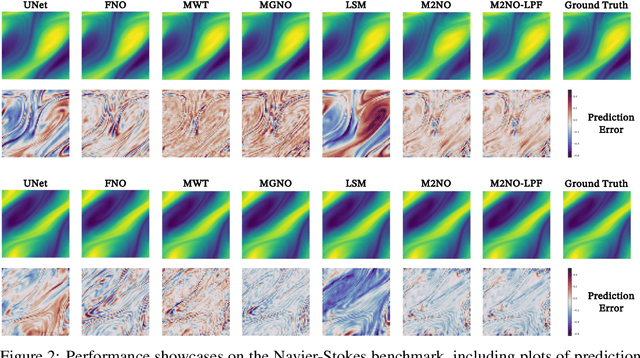

Solving partial differential equations (PDEs) effectively necessitates a multi-scale approach, particularly critical in high-dimensional scenarios characterized by increasing grid points or resolution. Traditional methods often fail to capture the detailed features necessary for accurate modeling, presenting a significant challenge in scientific computing. In response, we introduce the Multiwavelet-based Algebraic Multigrid Neural Operator (M2NO), a novel deep learning framework that synergistically combines multiwavelet transformations and algebraic multigrid (AMG) techniques. By exploiting the inherent similarities between these two approaches, M2NO overcomes their individual limitations and enhances precision and flexibility across various PDE benchmarks. Employing Multiresolution Analysis (MRA) with high-pass and low-pass filters, the model executes hierarchical decomposition to accurately delineate both global trends and localized details within PDE solutions, supporting adaptive data representation at multiple scales. M2NO also automates node selection and adeptly manages complex boundary conditions through its multiwavelet-based operators. Extensive evaluations on a diverse array of PDE datasets with different boundary conditions confirm M2NO's superior performance. Furthermore, M2NO excels in handling high-resolution and super-resolution tasks, consistently outperforming competing models and demonstrating robust adaptability in complex computational scenarios.
FourierKAN-GCF: Fourier Kolmogorov-Arnold Network -- An Effective and Efficient Feature Transformation for Graph Collaborative Filtering
Jun 04, 2024
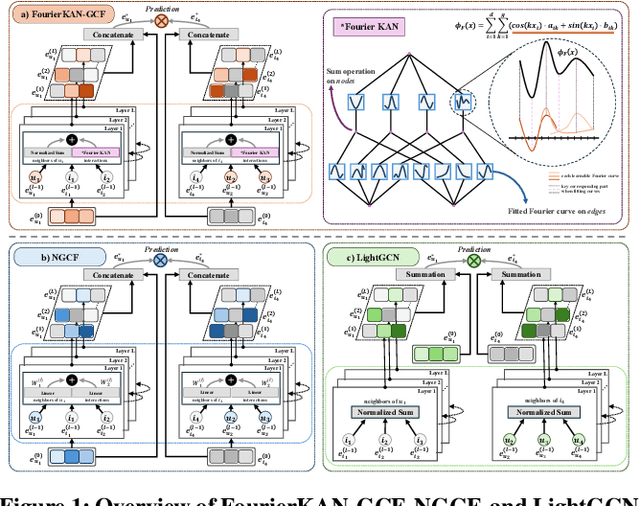

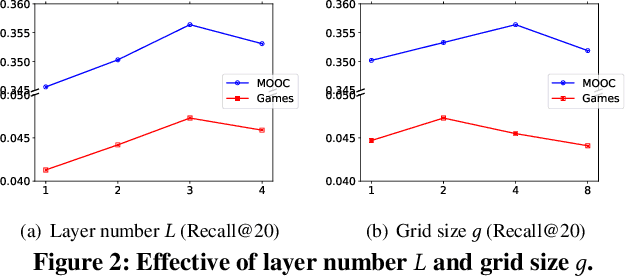
Graph Collaborative Filtering (GCF) has achieved state-of-the-art performance for recommendation tasks. However, most GCF structures simplify the feature transformation and nonlinear operation during message passing in the graph convolution network (GCN). We revisit these two components and discover that a part of feature transformation and nonlinear operation during message passing in GCN can improve the representation of GCF, but increase the difficulty of training. In this work, we propose a simple and effective graph-based recommendation model called FourierKAN-GCF. Specifically, it utilizes a novel Fourier Kolmogorov-Arnold Network (KAN) to replace the multilayer perceptron (MLP) as a part of the feature transformation during message passing in GCN, which improves the representation power of GCF and is easy to train. We further employ message dropout and node dropout strategies to improve the representation power and robustness of the model. Extensive experiments on two public datasets demonstrate the superiority of FourierKAN-GCF over most state-of-the-art methods. The implementation code is available at https://github.com/Jinfeng-Xu/FKAN-GCF.
Correlation Matching Transformation Transformers for UHD Image Restoration
Jun 02, 2024This paper proposes UHDformer, a general Transformer for Ultra-High-Definition (UHD) image restoration. UHDformer contains two learning spaces: (a) learning in high-resolution space and (b) learning in low-resolution space. The former learns multi-level high-resolution features and fuses low-high features and reconstructs the residual images, while the latter explores more representative features learning from the high-resolution ones to facilitate better restoration. To better improve feature representation in low-resolution space, we propose to build feature transformation from the high-resolution space to the low-resolution one. To that end, we propose two new modules: Dual-path Correlation Matching Transformation module (DualCMT) and Adaptive Channel Modulator (ACM). The DualCMT selects top C/r (r is greater or equal to 1 which controls the squeezing level) correlation channels from the max-pooling/mean-pooling high-resolution features to replace low-resolution ones in Transformers, which can effectively squeeze useless content to improve the feature representation in low-resolution space to facilitate better recovery. The ACM is exploited to adaptively modulate multi-level high-resolution features, enabling to provide more useful features to low-resolution space for better learning. Experimental results show that our UHDformer reduces about ninety-seven percent model sizes compared with most state-of-the-art methods while significantly improving performance under different training sets on 3 UHD image restoration tasks, including low-light image enhancement, image dehazing, and image deblurring. The source codes will be made available at https://github.com/supersupercong/UHDformer.
Multipath Exploitation for Fluctuating Target Detection in RIS-Assisted ISAC Systems
Jun 02, 2024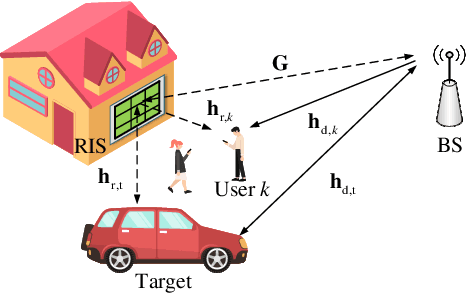
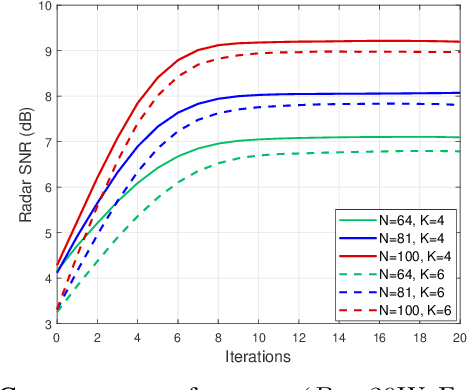
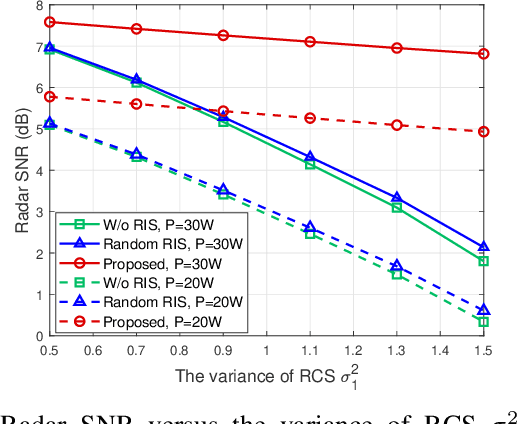

Integrated sensing and communication (ISAC) systems are typically deployed in multipath environments, which is usually deemed as a challenging issue for wireless communications. However, the multipath propagation can also provide extra illumination and observation perspectives for radar sensing, which offers spatial diversity gain for detecting targets with spatial radar cross-section (RCS) fluctuations. In this letter, we propose to utilize reconfigurable intelligent surfaces (RIS) in ISAC systems to provide high-quality and controllable multipath propagation for improving the performance of fluctuating target detection and simultaneously enhancing the quality of communication services. To effectively exploit the spatial diversity offered by RIS-empowered multipath, the dual-functional transmit beamforming and the RIS reflection beamforming are jointly designed to maximize the expectation of radar signal-to-noise ratio (SNR). To solve the resulting complex non-convex optimization problem, we develop an efficient alternating optimization algorithm that utilizes majorization-minimization (MM) and alternating direction method of multipliers (ADMM) algorithms. Simulation results illustrate the advantages of multipath exploitation and the proposed beamforming design algorithm for fluctuating target detection in RIS-assisted ISAC systems.
Explore Internal and External Similarity for Single Image Deraining with Graph Neural Networks
Jun 02, 2024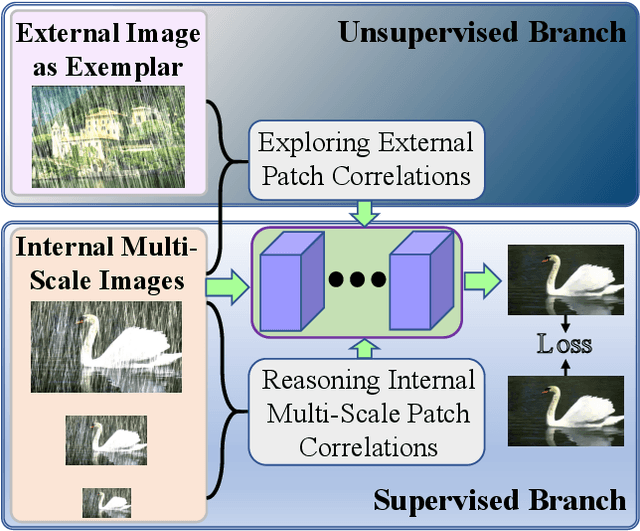

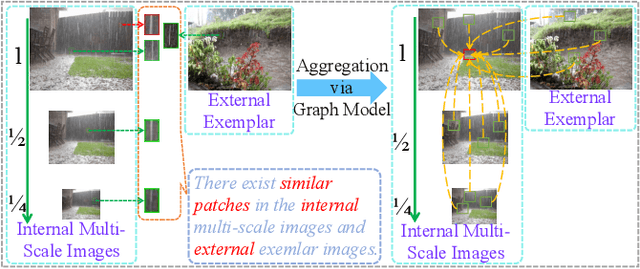
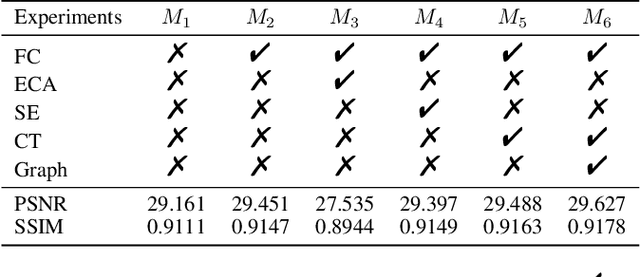
Patch-level non-local self-similarity is an important property of natural images. However, most existing methods do not consider this property into neural networks for image deraining, thus affecting recovery performance. Motivated by this property, we find that there exists significant patch recurrence property of a rainy image, that is, similar patches tend to recur many times in one image and its multi-scale images and external images. To better model this property for image detaining, we develop a multi-scale graph network with exemplars, called MSGNN, that contains two branches: 1) internal data-based supervised branch is used to model the internal relations of similar patches from the rainy image itself and its multi-scale images and 2) external data-participated unsupervised branch is used to model the external relations of the similar patches in the rainy image and exemplar. Specifically, we construct a graph model by searching the k-nearest neighboring patches from both the rainy images in a multi-scale framework and the exemplar. After obtaining the corresponding k neighboring patches from the multi-scale images and exemplar, we build a graph and aggregate them in an attentional manner so that the graph can provide more information from similar patches for image deraining. We embed the proposed graph in a deep neural network and train it in an end-to-end manner. Extensive experiments demonstrate that the proposed algorithm performs favorably against eight state-of-the-art methods on five public synthetic datasets and one real-world dataset. The source codes will be available at https://github.com/supersupercong/MSGNN.
Exploring Channel Estimation and Signal Detection for ODDM-based ISAC Systems
Jun 01, 2024Inspired by providing reliable communications for high-mobility scenarios, in this letter, we investigate the channel estimation and signal detection in integrated sensing and communication~(ISAC) systems based on the orthogonal delay-Doppler multiplexing~(ODDM) modulation, which consists of a pulse-train that can achieve the orthogonality with respect to the resolution of the delay-Doppler~(DD) plane. To enhance the communication performance in the ODDM-based ISAC systems, we first propose a low-complexity approximation algorithm for channel estimation, which addresses the challenge of the high complexity from high resolution in the ODDM modulation, and achieves performance close to that of the maximum likelihood estimator scheme. Then, we employ the orthogonal approximate message-passing scheme to detect the symbols in the communication process based on the estimated channel information. Finally, simulation results show that the detection performance of ODDM is better than other multi-carrier modulation schemes. Specifically, the ODDM outperforms the orthogonal time frequency space scheme by 2.3 dB when the bit error ratio is $10^{-6}$.