 Add to Chrome
 Add to Firefox
 Add to Edge
FundaPod: A Multi-Persona Agent Pod Platform with Knowledge Graph Memory for AI-Assisted Fundamental Investment Research
May 28, 2026
Large language models (LLMs) are increasingly applied in finance, yet most existing work emphasizes trading signals or financial NLP tasks centered on prediction. Institutional fundamental research, by contrast, requires human analysts or AI agents to gather evidence, identify business drivers, compare competing viewpoints, and generate investment memos. Its broader goal is not merely to predict outcomes, but to produce investment plans that are transparent, reusable, and verifiable, while contributing to the cumulative development of investment knowledge. We present FundaPod, a multi-persona agent platform for AI-assisted fundamental investment research. We argue that fundamental research is a human-centric decision-support task that is qualitatively distinct from trading-signal generation, and is therefore better served by an independence-preserving architecture. In FundaPod, AI agents with different personas, such as value investors or macro strategists, conduct research independently under a shared provenance contract. Their disagreements are then surfaced post hoc for adjudication by the human portfolio manager (PM) through a knowledge-graph memory system. This paper contributes five design principles for human-AI hybrid systems supporting fundamental research, grounded in design-science practice and theories of cognitive isolation and human-machine coordination. It also describes four architectural mechanisms: a persona distillation pipeline that turns public investor materials into deployable agents; a declarative skill registry that lets the planner derive typed task graphs; a grounded evidence model that links memo claims to verifiable sources; and a knowledge-graph "second brain" that connects tickers, memos, analysts, and themes. We demonstrate the architecture through a complete case study and a persona-based memo comparison.

VitalAgent: A Tool-Augmented Agent for Reactive and Proactive Physiological Monitoring over Wearable Health Data
May 28, 2026Wearable devices enable continuous monitoring of physiological signals such as ECG and PPG, but existing mHealth systems are largely limited to task-specific prediction pipelines or reactive question answering over static summaries. They lack the ability to support temporal reasoning, persistent physiological context, and proactive monitoring over long-term signal streams. We propose VitalAgent, a tool-augmented agentic framework for ECG/PPG-based mHealth that supports both reactive question answering and proactive monitoring. VitalAgent is built on a longitudinal physiological memory and a tool-augmented reasoning interface that enables dynamic computation over raw signals. We further introduce VitalBench, a longitudinal physiological monitoring benchmark dataset comprising 1,862 QA pairs for reactive question answering and 90.2 hours of continuous ECG/PPG recordings for proactive monitoring, covering cardiac, physical activity, and stress-related tasks. Experiments demonstrate that VitalAgent achieves over 30% improvement over prompt-based and ReAct baselines in reactive evaluation and supports proactive alert monitoring over long-term physiological signals, highlighting the importance of dynamic tool use and long-term physiological monitoring.
MuQ-Eval: An Open-Source Per-Sample Quality Metric for AI Music Generation Evaluation
Mar 24, 2026Distributional metrics such as Fréchet Audio Distance cannot score individual music clips and correlate poorly with human judgments, while the only per-sample learned metric achieving high human correlation is closed-source. We introduce MUQ-EVAL, an open-source per-sample quality metric for AIgenerated music built by training lightweight prediction heads on frozen MuQ-310M features using MusicEval, a dataset of generated clips from 31 text-to-music systems with expert quality ratings. Our simplest model, frozen features with attention pooling and a two-layer MLP, achieves system-level SRCC = 0.957 and utterance-level SRCC = 0.838 with human mean opinion scores. A systematic ablation over training objectives and adaptation strategies shows that no addition meaningfully improves the frozen baseline, indicating that frozen MuQ representations already capture quality-relevant information. Encoder choice is the dominant design factor, outweighing all architectural and training decisions. LoRA-adapted models trained on as few as 150 clips already achieve usable correlation, enabling personalized quality evaluators from individual listener annotations. A controlled degradation analysis reveals selective sensitivity to signal-level artifacts but insensitivity to musical-structural distortions. Our metric, MUQ-EVAL, is fully open-source, outperforms existing open per-sample metrics, and runs in real time on a single consumer GPU. Code, model weights, and evaluation scripts are available at https://github.com/dgtql/MuQ-Eval.
SLOFetch: Compressed-Hierarchical Instruction Prefetching for Cloud Microservices
Nov 06, 2025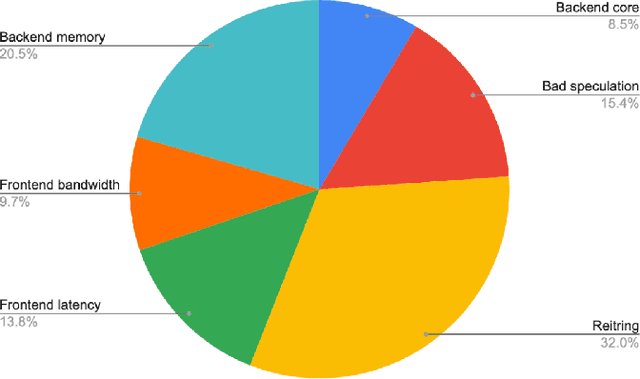
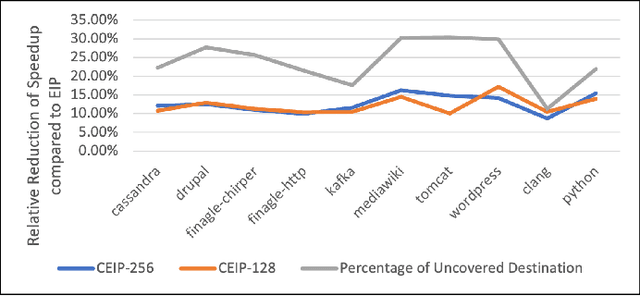
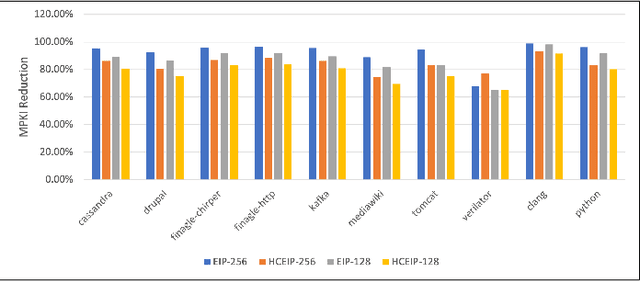
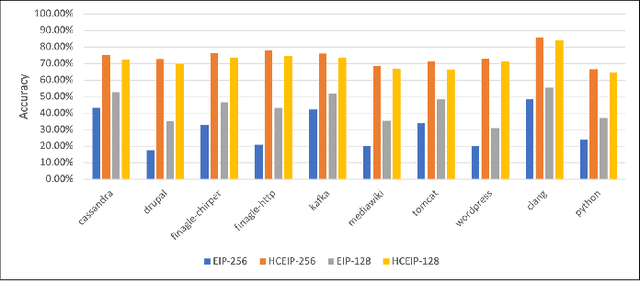
Large-scale networked services rely on deep soft-ware stacks and microservice orchestration, which increase instruction footprints and create frontend stalls that inflate tail latency and energy. We revisit instruction prefetching for these cloud workloads and present a design that aligns with SLO driven and self optimizing systems. Building on the Entangling Instruction Prefetcher (EIP), we introduce a Compressed Entry that captures up to eight destinations around a base using 36 bits by exploiting spatial clustering, and a Hierarchical Metadata Storage scheme that keeps only L1 resident and frequently queried entries on chip while virtualizing bulk metadata into lower levels. We further add a lightweight Online ML Controller that scores prefetch profitability using context features and a bandit adjusted threshold. On data center applications, our approach preserves EIP like speedups with smaller on chip state and improves efficiency for networked services in the ML era.
A Gravity-informed Spatiotemporal Transformer for Human Activity Intensity Prediction
Jun 16, 2025Human activity intensity prediction is a crucial to many location-based services. Although tremendous progress has been made to model dynamic spatiotemporal patterns of human activity, most existing methods, including spatiotemporal graph neural networks (ST-GNNs), overlook physical constraints of spatial interactions and the over-smoothing phenomenon in spatial correlation modeling. To address these limitations, this work proposes a physics-informed deep learning framework, namely Gravity-informed Spatiotemporal Transformer (Gravityformer) by refining transformer attention to integrate the universal law of gravitation and explicitly incorporating constraints from spatial interactions. Specifically, it (1) estimates two spatially explicit mass parameters based on inflow and outflow, (2) models the likelihood of cross-unit interaction using closed-form solutions of spatial interactions to constrain spatial modeling randomness, and (3) utilizes the learned spatial interaction to guide and mitigate the over-smoothing phenomenon in transformer attention matrices. The underlying law of human activity can be explicitly modeled by the proposed adaptive gravity model. Moreover, a parallel spatiotemporal graph convolution transformer structure is proposed for achieving a balance between coupled spatial and temporal learning. Systematic experiments on six real-world large-scale activity datasets demonstrate the quantitative and qualitative superiority of our approach over state-of-the-art benchmarks. Additionally, the learned gravity attention matrix can be disentangled and interpreted based on geographical laws. This work provides a novel insight into integrating physical laws with deep learning for spatiotemporal predictive learning.
A Narrative Review on Large AI Models in Lung Cancer Screening, Diagnosis, and Treatment Planning
Jun 08, 2025Lung cancer remains one of the most prevalent and fatal diseases worldwide, demanding accurate and timely diagnosis and treatment. Recent advancements in large AI models have significantly enhanced medical image understanding and clinical decision-making. This review systematically surveys the state-of-the-art in applying large AI models to lung cancer screening, diagnosis, prognosis, and treatment. We categorize existing models into modality-specific encoders, encoder-decoder frameworks, and joint encoder architectures, highlighting key examples such as CLIP, BLIP, Flamingo, BioViL-T, and GLoRIA. We further examine their performance in multimodal learning tasks using benchmark datasets like LIDC-IDRI, NLST, and MIMIC-CXR. Applications span pulmonary nodule detection, gene mutation prediction, multi-omics integration, and personalized treatment planning, with emerging evidence of clinical deployment and validation. Finally, we discuss current limitations in generalizability, interpretability, and regulatory compliance, proposing future directions for building scalable, explainable, and clinically integrated AI systems. Our review underscores the transformative potential of large AI models to personalize and optimize lung cancer care.
RegionGCN: Spatial-Heterogeneity-Aware Graph Convolutional Networks
Jan 29, 2025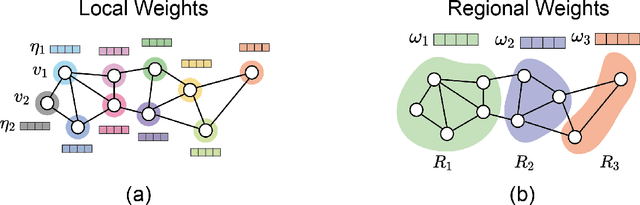
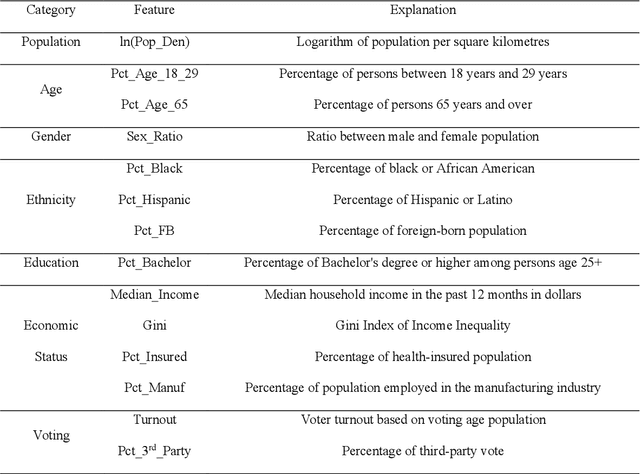

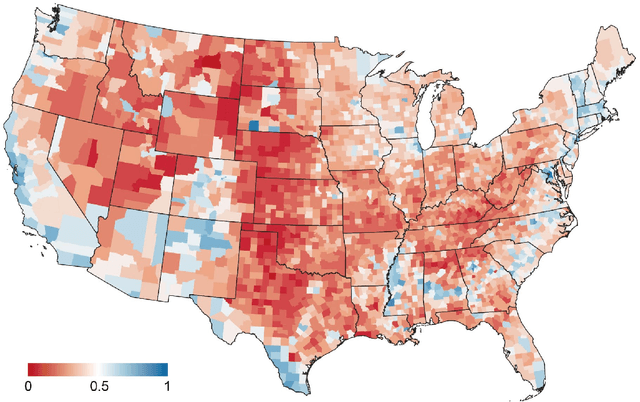
Modeling spatial heterogeneity in the data generation process is essential for understanding and predicting geographical phenomena. Despite their prevalence in geospatial tasks, neural network models usually assume spatial stationarity, which could limit their performance in the presence of spatial process heterogeneity. By allowing model parameters to vary over space, several approaches have been proposed to incorporate spatial heterogeneity into neural networks. However, current geographically weighting approaches are ineffective on graph neural networks, yielding no significant improvement in prediction accuracy. We assume the crux lies in the over-fitting risk brought by a large number of local parameters. Accordingly, we propose to model spatial process heterogeneity at the regional level rather than at the individual level, which largely reduces the number of spatially varying parameters. We further develop a heuristic optimization procedure to learn the region partition adaptively in the process of model training. Our proposed spatial-heterogeneity-aware graph convolutional network, named RegionGCN, is applied to the spatial prediction of county-level vote share in the 2016 US presidential election based on socioeconomic attributes. Results show that RegionGCN achieves significant improvement over the basic and geographically weighted GCNs. We also offer an exploratory analysis tool for the spatial variation of non-linear relationships through ensemble learning of regional partitions from RegionGCN. Our work contributes to the practice of Geospatial Artificial Intelligence (GeoAI) in tackling spatial heterogeneity.
Identifying Influential nodes in Brain Networks via Self-Supervised Graph-Transformer
Sep 17, 2024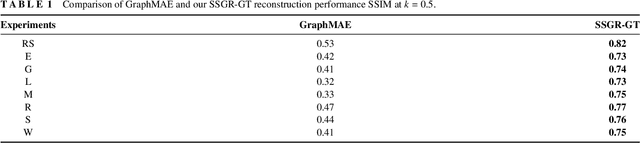
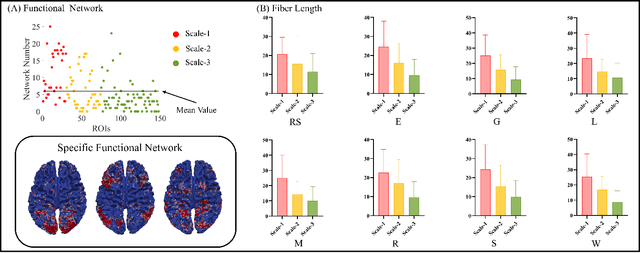
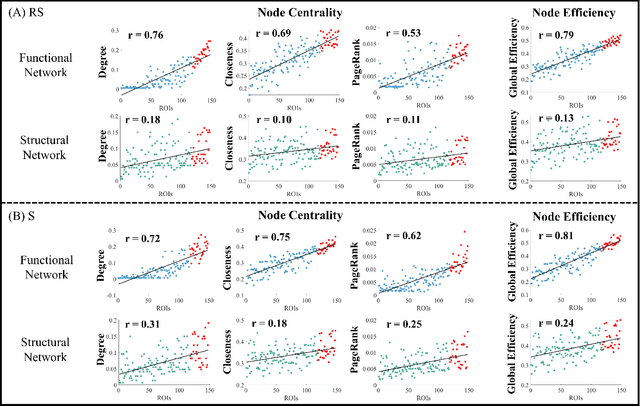
Studying influential nodes (I-nodes) in brain networks is of great significance in the field of brain imaging. Most existing studies consider brain connectivity hubs as I-nodes. However, this approach relies heavily on prior knowledge from graph theory, which may overlook the intrinsic characteristics of the brain network, especially when its architecture is not fully understood. In contrast, self-supervised deep learning can learn meaningful representations directly from the data. This approach enables the exploration of I-nodes for brain networks, which is also lacking in current studies. This paper proposes a Self-Supervised Graph Reconstruction framework based on Graph-Transformer (SSGR-GT) to identify I-nodes, which has three main characteristics. First, as a self-supervised model, SSGR-GT extracts the importance of brain nodes to the reconstruction. Second, SSGR-GT uses Graph-Transformer, which is well-suited for extracting features from brain graphs, combining both local and global characteristics. Third, multimodal analysis of I-nodes uses graph-based fusion technology, combining functional and structural brain information. The I-nodes we obtained are distributed in critical areas such as the superior frontal lobe, lateral parietal lobe, and lateral occipital lobe, with a total of 56 identified across different experiments. These I-nodes are involved in more brain networks than other regions, have longer fiber connections, and occupy more central positions in structural connectivity. They also exhibit strong connectivity and high node efficiency in both functional and structural networks. Furthermore, there is a significant overlap between the I-nodes and both the structural and functional rich-club. These findings enhance our understanding of the I-nodes within the brain network, and provide new insights for future research in further understanding the brain working mechanisms.
Uncover the nature of overlapping community in cities
Jan 31, 2024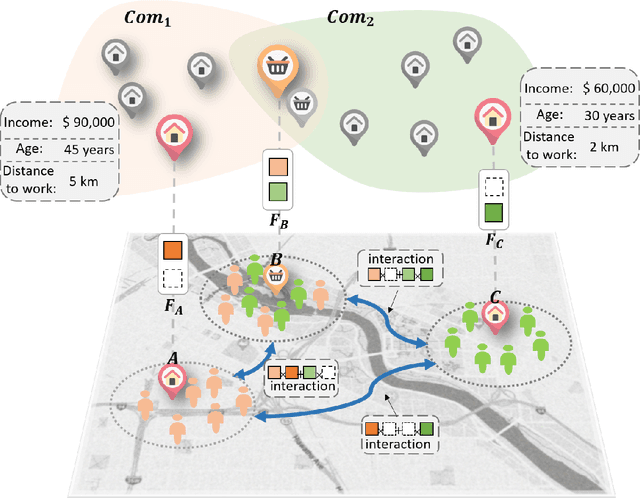
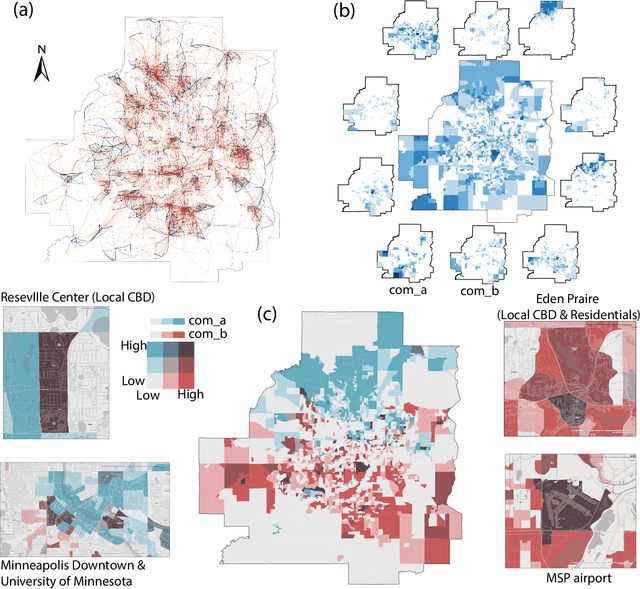
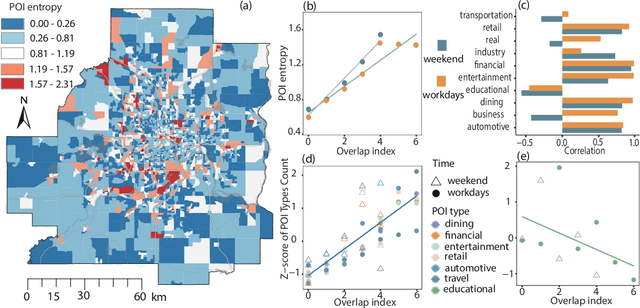
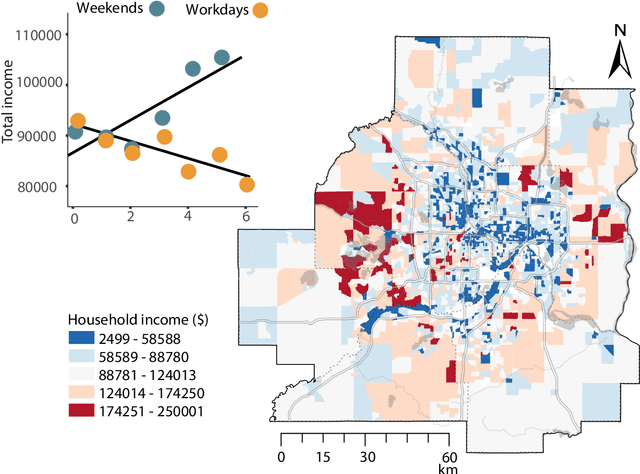
Urban spaces, though often perceived as discrete communities, are shared by various functional and social groups. Our study introduces a graph-based physics-aware deep learning framework, illuminating the intricate overlapping nature inherent in urban communities. Through analysis of individual mobile phone positioning data at Twin Cities metro area (TCMA) in Minnesota, USA, our findings reveal that 95.7 % of urban functional complexity stems from the overlapping structure of communities during weekdays. Significantly, our research not only quantifies these overlaps but also reveals their compelling correlations with income and racial indicators, unraveling the complex segregation patterns in U.S. cities. As the first to elucidate the overlapping nature of urban communities, this work offers a unique geospatial perspective on looking at urban structures, highlighting the nuanced interplay of socioeconomic dynamics within cities.
ChatGPT Informed Graph Neural Network for Stock Movement Prediction
Jun 07, 2023ChatGPT has demonstrated remarkable capabilities across various natural language processing (NLP) tasks. However, its potential for inferring dynamic network structures from temporal textual data, specifically financial news, remains an unexplored frontier. In this research, we introduce a novel framework that leverages ChatGPT's graph inference capabilities to enhance Graph Neural Networks (GNN). Our framework adeptly extracts evolving network structures from textual data, and incorporates these networks into graph neural networks for subsequent predictive tasks. The experimental results from stock movement forecasting indicate our model has consistently outperformed the state-of-the-art Deep Learning-based benchmarks. Furthermore, the portfolios constructed based on our model's outputs demonstrate higher annualized cumulative returns, alongside reduced volatility and maximum drawdown. This superior performance highlights the potential of ChatGPT for text-based network inferences and underscores its promising implications for the financial sector.