 Add to Chrome
 Add to Firefox
 Add to Edge
Penelope: Localized Latent Recurrence for Efficient Structured Reasoning
Jul 28, 2026
Complex structured reasoning tasks often require additional computation, yet current language models obtain it mainly by increasing parameter scale or by serializing intermediate steps as chain-of-thought (CoT) tokens. The former raises training and deployment costs, while the latter ties reasoning computation to autoregressive output length. We introduce Penelope, an efficient latent-reasoning framework for pretrained decoder-only Transformers that localizes recurrent computation to a selected decoder interval. The lower decoder prefix is evaluated once to construct a problem-conditioned boundary memory, which is then iteratively refined through time-modulated GRU dynamics and recurrent readout states before answer generation. A progressive CoT-to-latent curriculum transfers visible reasoning into this internal recurrent path, allowing additional computation to be allocated in latent space without repeatedly executing the complete decoder or generating a long intermediate trace. Experiments on open-source structured-reasoning benchmarks show that, at validation-selected latent budgets, Penelope attains competitive accuracy relative to established latent-reasoning models while reducing measured inference latency. These results show that latent refinement can be localized to a narrow decoder interval, reducing repeated full-decoder execution without generating a long visible reasoning trace and providing a practical accuracy-efficiency tradeoff for decoder-only Transformer models.

Workflow-GYM: Towards Long-Horizon Evaluation of Computer-use Agentic tasks in Real-World Professional Fields
Jun 09, 2026Recent years have witnessed the rapid evolution of AI agents toward handling increasingly complex, real-world tasks. However, existing benchmarks rarely evaluate whether agents can operate graphical user interfaces to complete long-horizon, high-value professional workflows across diverse domains. Current GUI benchmarks still predominantly focus on general-purpose software, relatively simple applications, and short-horizon tasks, leaving it largely unknown whether modern agents can follow user instructions to autonomously operate domain-specific professional software and accomplish economically valuable work in an end-to-end manner. To bridge this gap, we introduce Workflow-GYM, a benchmark for long-horizon GUI tasks centered on professional domains and specialized software environments. Through extensive experiments on state-of-the-art models, we find that even the strongest models achieve only slightly above 30% success rates, highlighting that professional long-horizon GUI workflows remain highly challenging for current GUI agents. Further analysis reveals that current agents struggle to maintain long-horizon workflow consistency, frequently exhibiting workflow stage omission, error propagation, objective drift, and insufficient understanding of professional software environments. Our findings provide important insights into the limitations of current agent systems and suggest key directions for the next generation of GUI-agent research.
OmniFM: Toward Modality-Robust and Task-Agnostic Federated Learning for Heterogeneous Medical Imaging
Mar 23, 2026Federated learning (FL) has become a promising paradigm for collaborative medical image analysis, yet existing frameworks remain tightly coupled to task-specific backbones and are fragile under heterogeneous imaging modalities. Such constraints hinder real-world deployment, where institutions vary widely in modality distributions and must support diverse downstream tasks. To address this limitation, we propose OmniFM, a modality- and task-agnostic FL framework that unifies training across classification, segmentation, super-resolution, visual question answering, and multimodal fusion without re-engineering the optimization pipeline. OmniFM builds on a key frequency-domain insight: low-frequency spectral components exhibit strong cross-modality consistency and encode modality-invariant anatomical structures. Accordingly, OmniFM integrates (i) Global Spectral Knowledge Retrieval to inject global frequency priors, (ii) Embedding-wise Cross-Attention Fusion to align representations, and (iii) Prefix-Suffix Spectral Prompting to jointly condition global and personalized cues, together regularized by a Spectral-Proximal Alignment objective that stabilizes aggregation. Experiments on real-world datasets show that OmniFM consistently surpasses state-of-the-art FL baselines across intra- and cross-modality heterogeneity, achieving superior results under both fine-tuning and training-from-scratch setups.
STGCN-LSTM for Olympic Medal Prediction: Dynamic Power Modeling and Causal Policy Optimization
Jan 29, 2025This paper proposes a novel hybrid model, STGCN-LSTM, to forecast Olympic medal distributions by integrating the spatio-temporal relationships among countries and the long-term dependencies of national performance. The Spatial-Temporal Graph Convolution Network (STGCN) captures geographic and interactive factors-such as coaching exchange and socio-economic links-while the Long Short-Term Memory (LSTM) module models historical trends in medal counts, economic data, and demographics. To address zero-inflated outputs (i.e., the disparity between countries that consistently yield wins and those never having won medals), a Zero-Inflated Compound Poisson (ZICP) framework is incorporated to separate random zeros from structural zeros, providing a clearer view of potential breakthrough performances. Validation includes historical backtracking, policy shock simulations, and causal inference checks, confirming the robustness of the proposed method. Results shed light on the influence of coaching mobility, event specialization, and strategic investment on medal forecasts, offering a data-driven foundation for optimizing sports policies and resource allocation in diverse Olympic contexts.
Guardians of Discourse: Evaluating LLMs on Multilingual Offensive Language Detection
Oct 21, 2024


Identifying offensive language is essential for maintaining safety and sustainability in the social media era. Though large language models (LLMs) have demonstrated encouraging potential in social media analytics, they lack thorough evaluation when in offensive language detection, particularly in multilingual environments. We for the first time evaluate multilingual offensive language detection of LLMs in three languages: English, Spanish, and German with three LLMs, GPT-3.5, Flan-T5, and Mistral, in both monolingual and multilingual settings. We further examine the impact of different prompt languages and augmented translation data for the task in non-English contexts. Furthermore, we discuss the impact of the inherent bias in LLMs and the datasets in the mispredictions related to sensitive topics.
Long Term Memory: The Foundation of AI Self-Evolution
Oct 21, 2024


Large language models (LLMs) like GPTs, trained on vast datasets, have demonstrated impressive capabilities in language understanding, reasoning, and planning, achieving human-level performance in various tasks. Most studies focus on enhancing these models by training on ever-larger datasets to build more powerful foundation models. While training stronger models is important, enabling models to evolve during inference is equally crucial, a process we refer to as AI self-evolution. Unlike large-scale training, self-evolution may rely on limited data or interactions. Inspired by the columnar organization of the human cerebral cortex, we hypothesize that AI models could develop cognitive abilities and build internal representations through iterative interactions with their environment. To achieve this, models need long-term memory (LTM) to store and manage processed interaction data. LTM supports self-evolution by representing diverse experiences across environments and agents. In this report, we explore AI self-evolution and its potential to enhance models during inference. We examine LTM's role in lifelong learning, allowing models to evolve based on accumulated interactions. We outline the structure of LTM and the systems needed for effective data retention and representation. We also classify approaches for building personalized models with LTM data and show how these models achieve self-evolution through interaction. Using LTM, our multi-agent framework OMNE achieved first place on the GAIA benchmark, demonstrating LTM's potential for AI self-evolution. Finally, we present a roadmap for future research, emphasizing the importance of LTM for advancing AI technology and its practical applications.
Ordered and Binary Speaker Embedding
May 25, 2023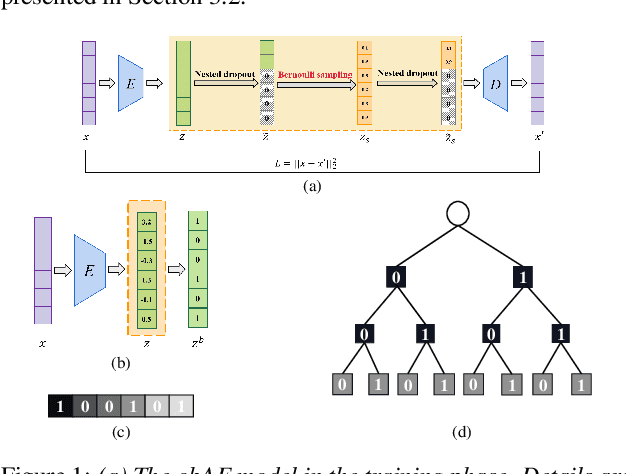
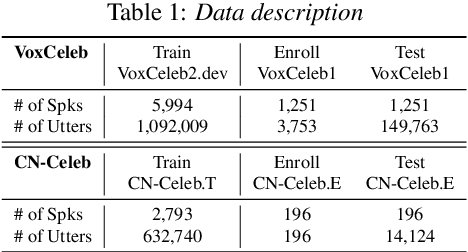
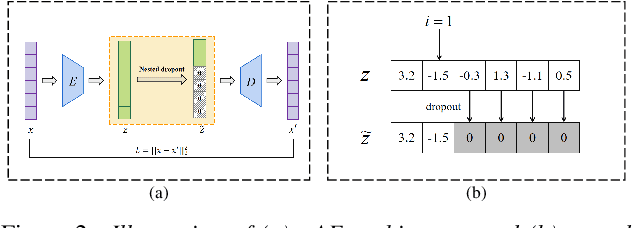
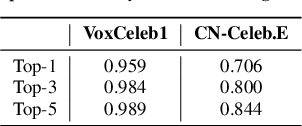
Modern speaker recognition systems represent utterances by embedding vectors. Conventional embedding vectors are dense and non-structural. In this paper, we propose an ordered binary embedding approach that sorts the dimensions of the embedding vector via a nested dropout and converts the sorted vectors to binary codes via Bernoulli sampling. The resultant ordered binary codes offer some important merits such as hierarchical clustering, reduced memory usage, and fast retrieval. These merits were empirically verified by comprehensive experiments on a speaker identification task with the VoxCeleb and CN-Celeb datasets.