 Add to Chrome
 Add to Firefox
 Add to Edge
StereoFactory: A Unified Merging Framework for Robust Stereo Matching
Jun 16, 2026
Stereo matching has advanced through foundation models trained on large-scale datasets, yet this paradigm suffers from a scalability bottleneck: incorporating new data requires costly joint retraining. Model merging offers a scalable post-hoc alternative by integrating knowledge from specialized models after source checkpoints are available. However, existing merging methods typically retain all available models or rely on greedy inclusion, which can preserve harmful task-vector interference. We propose StereoFactory, a coarse-to-fine evolutionary framework for adaptive model merging. Stage~1 employs a genetic algorithm to search the combinatorial space of model subsets, determining which models should participate. Stage~2 addresses module-level knowledge specialization (different functional modules exhibit distinct preferences for knowledge sources) through CMA-ES optimization of architecture-adaptive routing over the selected task vectors, with optional module-level scaling. Experiments across two architectures and four benchmarks demonstrate that StereoFactory consistently achieves the best four-benchmark average under the same checkpoint pool, reducing the average error from 3.80 to 3.30 on NMRF and from 2.88 to 2.19 on FoundationStereo relative to the strongest controlled baseline. The post-hoc search requires only 2.7--3.7\% of the corresponding joint-retraining wall-clock time. Analysis reveals that knowledge contributions are inherently module-specific, and selected subsets can transfer across architectures with minimal degradation. Code will be publicly released upon acceptance at: https://github.com/XiandaGuo/StereoFactory.

ChatHealthAI: Aligning Electronic Health Record Representations with Large Language Models for Grounded Clinical Reasoning
Jun 01, 2026Large language models (LLMs) exhibit strong natural-language reasoning abilities for clinical decision support, but struggle to effectively model structured longitudinal electronic health records (EHRs). In contrast, EHR foundation models can learn predictive patient representations, yet lack interpretable language-based reasoning. To bridge this gap, we propose ChatHealthAI, a multimodal reasoning framework that aligns structured EHR representations from a pretrained EHR foundation model with the semantic space of a frozen LLM through a task-aware resampler. By integrating longitudinal patient representations with refined clinical event descriptions, ChatHealthAI enables clinically grounded natural-language reasoning while maintaining accurate patient prediction. We evaluated ChatHealthAI on three clinical predictive tasks from the EHRSHOT benchmark. Results show that ChatHealthAI improves reasoning quality and interpretability while preserving competitive predictive performance. These findings highlight the potential of integrating EHR foundation models with pretrained LLMs for interpretable clinical prediction.
Synergizing Efficiency and Reliability for Continuous Mobile Manipulation
Apr 07, 2026Humans seamlessly fuse anticipatory planning with immediate feedback to perform successive mobile manipulation tasks without stopping, achieving both high efficiency and reliability. Replicating this fluid and reliable behavior in robots remains fundamentally challenging, not only due to conflicts between long-horizon planning and real-time reactivity, but also because excessively pursuing efficiency undermines reliability in uncertain environments: it impairs stable perception and the potential for compensation, while also increasing the risk of unintended contact. In this work, we present a unified framework that synergizes efficiency and reliability for continuous mobile manipulation. It features a reliability-aware trajectory planner that embeds essential elements for reliable execution into spatiotemporal optimization, generating efficient and reliability-promising global trajectories. It is coupled with a phase-dependent switching controller that seamlessly transitions between global trajectory tracking for efficiency and task-error compensation for reliability. We also investigate a hierarchical initialization that facilitates online replanning despite the complexity of long-horizon planning problems. Real-world evaluations demonstrate that our approach enables efficient and reliable completion of successive tasks under uncertainty (e.g., dynamic disturbances, perception and control errors). Moreover, the framework generalizes to tasks with diverse end-effector constraints. Compared with state-of-the-art baselines, our method consistently achieves the highest efficiency while improving the task success rate by 26.67\%--81.67\%. Comprehensive ablation studies further validate the contribution of each component. The source code will be released.
Causal World Modeling for Robot Control
Jan 29, 2026This work highlights that video world modeling, alongside vision-language pre-training, establishes a fresh and independent foundation for robot learning. Intuitively, video world models provide the ability to imagine the near future by understanding the causality between actions and visual dynamics. Inspired by this, we introduce LingBot-VA, an autoregressive diffusion framework that learns frame prediction and policy execution simultaneously. Our model features three carefully crafted designs: (1) a shared latent space, integrating vision and action tokens, driven by a Mixture-of-Transformers (MoT) architecture, (2) a closed-loop rollout mechanism, allowing for ongoing acquisition of environmental feedback with ground-truth observations, (3) an asynchronous inference pipeline, parallelizing action prediction and motor execution to support efficient control. We evaluate our model on both simulation benchmarks and real-world scenarios, where it shows significant promise in long-horizon manipulation, data efficiency in post-training, and strong generalizability to novel configurations. The code and model are made publicly available to facilitate the community.
Polybasic Speculative Decoding Through a Theoretical Perspective
Oct 30, 2025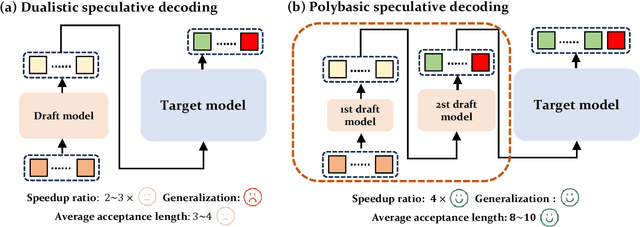

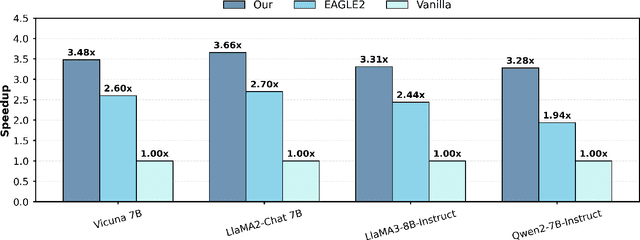
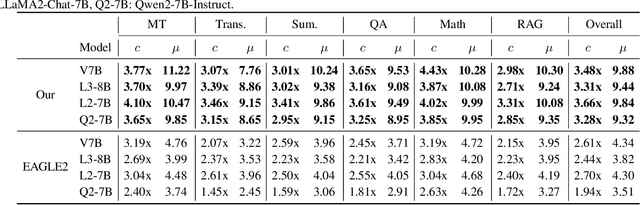
Inference latency stands as a critical bottleneck in the large-scale deployment of Large Language Models (LLMs). Speculative decoding methods have recently shown promise in accelerating inference without compromising the output distribution. However, existing work typically relies on a dualistic draft-verify framework and lacks rigorous theoretical grounding. In this paper, we introduce a novel \emph{polybasic} speculative decoding framework, underpinned by a comprehensive theoretical analysis. Specifically, we prove a fundamental theorem that characterizes the optimal inference time for multi-model speculative decoding systems, shedding light on how to extend beyond the dualistic approach to a more general polybasic paradigm. Through our theoretical investigation of multi-model token generation, we expose and optimize the interplay between model capabilities, acceptance lengths, and overall computational cost. Our framework supports both standalone implementation and integration with existing speculative techniques, leading to accelerated performance in practice. Experimental results across multiple model families demonstrate that our approach yields speedup ratios ranging from $3.31\times$ to $4.01\times$ for LLaMA2-Chat 7B, up to $3.87 \times$ for LLaMA3-8B, up to $4.43 \times$ for Vicuna-7B and up to $3.85 \times$ for Qwen2-7B -- all while preserving the original output distribution. We release our theoretical proofs and implementation code to facilitate further investigation into polybasic speculative decoding.
StereoCarla: A High-Fidelity Driving Dataset for Generalizable Stereo
Sep 16, 2025Stereo matching plays a crucial role in enabling depth perception for autonomous driving and robotics. While recent years have witnessed remarkable progress in stereo matching algorithms, largely driven by learning-based methods and synthetic datasets, the generalization performance of these models remains constrained by the limited diversity of existing training data. To address these challenges, we present StereoCarla, a high-fidelity synthetic stereo dataset specifically designed for autonomous driving scenarios. Built on the CARLA simulator, StereoCarla incorporates a wide range of camera configurations, including diverse baselines, viewpoints, and sensor placements as well as varied environmental conditions such as lighting changes, weather effects, and road geometries. We conduct comprehensive cross-domain experiments across four standard evaluation datasets (KITTI2012, KITTI2015, Middlebury, ETH3D) and demonstrate that models trained on StereoCarla outperform those trained on 11 existing stereo datasets in terms of generalization accuracy across multiple benchmarks. Furthermore, when integrated into multi-dataset training, StereoCarla contributes substantial improvements to generalization accuracy, highlighting its compatibility and scalability. This dataset provides a valuable benchmark for developing and evaluating stereo algorithms under realistic, diverse, and controllable settings, facilitating more robust depth perception systems for autonomous vehicles. Code can be available at https://github.com/XiandaGuo/OpenStereo, and data can be available at https://xiandaguo.net/StereoCarla.
Residual Learning Inspired Crossover Operator and Strategy Enhancements for Evolutionary Multitasking
Mar 27, 2025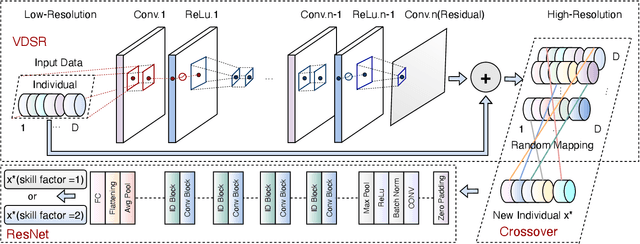
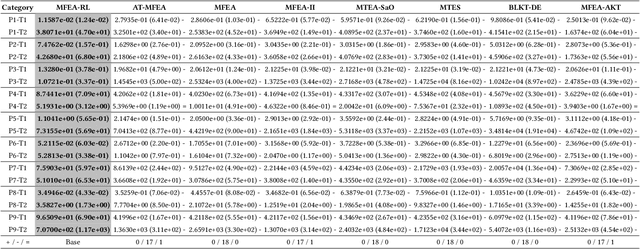
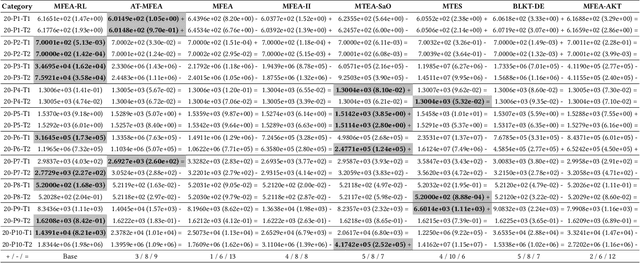
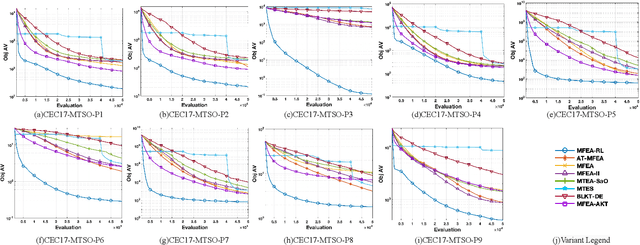
In evolutionary multitasking, strategies such as crossover operators and skill factor assignment are critical for effective knowledge transfer. Existing improvements to crossover operators primarily focus on low-dimensional variable combinations, such as arithmetic crossover or partially mapped crossover, which are insufficient for modeling complex high-dimensional interactions.Moreover, static or semi-dynamic crossover strategies fail to adapt to the dynamic dependencies among tasks. In addition, current Multifactorial Evolutionary Algorithm frameworks often rely on fixed skill factor assignment strategies, lacking flexibility. To address these limitations, this paper proposes the Multifactorial Evolutionary Algorithm-Residual Learning (MFEA-RL) method based on residual learning. The method employs a Very Deep Super-Resolution (VDSR) model to generate high-dimensional residual representations of individuals, enhancing the modeling of complex relationships within dimensions. A ResNet-based mechanism dynamically assigns skill factors to improve task adaptability, while a random mapping mechanism efficiently performs crossover operations and mitigates the risk of negative transfer. Theoretical analysis and experimental results show that MFEA-RL outperforms state-of-the-art multitasking algorithms. It excels in both convergence and adaptability on standard evolutionary multitasking benchmarks, including CEC2017-MTSO and WCCI2020-MTSO. Additionally, its effectiveness is validated through a real-world application scenario.
VenusFactory: A Unified Platform for Protein Engineering Data Retrieval and Language Model Fine-Tuning
Mar 19, 2025Natural language processing (NLP) has significantly influenced scientific domains beyond human language, including protein engineering, where pre-trained protein language models (PLMs) have demonstrated remarkable success. However, interdisciplinary adoption remains limited due to challenges in data collection, task benchmarking, and application. This work presents VenusFactory, a versatile engine that integrates biological data retrieval, standardized task benchmarking, and modular fine-tuning of PLMs. VenusFactory supports both computer science and biology communities with choices of both a command-line execution and a Gradio-based no-code interface, integrating $40+$ protein-related datasets and $40+$ popular PLMs. All implementations are open-sourced on https://github.com/tyang816/VenusFactory.
SR-FoT: A Syllogistic-Reasoning Framework of Thought for Large Language Models Tackling Knowledge-based Reasoning Tasks
Jan 20, 2025Deductive reasoning is a crucial logical capability that assists us in solving complex problems based on existing knowledge. Although augmented by Chain-of-Thought prompts, Large Language Models (LLMs) might not follow the correct reasoning paths. Enhancing the deductive reasoning abilities of LLMs, and leveraging their extensive built-in knowledge for various reasoning tasks, remains an open question. Attempting to mimic the human deductive reasoning paradigm, we propose a multi-stage Syllogistic-Reasoning Framework of Thought (SR-FoT) that enables LLMs to perform syllogistic deductive reasoning to handle complex knowledge-based reasoning tasks. Our SR-FoT begins by interpreting the question and then uses the interpretation and the original question to propose a suitable major premise. It proceeds by generating and answering minor premise questions in two stages to match the minor premises. Finally, it guides LLMs to use the previously generated major and minor premises to perform syllogistic deductive reasoning to derive the answer to the original question. Extensive and thorough experiments on knowledge-based reasoning tasks have demonstrated the effectiveness and advantages of our SR-FoT.
Stereo Anything: Unifying Stereo Matching with Large-Scale Mixed Data
Nov 21, 2024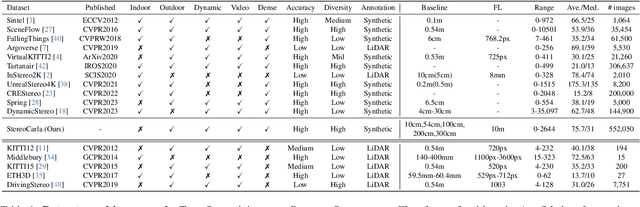
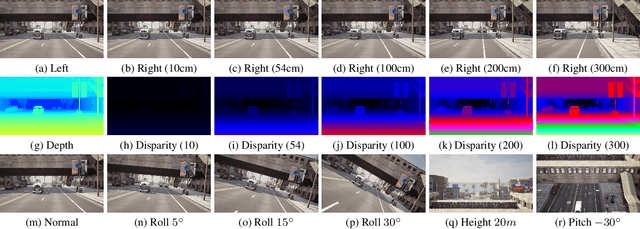
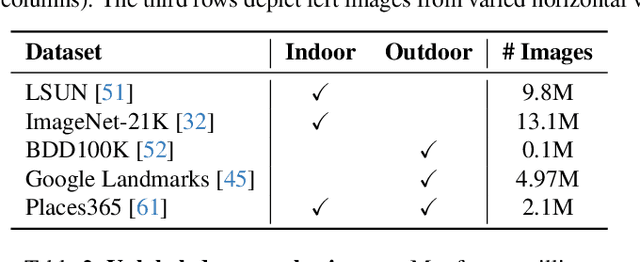
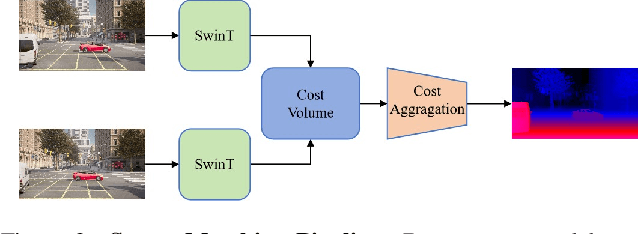
Stereo matching has been a pivotal component in 3D vision, aiming to find corresponding points between pairs of stereo images to recover depth information. In this work, we introduce StereoAnything, a highly practical solution for robust stereo matching. Rather than focusing on a specialized model, our goal is to develop a versatile foundational model capable of handling stereo images across diverse environments. To this end, we scale up the dataset by collecting labeled stereo images and generating synthetic stereo pairs from unlabeled monocular images. To further enrich the model's ability to generalize across different conditions, we introduce a novel synthetic dataset that complements existing data by adding variability in baselines, camera angles, and scene types. We extensively evaluate the zero-shot capabilities of our model on five public datasets, showcasing its impressive ability to generalize to new, unseen data. Code will be available at \url{https://github.com/XiandaGuo/OpenStereo}.