 Add to Chrome
 Add to Firefox
 Add to Edge
Recurrent Video Restoration Transformer with Guided Deformable Attention
Jun 05, 2022
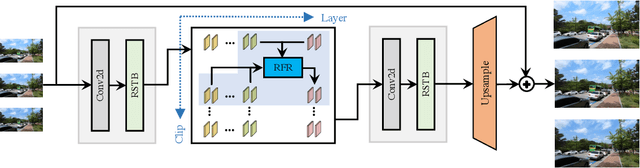
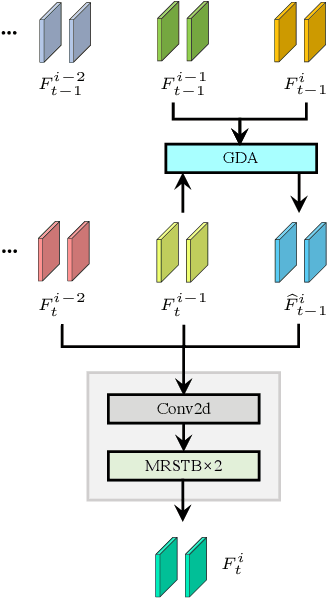
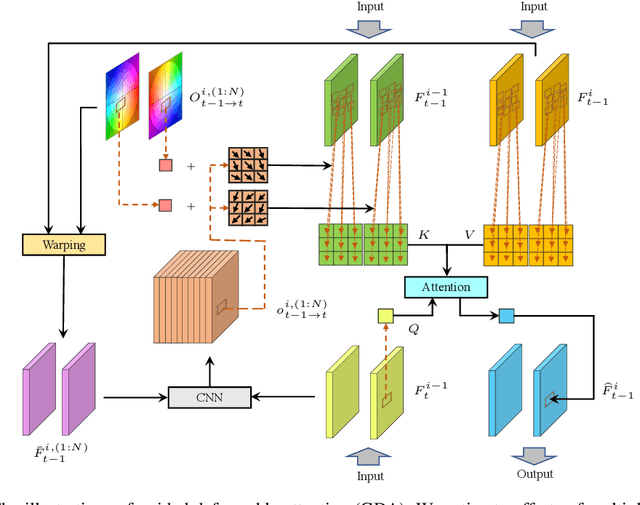
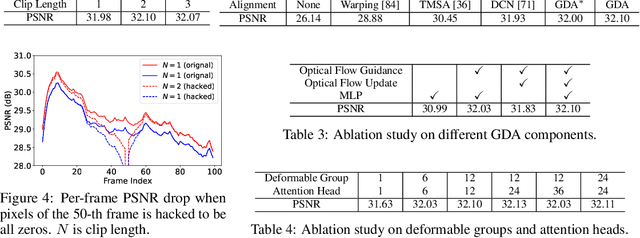
Video restoration aims at restoring multiple high-quality frames from multiple low-quality frames. Existing video restoration methods generally fall into two extreme cases, i.e., they either restore all frames in parallel or restore the video frame by frame in a recurrent way, which would result in different merits and drawbacks. Typically, the former has the advantage of temporal information fusion. However, it suffers from large model size and intensive memory consumption; the latter has a relatively small model size as it shares parameters across frames; however, it lacks long-range dependency modeling ability and parallelizability. In this paper, we attempt to integrate the advantages of the two cases by proposing a recurrent video restoration transformer, namely RVRT. RVRT processes local neighboring frames in parallel within a globally recurrent framework which can achieve a good trade-off between model size, effectiveness, and efficiency. Specifically, RVRT divides the video into multiple clips and uses the previously inferred clip feature to estimate the subsequent clip feature. Within each clip, different frame features are jointly updated with implicit feature aggregation. Across different clips, the guided deformable attention is designed for clip-to-clip alignment, which predicts multiple relevant locations from the whole inferred clip and aggregates their features by the attention mechanism. Extensive experiments on video super-resolution, deblurring, and denoising show that the proposed RVRT achieves state-of-the-art performance on benchmark datasets with balanced model size, testing memory and runtime.

NTIRE 2022 Challenge on High Dynamic Range Imaging: Methods and Results
May 25, 2022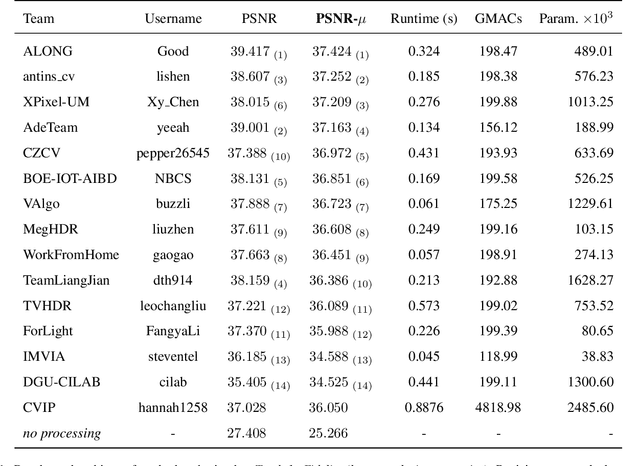
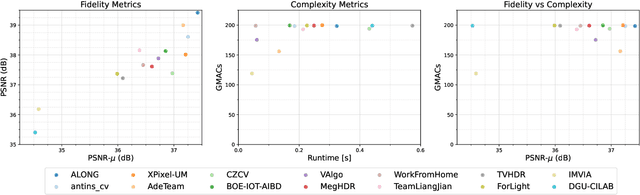
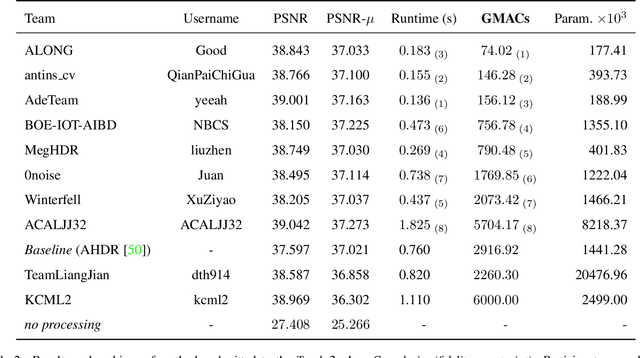
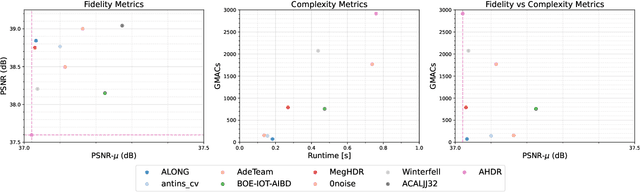
This paper reviews the challenge on constrained high dynamic range (HDR) imaging that was part of the New Trends in Image Restoration and Enhancement (NTIRE) workshop, held in conjunction with CVPR 2022. This manuscript focuses on the competition set-up, datasets, the proposed methods and their results. The challenge aims at estimating an HDR image from multiple respective low dynamic range (LDR) observations, which might suffer from under- or over-exposed regions and different sources of noise. The challenge is composed of two tracks with an emphasis on fidelity and complexity constraints: In Track 1, participants are asked to optimize objective fidelity scores while imposing a low-complexity constraint (i.e. solutions can not exceed a given number of operations). In Track 2, participants are asked to minimize the complexity of their solutions while imposing a constraint on fidelity scores (i.e. solutions are required to obtain a higher fidelity score than the prescribed baseline). Both tracks use the same data and metrics: Fidelity is measured by means of PSNR with respect to a ground-truth HDR image (computed both directly and with a canonical tonemapping operation), while complexity metrics include the number of Multiply-Accumulate (MAC) operations and runtime (in seconds).
* CVPR Workshops 2022. 15 pages, 21 figures, 2 tables
Degradation-Aware Unfolding Half-Shuffle Transformer for Spectral Compressive Imaging
May 20, 2022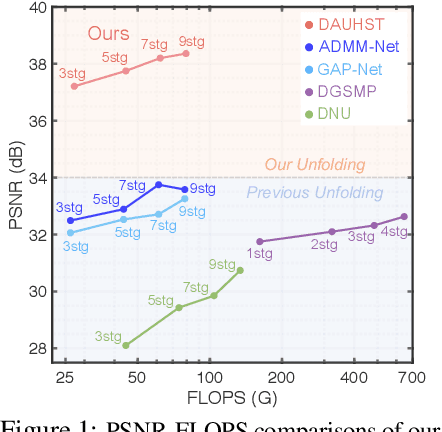
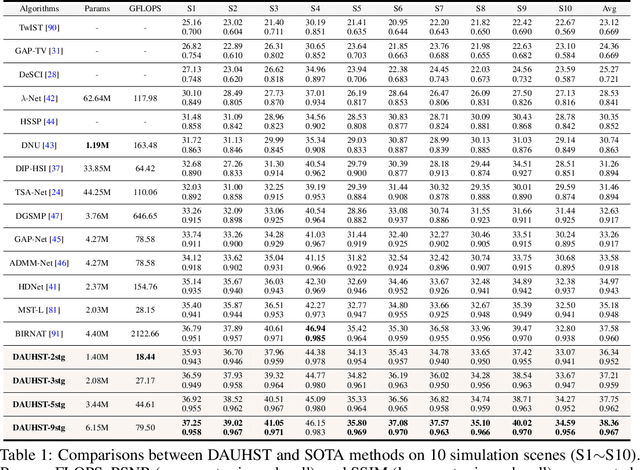
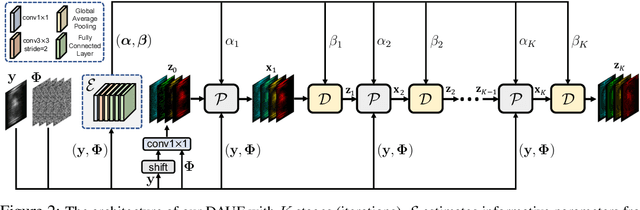
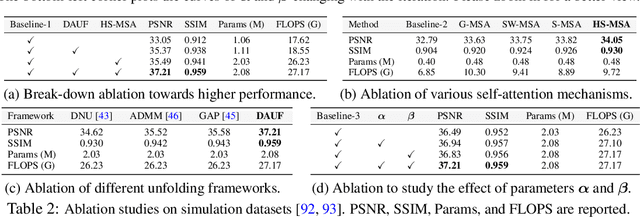
In coded aperture snapshot spectral compressive imaging (CASSI) systems, hyperspectral image (HSI) reconstruction methods are employed to recover the spatial-spectral signal from a compressed measurement. Among these algorithms, deep unfolding methods demonstrate promising performance but suffer from two issues. Firstly, they do not estimate the degradation patterns and ill-posedness degree from the highly related CASSI to guide the iterative learning. Secondly, they are mainly CNN-based, showing limitations in capturing long-range dependencies. In this paper, we propose a principled Degradation-Aware Unfolding Framework (DAUF) that estimates parameters from the compressed image and physical mask, and then uses these parameters to control each iteration. Moreover, we customize a novel Half-Shuffle Transformer (HST) that simultaneously captures local contents and non-local dependencies. By plugging HST into DAUF, we establish the first Transformer-based deep unfolding method, Degradation-Aware Unfolding Half-Shuffle Transformer (DAUHST), for HSI reconstruction. Experiments show that DAUHST significantly surpasses state-of-the-art methods while requiring cheaper computational and memory costs. Code and models will be released to the public.
Revisiting Random Channel Pruning for Neural Network Compression
May 11, 2022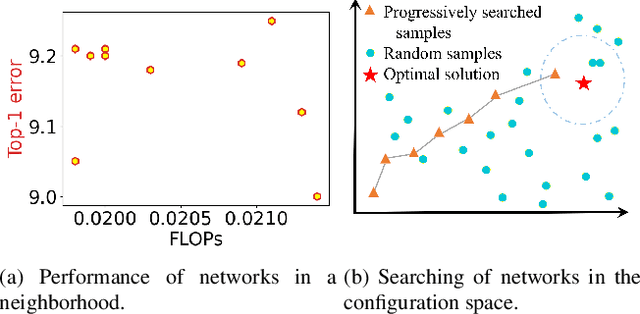
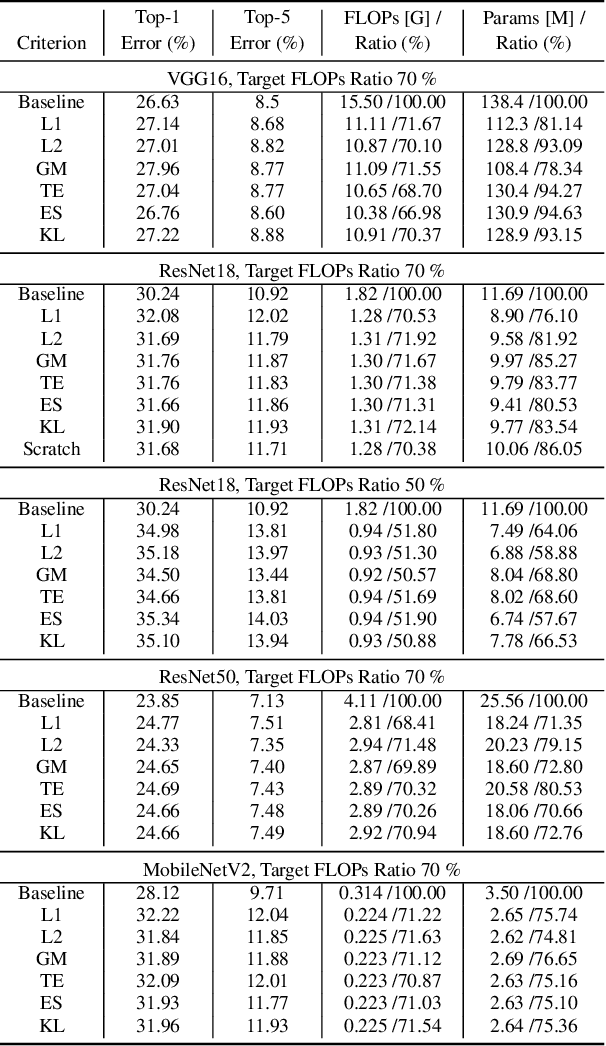
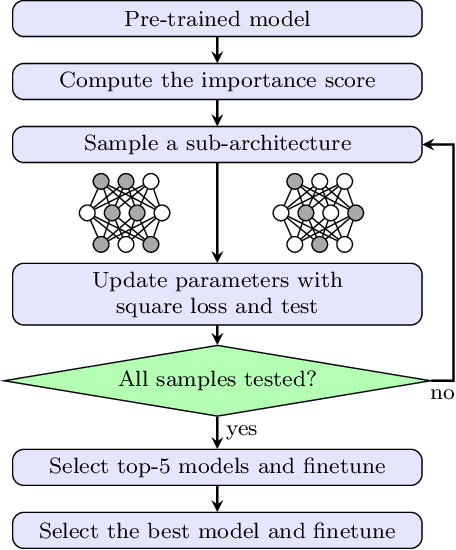
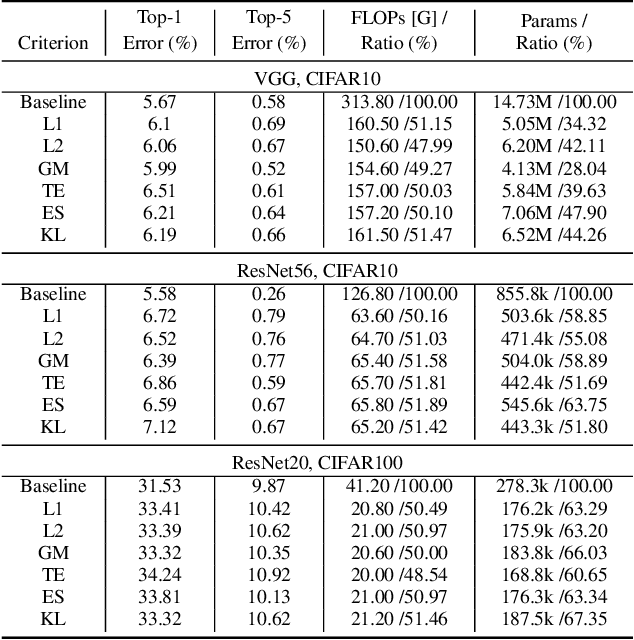
Channel (or 3D filter) pruning serves as an effective way to accelerate the inference of neural networks. There has been a flurry of algorithms that try to solve this practical problem, each being claimed effective in some ways. Yet, a benchmark to compare those algorithms directly is lacking, mainly due to the complexity of the algorithms and some custom settings such as the particular network configuration or training procedure. A fair benchmark is important for the further development of channel pruning. Meanwhile, recent investigations reveal that the channel configurations discovered by pruning algorithms are at least as important as the pre-trained weights. This gives channel pruning a new role, namely searching the optimal channel configuration. In this paper, we try to determine the channel configuration of the pruned models by random search. The proposed approach provides a new way to compare different methods, namely how well they behave compared with random pruning. We show that this simple strategy works quite well compared with other channel pruning methods. We also show that under this setting, there are surprisingly no clear winners among different channel importance evaluation methods, which then may tilt the research efforts into advanced channel configuration searching methods.
NTIRE 2022 Challenge on Efficient Super-Resolution: Methods and Results
May 11, 2022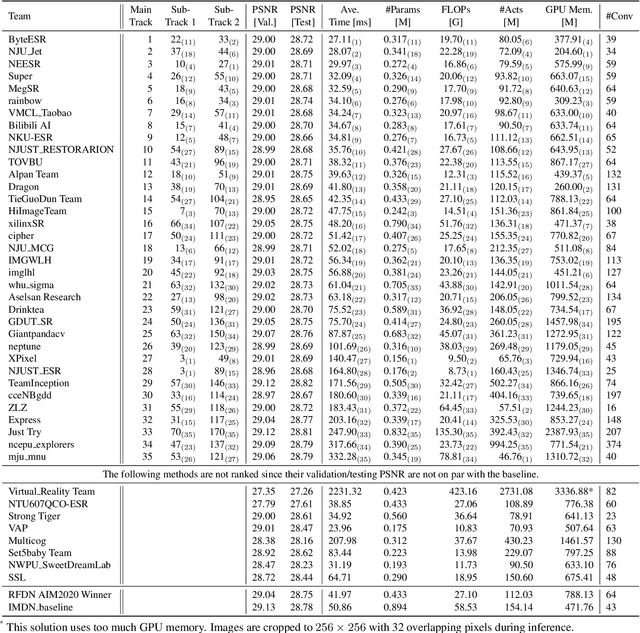
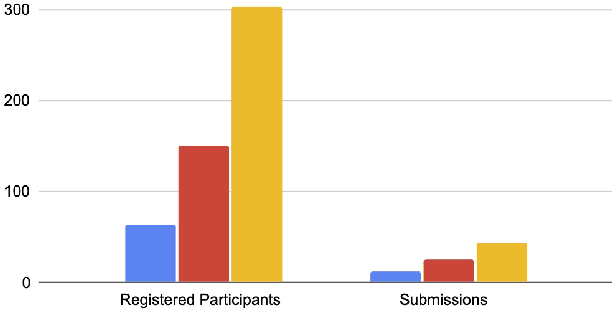
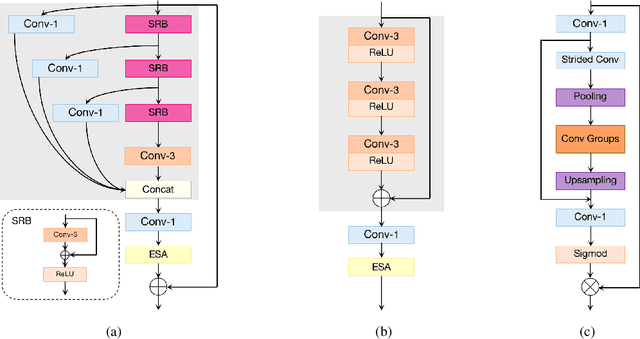
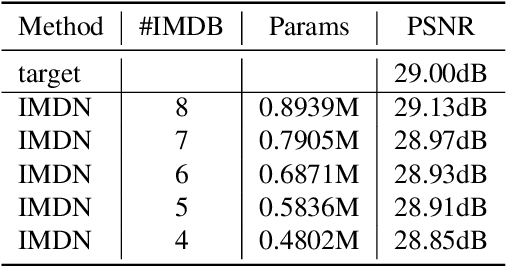
This paper reviews the NTIRE 2022 challenge on efficient single image super-resolution with focus on the proposed solutions and results. The task of the challenge was to super-resolve an input image with a magnification factor of $\times$4 based on pairs of low and corresponding high resolution images. The aim was to design a network for single image super-resolution that achieved improvement of efficiency measured according to several metrics including runtime, parameters, FLOPs, activations, and memory consumption while at least maintaining the PSNR of 29.00dB on DIV2K validation set. IMDN is set as the baseline for efficiency measurement. The challenge had 3 tracks including the main track (runtime), sub-track one (model complexity), and sub-track two (overall performance). In the main track, the practical runtime performance of the submissions was evaluated. The rank of the teams were determined directly by the absolute value of the average runtime on the validation set and test set. In sub-track one, the number of parameters and FLOPs were considered. And the individual rankings of the two metrics were summed up to determine a final ranking in this track. In sub-track two, all of the five metrics mentioned in the description of the challenge including runtime, parameter count, FLOPs, activations, and memory consumption were considered. Similar to sub-track one, the rankings of five metrics were summed up to determine a final ranking. The challenge had 303 registered participants, and 43 teams made valid submissions. They gauge the state-of-the-art in efficient single image super-resolution.
Conformer and Blind Noisy Students for Improved Image Quality Assessment
Apr 27, 2022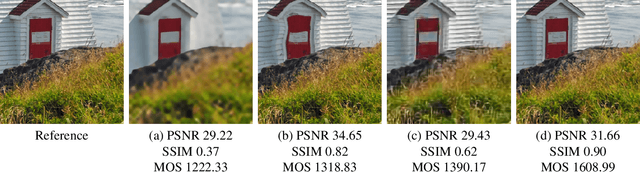
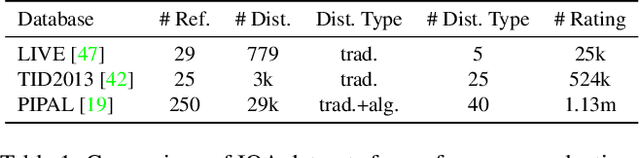
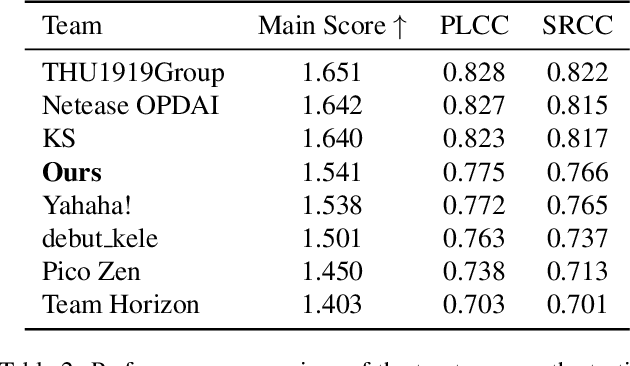
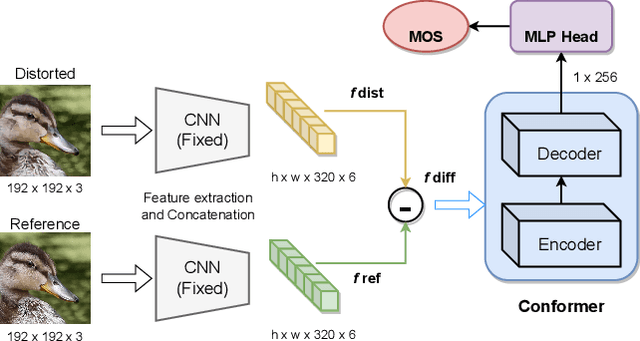
Generative models for image restoration, enhancement, and generation have significantly improved the quality of the generated images. Surprisingly, these models produce more pleasant images to the human eye than other methods, yet, they may get a lower perceptual quality score using traditional perceptual quality metrics such as PSNR or SSIM. Therefore, it is necessary to develop a quantitative metric to reflect the performance of new algorithms, which should be well-aligned with the person's mean opinion score (MOS). Learning-based approaches for perceptual image quality assessment (IQA) usually require both the distorted and reference image for measuring the perceptual quality accurately. However, commonly only the distorted or generated image is available. In this work, we explore the performance of transformer-based full-reference IQA models. We also propose a method for IQA based on semi-supervised knowledge distillation from full-reference teacher models into blind student models using noisy pseudo-labeled data. Our approaches achieved competitive results on the NTIRE 2022 Perceptual Image Quality Assessment Challenge: our full-reference model was ranked 4th, and our blind noisy student was ranked 3rd among 70 participants, each in their respective track.
NTIRE 2022 Challenge on Super-Resolution and Quality Enhancement of Compressed Video: Dataset, Methods and Results
Apr 25, 2022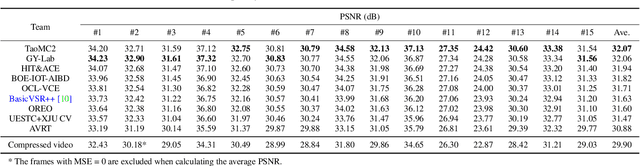
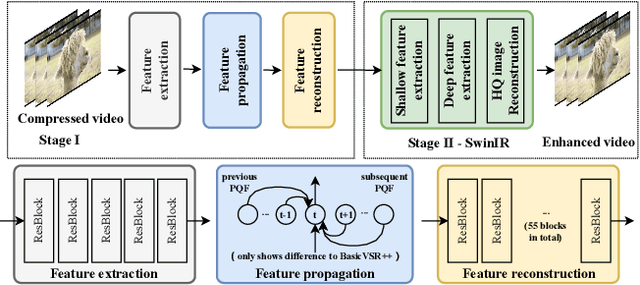
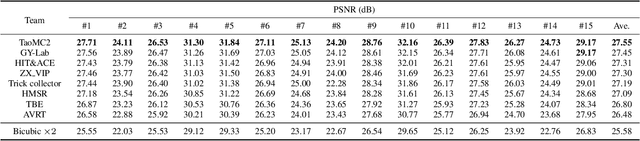
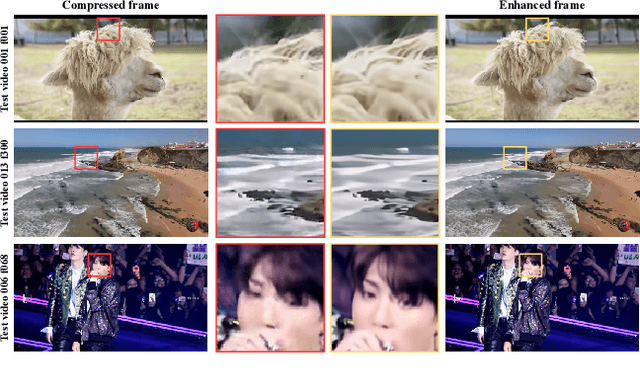
This paper reviews the NTIRE 2022 Challenge on Super-Resolution and Quality Enhancement of Compressed Video. In this challenge, we proposed the LDV 2.0 dataset, which includes the LDV dataset (240 videos) and 95 additional videos. This challenge includes three tracks. Track 1 aims at enhancing the videos compressed by HEVC at a fixed QP. Track 2 and Track 3 target both the super-resolution and quality enhancement of HEVC compressed video. They require x2 and x4 super-resolution, respectively. The three tracks totally attract more than 600 registrations. In the test phase, 8 teams, 8 teams and 12 teams submitted the final results to Tracks 1, 2 and 3, respectively. The proposed methods and solutions gauge the state-of-the-art of super-resolution and quality enhancement of compressed video. The proposed LDV 2.0 dataset is available at https://github.com/RenYang-home/LDV_dataset. The homepage of this challenge (including open-sourced codes) is at https://github.com/RenYang-home/NTIRE22_VEnh_SR.
NTIRE 2022 Challenge on Stereo Image Super-Resolution: Methods and Results
Apr 20, 2022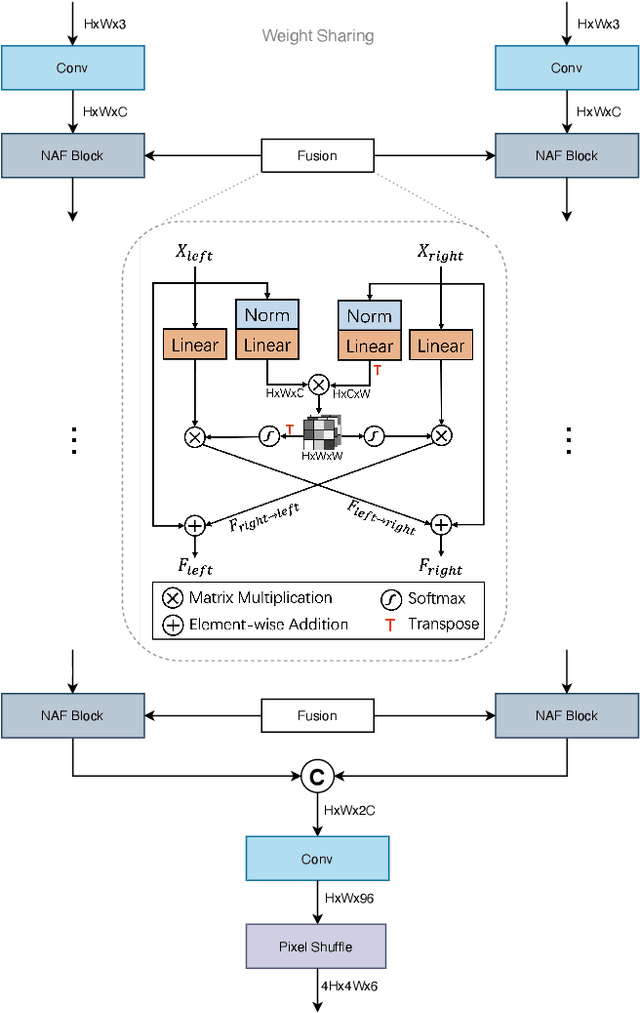
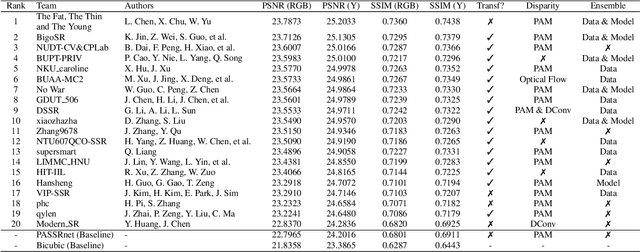
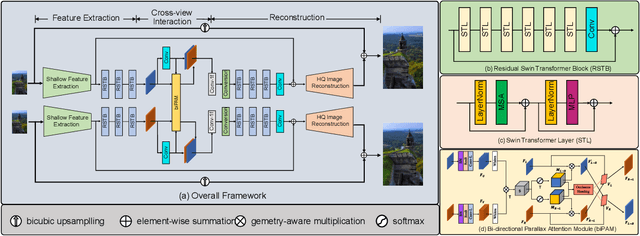
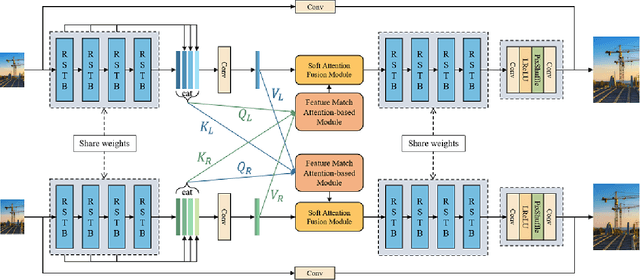
In this paper, we summarize the 1st NTIRE challenge on stereo image super-resolution (restoration of rich details in a pair of low-resolution stereo images) with a focus on new solutions and results. This challenge has 1 track aiming at the stereo image super-resolution problem under a standard bicubic degradation. In total, 238 participants were successfully registered, and 21 teams competed in the final testing phase. Among those participants, 20 teams successfully submitted results with PSNR (RGB) scores better than the baseline. This challenge establishes a new benchmark for stereo image SR.
MST++: Multi-stage Spectral-wise Transformer for Efficient Spectral Reconstruction
Apr 17, 2022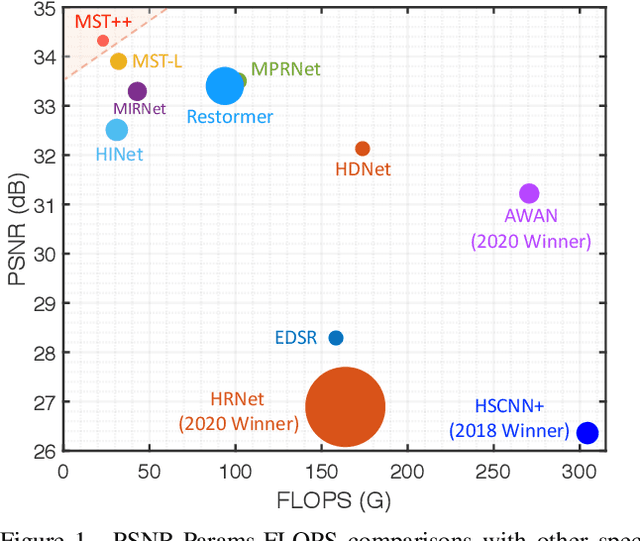
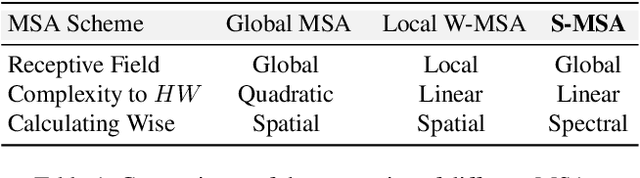
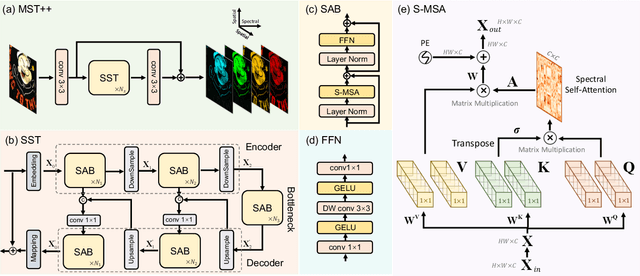
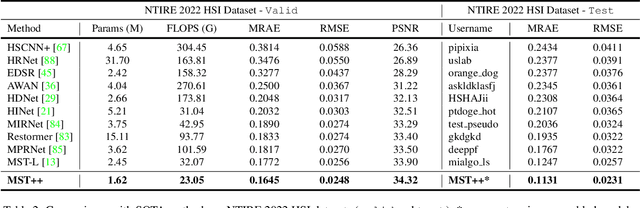
Existing leading methods for spectral reconstruction (SR) focus on designing deeper or wider convolutional neural networks (CNNs) to learn the end-to-end mapping from the RGB image to its hyperspectral image (HSI). These CNN-based methods achieve impressive restoration performance while showing limitations in capturing the long-range dependencies and self-similarity prior. To cope with this problem, we propose a novel Transformer-based method, Multi-stage Spectral-wise Transformer (MST++), for efficient spectral reconstruction. In particular, we employ Spectral-wise Multi-head Self-attention (S-MSA) that is based on the HSI spatially sparse while spectrally self-similar nature to compose the basic unit, Spectral-wise Attention Block (SAB). Then SABs build up Single-stage Spectral-wise Transformer (SST) that exploits a U-shaped structure to extract multi-resolution contextual information. Finally, our MST++, cascaded by several SSTs, progressively improves the reconstruction quality from coarse to fine. Comprehensive experiments show that our MST++ significantly outperforms other state-of-the-art methods. In the NTIRE 2022 Spectral Reconstruction Challenge, our approach won the First place. Code and pre-trained models are publicly available at https://github.com/caiyuanhao1998/MST-plus-plus.
* Winner of NTIRE 2022 Challenge on Spectral Reconstruction from RGB; The First Transformer-based Method for Spectral Reconstruction
Arbitrary-Scale Image Synthesis
Apr 05, 2022Positional encodings have enabled recent works to train a single adversarial network that can generate images of different scales. However, these approaches are either limited to a set of discrete scales or struggle to maintain good perceptual quality at the scales for which the model is not trained explicitly. We propose the design of scale-consistent positional encodings invariant to our generator's layers transformations. This enables the generation of arbitrary-scale images even at scales unseen during training. Moreover, we incorporate novel inter-scale augmentations into our pipeline and partial generation training to facilitate the synthesis of consistent images at arbitrary scales. Lastly, we show competitive results for a continuum of scales on various commonly used datasets for image synthesis.