 Add to Chrome
 Add to Firefox
 Add to Edge
HyperDFlash: MHC-Aligned Block Speculative Decoding with Gated Residual Reduction
Jun 25, 2026
We present HyperDFlash, a block-parallel speculative decoding framework tailored to the novel multi-hyper-connection (MHC) architecture proposed by DeepSeek-V4. Despite the strong initial-token drafting performance of the native Multi-Token Prediction (MTP) module in DeepSeek-V4, its draft accuracy degrades sharply at later positions, as error accumulation from unverified intermediate tokens harms acceptance rates. Although the original DFlash method supports efficient one-pass block drafting, it cannot be seamlessly adapted to the MHC paradigm, since the multi-path residual stream of DeepSeek-V4 induces feature misalignment with conventional drafting designs. To resolve this mismatch, we propose two model-aligned optimizations for MHC residual streams. First, we adopt pre-collapse residual states as the exclusive conditioning signal, preserving multi-path structural information and aligning the drafter with the native prediction pathway of the target model. Second, we replace the heavy generic linear compressor with a lightweight gated residual reducer, whose parameters are inherited from the built-in hyper-connection head. This design yields input-aware path aggregation with three orders of magnitude fewer parameters while maintaining architectural alignment. We further enhance training via a targeted KL distillation loss applied to the LM-head, which regularizes predictions against the full target probability distribution and improves draft quality at early training stages. Experiments across math reasoning, code synthesis, and conversational benchmarks show that HyperDFlash consistently outperforms both the native MTP baseline and vanilla DFlash adaptation. It achieves substantial gains in average accepted draft length and decoding speedup, validating the effectiveness of MHC alignment, gated reduction, and targeted distillation for high-performance speculative decoding.

Motion-Aware Caching for Efficient Autoregressive Video Generation
May 03, 2026Autoregressive video generation paradigms offer theoretical promise for long video synthesis, yet their practical deployment is hindered by the computational burden of sequential iterative denoising. While cache reuse strategies can accelerate generation by skipping redundant denoising steps, existing methods rely on coarse-grained chunk-level skipping that fails to capture fine-grained pixel dynamics. This oversight is critical: pixels with high motion require more denoising steps to prevent error accumulation, while static pixels tolerate aggressive skipping. We formalize this insight theoretically by linking cache errors to residual instability, and propose MotionCache, a motion-aware cache framework that exploits inter-frame differences as a lightweight proxy for pixel-level motion characteristics. MotionCache employs a coarse-to-fine strategy: an initial warm-up phase establishes semantic coherence, followed by motion-weighted cache reuse that dynamically adjusts update frequencies per token. Extensive experiments on state-of-the-art models like SkyReels-V2 and MAGI-1 demonstrate that MotionCache achieves significant speedups of $\textbf{6.28}\times$ and $\textbf{1.64}\times$ respectively, while effectively preserving generation quality (VBench: $1\%\downarrow$ and $0.01\%\downarrow$ respectively). The code is available at https://github.com/ywlq/MotionCache.
DreamLite: A Lightweight On-Device Unified Model for Image Generation and Editing
Mar 30, 2026Diffusion models have made significant progress in both text-to-image (T2I) generation and text-guided image editing. However, these models are typically built with billions of parameters, leading to high latency and increased deployment challenges. While on-device diffusion models improve efficiency, they largely focus on T2I generation and lack support for image editing. In this paper, we propose DreamLite, a compact unified on-device diffusion model (0.39B) that supports both T2I generation and text-guided image editing within a single network. DreamLite is built on a pruned mobile U-Net backbone and unifies conditioning through in-context spatial concatenation in the latent space. It concatenates images horizontally as input, using a (target | blank) configuration for generation tasks and (target | source) for editing tasks. To stabilize the training of this compact model, we introduce a task-progressive joint pretraining strategy that sequentially targets T2I, editing, and joint tasks. After high-quality SFT and reinforcement learning, DreamLite achieves GenEval (0.72) for image generation and ImgEdit (4.11) for image editing, outperforming existing on-device models and remaining competitive with several server-side models. By employing step distillation, we further reduce denoising processing to just 4 steps, enabling our DreamLite could generate or edit a 1024 x 1024 image in less than 1s on a Xiaomi 14 smartphone. To the best of our knowledge, DreamLite is the first unified on-device diffusion model that supports both image generation and image editing.
S2O: Early Stopping for Sparse Attention via Online Permutation
Feb 26, 2026Attention scales quadratically with sequence length, fundamentally limiting long-context inference. Existing block-granularity sparsification can reduce latency, but coarse blocks impose an intrinsic sparsity ceiling, making further improvements difficult even with carefully engineered designs. We present S2O, which performs early stopping for sparse attention via online permutation. Inspired by virtual-to-physical address mapping in memory systems, S2O revisits and factorizes FlashAttention execution, enabling inference to load non-contiguous tokens rather than a contiguous span in the original order. Motivated by fine-grained structures in attention heatmaps, we transform explicit permutation into an online, index-guided, discrete loading policy; with extremely lightweight preprocessing and index-remapping overhead, it concentrates importance on a small set of high-priority blocks. Building on this importance-guided online permutation for loading, S2O further introduces an early-stopping rule: computation proceeds from high to low importance; once the current block score falls below a threshold, S2O terminates early and skips the remaining low-contribution blocks, thereby increasing effective sparsity and reducing computation under a controlled error budget. As a result, S2O substantially raises the practical sparsity ceiling. On Llama-3.1-8B under a 128K context, S2O reduces single-operator MSE by 3.82$\times$ at matched sparsity, and reduces prefill compute density by 3.31$\times$ at matched MSE; meanwhile, it preserves end-to-end accuracy and achieves 7.51$\times$ attention and 3.81$\times$ end-to-end speedups.
Seedance 1.5 pro: A Native Audio-Visual Joint Generation Foundation Model
Dec 23, 2025Recent strides in video generation have paved the way for unified audio-visual generation. In this work, we present Seedance 1.5 pro, a foundational model engineered specifically for native, joint audio-video generation. Leveraging a dual-branch Diffusion Transformer architecture, the model integrates a cross-modal joint module with a specialized multi-stage data pipeline, achieving exceptional audio-visual synchronization and superior generation quality. To ensure practical utility, we implement meticulous post-training optimizations, including Supervised Fine-Tuning (SFT) on high-quality datasets and Reinforcement Learning from Human Feedback (RLHF) with multi-dimensional reward models. Furthermore, we introduce an acceleration framework that boosts inference speed by over 10X. Seedance 1.5 pro distinguishes itself through precise multilingual and dialect lip-syncing, dynamic cinematic camera control, and enhanced narrative coherence, positioning it as a robust engine for professional-grade content creation. Seedance 1.5 pro is now accessible on Volcano Engine at https://console.volcengine.com/ark/region:ark+cn-beijing/experience/vision?type=GenVideo.
GQSA: Group Quantization and Sparsity for Accelerating Large Language Model Inference
Dec 23, 2024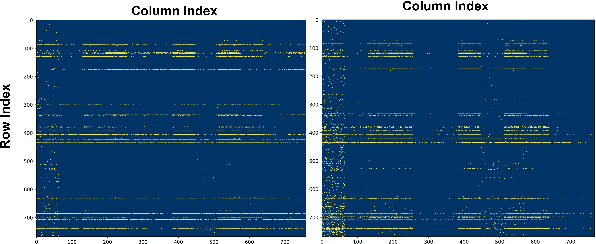
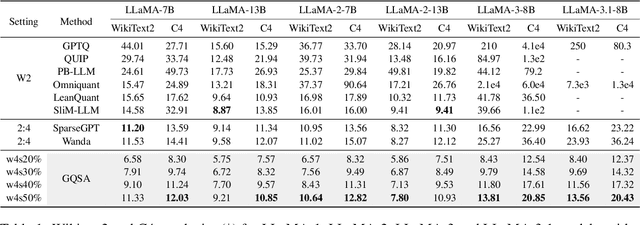
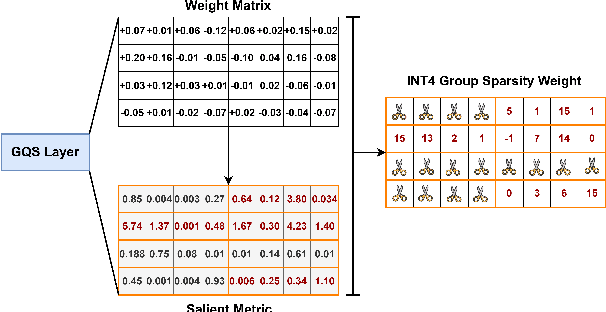
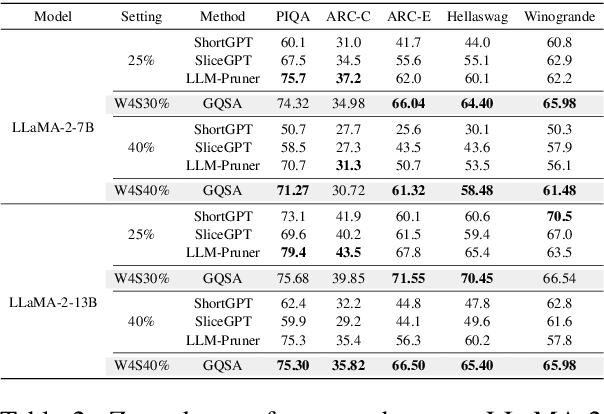
With the rapid growth in the scale and complexity of large language models (LLMs), the costs of training and inference have risen substantially. Model compression has emerged as a mainstream solution to reduce memory usage and computational overhead. This paper presents Group Quantization and Sparse Acceleration (\textbf{GQSA}), a novel compression technique tailored for LLMs. Traditional methods typically focus exclusively on either quantization or sparsification, but relying on a single strategy often results in significant performance loss at high compression rates. In contrast, GQSA integrates quantization and sparsification in a tightly coupled manner, leveraging GPU-friendly structured group sparsity and quantization for efficient acceleration. The proposed method consists of three key steps. First, GQSA applies group structured pruning to adhere to GPU-friendly sparse pattern constraints. Second, a two-stage sparsity-aware training process is employed to maximize performance retention after compression. Finally, the framework adopts the Block Sparse Row (BSR) format to enable practical deployment and efficient execution. Experimental results on the LLaMA model family show that GQSA achieves an excellent balance between model speed and accuracy. Furthermore, on the latest LLaMA-3 and LLaMA-3.1 models, GQSA outperforms existing LLM compression techniques significantly.
Timely reliable Bayesian decision-making enabled using memristors
Dec 07, 2024Brains perform timely reliable decision-making by Bayes theorem. Bayes theorem quantifies events as probabilities and, through probability rules, renders the decisions. Learning from this, applying Bayes theorem in practical problems can visualize the potential risks and decision confidence, thereby enabling efficient user-scene interactions. However, given the probabilistic nature, implementing Bayes theorem with the conventional deterministic computing can inevitably induce excessive computational cost and decision latency. Herein, we propose a probabilistic computing approach using memristors to implement Bayes theorem. We integrate volatile memristors with Boolean logics and, by exploiting the volatile stochastic switching of the memristors, realize Boolean operations with statistical probabilities and correlations, key for enabling Bayes theorem. To practically demonstrate the effectiveness of our memristor-enabled Bayes theorem approach in user-scene interactions, we design lightweight Bayesian inference and fusion operators using our probabilistic logics and apply the operators in road scene parsing for self-driving, including route planning and obstacle detection. The results show that our operators can achieve reliable decisions at a rate over 2,500 frames per second, outperforming human decision-making and the existing driving assistance systems.
ABQ-LLM: Arbitrary-Bit Quantized Inference Acceleration for Large Language Models
Aug 16, 2024
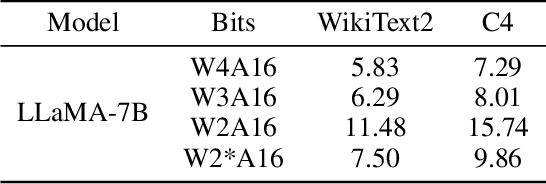
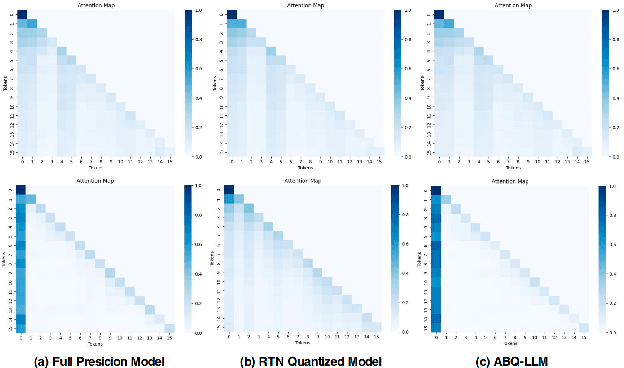
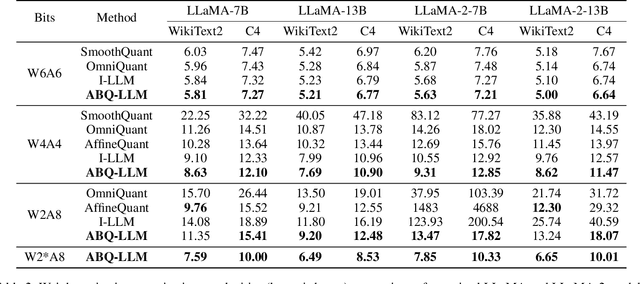
Large Language Models (LLMs) have revolutionized natural language processing tasks. However, their practical application is constrained by substantial memory and computational demands. Post-training quantization (PTQ) is considered an effective method to accelerate LLM inference. Despite its growing popularity in LLM model compression, PTQ deployment faces two major challenges. First, low-bit quantization leads to performance degradation. Second, restricted by the limited integer computing unit type on GPUs, quantized matrix operations with different precisions cannot be effectively accelerated. To address these issues, we introduce a novel arbitrary-bit quantization algorithm and inference framework, ABQ-LLM. It achieves superior performance across various quantization settings and enables efficient arbitrary-precision quantized inference on the GPU. ABQ-LLM introduces several key innovations: (1) a distribution correction method for transformer blocks to mitigate distribution differences caused by full quantization of weights and activations, improving performance at low bit-widths. (2) the bit balance strategy to counteract performance degradation from asymmetric distribution issues at very low bit-widths (e.g., 2-bit). (3) an innovative quantization acceleration framework that reconstructs the quantization matrix multiplication of arbitrary precision combinations based on BTC (Binary TensorCore) equivalents, gets rid of the limitations of INT4/INT8 computing units. ABQ-LLM can convert each component bit width gain into actual acceleration gain, maximizing performance under mixed precision(e.g., W6A6, W2A8). Based on W2*A8 quantization configuration on LLaMA-7B model, it achieved a WikiText2 perplexity of 7.59 (2.17$\downarrow $ vs 9.76 in AffineQuant). Compared to SmoothQuant, we realized 1.6$\times$ acceleration improvement and 2.7$\times$ memory compression gain.
Hybrid SD: Edge-Cloud Collaborative Inference for Stable Diffusion Models
Aug 13, 2024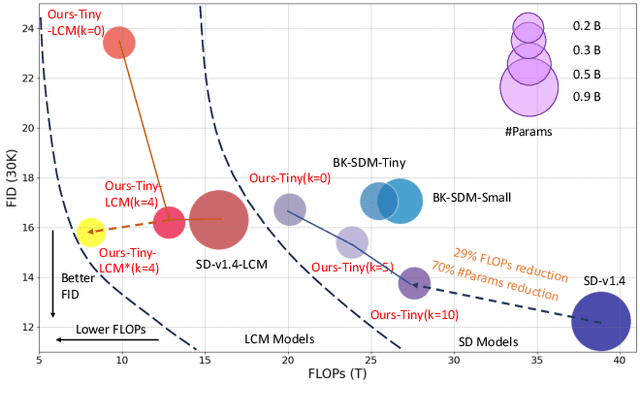

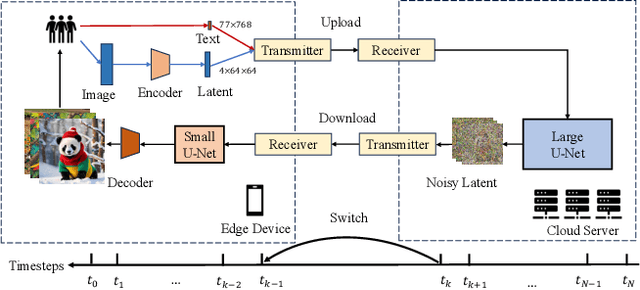

Stable Diffusion Models (SDMs) have shown remarkable proficiency in image synthesis. However, their broad application is impeded by their large model sizes and intensive computational requirements, which typically require expensive cloud servers for deployment. On the flip side, while there are many compact models tailored for edge devices that can reduce these demands, they often compromise on semantic integrity and visual quality when compared to full-sized SDMs. To bridge this gap, we introduce Hybrid SD, an innovative, training-free SDMs inference framework designed for edge-cloud collaborative inference. Hybrid SD distributes the early steps of the diffusion process to the large models deployed on cloud servers, enhancing semantic planning. Furthermore, small efficient models deployed on edge devices can be integrated for refining visual details in the later stages. Acknowledging the diversity of edge devices with differing computational and storage capacities, we employ structural pruning to the SDMs U-Net and train a lightweight VAE. Empirical evaluations demonstrate that our compressed models achieve state-of-the-art parameter efficiency (225.8M) on edge devices with competitive image quality. Additionally, Hybrid SD reduces the cloud cost by 66% with edge-cloud collaborative inference.
FoldGPT: Simple and Effective Large Language Model Compression Scheme
Jul 01, 2024The demand for deploying large language models(LLMs) on mobile devices continues to increase, driven by escalating data security concerns and cloud costs. However, network bandwidth and memory limitations pose challenges for deploying billion-level models on mobile devices. In this study, we investigate the outputs of different layers across various scales of LLMs and found that the outputs of most layers exhibit significant similarity. Moreover, this similarity becomes more pronounced as the model size increases, indicating substantial redundancy in the depth direction of the LLMs. Based on this observation, we propose an efficient model volume compression strategy, termed FoldGPT, which combines block removal and block parameter sharing.This strategy consists of three parts: (1) Based on the learnable gating parameters, we determine the block importance ranking while modeling the coupling effect between blocks. Then we delete some redundant layers based on the given removal rate. (2) For the retained blocks, we apply a specially designed group parameter sharing strategy, where blocks within the same group share identical weights, significantly compressing the number of parameters and slightly reducing latency overhead. (3) After sharing these Blocks, we "cure" the mismatch caused by sparsity with a minor amount of fine-tuning and introduce a tail-layer distillation strategy to improve the performance. Experiments demonstrate that FoldGPT outperforms previous state-of-the-art(SOTA) methods in efficient model compression, demonstrating the feasibility of achieving model lightweighting through straightforward block removal and parameter sharing.