 Add to Chrome
 Add to Firefox
 Add to Edge
VideoCrafter1: Open Diffusion Models for High-Quality Video Generation
Oct 30, 2023
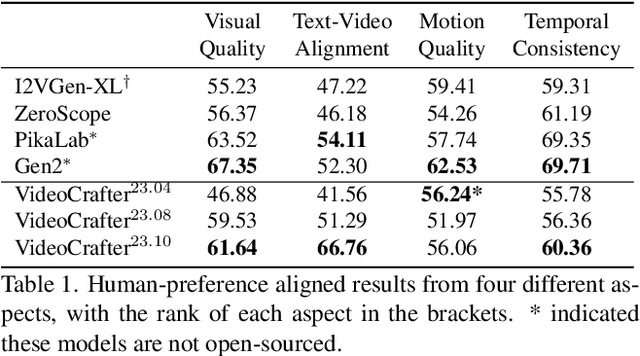
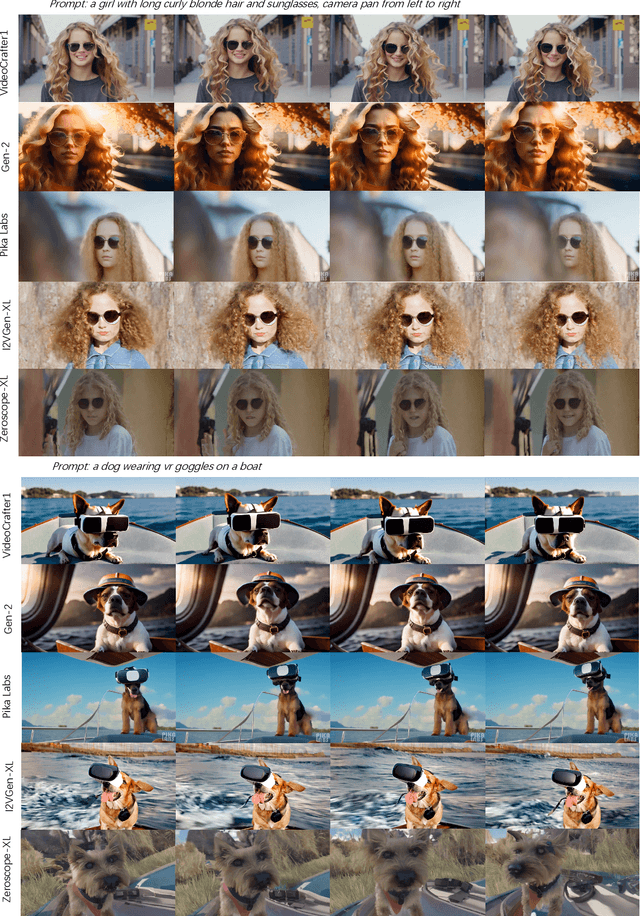
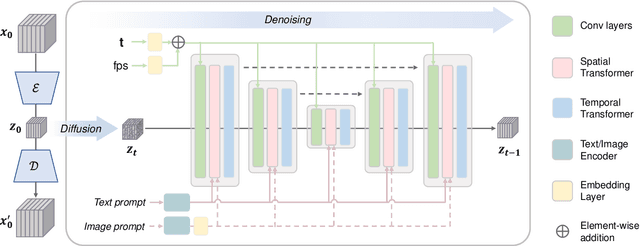
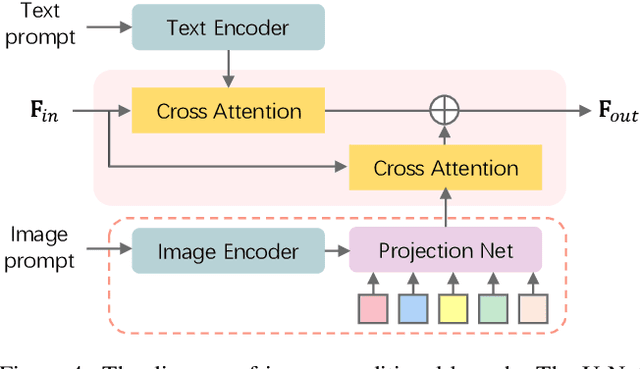
Video generation has increasingly gained interest in both academia and industry. Although commercial tools can generate plausible videos, there is a limited number of open-source models available for researchers and engineers. In this work, we introduce two diffusion models for high-quality video generation, namely text-to-video (T2V) and image-to-video (I2V) models. T2V models synthesize a video based on a given text input, while I2V models incorporate an additional image input. Our proposed T2V model can generate realistic and cinematic-quality videos with a resolution of $1024 \times 576$, outperforming other open-source T2V models in terms of quality. The I2V model is designed to produce videos that strictly adhere to the content of the provided reference image, preserving its content, structure, and style. This model is the first open-source I2V foundation model capable of transforming a given image into a video clip while maintaining content preservation constraints. We believe that these open-source video generation models will contribute significantly to the technological advancements within the community.

ControlLLM: Augment Language Models with Tools by Searching on Graphs
Oct 30, 2023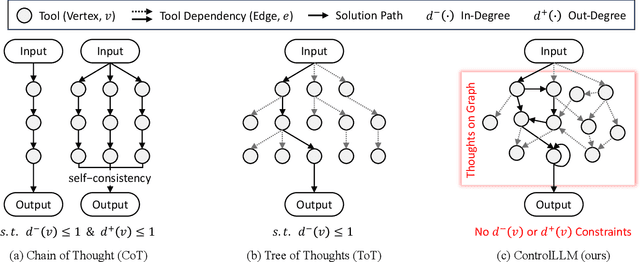
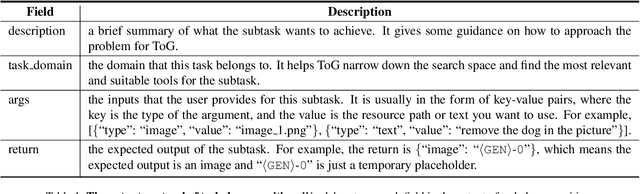
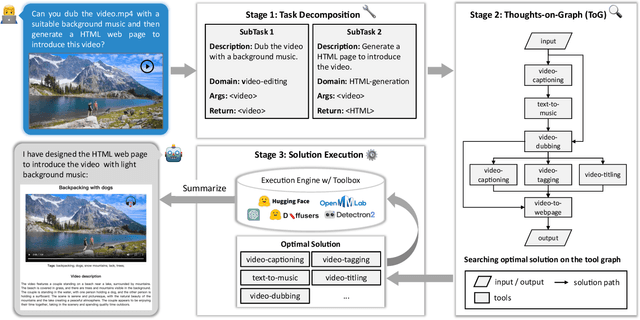
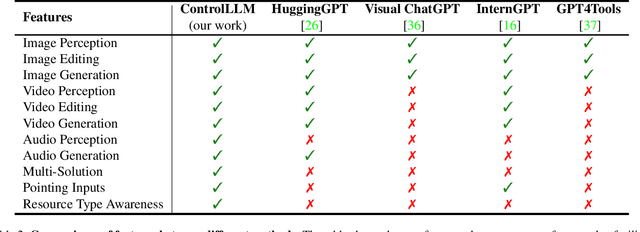
We present ControlLLM, a novel framework that enables large language models (LLMs) to utilize multi-modal tools for solving complex real-world tasks. Despite the remarkable performance of LLMs, they still struggle with tool invocation due to ambiguous user prompts, inaccurate tool selection and parameterization, and inefficient tool scheduling. To overcome these challenges, our framework comprises three key components: (1) a \textit{task decomposer} that breaks down a complex task into clear subtasks with well-defined inputs and outputs; (2) a \textit{Thoughts-on-Graph (ToG) paradigm} that searches the optimal solution path on a pre-built tool graph, which specifies the parameter and dependency relations among different tools; and (3) an \textit{execution engine with a rich toolbox} that interprets the solution path and runs the tools efficiently on different computational devices. We evaluate our framework on diverse tasks involving image, audio, and video processing, demonstrating its superior accuracy, efficiency, and versatility compared to existing methods. The code is at https://github.com/OpenGVLab/ControlLLM .
ScaleCrafter: Tuning-free Higher-Resolution Visual Generation with Diffusion Models
Oct 11, 2023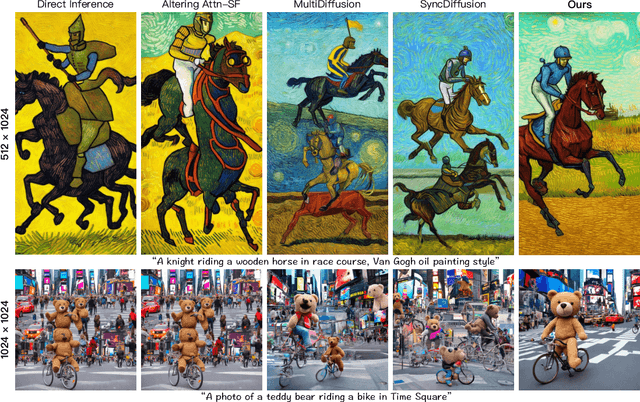
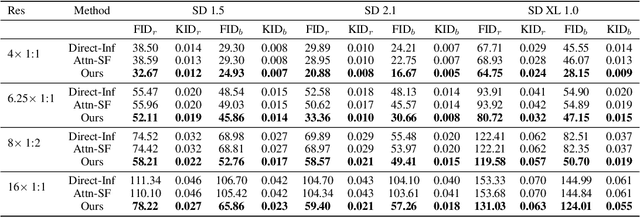


In this work, we investigate the capability of generating images from pre-trained diffusion models at much higher resolutions than the training image sizes. In addition, the generated images should have arbitrary image aspect ratios. When generating images directly at a higher resolution, 1024 x 1024, with the pre-trained Stable Diffusion using training images of resolution 512 x 512, we observe persistent problems of object repetition and unreasonable object structures. Existing works for higher-resolution generation, such as attention-based and joint-diffusion approaches, cannot well address these issues. As a new perspective, we examine the structural components of the U-Net in diffusion models and identify the crucial cause as the limited perception field of convolutional kernels. Based on this key observation, we propose a simple yet effective re-dilation that can dynamically adjust the convolutional perception field during inference. We further propose the dispersed convolution and noise-damped classifier-free guidance, which can enable ultra-high-resolution image generation (e.g., 4096 x 4096). Notably, our approach does not require any training or optimization. Extensive experiments demonstrate that our approach can address the repetition issue well and achieve state-of-the-art performance on higher-resolution image synthesis, especially in texture details. Our work also suggests that a pre-trained diffusion model trained on low-resolution images can be directly used for high-resolution visual generation without further tuning, which may provide insights for future research on ultra-high-resolution image and video synthesis.
In-Domain GAN Inversion for Faithful Reconstruction and Editability
Sep 25, 2023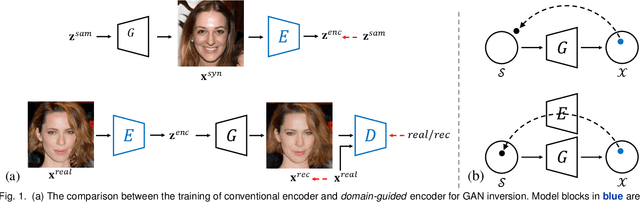
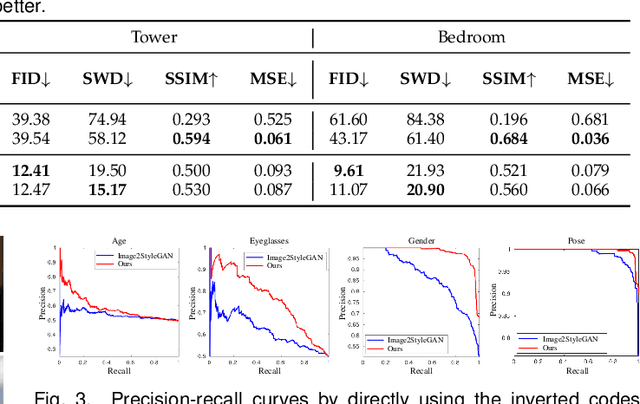
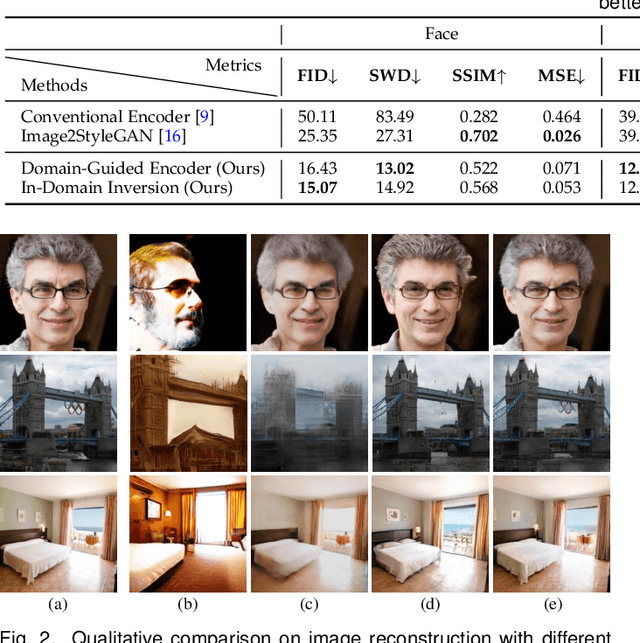
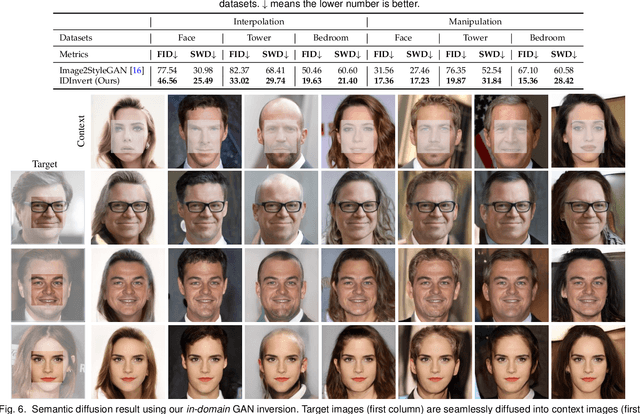
Generative Adversarial Networks (GANs) have significantly advanced image synthesis through mapping randomly sampled latent codes to high-fidelity synthesized images. However, applying well-trained GANs to real image editing remains challenging. A common solution is to find an approximate latent code that can adequately recover the input image to edit, which is also known as GAN inversion. To invert a GAN model, prior works typically focus on reconstructing the target image at the pixel level, yet few studies are conducted on whether the inverted result can well support manipulation at the semantic level. This work fills in this gap by proposing in-domain GAN inversion, which consists of a domain-guided encoder and a domain-regularized optimizer, to regularize the inverted code in the native latent space of the pre-trained GAN model. In this way, we manage to sufficiently reuse the knowledge learned by GANs for image reconstruction, facilitating a wide range of editing applications without any retraining. We further make comprehensive analyses on the effects of the encoder structure, the starting inversion point, as well as the inversion parameter space, and observe the trade-off between the reconstruction quality and the editing property. Such a trade-off sheds light on how a GAN model represents an image with various semantics encoded in the learned latent distribution. Code, models, and demo are available at the project page: https://genforce.github.io/idinvert/.
AniPortraitGAN: Animatable 3D Portrait Generation from 2D Image Collections
Sep 05, 2023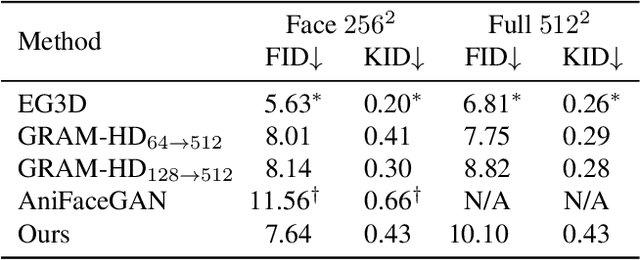
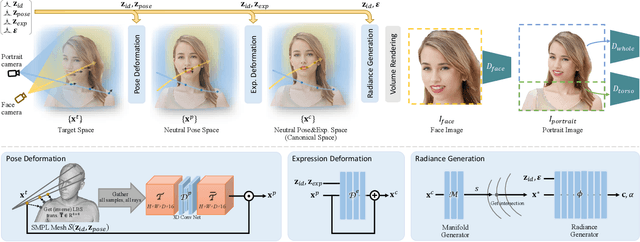
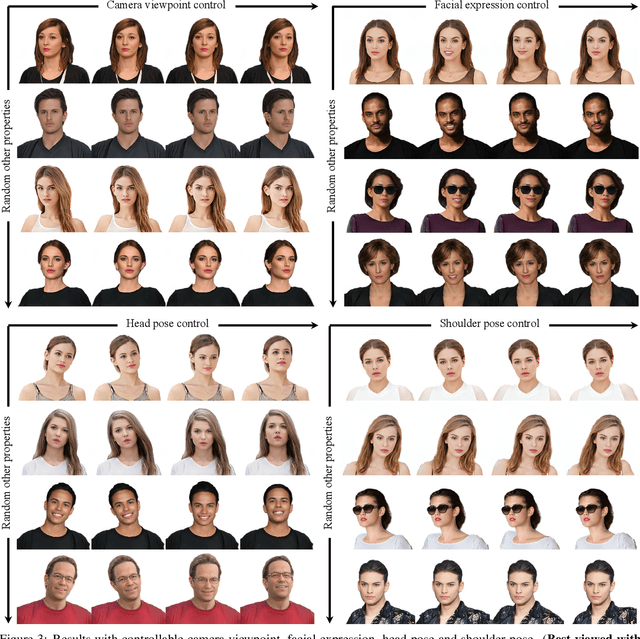
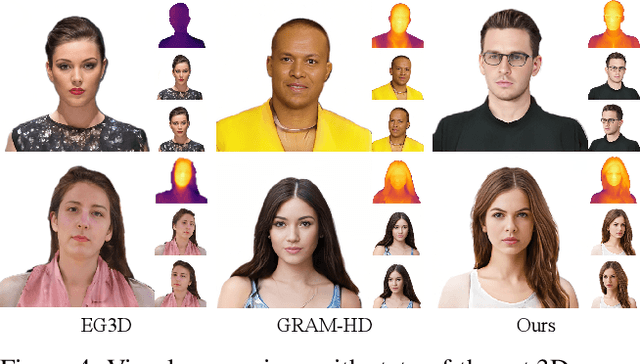
Previous animatable 3D-aware GANs for human generation have primarily focused on either the human head or full body. However, head-only videos are relatively uncommon in real life, and full body generation typically does not deal with facial expression control and still has challenges in generating high-quality results. Towards applicable video avatars, we present an animatable 3D-aware GAN that generates portrait images with controllable facial expression, head pose, and shoulder movements. It is a generative model trained on unstructured 2D image collections without using 3D or video data. For the new task, we base our method on the generative radiance manifold representation and equip it with learnable facial and head-shoulder deformations. A dual-camera rendering and adversarial learning scheme is proposed to improve the quality of the generated faces, which is critical for portrait images. A pose deformation processing network is developed to generate plausible deformations for challenging regions such as long hair. Experiments show that our method, trained on unstructured 2D images, can generate diverse and high-quality 3D portraits with desired control over different properties.
Online Overexposed Pixels Hallucination in Videos with Adaptive Reference Frame Selection
Aug 29, 2023Low dynamic range (LDR) cameras cannot deal with wide dynamic range inputs, frequently leading to local overexposure issues. We present a learning-based system to reduce these artifacts without resorting to complex acquisition mechanisms like alternating exposures or costly processing that are typical of high dynamic range (HDR) imaging. We propose a transformer-based deep neural network (DNN) to infer the missing HDR details. In an ablation study, we show the importance of using a multiscale DNN and train it with the proper cost function to achieve state-of-the-art quality. To aid the reconstruction of the overexposed areas, our DNN takes a reference frame from the past as an additional input. This leverages the commonly occurring temporal instabilities of autoexposure to our advantage: since well-exposed details in the current frame may be overexposed in the future, we use reinforcement learning to train a reference frame selection DNN that decides whether to adopt the current frame as a future reference. Without resorting to alternating exposures, we obtain therefore a causal, HDR hallucination algorithm with potential application in common video acquisition settings. Our demo video can be found at https://drive.google.com/file/d/1-r12BKImLOYCLUoPzdebnMyNjJ4Rk360/view
CoDeF: Content Deformation Fields for Temporally Consistent Video Processing
Aug 15, 2023

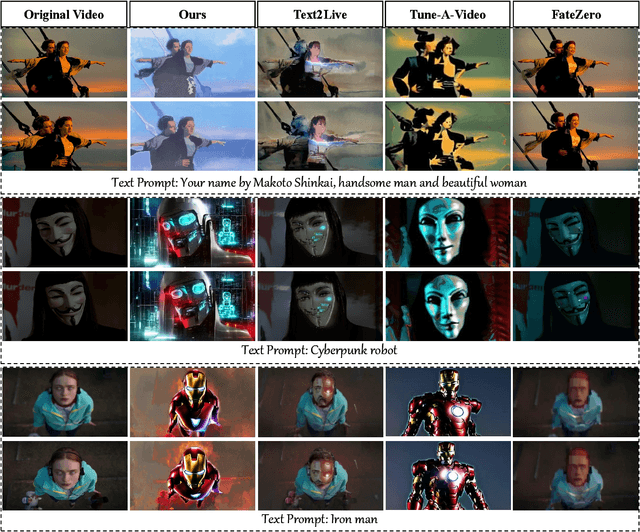

We present the content deformation field CoDeF as a new type of video representation, which consists of a canonical content field aggregating the static contents in the entire video and a temporal deformation field recording the transformations from the canonical image (i.e., rendered from the canonical content field) to each individual frame along the time axis.Given a target video, these two fields are jointly optimized to reconstruct it through a carefully tailored rendering pipeline.We advisedly introduce some regularizations into the optimization process, urging the canonical content field to inherit semantics (e.g., the object shape) from the video.With such a design, CoDeF naturally supports lifting image algorithms for video processing, in the sense that one can apply an image algorithm to the canonical image and effortlessly propagate the outcomes to the entire video with the aid of the temporal deformation field.We experimentally show that CoDeF is able to lift image-to-image translation to video-to-video translation and lift keypoint detection to keypoint tracking without any training.More importantly, thanks to our lifting strategy that deploys the algorithms on only one image, we achieve superior cross-frame consistency in processed videos compared to existing video-to-video translation approaches, and even manage to track non-rigid objects like water and smog.Project page can be found at https://qiuyu96.github.io/CoDeF/.
Animate-A-Story: Storytelling with Retrieval-Augmented Video Generation
Jul 13, 2023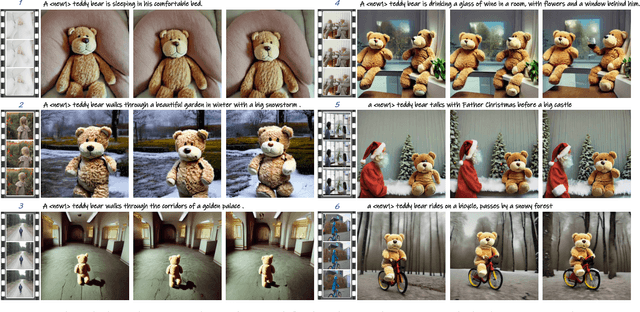
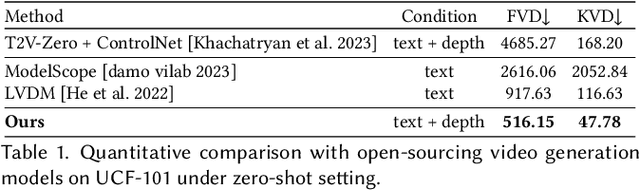
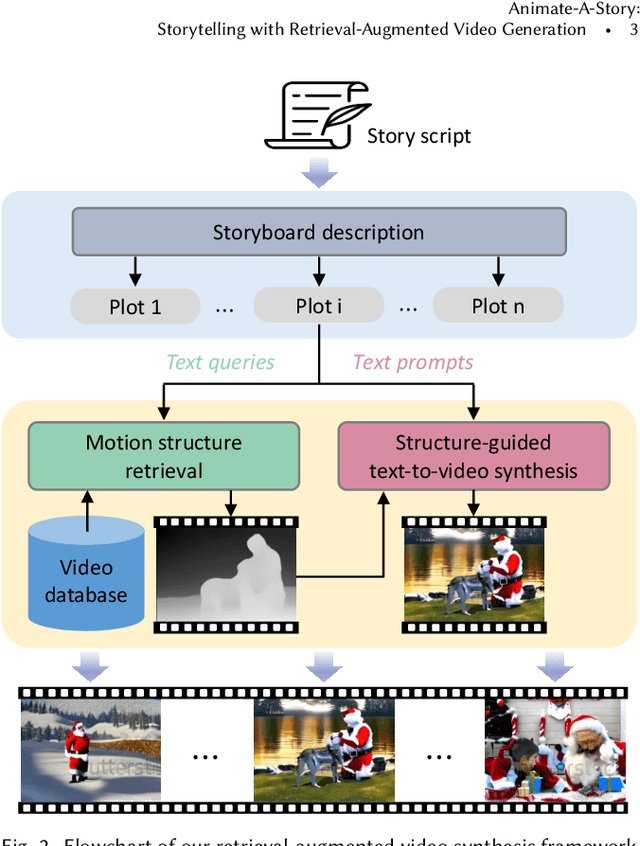
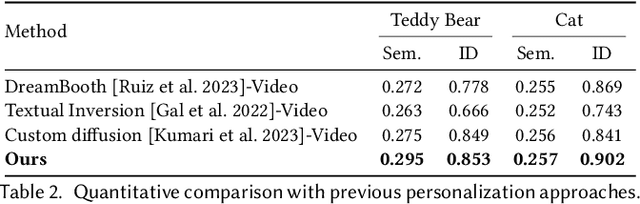
Generating videos for visual storytelling can be a tedious and complex process that typically requires either live-action filming or graphics animation rendering. To bypass these challenges, our key idea is to utilize the abundance of existing video clips and synthesize a coherent storytelling video by customizing their appearances. We achieve this by developing a framework comprised of two functional modules: (i) Motion Structure Retrieval, which provides video candidates with desired scene or motion context described by query texts, and (ii) Structure-Guided Text-to-Video Synthesis, which generates plot-aligned videos under the guidance of motion structure and text prompts. For the first module, we leverage an off-the-shelf video retrieval system and extract video depths as motion structure. For the second module, we propose a controllable video generation model that offers flexible controls over structure and characters. The videos are synthesized by following the structural guidance and appearance instruction. To ensure visual consistency across clips, we propose an effective concept personalization approach, which allows the specification of the desired character identities through text prompts. Extensive experiments demonstrate that our approach exhibits significant advantages over various existing baselines.
CMDFusion: Bidirectional Fusion Network with Cross-modality Knowledge Distillation for LIDAR Semantic Segmentation
Jul 09, 2023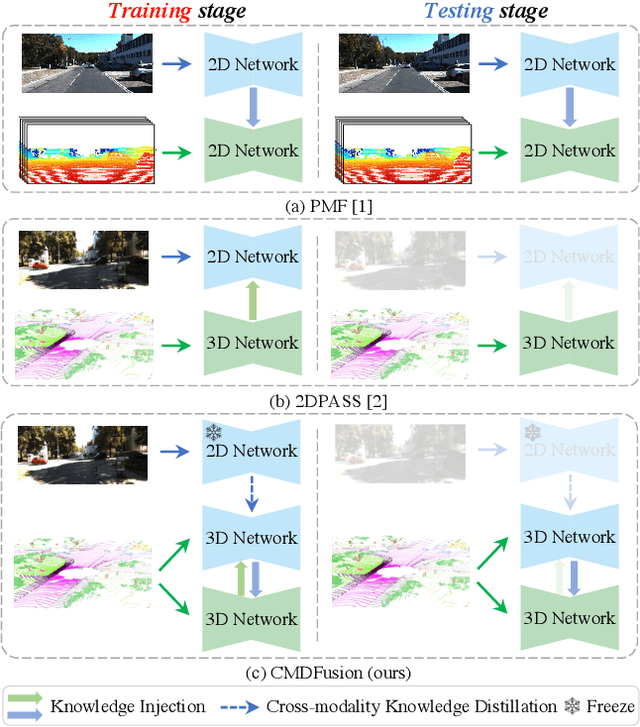
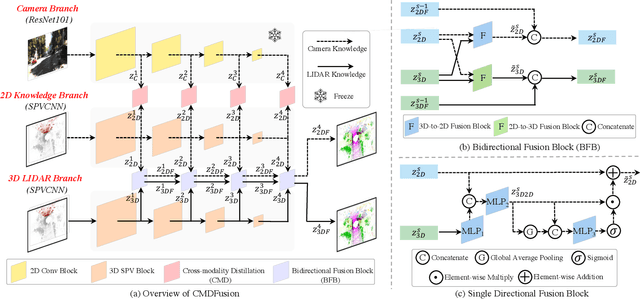
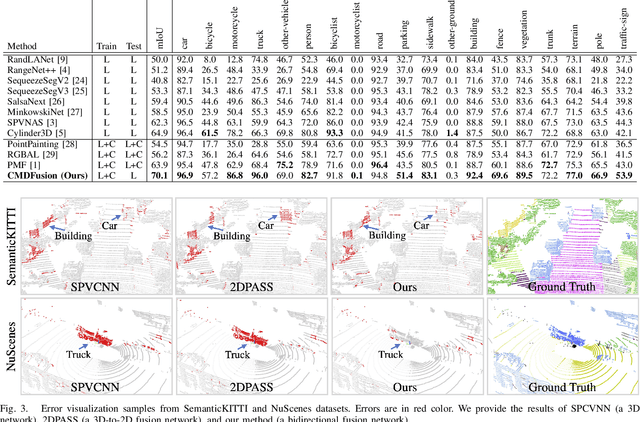
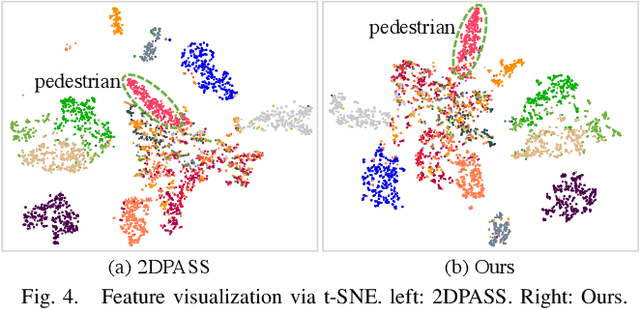
2D RGB images and 3D LIDAR point clouds provide complementary knowledge for the perception system of autonomous vehicles. Several 2D and 3D fusion methods have been explored for the LIDAR semantic segmentation task, but they suffer from different problems. 2D-to-3D fusion methods require strictly paired data during inference, which may not be available in real-world scenarios, while 3D-to-2D fusion methods cannot explicitly make full use of the 2D information. Therefore, we propose a Bidirectional Fusion Network with Cross-Modality Knowledge Distillation (CMDFusion) in this work. Our method has two contributions. First, our bidirectional fusion scheme explicitly and implicitly enhances the 3D feature via 2D-to-3D fusion and 3D-to-2D fusion, respectively, which surpasses either one of the single fusion schemes. Second, we distillate the 2D knowledge from a 2D network (Camera branch) to a 3D network (2D knowledge branch) so that the 3D network can generate 2D information even for those points not in the FOV (field of view) of the camera. In this way, RGB images are not required during inference anymore since the 2D knowledge branch provides 2D information according to the 3D LIDAR input. We show that our CMDFusion achieves the best performance among all fusion-based methods on SemanticKITTI and nuScenes datasets. The code will be released at https://github.com/Jun-CEN/CMDFusion.
TextDiffuser: Diffusion Models as Text Painters
May 24, 2023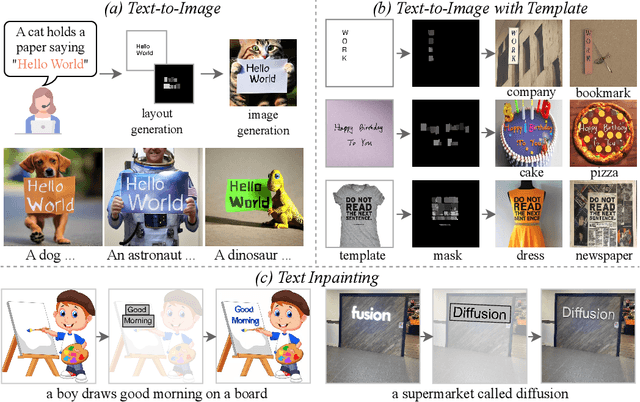
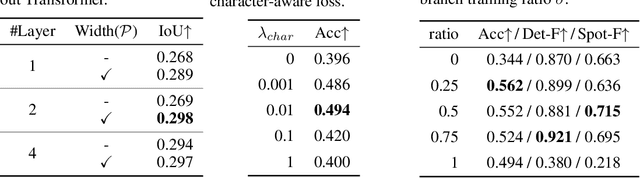
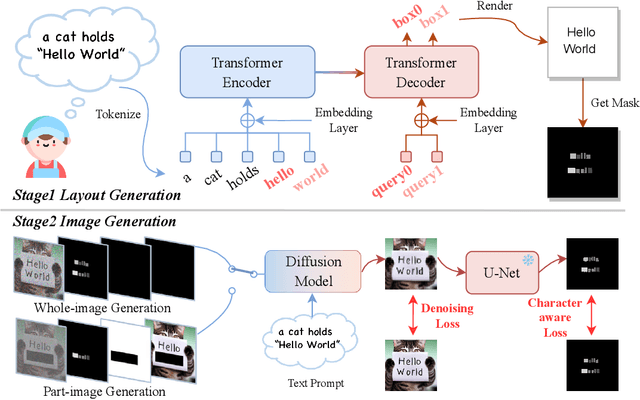
Diffusion models have gained increasing attention for their impressive generation abilities but currently struggle with rendering accurate and coherent text. To address this issue, we introduce TextDiffuser, focusing on generating images with visually appealing text that is coherent with backgrounds. TextDiffuser consists of two stages: first, a Transformer model generates the layout of keywords extracted from text prompts, and then diffusion models generate images conditioned on the text prompt and the generated layout. Additionally, we contribute the first large-scale text images dataset with OCR annotations, MARIO-10M, containing 10 million image-text pairs with text recognition, detection, and character-level segmentation annotations. We further collect the MARIO-Eval benchmark to serve as a comprehensive tool for evaluating text rendering quality. Through experiments and user studies, we show that TextDiffuser is flexible and controllable to create high-quality text images using text prompts alone or together with text template images, and conduct text inpainting to reconstruct incomplete images with text. The code, model, and dataset will be available at \url{https://aka.ms/textdiffuser}.