 Add to Chrome
 Add to Firefox
 Add to Edge
One Request, Multiple Experts: LLM Orchestrates Domain Specific Models via Adaptive Task Routing
Nov 16, 2025
With the integration of massive distributed energy resources and the widespread participation of novel market entities, the operation of active distribution networks (ADNs) is progressively evolving into a complex multi-scenario, multi-objective problem. Although expert engineers have developed numerous domain specific models (DSMs) to address distinct technical problems, mastering, integrating, and orchestrating these heterogeneous DSMs still entail considerable overhead for ADN operators. Therefore, an intelligent approach is urgently required to unify these DSMs and enable efficient coordination. To address this challenge, this paper proposes the ADN-Agent architecture, which leverages a general large language model (LLM) to coordinate multiple DSMs, enabling adaptive intent recognition, task decomposition, and DSM invocation. Within the ADN-Agent, we design a novel communication mechanism that provides a unified and flexible interface for diverse heterogeneous DSMs. Finally, for some language-intensive subtasks, we propose an automated training pipeline for fine-tuning small language models, thereby effectively enhancing the overall problem-solving capability of the system. Comprehensive comparisons and ablation experiments validate the efficacy of the proposed method and demonstrate that the ADN-Agent architecture outperforms existing LLM application paradigms.

Target-Balanced Score Distillation
Nov 12, 2025Score Distillation Sampling (SDS) enables 3D asset generation by distilling priors from pretrained 2D text-to-image diffusion models, but vanilla SDS suffers from over-saturation and over-smoothing. To mitigate this issue, recent variants have incorporated negative prompts. However, these methods face a critical trade-off: limited texture optimization, or significant texture gains with shape distortion. In this work, we first conduct a systematic analysis and reveal that this trade-off is fundamentally governed by the utilization of the negative prompts, where Target Negative Prompts (TNP) that embed target information in the negative prompts dramatically enhancing texture realism and fidelity but inducing shape distortions. Informed by this key insight, we introduce the Target-Balanced Score Distillation (TBSD). It formulates generation as a multi-objective optimization problem and introduces an adaptive strategy that effectively resolves the aforementioned trade-off. Extensive experiments demonstrate that TBSD significantly outperforms existing state-of-the-art methods, yielding 3D assets with high-fidelity textures and geometrically accurate shape.
Retrospective motion correction in MRI using disentangled embeddings
Nov 11, 2025Physiological motion can affect the diagnostic quality of magnetic resonance imaging (MRI). While various retrospective motion correction methods exist, many struggle to generalize across different motion types and body regions. In particular, machine learning (ML)-based corrections are often tailored to specific applications and datasets. We hypothesize that motion artifacts, though diverse, share underlying patterns that can be disentangled and exploited. To address this, we propose a hierarchical vector-quantized (VQ) variational auto-encoder that learns a disentangled embedding of motion-to-clean image features. A codebook is deployed to capture finite collection of motion patterns at multiple resolutions, enabling coarse-to-fine correction. An auto-regressive model is trained to learn the prior distribution of motion-free images and is used at inference to guide the correction process. Unlike conventional approaches, our method does not require artifact-specific training and can generalize to unseen motion patterns. We demonstrate the approach on simulated whole-body motion artifacts and observe robust correction across varying motion severity. Our results suggest that the model effectively disentangled physical motion of the simulated motion-effective scans, therefore, improving the generalizability of the ML-based MRI motion correction. Our work of disentangling the motion features shed a light on its potential application across anatomical regions and motion types.
Klear-AgentForge: Forging Agentic Intelligence through Posttraining Scaling
Nov 08, 2025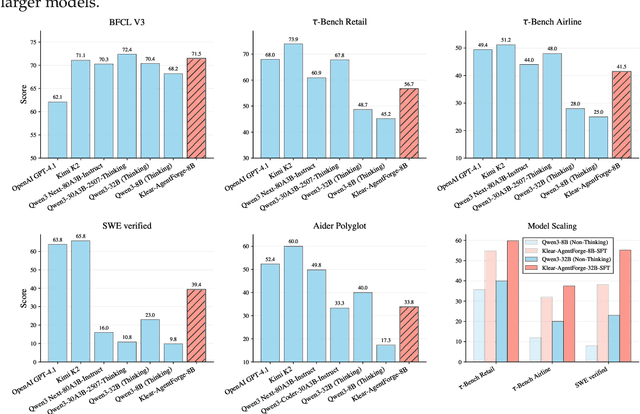
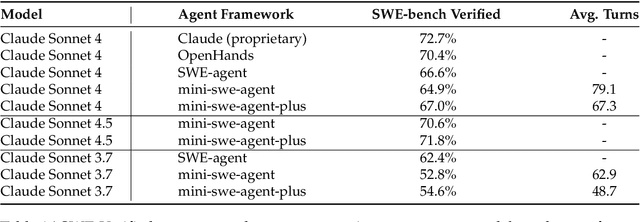
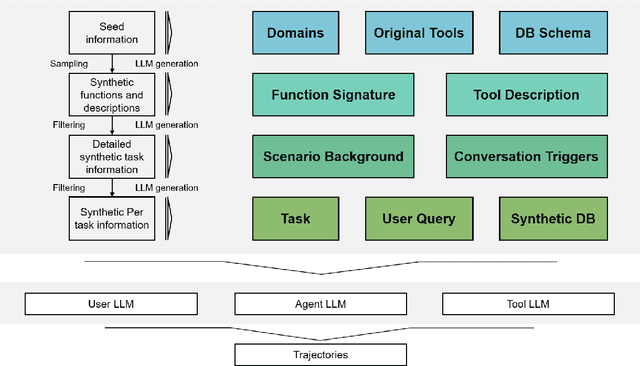
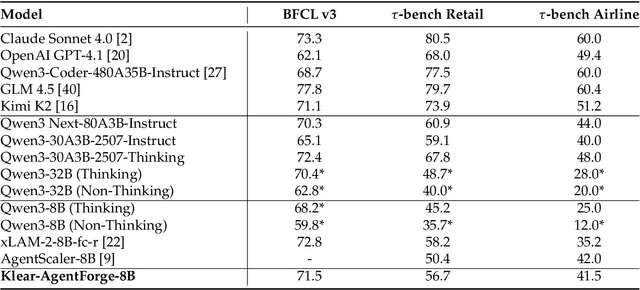
Despite the proliferation of powerful agentic models, the lack of critical post-training details hinders the development of strong counterparts in the open-source community. In this study, we present a comprehensive and fully open-source pipeline for training a high-performance agentic model for interacting with external tools and environments, named Klear-Qwen3-AgentForge, starting from the Qwen3-8B base model. We design effective supervised fine-tuning (SFT) with synthetic data followed by multi-turn reinforcement learning (RL) to unlock the potential for multiple diverse agentic tasks. We perform exclusive experiments on various agentic benchmarks in both tool use and coding domains. Klear-Qwen3-AgentForge-8B achieves state-of-the-art performance among LLMs of similar size and remains competitive with significantly larger models.
HTMformer: Hybrid Time and Multivariate Transformer for Time Series Forecasting
Oct 08, 2025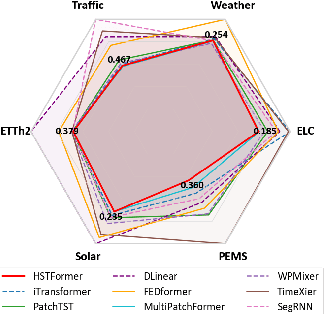
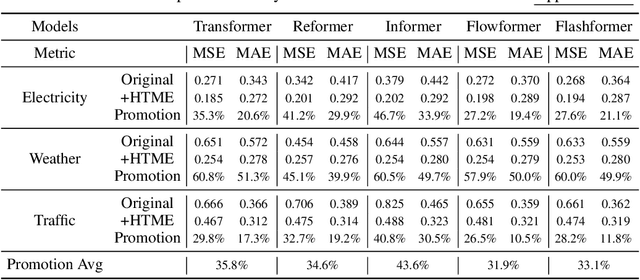
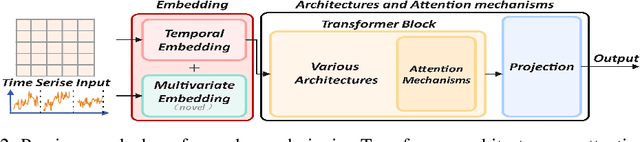
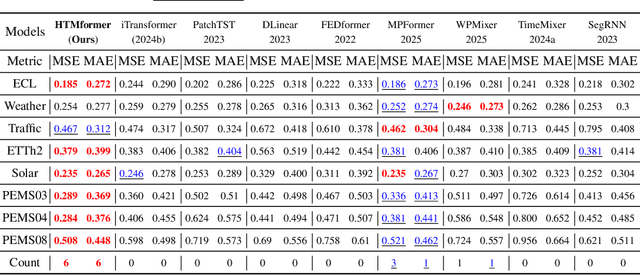
Transformer-based methods have achieved impressive results in time series forecasting. However, existing Transformers still exhibit limitations in sequence modeling as they tend to overemphasize temporal dependencies. This incurs additional computational overhead without yielding corresponding performance gains. We find that the performance of Transformers is highly dependent on the embedding method used to learn effective representations. To address this issue, we extract multivariate features to augment the effective information captured in the embedding layer, yielding multidimensional embeddings that convey richer and more meaningful sequence representations. These representations enable Transformer-based forecasters to better understand the series. Specifically, we introduce Hybrid Temporal and Multivariate Embeddings (HTME). The HTME extractor integrates a lightweight temporal feature extraction module with a carefully designed multivariate feature extraction module to provide complementary features, thereby achieving a balance between model complexity and performance. By combining HTME with the Transformer architecture, we present HTMformer, leveraging the enhanced feature extraction capability of the HTME extractor to build a lightweight forecaster. Experiments conducted on eight real-world datasets demonstrate that our approach outperforms existing baselines in both accuracy and efficiency.
Fed-PISA: Federated Voice Cloning via Personalized Identity-Style Adaptation
Sep 19, 2025Voice cloning for Text-to-Speech (TTS) aims to generate expressive and personalized speech from text using limited data from a target speaker. Federated Learning (FL) offers a collaborative and privacy-preserving framework for this task, but existing approaches suffer from high communication costs and tend to suppress stylistic heterogeneity, resulting in insufficient personalization. To address these issues, we propose Fed-PISA, which stands for Federated Personalized Identity-Style Adaptation. To minimize communication costs, Fed-PISA introduces a disentangled Low-Rank Adaptation (LoRA) mechanism: the speaker's timbre is retained locally through a private ID-LoRA, while only a lightweight style-LoRA is transmitted to the server, thereby minimizing parameter exchange. To harness heterogeneity, our aggregation method, inspired by collaborative filtering, is introduced to create custom models for each client by learning from stylistically similar peers. Experiments show that Fed-PISA improves style expressivity, naturalness, and speaker similarity, outperforming standard federated baselines with minimal communication costs.
Wan-Animate: Unified Character Animation and Replacement with Holistic Replication
Sep 17, 2025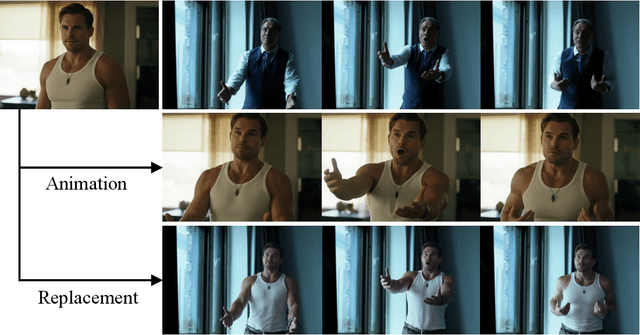
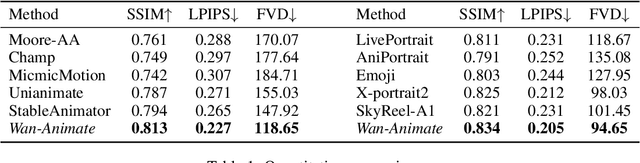
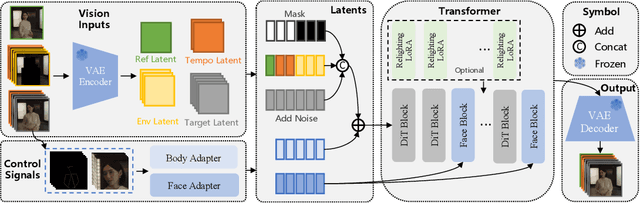
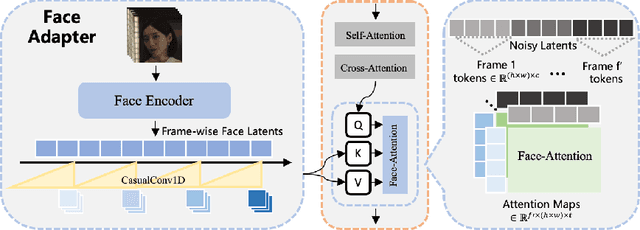
We introduce Wan-Animate, a unified framework for character animation and replacement. Given a character image and a reference video, Wan-Animate can animate the character by precisely replicating the expressions and movements of the character in the video to generate high-fidelity character videos. Alternatively, it can integrate the animated character into the reference video to replace the original character, replicating the scene's lighting and color tone to achieve seamless environmental integration. Wan-Animate is built upon the Wan model. To adapt it for character animation tasks, we employ a modified input paradigm to differentiate between reference conditions and regions for generation. This design unifies multiple tasks into a common symbolic representation. We use spatially-aligned skeleton signals to replicate body motion and implicit facial features extracted from source images to reenact expressions, enabling the generation of character videos with high controllability and expressiveness. Furthermore, to enhance environmental integration during character replacement, we develop an auxiliary Relighting LoRA. This module preserves the character's appearance consistency while applying the appropriate environmental lighting and color tone. Experimental results demonstrate that Wan-Animate achieves state-of-the-art performance. We are committed to open-sourcing the model weights and its source code.
Adaptive Sampling Scheduler
Sep 16, 2025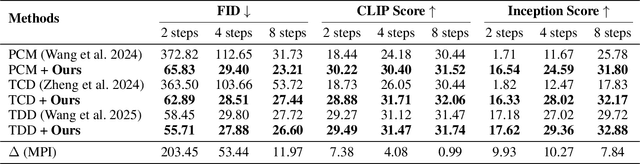
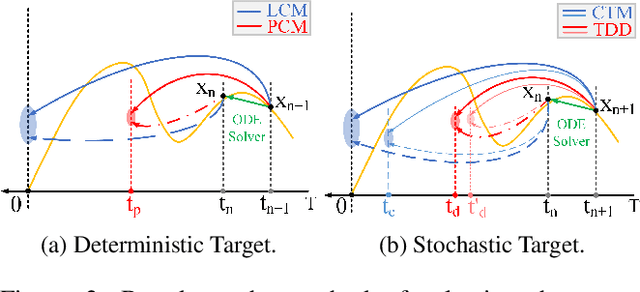
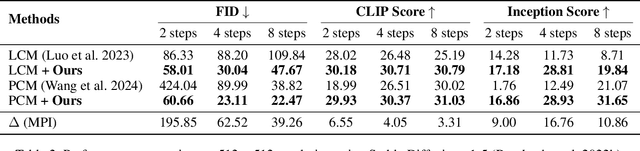
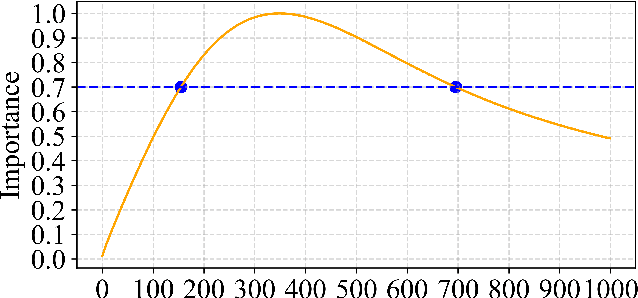
Consistent distillation methods have evolved into effective techniques that significantly accelerate the sampling process of diffusion models. Although existing methods have achieved remarkable results, the selection of target timesteps during distillation mainly relies on deterministic or stochastic strategies, which often require sampling schedulers to be designed specifically for different distillation processes. Moreover, this pattern severely limits flexibility, thereby restricting the full sampling potential of diffusion models in practical applications. To overcome these limitations, this paper proposes an adaptive sampling scheduler that is applicable to various consistency distillation frameworks. The scheduler introduces three innovative strategies: (i) dynamic target timestep selection, which adapts to different consistency distillation frameworks by selecting timesteps based on their computed importance; (ii) Optimized alternating sampling along the solution trajectory by guiding forward denoising and backward noise addition based on the proposed time step importance, enabling more effective exploration of the solution space to enhance generation performance; and (iii) Utilization of smoothing clipping and color balancing techniques to achieve stable and high-quality generation results at high guidance scales, thereby expanding the applicability of consistency distillation models in complex generation scenarios. We validated the effectiveness and flexibility of the adaptive sampling scheduler across various consistency distillation methods through comprehensive experimental evaluations. Experimental results consistently demonstrated significant improvements in generative performance, highlighting the strong adaptability achieved by our method.
AR-GRPO: Training Autoregressive Image Generation Models via Reinforcement Learning
Aug 09, 2025
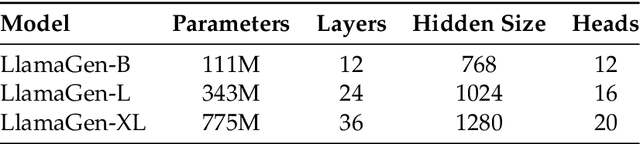
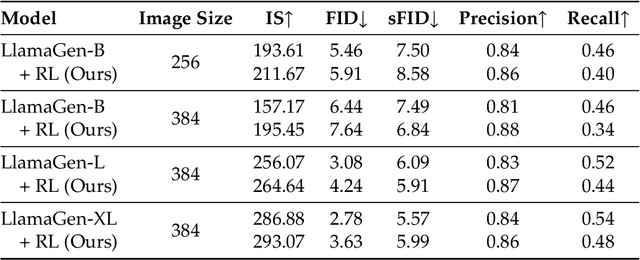

Inspired by the success of reinforcement learning (RL) in refining large language models (LLMs), we propose AR-GRPO, an approach to integrate online RL training into autoregressive (AR) image generation models. We adapt the Group Relative Policy Optimization (GRPO) algorithm to refine the vanilla autoregressive models' outputs by carefully designed reward functions that evaluate generated images across multiple quality dimensions, including perceptual quality, realism, and semantic fidelity. We conduct comprehensive experiments on both class-conditional (i.e., class-to-image) and text-conditional (i.e., text-to-image) image generation tasks, demonstrating that our RL-enhanced framework significantly improves both the image quality and human preference of generated images compared to the standard AR baselines. Our results show consistent improvements across various evaluation metrics, establishing the viability of RL-based optimization for AR image generation and opening new avenues for controllable and high-quality image synthesis. The source codes and models are available at: https://github.com/Kwai-Klear/AR-GRPO.
LoRA in LoRA: Towards Parameter-Efficient Architecture Expansion for Continual Visual Instruction Tuning
Aug 08, 2025Continual Visual Instruction Tuning (CVIT) enables Multimodal Large Language Models (MLLMs) to incrementally learn new tasks over time. However, this process is challenged by catastrophic forgetting, where performance on previously learned tasks deteriorates as the model adapts to new ones. A common approach to mitigate forgetting is architecture expansion, which introduces task-specific modules to prevent interference. Yet, existing methods often expand entire layers for each task, leading to significant parameter overhead and poor scalability. To overcome these issues, we introduce LoRA in LoRA (LiLoRA), a highly efficient architecture expansion method tailored for CVIT in MLLMs. LiLoRA shares the LoRA matrix A across tasks to reduce redundancy, applies an additional low-rank decomposition to matrix B to minimize task-specific parameters, and incorporates a cosine-regularized stability loss to preserve consistency in shared representations over time. Extensive experiments on a diverse CVIT benchmark show that LiLoRA consistently achieves superior performance in sequential task learning while significantly improving parameter efficiency compared to existing approaches.