 Add to Chrome
 Add to Firefox
 Add to Edge
Coupled-cluster molecular properties across the main group that extrapolate beyond training size
Aug 18, 2026
Coupled-cluster theory defines the accuracy standard for molecular electronic-structure properties but scales too steeply for routine application, whereas density-functional theory is affordable yet systematically biased. We resolve this trade-off with a single equivariant network, MEHnet-MG, that predicts an effective one-electron Hamiltonian from one inexpensive B3LYP/def2-SVP calculation and derives a broad suite of properties from it (energy, optical gap, dipole, quadrupole, polarizability, Mulliken atomic charges, and Mayer bond orders) at coupled-cluster accuracy across nine main-group elements, including the under-served phosphorus, sulfur, and chlorine chemistries. The model is trained on a new in-house dataset of multi-property labels computed at the CCSD(T) level for all nine elements. On a held-out test set, it reduces the error of every property by a factor of 3.8 to 230 relative to semi-local, hybrid, and double-hybrid DFT (referenced to composite CCSD(T)/cc-pVTZ; Methods), while adding only ~25 ms wall time per molecule, delivering coupled-cluster-quality predictions at the cost of a single DFT calculation. Critically, deriving every property from a predicted Hamiltonian rather than pooling per-atom features builds the correct size-scaling into the model architecture: on pi-conjugated oligothiophenes it matches finite-field CCSD polarizability and the EOM-CCSD optical gap to ~2% at the largest sizes where those references remain affordable (44 and 37 atoms, where a single CCSD field point already costs ~500x the model's entire inference) and extrapolates the corrected trends to 58-atom chains, a regime where pooling-based architectures fail by construction. Accurate extrapolation is therefore set by the model's inductive bias rather than by the training data.

Atomistic Language Models Understand and Generate Materials
Jun 19, 2026Atomistic structure and natural language have long been modeled separately, with language models either calling atomistic models as tools or being fine-tuned on lossy textual encodings that discard atomistic information. We introduce Atomistic Language Models (ALMs) to pursue native multimodality, in which a single language backbone understands atomistic structures, generates materials from natural language, and optimizes crystal structures as instructed by text. By unifying a pretrained atomistic encoder, large language model, and denoising diffusion model through purely continuous projectors and staged training, ALMs achieve state-of-the-art results on crystal structure prediction and de novo generation. ALMs are enabled by a continuous bridge that maps language model embeddings directly into the steering space of atomistic diffusion, and are assisted by Text-to-Crystal Feynman-Kac (T2C-FK), a particle-based sampler that scores partial denoising trajectories to enforce stoichiometric targets at inference time. To evaluate the ability of ALMs to optimize and generate materials from natural-language prompts and 3D atom-coordinate inputs, we introduce ALM Bench, the first benchmark for text-conditioned crystal generation and optimization. Code, training data, and model weights will be released soon.
Economy of Minds: Emerging Multi-Agent Intelligence with Economic Interactions
Jun 01, 2026How can a population of agents self-orchestrate and self-adapt into stronger collective intelligence without centralized control? Inspired by Friedrich Hayek's economic theory of decentralized coordination in markets, we study this question through an agent economy in which agents compete via auctions for the right to act, exchange payments, and accumulate wealth from environmental rewards. These simple economic signals induce decentralized credit assignment, driving planning without global orchestration or explicit communication protocols. The population evolves through economic selection: effective agents accumulate wealth and are mutated via exploitation, while ineffective ones go bankrupt and are replaced via exploration. We show that, initialized with weak agents, the economy produces emergent multi-step reasoning strategies and outperforms stronger monolithic baselines across five agentic tasks, including mathematical reasoning, financial research, scientific research, accelerator design, and distributed-system optimization. We further provide theoretical insights into how economic dynamics shape agent behaviors, linking local incentives to long-term global performance. Our results suggest a new path to multi-agent intelligence: rather than engineering coordination, we can design decentralized incentive structures under which it automatically emerges.
Wan-Animate: Unified Character Animation and Replacement with Holistic Replication
Sep 17, 2025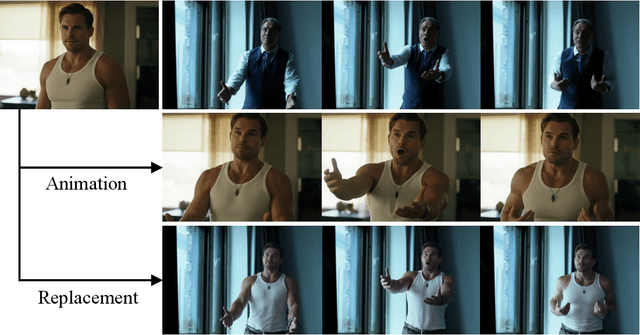
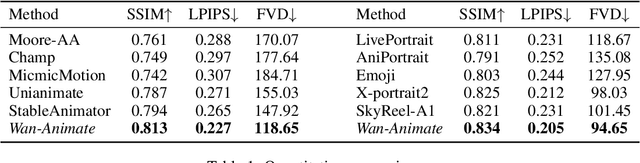
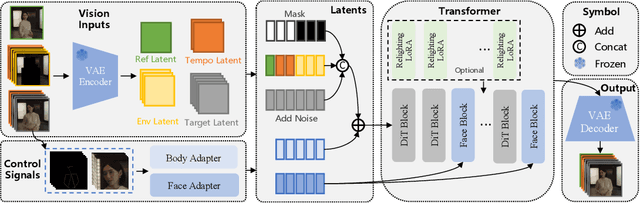
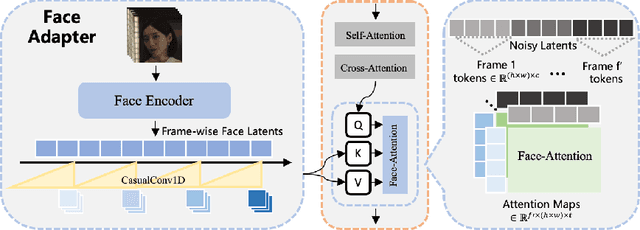
We introduce Wan-Animate, a unified framework for character animation and replacement. Given a character image and a reference video, Wan-Animate can animate the character by precisely replicating the expressions and movements of the character in the video to generate high-fidelity character videos. Alternatively, it can integrate the animated character into the reference video to replace the original character, replicating the scene's lighting and color tone to achieve seamless environmental integration. Wan-Animate is built upon the Wan model. To adapt it for character animation tasks, we employ a modified input paradigm to differentiate between reference conditions and regions for generation. This design unifies multiple tasks into a common symbolic representation. We use spatially-aligned skeleton signals to replicate body motion and implicit facial features extracted from source images to reenact expressions, enabling the generation of character videos with high controllability and expressiveness. Furthermore, to enhance environmental integration during character replacement, we develop an auxiliary Relighting LoRA. This module preserves the character's appearance consistency while applying the appropriate environmental lighting and color tone. Experimental results demonstrate that Wan-Animate achieves state-of-the-art performance. We are committed to open-sourcing the model weights and its source code.
Collaborative AI Enhances Image Understanding in Materials Science
Mar 17, 2025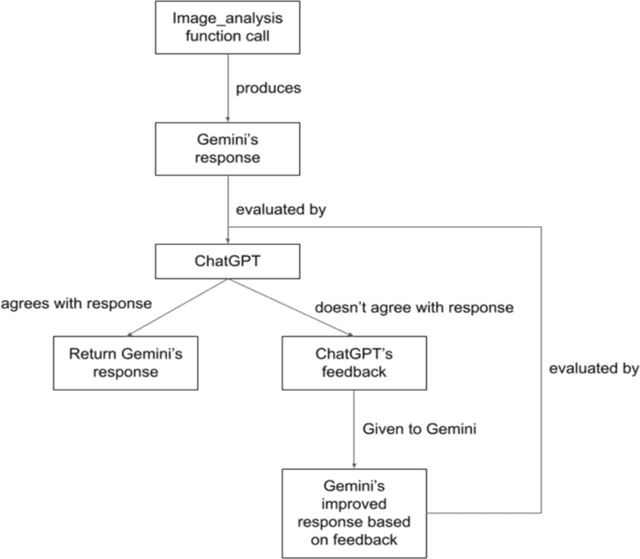
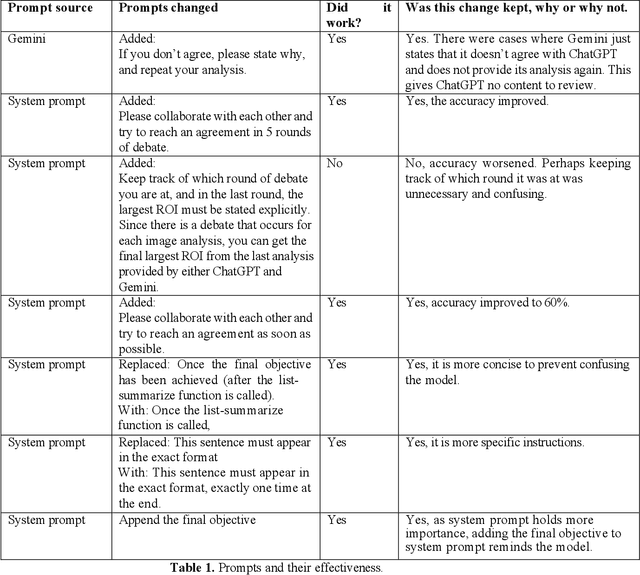

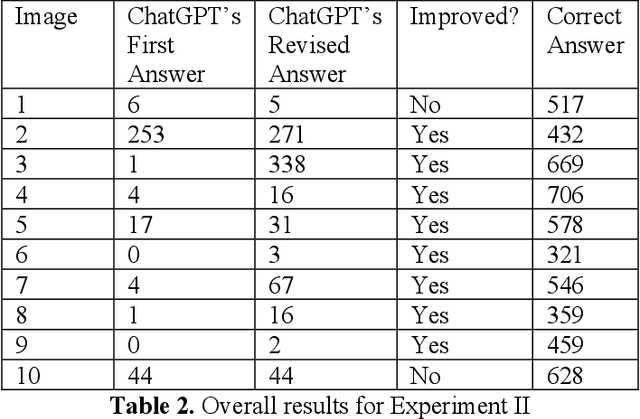
The Copilot for Real-world Experimental Scientist (CRESt) system empowers researchers to control autonomous laboratories through conversational AI, providing a seamless interface for managing complex experimental workflows. We have enhanced CRESt by integrating a multi-agent collaboration mechanism that utilizes the complementary strengths of the ChatGPT and Gemini models for precise image analysis in materials science. This innovative approach significantly improves the accuracy of experimental outcomes by fostering structured debates between the AI models, which enhances decision-making processes in materials phase analysis. Additionally, to evaluate the generalizability of this approach, we tested it on a quantitative task of counting particles. Here, the collaboration between the AI models also led to improved results, demonstrating the versatility and robustness of this method. By harnessing this dual-AI framework, this approach stands as a pioneering method for enhancing experimental accuracy and efficiency in materials research, with applications extending beyond CRESt to broader scientific experimentation and analysis.
Frankenstein Optimizer: Harnessing the Potential by Revisiting Optimization Tricks
Mar 04, 2025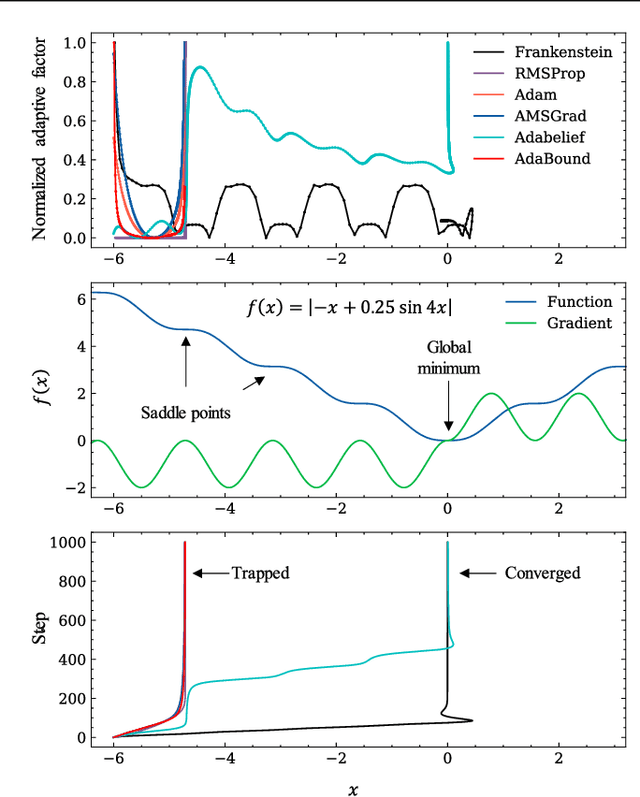
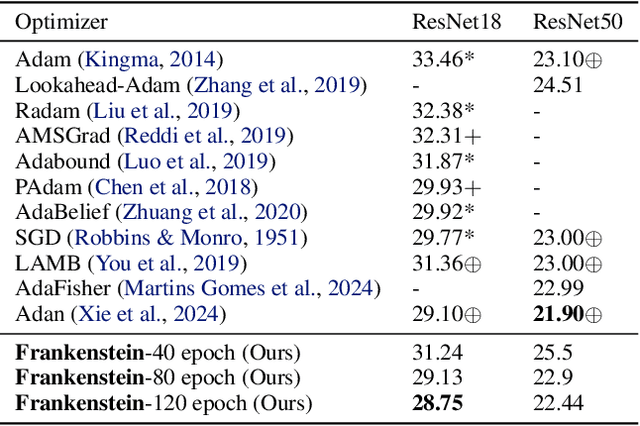
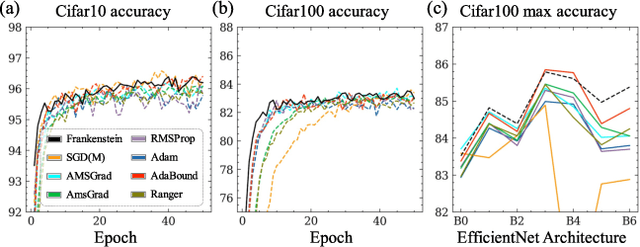
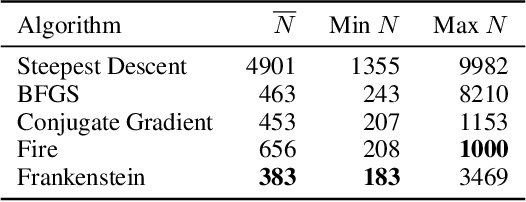
Gradient-based optimization drives the unprecedented performance of modern deep neural network models across diverse applications. Adaptive algorithms have accelerated neural network training due to their rapid convergence rates; however, they struggle to find ``flat minima" reliably, resulting in suboptimal generalization compared to stochastic gradient descent (SGD). By revisiting various adaptive algorithms' mechanisms, we propose the Frankenstein optimizer, which combines their advantages. The proposed Frankenstein dynamically adjusts first- and second-momentum coefficients according to the optimizer's current state to directly maintain consistent learning dynamics and immediately reflect sudden gradient changes. Extensive experiments across several research domains such as computer vision, natural language processing, few-shot learning, and scientific simulations show that Frankenstein surpasses existing adaptive algorithms and SGD empirically regarding convergence speed and generalization performance. Furthermore, this research deepens our understanding of adaptive algorithms through centered kernel alignment analysis and loss landscape visualization during the learning process.
Contrastive Learning of English Language and Crystal Graphs for Multimodal Representation of Materials Knowledge
Feb 23, 2025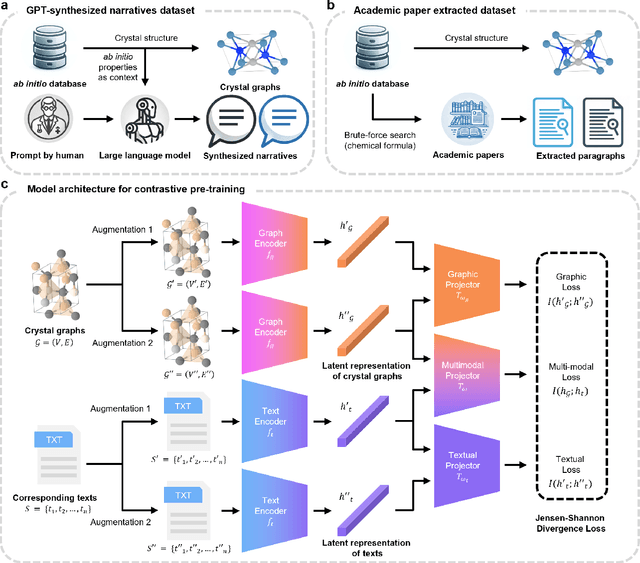
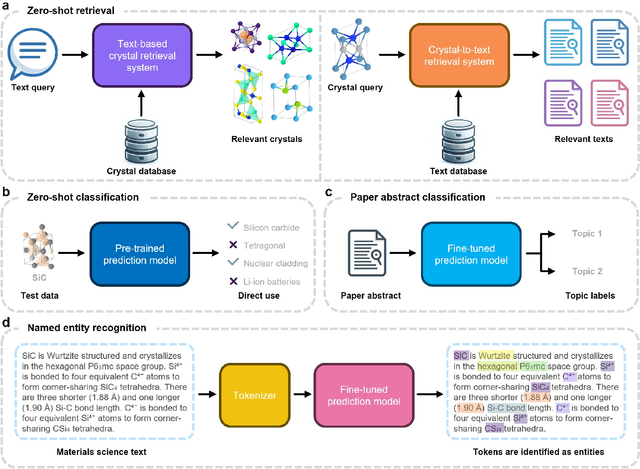
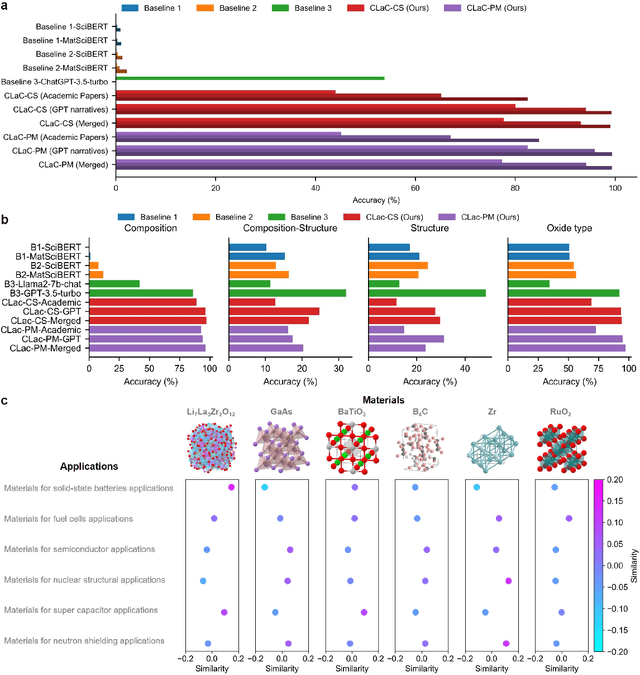
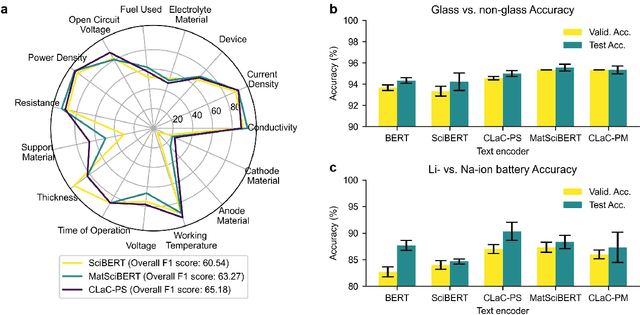
Artificial intelligence (AI) is increasingly used for the inverse design of materials, such as crystals and molecules. Existing AI research on molecules has integrated chemical structures of molecules with textual knowledge to adapt to complex instructions. However, this approach has been unattainable for crystals due to data scarcity from the biased distribution of investigated crystals and the lack of semantic supervision in peer-reviewed literature. In this work, we introduce a contrastive language-crystals model (CLaC) pre-trained on a newly synthesized dataset of 126k crystal structure-text pairs. To demonstrate the advantage of using synthetic data to overcome data scarcity, we constructed a comparable dataset extracted from academic papers. We evaluate CLaC's generalization ability through various zero-shot cross-modal tasks and downstream applications. In experiments, CLaC achieves state-of-the-art zero-shot generalization performance in understanding crystal structures, surpassing latest large language models.
Bounds of Block Rewards in Honest PinFi Systems
Apr 01, 2024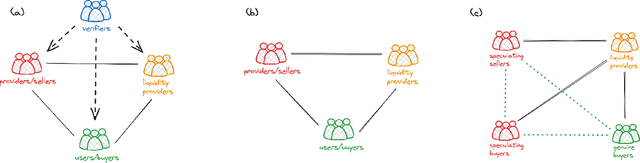
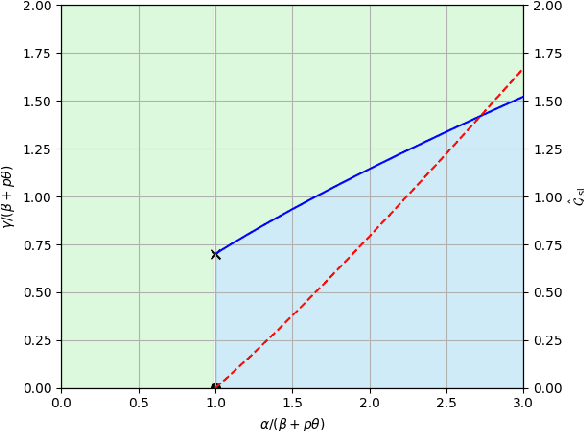
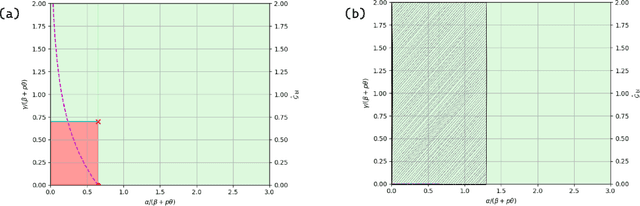
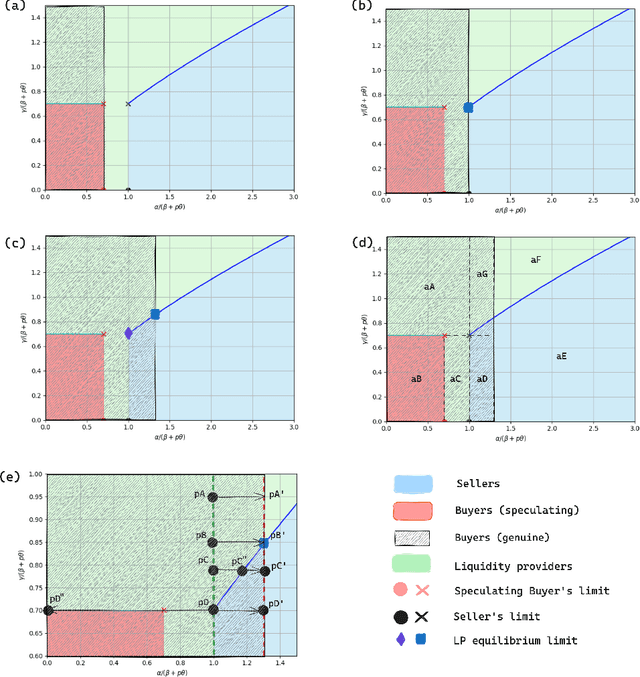
PinFi is a class of novel protocols for decentralized pricing of dissipative assets, whose value naturally declines over time. Central to the protocol's functionality and its market efficiency is the role of liquidity providers (LPs). This study addresses critical stability and sustainability challenges within the protocol, namely: the propensity of LPs to prefer selling in external markets over participation in the protocol; a similar inclination towards selling within the PinFi system rather than contributing as LPs; and a scenario where LPs are disinclined to sell within the protocol. Employing a game-theoretic approach, we explore PinFi's mechanisms and its broader ramifications. Our findings reveal that, under a variety of common conditions and with an assumption of participant integrity, PinFi is capable of fostering a dynamic equilibrium among LPs, sellers, and buyers. This balance is maintained through a carefully calibrated range of block rewards for LPs, ensuring the protocol's long-term stability and utility.
Generative Model for Constructing Reaction Path from Initial to Final States
Jan 19, 2024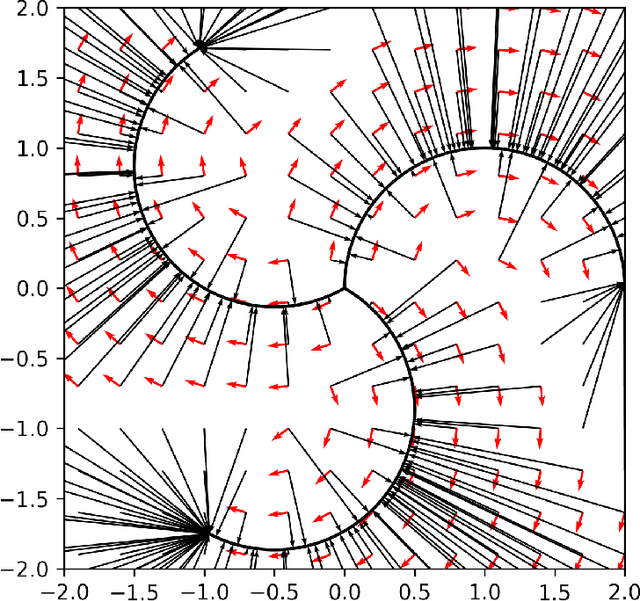
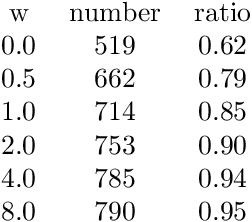
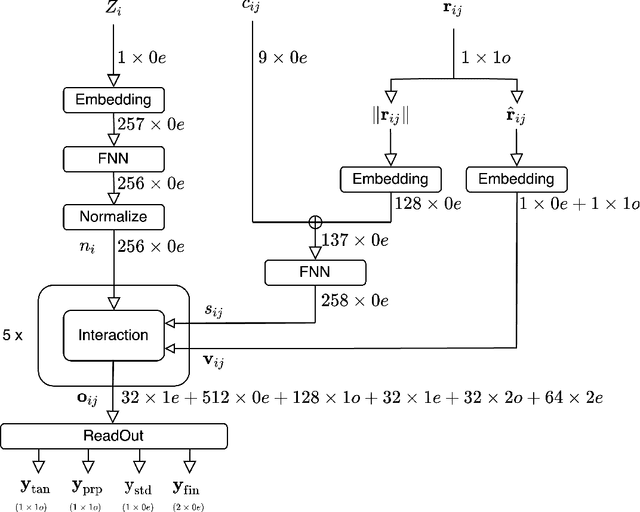
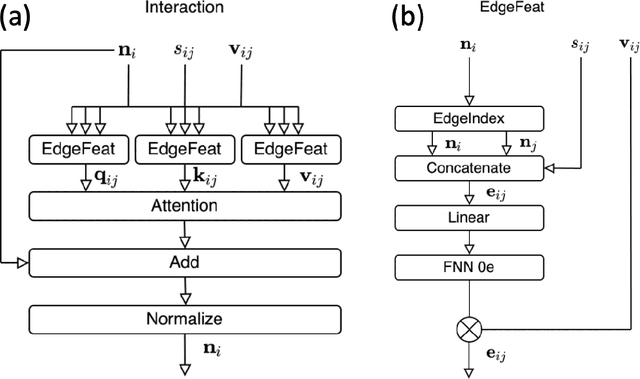
Mapping out reaction pathways and their corresponding activation barriers is a significant aspect of molecular simulation. Given their inherent complexity and nonlinearity, even generating a initial guess of these paths remains a challenging problem. Presented in this paper is an innovative approach that utilizes neural networks to generate initial guess for these reaction pathways. The proposed method is initiated by inputting the coordinates of the initial state, followed by progressive alterations to its structure. This iterative process culminates in the generation of the approximate representation of the reaction path and the coordinates of the final state. The application of this method extends to complex reaction pathways illustrated by organic reactions. Training was executed on the Transition1x dataset, an organic reaction pathway dataset. The results revealed generation of reactions that bore substantial similarities with the corresponding test data. The method's flexibility allows for reactions to be generated either to conform to predetermined conditions or in a randomized manner.
Blind quantum machine learning with quantum bipartite correlator
Oct 19, 2023

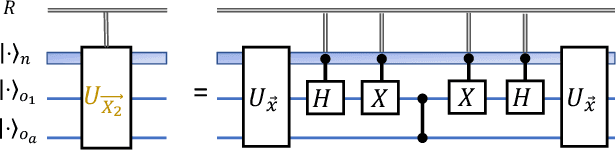

Distributed quantum computing is a promising computational paradigm for performing computations that are beyond the reach of individual quantum devices. Privacy in distributed quantum computing is critical for maintaining confidentiality and protecting the data in the presence of untrusted computing nodes. In this work, we introduce novel blind quantum machine learning protocols based on the quantum bipartite correlator algorithm. Our protocols have reduced communication overhead while preserving the privacy of data from untrusted parties. We introduce robust algorithm-specific privacy-preserving mechanisms with low computational overhead that do not require complex cryptographic techniques. We then validate the effectiveness of the proposed protocols through complexity and privacy analysis. Our findings pave the way for advancements in distributed quantum computing, opening up new possibilities for privacy-aware machine learning applications in the era of quantum technologies.