 Add to Chrome
 Add to Firefox
 Add to Edge
Astrolabe: Spherical-Map Guidance Across Diffusion Pipelines for Full-Body Capture from Unconstrained Images
Aug 02, 2026
Full-body capture from unconstrained photographs requires global correspondence across arbitrary views, poses, crops, and occlusions. Yet pose, geometry, and foundation features estimated in this setting are too unreliable for dense matching or appearance transfer, while diffusion rectifiers and optimization pipelines expose no common interface for consuming such uncertain correspondence. Our insight is that correspondence need not be locally accurate: its coarse viewpoint and body layout can still organize how a diffusion prior adapts and guides reconstruction. We introduce \emph{Astrolabe}, a host-portable adapter built on frozen viewpoint-guided spherical maps (SPH). A fixed bounded transform converts SPH into a spatial noise shift, which is matched during prior adaptation and reused during downstream denoising or score-distillation guidance in both pipeline categories. When a rectifier exposes a reference router, the same target/reference SPH additionally supplies coarse compatibility scores to select native appearance features; router-free optimization uses only the shared shift path. Astrolabe therefore follows one SPH--shift--adapt--guide process without dense warping or a learned control branch. Across Puzzle-IOI and 4D-Dress, it improves all reported image metrics in both hosts and all paired Puzzle-IOI geometry metrics; image gains extend to rear views, while 4D-Dress geometry remains stable overall.

Adaptive Sampling Scheduler
Sep 16, 2025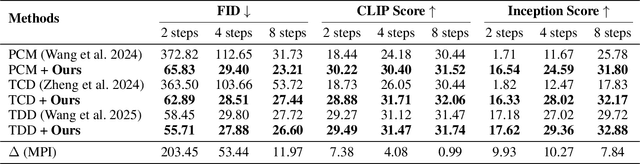
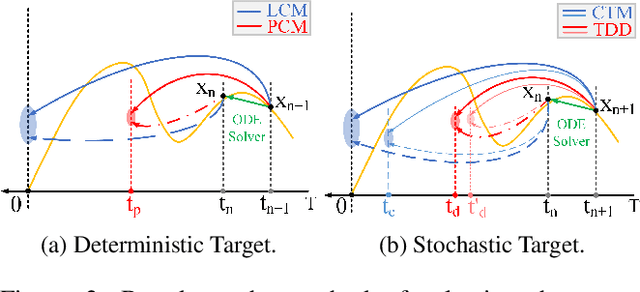
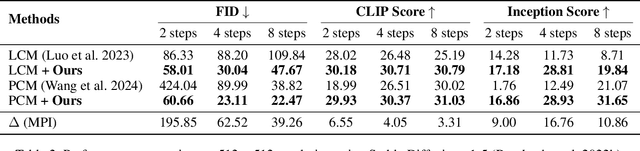
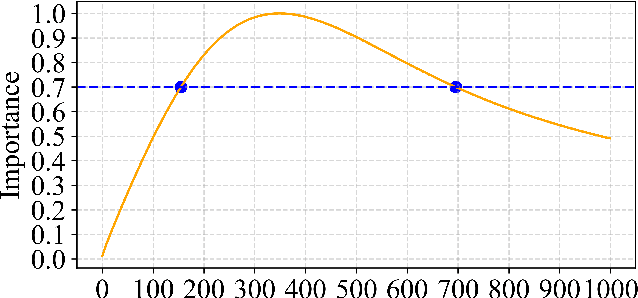
Consistent distillation methods have evolved into effective techniques that significantly accelerate the sampling process of diffusion models. Although existing methods have achieved remarkable results, the selection of target timesteps during distillation mainly relies on deterministic or stochastic strategies, which often require sampling schedulers to be designed specifically for different distillation processes. Moreover, this pattern severely limits flexibility, thereby restricting the full sampling potential of diffusion models in practical applications. To overcome these limitations, this paper proposes an adaptive sampling scheduler that is applicable to various consistency distillation frameworks. The scheduler introduces three innovative strategies: (i) dynamic target timestep selection, which adapts to different consistency distillation frameworks by selecting timesteps based on their computed importance; (ii) Optimized alternating sampling along the solution trajectory by guiding forward denoising and backward noise addition based on the proposed time step importance, enabling more effective exploration of the solution space to enhance generation performance; and (iii) Utilization of smoothing clipping and color balancing techniques to achieve stable and high-quality generation results at high guidance scales, thereby expanding the applicability of consistency distillation models in complex generation scenarios. We validated the effectiveness and flexibility of the adaptive sampling scheduler across various consistency distillation methods through comprehensive experimental evaluations. Experimental results consistently demonstrated significant improvements in generative performance, highlighting the strong adaptability achieved by our method.