 Add to Chrome
 Add to Firefox
 Add to Edge
MA-GTS: A Multi-Agent Framework for Solving Complex Graph Problems in Real-World Applications
Feb 25, 2025
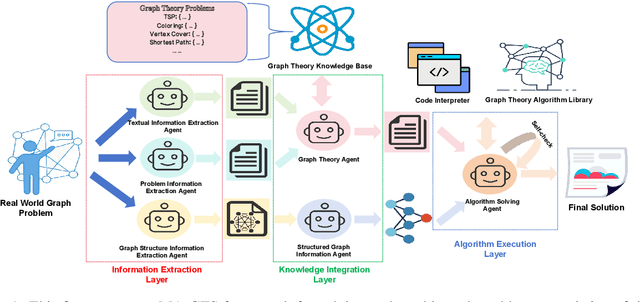
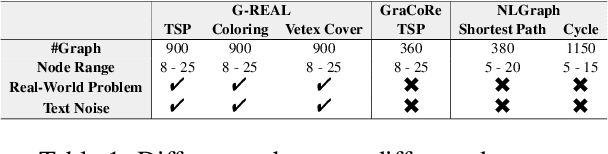
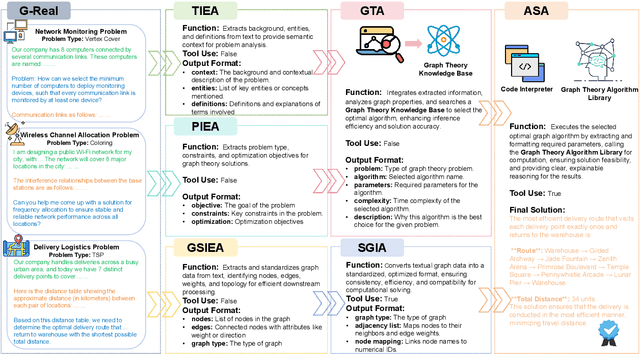
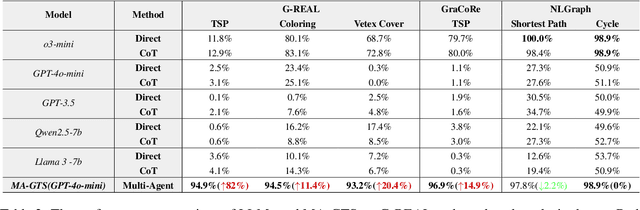
Graph-theoretic problems arise in real-world applications like logistics, communication networks, and traffic optimization. These problems are often complex, noisy, and irregular, posing challenges for traditional algorithms. Large language models (LLMs) offer potential solutions but face challenges, including limited accuracy and input length constraints. To address these challenges, we propose MA-GTS (Multi-Agent Graph Theory Solver), a multi-agent framework that decomposes these complex problems through agent collaboration. MA-GTS maps the implicitly expressed text-based graph data into clear, structured graph representations and dynamically selects the most suitable algorithm based on problem constraints and graph structure scale. This approach ensures that the solution process remains efficient and the resulting reasoning path is interpretable. We validate MA-GTS using the G-REAL dataset, a real-world-inspired graph theory dataset we created. Experimental results show that MA-GTS outperforms state-of-the-art approaches in terms of efficiency, accuracy, and scalability, with strong results across multiple benchmarks (G-REAL 94.2%, GraCoRe 96.9%, NLGraph 98.4%).MA-GTS is open-sourced at https://github.com/ZIKEYUAN/MA-GTS.git.

Improved Diffusion-based Generative Model with Better Adversarial Robustness
Feb 24, 2025Diffusion Probabilistic Models (DPMs) have achieved significant success in generative tasks. However, their training and sampling processes suffer from the issue of distribution mismatch. During the denoising process, the input data distributions differ between the training and inference stages, potentially leading to inaccurate data generation. To obviate this, we analyze the training objective of DPMs and theoretically demonstrate that this mismatch can be alleviated through Distributionally Robust Optimization (DRO), which is equivalent to performing robustness-driven Adversarial Training (AT) on DPMs. Furthermore, for the recently proposed Consistency Model (CM), which distills the inference process of the DPM, we prove that its training objective also encounters the mismatch issue. Fortunately, this issue can be mitigated by AT as well. Based on these insights, we propose to conduct efficient AT on both DPM and CM. Finally, extensive empirical studies validate the effectiveness of AT in diffusion-based models. The code is available at https://github.com/kugwzk/AT_Diff.
NLP-AKG: Few-Shot Construction of NLP Academic Knowledge Graph Based on LLM
Feb 20, 2025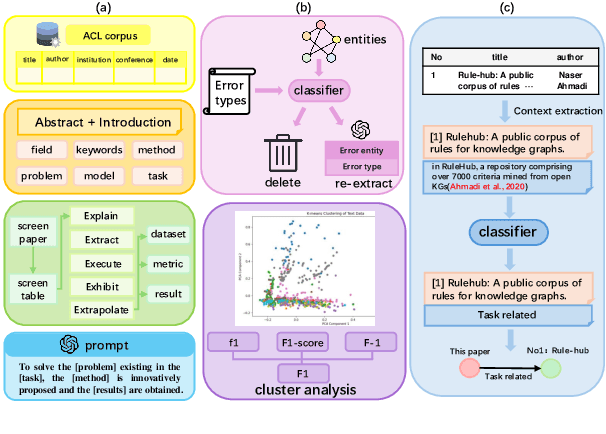
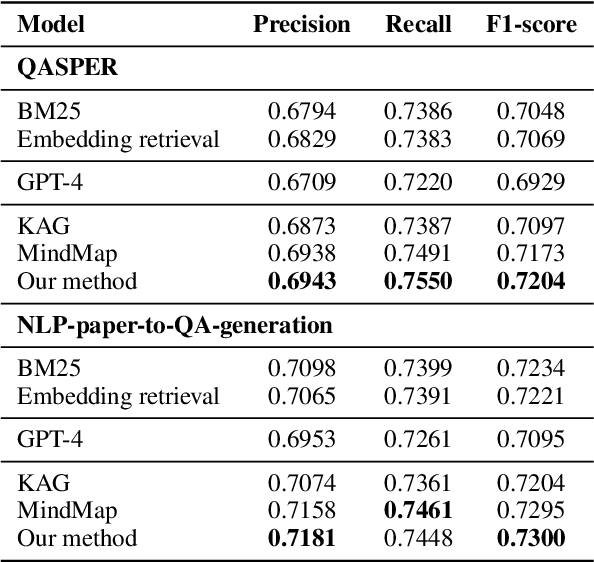
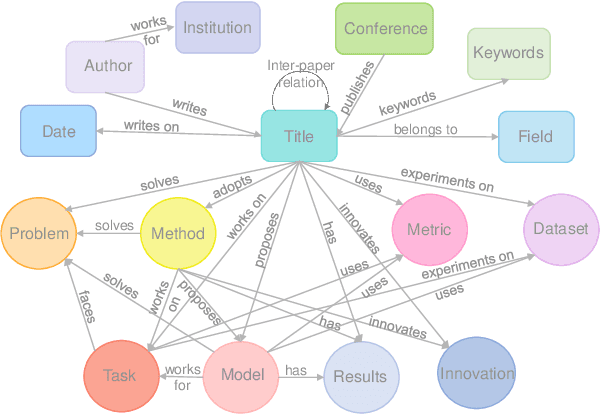
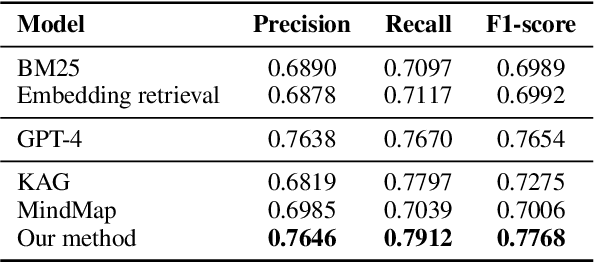
Large language models (LLMs) have been widely applied in question answering over scientific research papers. To enhance the professionalism and accuracy of responses, many studies employ external knowledge augmentation. However, existing structures of external knowledge in scientific literature often focus solely on either paper entities or domain concepts, neglecting the intrinsic connections between papers through shared domain concepts. This results in less comprehensive and specific answers when addressing questions that combine papers and concepts. To address this, we propose a novel knowledge graph framework that captures deep conceptual relations between academic papers, constructing a relational network via intra-paper semantic elements and inter-paper citation relations. Using a few-shot knowledge graph construction method based on LLM, we develop NLP-AKG, an academic knowledge graph for the NLP domain, by extracting 620,353 entities and 2,271,584 relations from 60,826 papers in ACL Anthology. Based on this, we propose a 'sub-graph community summary' method and validate its effectiveness on three NLP scientific literature question answering datasets.
Personalized Image Generation with Deep Generative Models: A Decade Survey
Feb 18, 2025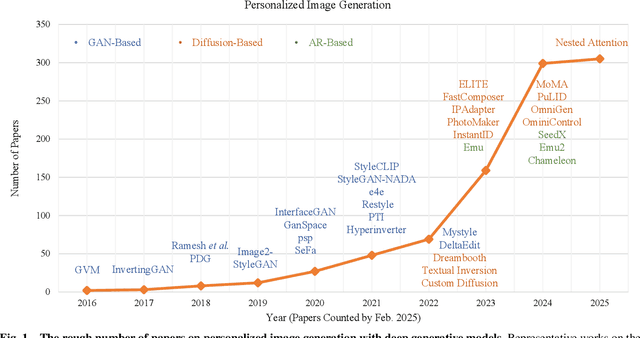
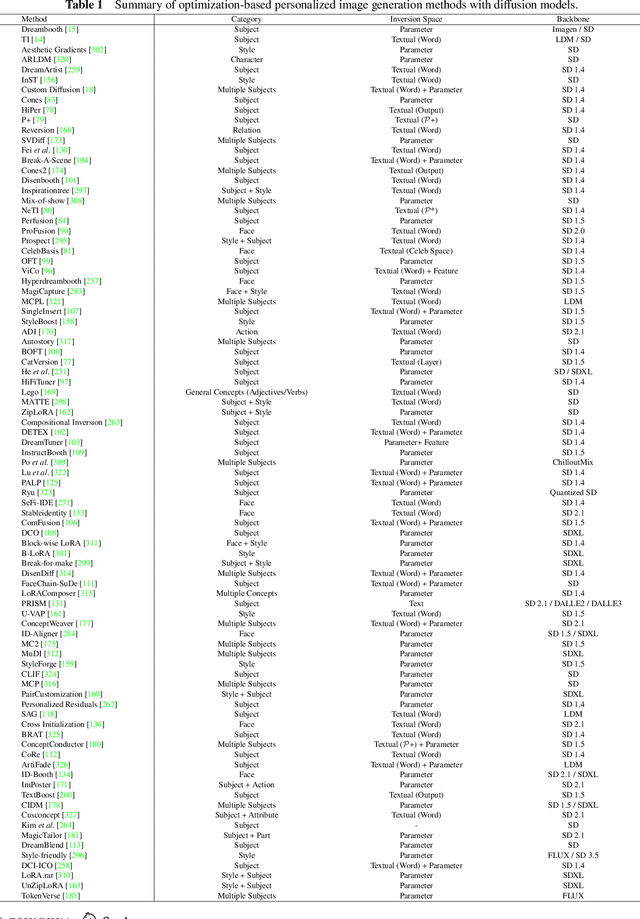
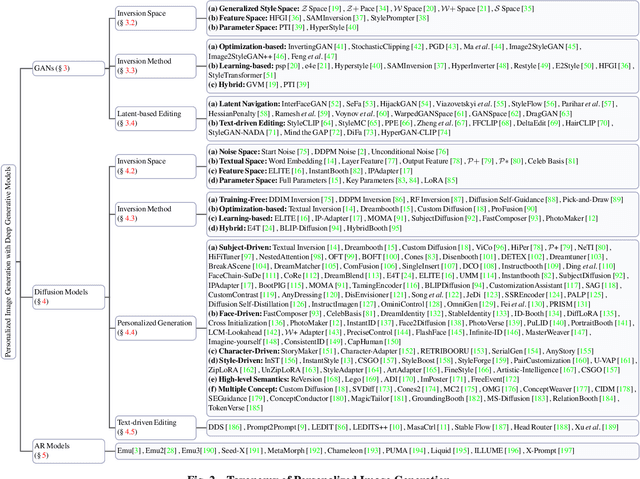
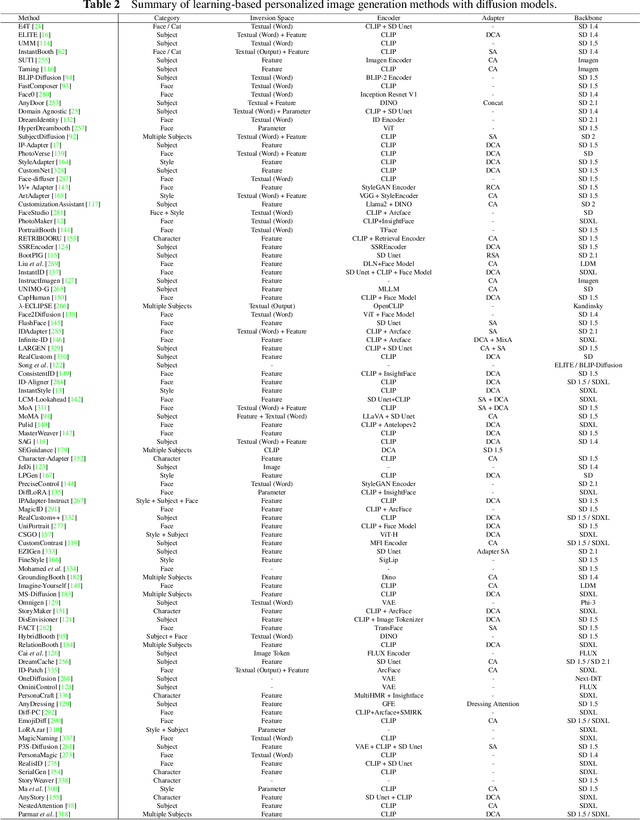
Recent advancements in generative models have significantly facilitated the development of personalized content creation. Given a small set of images with user-specific concept, personalized image generation allows to create images that incorporate the specified concept and adhere to provided text descriptions. Due to its wide applications in content creation, significant effort has been devoted to this field in recent years. Nonetheless, the technologies used for personalization have evolved alongside the development of generative models, with their distinct and interrelated components. In this survey, we present a comprehensive review of generalized personalized image generation across various generative models, including traditional GANs, contemporary text-to-image diffusion models, and emerging multi-model autoregressive models. We first define a unified framework that standardizes the personalization process across different generative models, encompassing three key components, i.e., inversion spaces, inversion methods, and personalization schemes. This unified framework offers a structured approach to dissecting and comparing personalization techniques across different generative architectures. Building upon this unified framework, we further provide an in-depth analysis of personalization techniques within each generative model, highlighting their unique contributions and innovations. Through comparative analysis, this survey elucidates the current landscape of personalized image generation, identifying commonalities and distinguishing features among existing methods. Finally, we discuss the open challenges in the field and propose potential directions for future research. We keep tracing related works at https://github.com/csyxwei/Awesome-Personalized-Image-Generation.
Ontology-Guided Reverse Thinking Makes Large Language Models Stronger on Knowledge Graph Question Answering
Feb 17, 2025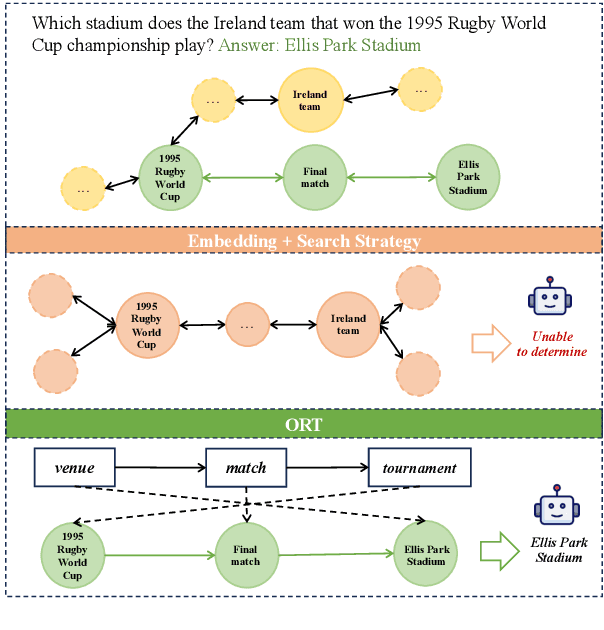
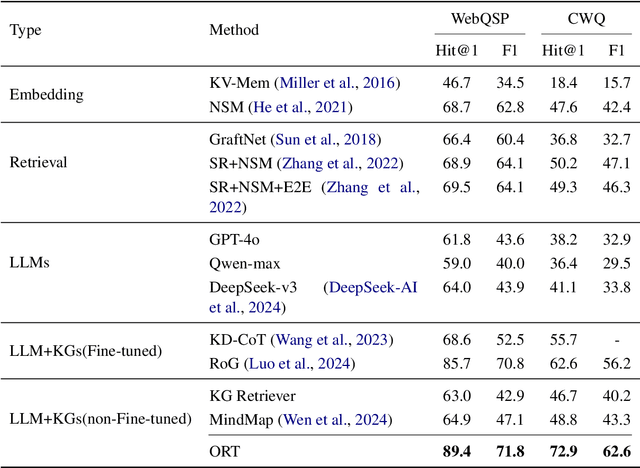
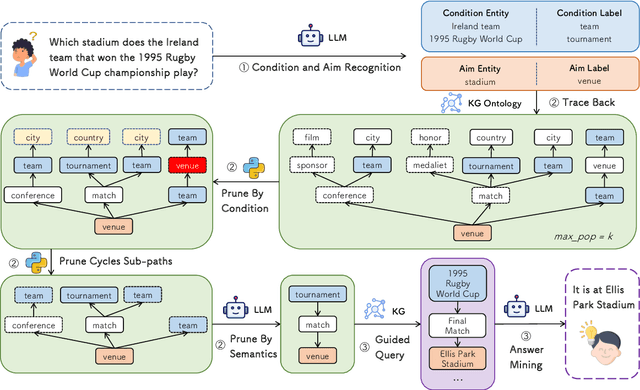
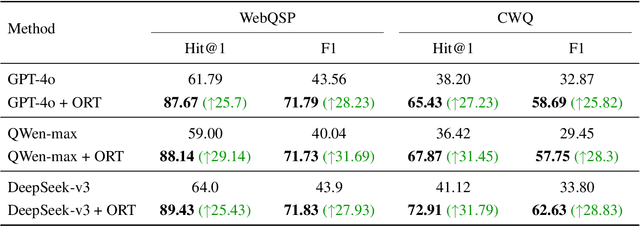
Large language models (LLMs) have shown remarkable capabilities in natural language processing. However, in knowledge graph question answering tasks (KGQA), there remains the issue of answering questions that require multi-hop reasoning. Existing methods rely on entity vector matching, but the purpose of the question is abstract and difficult to match with specific entities. As a result, it is difficult to establish reasoning paths to the purpose, which leads to information loss and redundancy. To address this issue, inspired by human reverse thinking, we propose Ontology-Guided Reverse Thinking (ORT), a novel framework that constructs reasoning paths from purposes back to conditions. ORT operates in three key phases: (1) using LLM to extract purpose labels and condition labels, (2) constructing label reasoning paths based on the KG ontology, and (3) using the label reasoning paths to guide knowledge retrieval. Experiments on the WebQSP and CWQ datasets show that ORT achieves state-of-the-art performance and significantly enhances the capability of LLMs for KGQA.
Generative Adversarial Networks Bridging Art and Machine Intelligence
Feb 09, 2025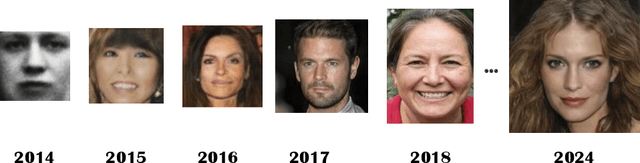

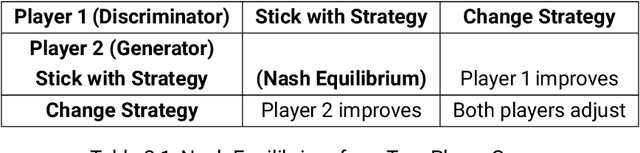

Generative Adversarial Networks (GAN) have greatly influenced the development of computer vision and artificial intelligence in the past decade and also connected art and machine intelligence together. This book begins with a detailed introduction to the fundamental principles and historical development of GANs, contrasting them with traditional generative models and elucidating the core adversarial mechanisms through illustrative Python examples. The text systematically addresses the mathematical and theoretical underpinnings including probability theory, statistics, and game theory providing a solid framework for understanding the objectives, loss functions, and optimisation challenges inherent to GAN training. Subsequent chapters review classic variants such as Conditional GANs, DCGANs, InfoGAN, and LAPGAN before progressing to advanced training methodologies like Wasserstein GANs, GANs with gradient penalty, least squares GANs, and spectral normalisation techniques. The book further examines architectural enhancements and task-specific adaptations in generators and discriminators, showcasing practical implementations in high resolution image generation, artistic style transfer, video synthesis, text to image generation and other multimedia applications. The concluding sections offer insights into emerging research trends, including self-attention mechanisms, transformer-based generative models, and a comparative analysis with diffusion models, thus charting promising directions for future developments in both academic and applied settings.
On Fairness of Unified Multimodal Large Language Model for Image Generation
Feb 05, 2025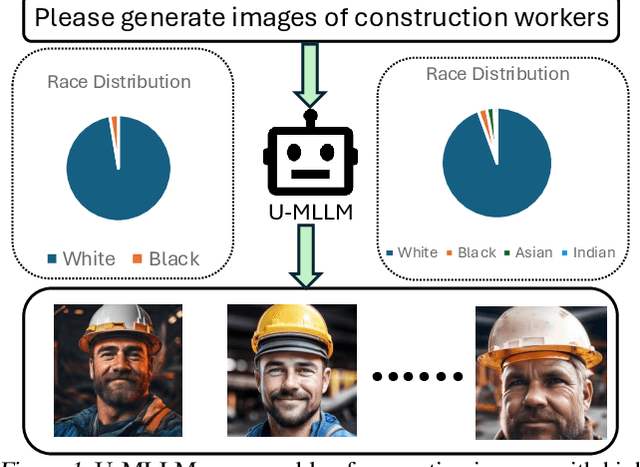
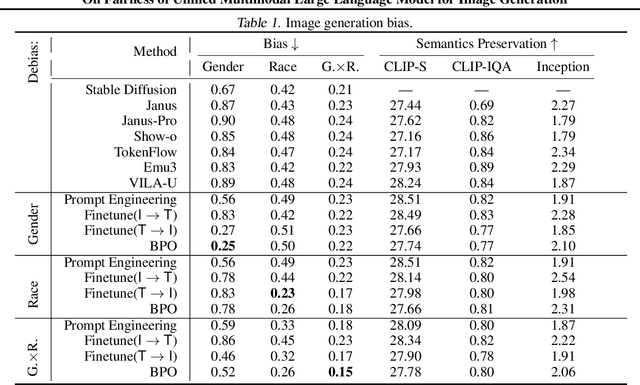
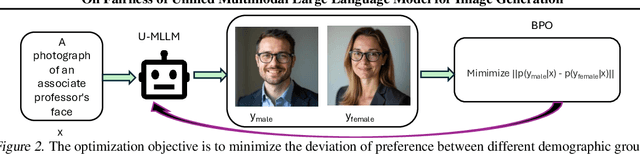
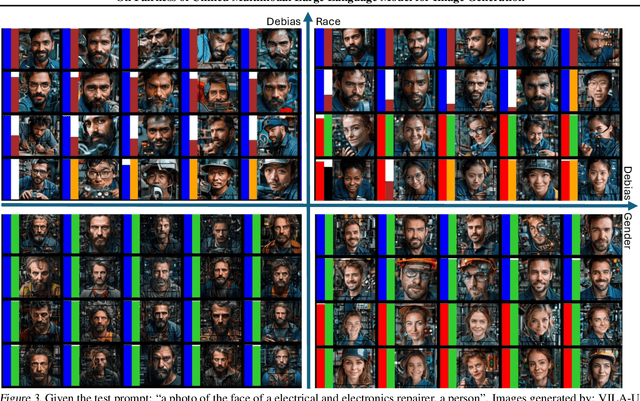
Unified multimodal large language models (U-MLLMs) have demonstrated impressive performance in visual understanding and generation in an end-to-end pipeline. Compared with generation-only models (e.g., Stable Diffusion), U-MLLMs may raise new questions about bias in their outputs, which can be affected by their unified capabilities. This gap is particularly concerning given the under-explored risk of propagating harmful stereotypes. In this paper, we benchmark the latest U-MLLMs and find that most exhibit significant demographic biases, such as gender and race bias. To better understand and mitigate this issue, we propose a locate-then-fix strategy, where we audit and show how the individual model component is affected by bias. Our analysis shows that bias originates primarily from the language model. More interestingly, we observe a "partial alignment" phenomenon in U-MLLMs, where understanding bias appears minimal, but generation bias remains substantial. Thus, we propose a novel balanced preference model to balance the demographic distribution with synthetic data. Experiments demonstrate that our approach reduces demographic bias while preserving semantic fidelity. We hope our findings underscore the need for more holistic interpretation and debiasing strategies of U-MLLMs in the future.
TAD-Bench: A Comprehensive Benchmark for Embedding-Based Text Anomaly Detection
Jan 21, 2025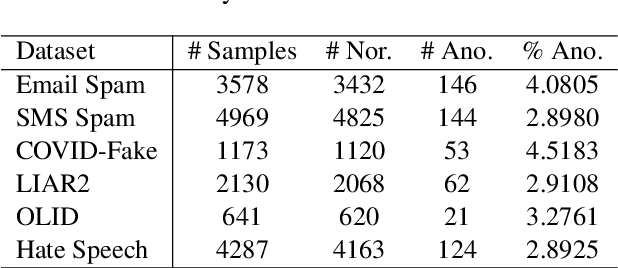

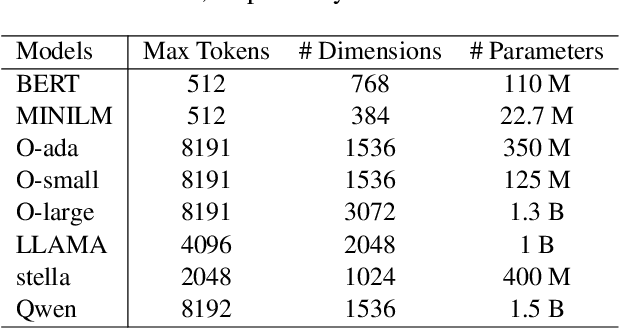

Text anomaly detection is crucial for identifying spam, misinformation, and offensive language in natural language processing tasks. Despite the growing adoption of embedding-based methods, their effectiveness and generalizability across diverse application scenarios remain under-explored. To address this, we present TAD-Bench, a comprehensive benchmark designed to systematically evaluate embedding-based approaches for text anomaly detection. TAD-Bench integrates multiple datasets spanning different domains, combining state-of-the-art embeddings from large language models with a variety of anomaly detection algorithms. Through extensive experiments, we analyze the interplay between embeddings and detection methods, uncovering their strengths, weaknesses, and applicability to different tasks. These findings offer new perspectives on building more robust, efficient, and generalizable anomaly detection systems for real-world applications.
From Aleatoric to Epistemic: Exploring Uncertainty Quantification Techniques in Artificial Intelligence
Jan 05, 2025
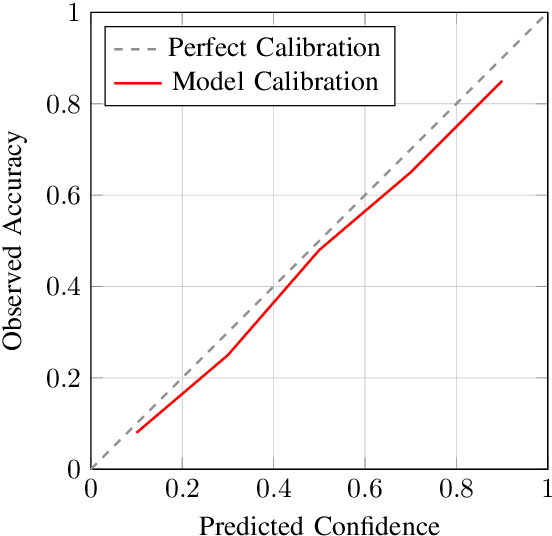

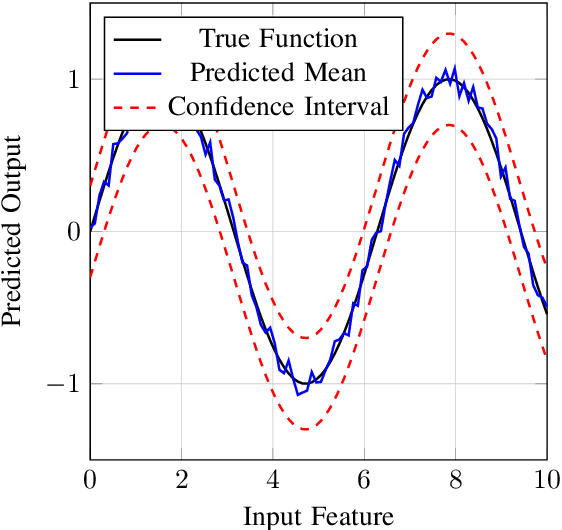
Uncertainty quantification (UQ) is a critical aspect of artificial intelligence (AI) systems, particularly in high-risk domains such as healthcare, autonomous systems, and financial technology, where decision-making processes must account for uncertainty. This review explores the evolution of uncertainty quantification techniques in AI, distinguishing between aleatoric and epistemic uncertainties, and discusses the mathematical foundations and methods used to quantify these uncertainties. We provide an overview of advanced techniques, including probabilistic methods, ensemble learning, sampling-based approaches, and generative models, while also highlighting hybrid approaches that integrate domain-specific knowledge. Furthermore, we examine the diverse applications of UQ across various fields, emphasizing its impact on decision-making, predictive accuracy, and system robustness. The review also addresses key challenges such as scalability, efficiency, and integration with explainable AI, and outlines future directions for research in this rapidly developing area. Through this comprehensive survey, we aim to provide a deeper understanding of UQ's role in enhancing the reliability, safety, and trustworthiness of AI systems.
UDMC: Unified Decision-Making and Control Framework for Urban Autonomous Driving with Motion Prediction of Traffic Participants
Jan 05, 2025

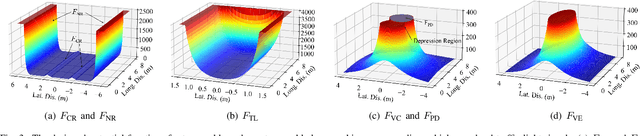

Current autonomous driving systems often struggle to balance decision-making and motion control while ensuring safety and traffic rule compliance, especially in complex urban environments. Existing methods may fall short due to separate handling of these functionalities, leading to inefficiencies and safety compromises. To address these challenges, we introduce UDMC, an interpretable and unified Level 4 autonomous driving framework. UDMC integrates decision-making and motion control into a single optimal control problem (OCP), considering the dynamic interactions with surrounding vehicles, pedestrians, road lanes, and traffic signals. By employing innovative potential functions to model traffic participants and regulations, and incorporating a specialized motion prediction module, our framework enhances on-road safety and rule adherence. The integrated design allows for real-time execution of flexible maneuvers suited to diverse driving scenarios. High-fidelity simulations conducted in CARLA exemplify the framework's computational efficiency, robustness, and safety, resulting in superior driving performance when compared against various baseline models. Our open-source project is available at https://github.com/henryhcliu/udmc_carla.git.